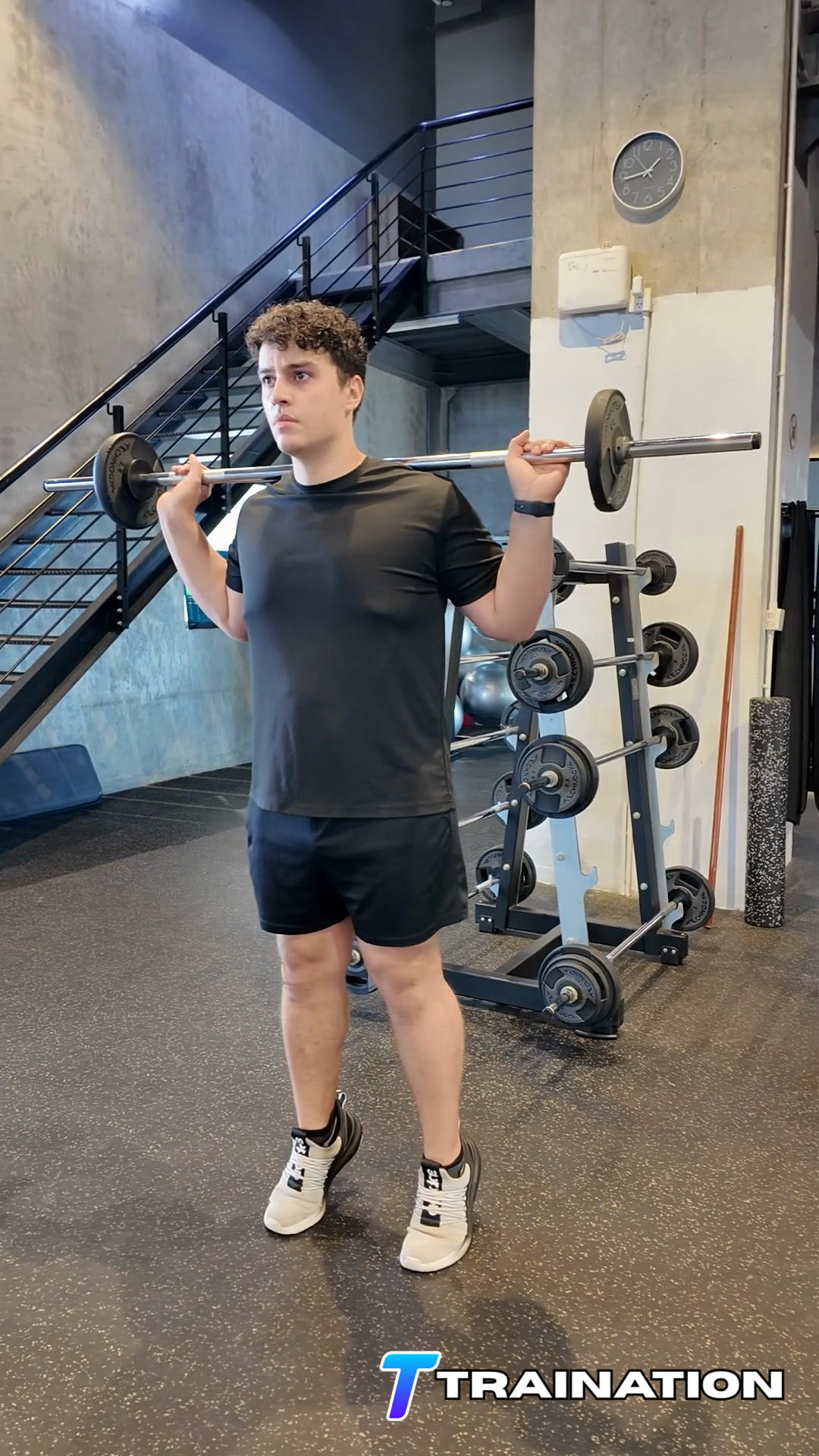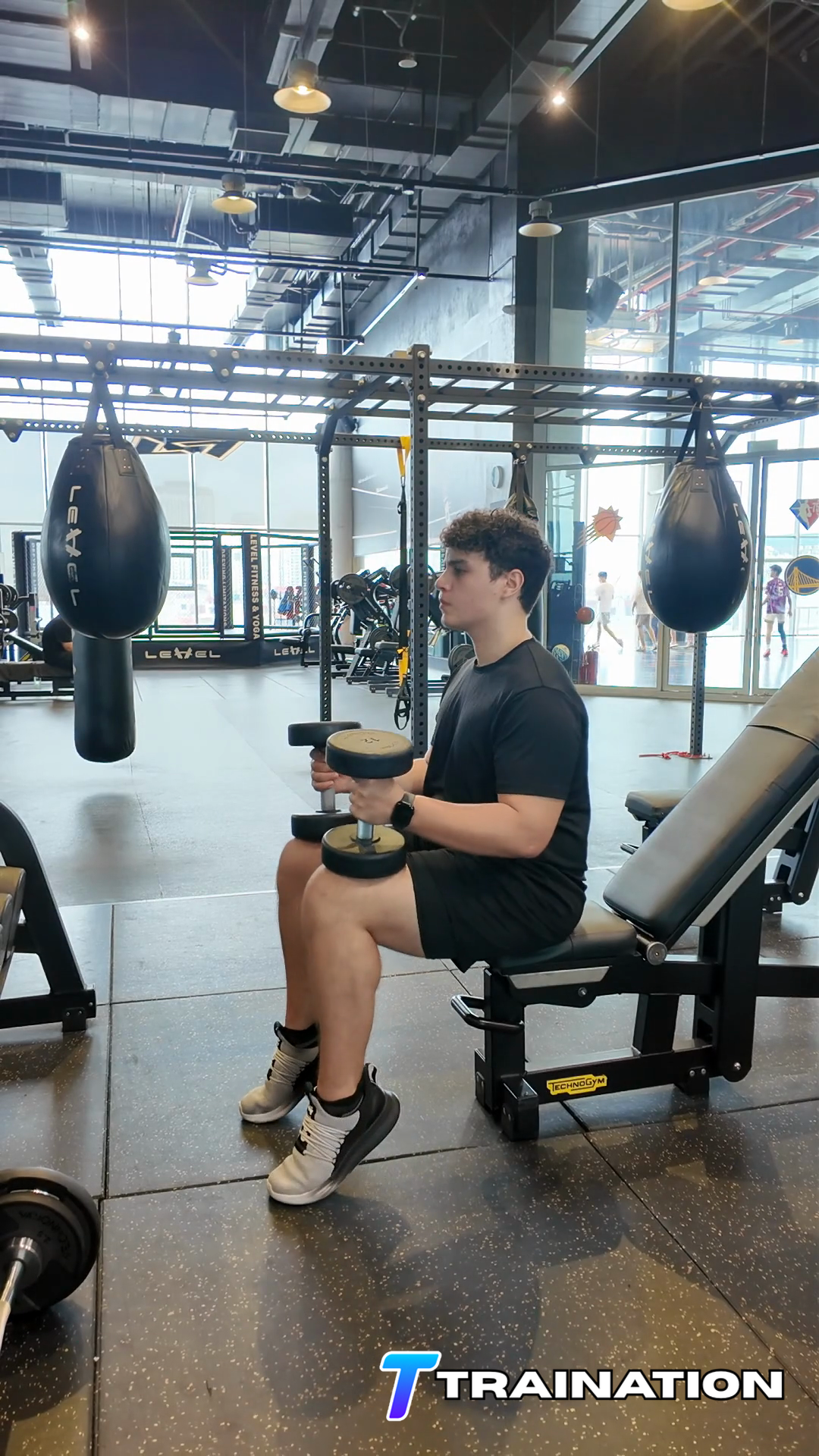
Ankles rolling outward
Keep pressure through both sides of the forefoot as the heels rise.
Train the calves by moving through a full heel raise with a brief pause at the top.
Primary musclesGastrocnemius, Soleus
Secondary musclesTibialis posterior, Foot stabilizers
Follow the sequence in order, paying attention to the starting position, movement path, and finish described in each step.
For Standing Calf Raise, stand tall with the balls of both feet planted, hold the load securely, and keep the ankles parallel.
Lower the heels through a comfortable stretch without bouncing at the bottom.
Press through the big-toe and little-toe sides of the forefoot to raise the heels as high as possible.
Keep the knees and hips still so the movement comes from the ankles rather than a body sway.
Pause briefly at the top, then lower at a steady pace while the knees and hips remain still.
Keep pressure through both sides of the forefoot as the heels rise.
Pause in a comfortable stretch instead of using the Achilles tendon like a spring.
Keep the rest of the body still so the ankles produce the movement.
Rise as high as the ankles can control and pause before lowering.
Place Standing Calf Raise near the end of lower-body training, or between upper-body sets when balance and ankle control are not compromised.
Use two to four times per week, balancing straight-knee and bent-knee calf work across the program.
| Goal | Sets | Reps or time | Rest | Effort and execution |
|---|---|---|---|---|
| Strength accessory | 2–4 | 6–10 | 75–150 sec | Leave 2–3 controlled reps in reserve |
| Muscle growth | 2–4 | 10–20 | 60–120 sec | Usually 1–3 clean reps in reserve |
Scale the movement
Hold a stable support or use an easier setup while learning the movement.
Use a shorter pain-free range and expand it only as control improves.
Slow the lowering phase without changing the start, finish, or joint alignment.
Add a brief pause at the hardest controlled position before increasing load.
Turn Standing Calf Raise and the rest of your exercise library into repeatable client programs.
Explore the workout builder