
Why Do People Pay for Personal Trainers When Workouts Are Free?
Why do clients hire personal trainers? Explore how to justify your rates, show real value, and retain clients.
Anyone can open their phone and find a free workout routine in seconds. Exercise guides, movement tutorials, and pre-made templates are everywhere.
Yet many trainers still pitch the exact same tired offer: custom workouts, accountability, and support
When a client pays good money only to receive a static workout sheet and a few hands-off check-ins, they quickly start asking: "Why is personal training so expensive?" and wondering what clients actually pay a coach for.
This tension defines the core difference between online coaching vs workout plan templates. People do not hire a trainer because exercise routines are hard to find. They hire a coach because daily life gets messy, plans fall apart, and they need an expert to eliminate the guesswork.
If someone is wondering, "Is it worth it to hire a personal trainers?" the honest answer depends entirely on what is being sold. Clients don't pay for paper sheets; they pay for what happens when real life gets in the way.

Why Workouts Are Cheap, But Choices Are Hard
Clients have access to thousands of free exercises, but they consistently get stuck on the day-to-day decisions:
Does this routine actually fit my hectic work schedule?
Why am I stalling: am I under-recovered, or just not pushing hard enough?
Should I lift heavier today, or back off and take an extra rest day?
What do I do when work travel, a sick kid, or poor sleep ruins the week?
This points directly to why do people pay for personal trainers in the first place. The coach’s job is not to dump more information on someone who already feels overwhelmed. It is to make the next clear decision so the client can simply show up, do the work, and stay consistent. That level of active decision-making is the true value of a personal trainer.
What Good Coaching Looks Like in Real Life
If your client cannot spot the difference between your coaching and a downloadable PDF, you are falling into the trap of a personal trainer selling workouts vs coaching.
True fitness coaching shows up in the daily actions:
Catching Small Details: You notice when a client skips a specific lift, struggles after high-stress days, or trains in a way that clashes with their stated goals.
Changing the Plan on the Fly: When a client gets sick, travels for work, or loses gym access, you adjust their sessions immediately to keep their momentum going.
Real Personal Training Accountability: Real accountability is not sending a random text asking "Did you work out today?" It is an agreed-upon deadline to log lifts, a predictable check-in schedule, and a quick adjustment if two workouts get missed.
Less Mental Stress: The client steps into the gym without having to overthink sets, reps, or swaps. The thinking has already been handled.
Clear Boundaries: Clients know exactly when you are available, when check-ins happen, and how fast you will reply.

How to Justify Personal Training Rates with Clear Proof
To build a solid fitness coaching value proposition and understand how to justify personal training rates, stop relying on empty promises. Show your clients exactly what they will experience:
| The Usual Promise | What the Client Actually Sees |
| Accountability | You spot missed sessions early and adjust the schedule before the entire week is lost. |
| Personalization | The client sees their check-in notes directly change next week's exercises. |
| Support | The client knows the exact day, time, and way you review their training. |
| Form Coaching | You spot a problem, give one clear cue, and verify the fix on their next set. |
| Flexibility | The workout changes smoothly whenever life, travel, or energy shifts. |
Better Ways to Describe Your Offer
Ditch the generic buzzwords and describe your direct actions instead:
Instead of: "Personalized online coaching designed around your goals."
Try: "Your plan changes whenever your schedule, gear, or stress levels shift. You will never get a pre-made template with your name pasted on top."
Instead of: "I’ll keep you accountable."
Try: "If you miss two workouts, we don't wait weeks to talk. We check what happened within 48 hours and fix the plan so you stay on track."
Instead of: "Support and progress tracking."
Try: "Every week, I review your training log, tell you what changed, explain why, and give you your exact next steps."
Why Real Lasting Results Take Years, Not Weeks.
When answering why pay for a personal trainer, coaches need to address the real elephant in the room: the idea that anyone can change their body permanently in an eight-week or twelve-week sprint.
Building meaningful strength, changing body composition, and dialing in sustainable nutrition takes years of patient, repeated effort. If someone could simply "learn the basics" from a quick guide and see lasting results, they would have done it already.
When a prospective client is looking for a coach, it means their own personal efforts have hit a wall.
The last thing they need is another generic workout plan; they need an expert to look at their situation and say: "This is why what you've been doing isn't working, and here is the exact plan for you to move forward."
Achieving long-term transformation requires sticking with a process through life transitions, schedule chaos, and motivation dips. That kind of endurance demands more than good intentions, it requires a dependable structure.

Delivering a Premium Experience: Why the Right App Justifies Higher Rates
When clients ask, "Why is personal training so expensive?",they are weighing the overall experience against the price tag.
Handing someone a paper log, sending a generic PDF, or juggling communication across text messages and emails feels like an amateur operation.
An organized, high-touch environment where the value is felt every single day, not just during scheduled calls or sessions creates trust and builds authority.
Using a dedicated app for personal trainers elevates the client experience from a transactional exchange into an all-inclusive service.
Here is how centralizing your coaching inside one system proves its value daily:
Real-Time Progress Tracking: When clients can record weights, log repetitions, track body measurements, and watch their personal records update in real time, progress becomes real! Clear charts and milestone badges give clients tangible proof that the plan is working, reinforcing why their investment is paying off.
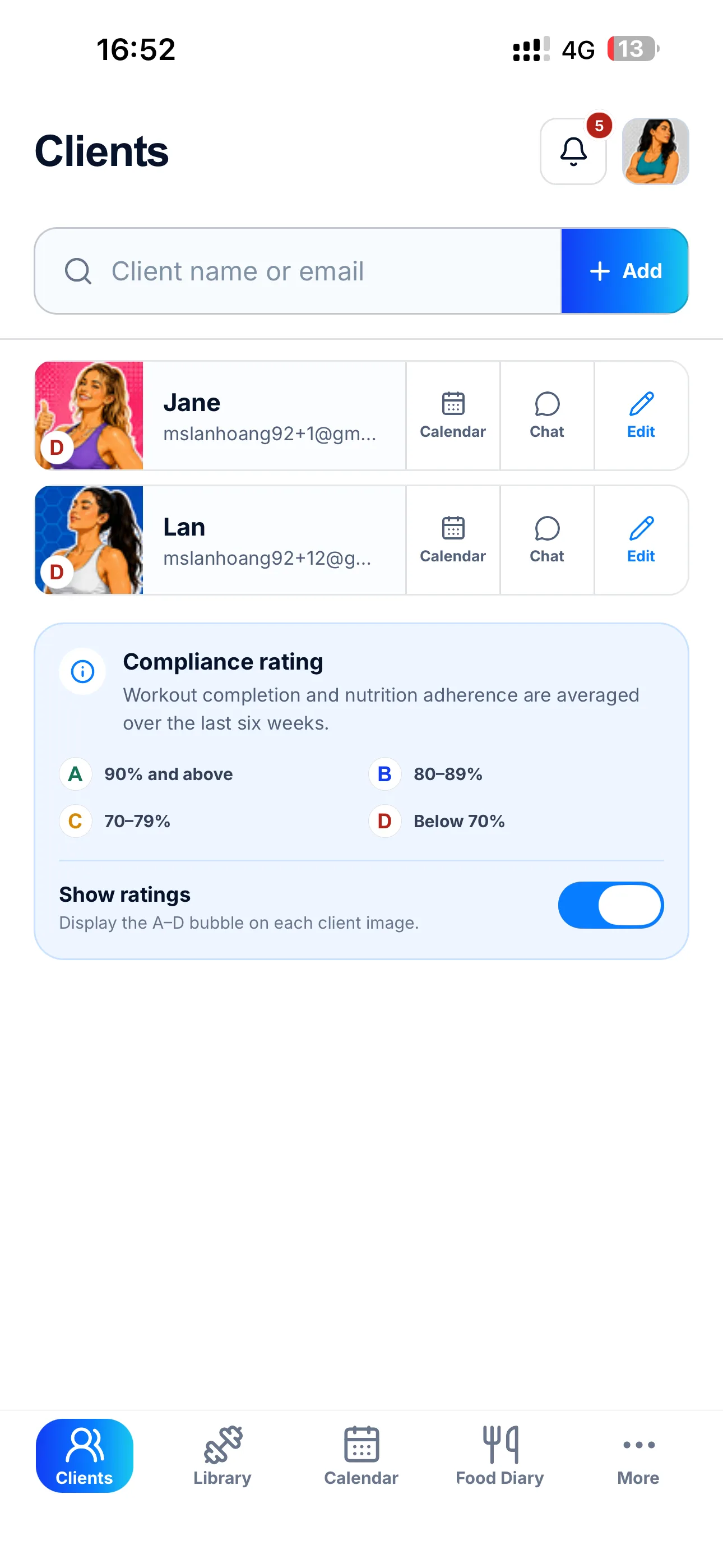
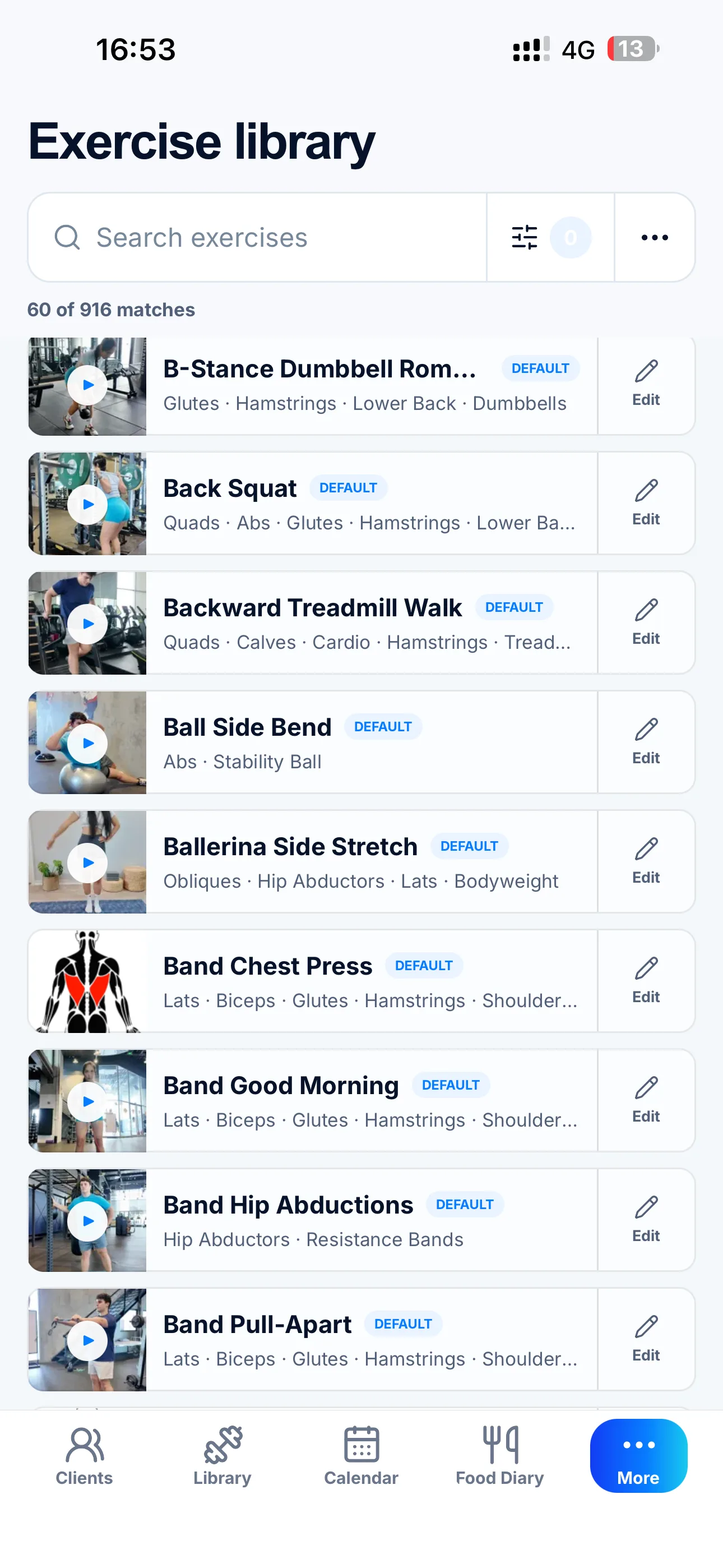
On-Demand Exercise Video Demos: Nothing creates anxiety like standing in a crowded gym trying to decipher exercise shorthand. Having crystal-clear form demonstrations built directly into each workout removes friction, builds confidence, and ensures exercises are performed safely without leaving the client to guess.
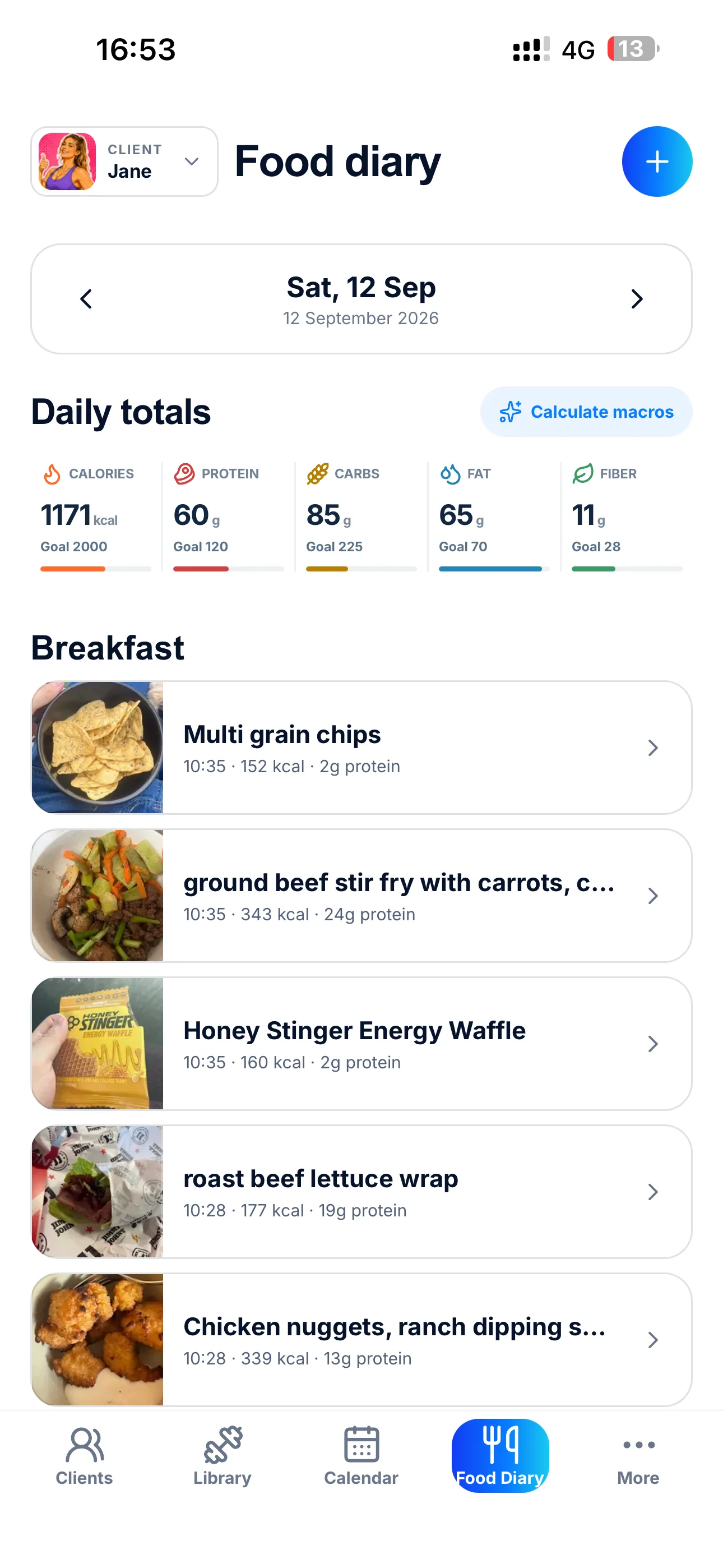
Integrated Food & Nutrition Logging: Nutrition is where most client goals either succeed or fail. Integrating food logs and macronutrient targets within the same app as their workouts gives coaches complete context over client recovery and energy levels, eliminating the headache of syncing separate third-party trackers.
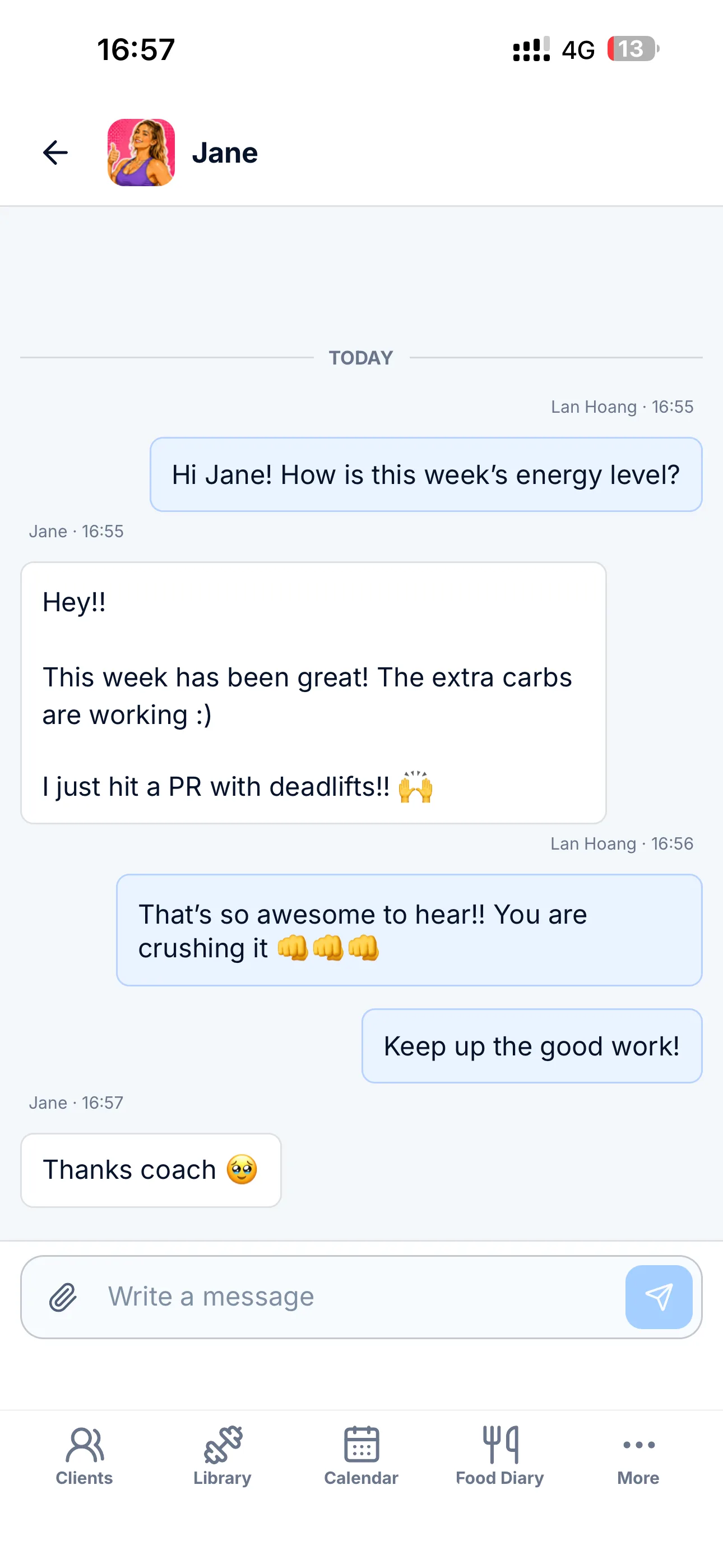
Direct, Centralized Coach Messaging: Giving clients a clean, professional channel to ask questions, share form check videos, and receive voice notes keeps communication structured. It provides clients with the reassurance of ongoing access while maintaining healthy boundaries for the coach, no lost messages across social media DMs or late-night text threads.
When clients have their workouts, form checks, nutrition data, and coach access organized neatly in their pocket, the entire relationship changes. It transforms personal training from an expensive, one-off service into an essential, premium operating system for their everyday health.
Building a Long-Term System with Traination
To deliver that level of consistency, modern coaches cannot rely on messy spreadsheets or scattered text messages. While there are dozens of generic apps for personal trainers on the market, most simply act as digital workout binders rather than true coaching tools.
Traination is built differently as a dedicated online software for personal trainers. It bridges the gap between client adherence and coach intervention, giving fitness professionals an app for personal trainers that makes every decision visible.
By tracking compliance trends, logging program updates, and attaching clear reasoning to every workout adjustment, Traination gives clients a reliable system they can stick to long enough to see true, permanent results.
Want early access to Traination?
Join the beta list to try new features early and help shape the app for coaches.