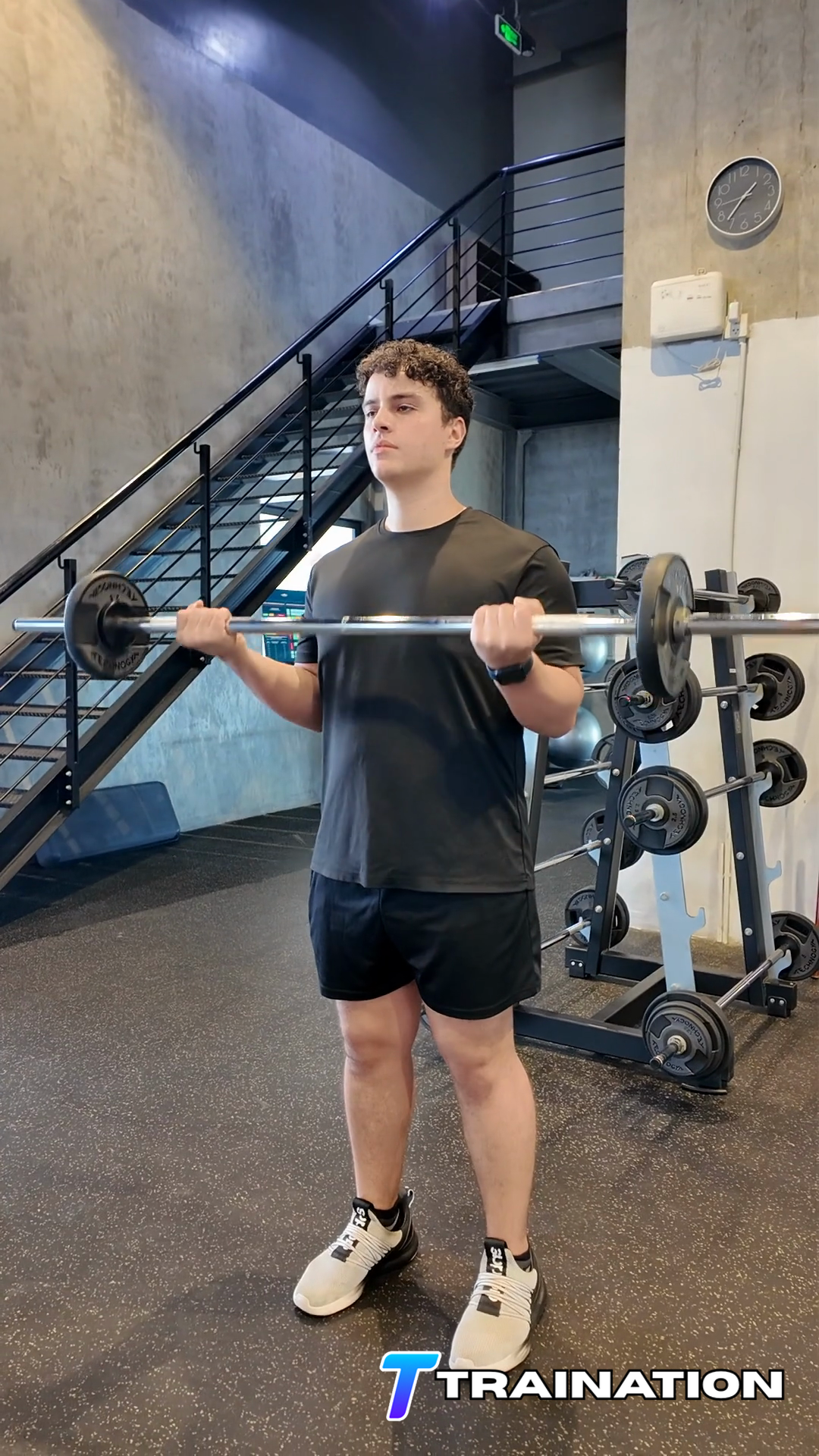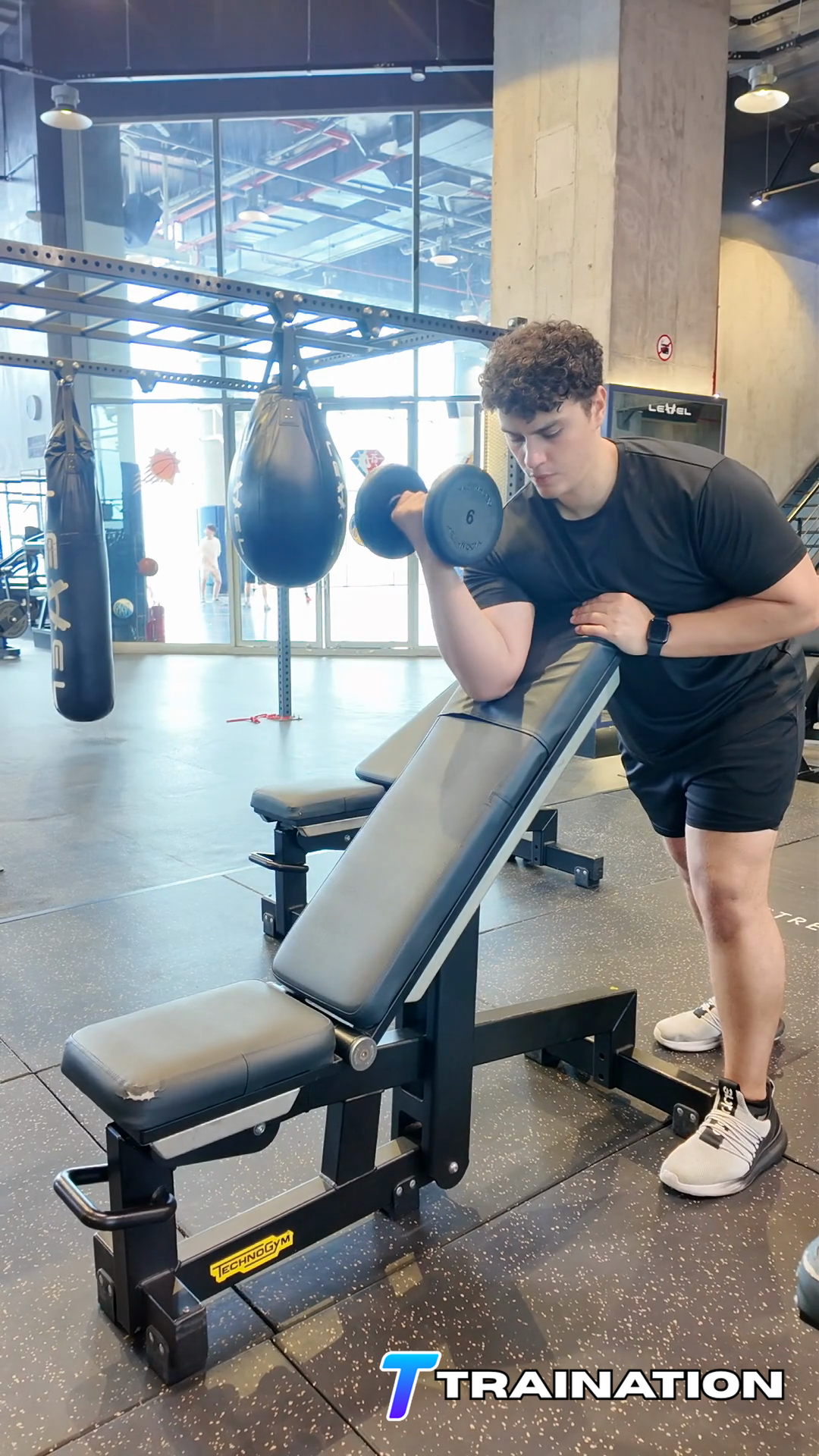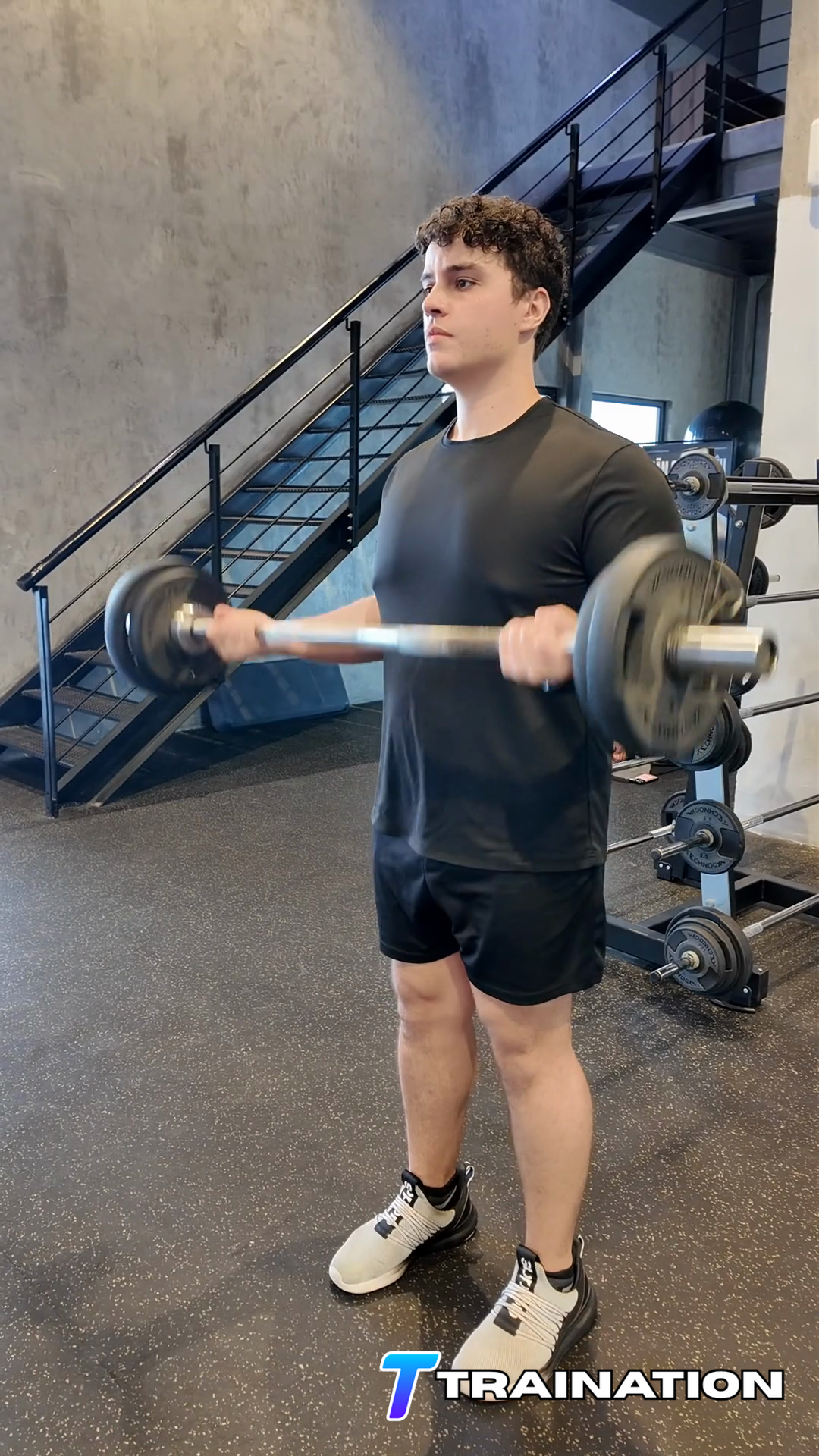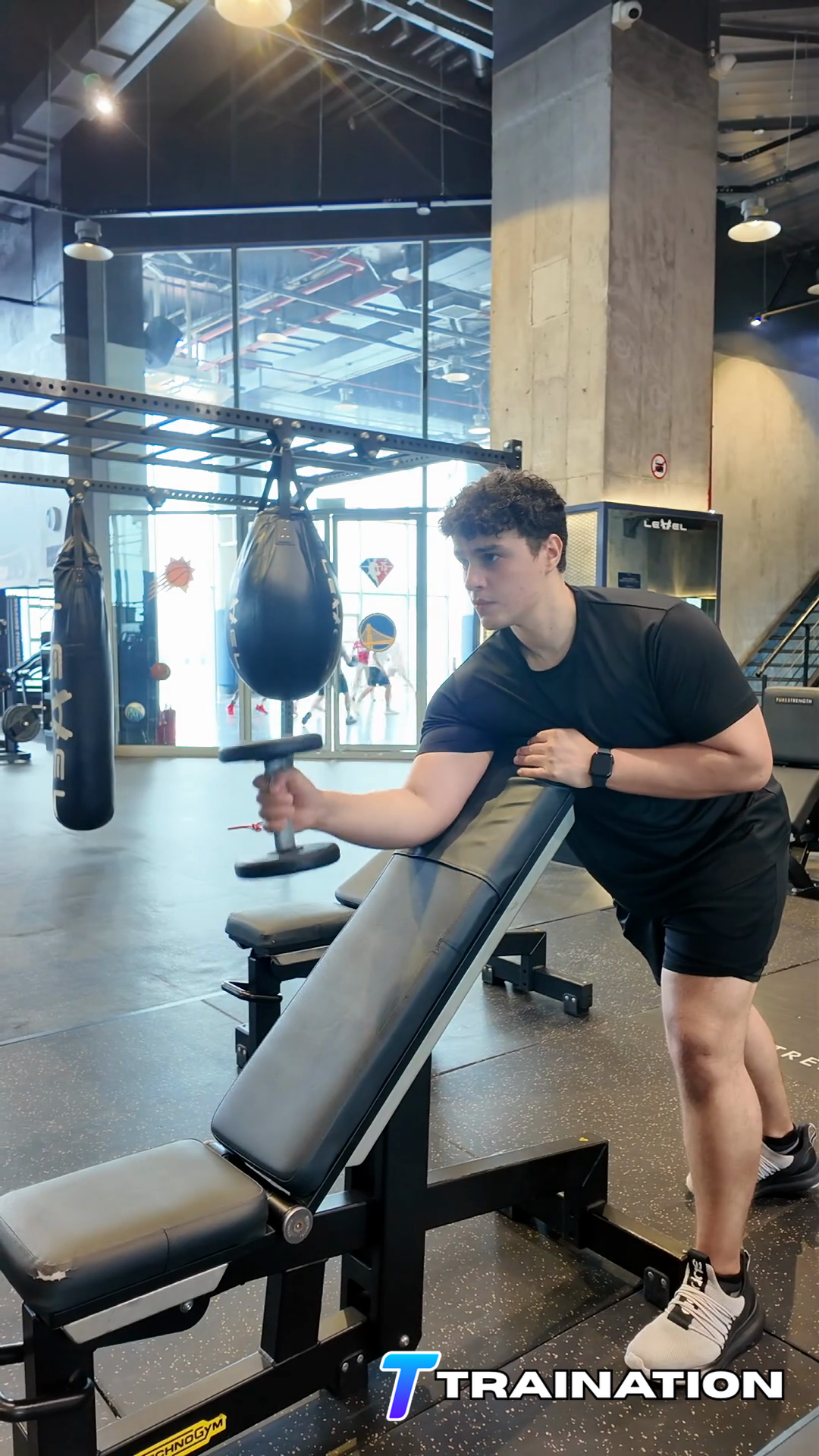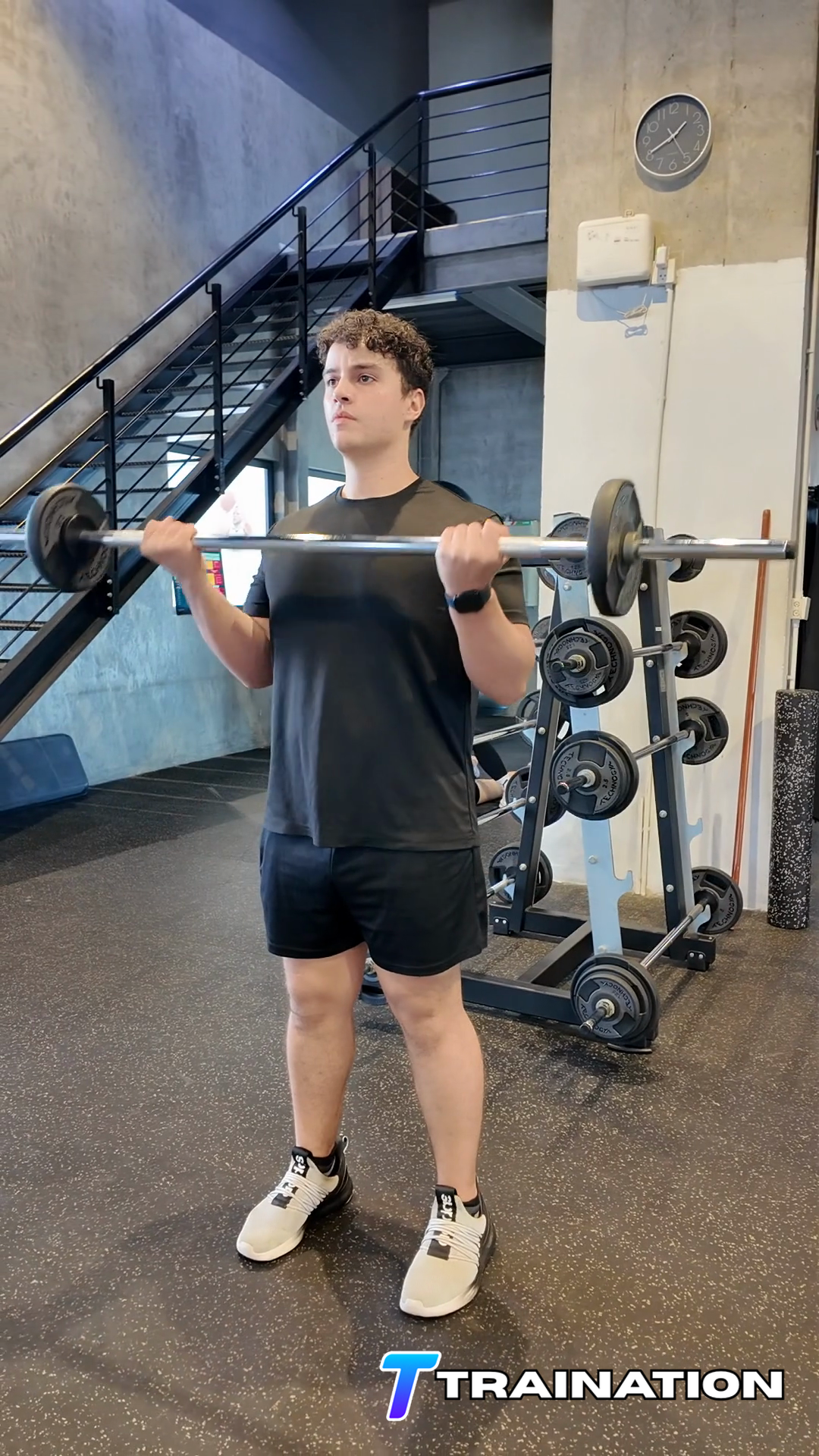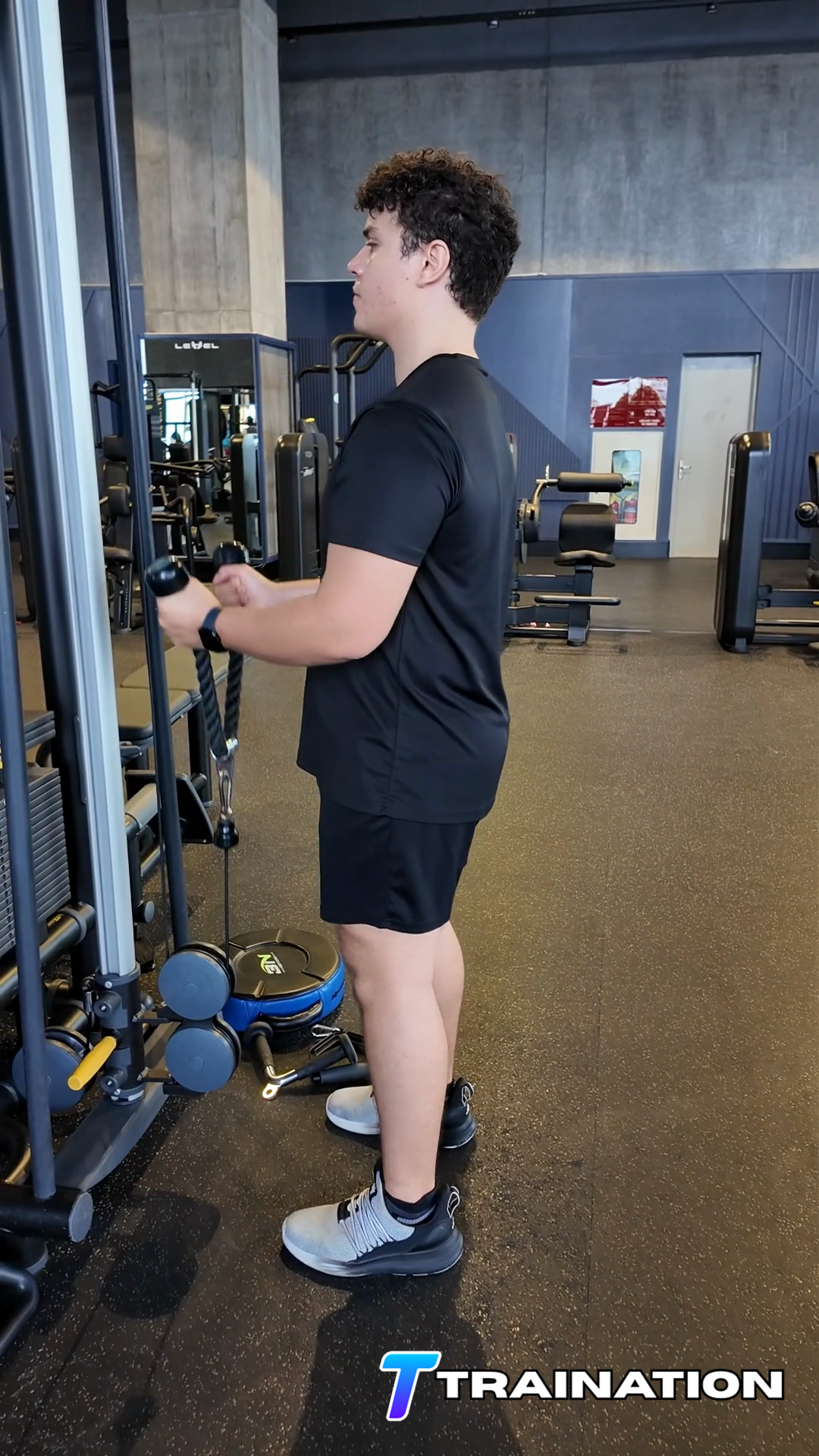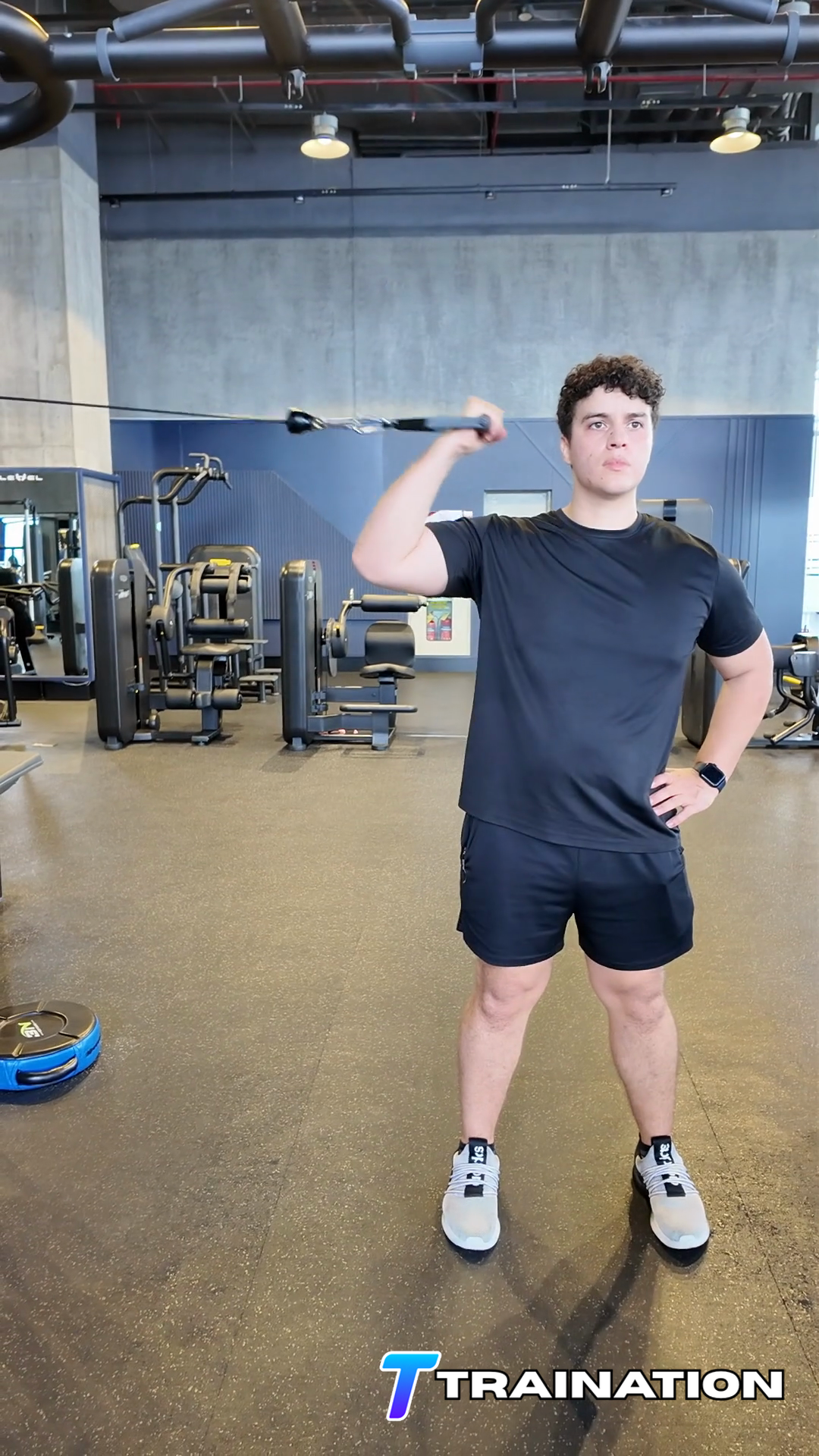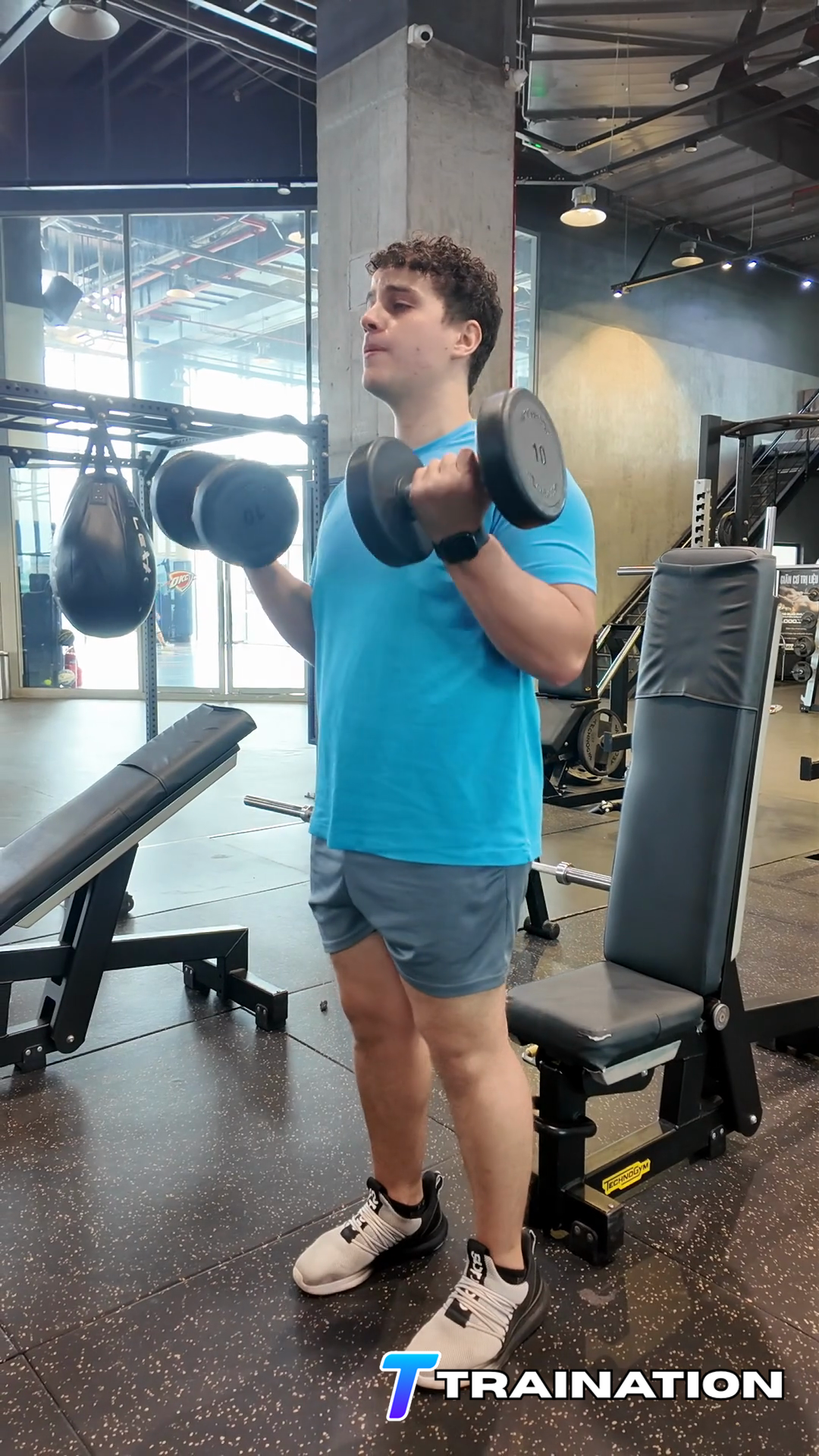
Using too much resistance
Reduce the load or difficulty when Dumbbell Bicep Curl To Shoulder Press cannot be completed through a controlled range.
Dumbbell Bicep Curl To Shoulder Press combines a controlled curl with an overhead press to train the biceps, shoulders, and triceps in sequence.
Primary musclesBiceps brachii, Deltoids
Secondary musclesBrachialis, Brachioradialis, Triceps brachii, Upper trapezius
Follow the sequence in order, paying attention to the starting position, movement path, and finish described in each step.
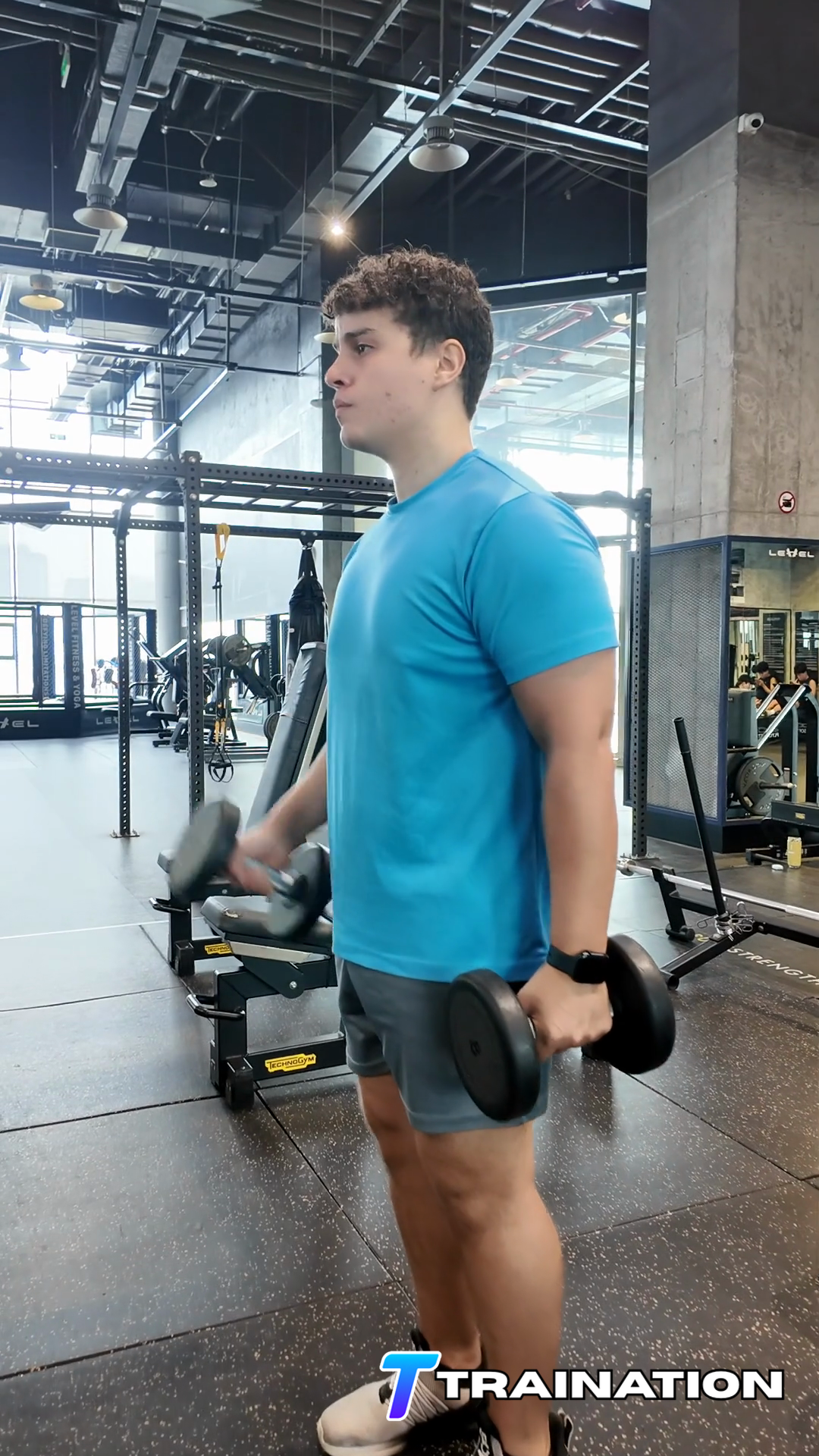
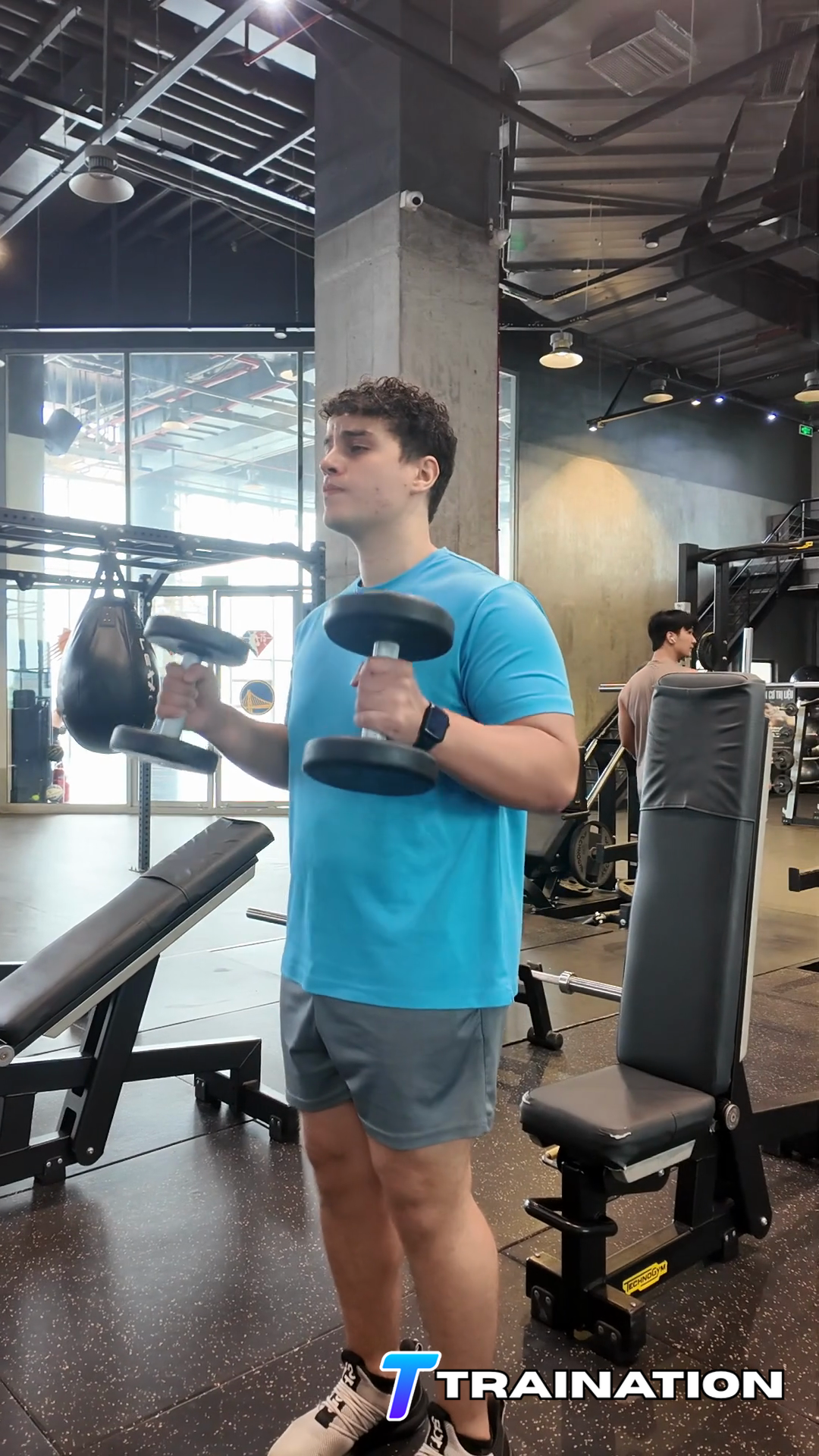
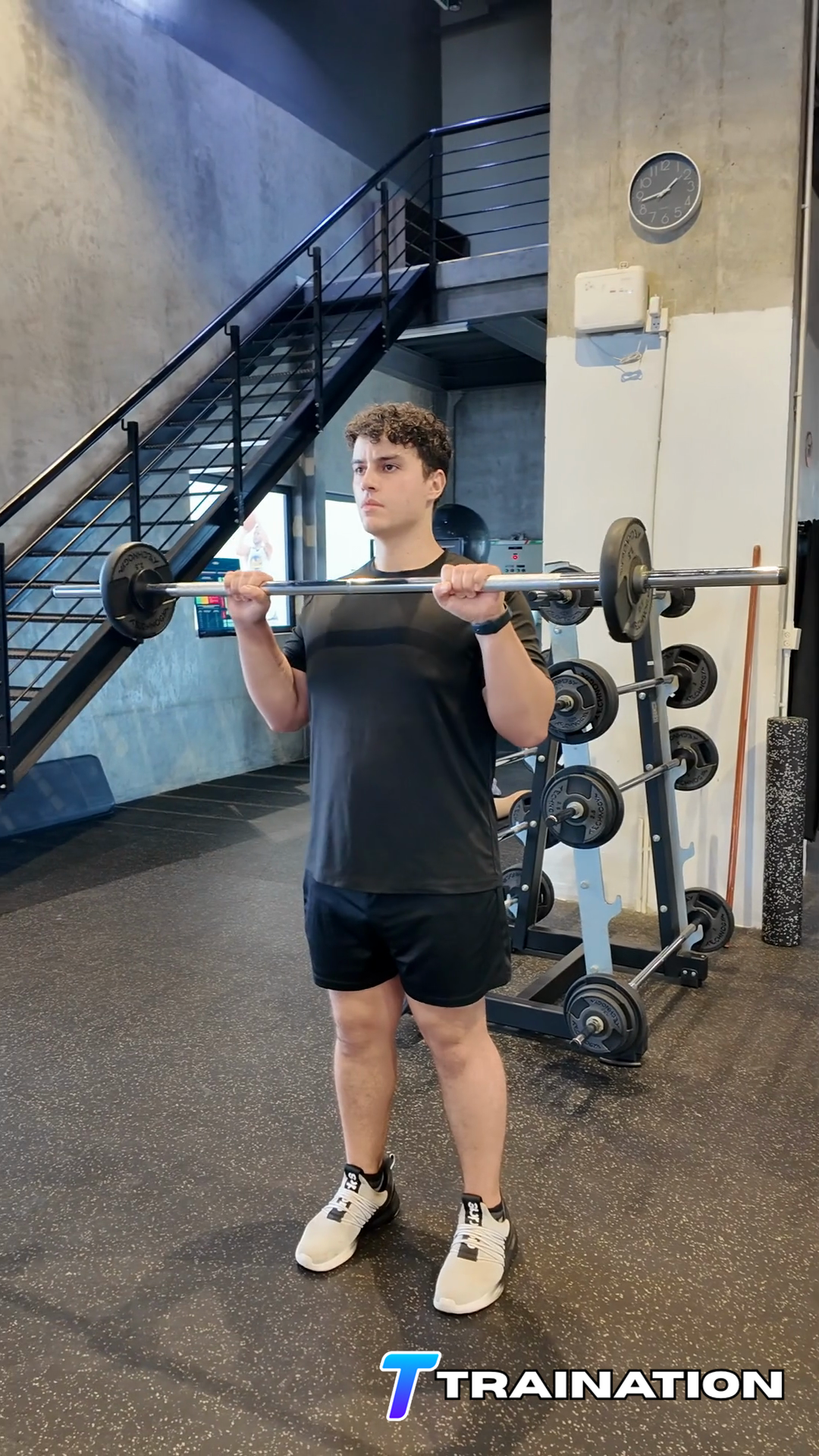
For Dumbbell Bicep Curl To Shoulder Press, stand tall with a dumbbell in each hand, palms forward or neutral, and keep the elbows close to the sides.
Brace the trunk and keep the ribs stacked over the pelvis before the arms begin to move.
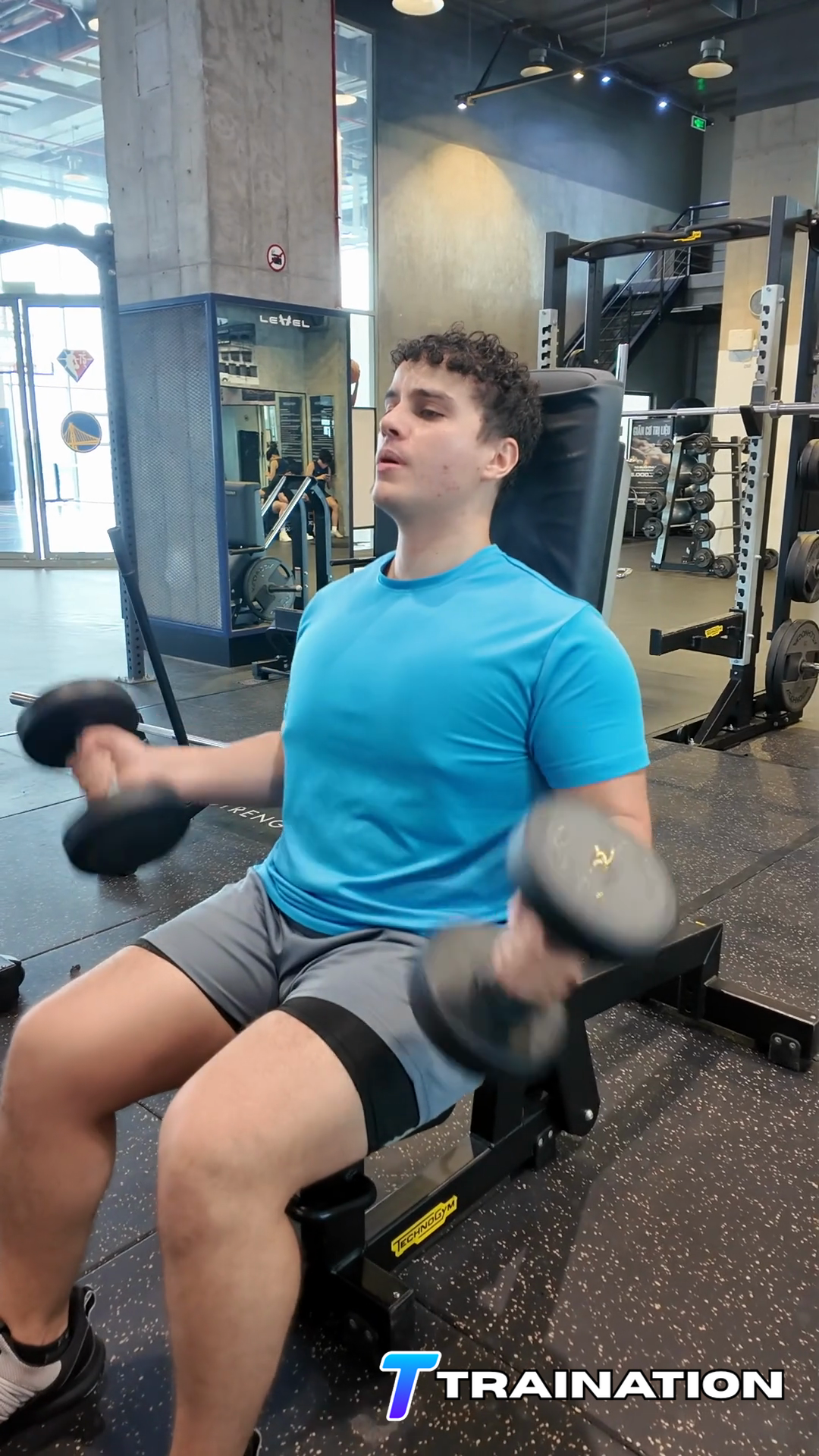
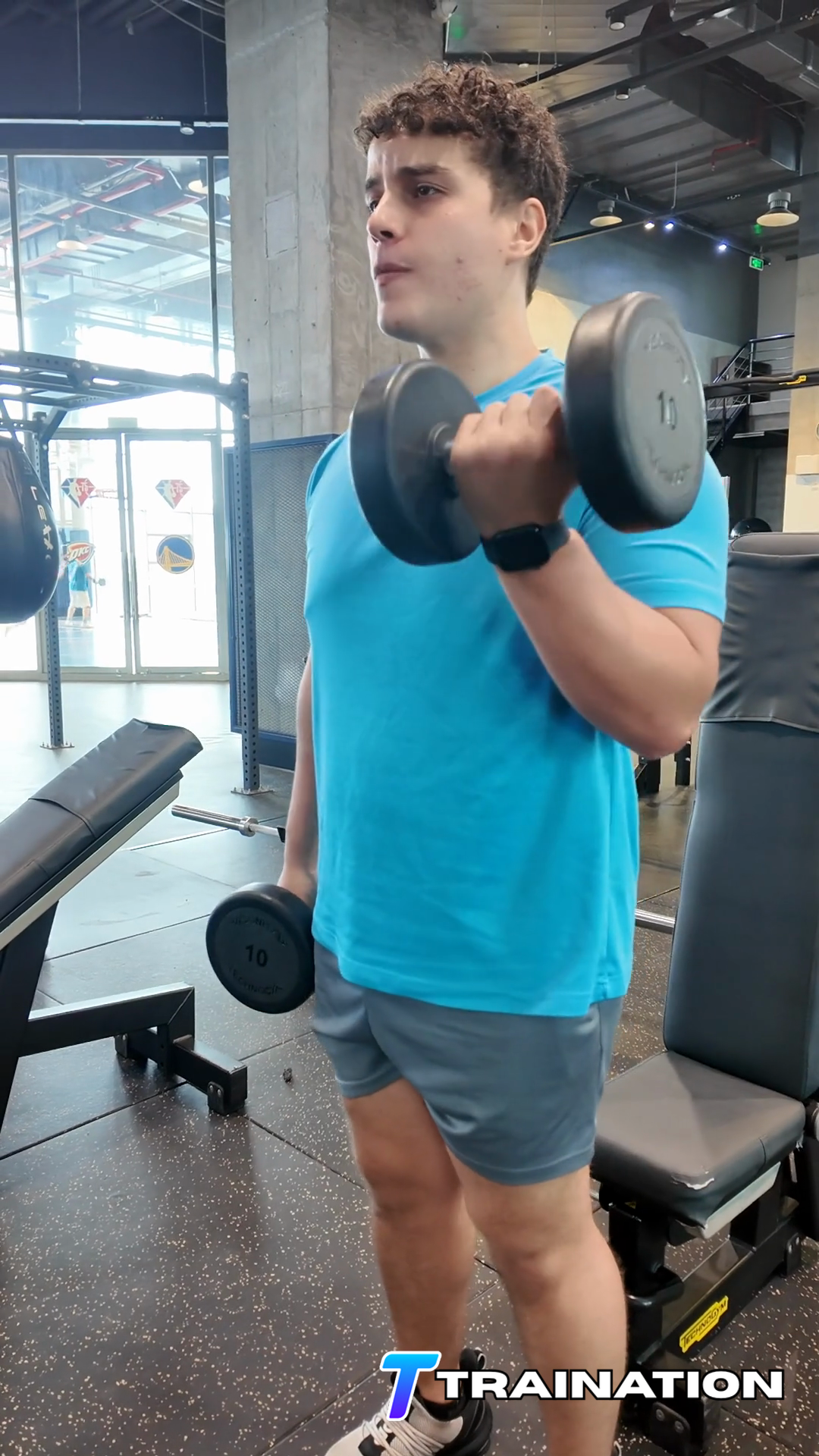
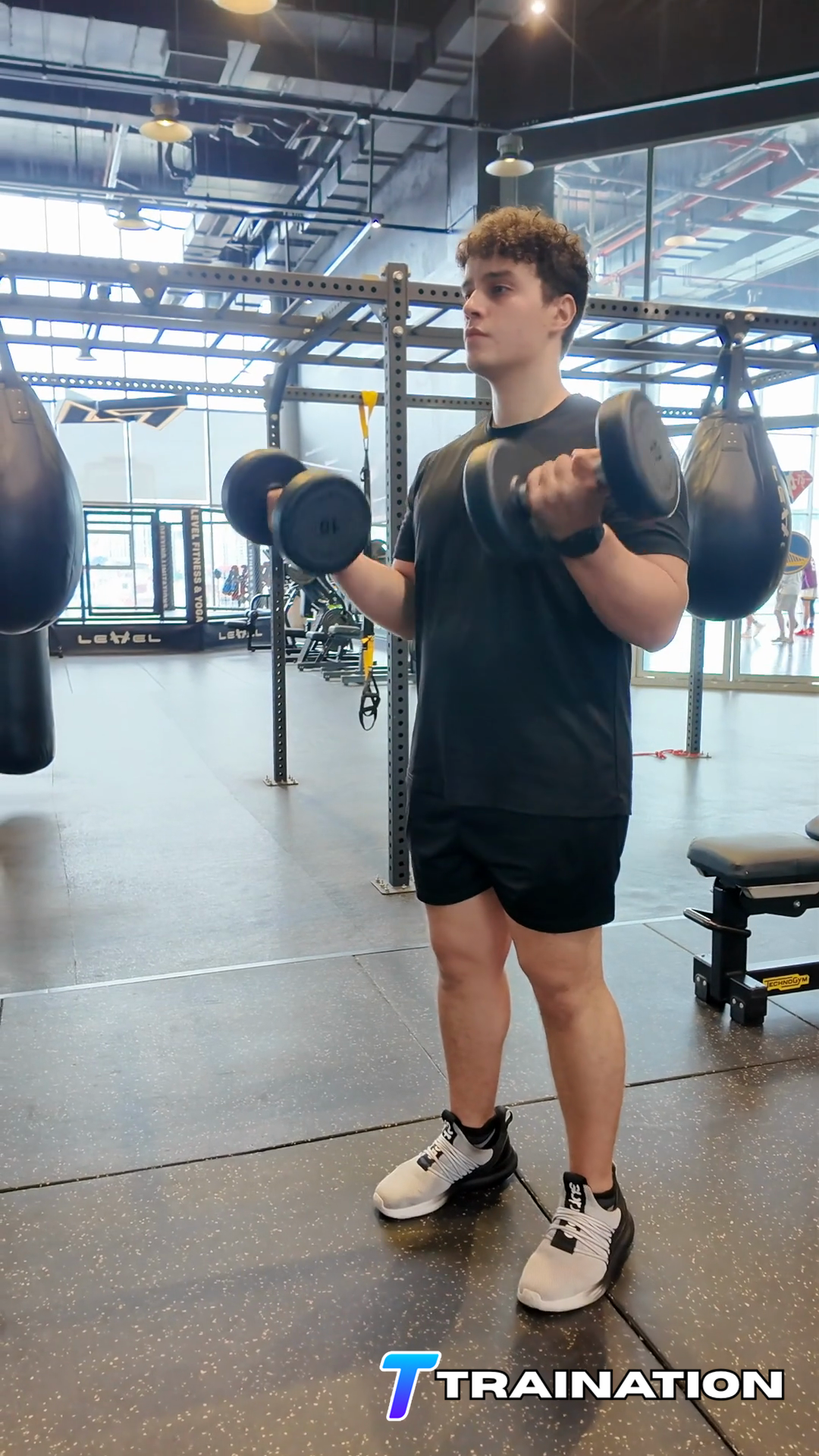
Curl the dumbbells to the shoulders without swinging the torso or driving the elbows forward.
From the stable shoulder position, brace the ribs and press both dumbbells overhead until the arms are comfortably extended.
Lower to the shoulders first, then uncurl the dumbbells to the sides before beginning the next repetition.
Reduce the load or difficulty when Dumbbell Bicep Curl To Shoulder Press cannot be completed through a controlled range.
Keep the supported parts of the body still and move slowly enough to stay in control.
Stop before balance, posture, or joint alignment changes.
Control both phases instead of allowing the resistance or body weight to take over.
Place Dumbbell Bicep Curl To Shoulder Press in the middle of a full-body session or a technique circuit after each component has been learned separately.
Use once or twice per week when the combination directly supports the program; otherwise train the component movements separately.
| Goal | Sets | Reps or time | Rest | Effort and execution |
|---|---|---|---|---|
| Technique | 2–4 | 4–6 | 90–150 sec | Use the load the weakest component controls |
| Full-body accessory | 2–4 | 6–10 | 90–180 sec | Keep 2–3 clean reps in reserve |
Scale the movement
Hold a stable support or use an easier setup while learning the movement.
Use a shorter pain-free range and expand it only as control improves.
Slow the lowering phase without changing the start, finish, or joint alignment.
Add a brief pause at the hardest controlled position before increasing load.
Turn Dumbbell Bicep Curl To Shoulder Press and the rest of your exercise library into repeatable client programs.
Explore the workout builder