Chasing speed after form changes
Reduce the pace when knee-drive height, shoulder position, or trunk control deteriorates.
Mountain Climbers is a conditioning drill that builds coordination, repeatable speed, and whole-body stamina.
Primary musclesIliopsoas, Rectus abdominis, Quadriceps
Secondary musclesShoulders, Triceps brachii, Obliques, Calves
Follow the sequence in order, paying attention to the starting position, movement path, and finish described in each step.
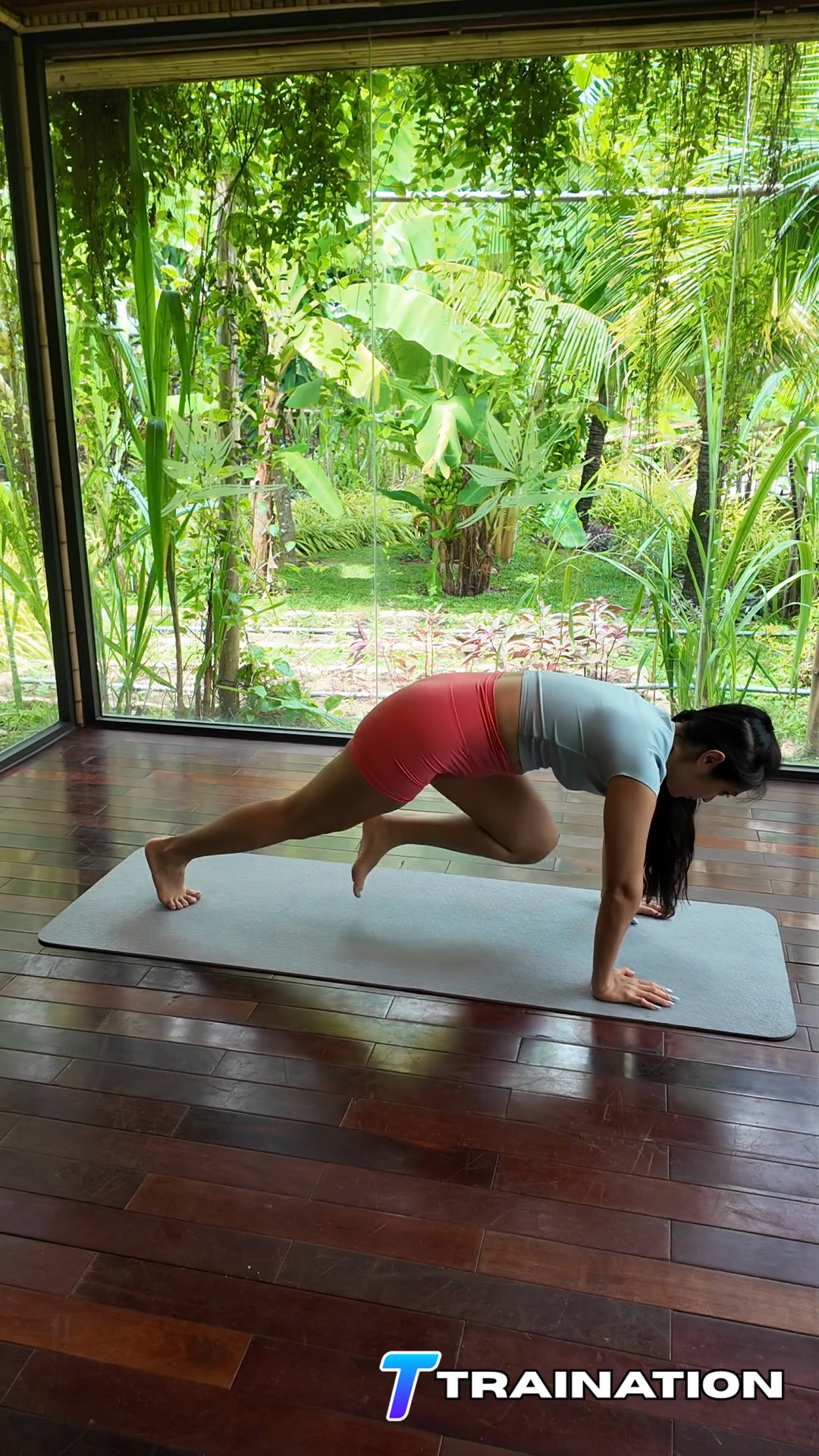
Begin in a high plank with the hands below the shoulders and the body in a straight line from head to heels.
Brace the trunk and drive one knee toward the chest without lifting the hips or rounding the shoulders.
Return that foot as the opposite knee comes forward, keeping both hands planted and the pelvis level.
Alternate at the fastest pace that preserves the plank position and keeps the shoulders steady.
Slow the feet before ending the interval and lower the knees under control.
Reduce the pace when knee-drive height, shoulder position, or trunk control deteriorates.
Use the first interval to establish a repeatable pace instead of sprinting immediately.
Keep each knee drive reaching the same controlled height throughout the interval.
Decelerate under control and regain steady breathing before walking away from the station.
Place Mountain Climbers after technical strength or power work, in a dedicated conditioning block, or in a separate conditioning session.
Use one to three times per week according to the rest of the program's impact and conditioning load.
| Goal | Sets | Reps or time | Rest | Effort and execution |
|---|---|---|---|---|
| Technique / warm-up | 2–4 | 10–20 sec | 40–60 sec | Easy pace with identical repetitions |
| Conditioning | 4–8 | 20–40 sec | 40–90 sec | Hard but repeatable; stop before form changes |
| Circuit station | 2–5 rounds | 15–30 sec | By circuit design | Leave enough reserve for the next station |
Scale the movement
Reduce pace and shorten work periods while preserving the complete movement pattern.
Choose a walking, marching, or smaller-range version when impact or coordination limits technique.
Add a small amount of work time before trying to move faster.
Reduce rest gradually only when pace and range remain repeatable across all rounds.
Turn Mountain Climbers and the rest of your exercise library into repeatable client programs.
Explore the workout builder