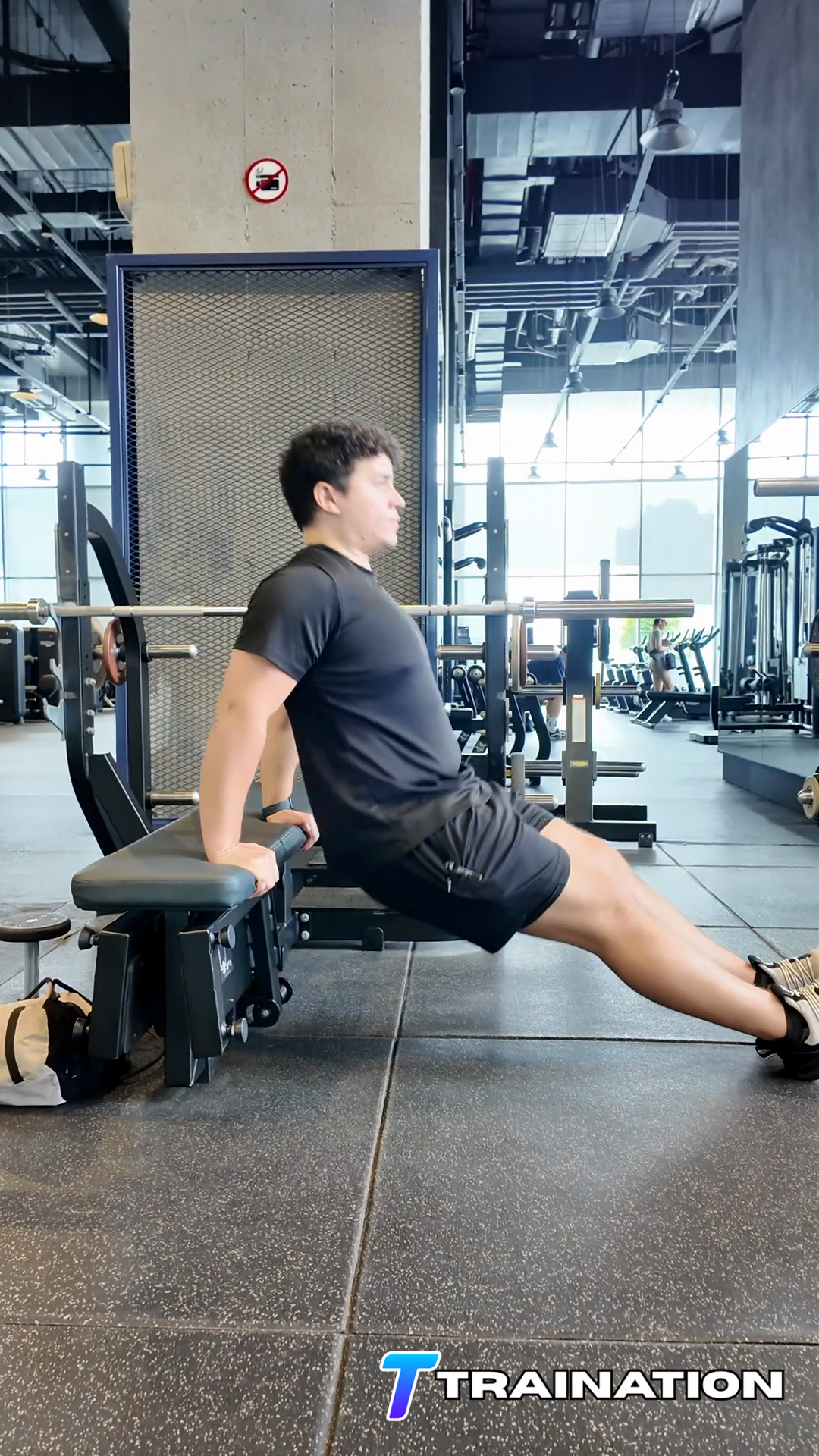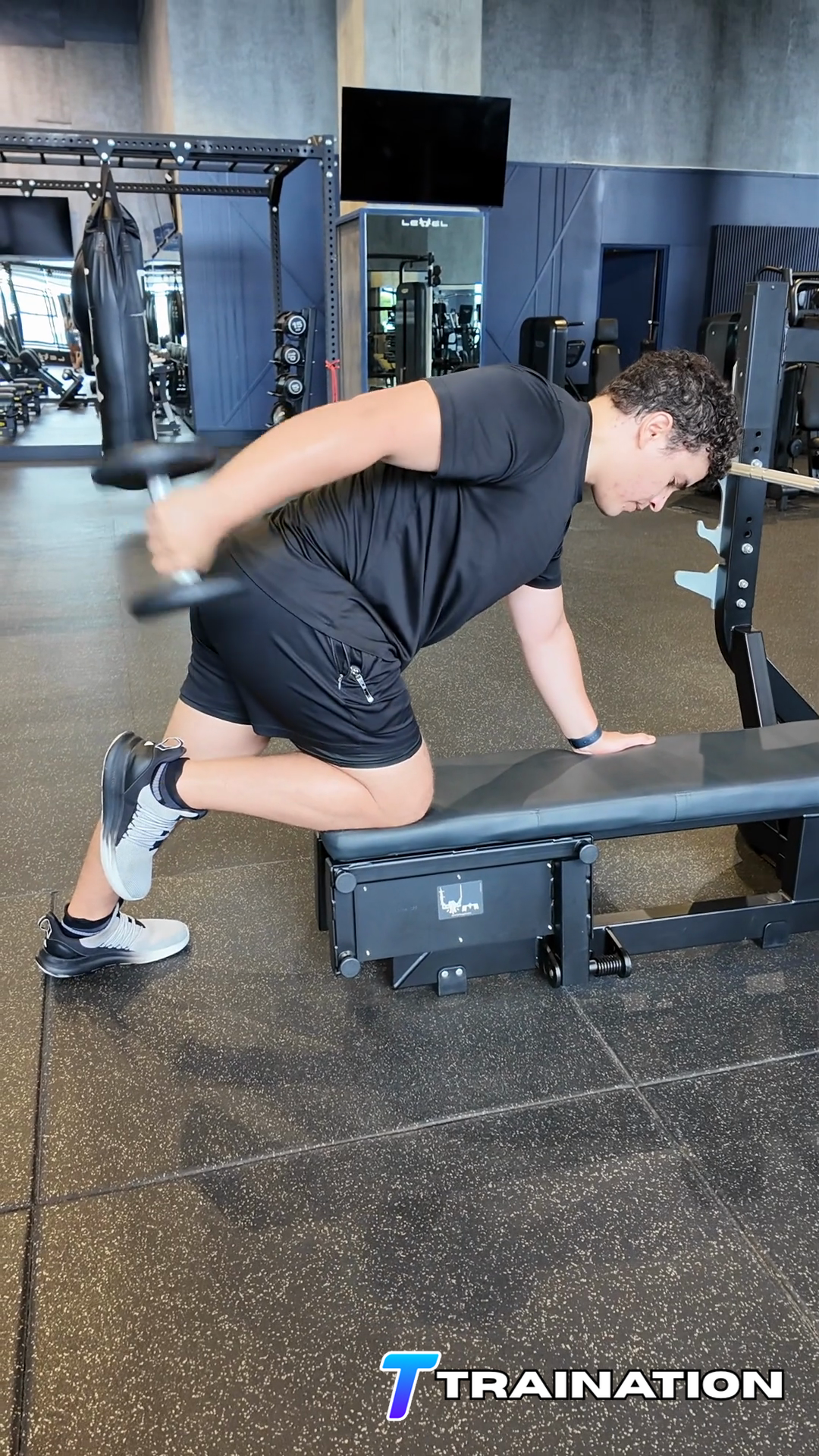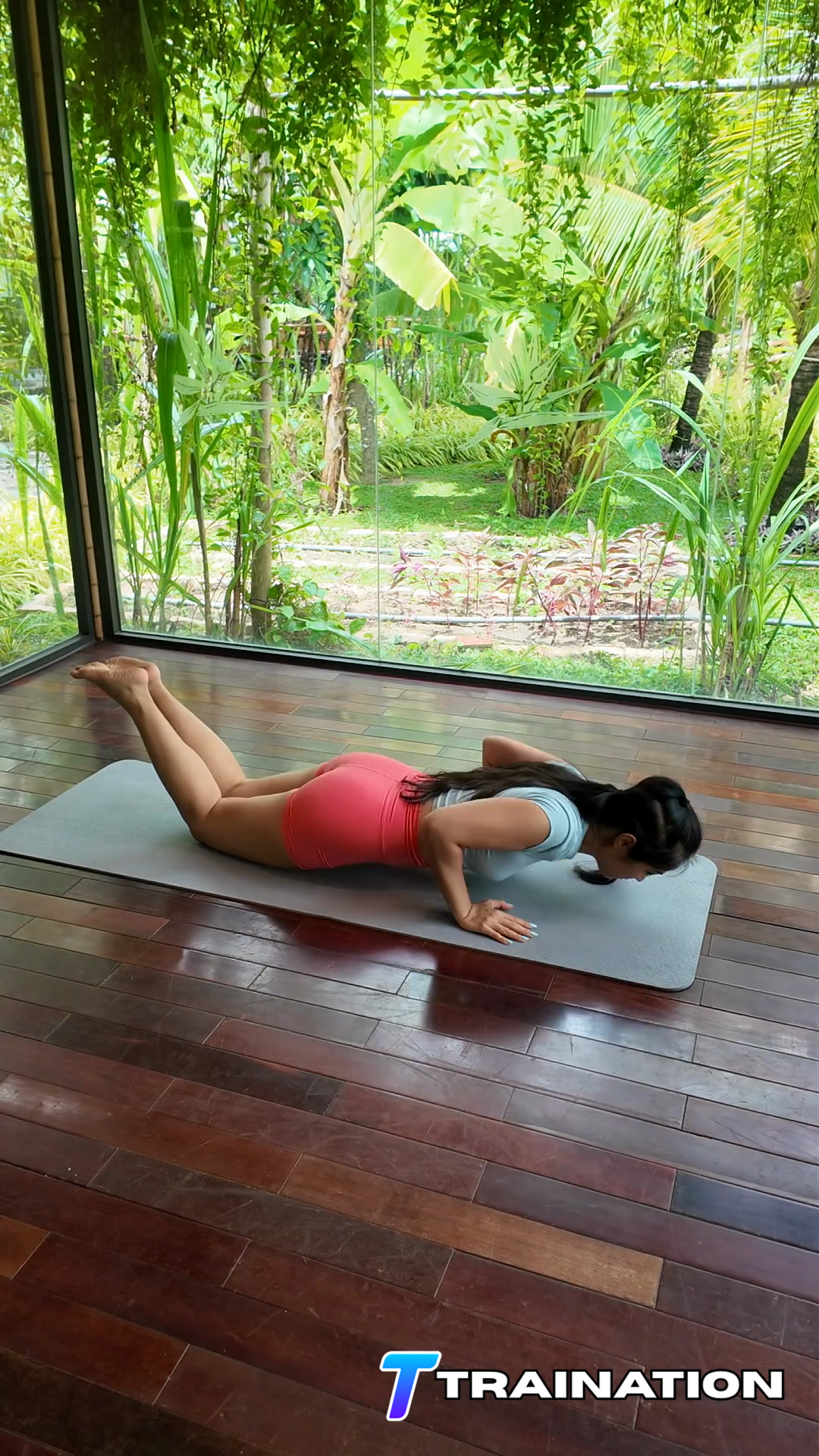
Wrists folding backward
Keep each wrist aligned with the forearm and maintain even pressure through both handles.
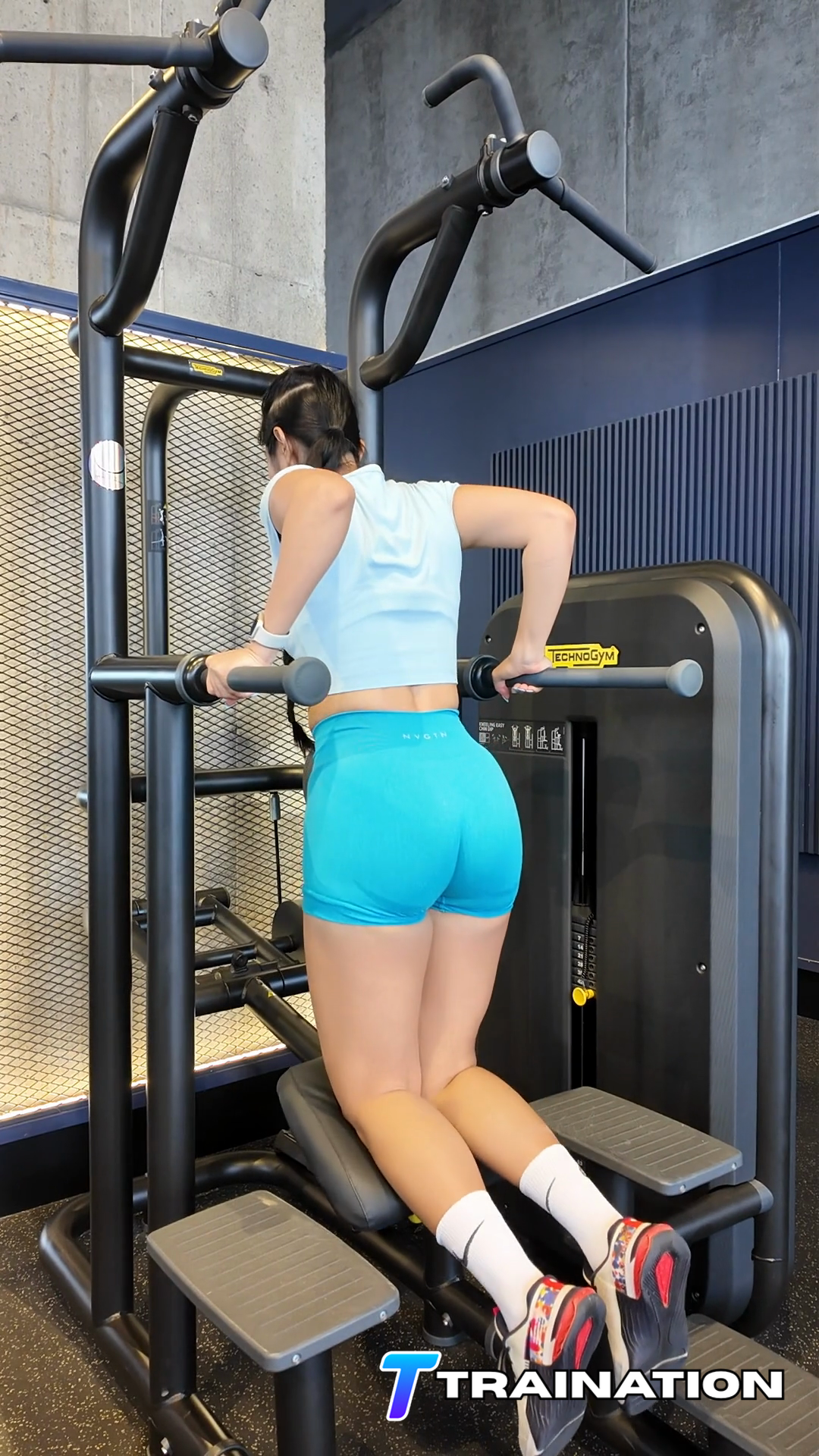
Assisted Dips trains the triceps, chest, and front shoulders by lowering and pressing the body between or in front of fixed supports.
Primary musclesTriceps brachii
Secondary musclesPectoralis major, Anterior deltoids
Follow the sequence in order, paying attention to the starting position, movement path, and finish described in each step.
Set enough machine assistance to support a controlled full range, then kneel or stand on the assistance platform and grasp the parallel handles.
Begin in a tall support with straight arms, shoulders down, and the torso braced.
Bend the elbows and lower the body between the handles while keeping the forearms close to vertical.
Stop at the deepest comfortable shoulder position, then press through the handles to straighten the elbows.
Finish tall without shrugging, and step off only after the assistance platform has returned under control.
Keep each wrist aligned with the forearm and maintain even pressure through both handles.
Use a comfortable diagonal elbow angle that keeps the forearms aligned with the handles.
Select enough assistance to control the full range while still requiring the triceps to press the body upward.
Stop before the shoulders roll forward or drop below the depth you can control.
Use Assisted Dips early in a workout focused on triceps, or early in a full-body workout, when strength or technical progress is the priority; place it later when it supplies secondary volume.
Use one to three times per week as part of training the relevant muscle groups at least twice weekly; the same exercise does not need to appear in every session.
| Goal | Sets | Reps or time | Rest | Effort and execution |
|---|---|---|---|---|
| Strength | 2–4 | 3–6 | 2–4 min | Heavy, usually 2–3 clean reps in reserve |
| Muscle growth | 2–4 | 6–12 | 90–180 sec | Usually 1–3 clean reps in reserve |
Scale the movement
Increase the machine assistance until the full dip range stays controlled without shoulder shrugging.
Use a high stable surface to practise triceps-led pressing with less body weight.
Reduce assistance by one machine increment after every repetition uses the same depth and shoulder position.
Move to bodyweight only after the assisted version is repeatable without swinging or dropping into the shoulders.
Turn Assisted Dips and the rest of your exercise library into repeatable client programs.
Explore the workout builder