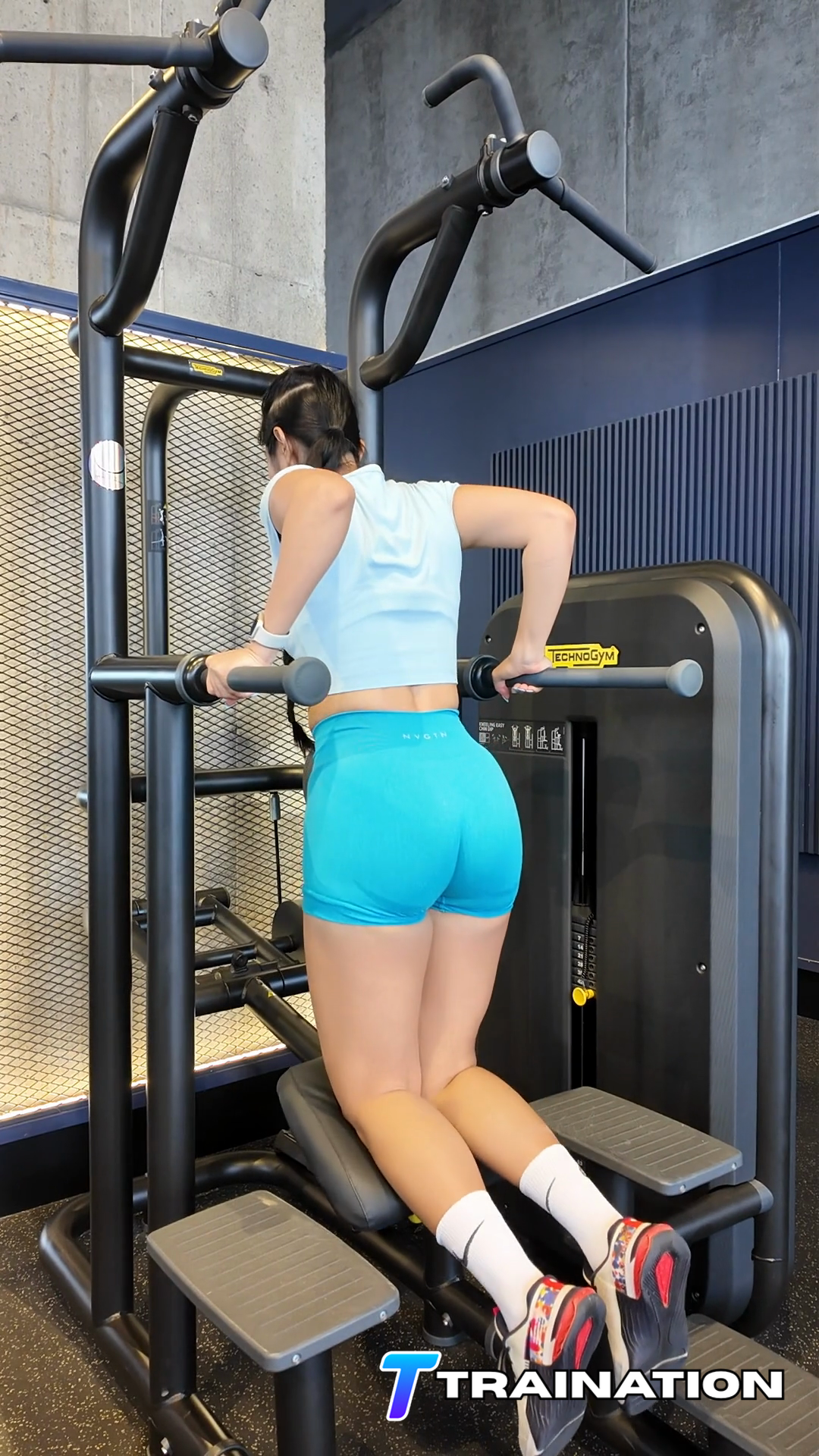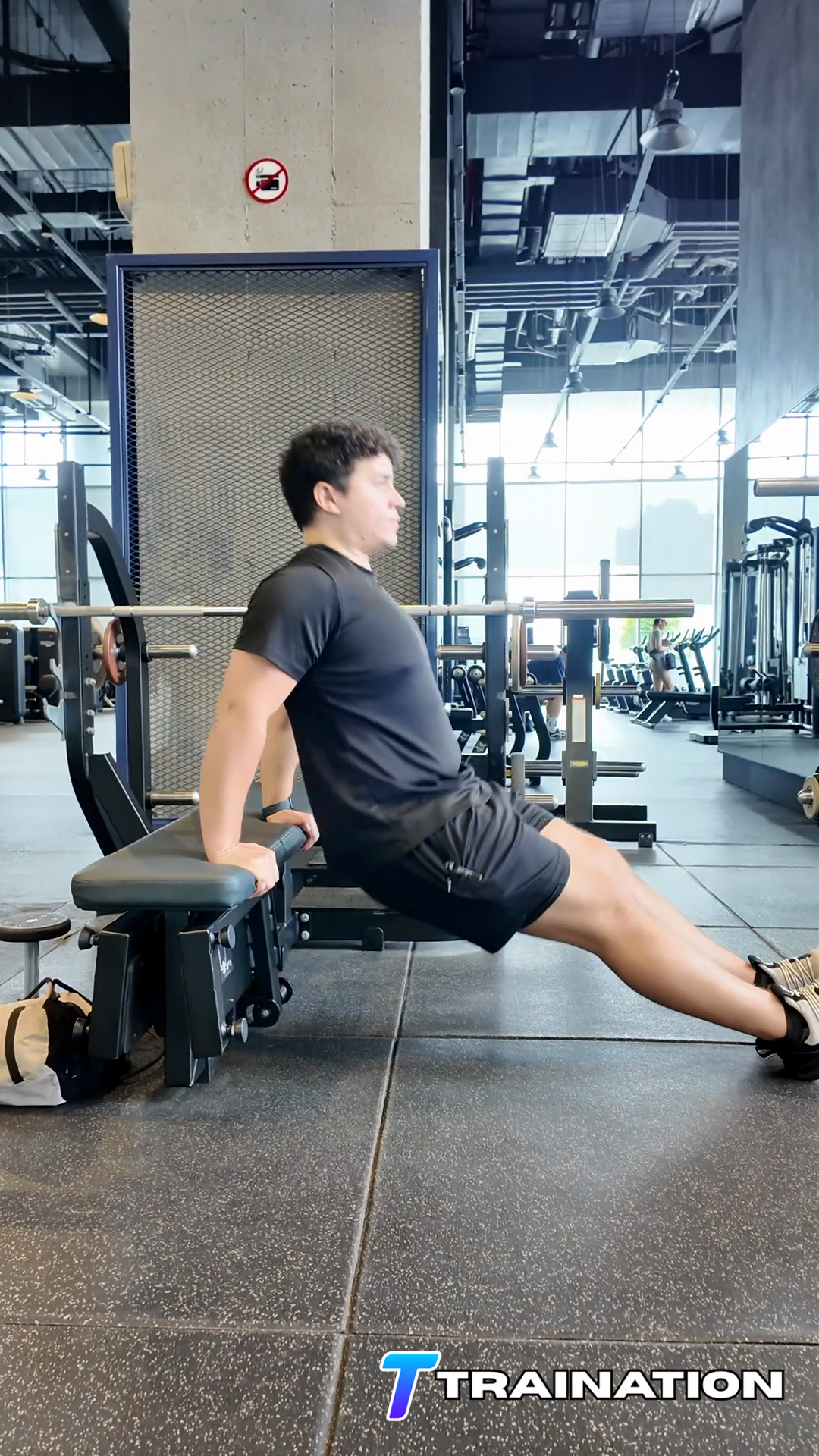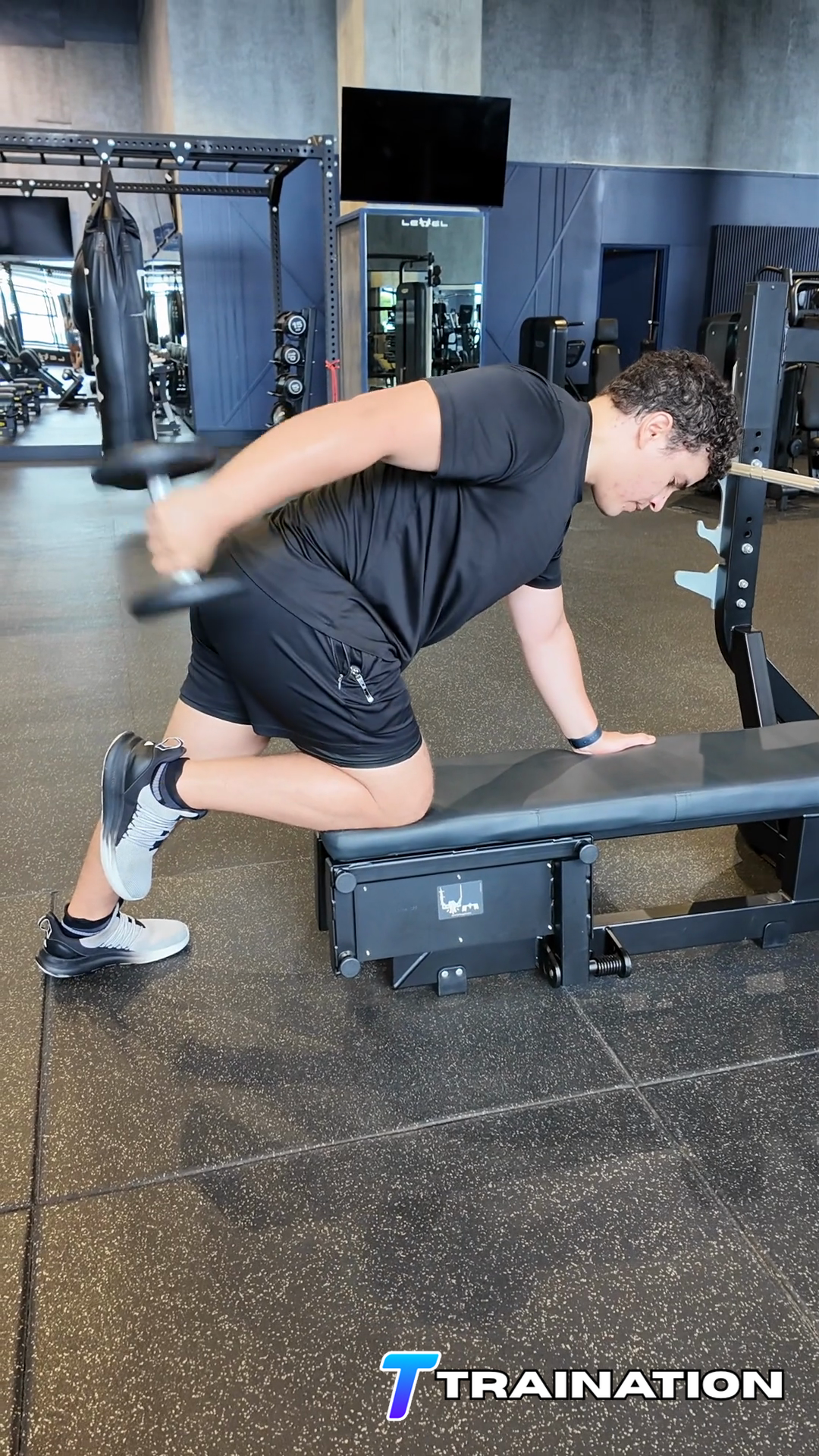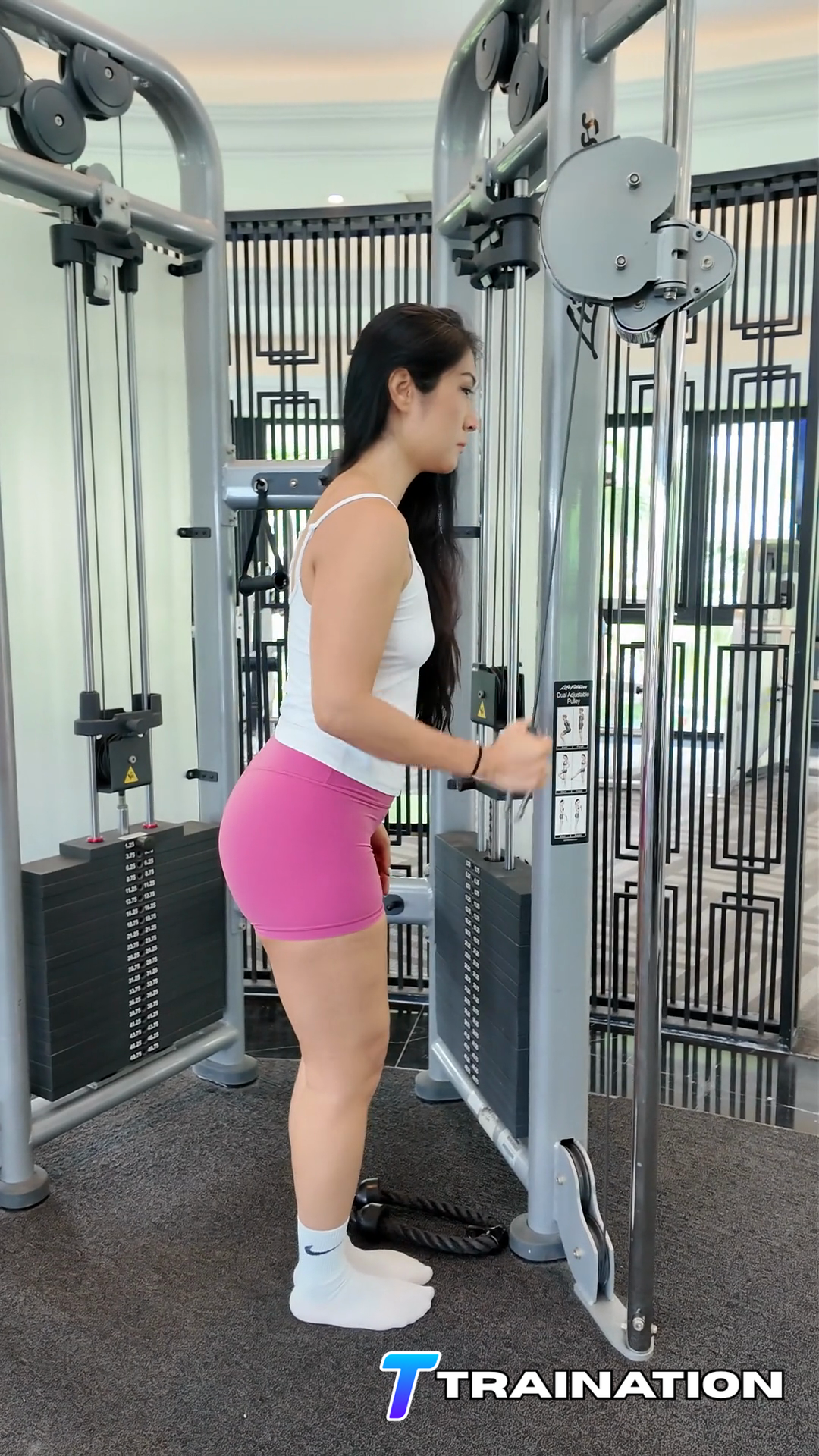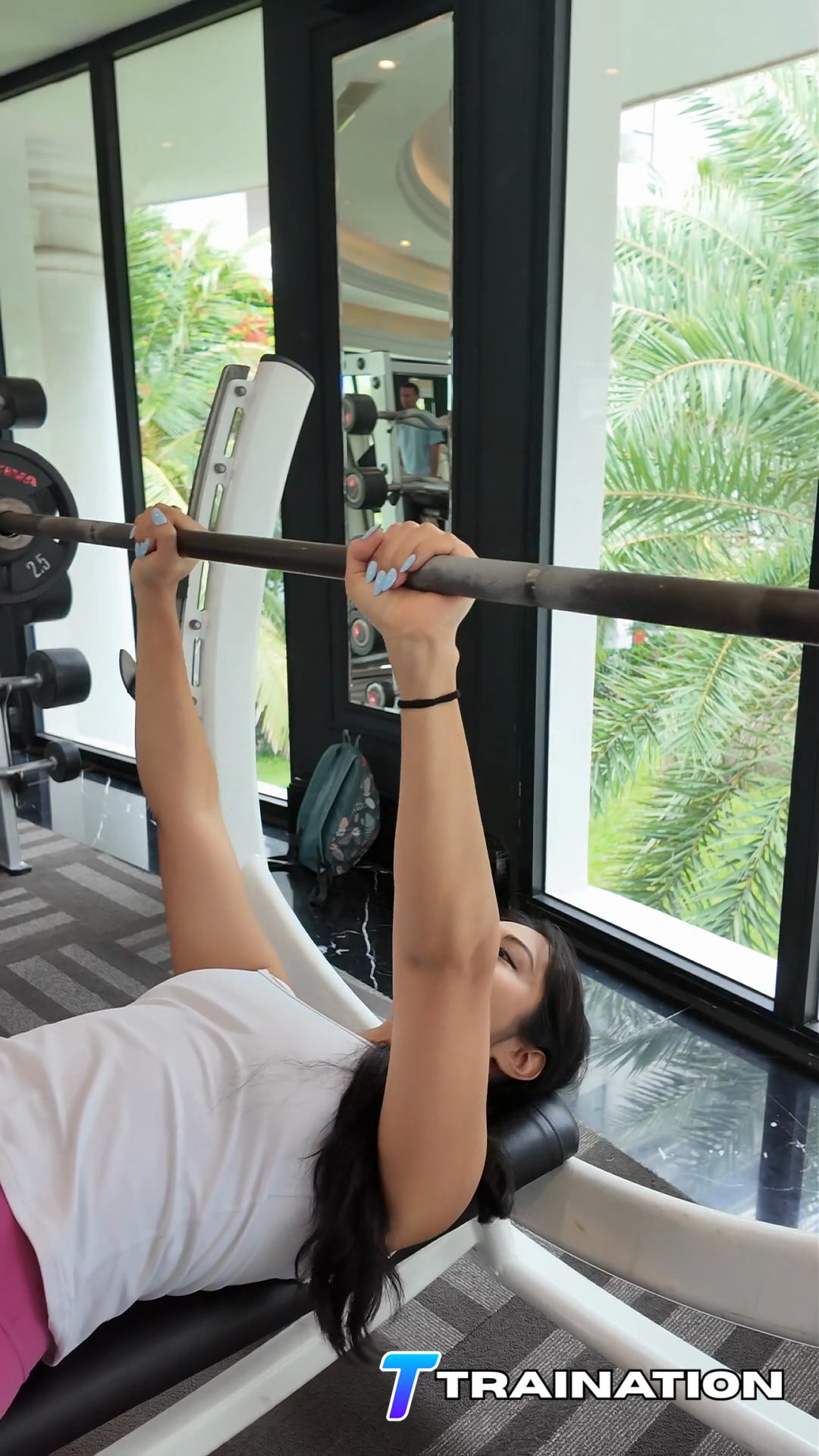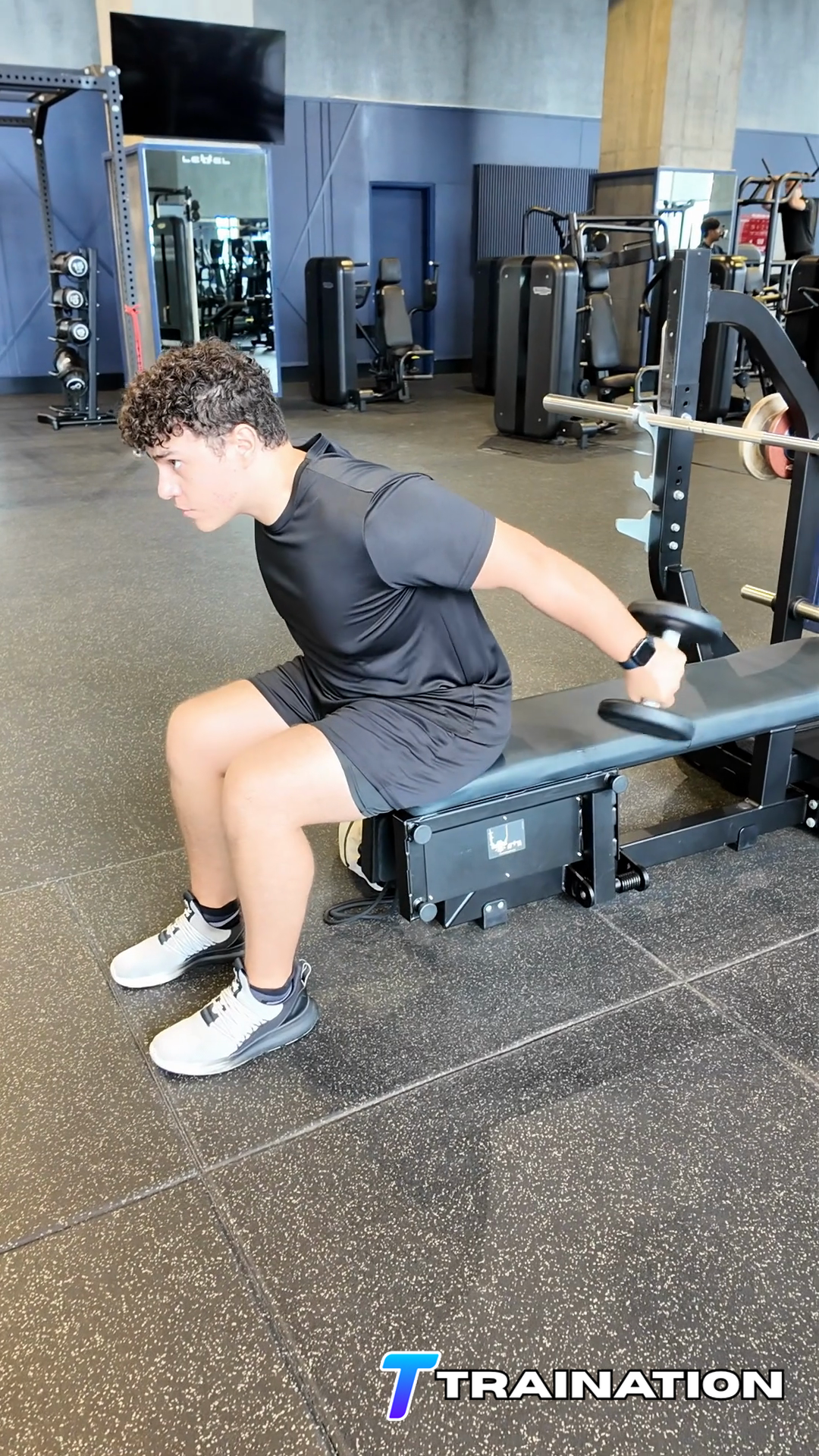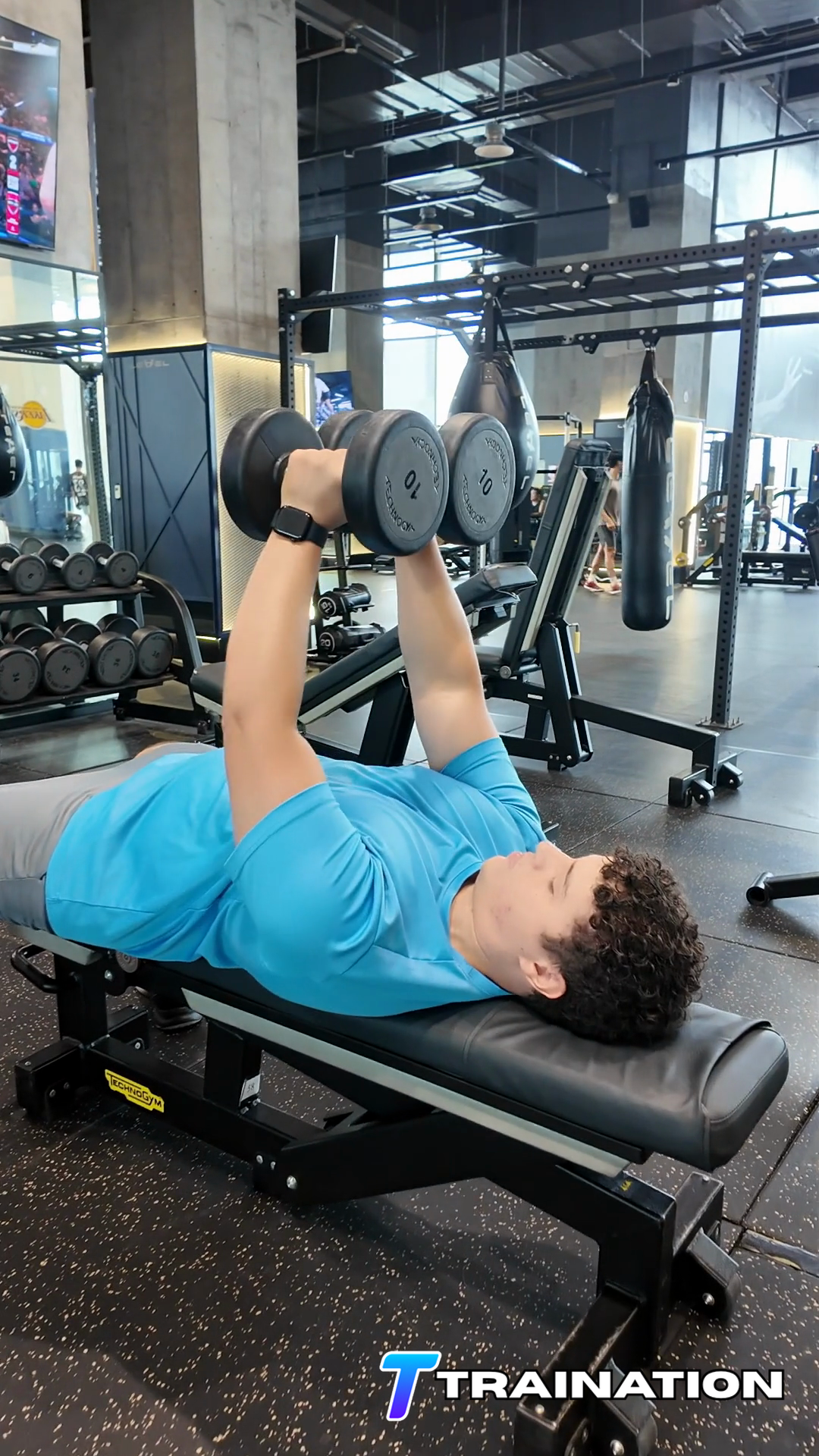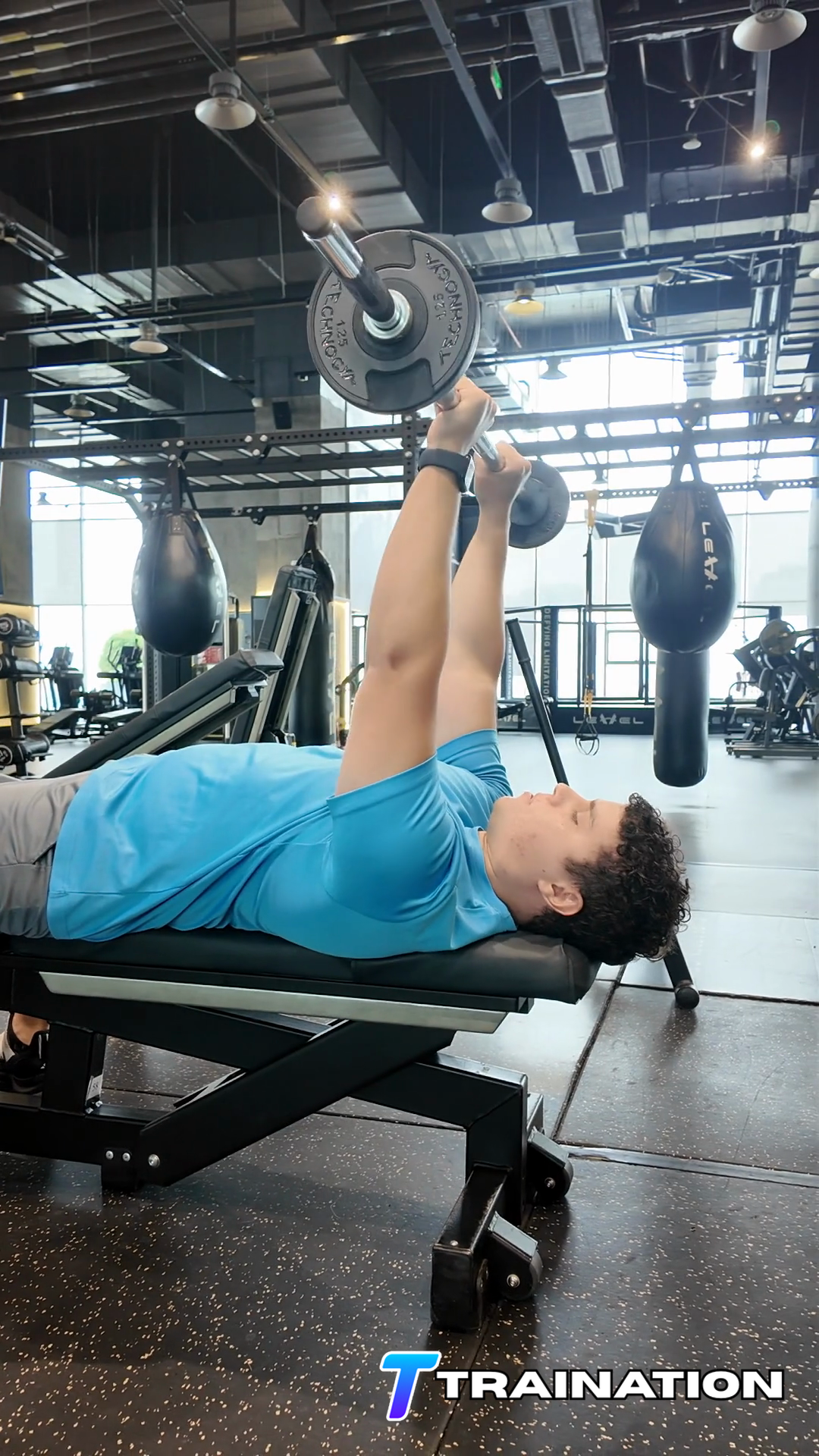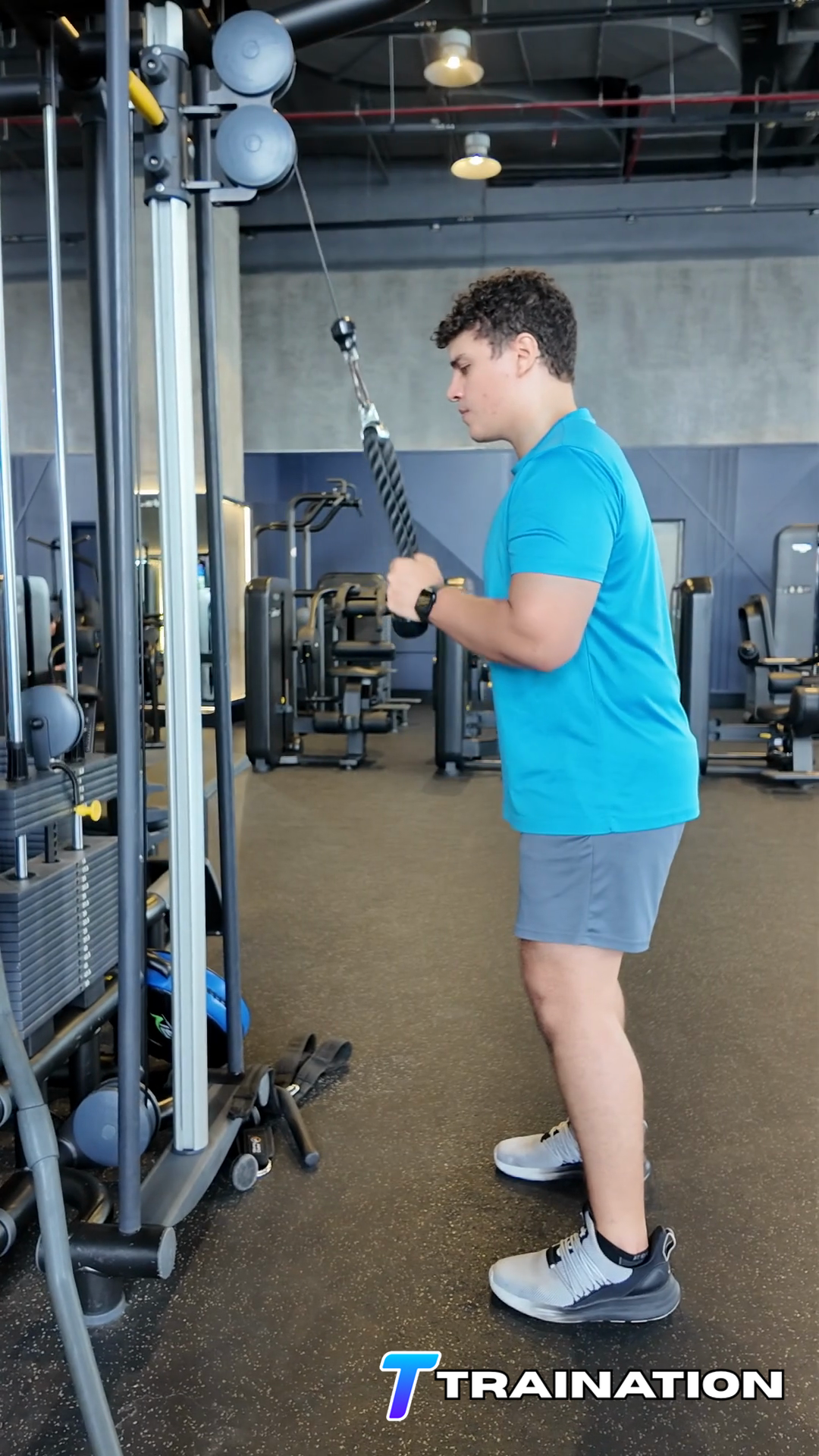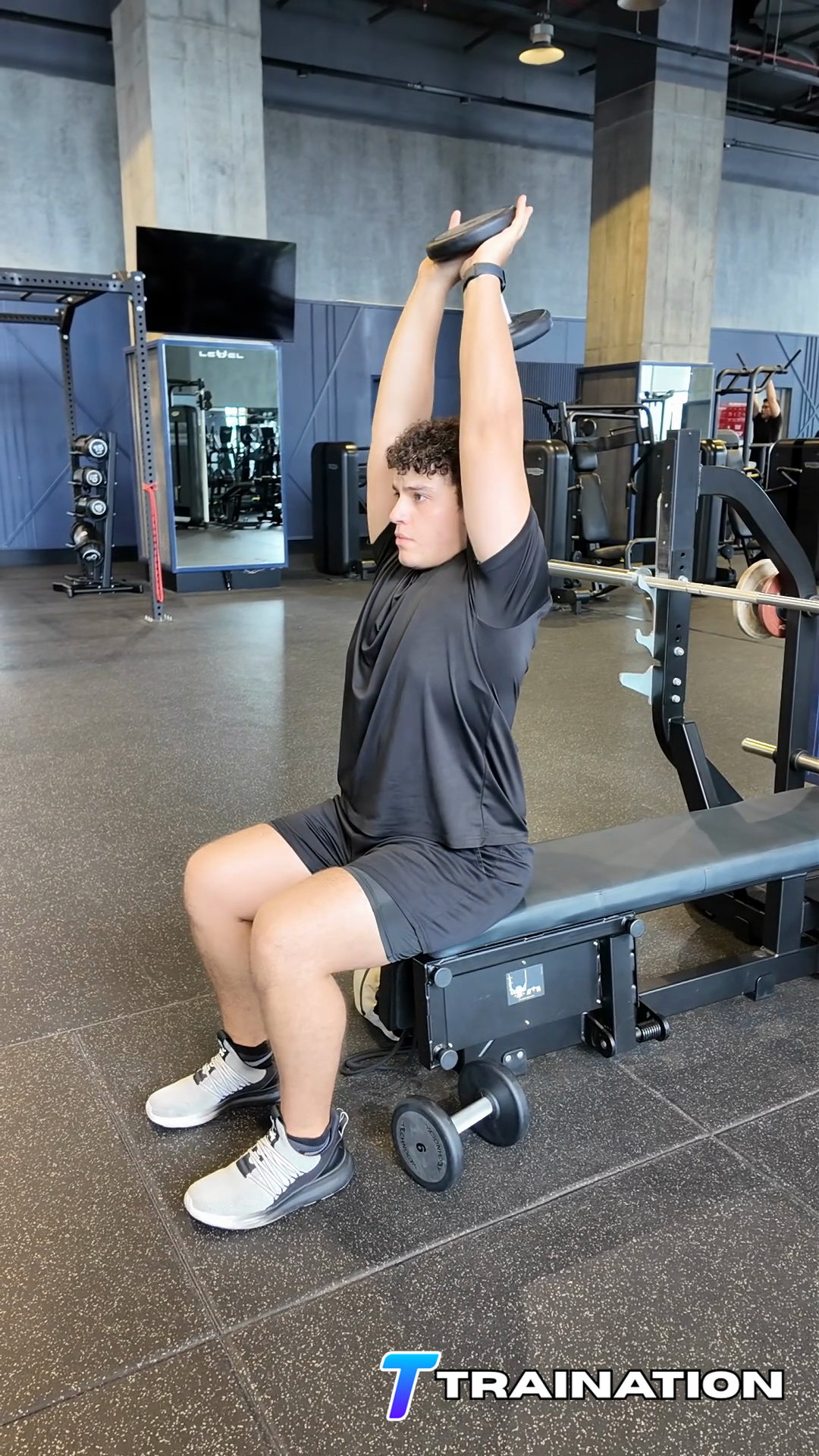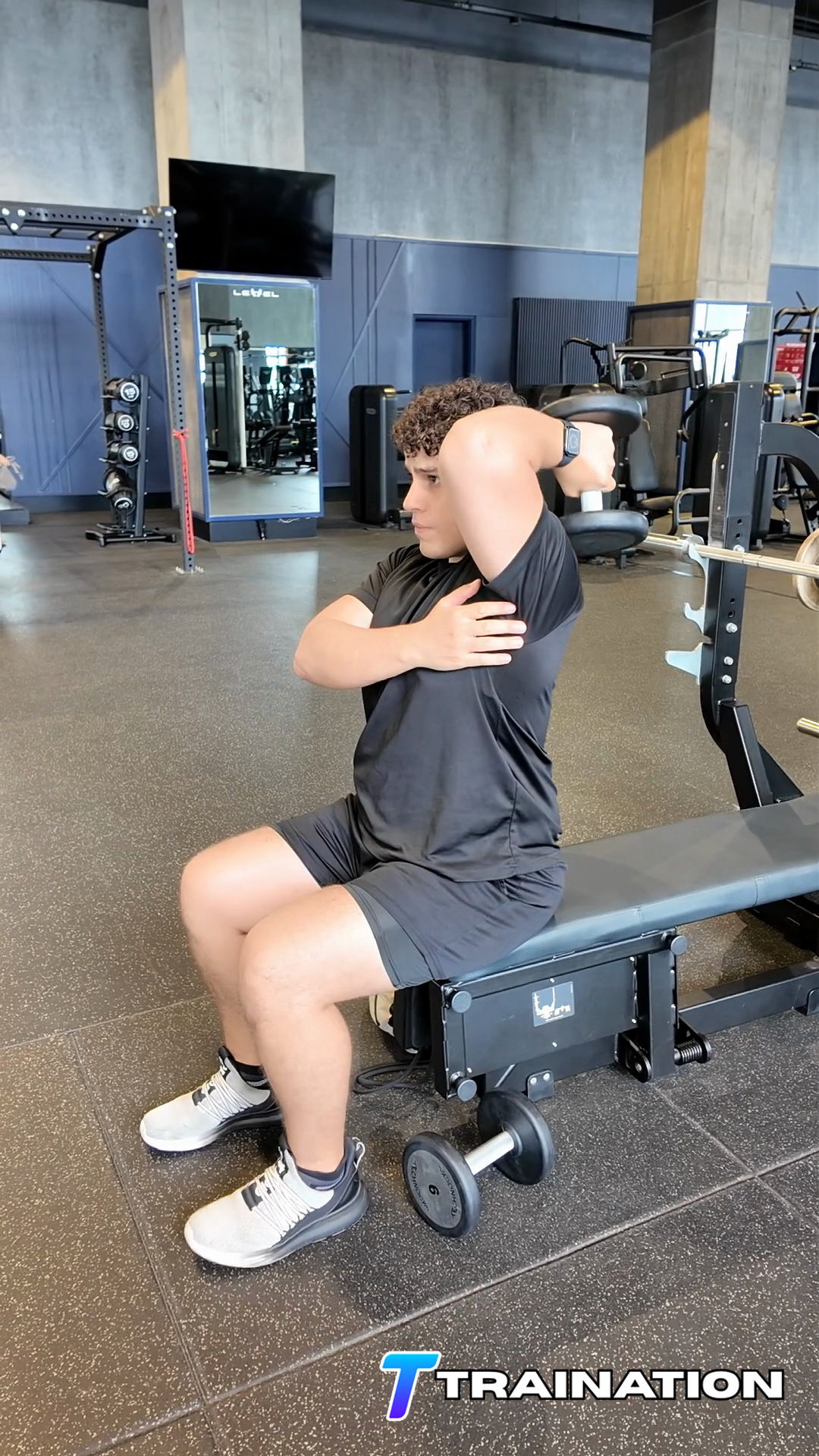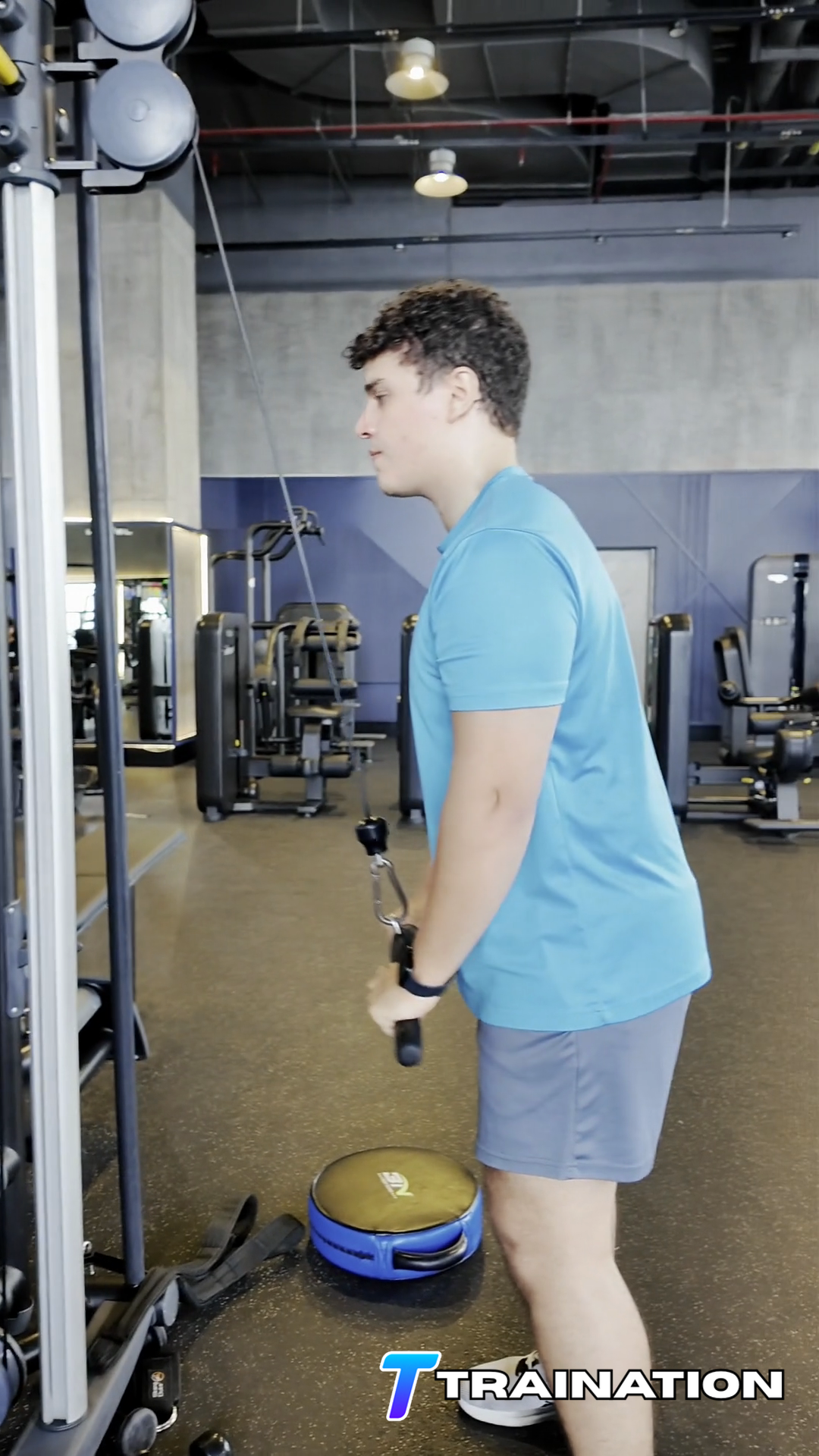
Upper arms wandering
Keep the upper arms still so the elbow joint, rather than the shoulder, performs the extension.
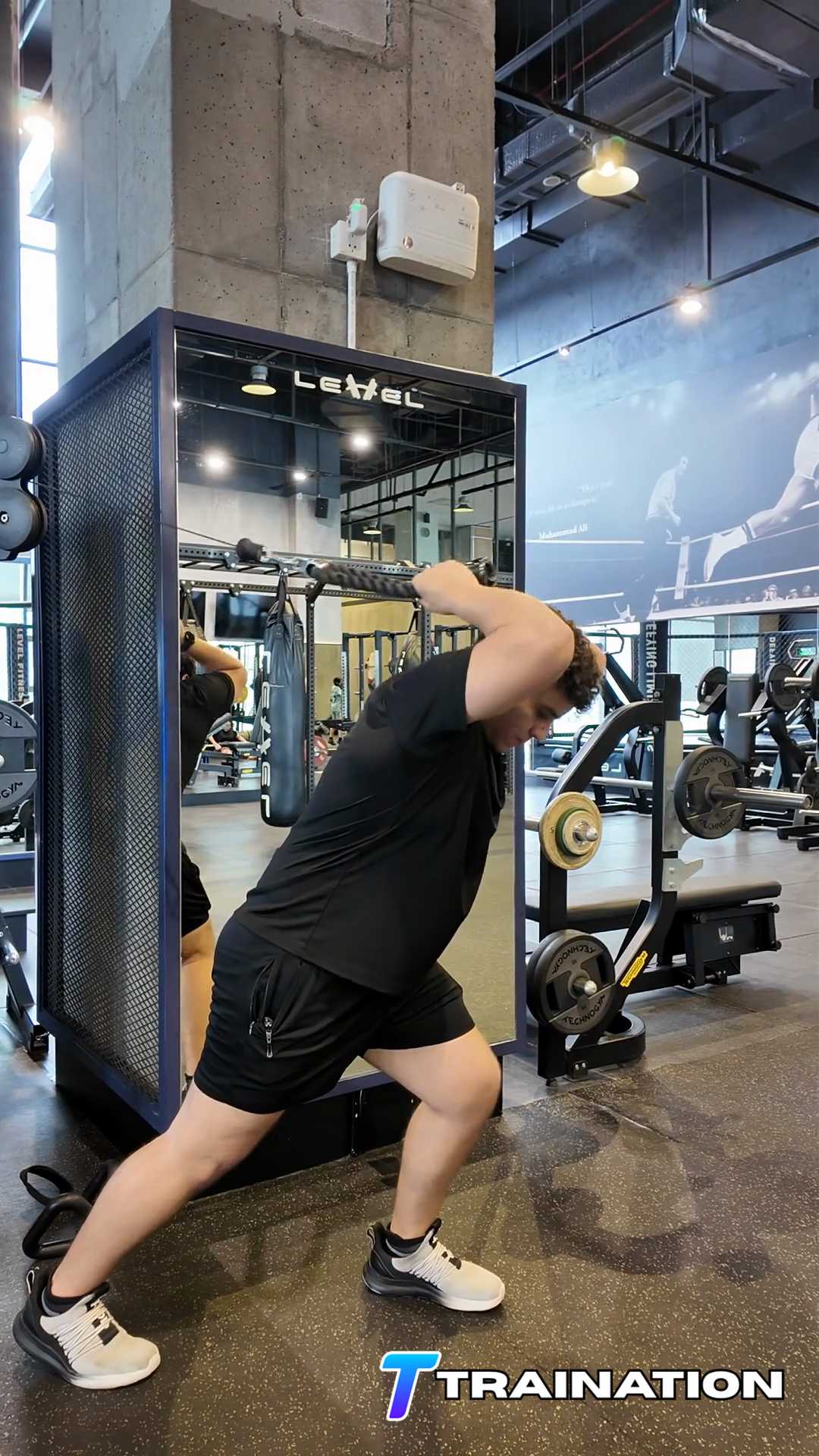
Standing Cable Tricep Overhead Extension trains the triceps by straightening the elbow while keeping the shoulder and upper arm still.
Primary musclesTriceps brachii
Secondary musclesAnconeus, Posterior deltoids
Follow the sequence in order, paying attention to the starting position, movement path, and finish described in each step.
For Standing Cable Tricep Overhead Extension, position the cable rope behind the head with the elbows pointing forward and the upper arms close to the ears.
Brace the trunk and keep the wrists straight before extending the elbows.
Straighten the elbows against resistance while keeping the upper arms from drifting.
Finish with the triceps contracted without snapping or forcefully locking the joint.
Return slowly until the elbows are comfortably bent. Repeat without changing the established position.
Keep the upper arms still so the elbow joint, rather than the shoulder, performs the extension.
Brace and reduce the load if the torso rocks or the shoulders roll to finish the repetition.
Keep the wrists aligned with the forearms throughout the press, kickback, or overhead extension.
Finish smoothly with the triceps contracted rather than forcefully jamming the elbow straight.
Place Standing Cable Tricep Overhead Extension after bench and overhead presses so triceps fatigue does not limit compound pressing.
Use one to three times per week and count pressing sets that already train the triceps.
| Goal | Sets | Reps or time | Rest | Effort and execution |
|---|---|---|---|---|
| Strength accessory | 2–4 | 6–10 | 75–150 sec | Leave 2–3 controlled reps in reserve |
| Muscle growth | 2–4 | 8–15 | 60–120 sec | Usually 1–3 clean reps in reserve |
Scale the movement
A high cable and fixed standing position make upper-arm control easy to practise.
Use an elevated surface to scale body weight while keeping the elbows close.
Return the elbow to its bent position over three seconds without moving the upper arm.
Train one arm at a time after both arms can complete the movement with the same control.
Turn Standing Cable Tricep Overhead Extension and the rest of your exercise library into repeatable client programs.
Explore the workout builder