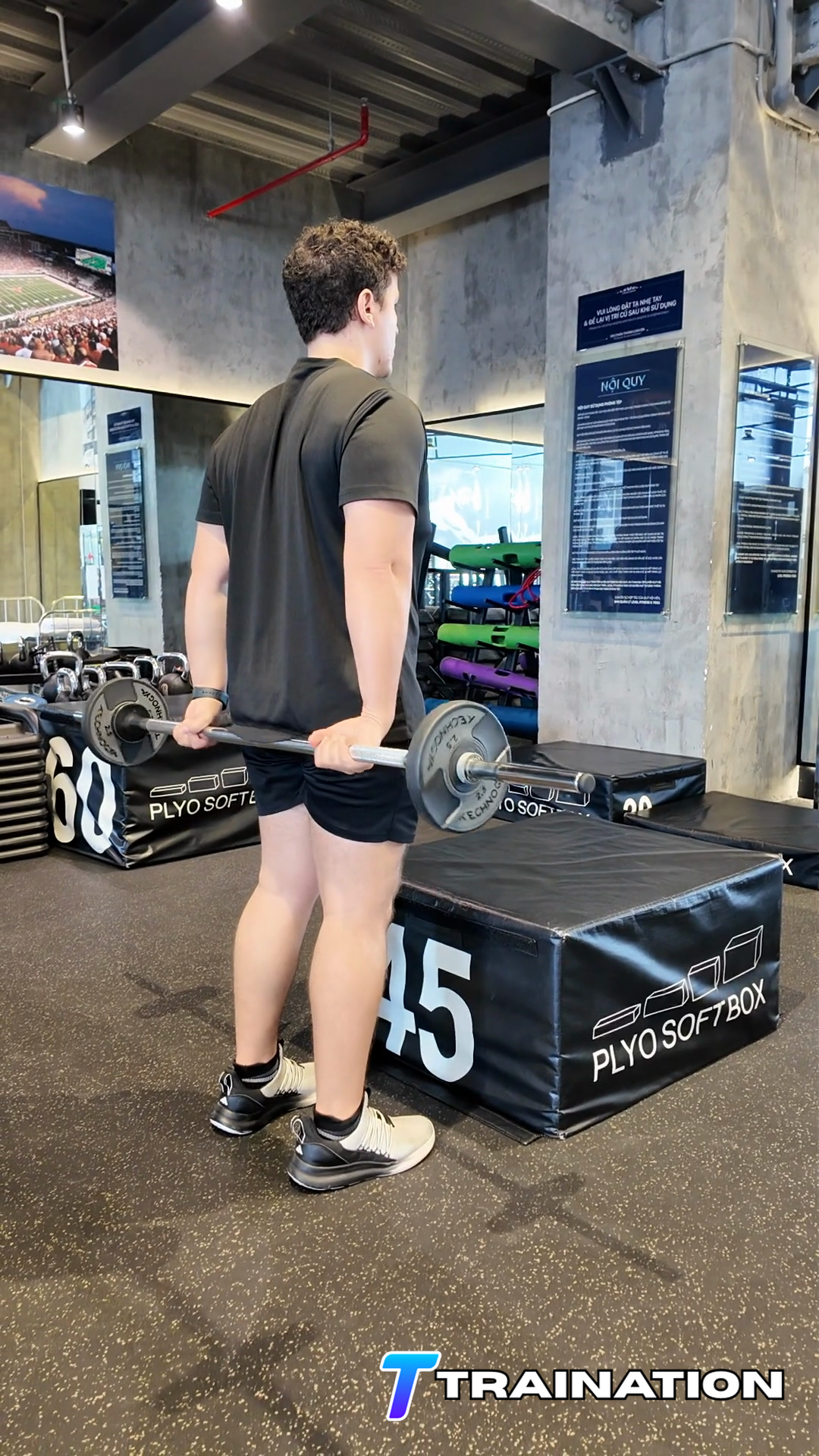
Leaning to one side
Keep the shoulders and pelvis level and reduce the load if the trunk tilts.
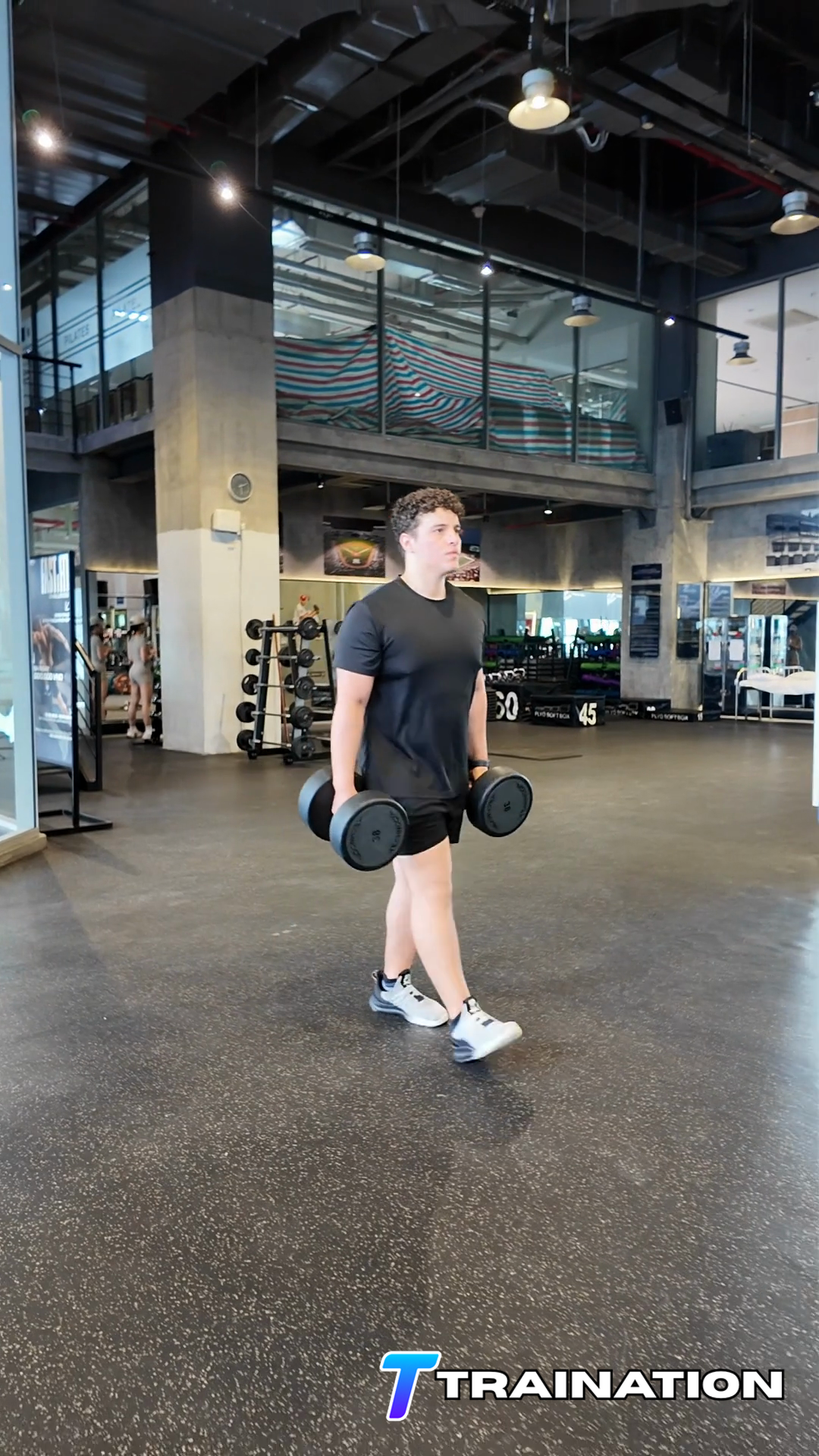
Dumbbell Farmers Carry develops grip, trunk stability, and loaded walking capacity while the weights remain controlled at the sides.
Primary musclesForearm and finger flexors
Secondary musclesTrapezius, Obliques, Gluteal muscles, Calves
Follow the sequence in order, paying attention to the starting position, movement path, and finish described in each step.
For Dumbbell Farmers Carry, stand between the dumbbells, hinge to grip them, brace, and stand without letting either weight swing.
Walk with short, steady steps while keeping the chest upright, shoulders level, and weights beside the thighs.
Keep the hands closed firmly and the weights clear of the legs without shrugging the shoulders toward the ears.
Turn with several small steps rather than twisting through the knees or trunk.
Stop, hinge, and place both weights down under control before releasing your grip.
Keep the shoulders and pelvis level and reduce the load if the trunk tilts.
Let the arms hang long with the shoulders controlled rather than jammed toward the ears.
Use short, steady strides that keep the weights from swinging.
Stop, hinge, and place both loads down before releasing the grip.
Use Dumbbell Farmers Carry after the main strength work, near the end of a full-body session, or as a station in a carefully designed conditioning circuit.
Use one to three times per week while monitoring grip fatigue from rows, pull-ups, and deadlifts.
| Goal | Sets | Reps or time | Rest | Effort and execution |
|---|---|---|---|---|
| Strength | 3–5 | 15–30 m or 15–30 sec | 2–3 min | Heavy with level shoulders and normal stride |
| Endurance | 2–4 | 30–60 m or 30–60 sec | 60–120 sec | Moderate pace with steady control |
Scale the movement
Hold a stable support or use an easier setup while learning the movement.
Use a shorter pain-free range and expand it only as control improves.
Slow the lowering phase without changing the start, finish, or joint alignment.
Add a brief pause at the hardest controlled position before increasing load.
Turn Dumbbell Farmers Carry and the rest of your exercise library into repeatable client programs.
Explore the workout builder