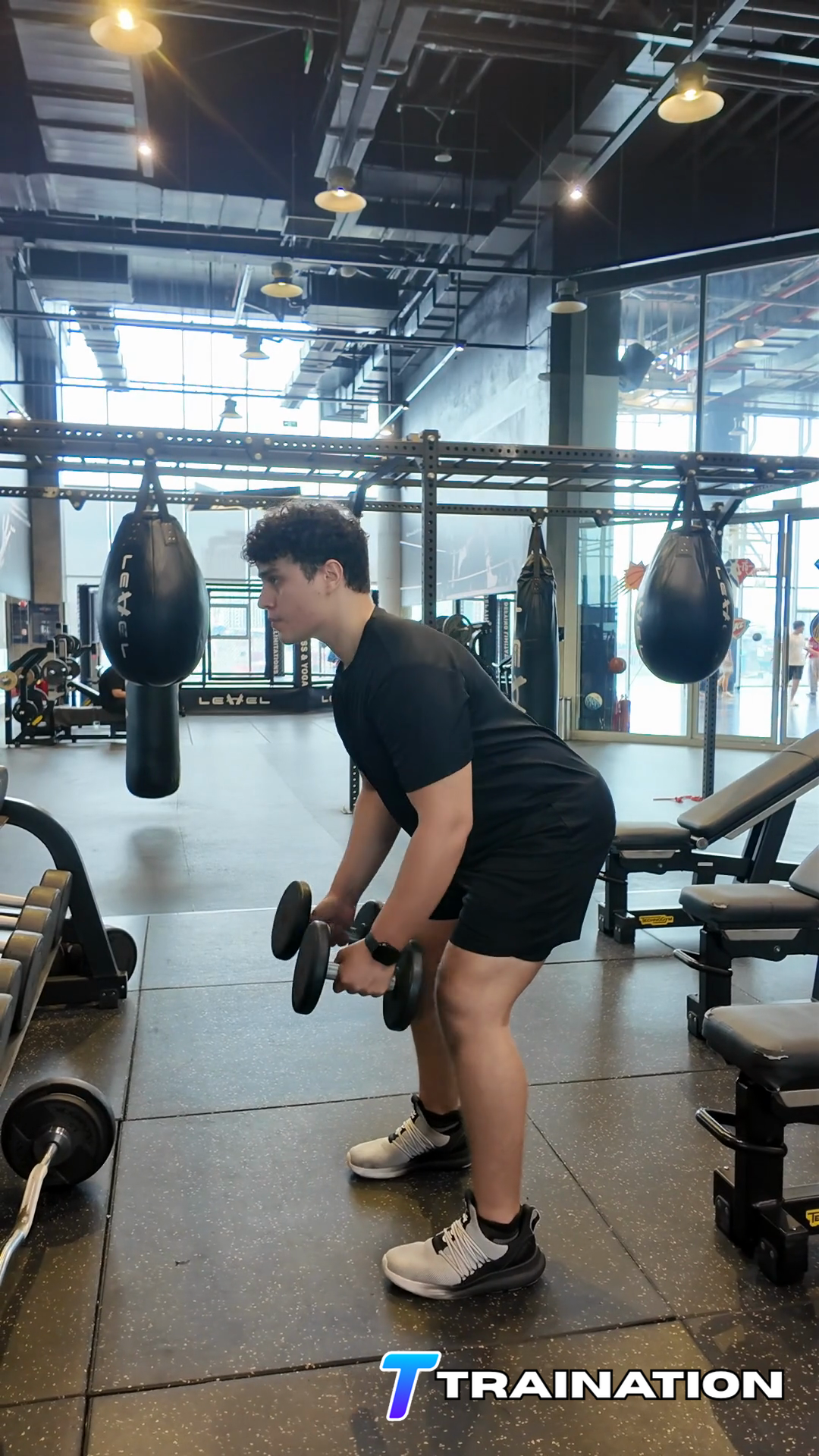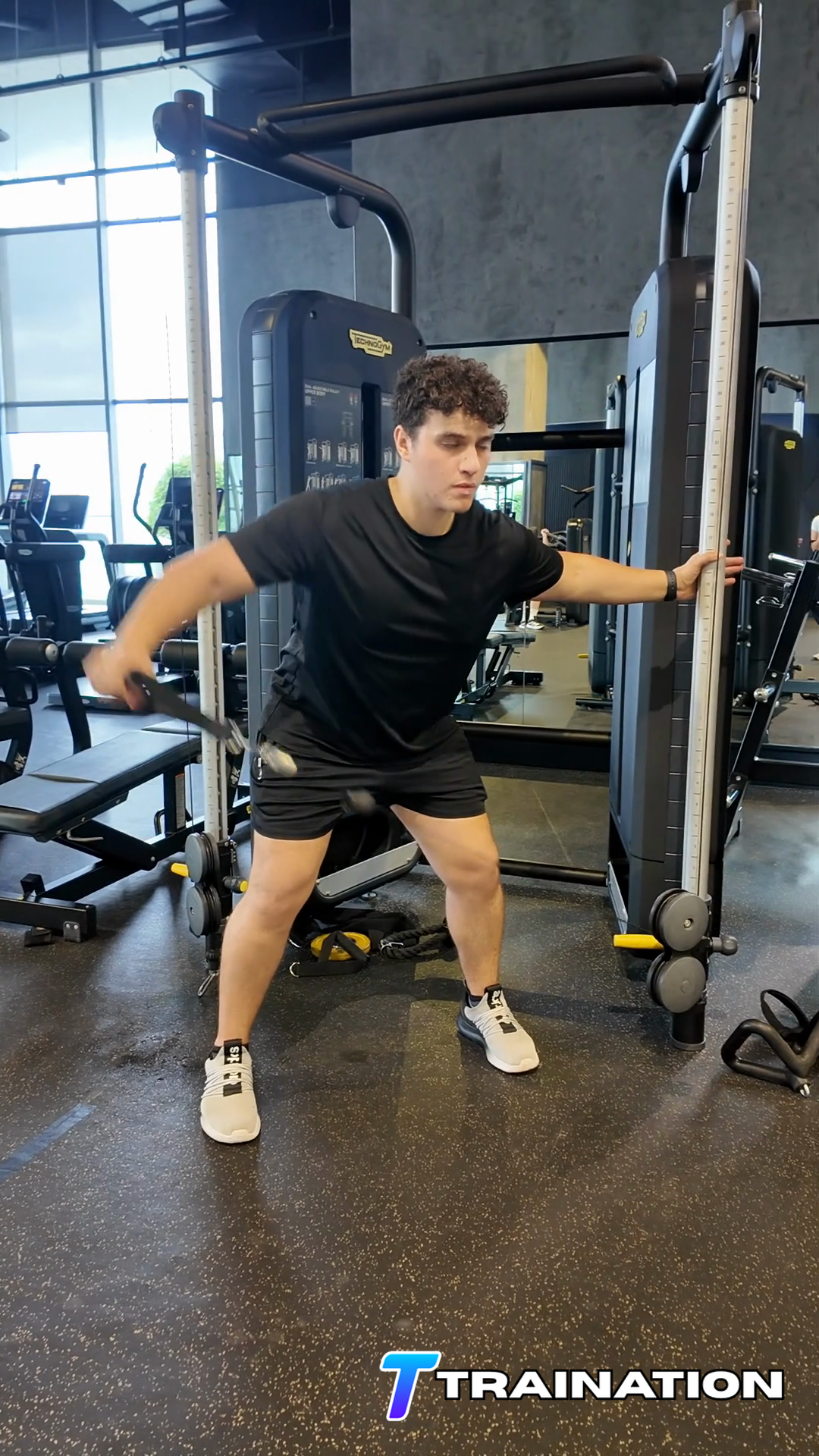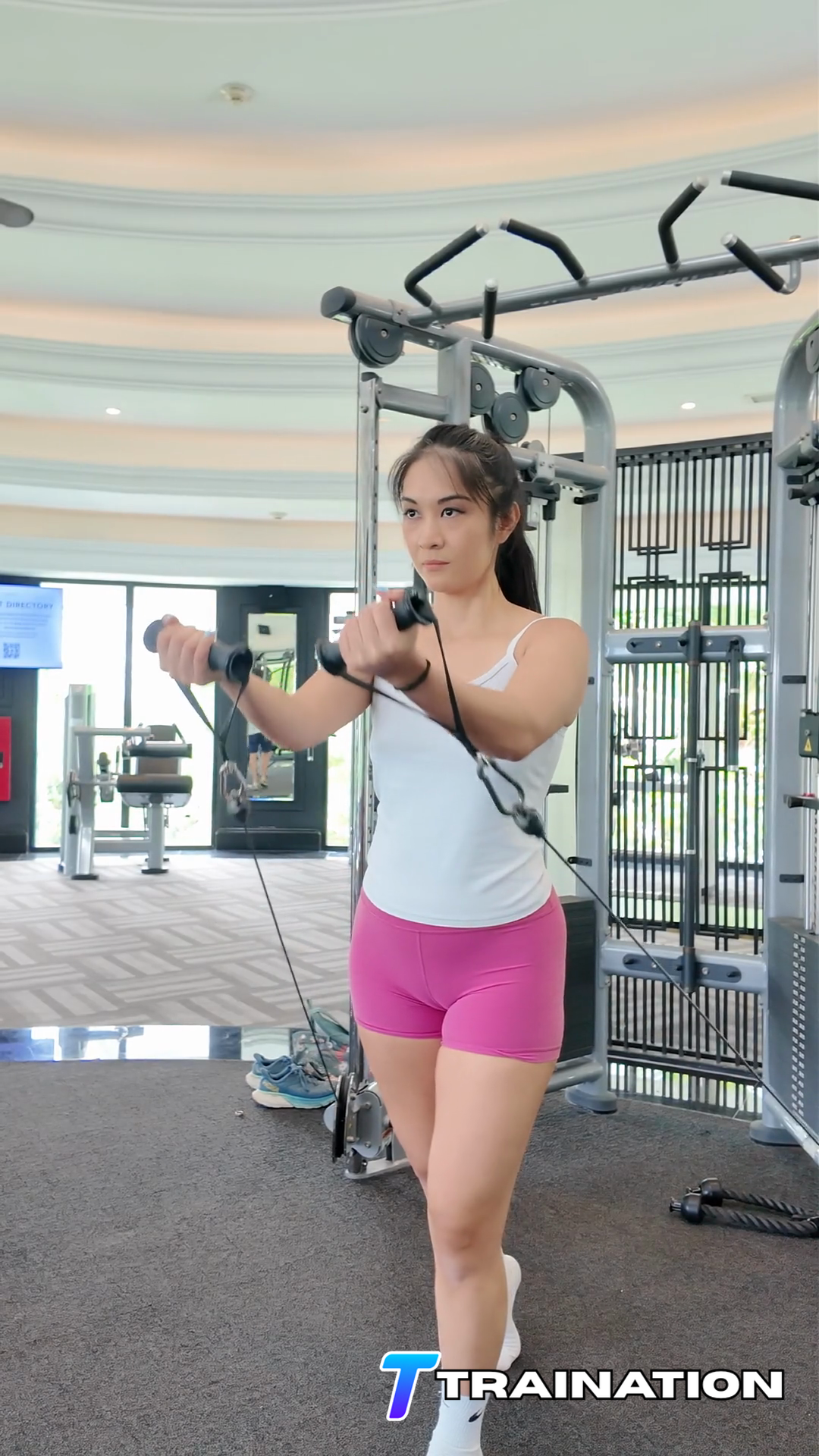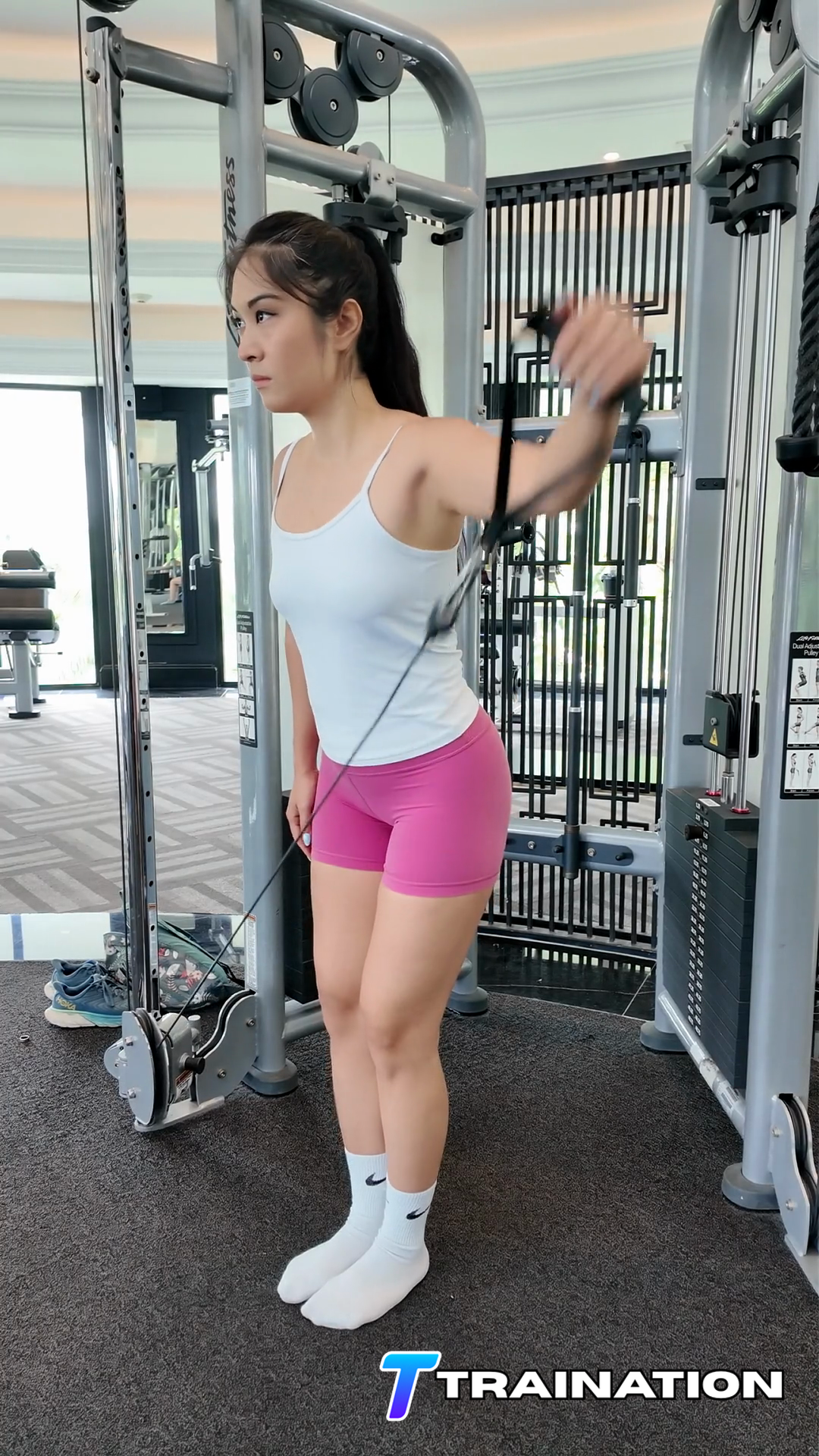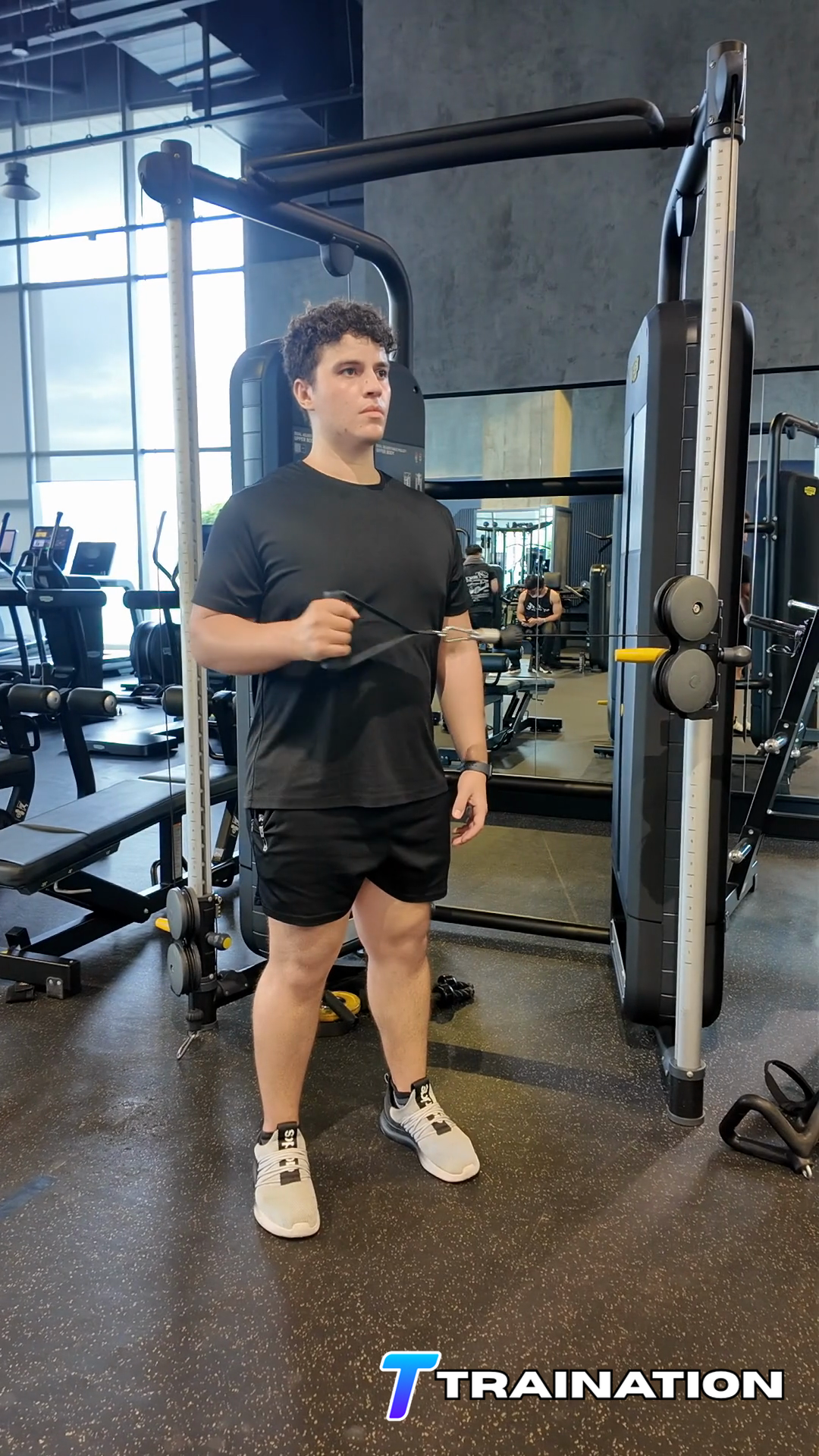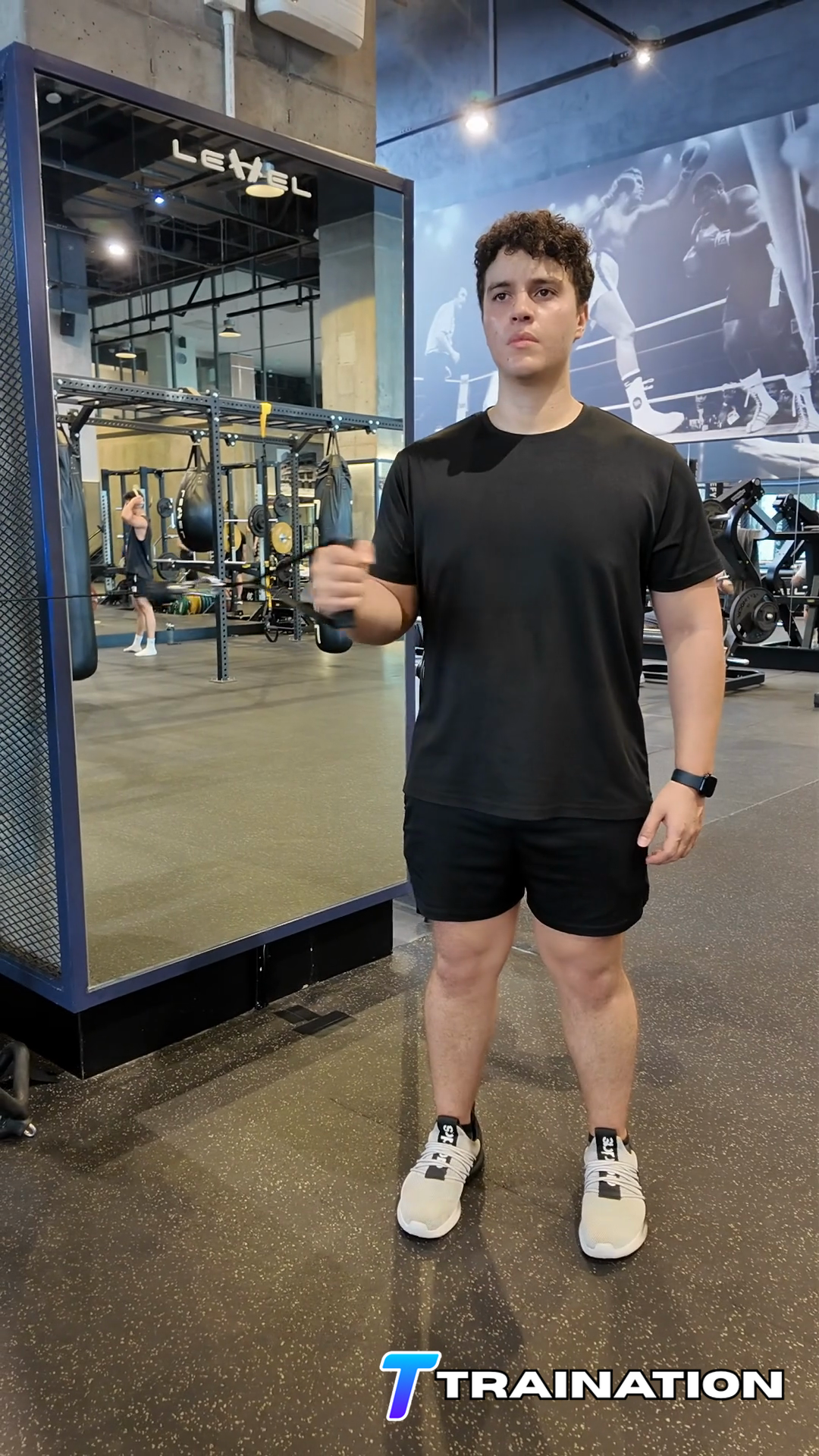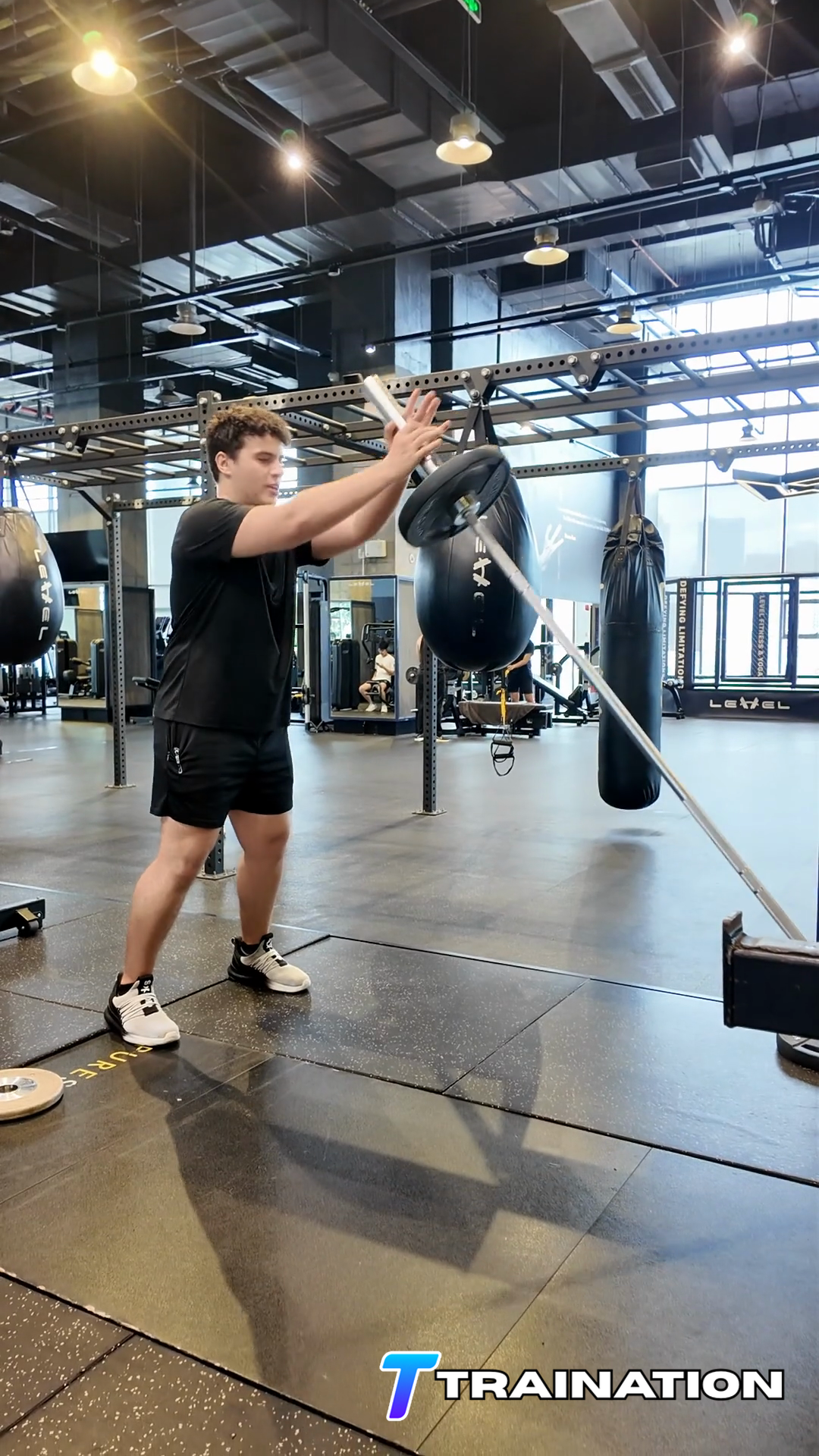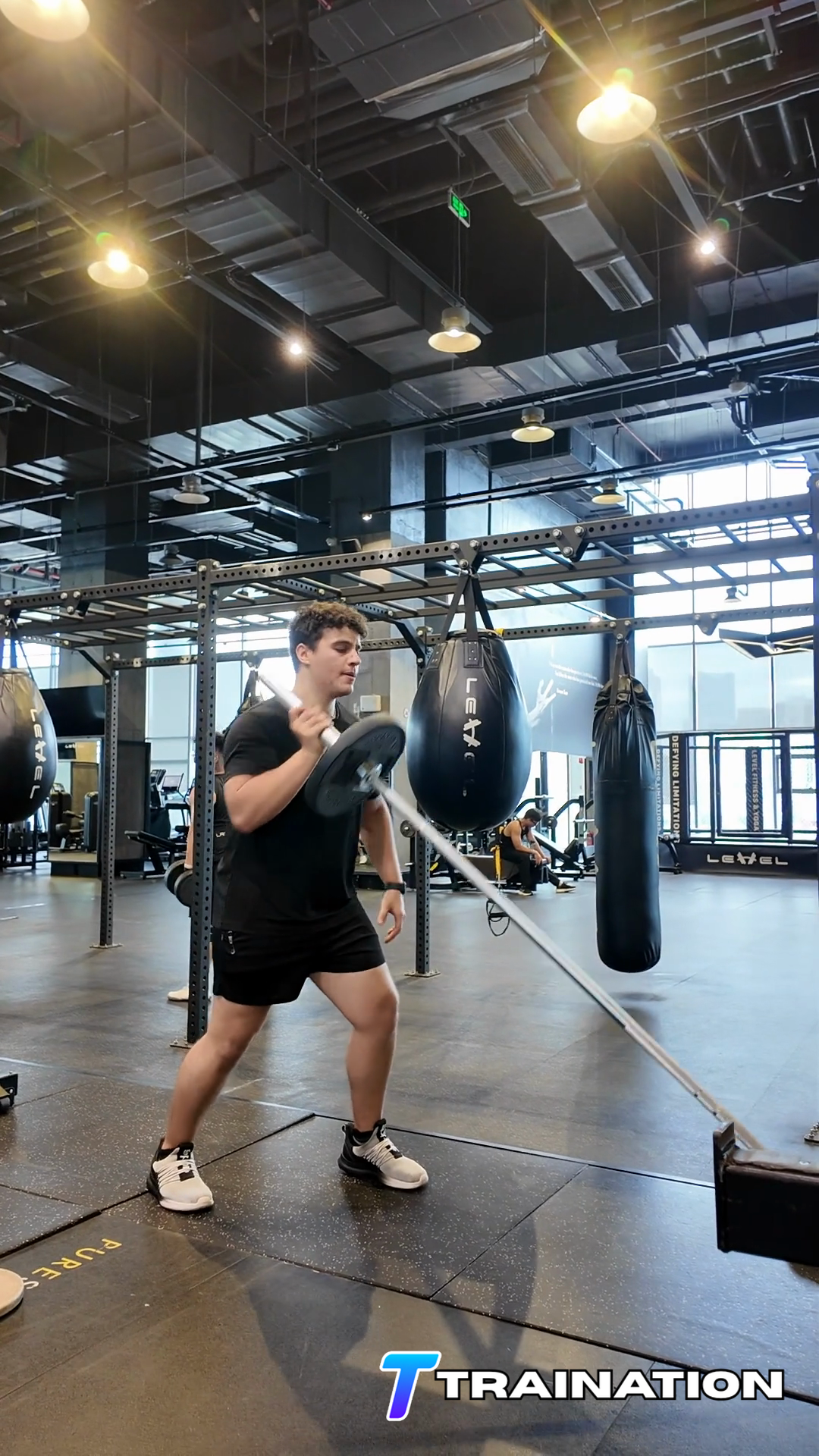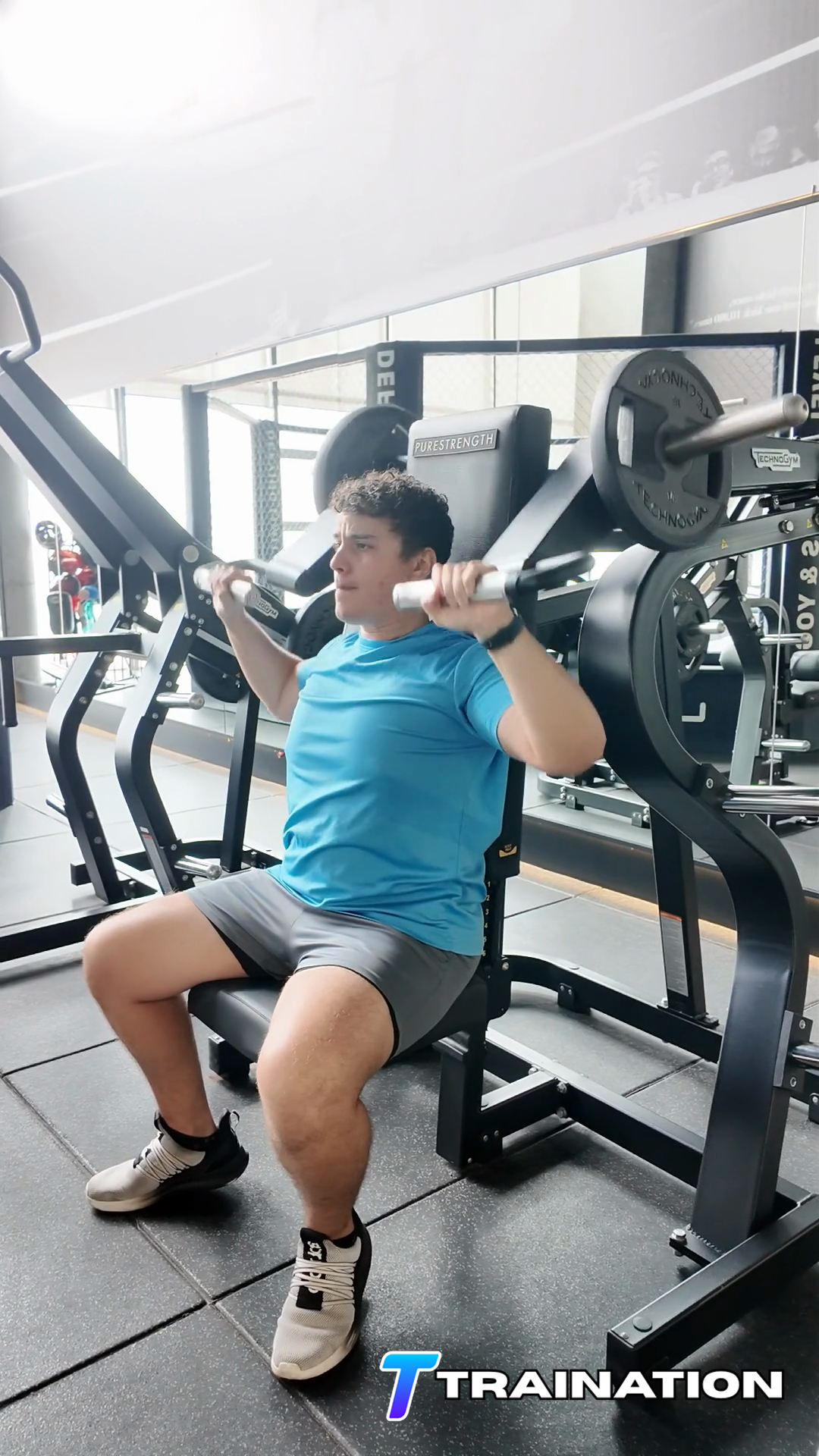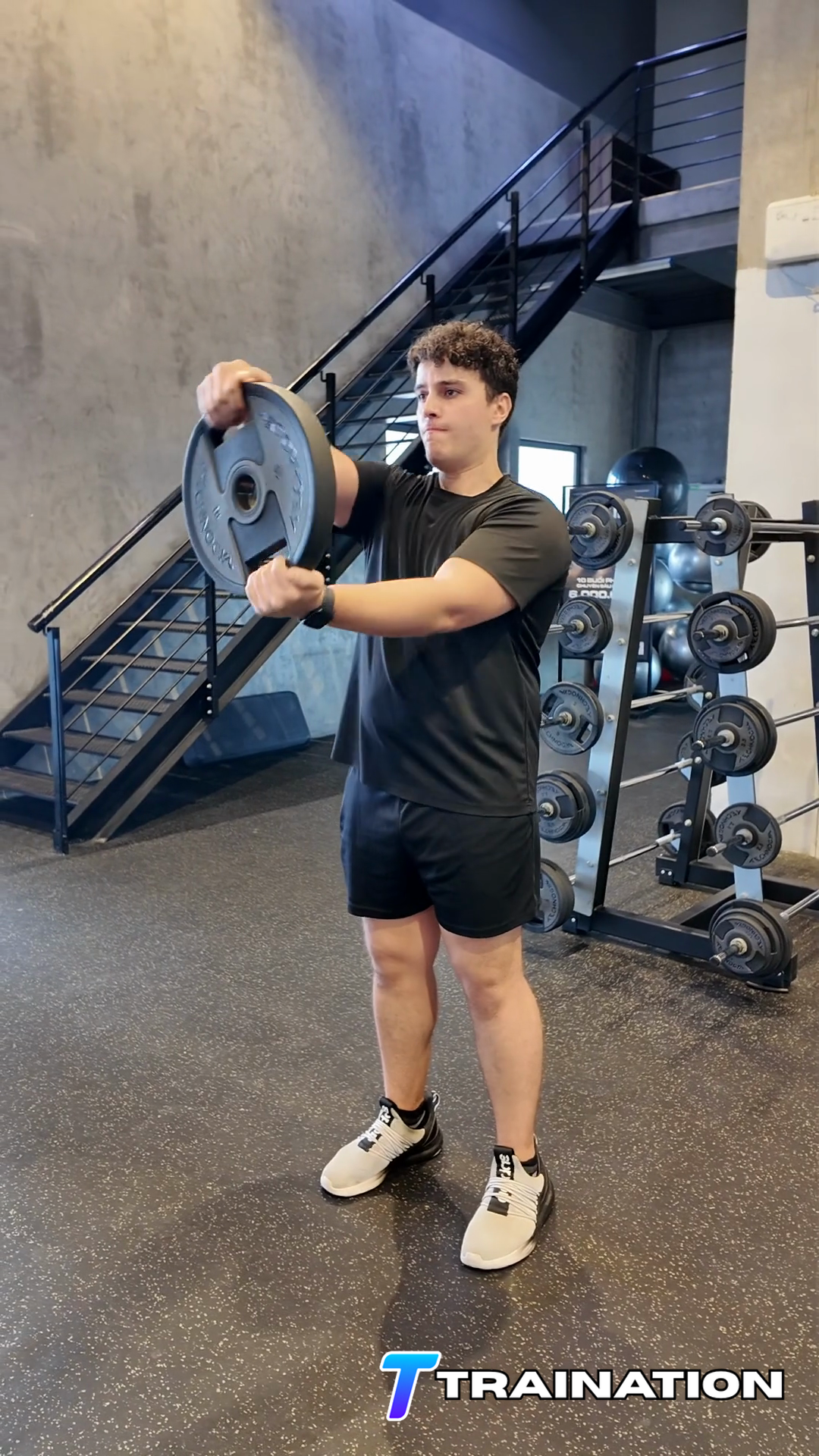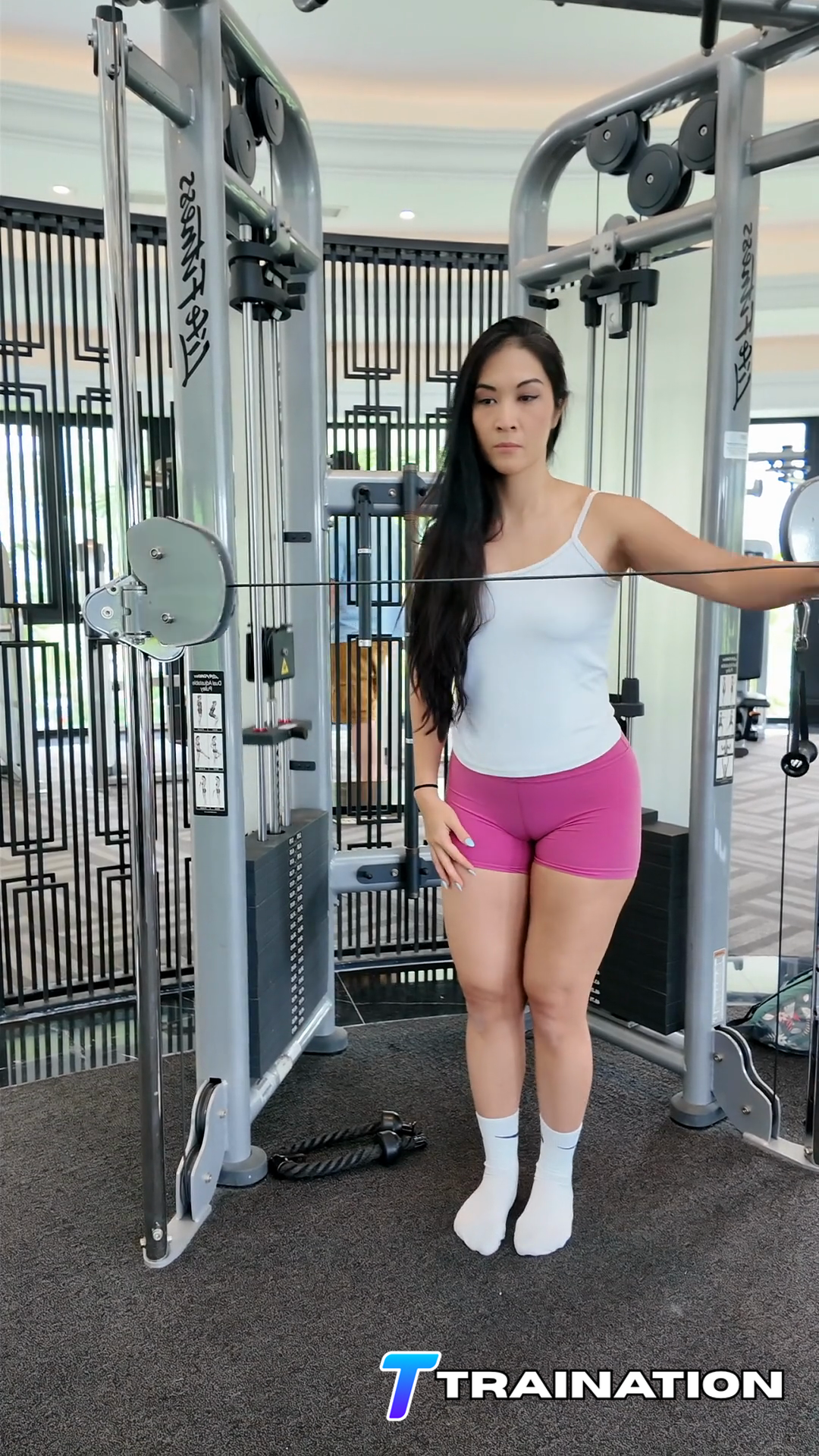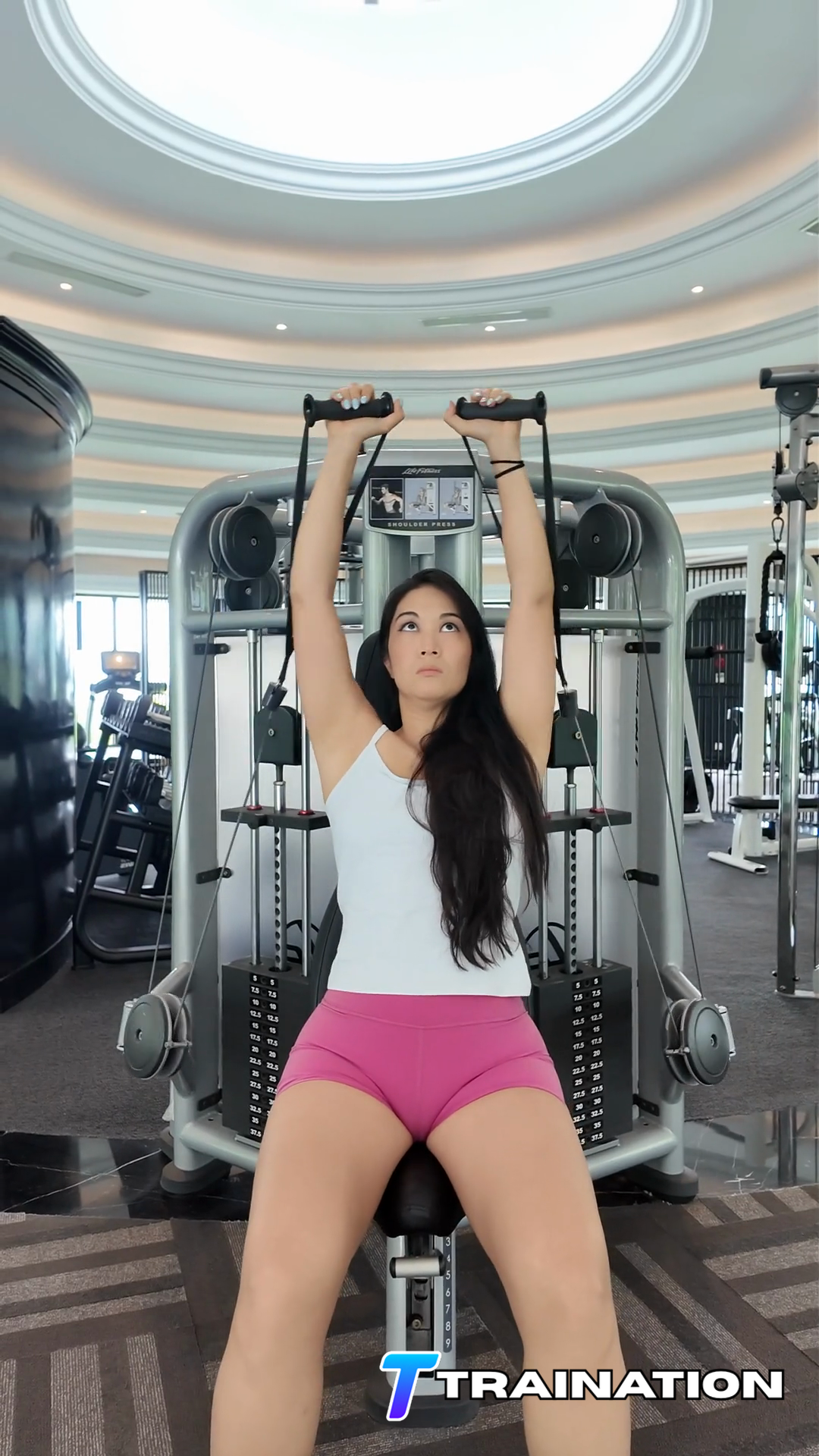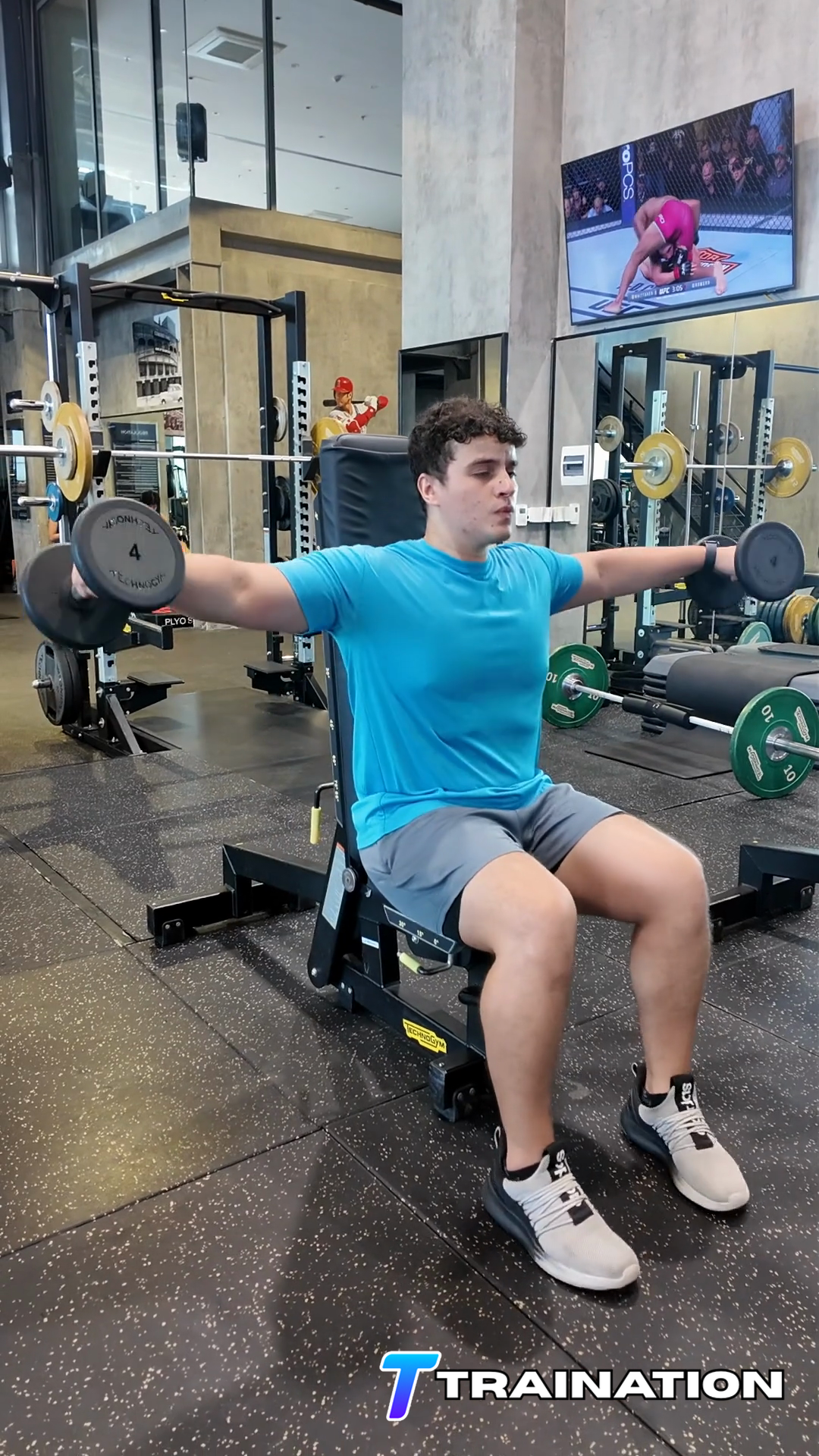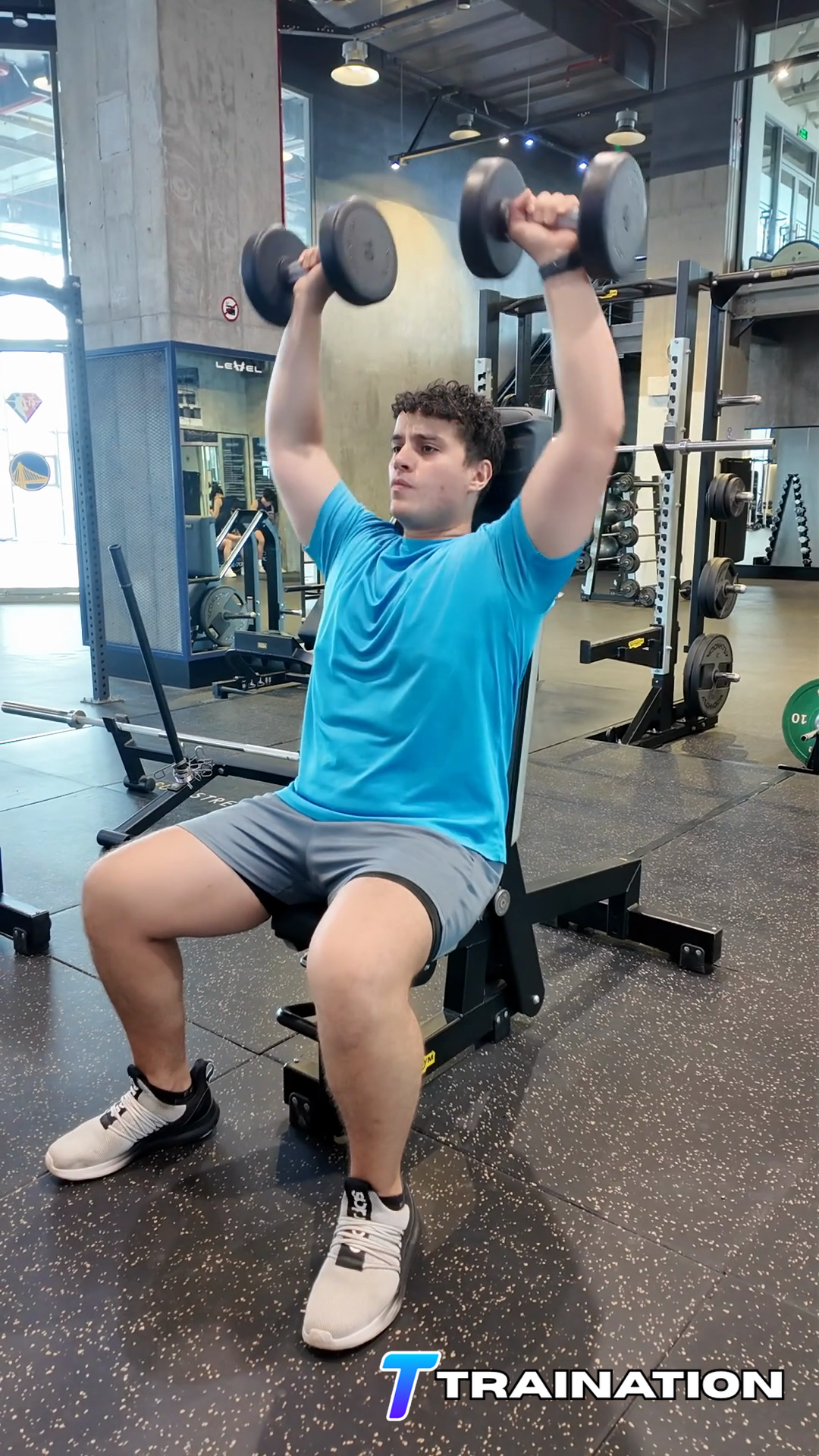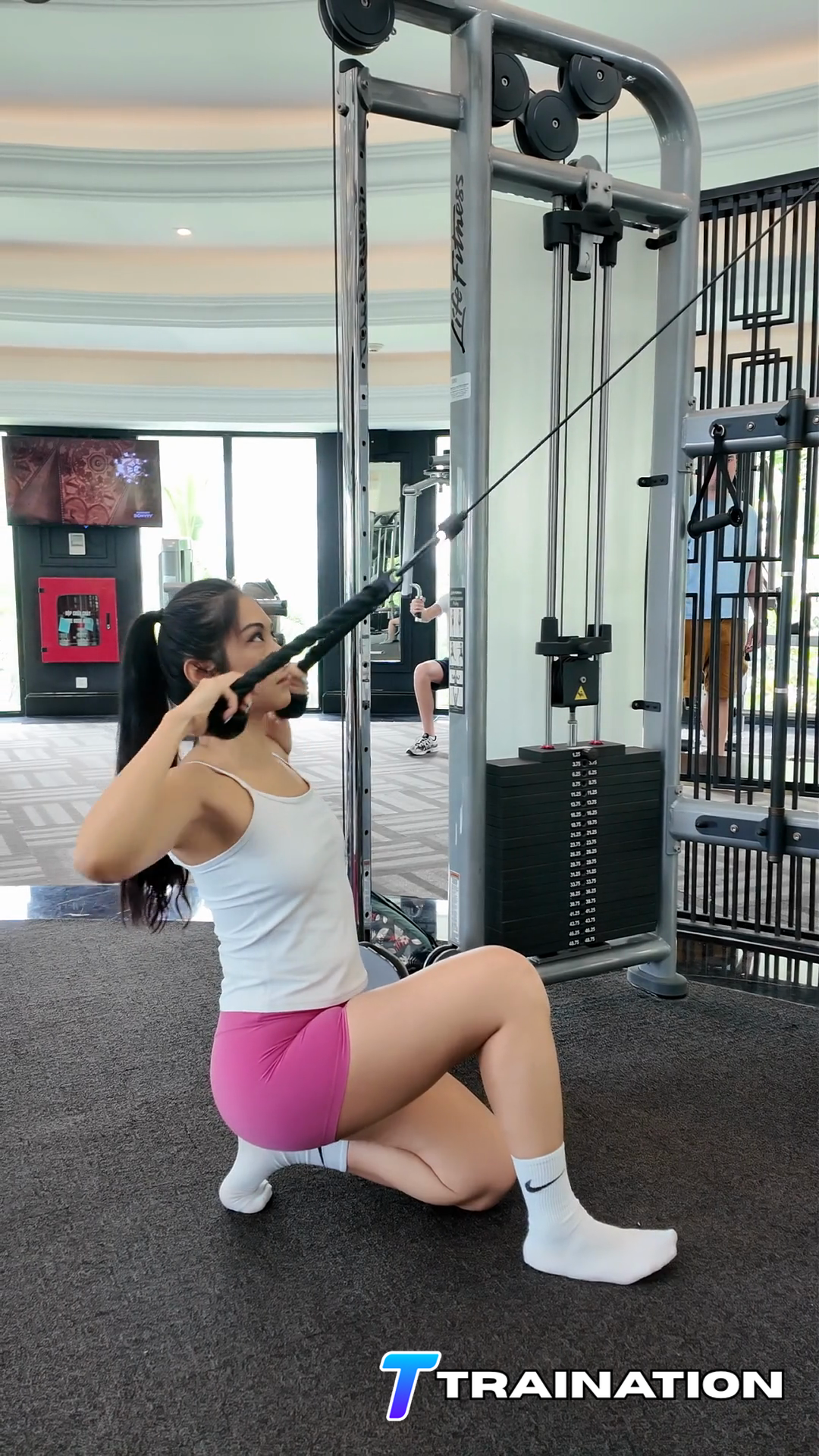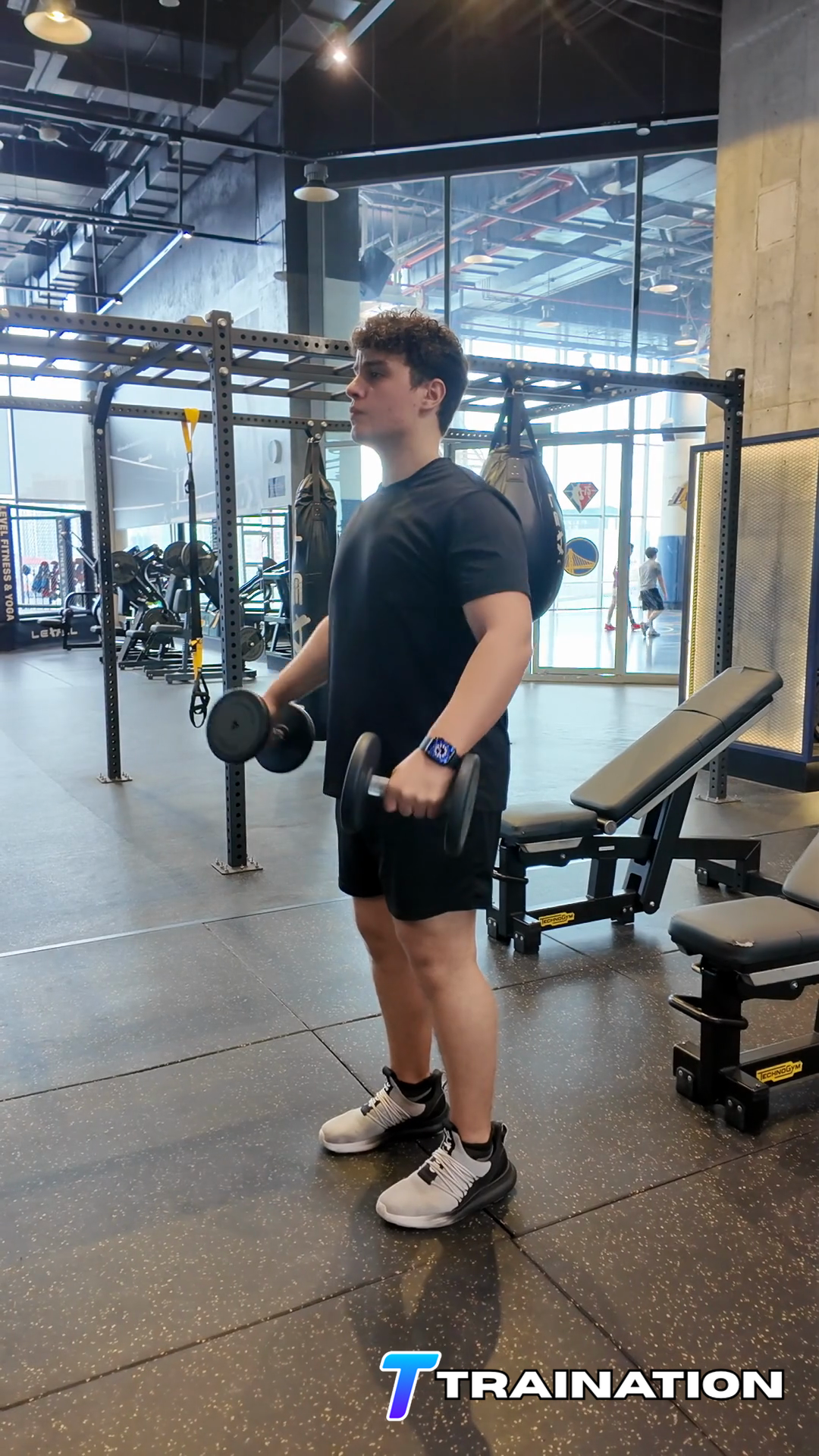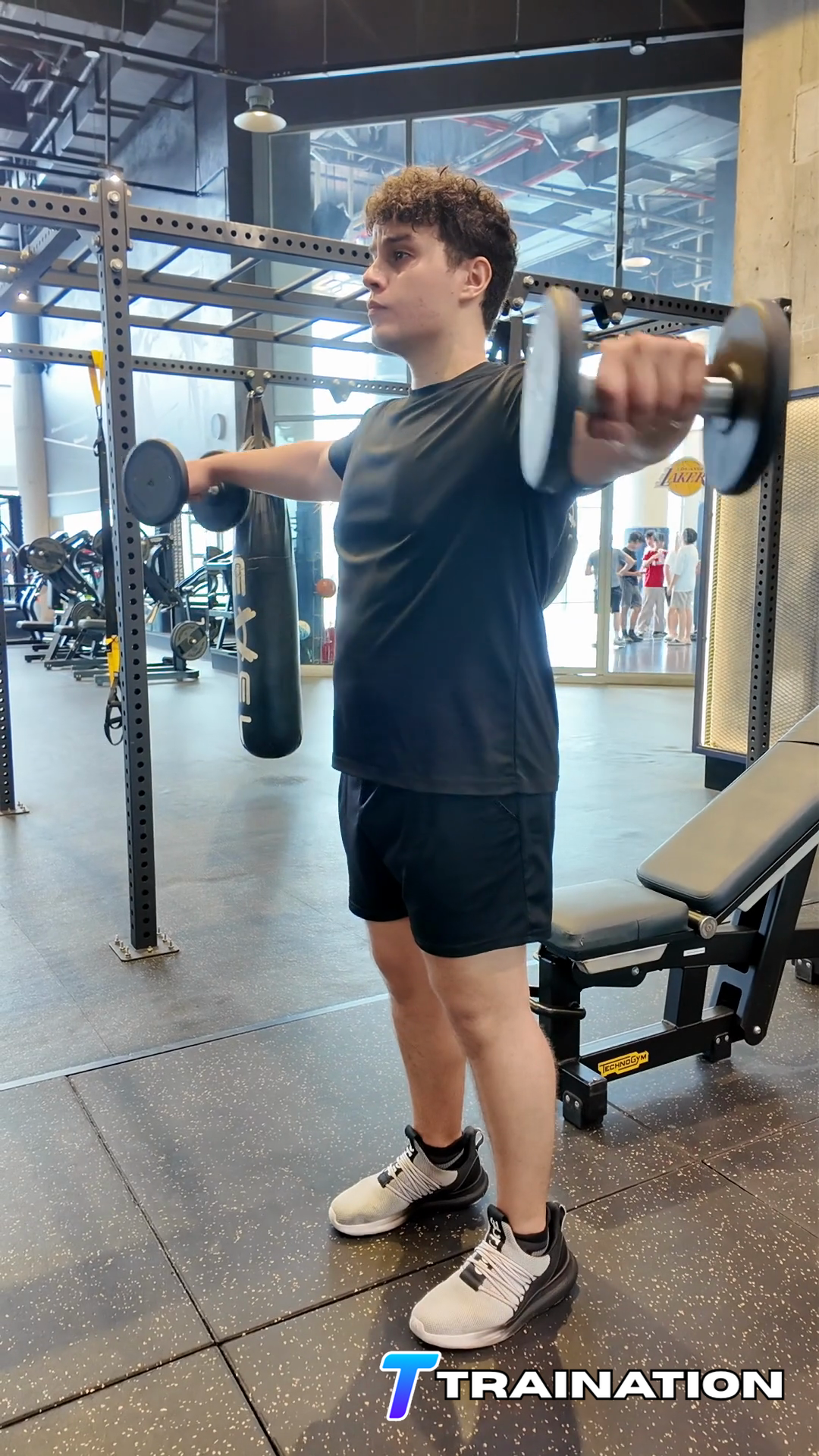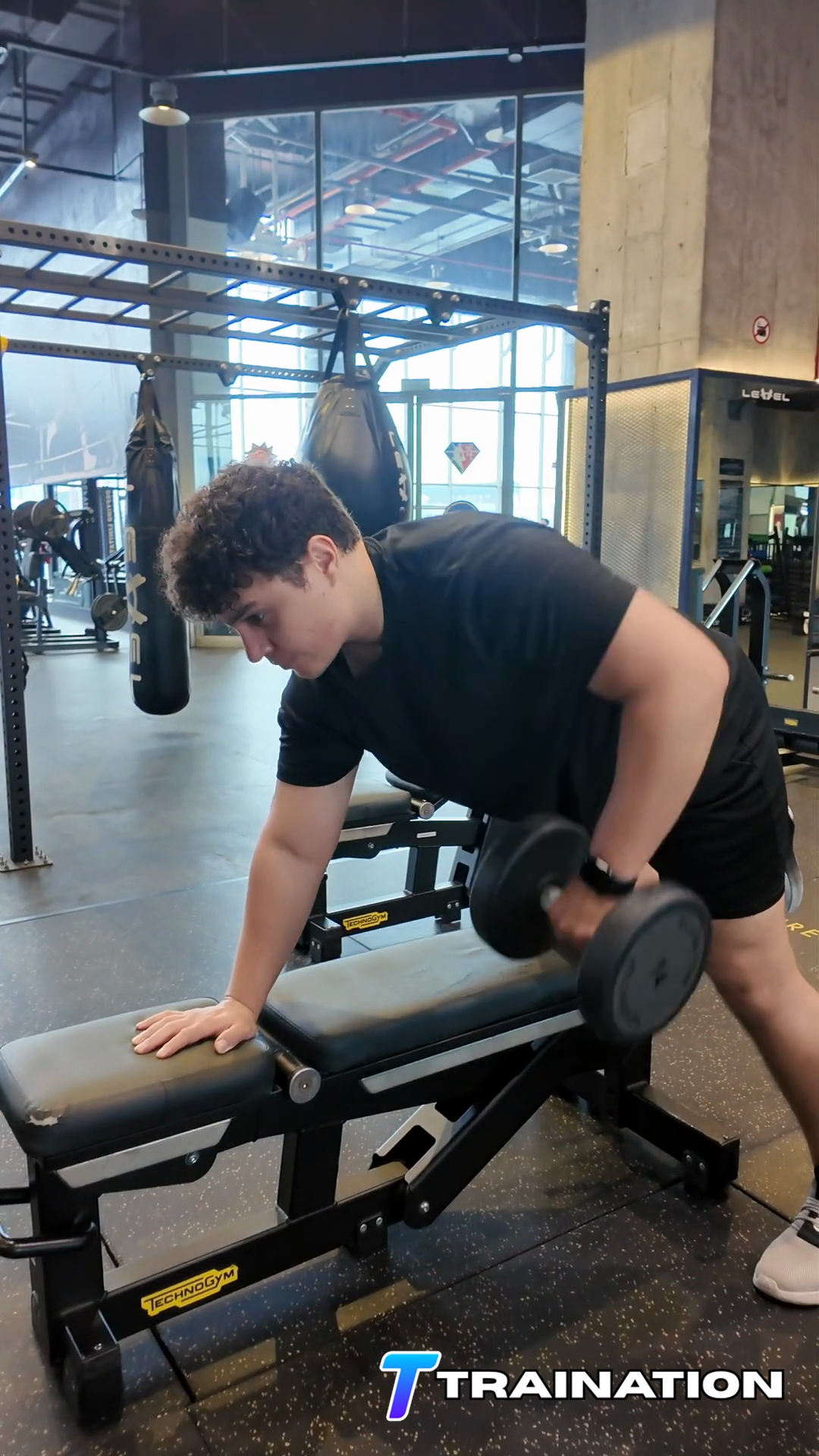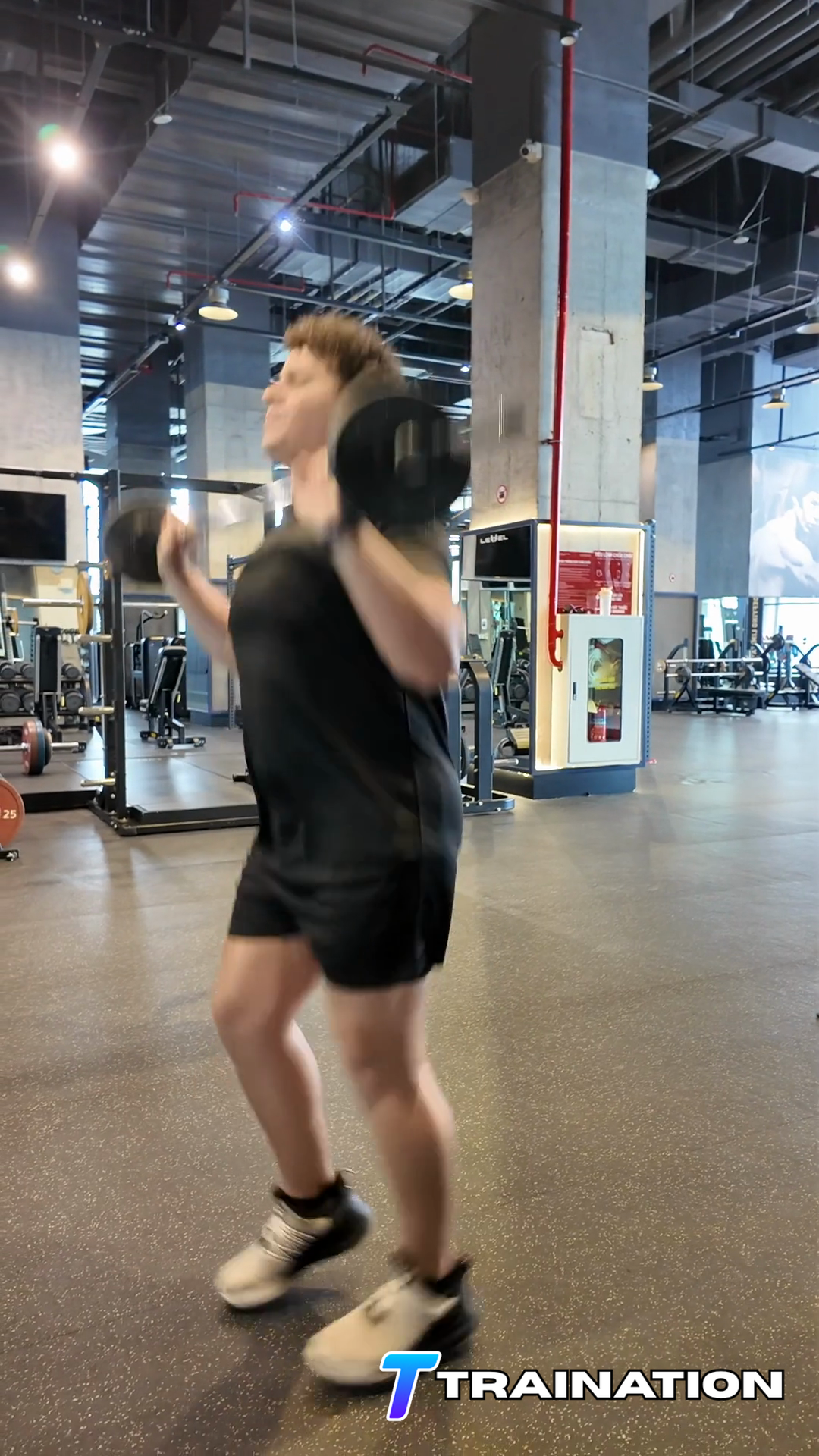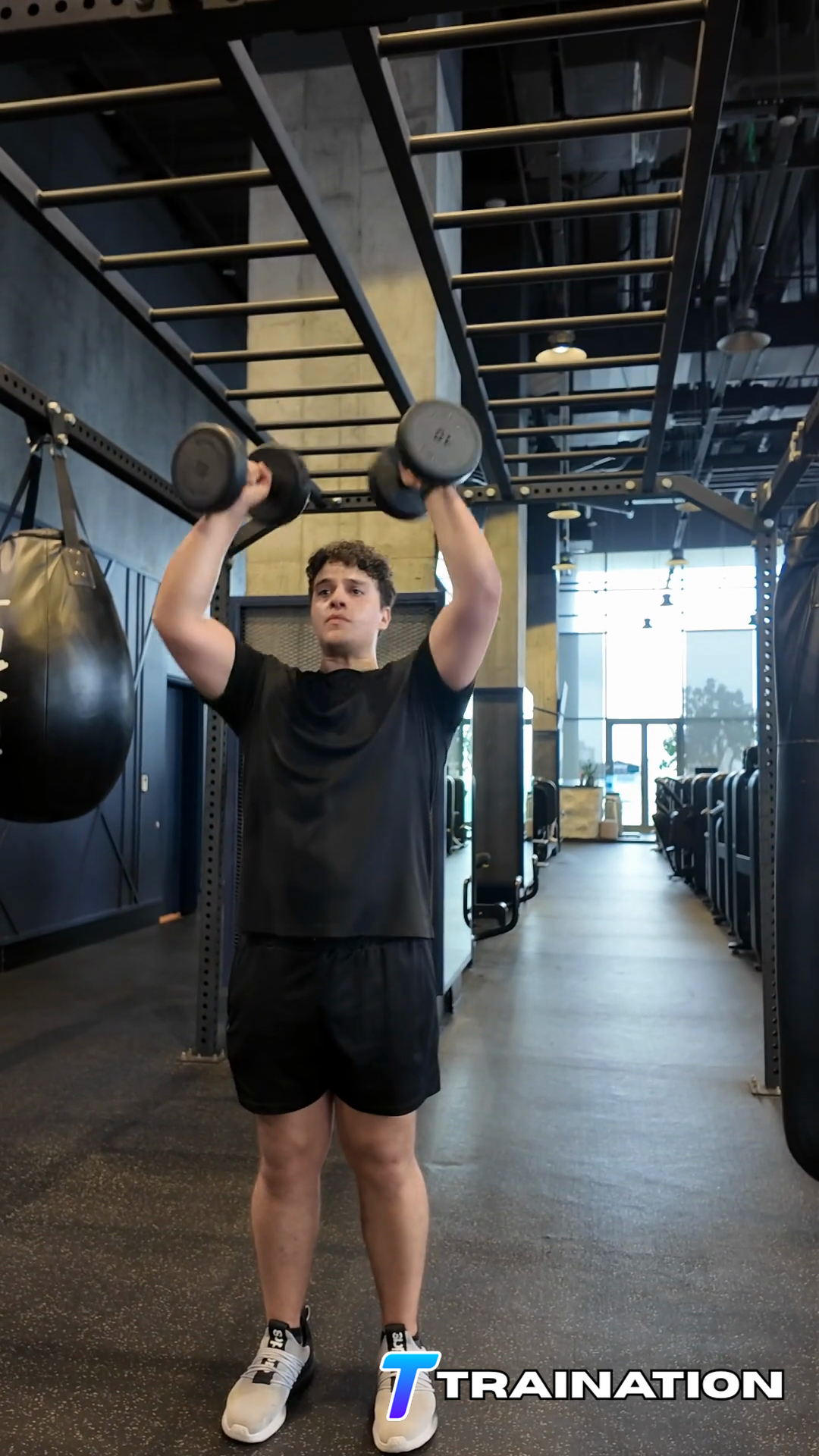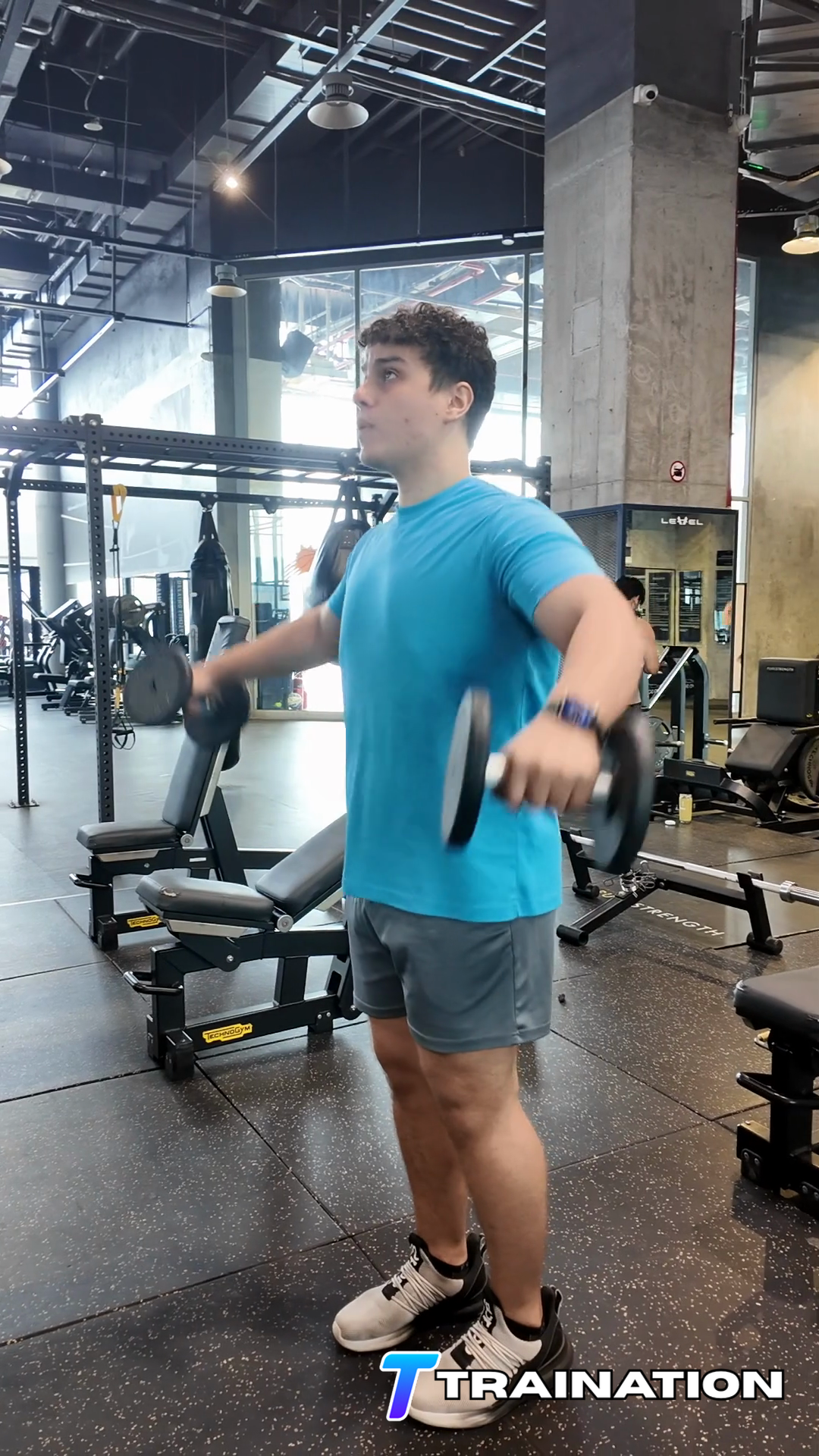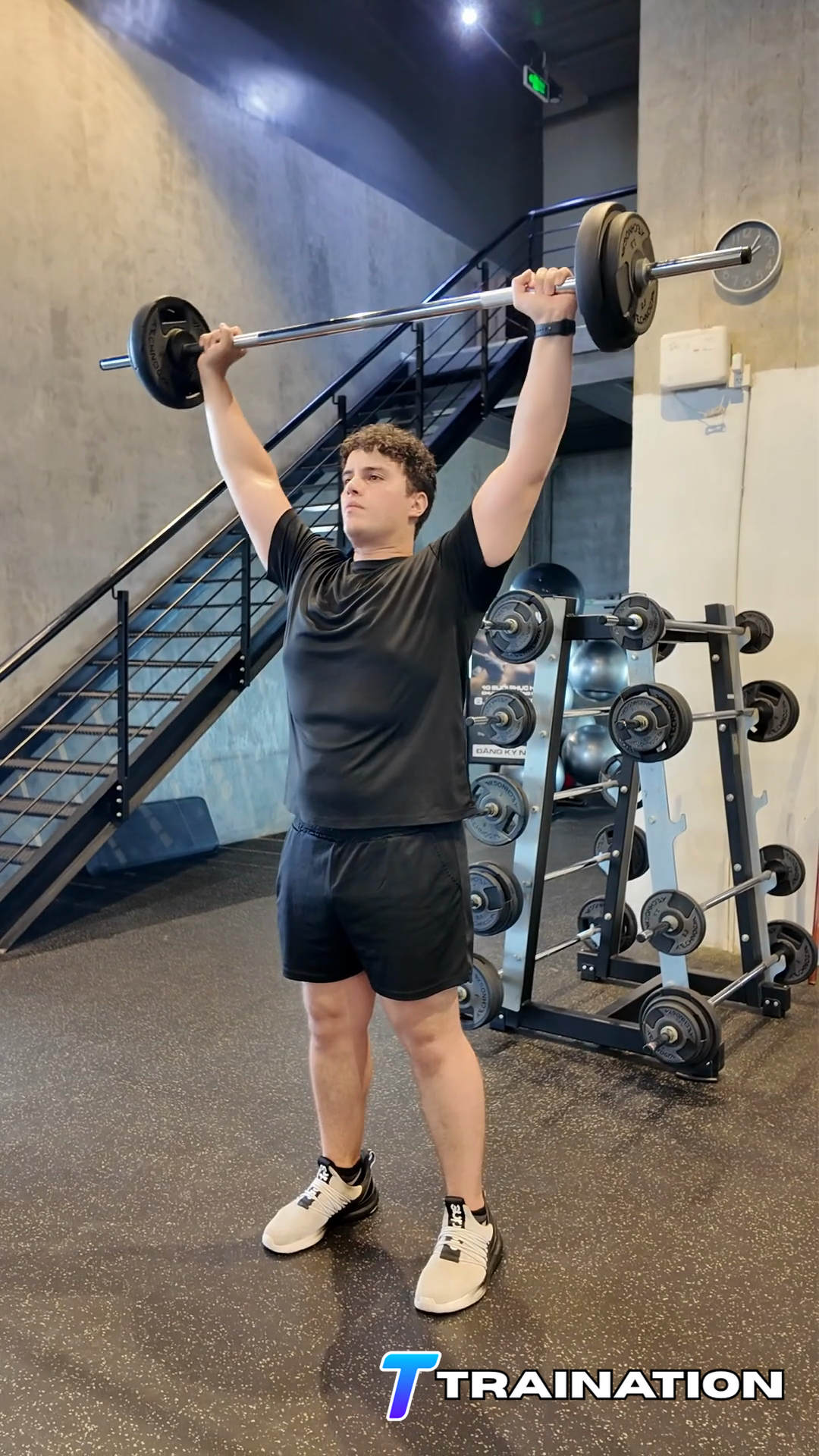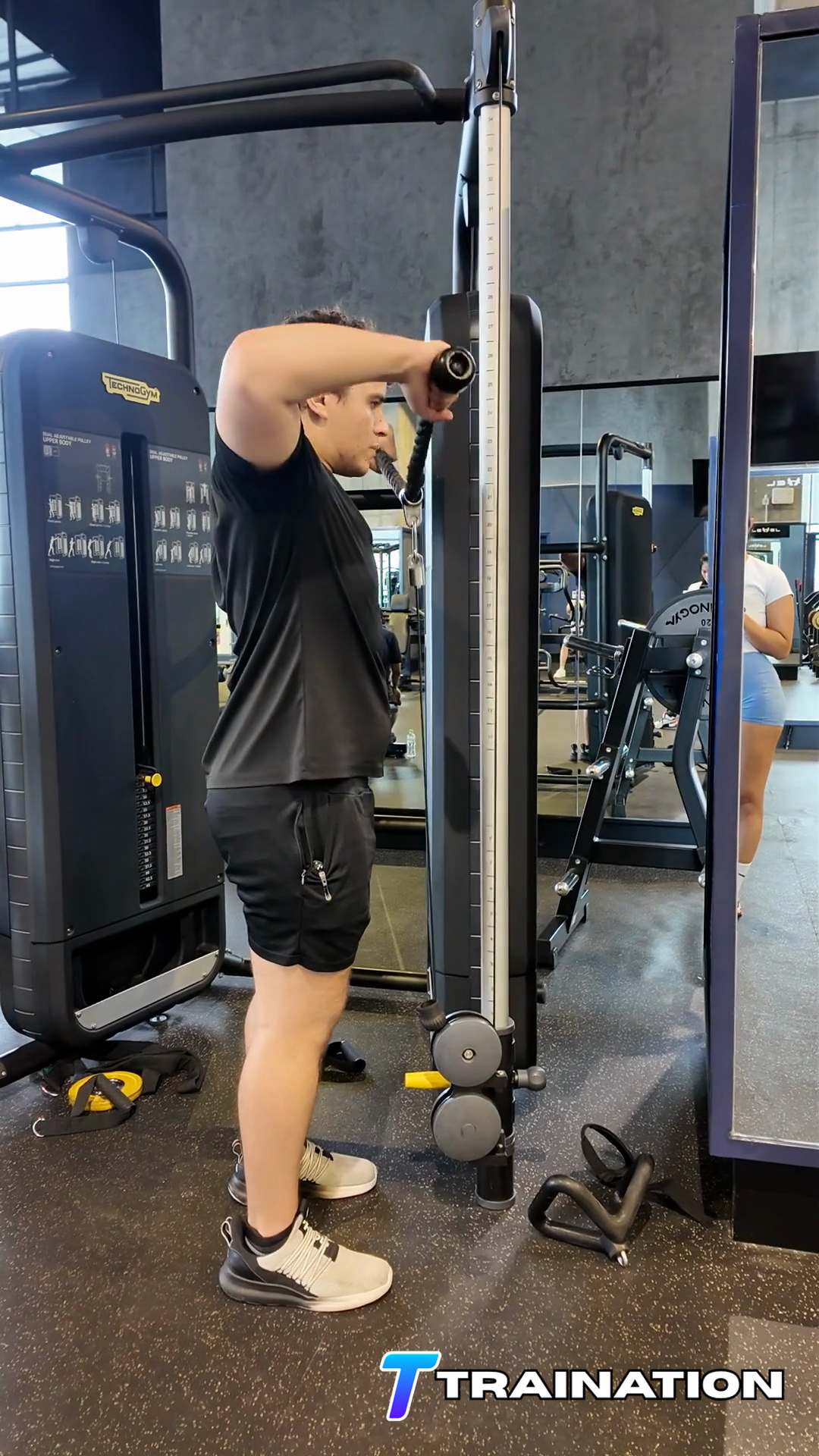
Pulling toward the ribs
Lead the elbows upward close to the torso rather than rowing the handle backward.
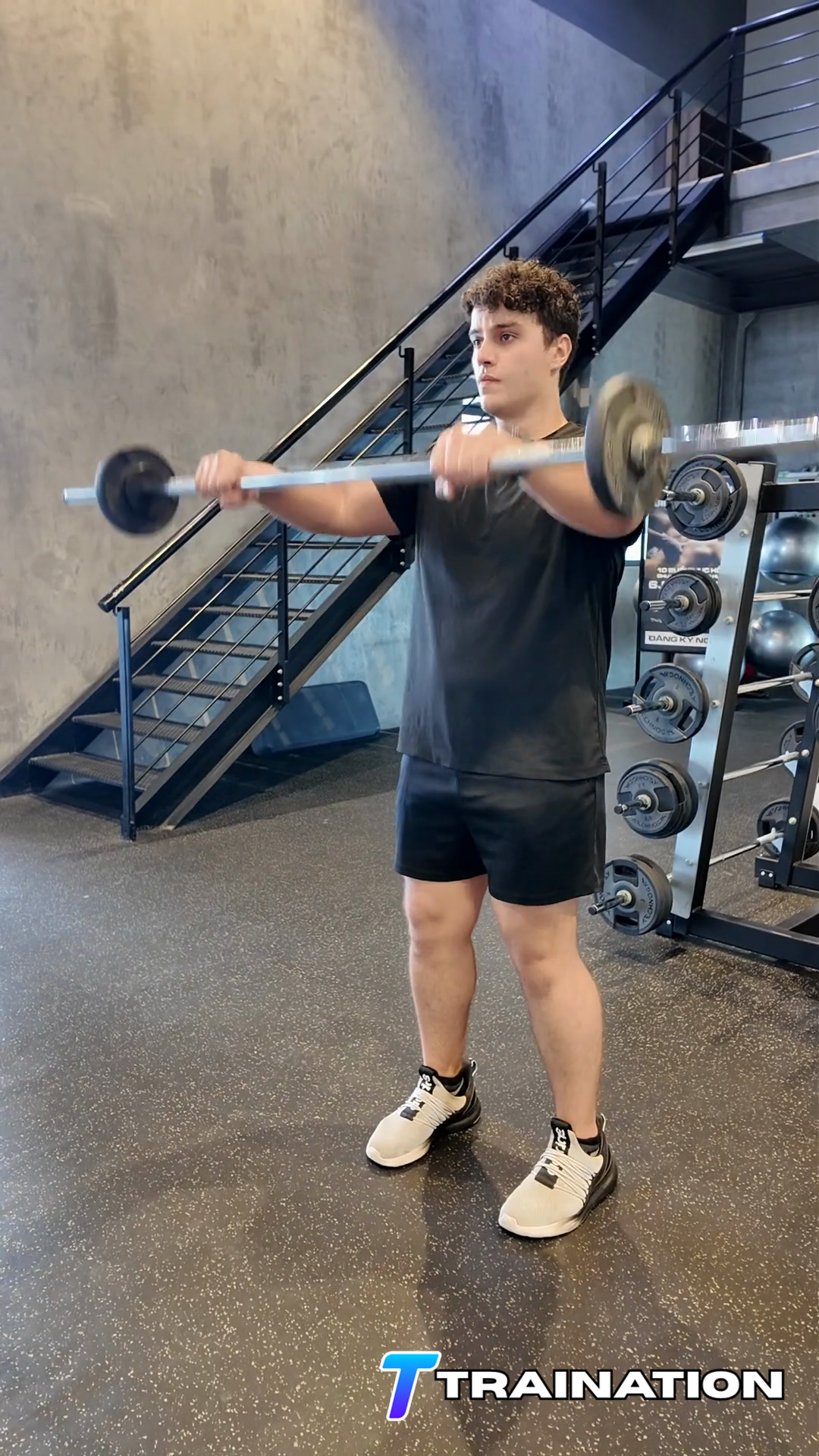
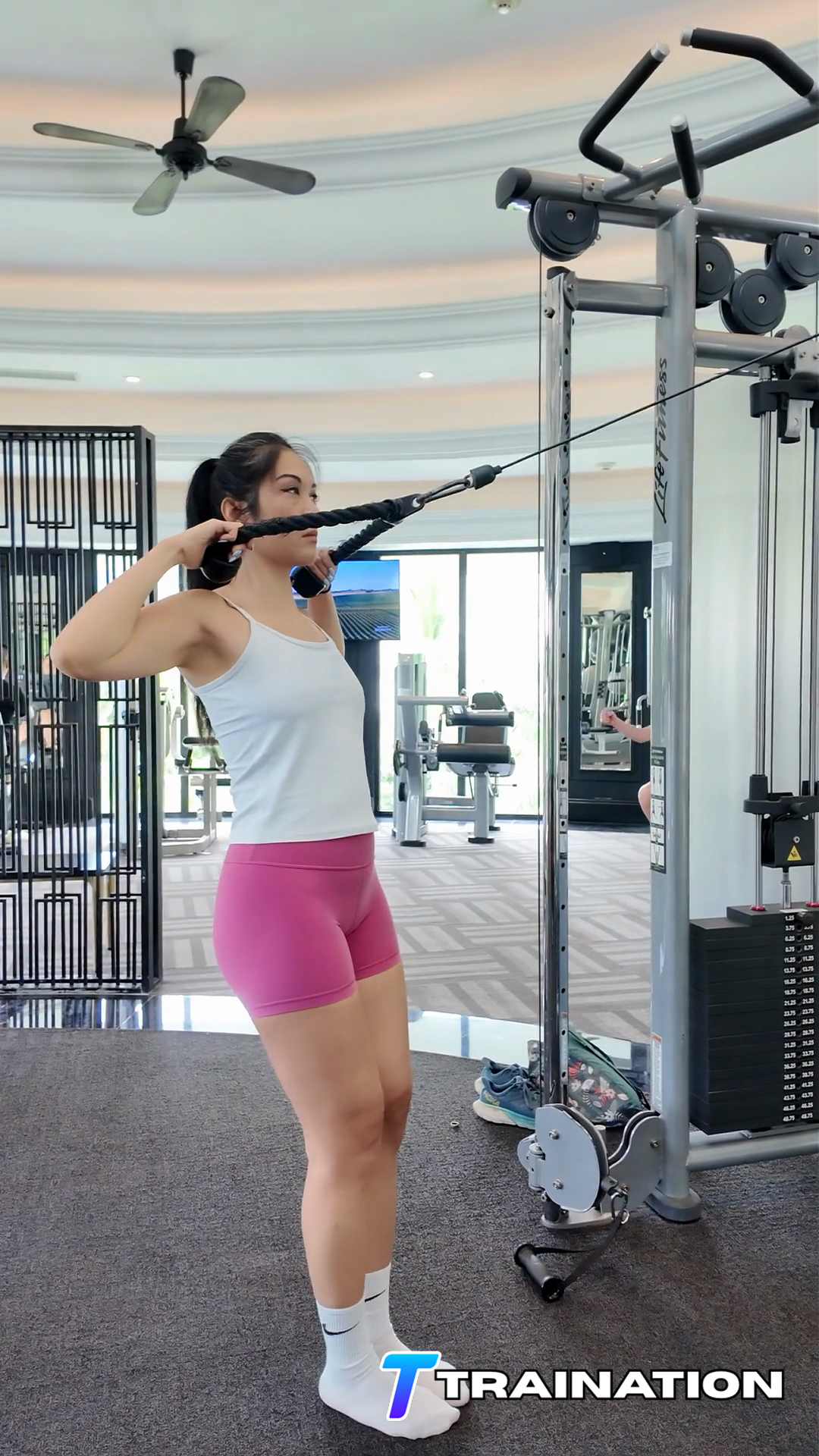
Cable Upright Row trains the side shoulders and upper trapezius by leading the elbows upward while the cable stays close to the body.
Primary musclesLateral deltoids, Upper trapezius
Secondary musclesBiceps brachii, Forearms
Follow the sequence in order, paying attention to the starting position, movement path, and finish described in each step.
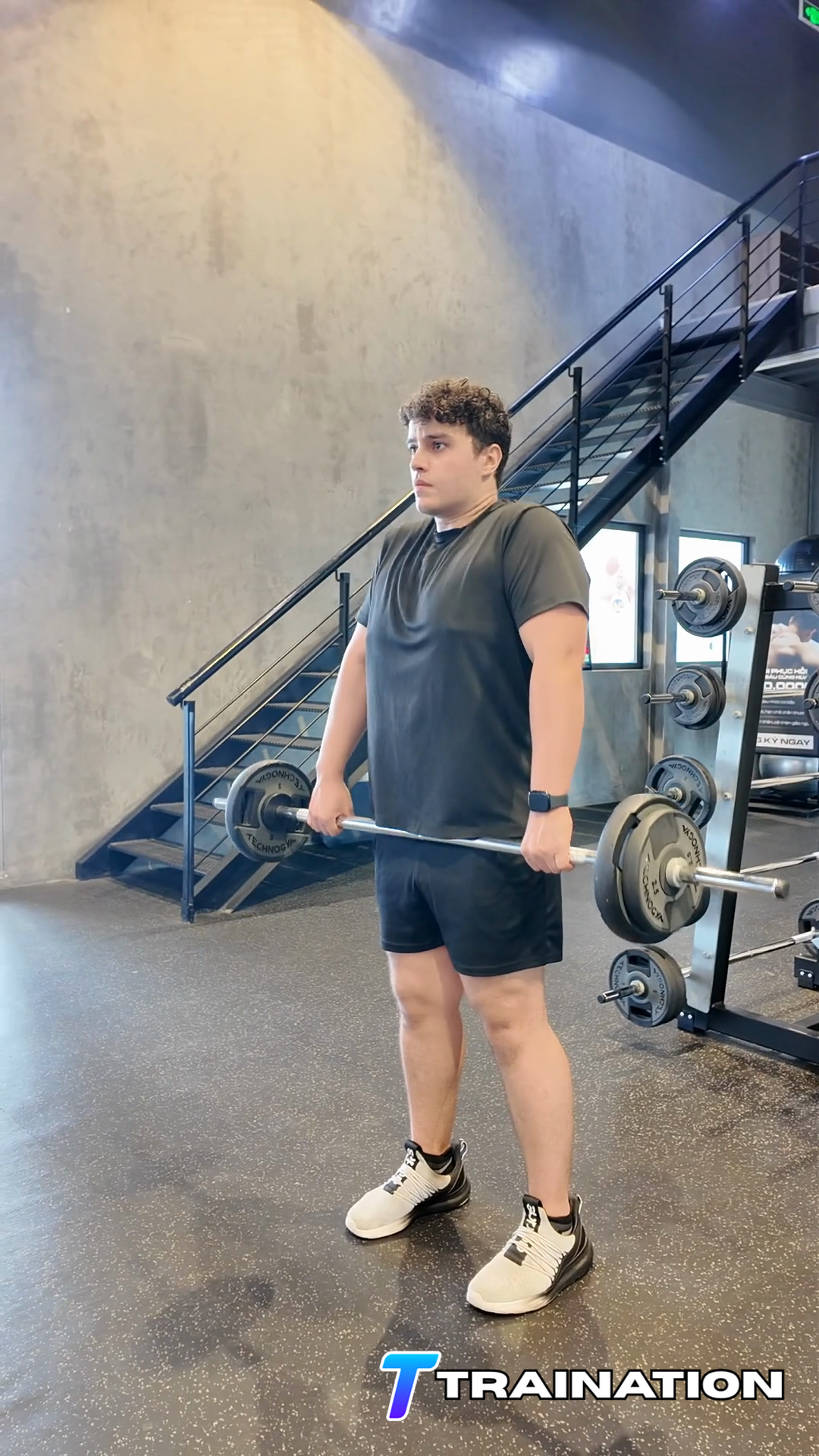
Set a low cable with a straight bar or rope and stand tall holding it in front of the thighs with an overhand grip.
Brace the trunk, keep the wrists straight, and let the shoulders rest naturally before the pull.
Lead with the elbows and pull the handle upward close to the body while the hands remain below the elbows.
Stop near lower-chest height or earlier if the shoulders or wrists feel crowded; do not force the elbows above a comfortable range.
Lower the handle slowly to the thighs without leaning, shrugging, or letting the stack drop.
Lead the elbows upward close to the torso rather than rowing the handle backward.
Keep the wrists straight and hands below the elbows throughout the pull.
Stop at the highest comfortable range instead of pulling through shoulder or wrist crowding.
Keep the torso still and reduce the stack if momentum is needed.
Place Cable Upright Row after compound pressing so local shoulder fatigue does not reduce overhead or bench-press performance.
Use one to three times per week and count pressing volume that already trains the front and side shoulders.
| Goal | Sets | Reps or time | Rest | Effort and execution |
|---|---|---|---|---|
| Strength accessory | 2–4 | 6–10 | 75–150 sec | Leave 2–3 controlled reps in reserve |
| Muscle growth | 2–4 | 10–20 | 60–120 sec | Usually 1–3 clean reps in reserve |
Scale the movement
Reduce the stack until the elbows can lead without wrist or shoulder crowding.
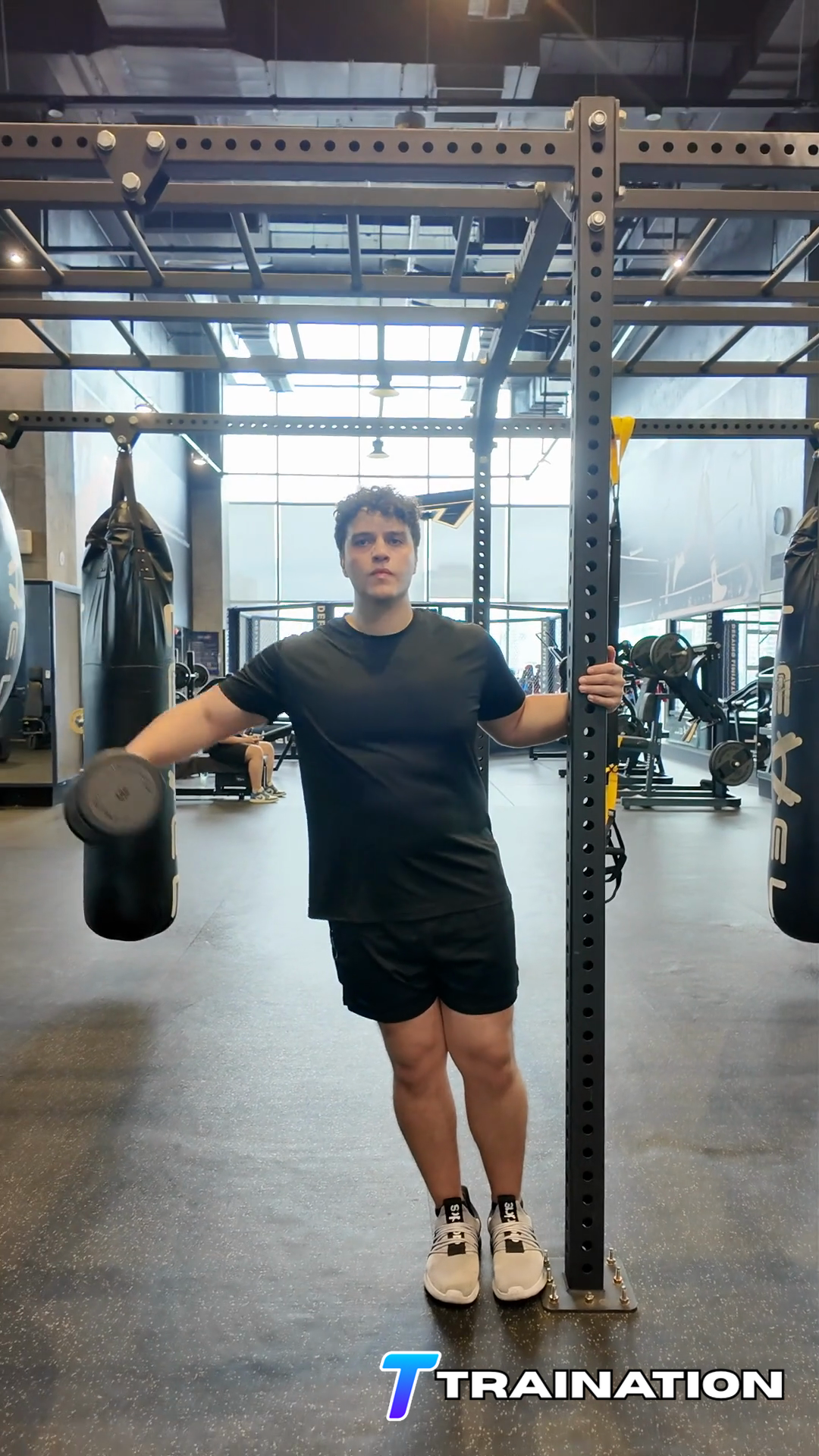
Use a lighter one-arm side raise when the two-arm upright path is difficult to control.
Pause below the highest comfortable elbow position without shrugging or bending the wrists.
Use a rope to allow the hands to separate only after the straight-handle path is comfortable.
Turn Cable Upright Row and the rest of your exercise library into repeatable client programs.
Explore the workout builder