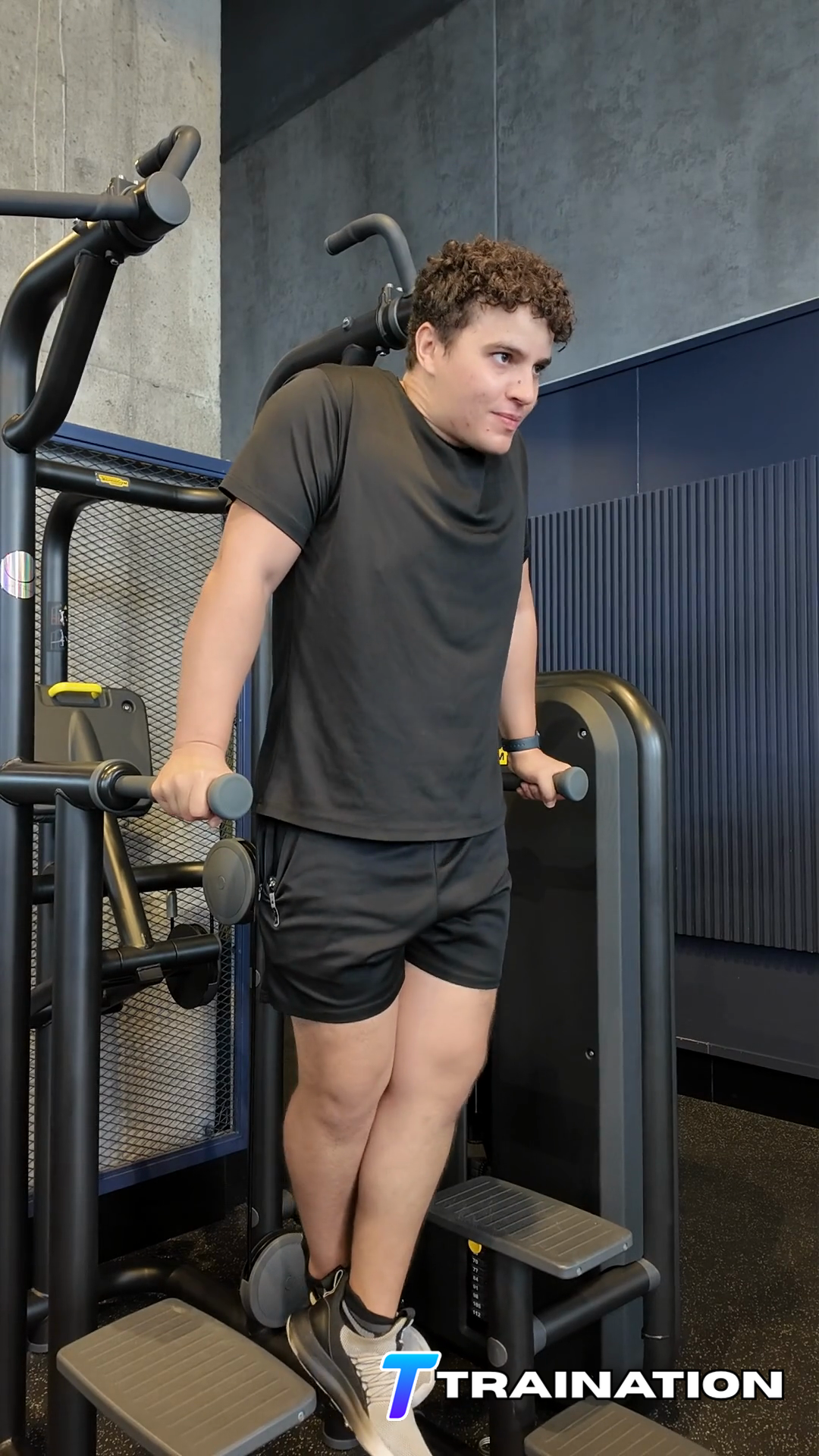
Bending the elbows
Keep the elbows straight so the repetition remains a shoulder-blade movement rather than becoming a dip.
Dip Shrugs Serratus Shrugs targets the upper trapezius through controlled shoulder-blade elevation.
Primary musclesSerratus anterior, Lower trapezius
Secondary musclesPectoralis minor, Triceps brachii
Follow the sequence in order, paying attention to the starting position, movement path, and finish described in each step.
Support the body on parallel bars with straight elbows, shoulders away from the ears, and feet clear of the floor.
Brace the trunk and keep the elbows locked so all motion comes from the shoulder blades around the rib cage.
Allow the torso to sink a small distance between the shoulders without bending the elbows.
Press firmly through the bars to push the torso upward by moving the shoulder blades down and around the ribs.
Pause in the tall support, then repeat the small shoulder-blade motion without turning it into a dip.
Keep the elbows straight so the repetition remains a shoulder-blade movement rather than becoming a dip.
Press the bars away and move the shoulder blades down and around the ribs instead of lifting them toward the neck.
Use a small controlled rise and sink without dropping deeply into the front of the shoulders.
Keep the legs and trunk still so momentum does not replace the shoulder-blade action.
Place Dip Shrugs Serratus Shrugs after the main upper-body pulls and presses so grip or shoulder-girdle fatigue does not limit compound work.
Use one to three times per week while accounting for loaded carries, deadlifts, rows, and overhead work.
| Goal | Sets | Reps or time | Rest | Effort and execution |
|---|---|---|---|---|
| Strength accessory | 2–4 | 6–10 | 75–150 sec | Leave 2–3 controlled reps in reserve |
| Muscle growth | 2–4 | 8–15 | 60–120 sec | Usually 1–3 clean reps in reserve |
Scale the movement
Hold a stable support or use an easier setup while learning the movement.
Use a shorter pain-free range and expand it only as control improves.
Slow the lowering phase without changing the start, finish, or joint alignment.
Add a brief pause at the hardest controlled position before increasing load.
Turn Dip Shrugs Serratus Shrugs and the rest of your exercise library into repeatable client programs.
Explore the workout builder