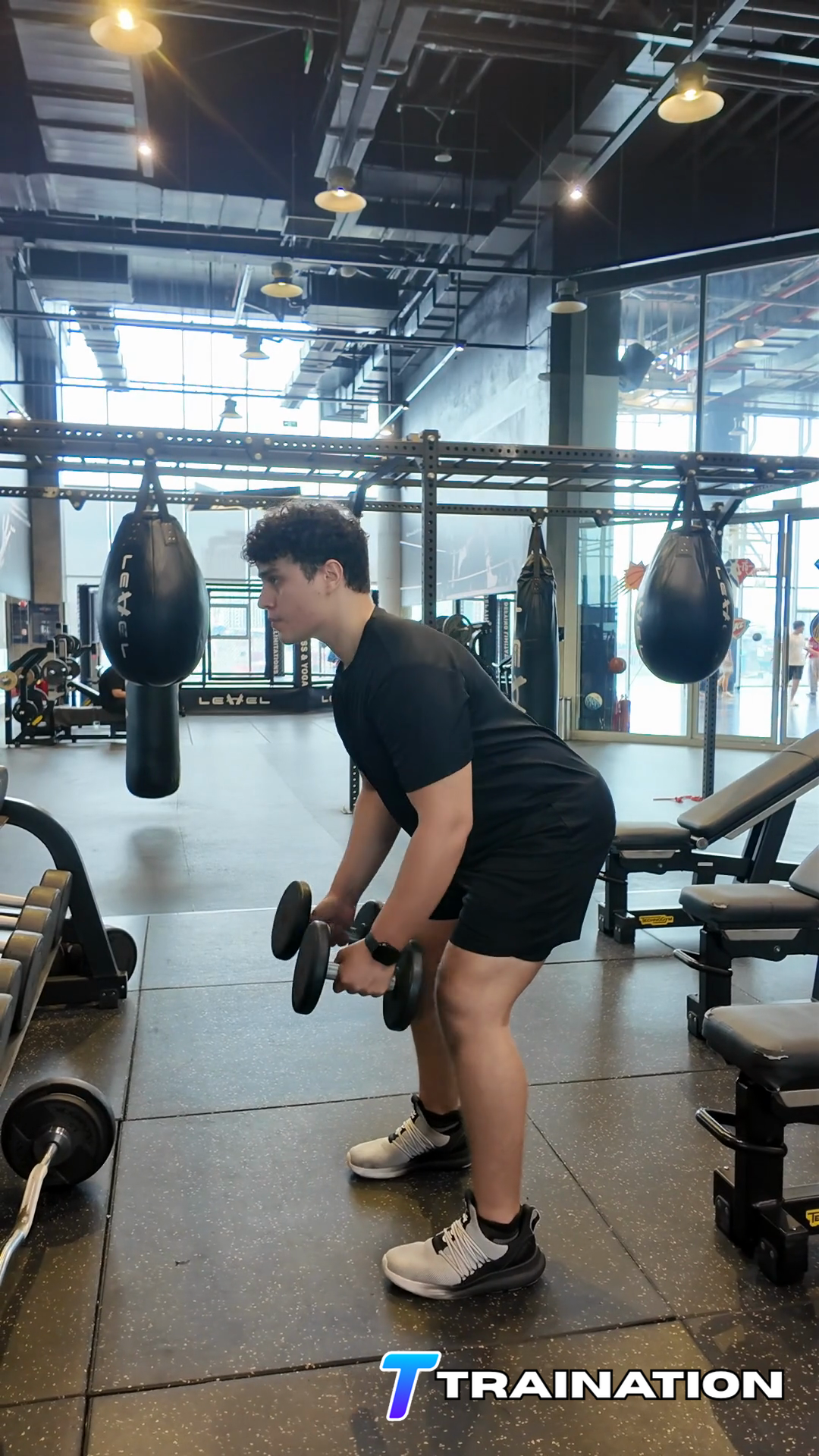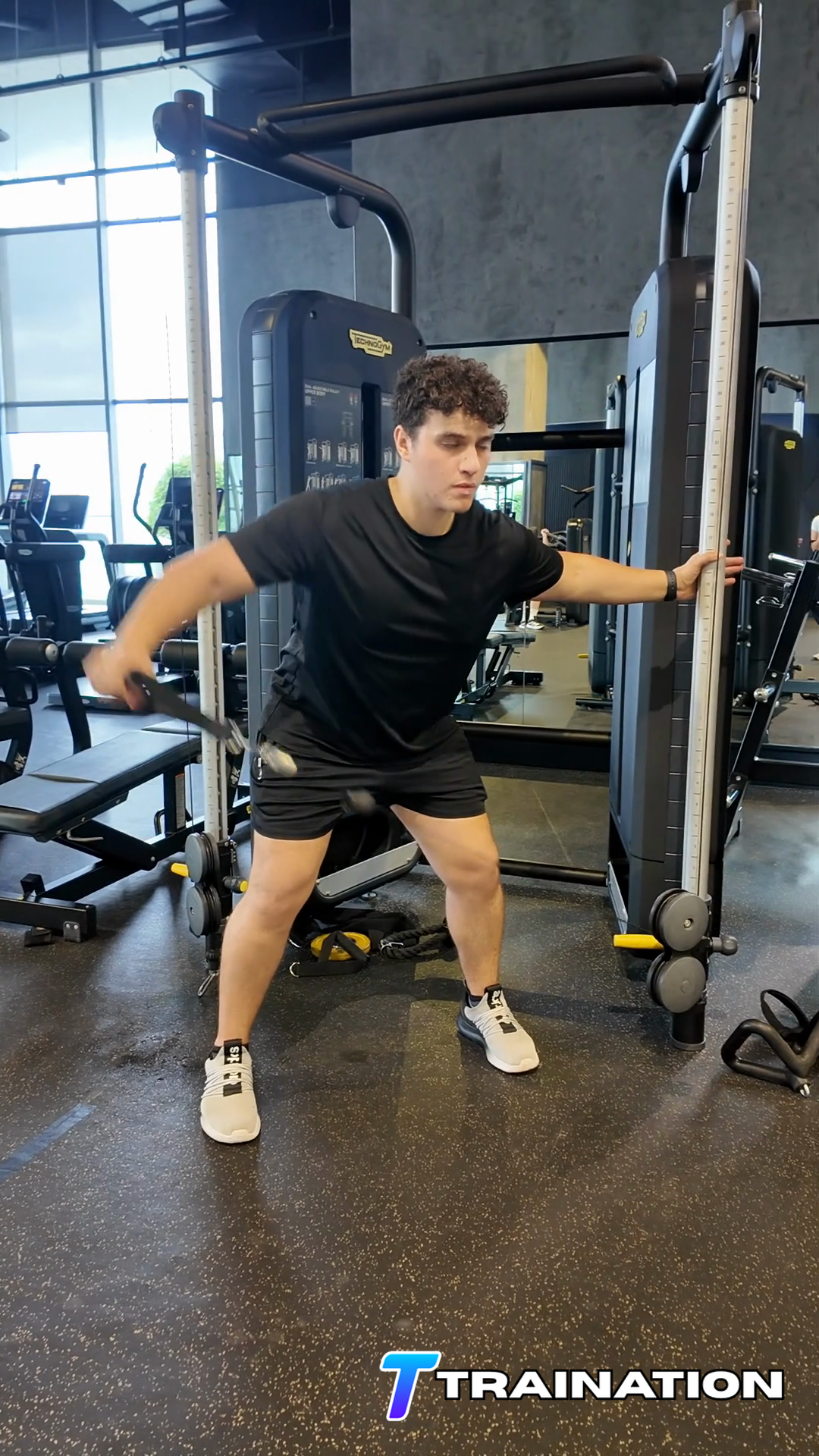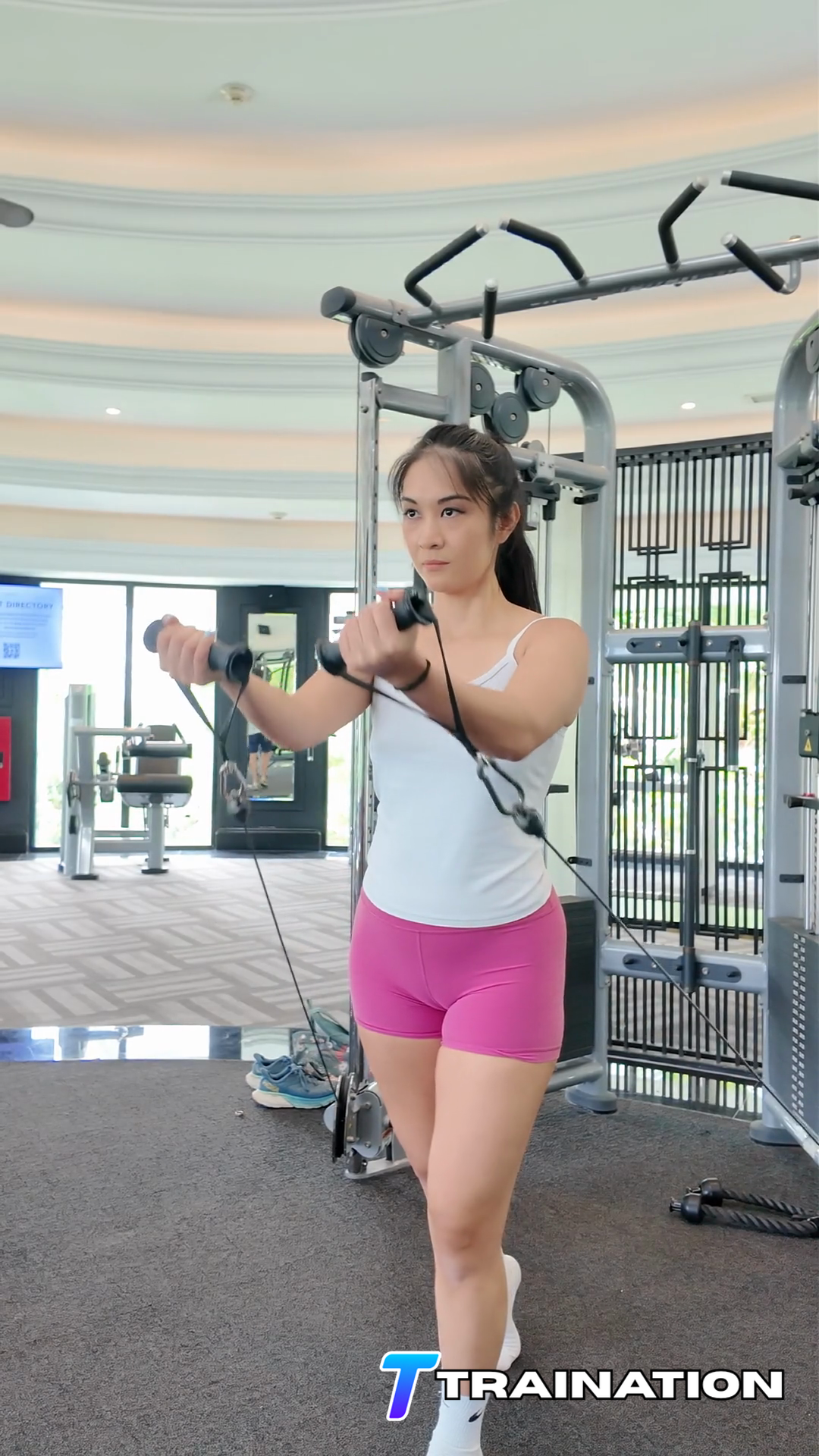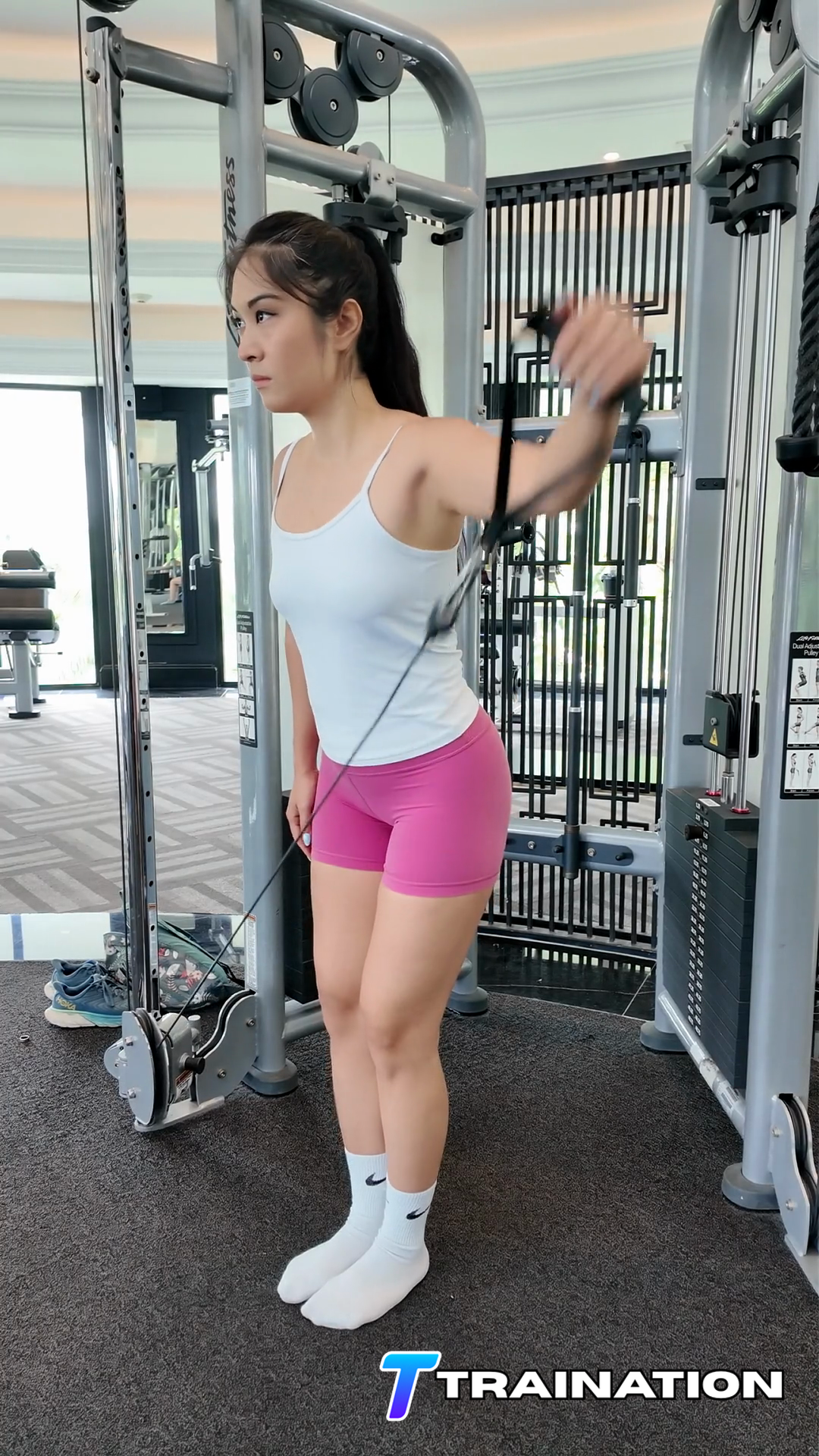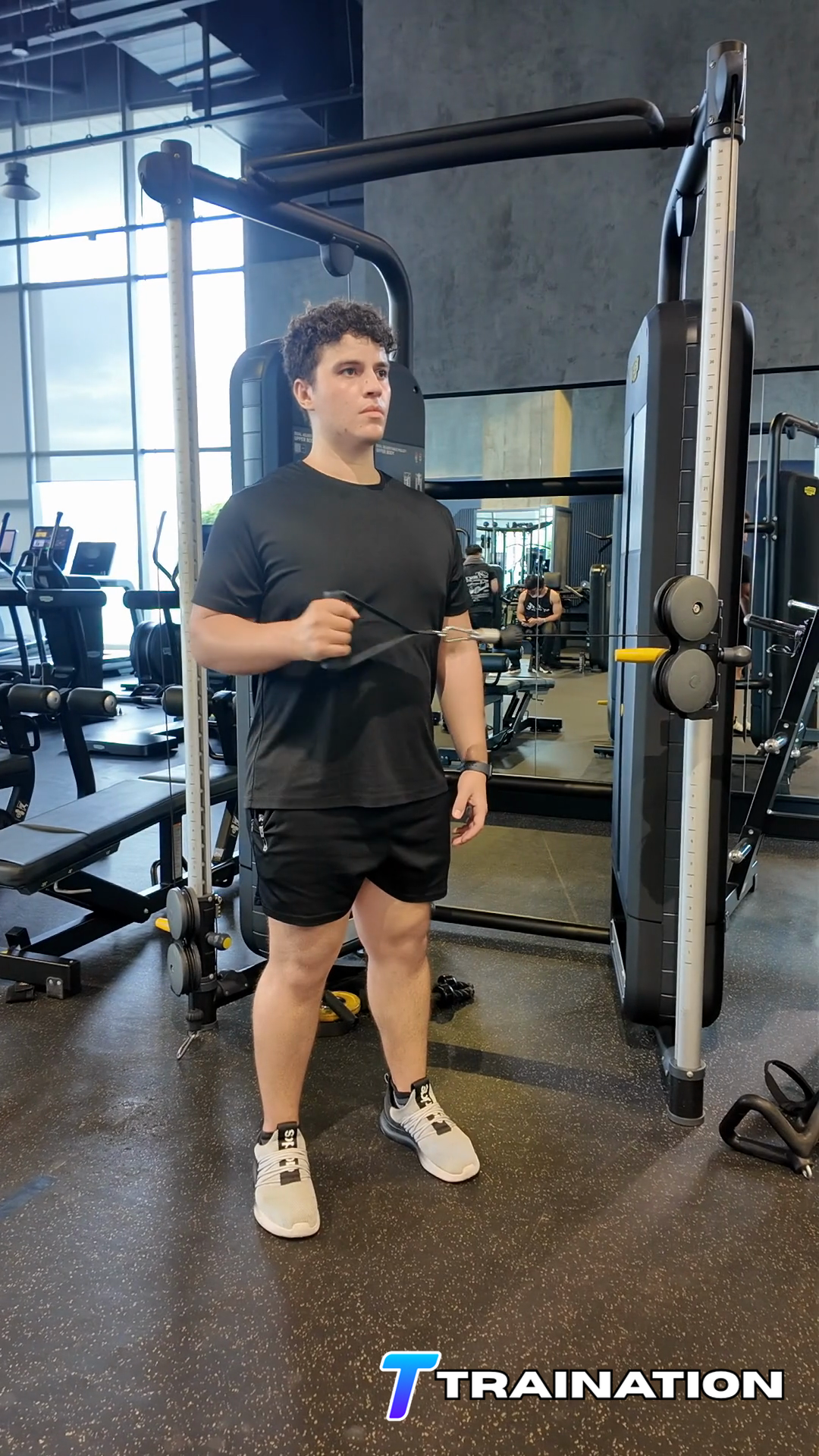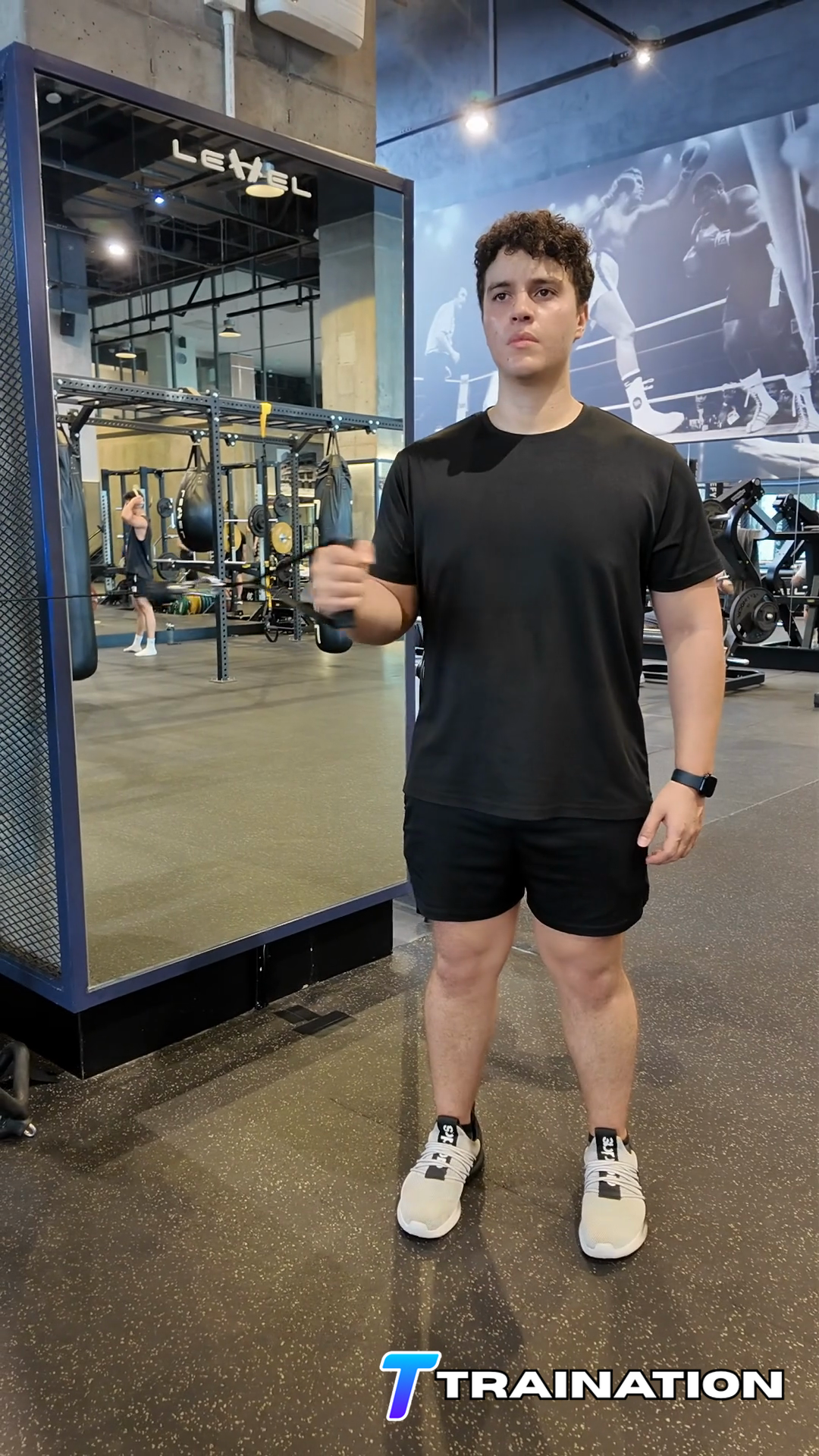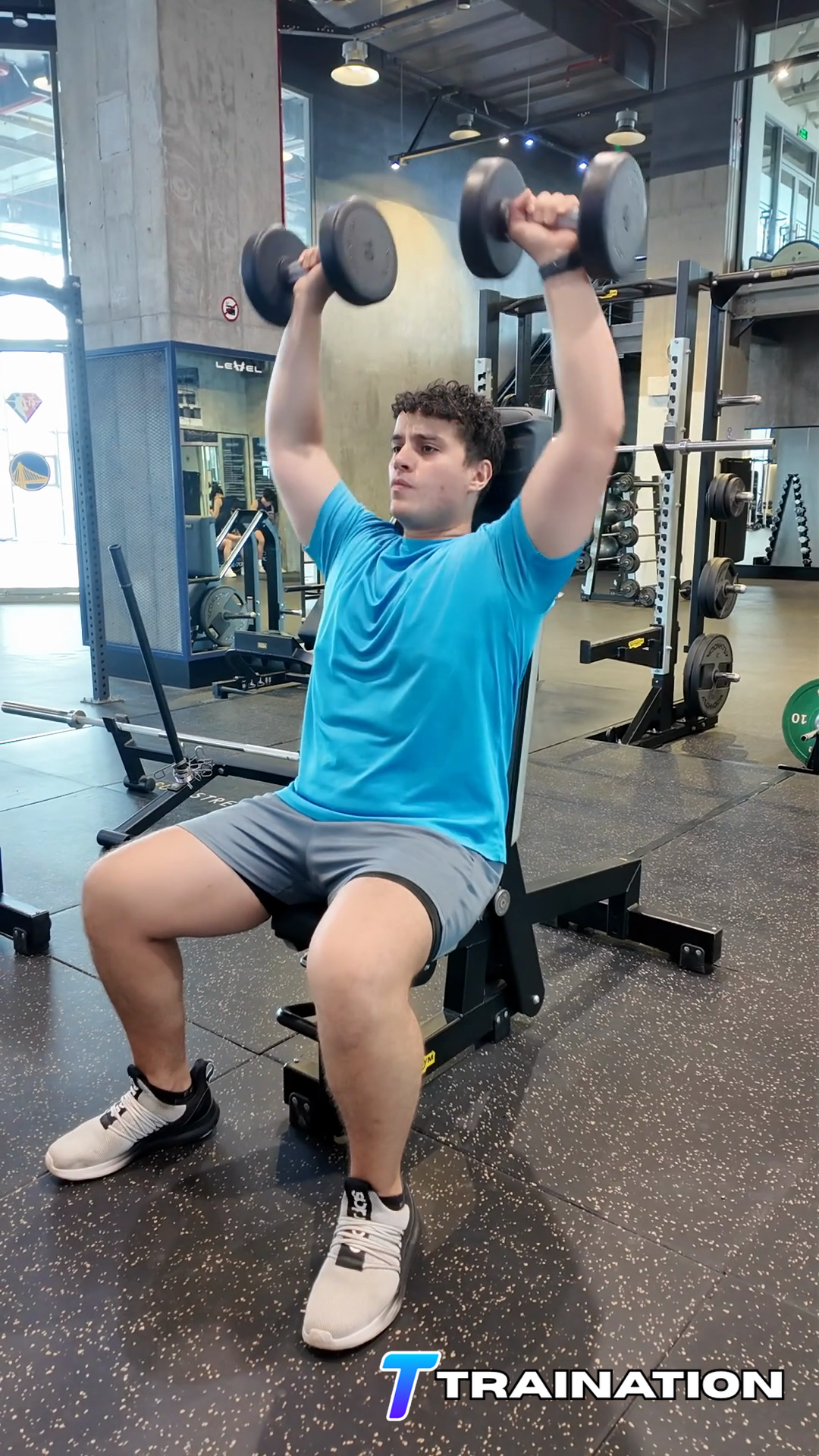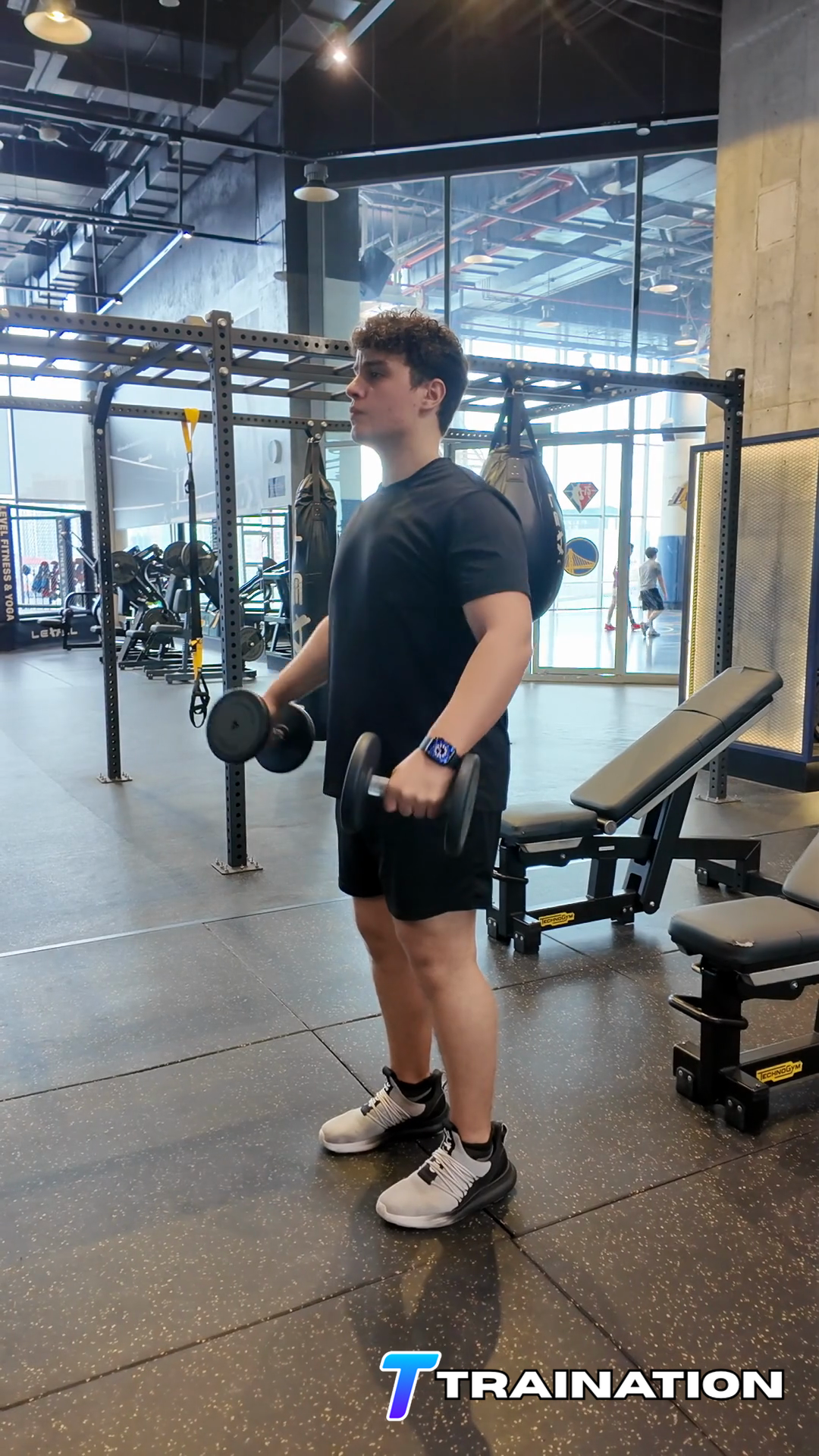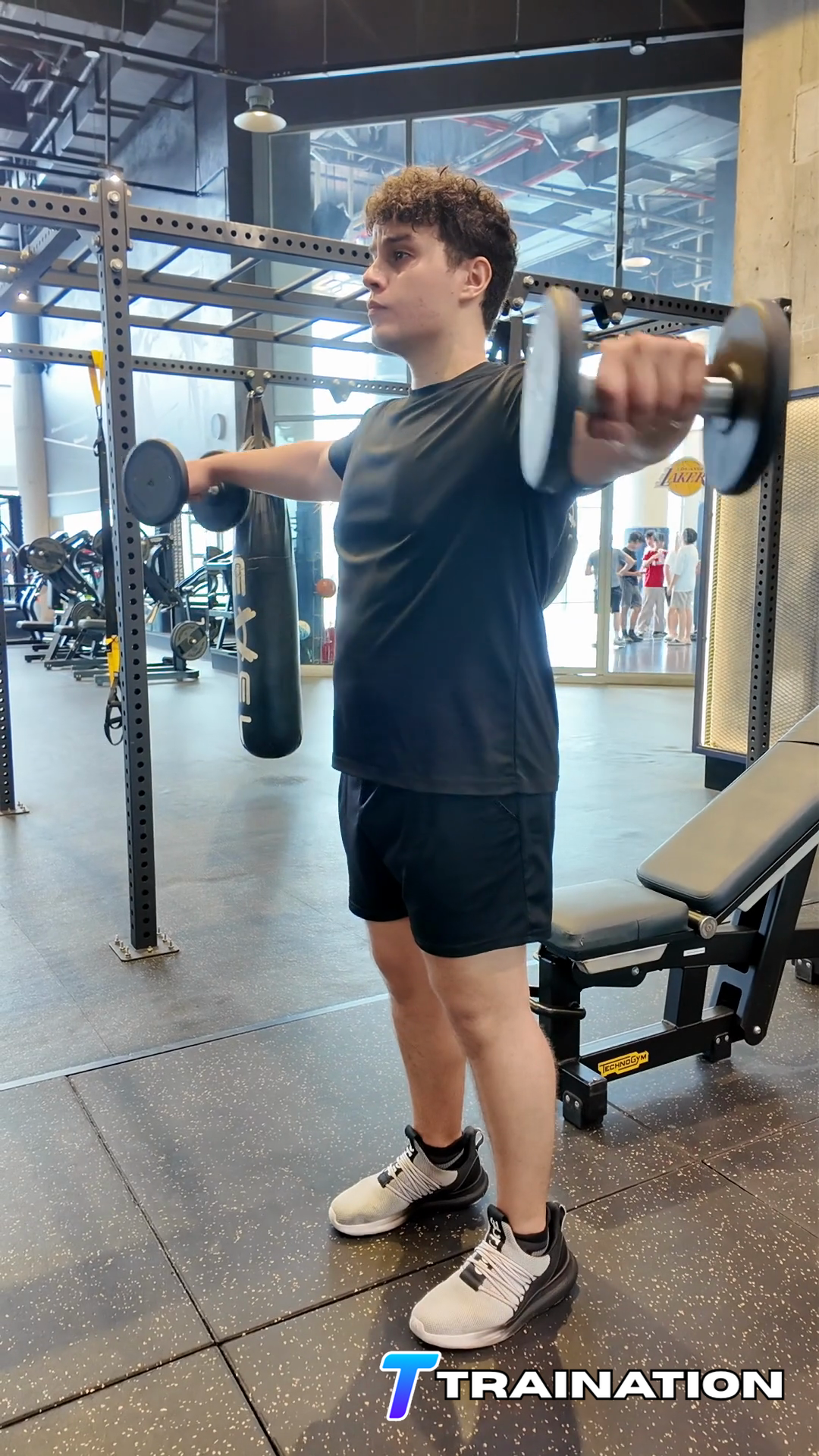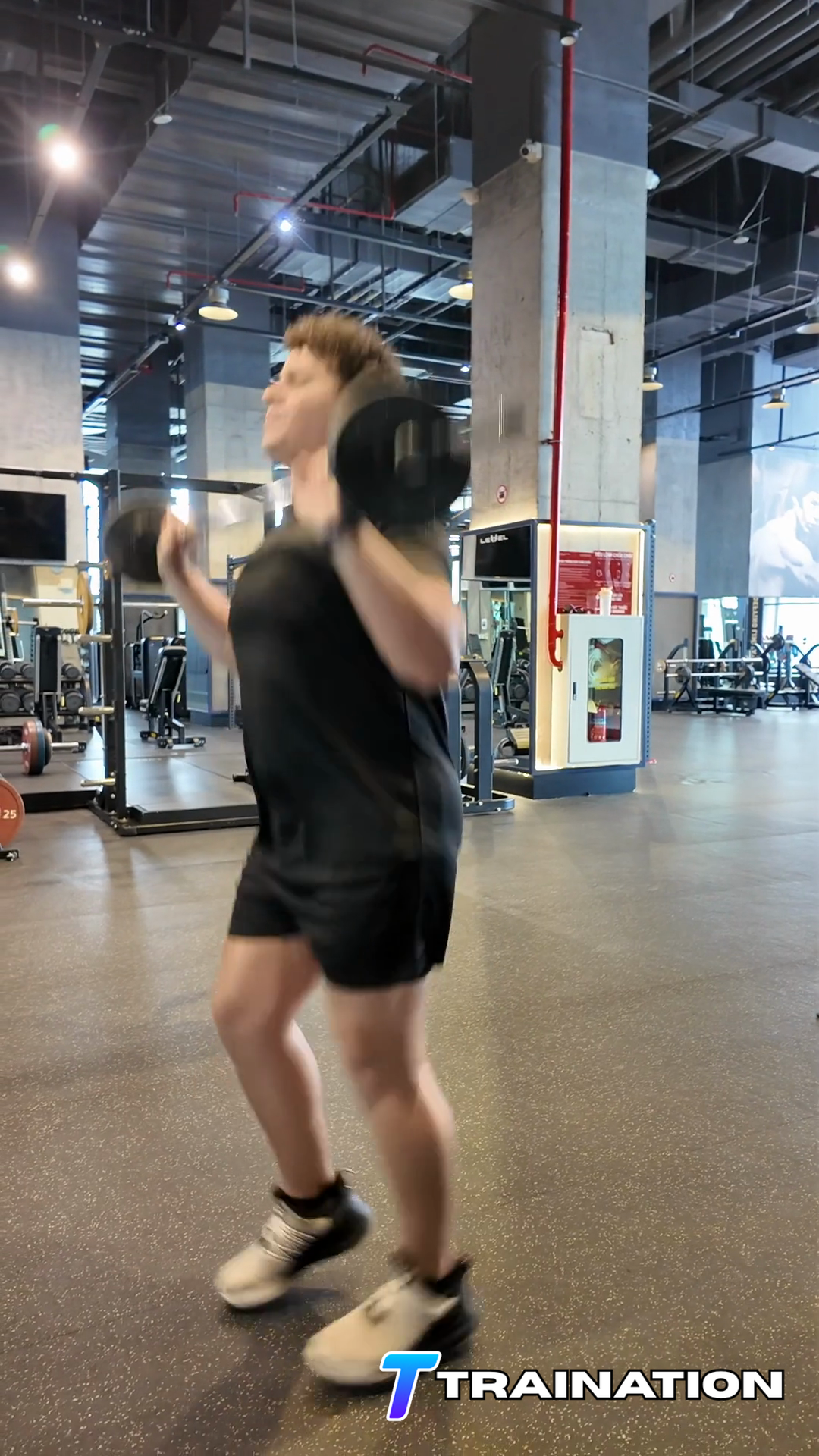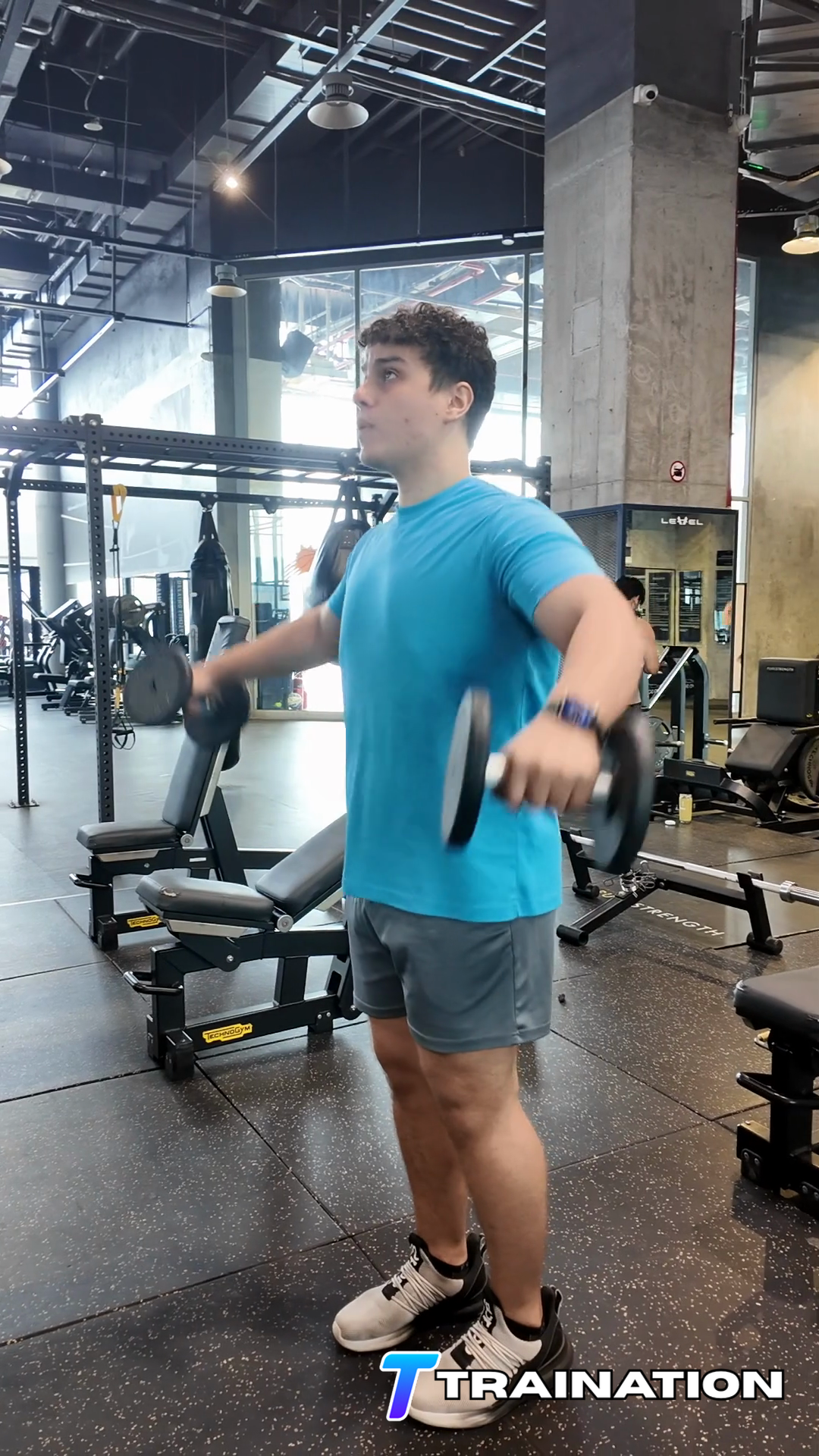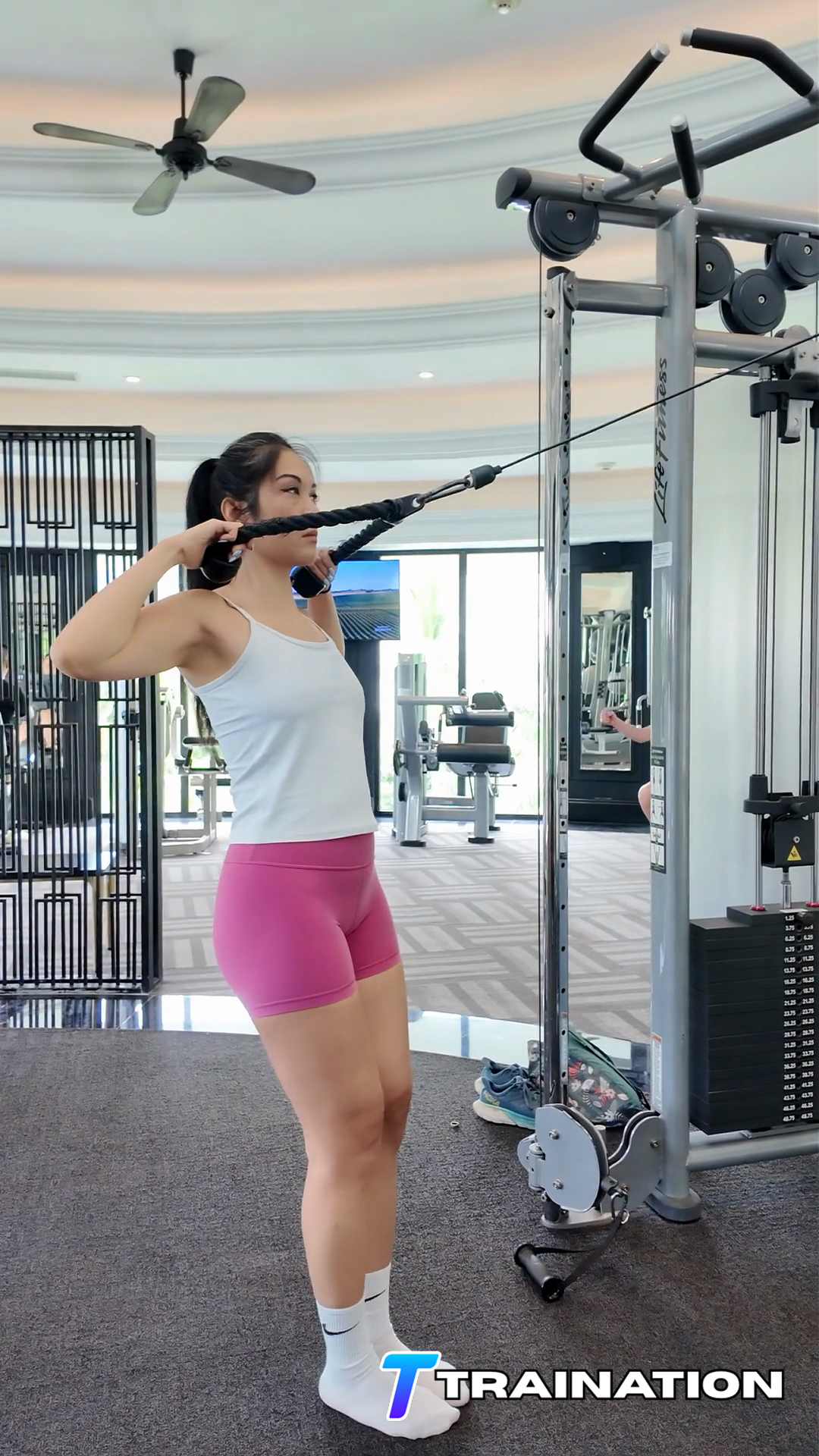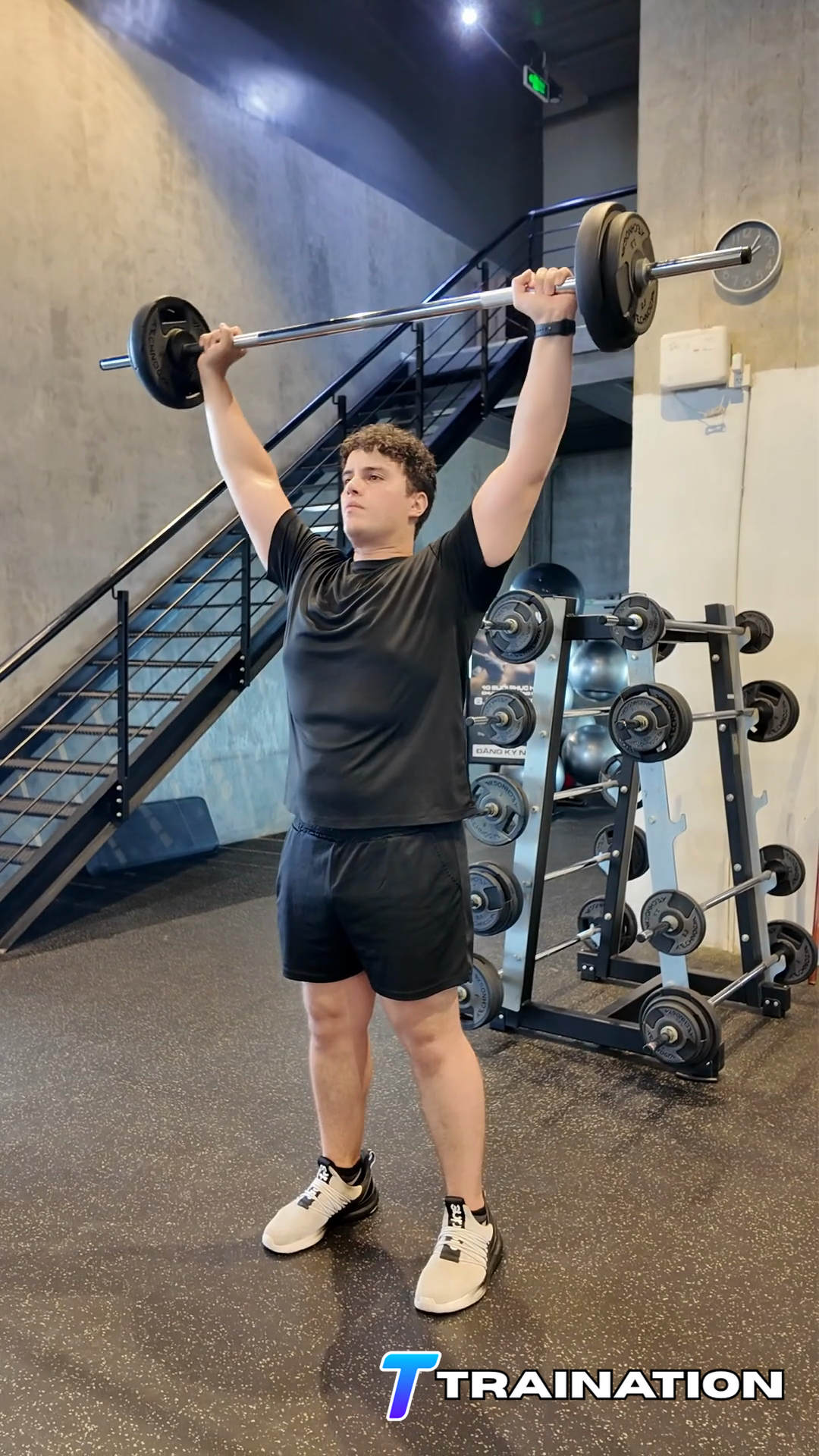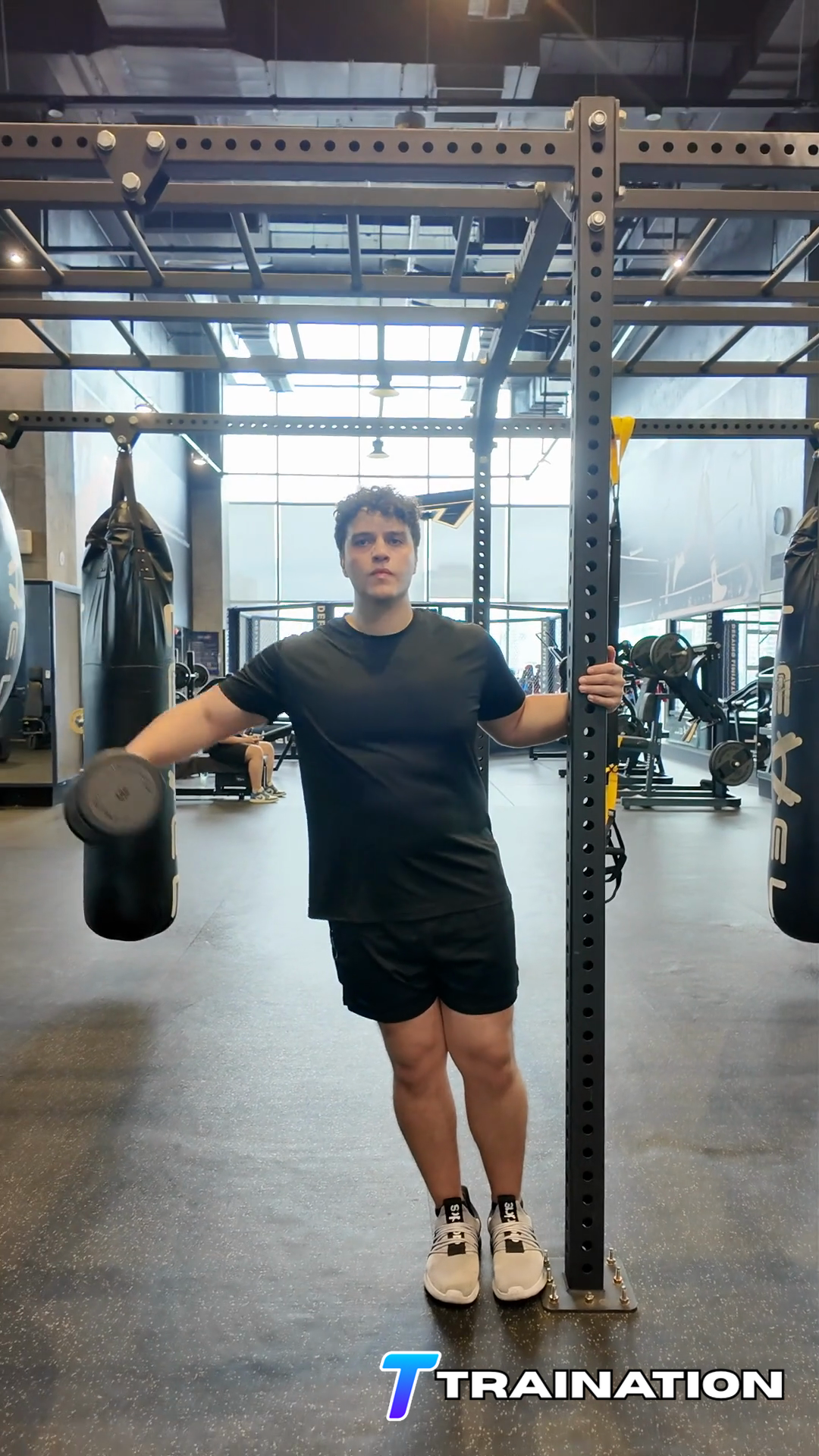
Using momentum
Keep the torso still and choose a load that can be raised without a knee dip or backward lean.
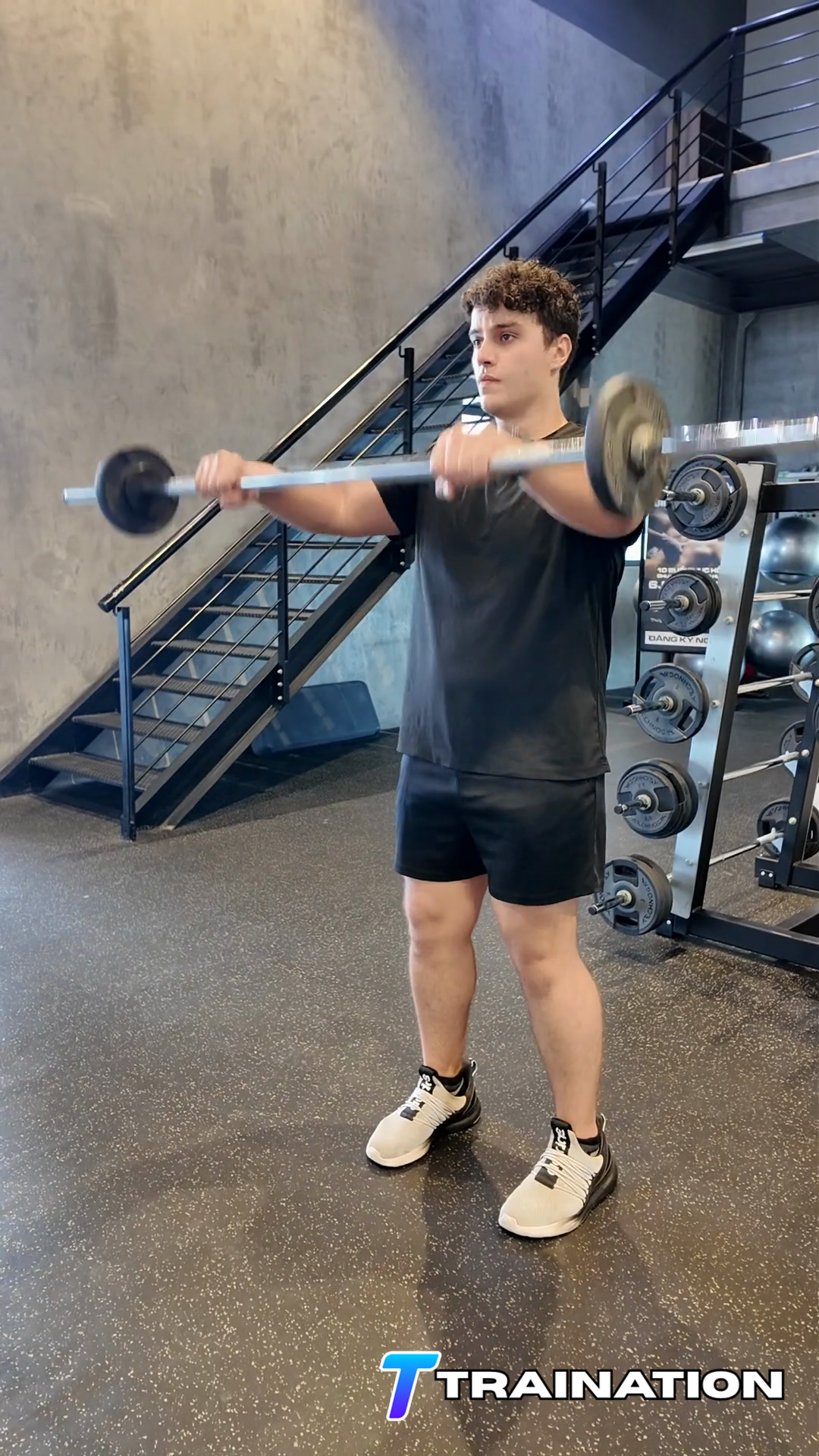
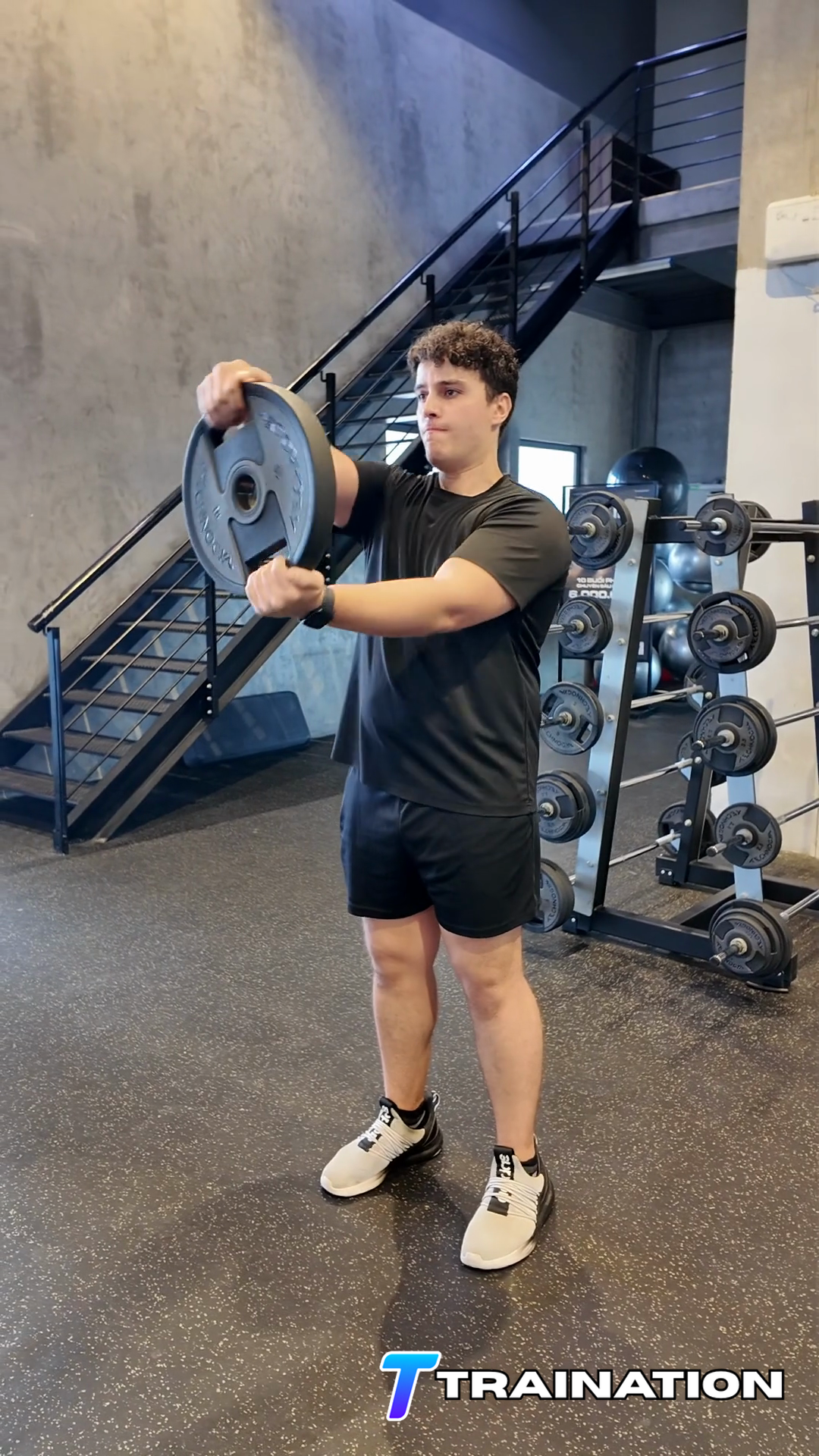
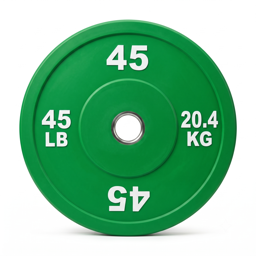
Raise a weight plate under control to strengthen the front of the shoulders.
Primary musclesAnterior deltoids
Secondary musclesUpper pectoralis major, Serratus anterior, Upper trapezius
Follow the sequence in order, paying attention to the starting position, movement path, and finish described in each step.
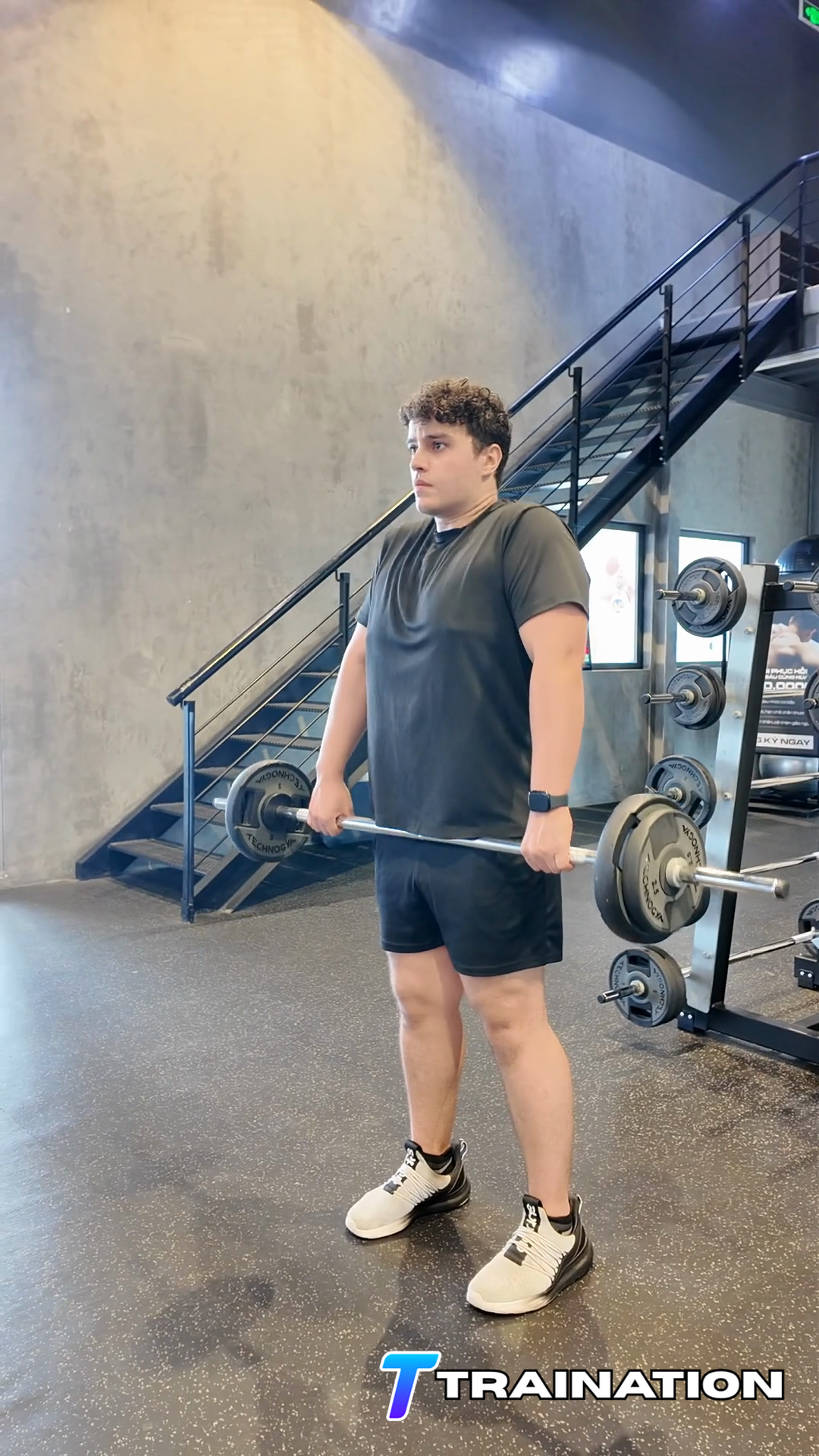
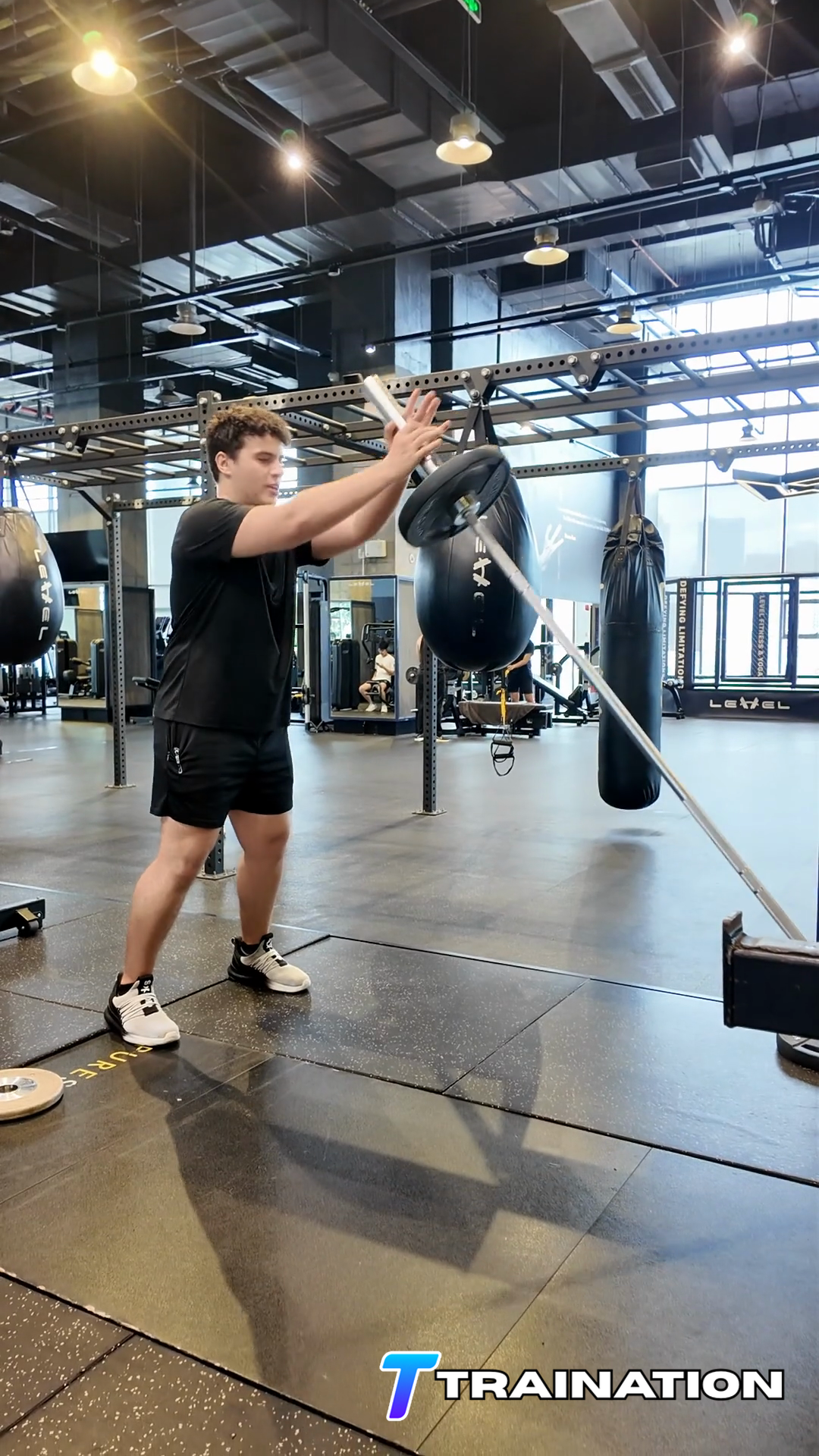
For Plate Front Raise, hold the load in front of the thighs with the palms facing down or inward and the elbows softly bent.
Brace the abdomen, stack the ribs over the pelvis, and keep the head in line with the spine.
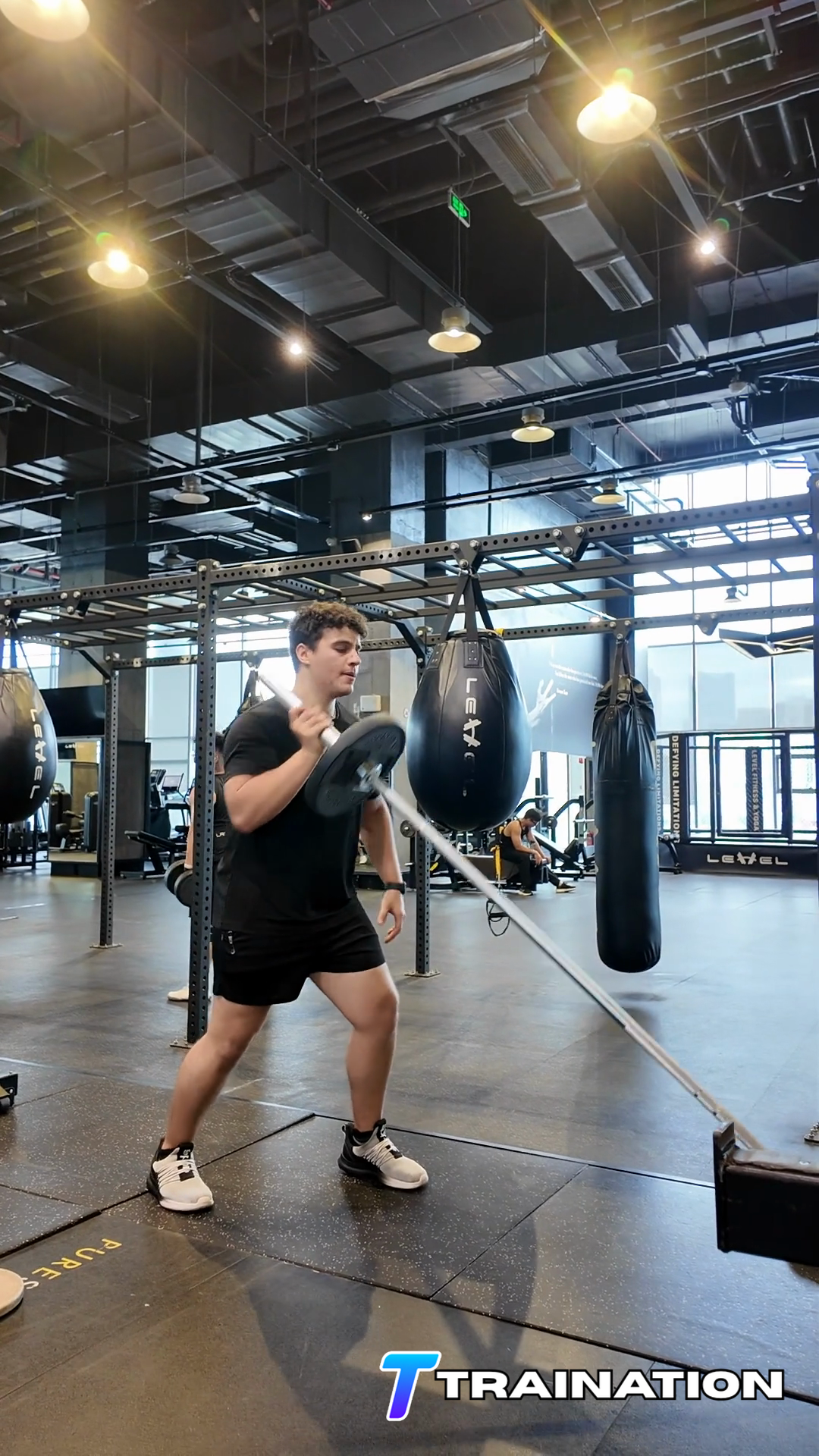
Raise the load forward until the arms approach shoulder height without leaning backward or shrugging.
Stop around shoulder height, or earlier if the pain-free range is shorter, and keep the wrists straight.
Lower over two to three seconds until the load returns beside or in front of the thighs without dropping.
Keep the torso still and choose a load that can be raised without a knee dip or backward lean.
Keep the neck relaxed and shoulders away from the ears during the raise.
Use the pain-free range available today; the arm does not need to reach exactly parallel to the floor.
Lower slowly so the shoulder controls the return rather than gravity.
Place Plate Front Raise after compound pressing so local shoulder fatigue does not reduce overhead or bench-press performance.
Use one to three times per week and count pressing volume that already trains the front and side shoulders.
| Goal | Sets | Reps or time | Rest | Effort and execution |
|---|---|---|---|---|
| Strength accessory | 2–4 | 6–10 | 75–150 sec | Leave 2–3 controlled reps in reserve |
| Muscle growth | 2–4 | 10–20 | 60–120 sec | Usually 1–3 clean reps in reserve |
Scale the movement
Use the free hand for balance and a very light load so the torso cannot create momentum.
Work only through the pain-free range and extend it gradually as control improves.
Lower over three seconds while keeping the neck relaxed and torso still.
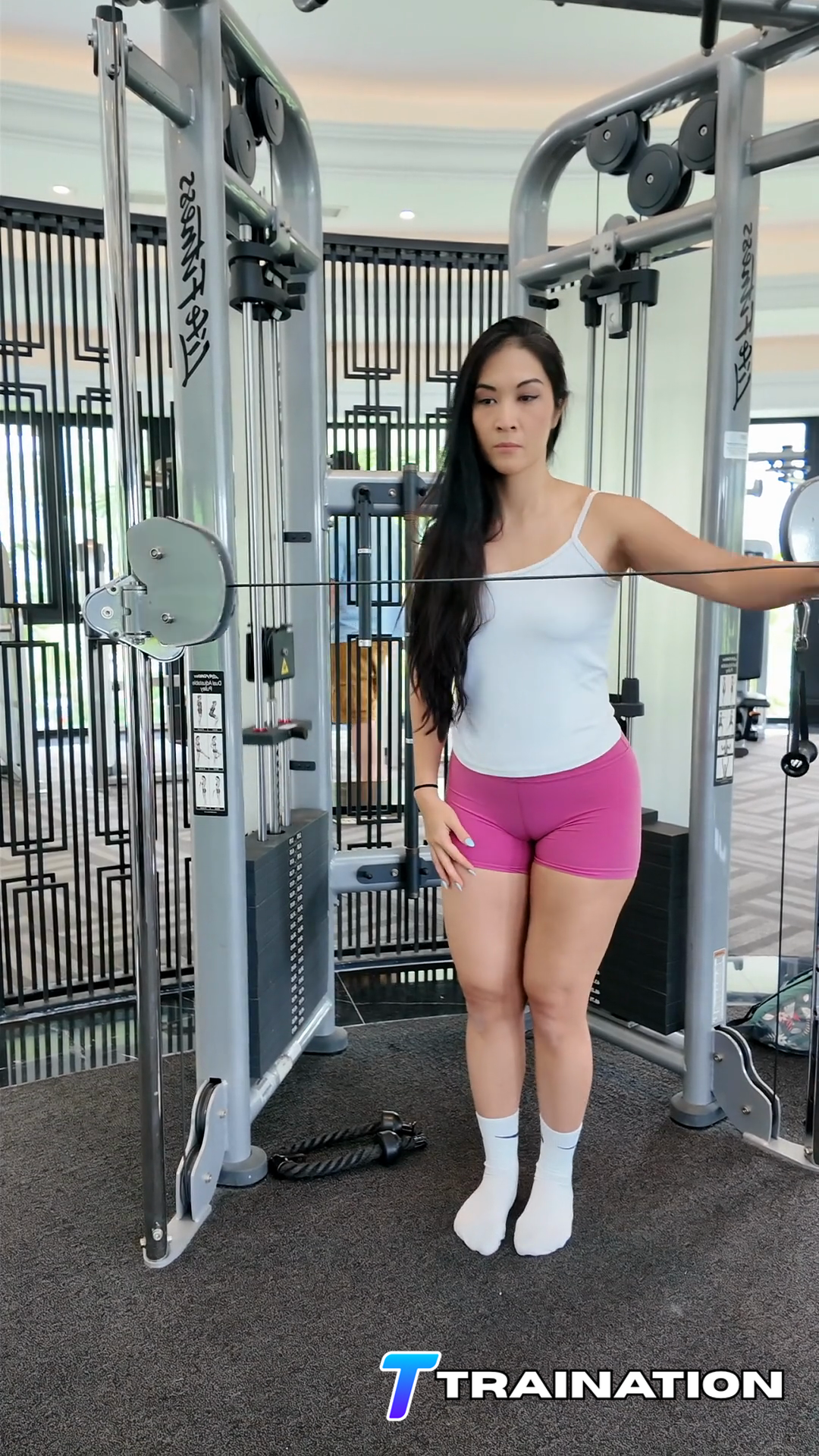
Use cable resistance for continuous tension after dumbbell technique is consistent.
Turn Plate Front Raise and the rest of your exercise library into repeatable client programs.
Explore the workout builder