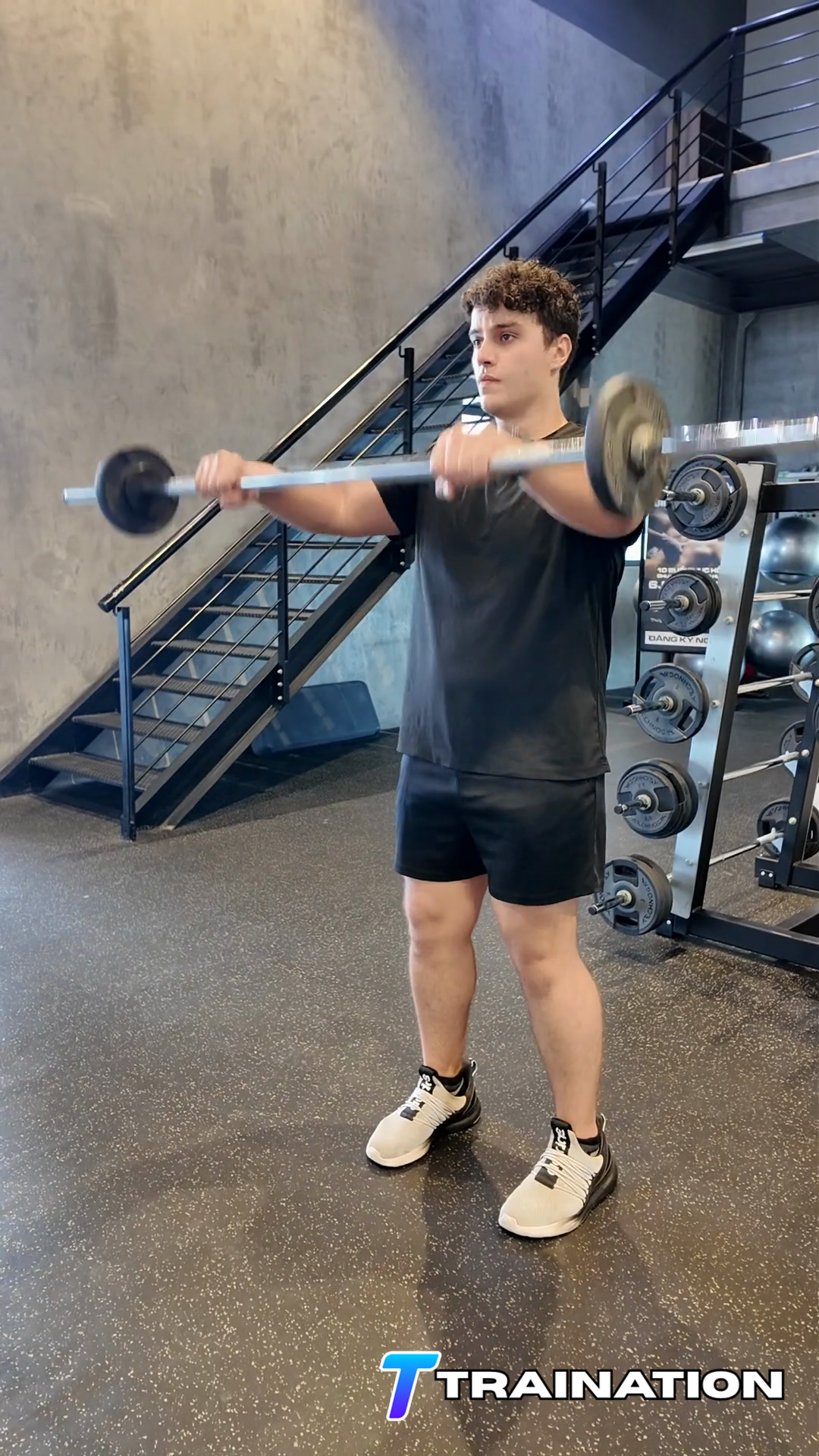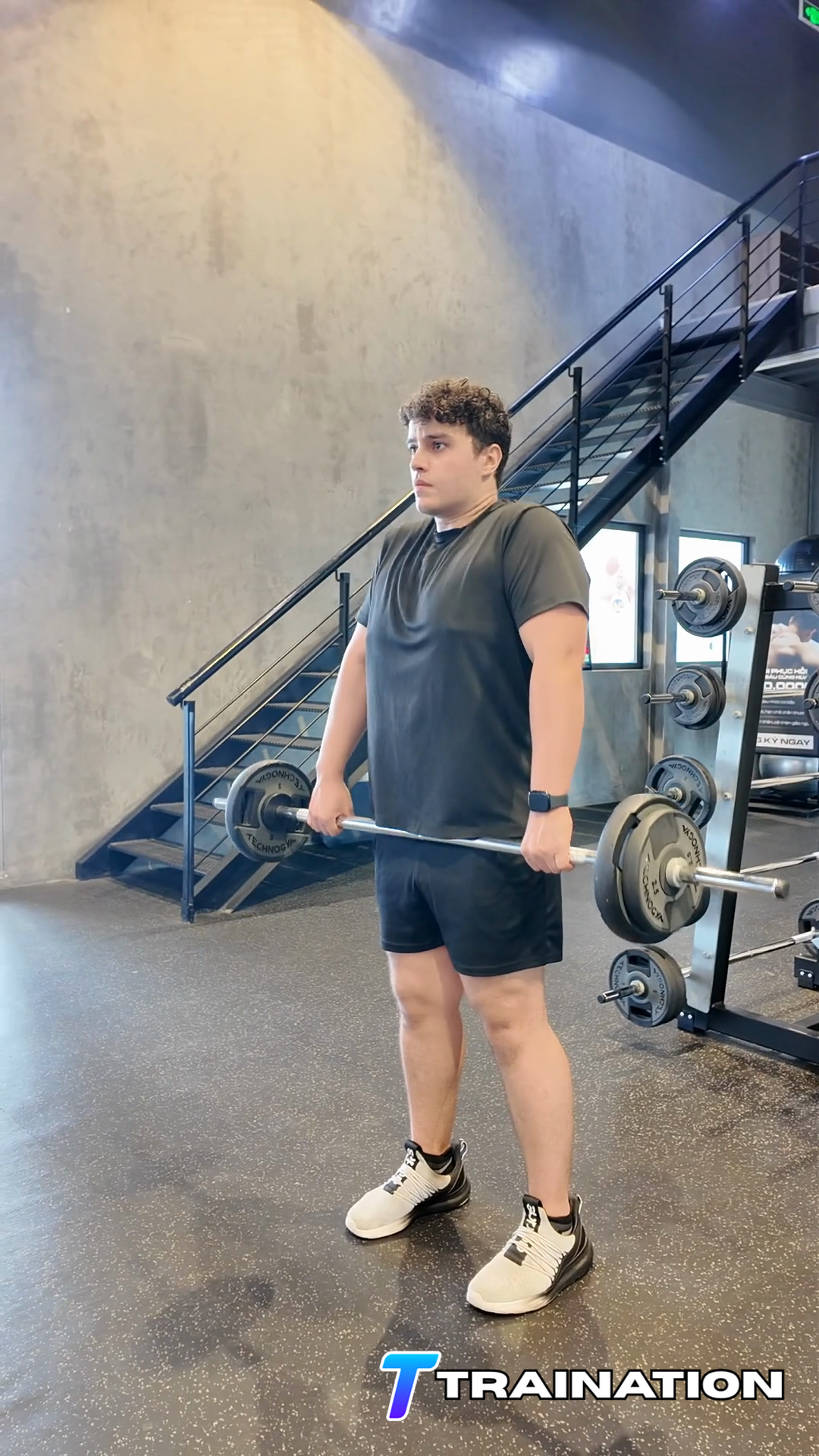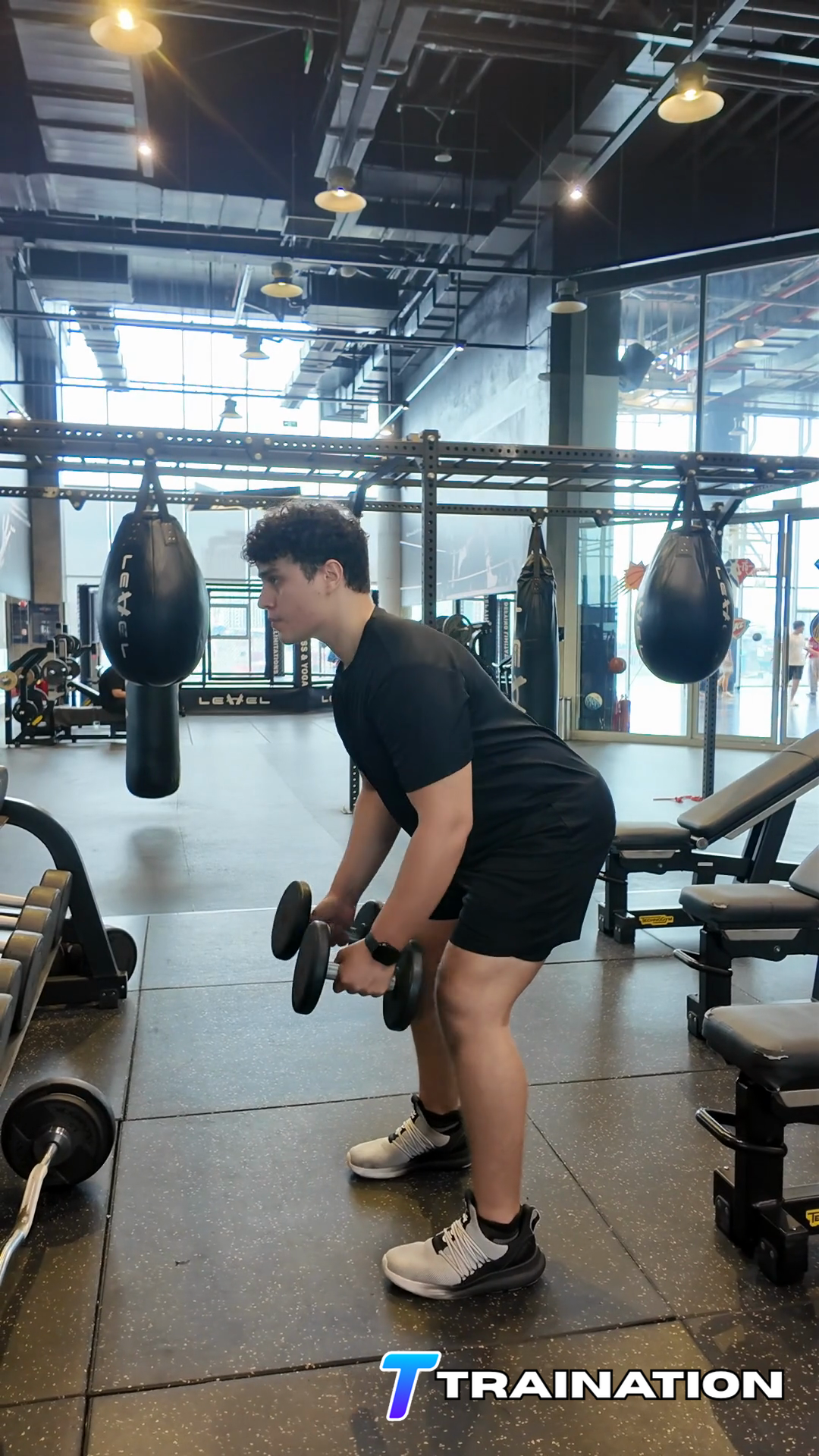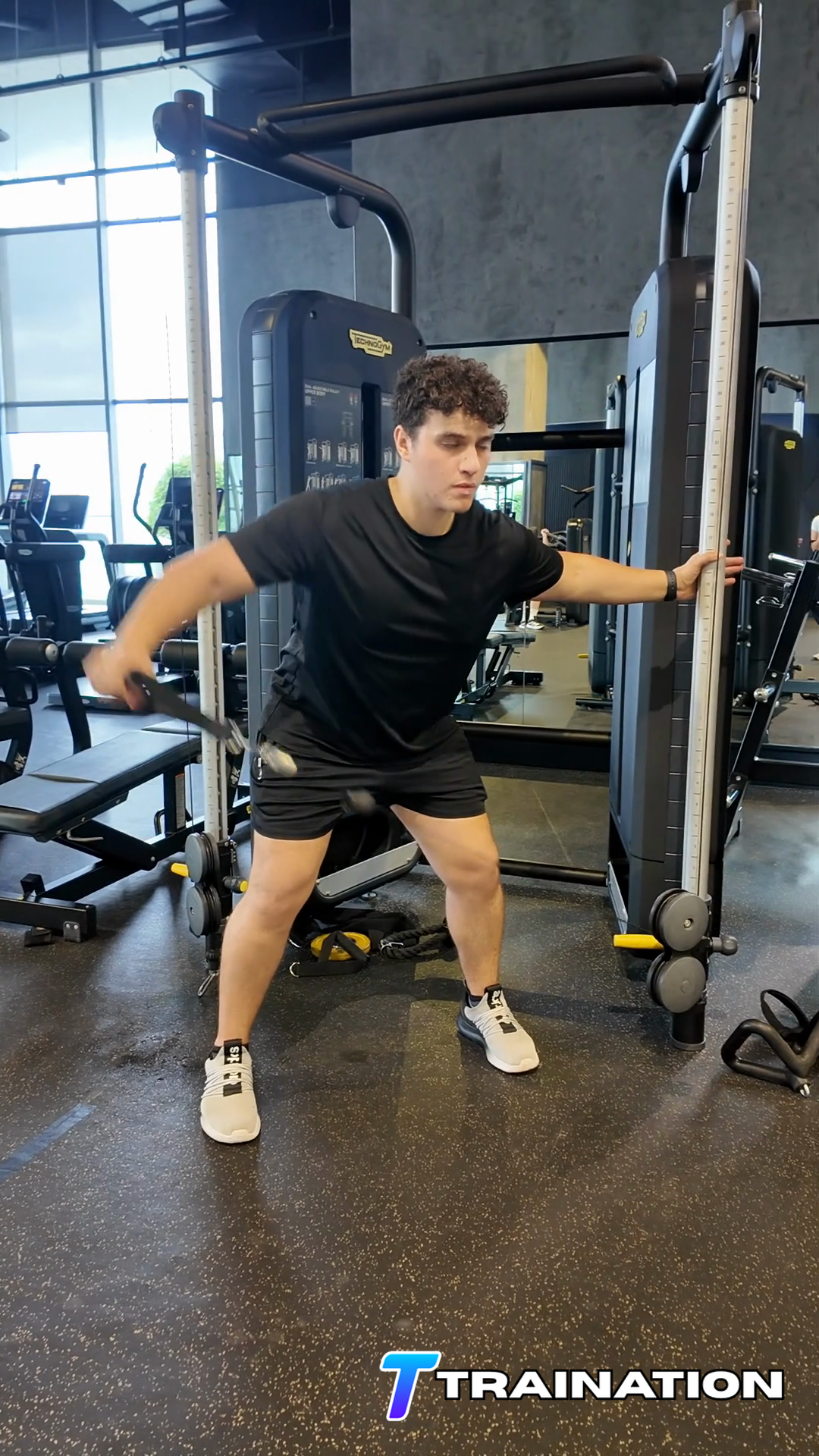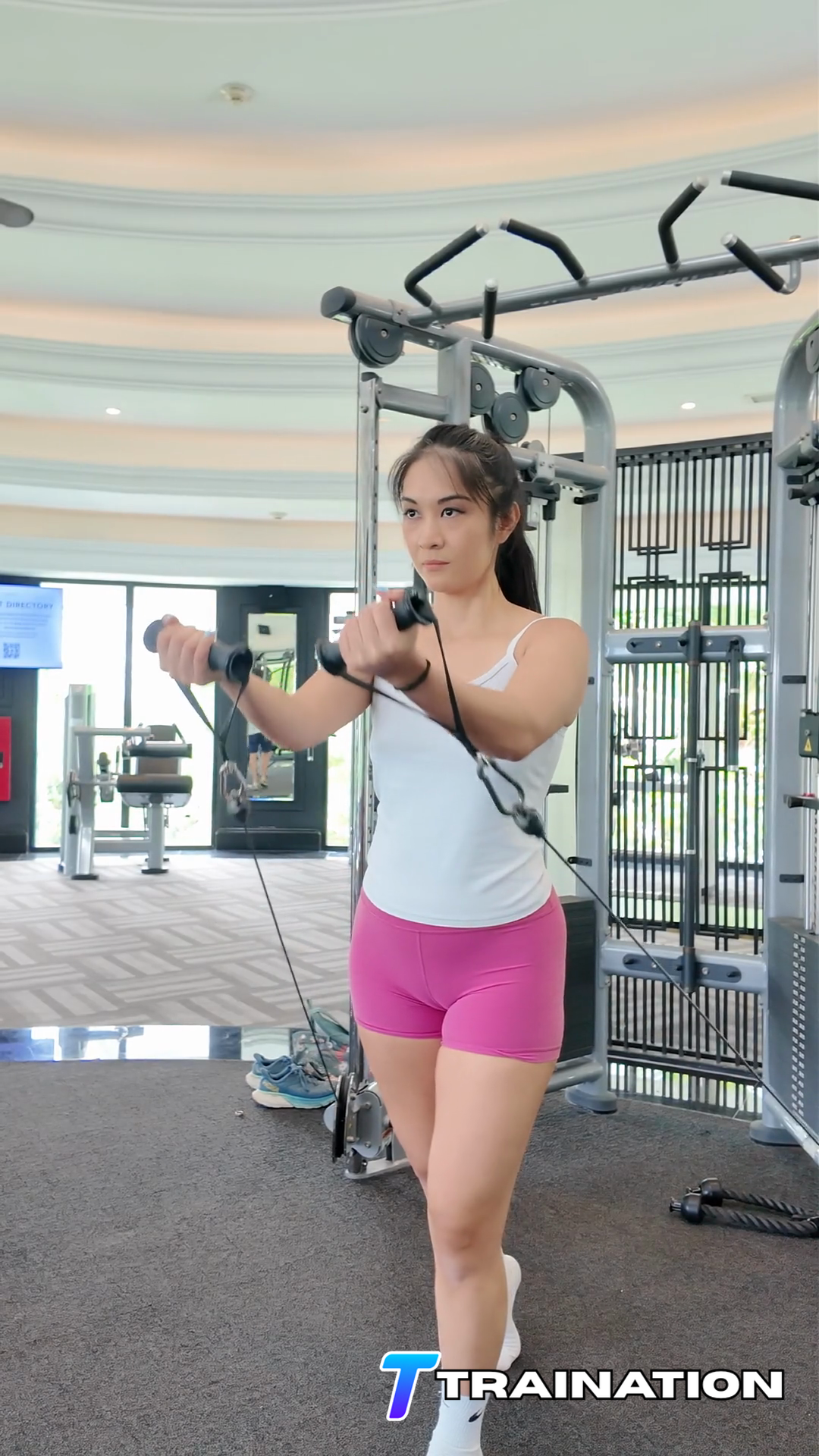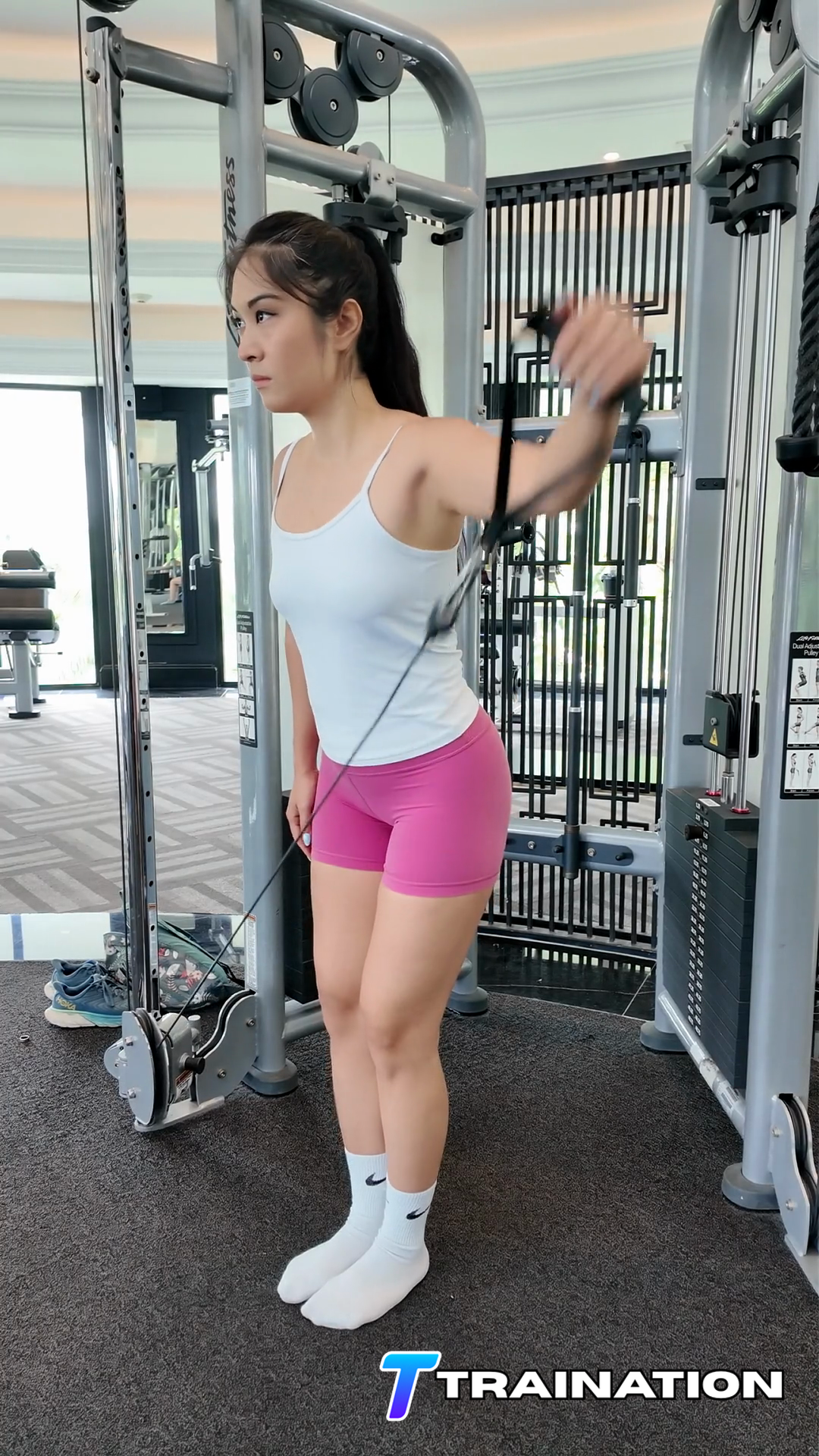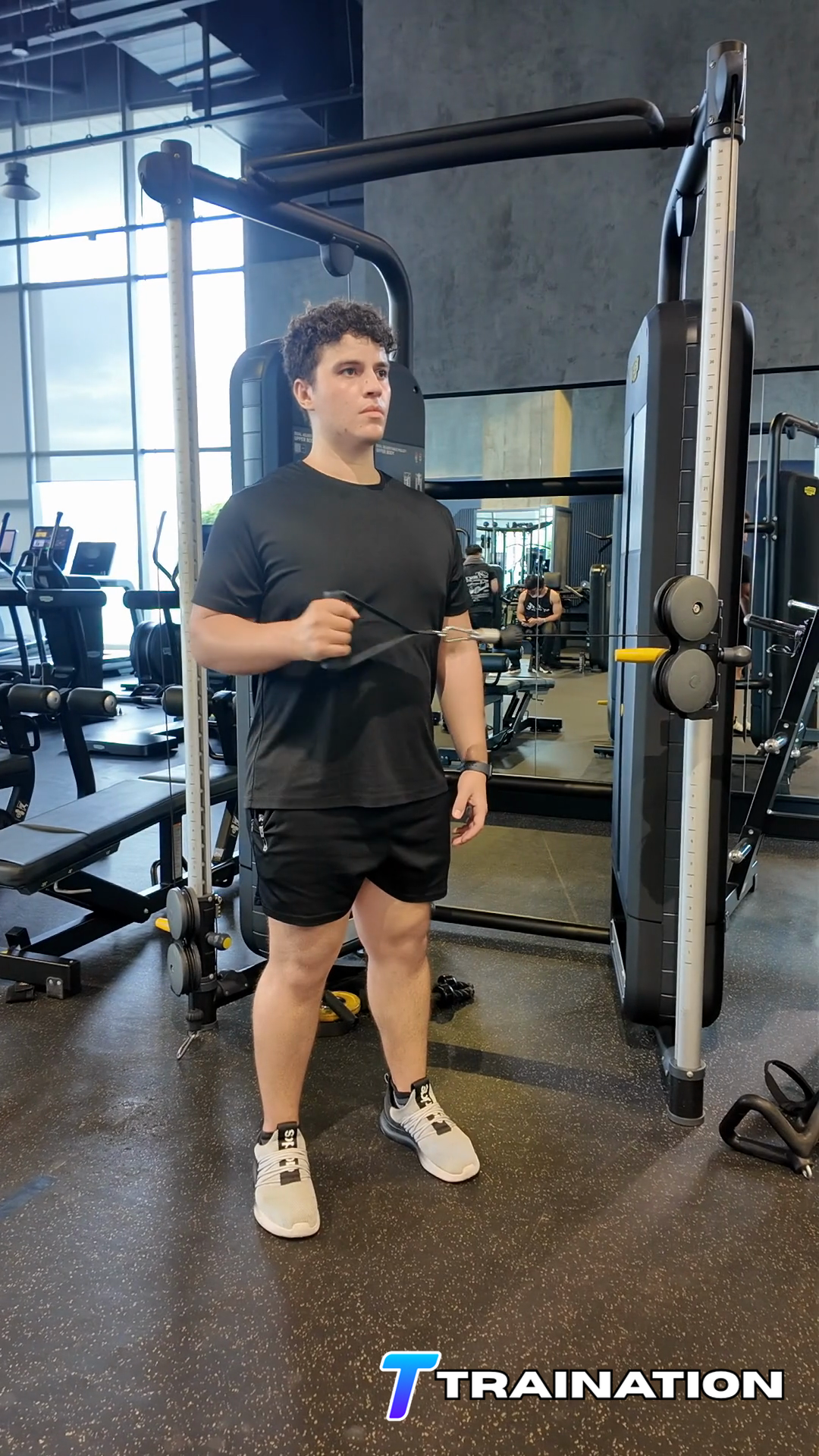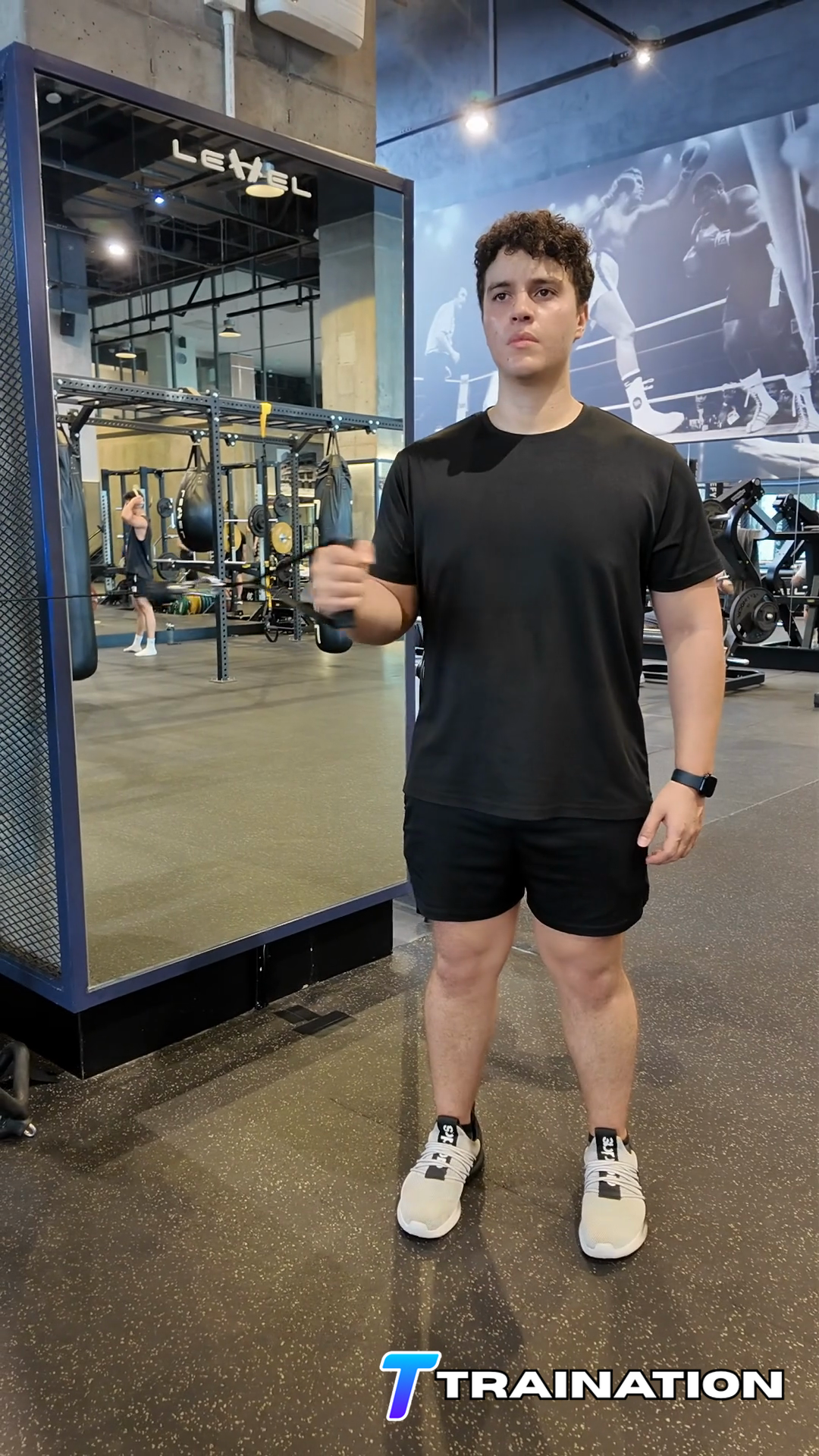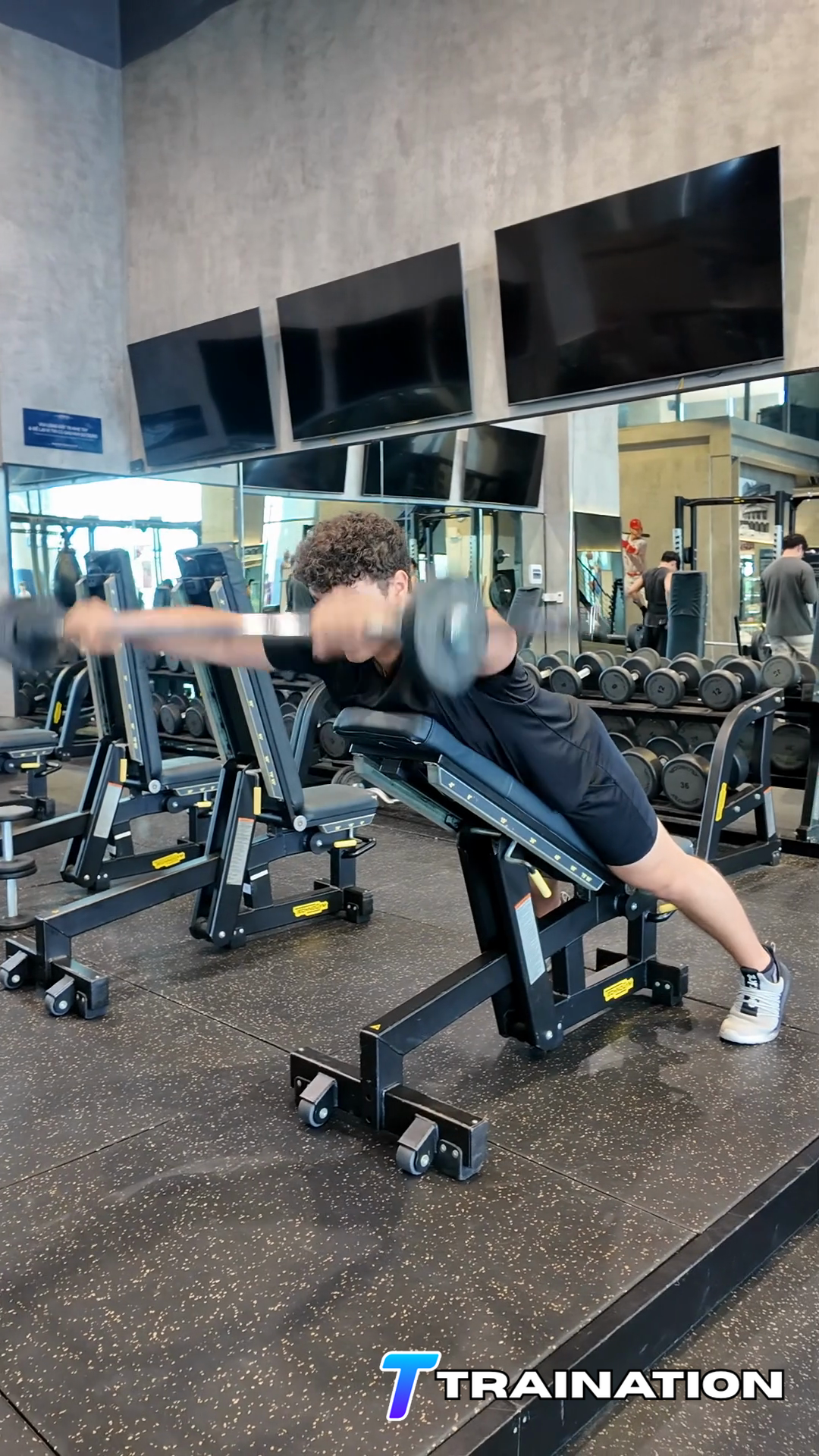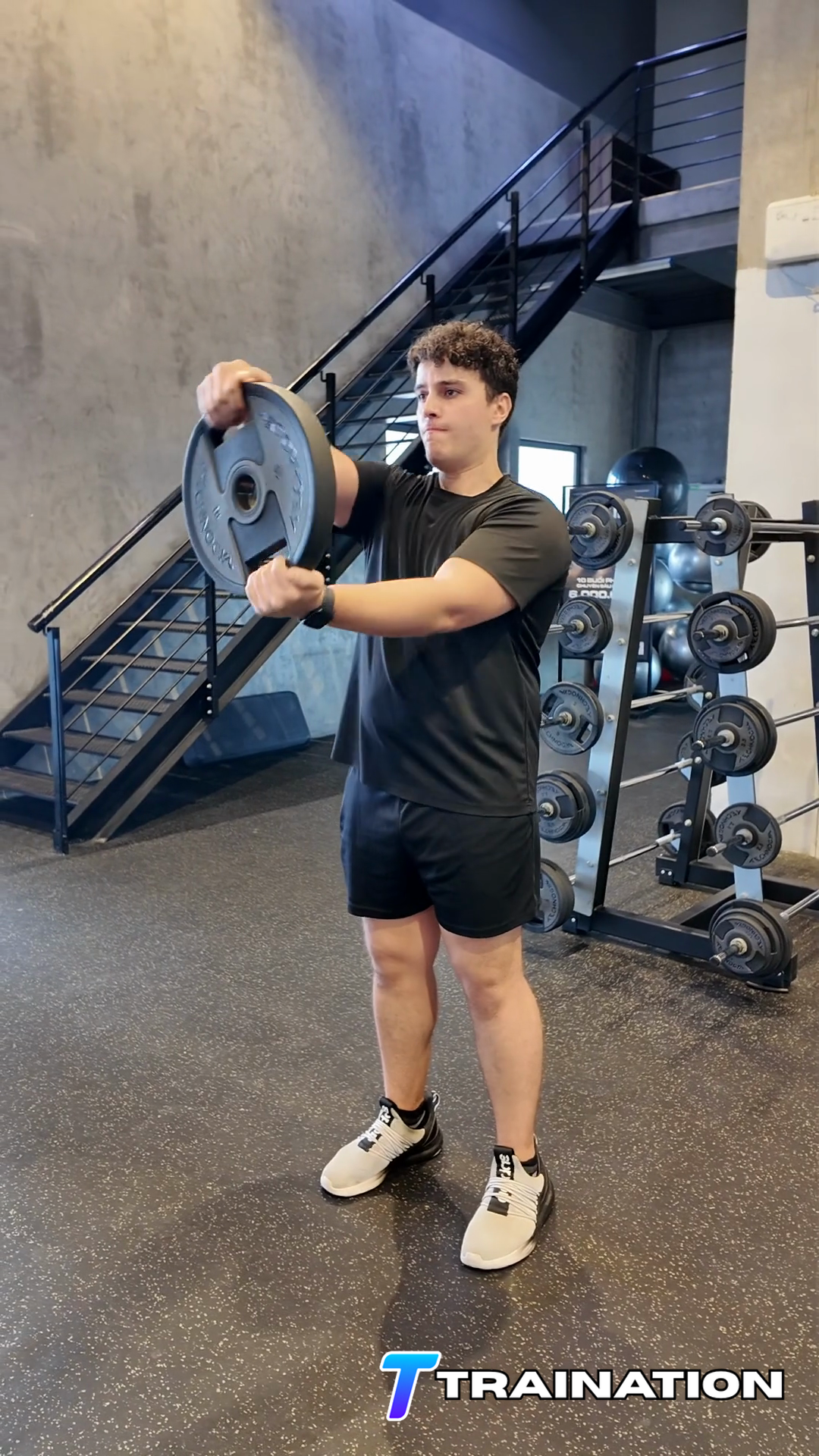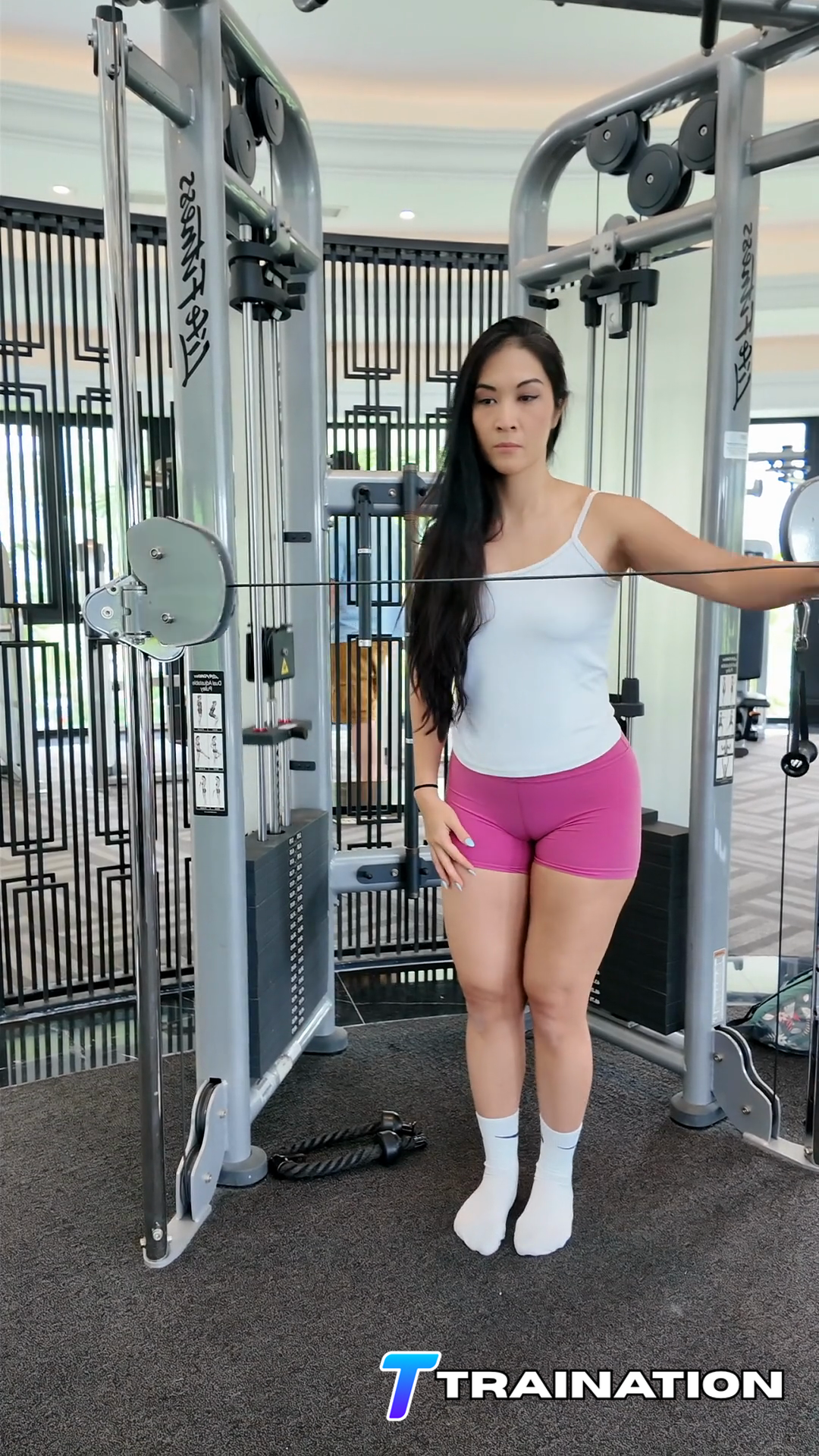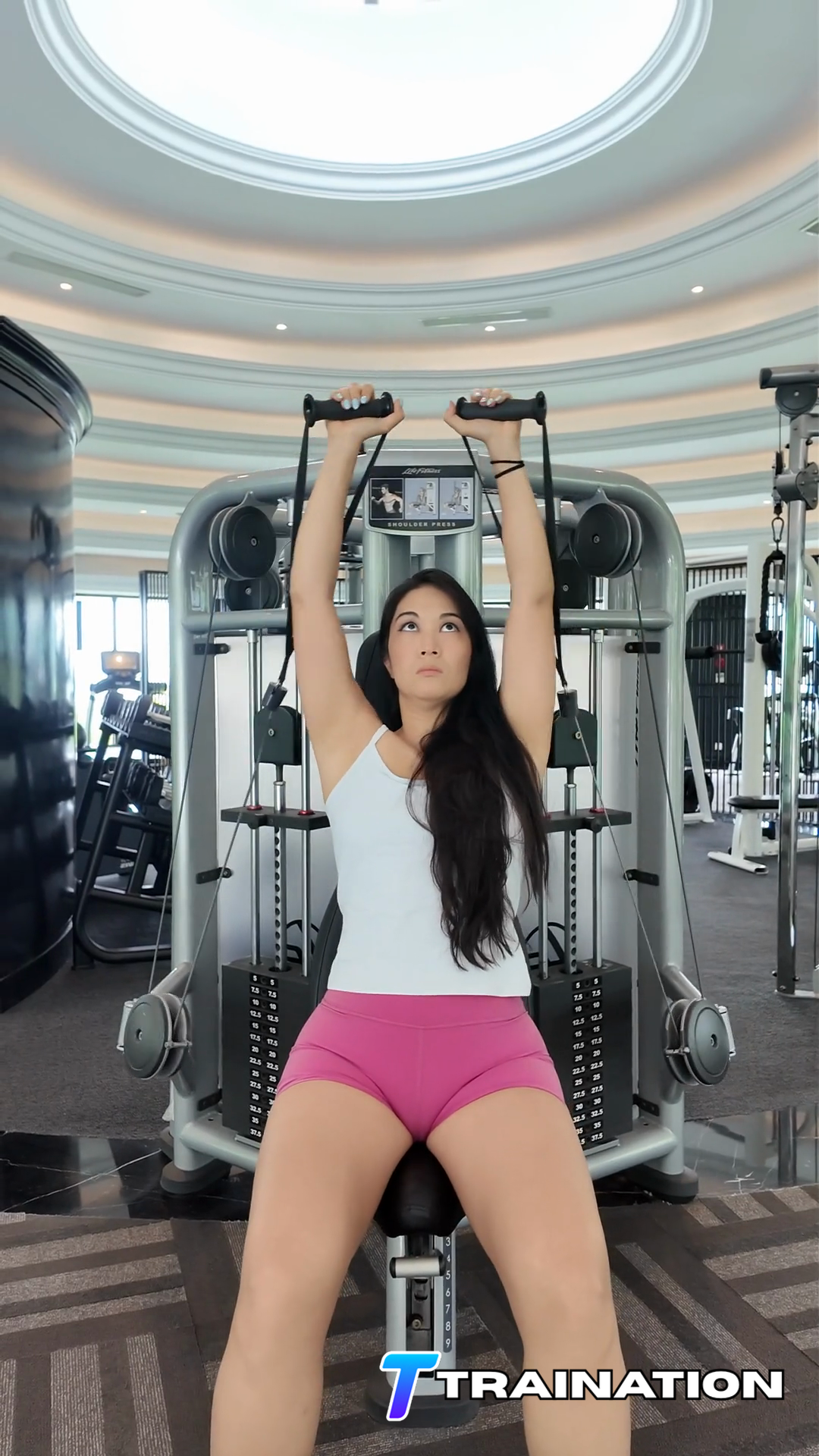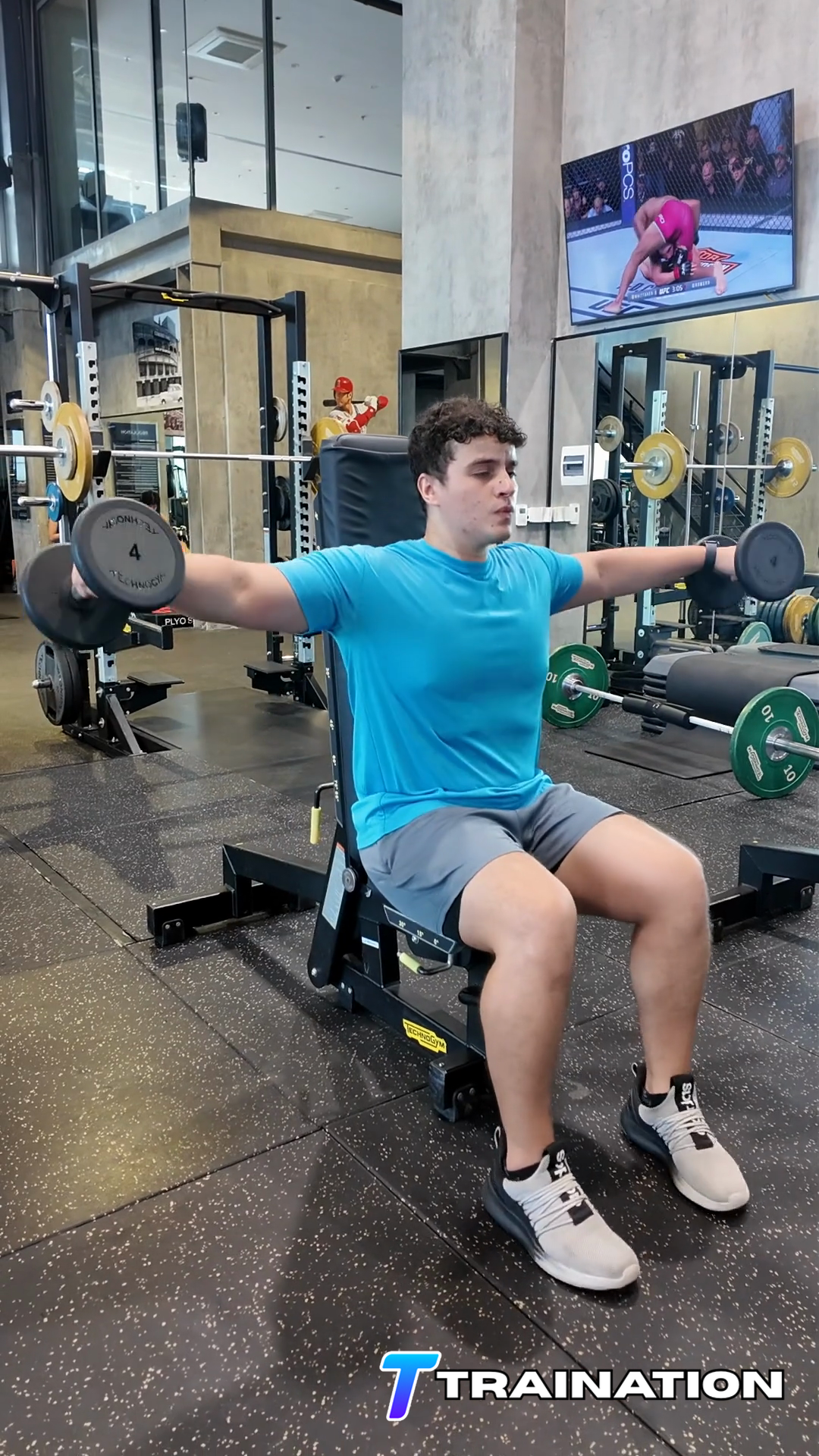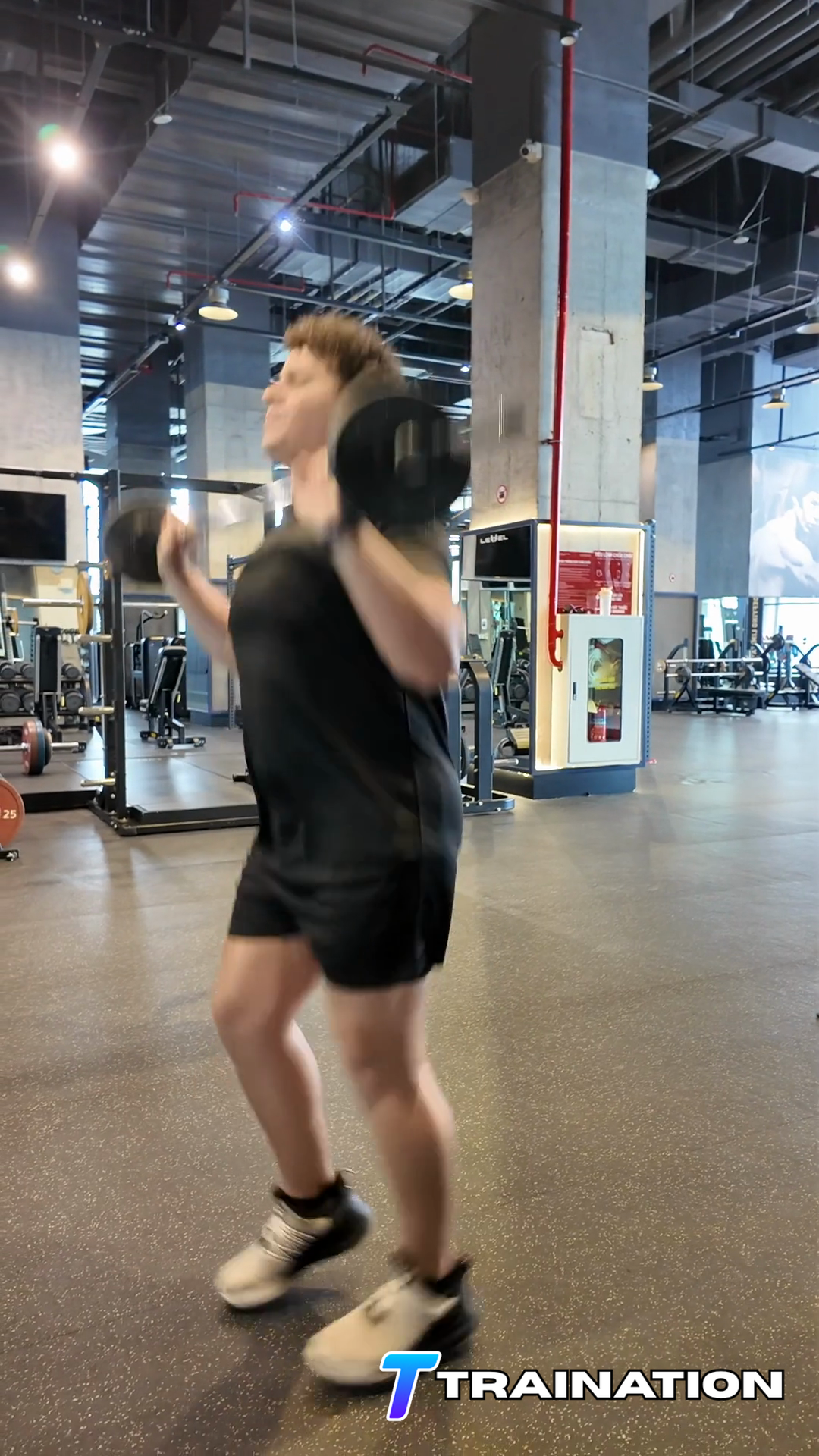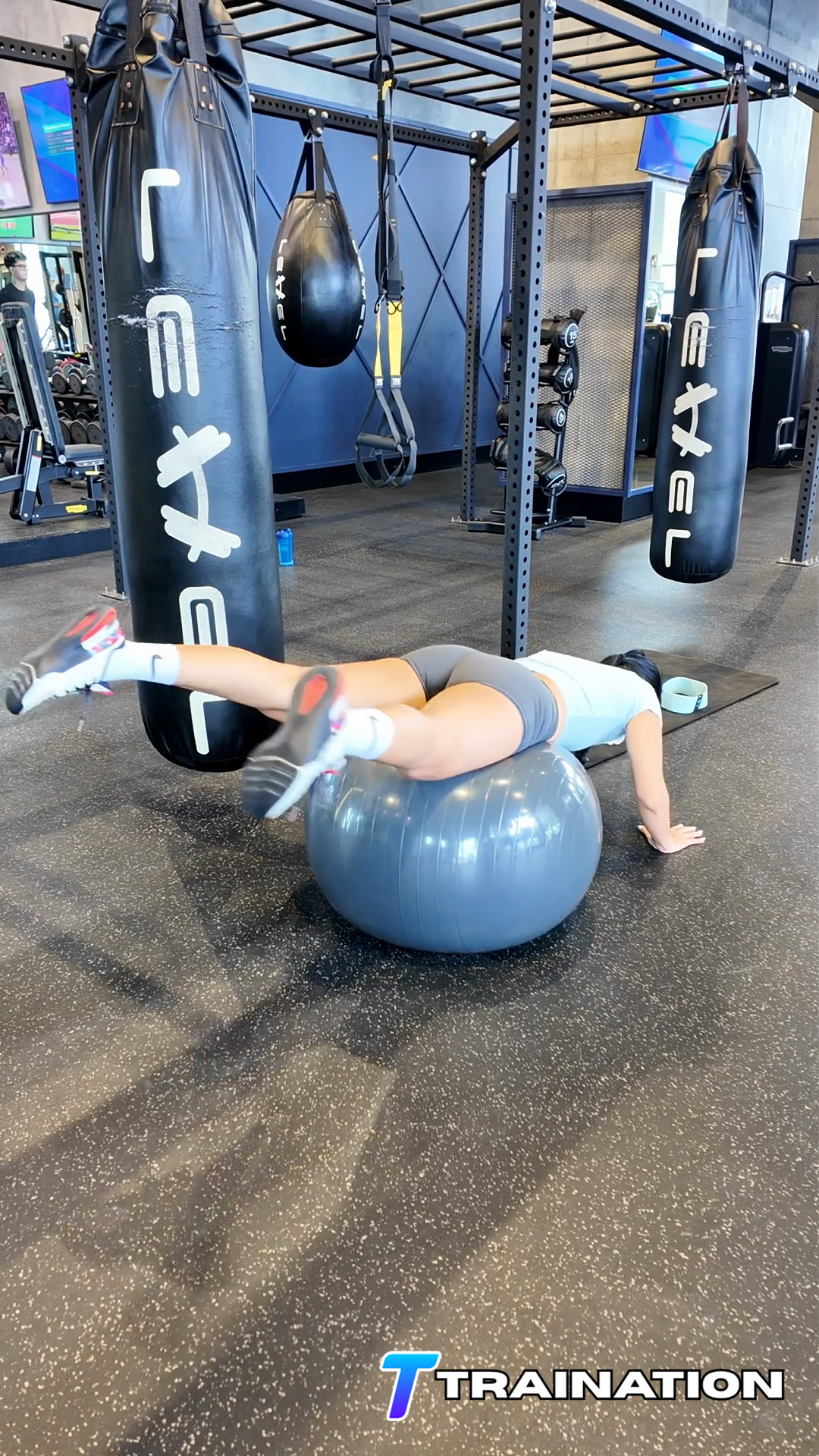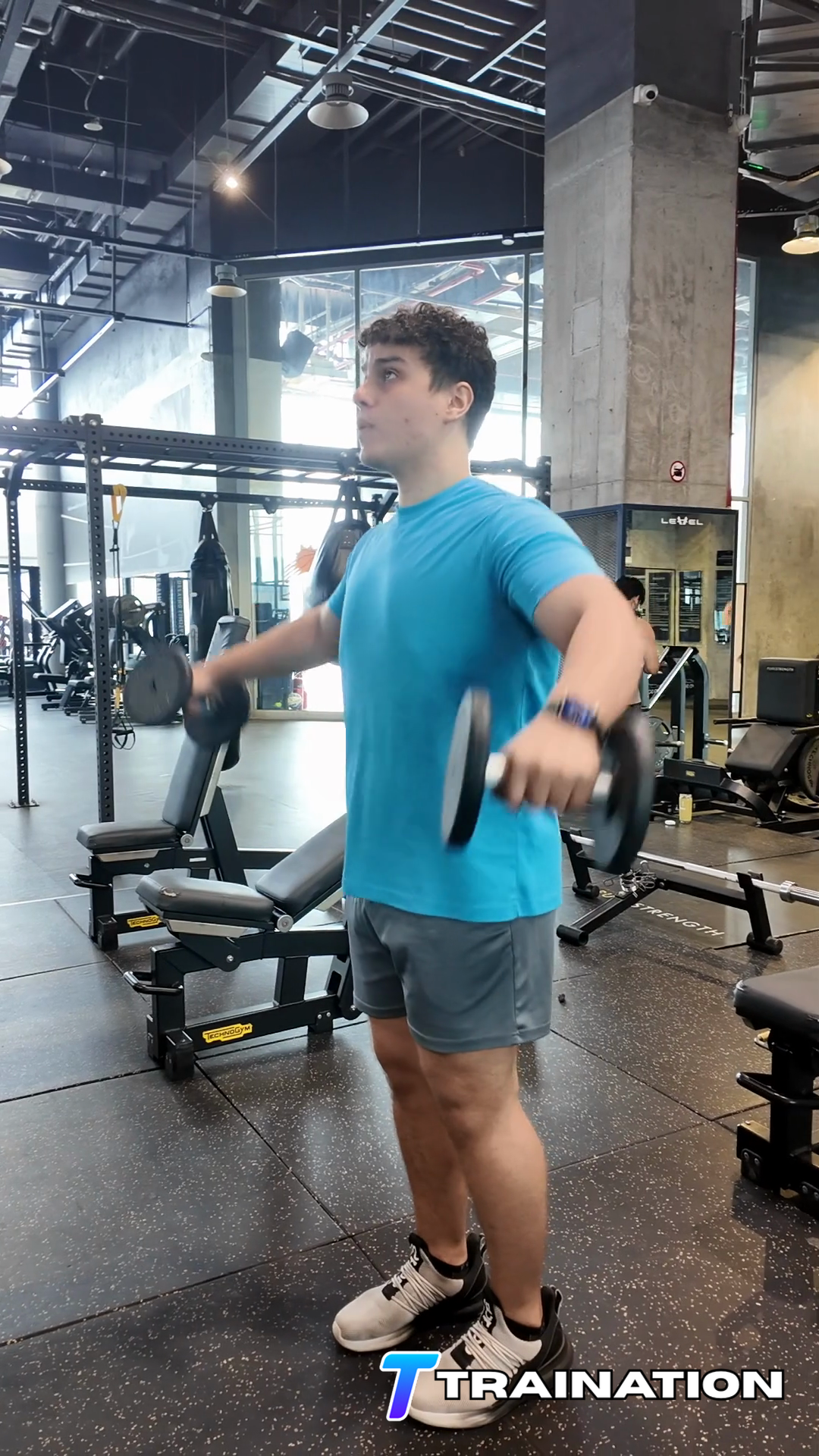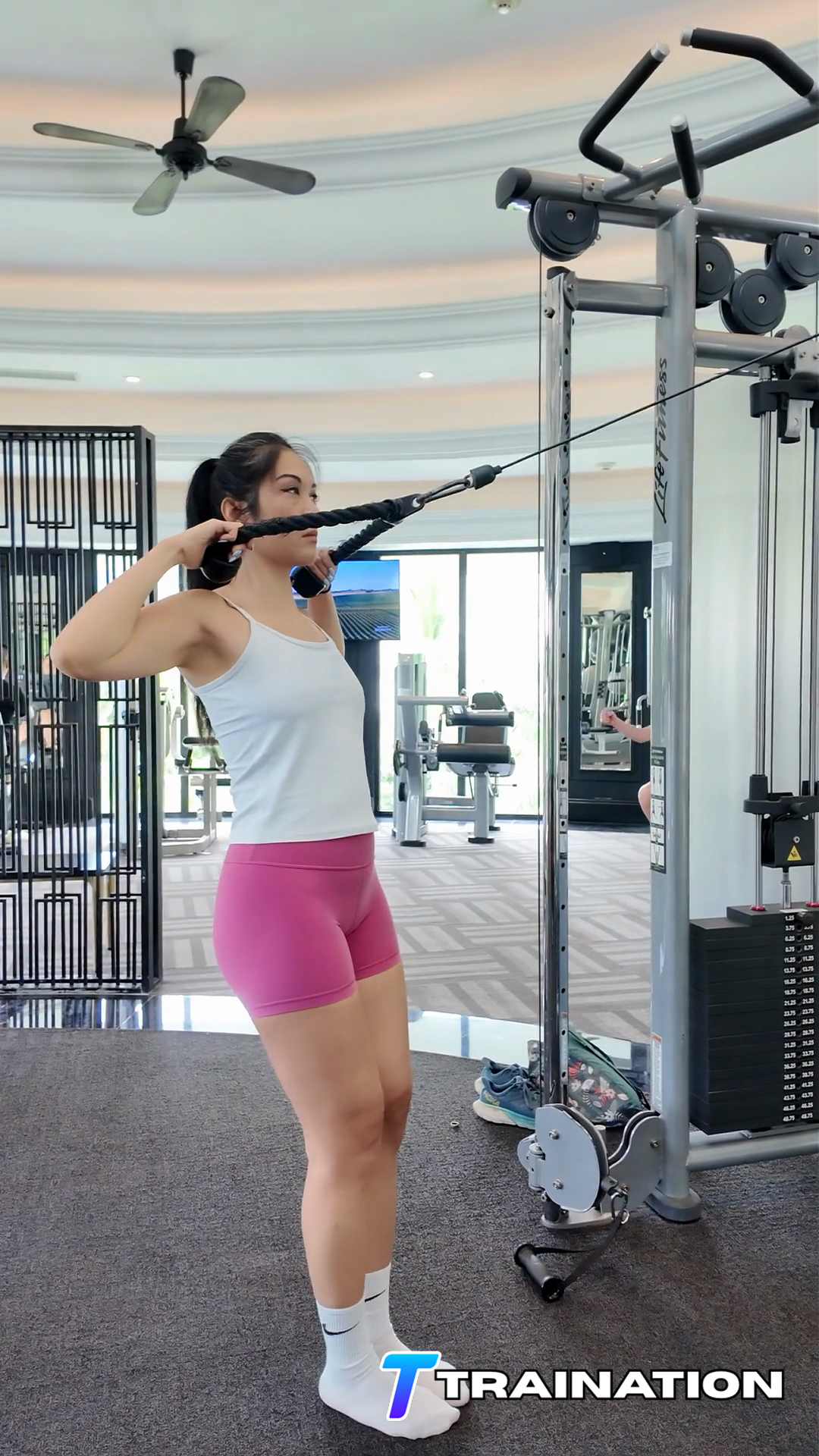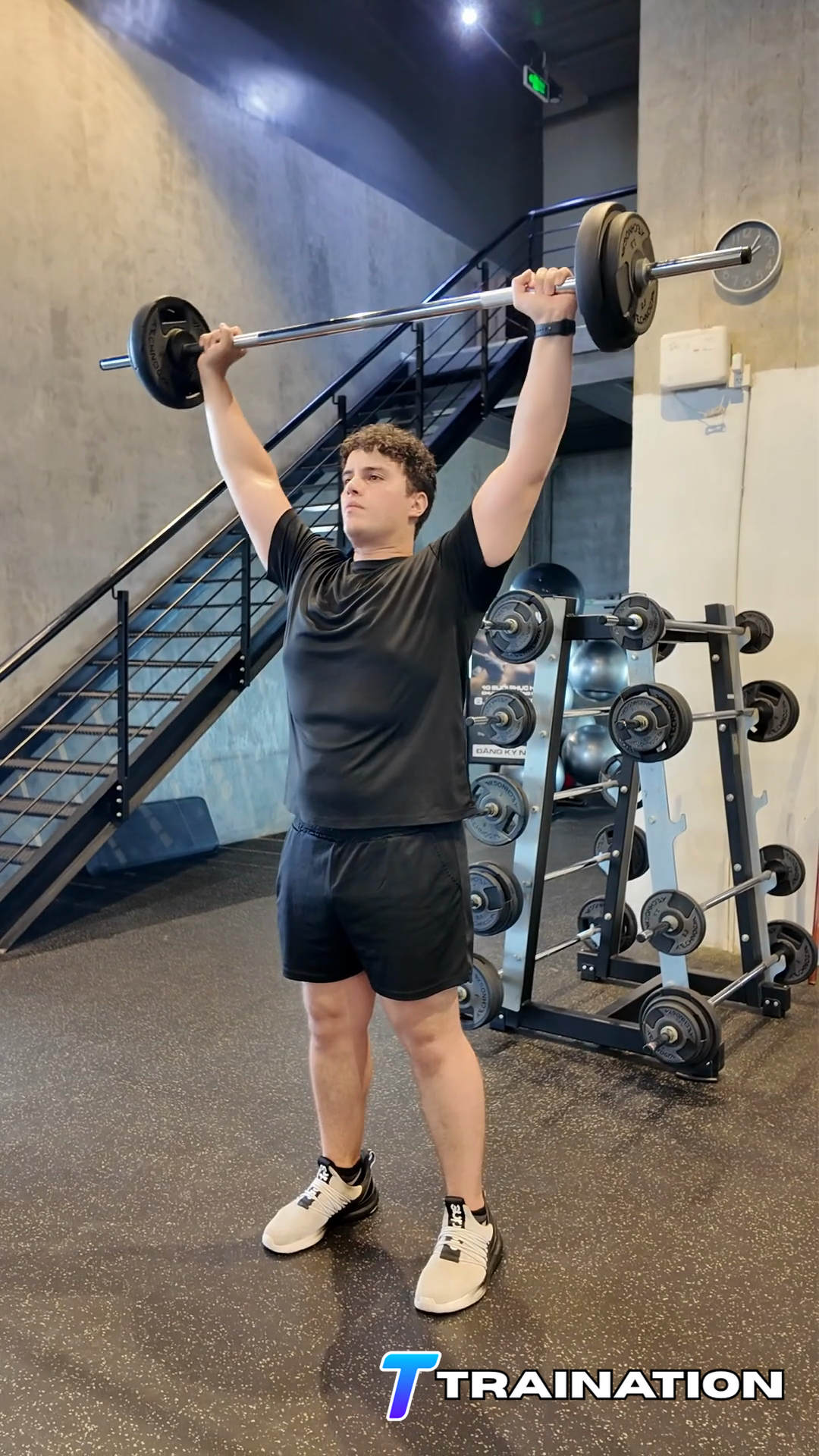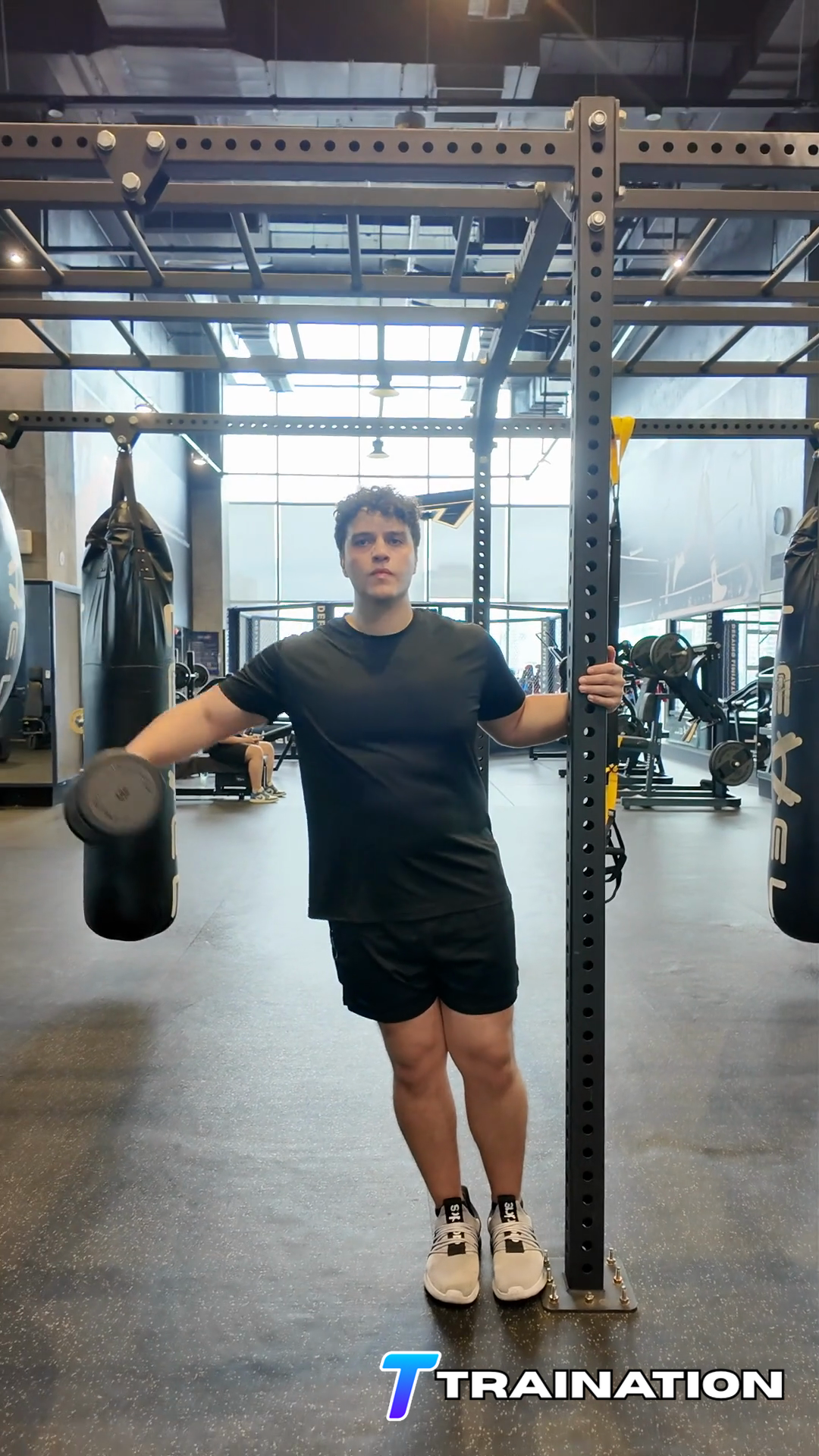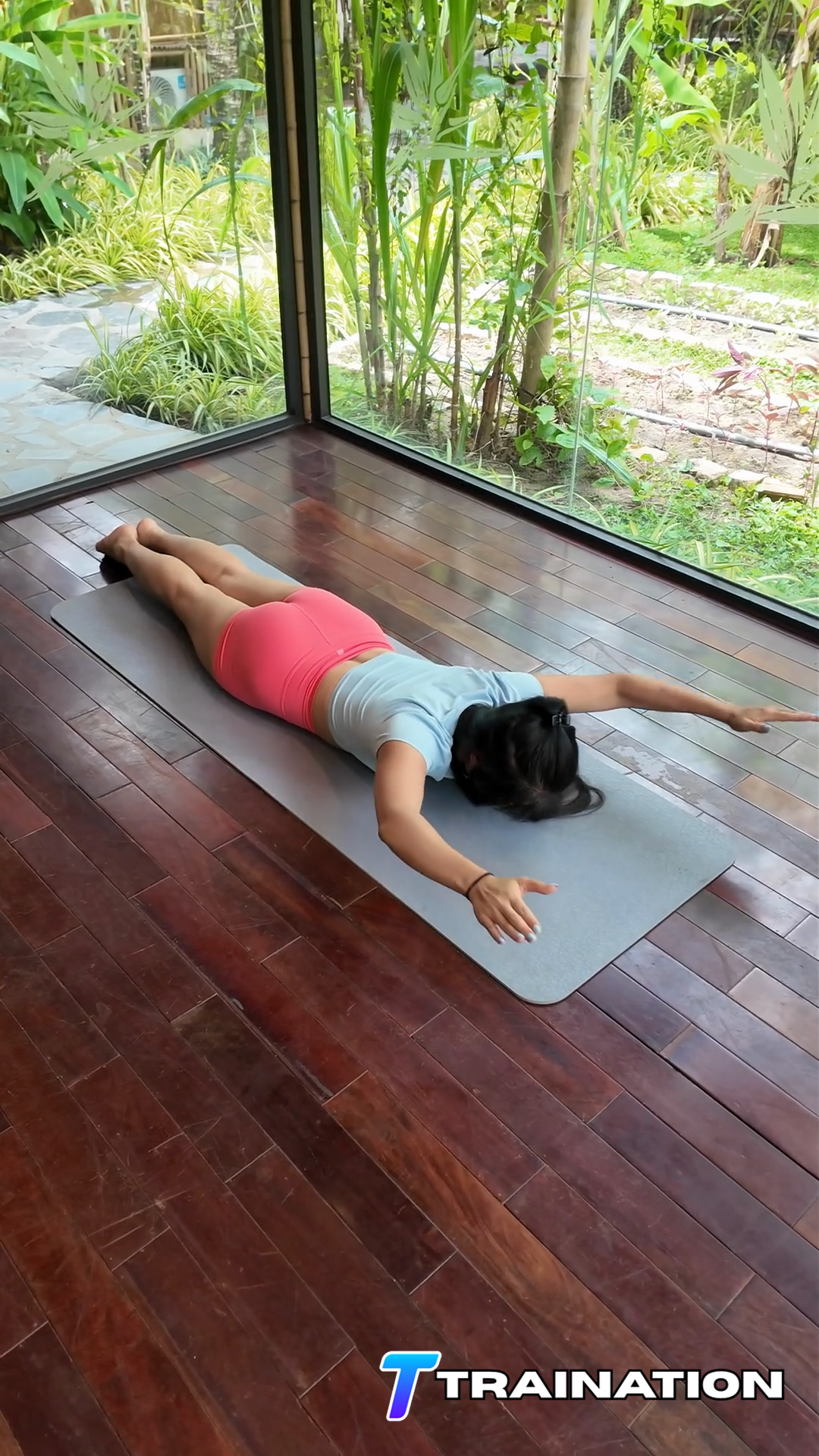
Ribs flaring upward
Brace the abdomen and keep the ribs over the pelvis instead of leaning back to create clearance.
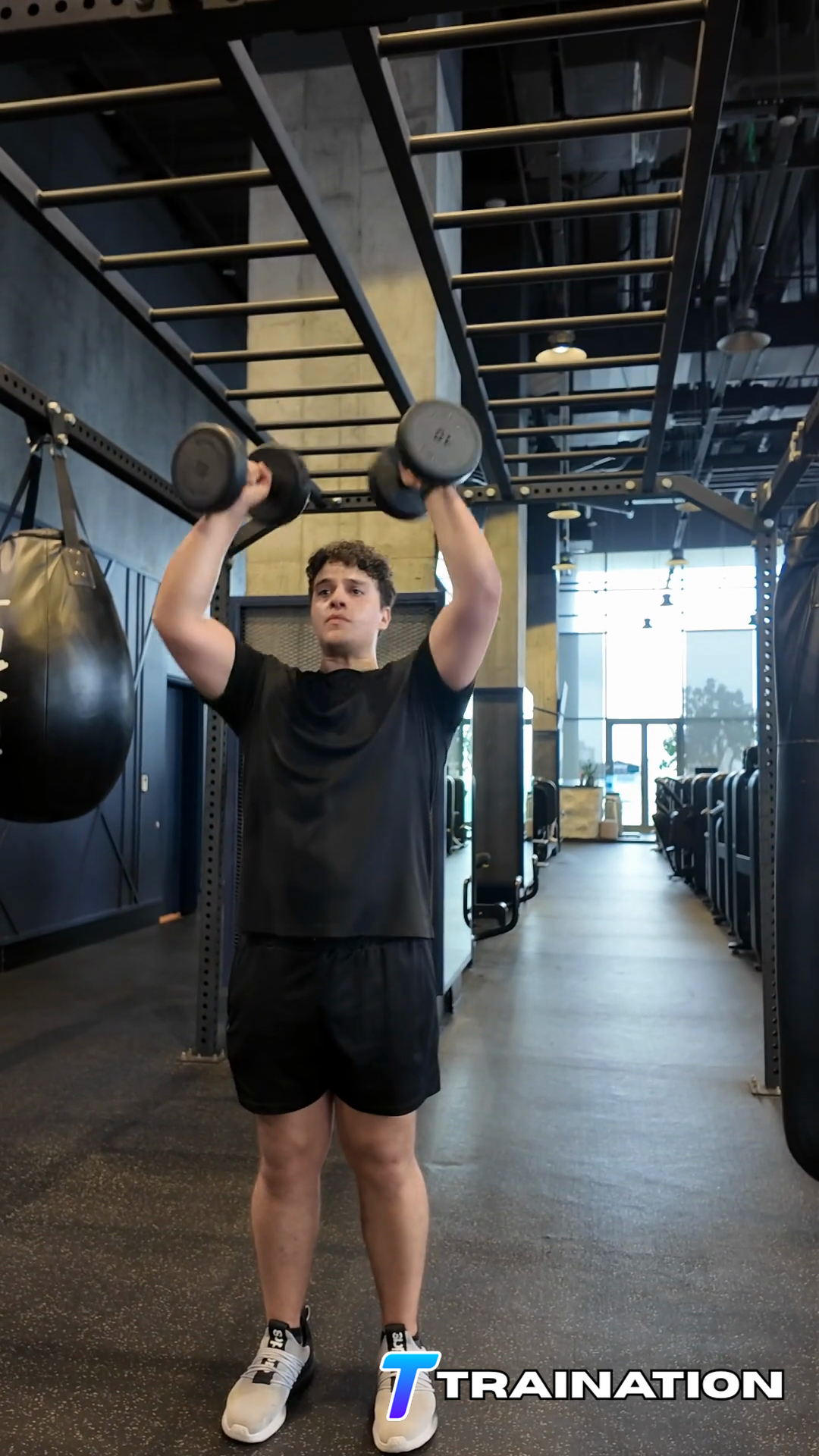
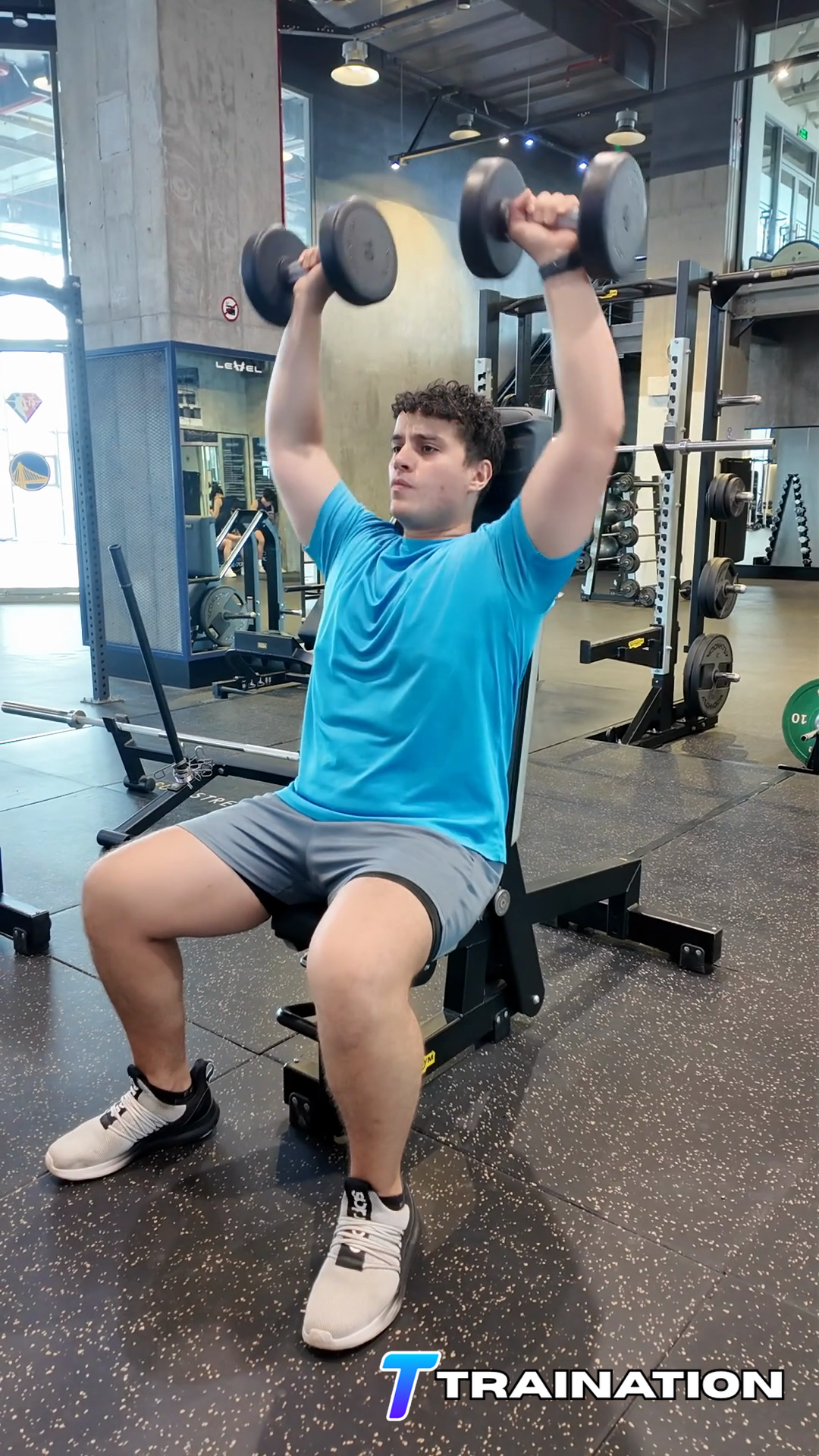
Seated Dumbbell Shoulder Press develops shoulder and triceps strength through an overhead pressing path.
Primary musclesAnterior deltoids, Lateral deltoids
Secondary musclesTriceps brachii, Upper pectoralis major, Serratus anterior, Trapezius
Follow the sequence in order, paying attention to the starting position, movement path, and finish described in each step.
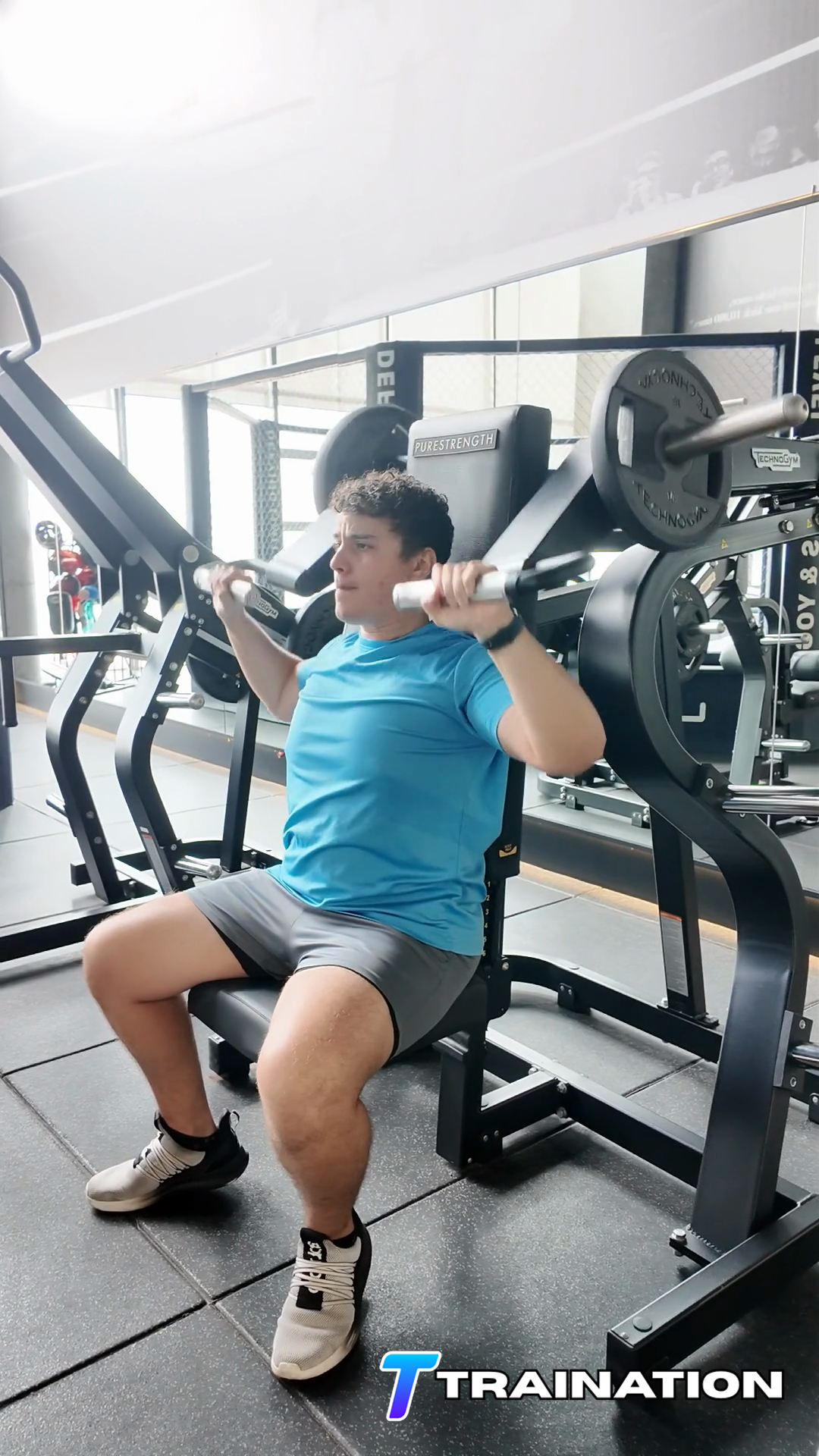
For Seated Dumbbell Shoulder Press, sit with the back supported and feet planted, then hold the dumbbells at shoulder height with wrists above the elbows.
Brace the abdomen and glutes so the press does not begin with a backward lean or a flare of the lower ribs.
Press upward while keeping the load balanced over the middle of the body rather than drifting forward.
Finish with the arms extended in a comfortable overhead position and the neck relaxed.
Lower to the shoulders under control without flaring the ribs or bouncing into the next repetition.
Brace the abdomen and keep the ribs over the pelvis instead of leaning back to create clearance.
Stack the wrists over the elbows and keep the load balanced through the hands.
Press toward a balanced overhead position rather than finishing far in front of the body.
Allow natural shoulder-blade movement without jamming the shoulders toward the ears or craning the head.
Use Seated Dumbbell Shoulder Press early in a workout focused on shoulders, or early in a full-body workout, when strength or technical progress is the priority; place it later when it supplies secondary volume.
Use one to three times per week as part of training the relevant muscle groups at least twice weekly; the same exercise does not need to appear in every session.
| Goal | Sets | Reps or time | Rest | Effort and execution |
|---|---|---|---|---|
| Strength | 2–4 | 3–6 | 2–4 min | Heavy, usually 2–3 clean reps in reserve |
| Muscle growth | 2–4 | 6–12 | 90–180 sec | Usually 1–3 clean reps in reserve |
Scale the movement
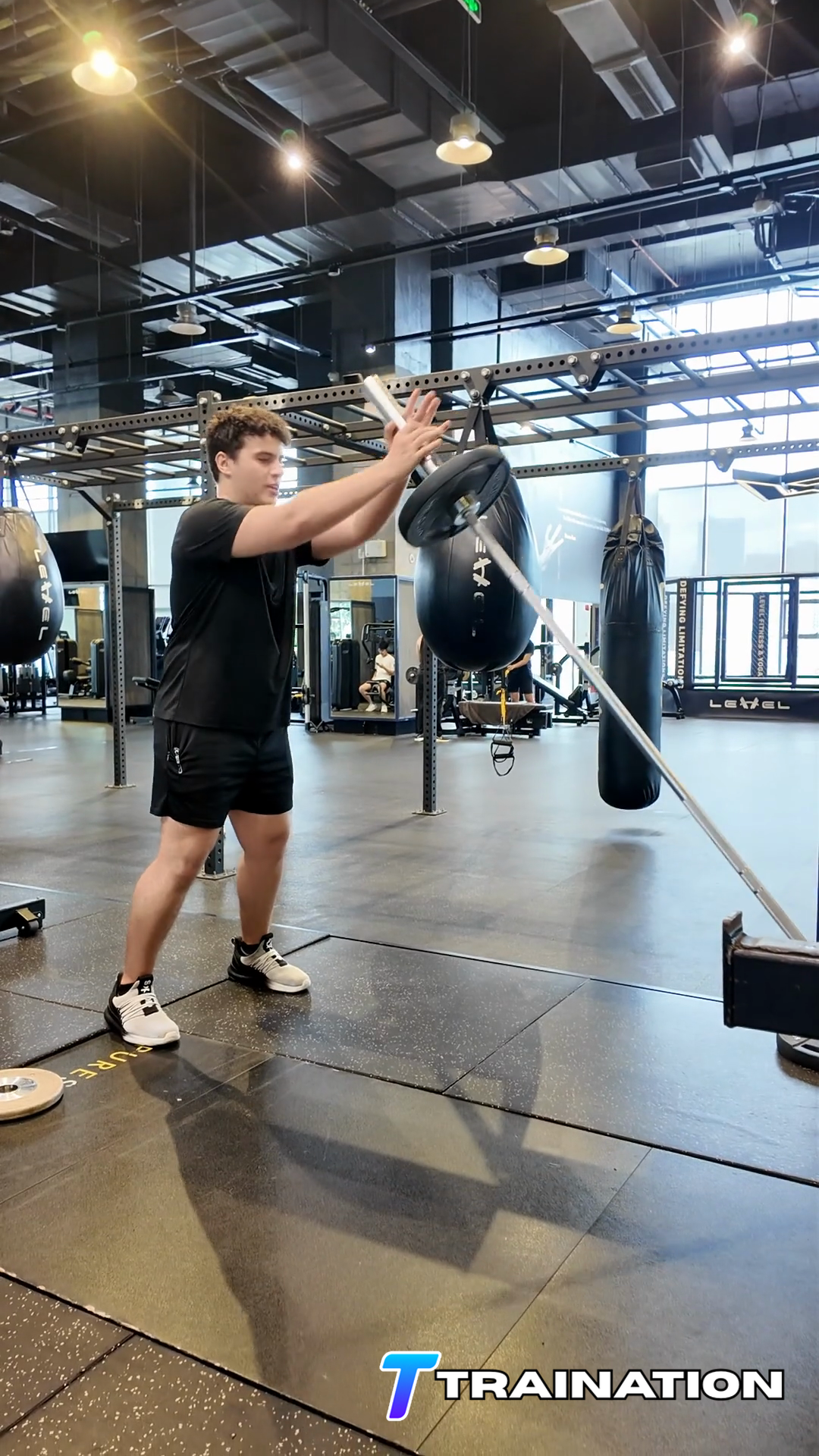
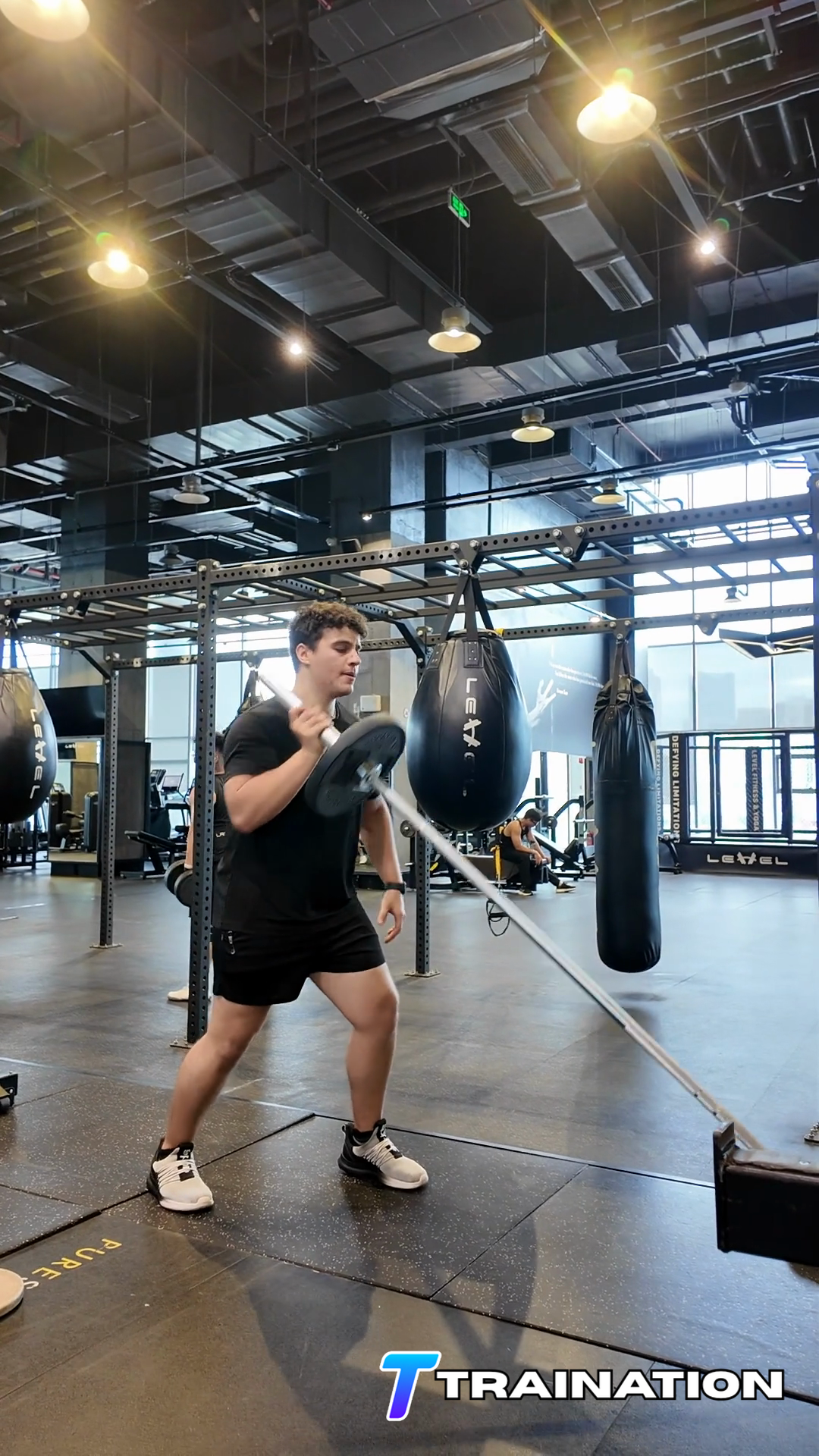
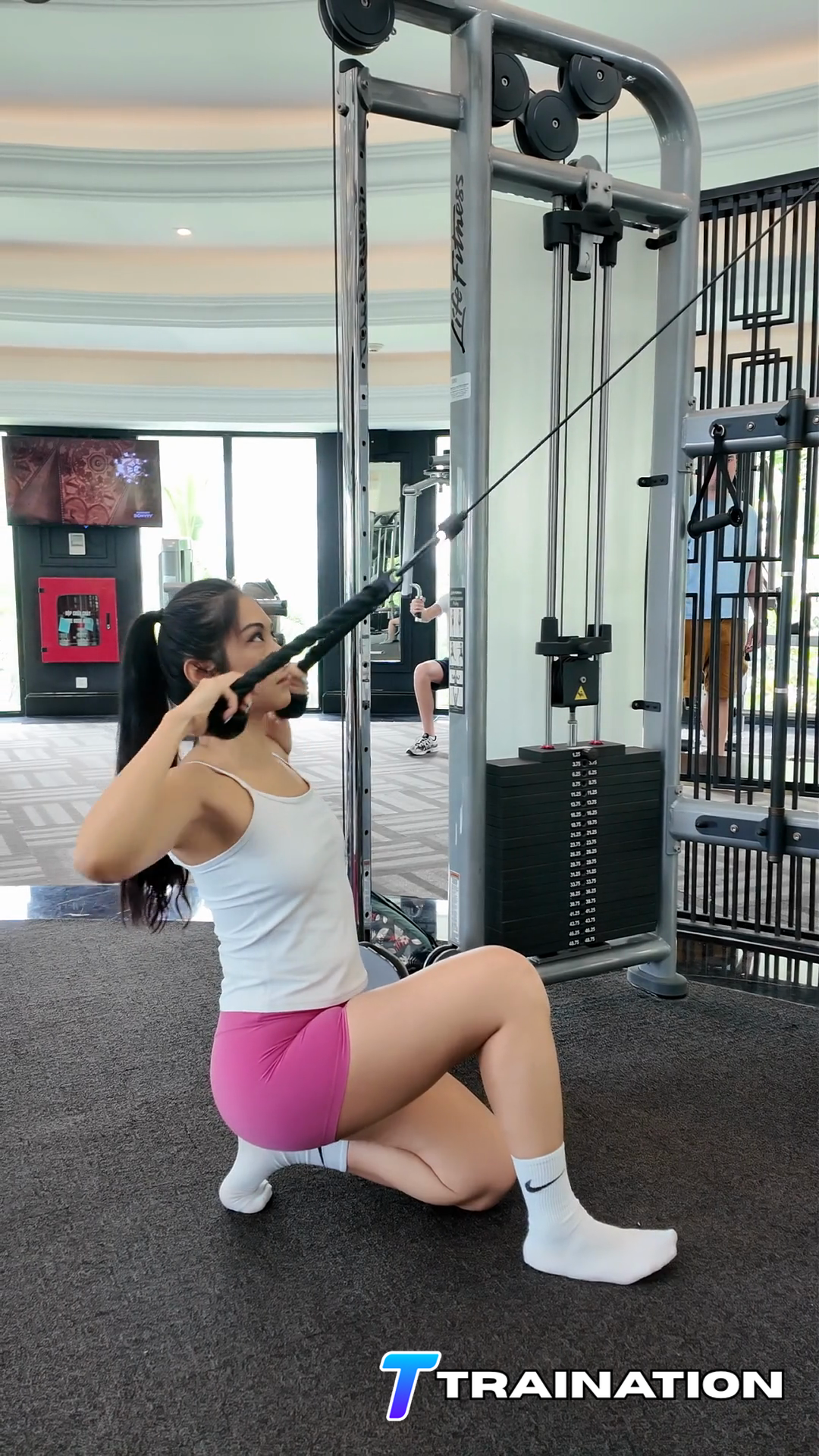
The angled path and kneeling base reduce load while reinforcing a stacked trunk.
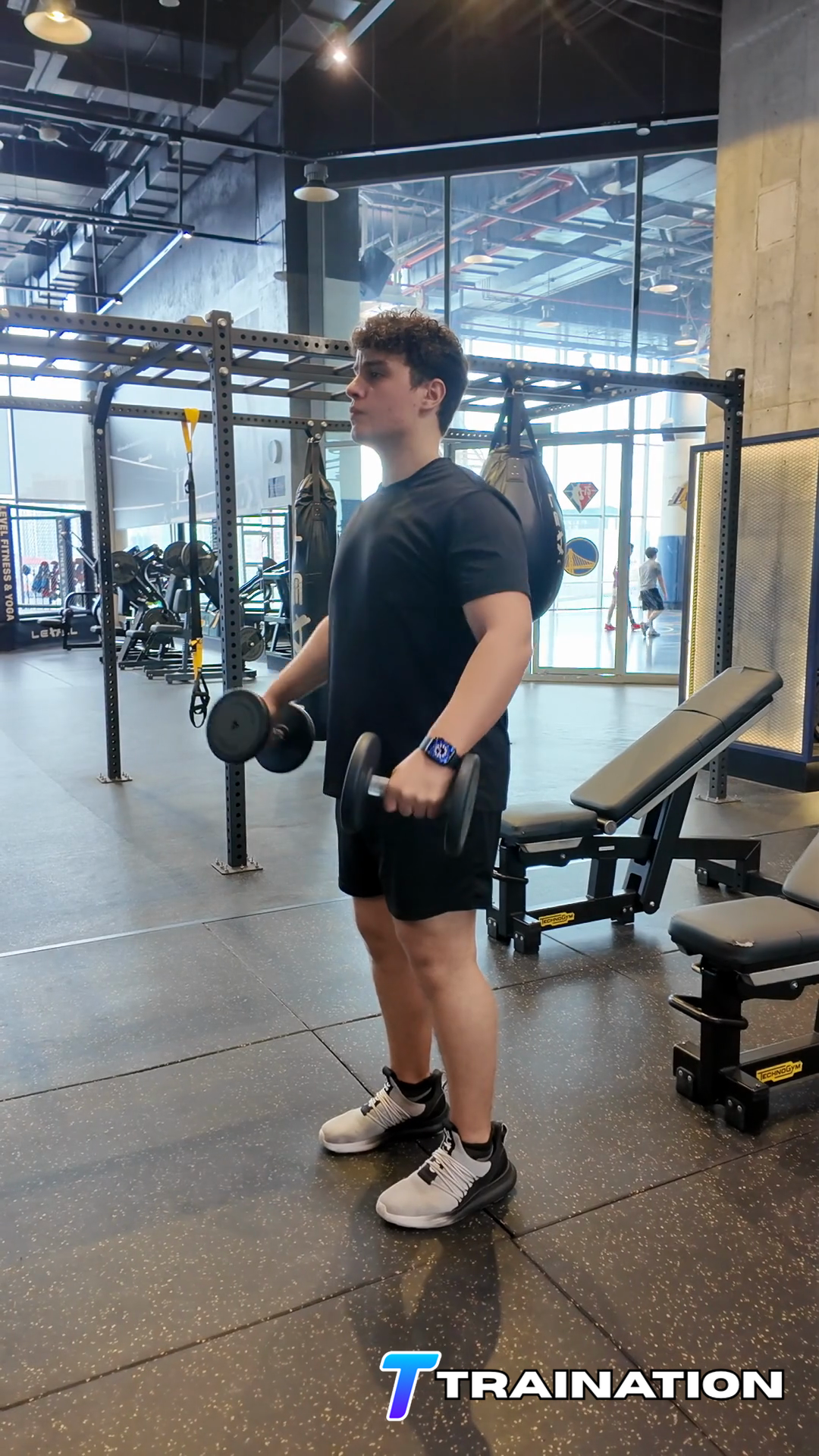
Back support and a palms-in grip can make the overhead path easier to control.
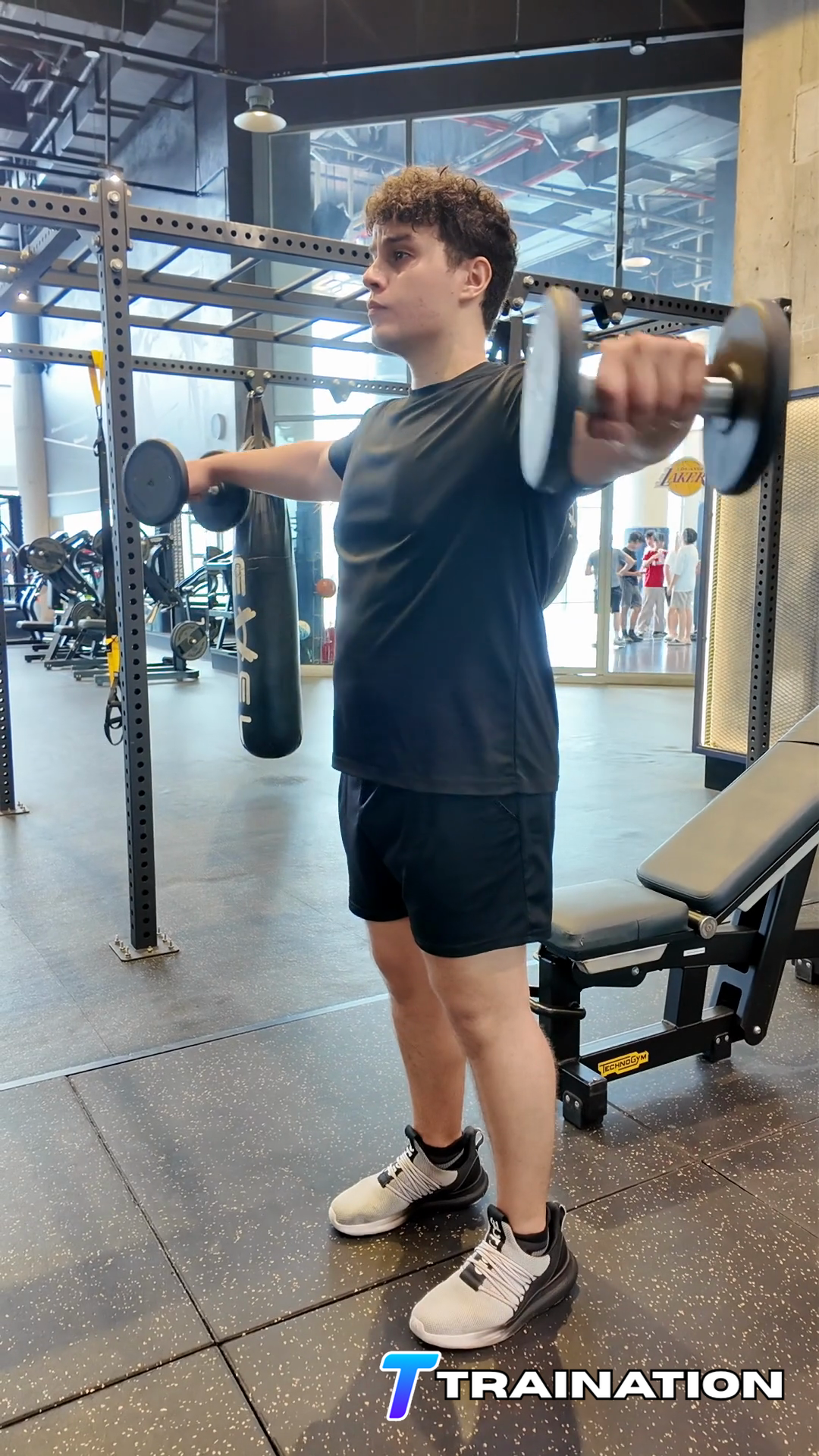
Pause at shoulder height before each press without losing wrist or rib position.
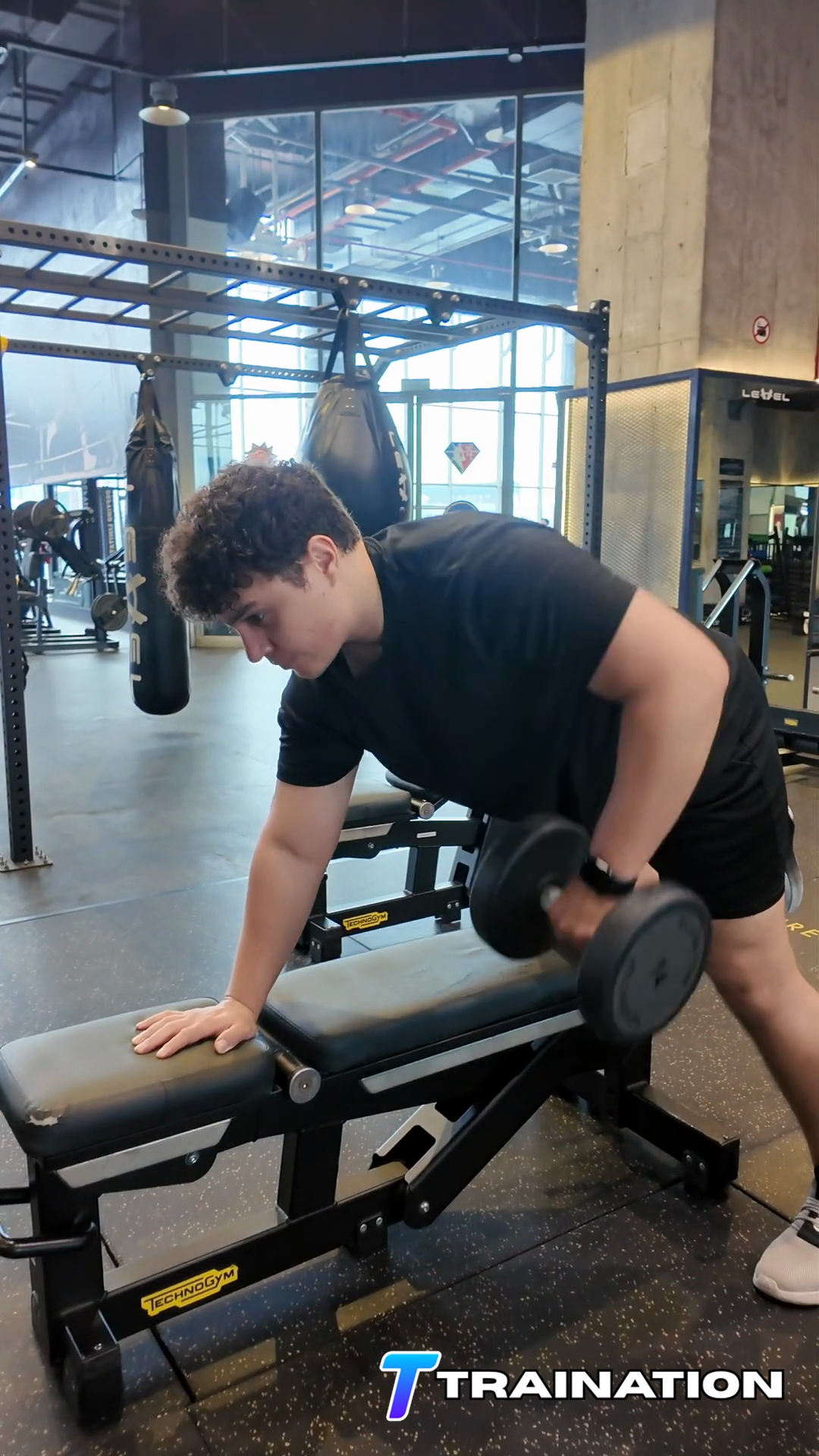
Use one arm only after you can press with both arms while keeping the body still.
Turn Seated Dumbbell Shoulder Press and the rest of your exercise library into repeatable client programs.
Explore the workout builder