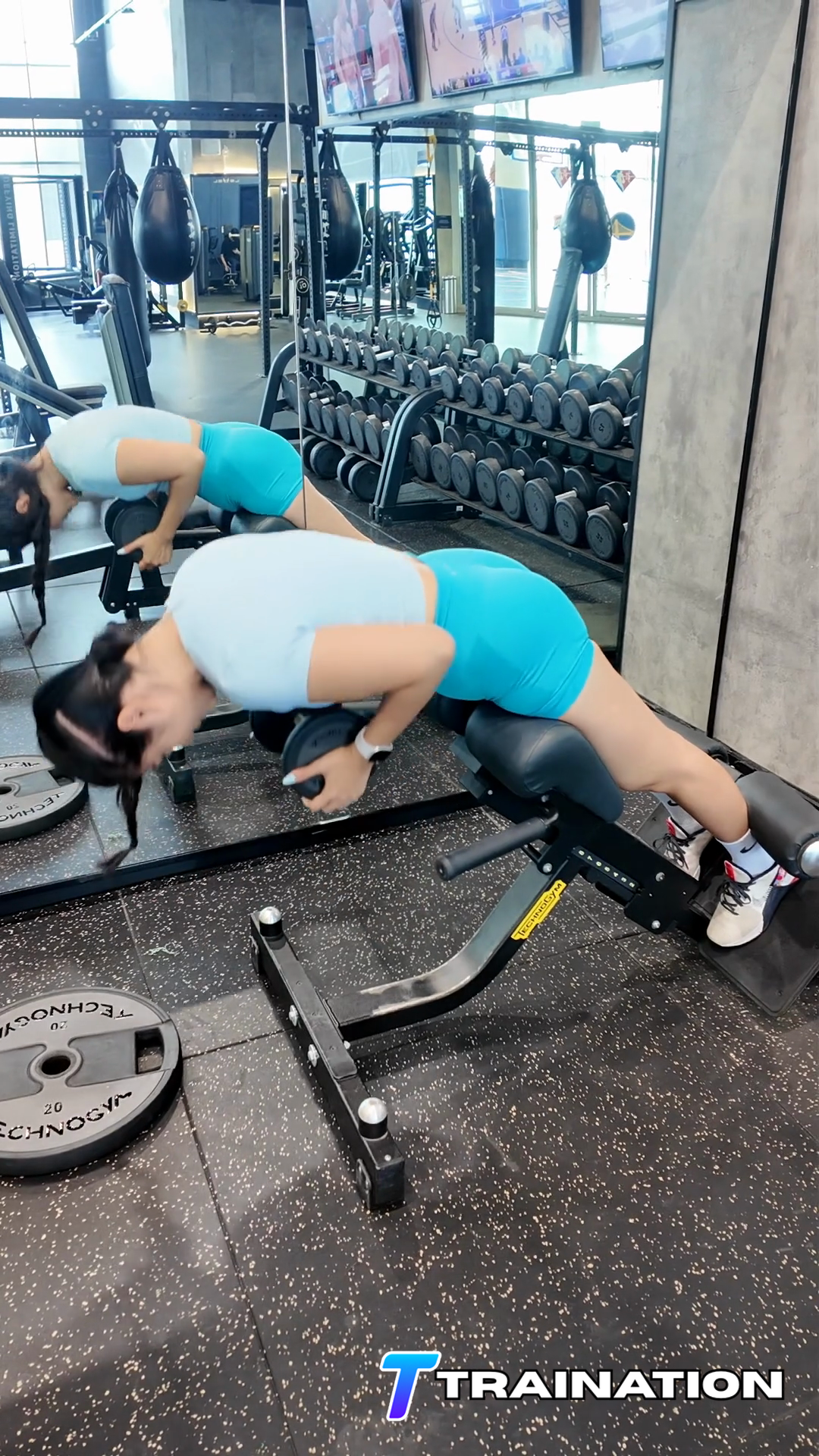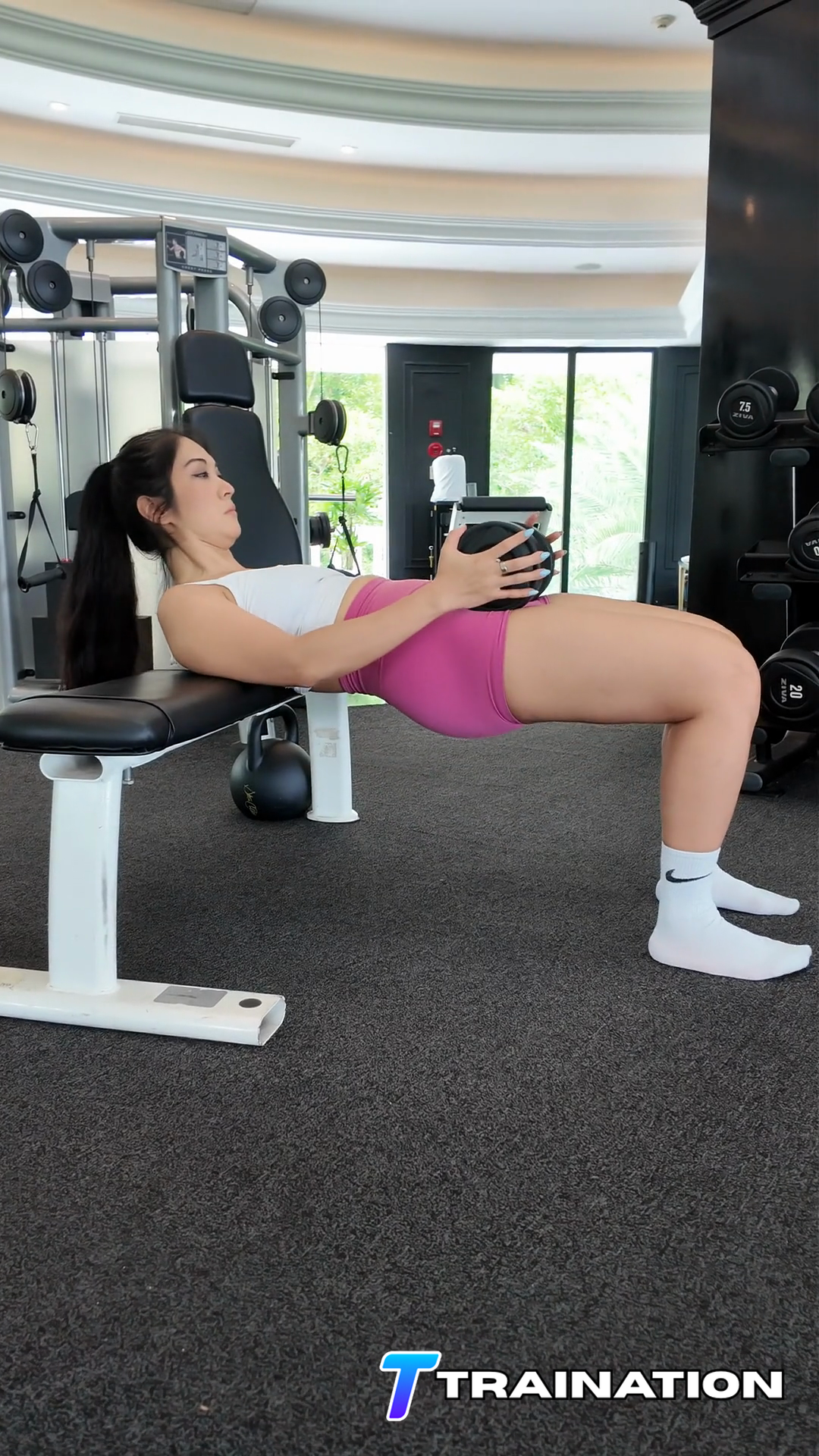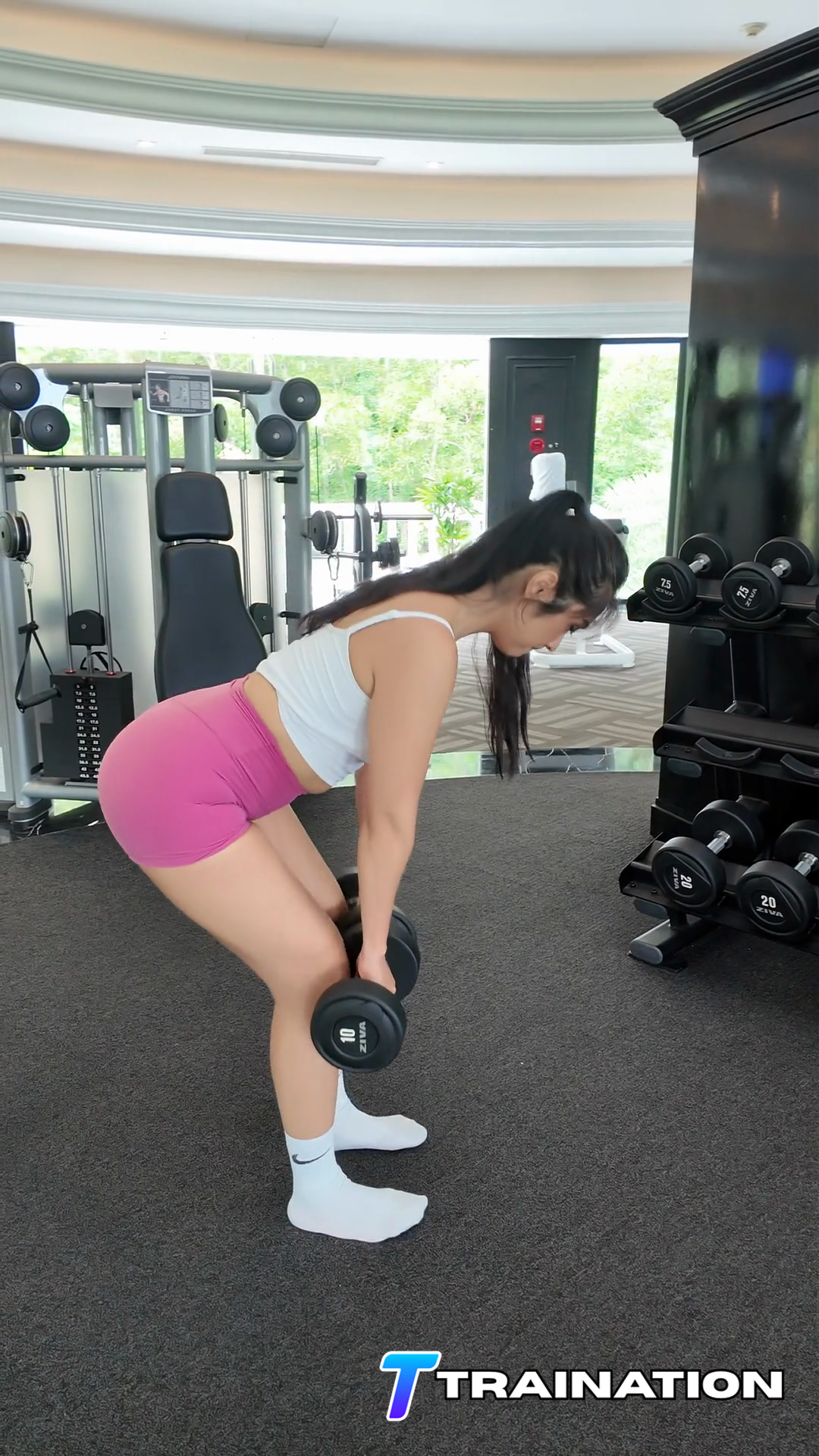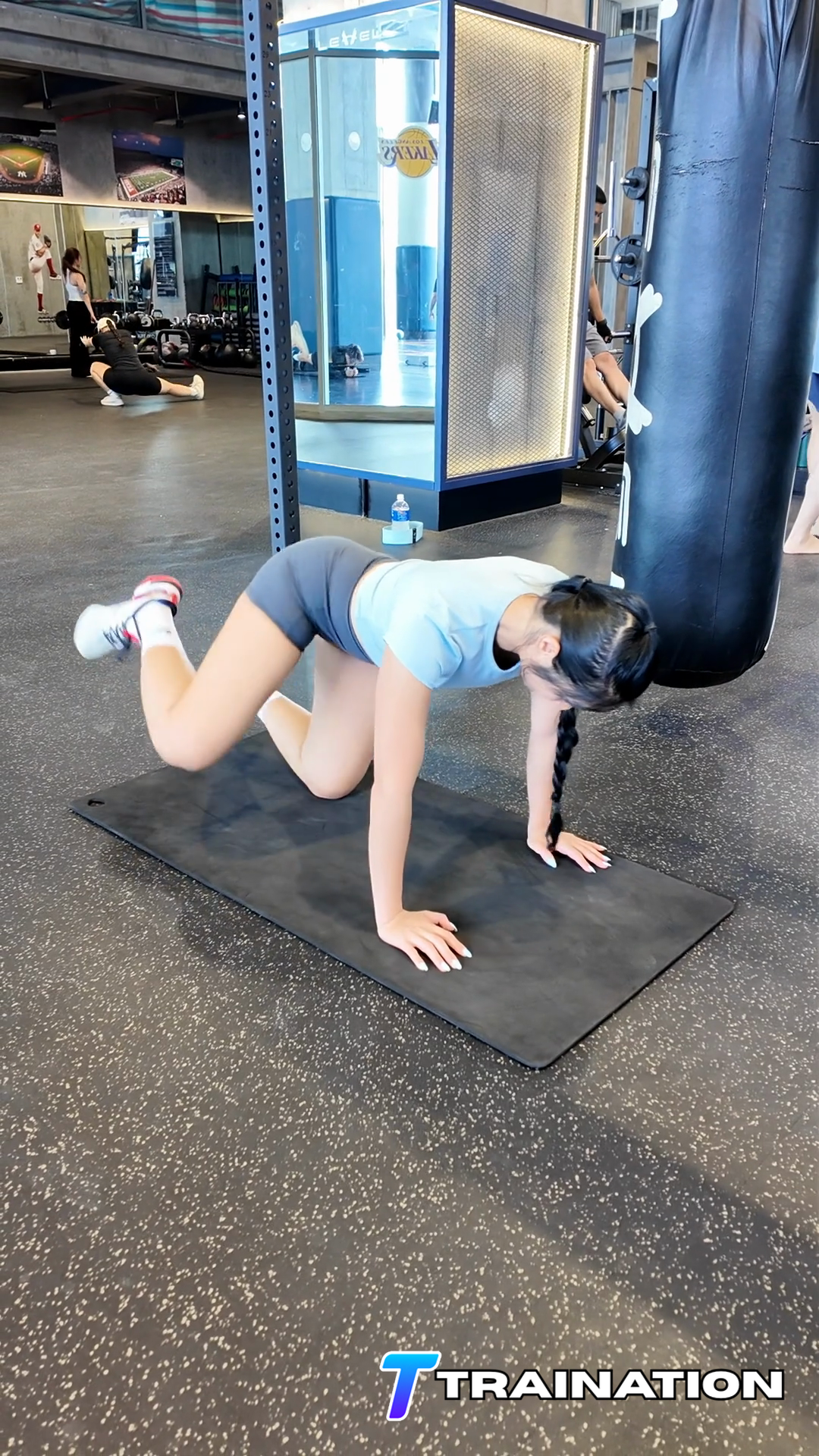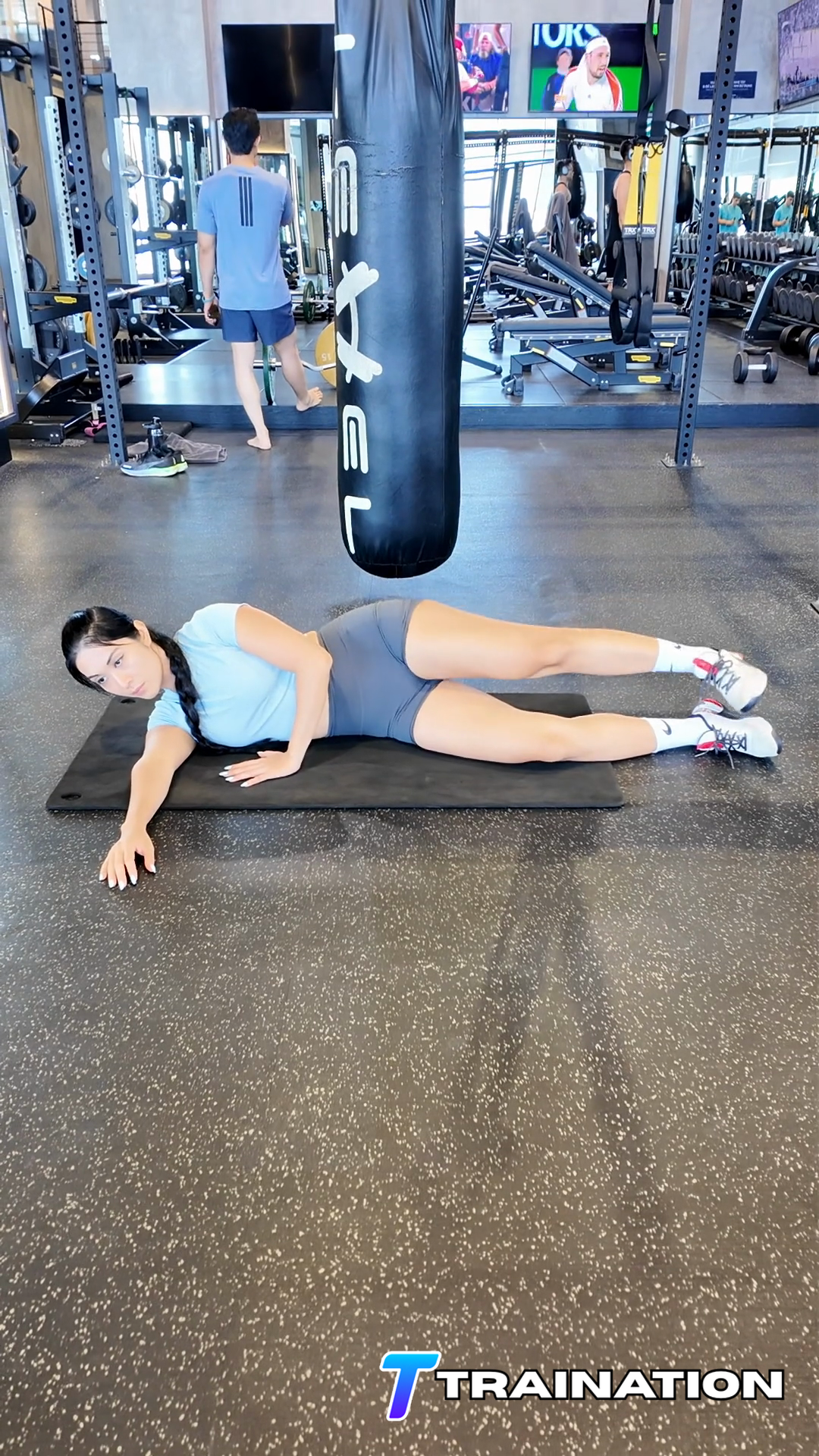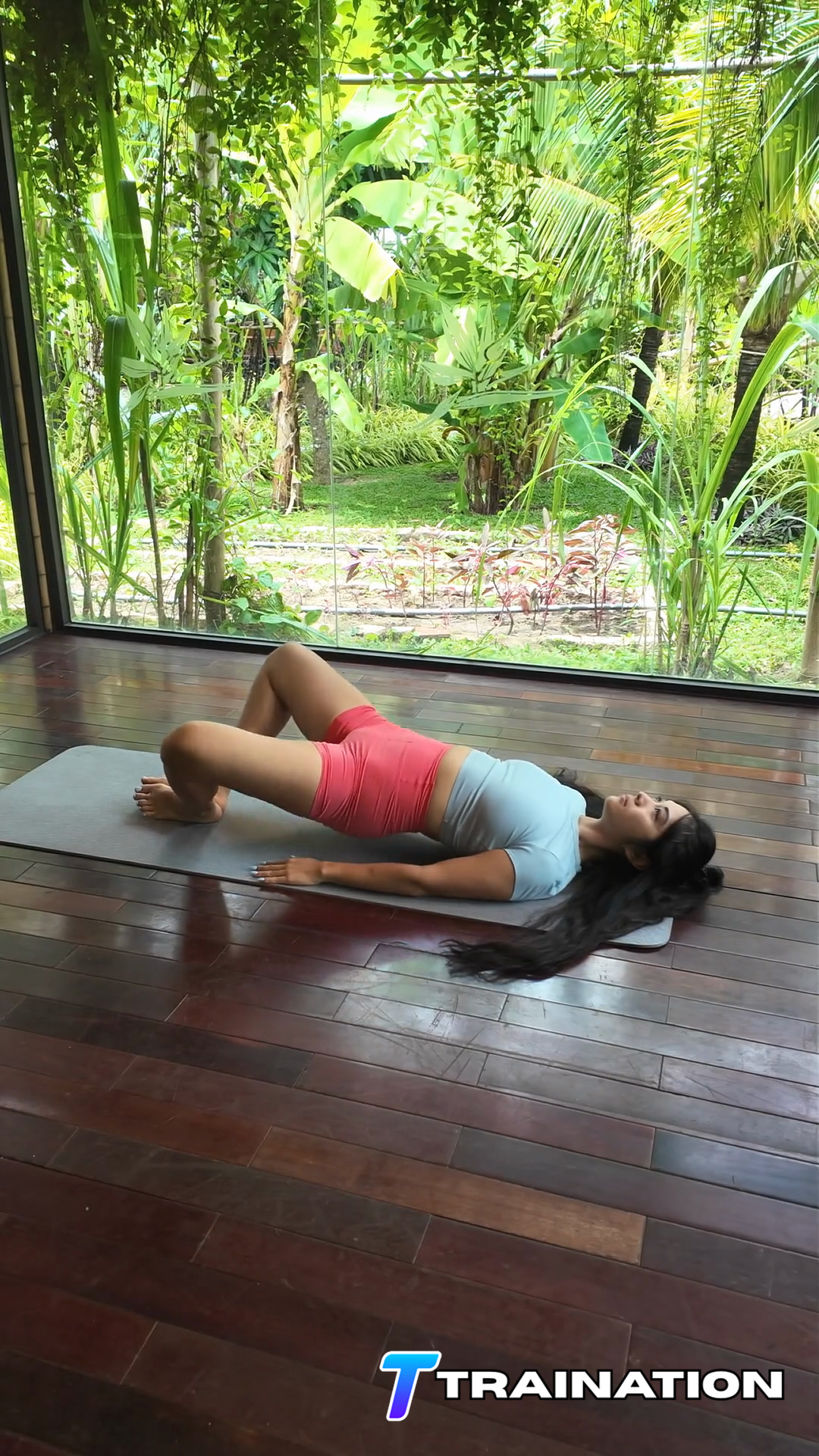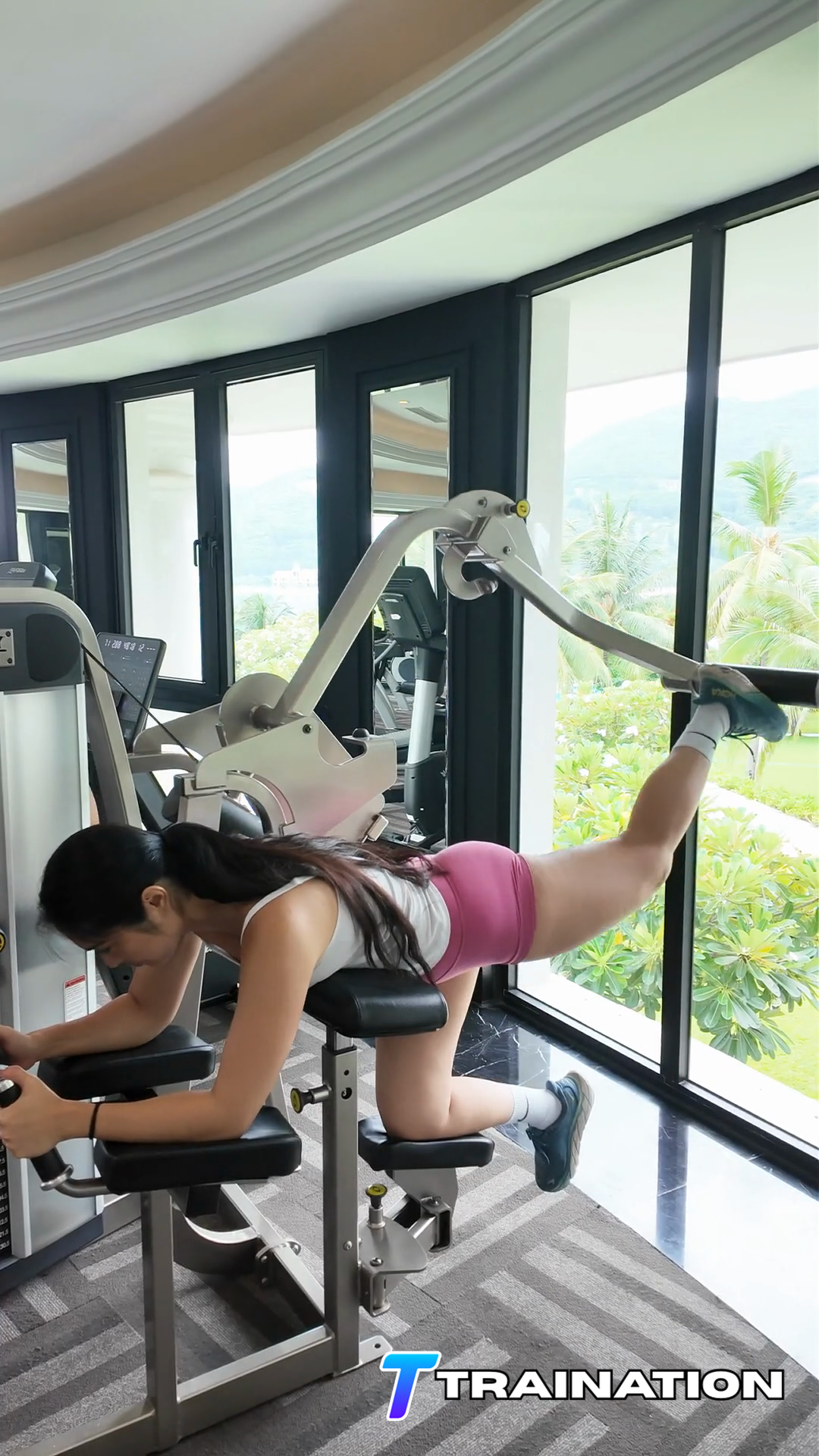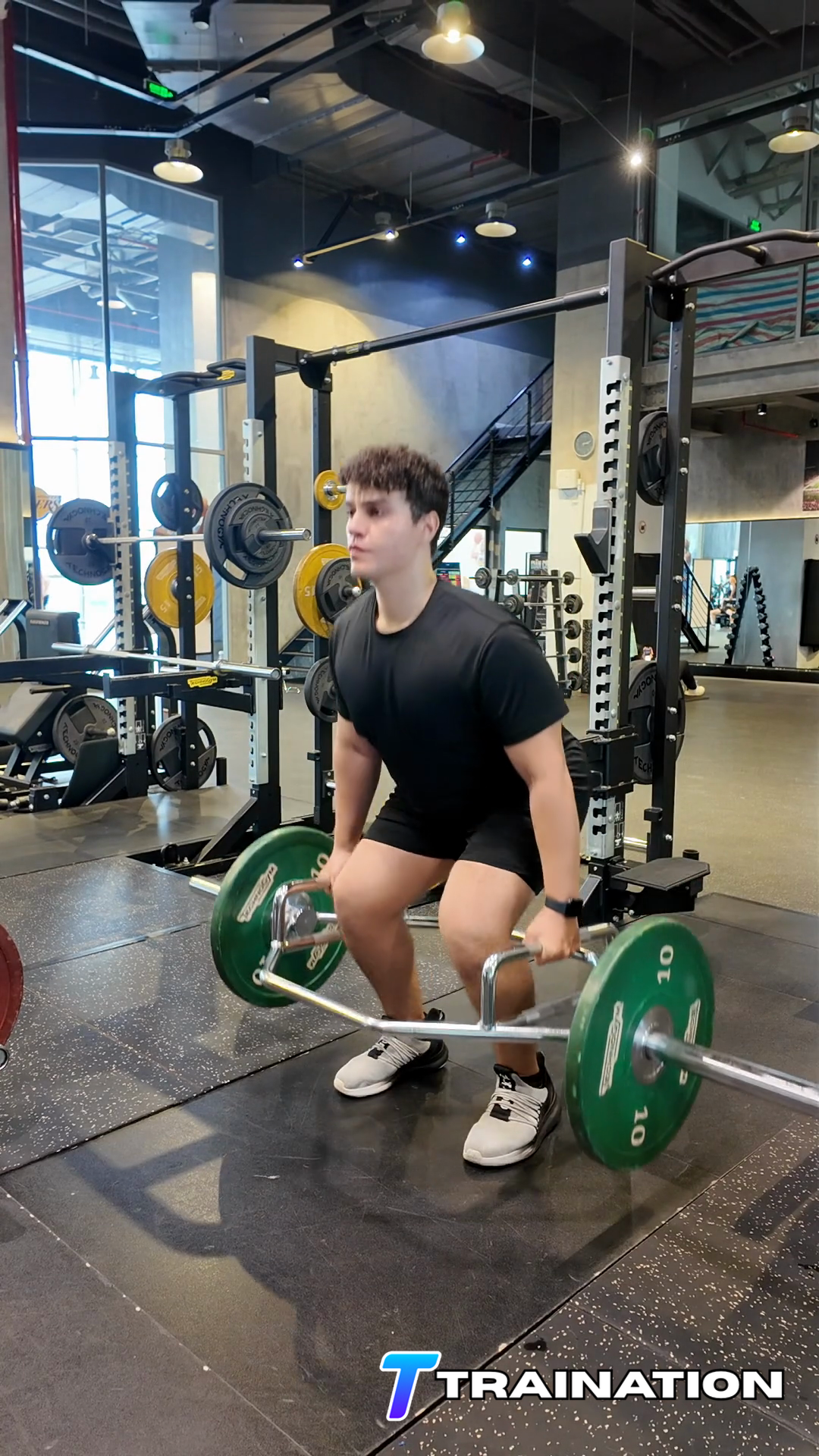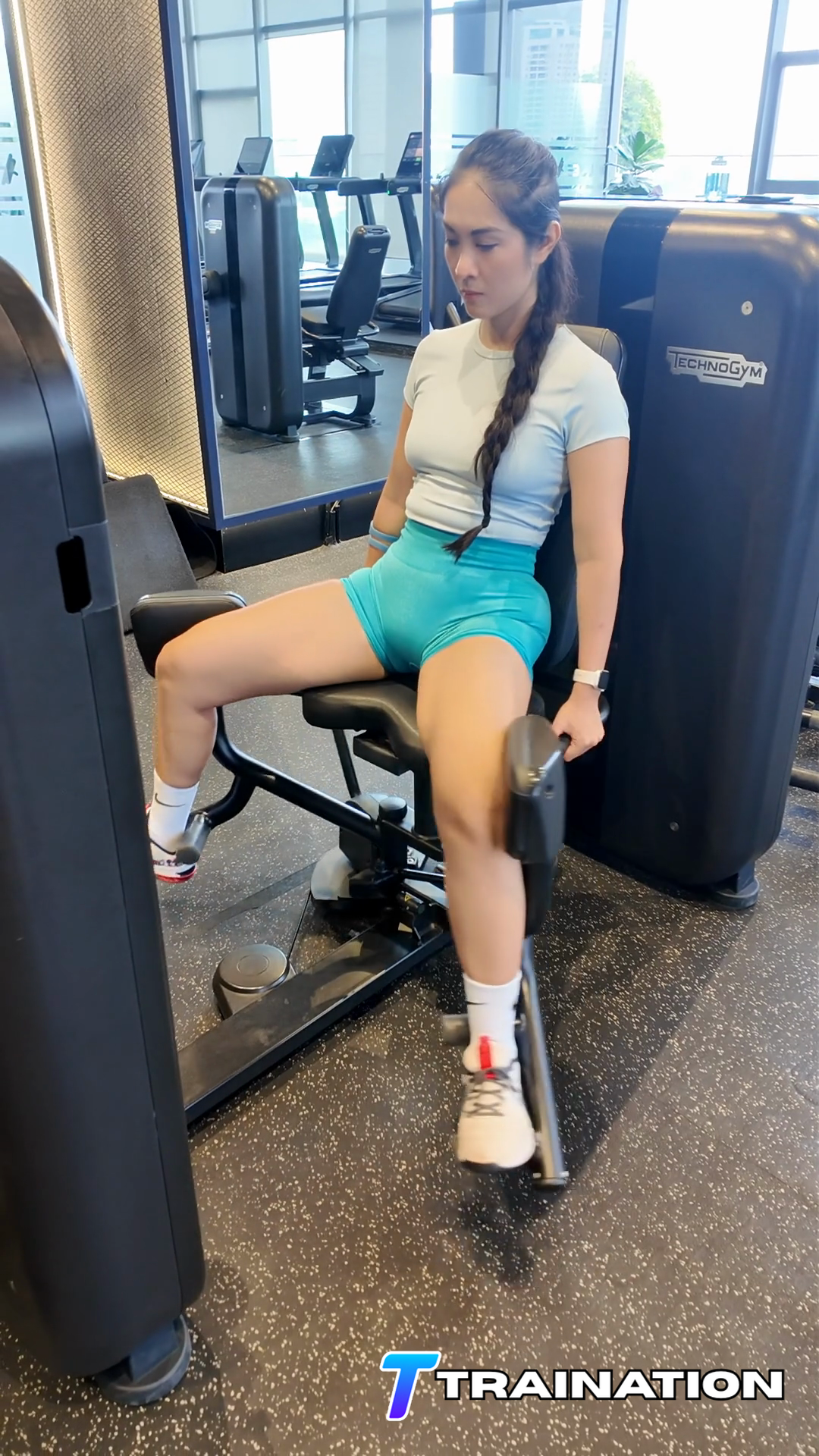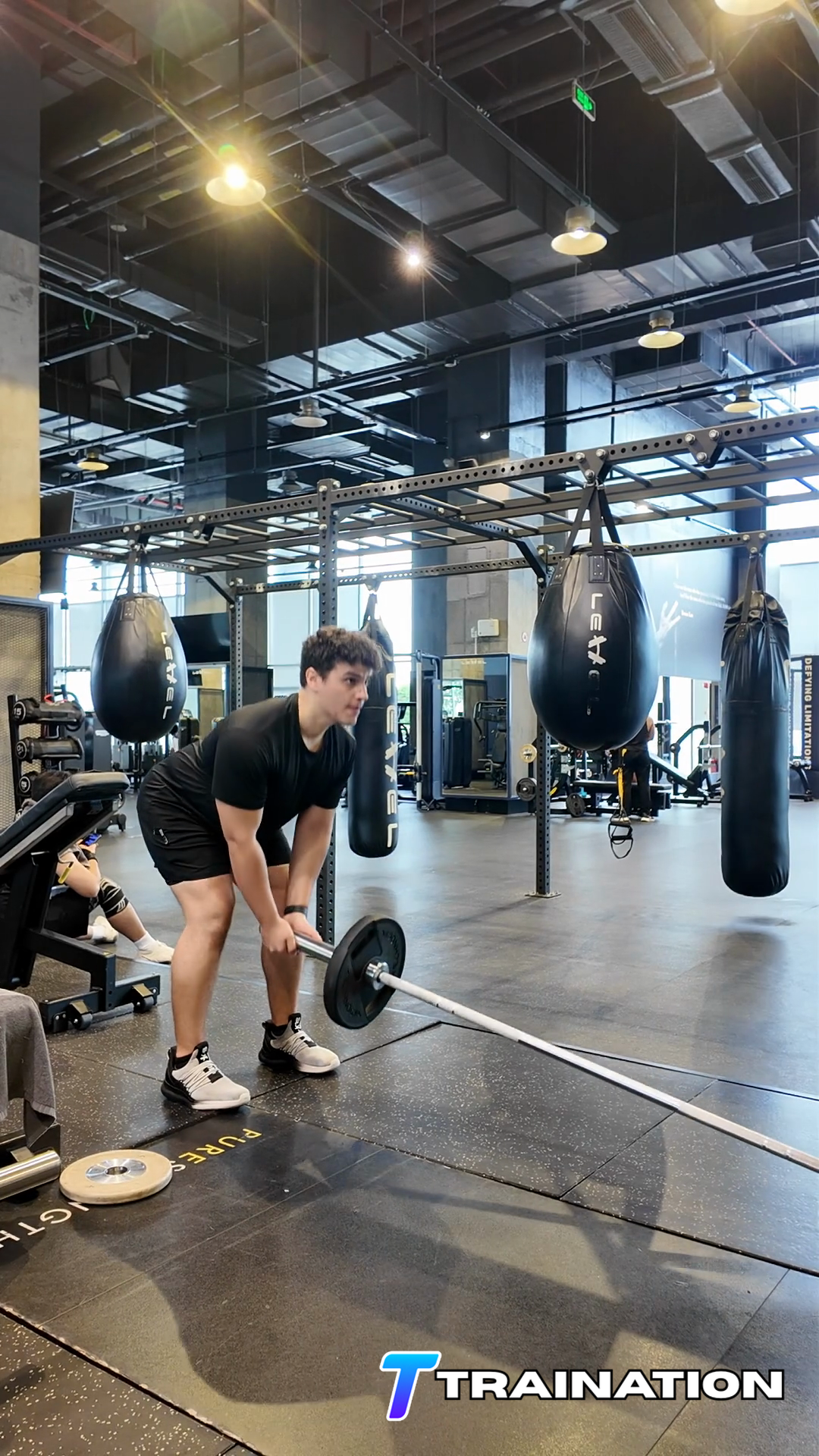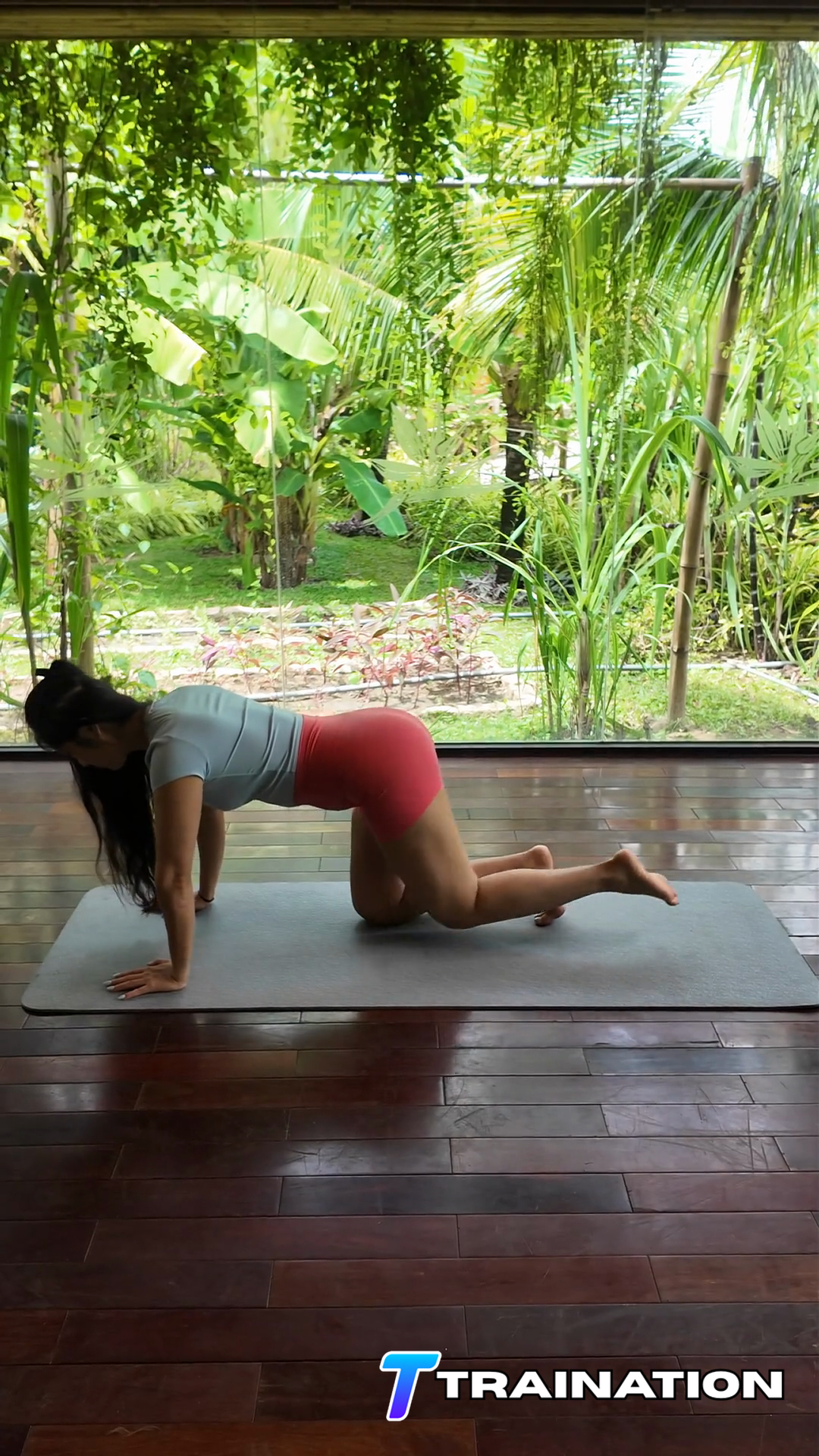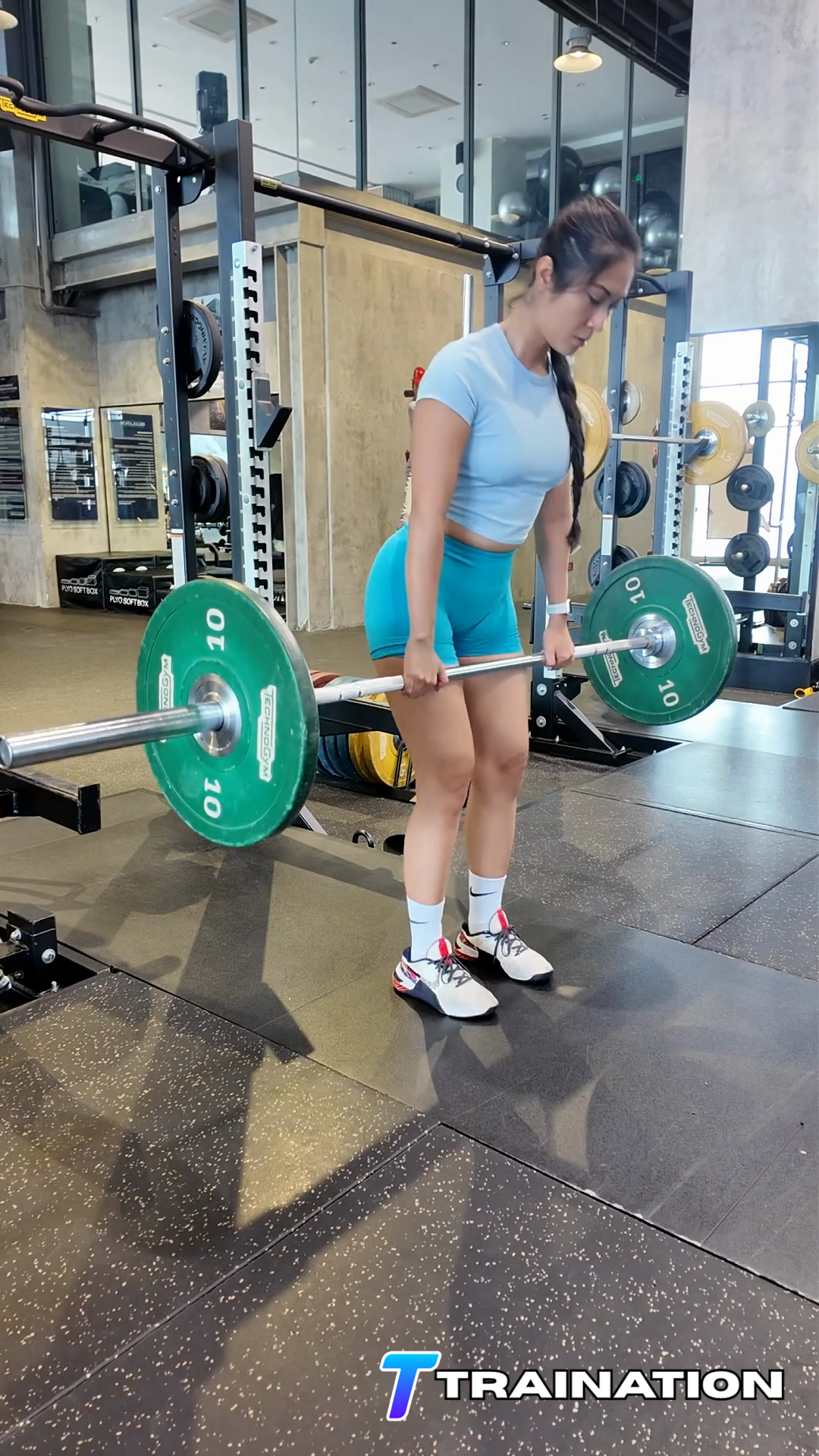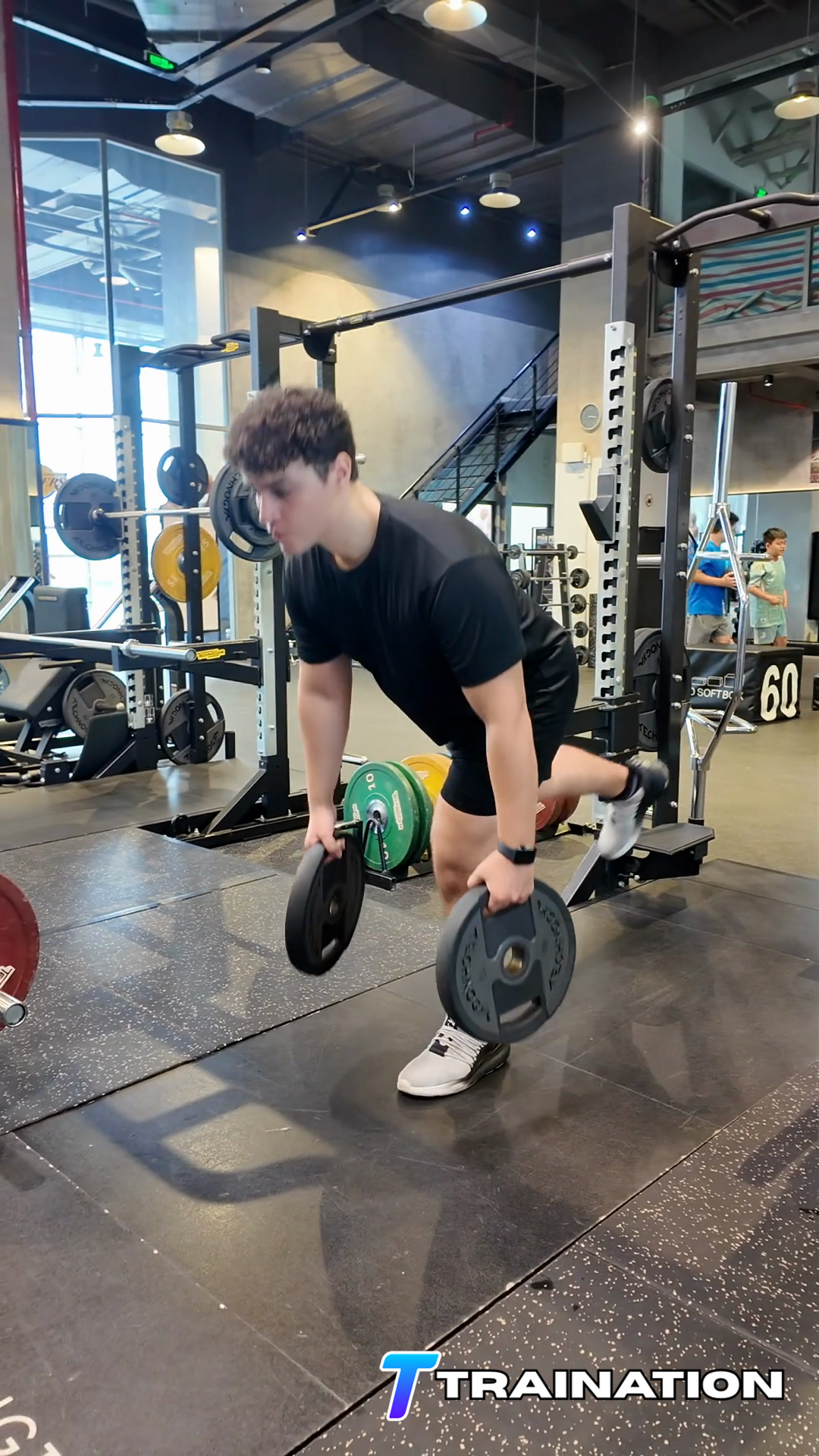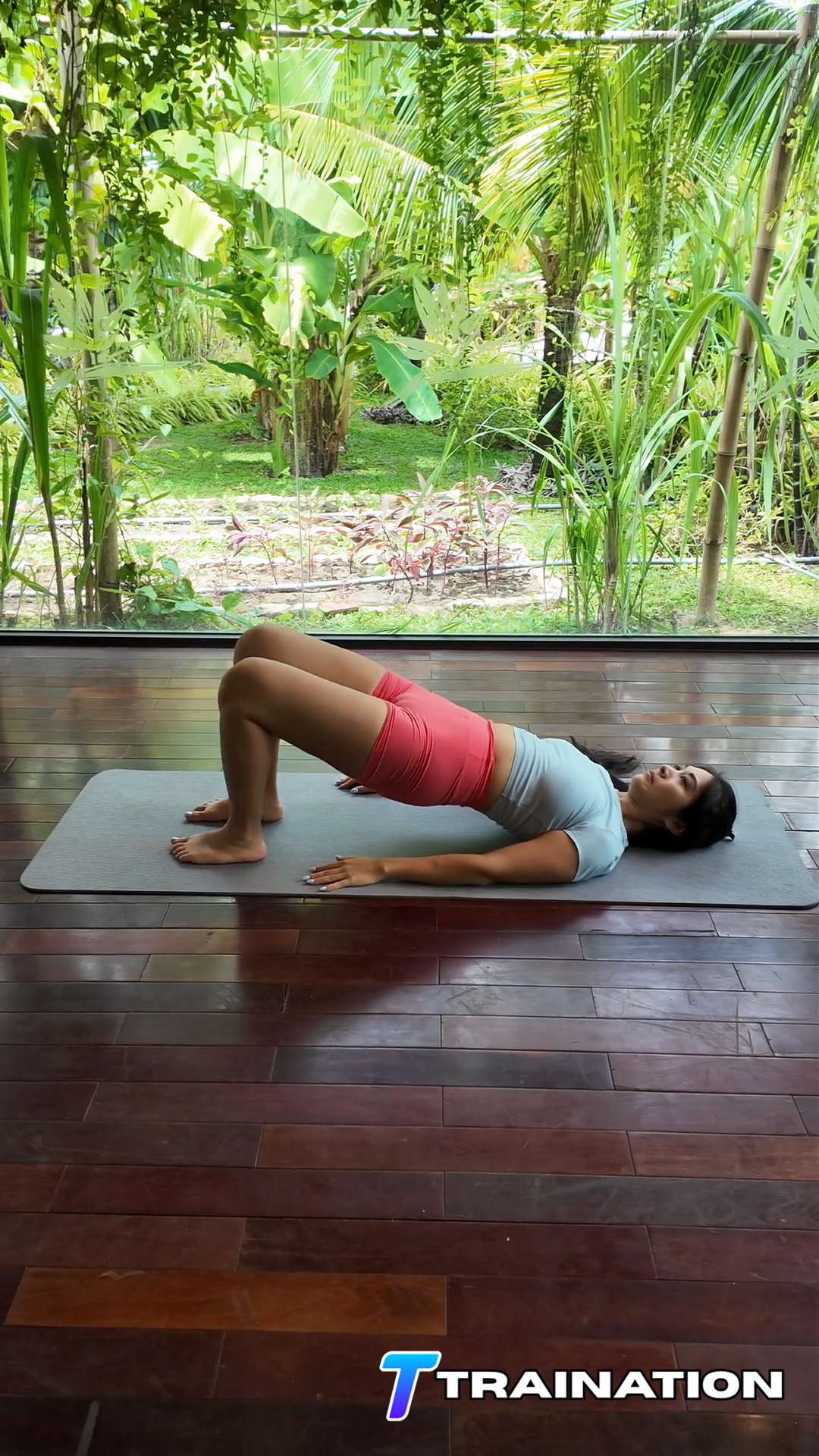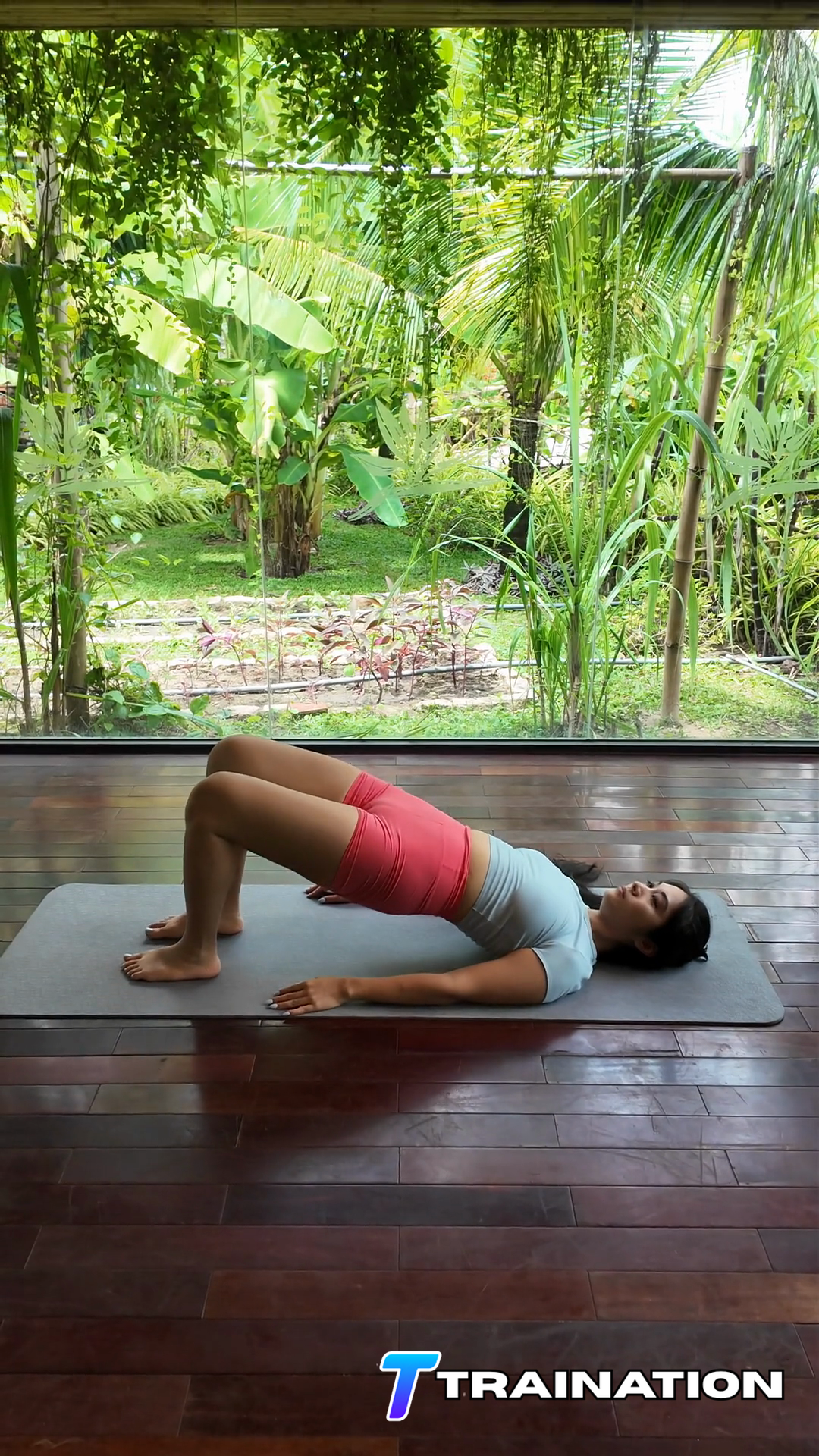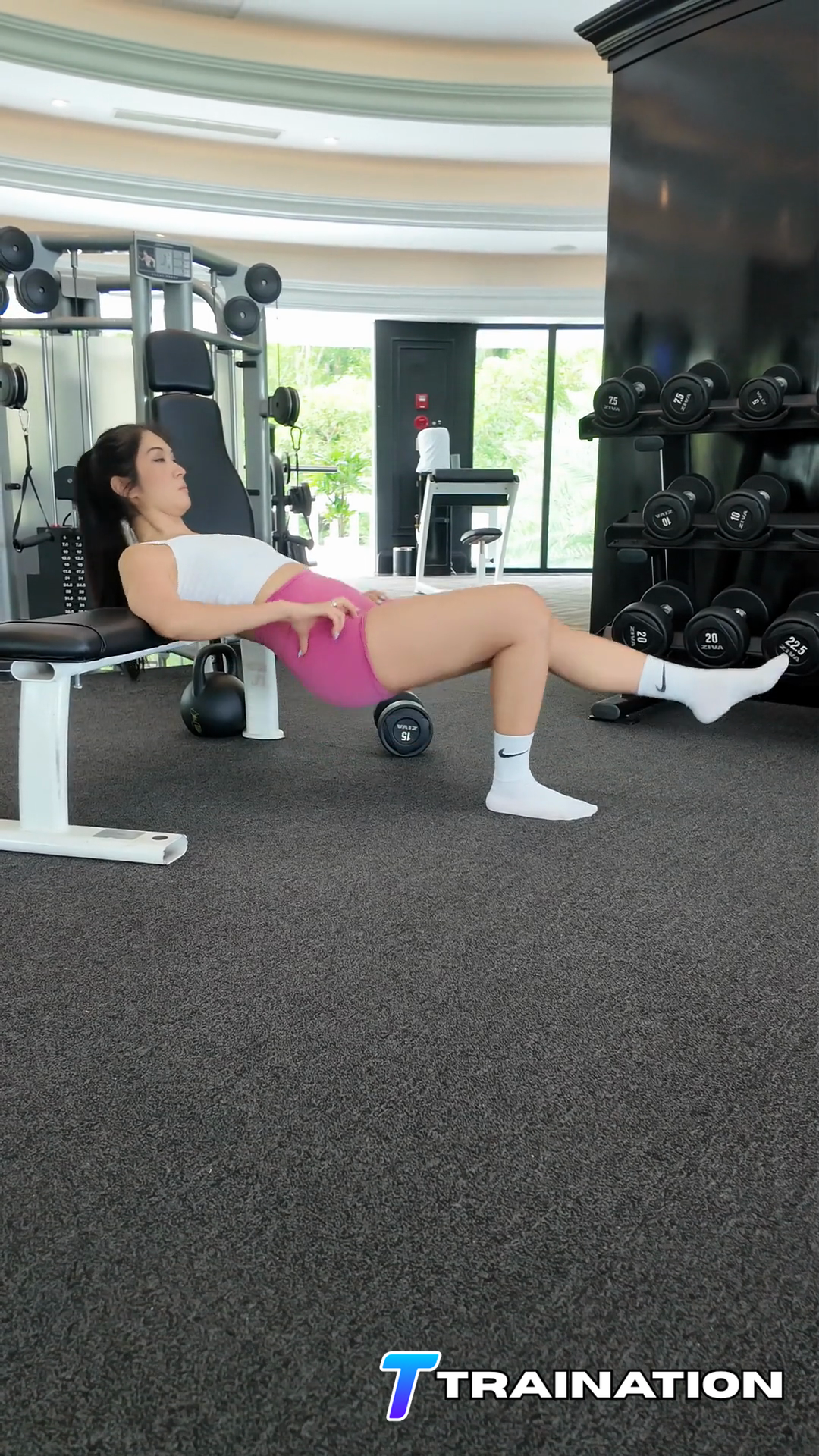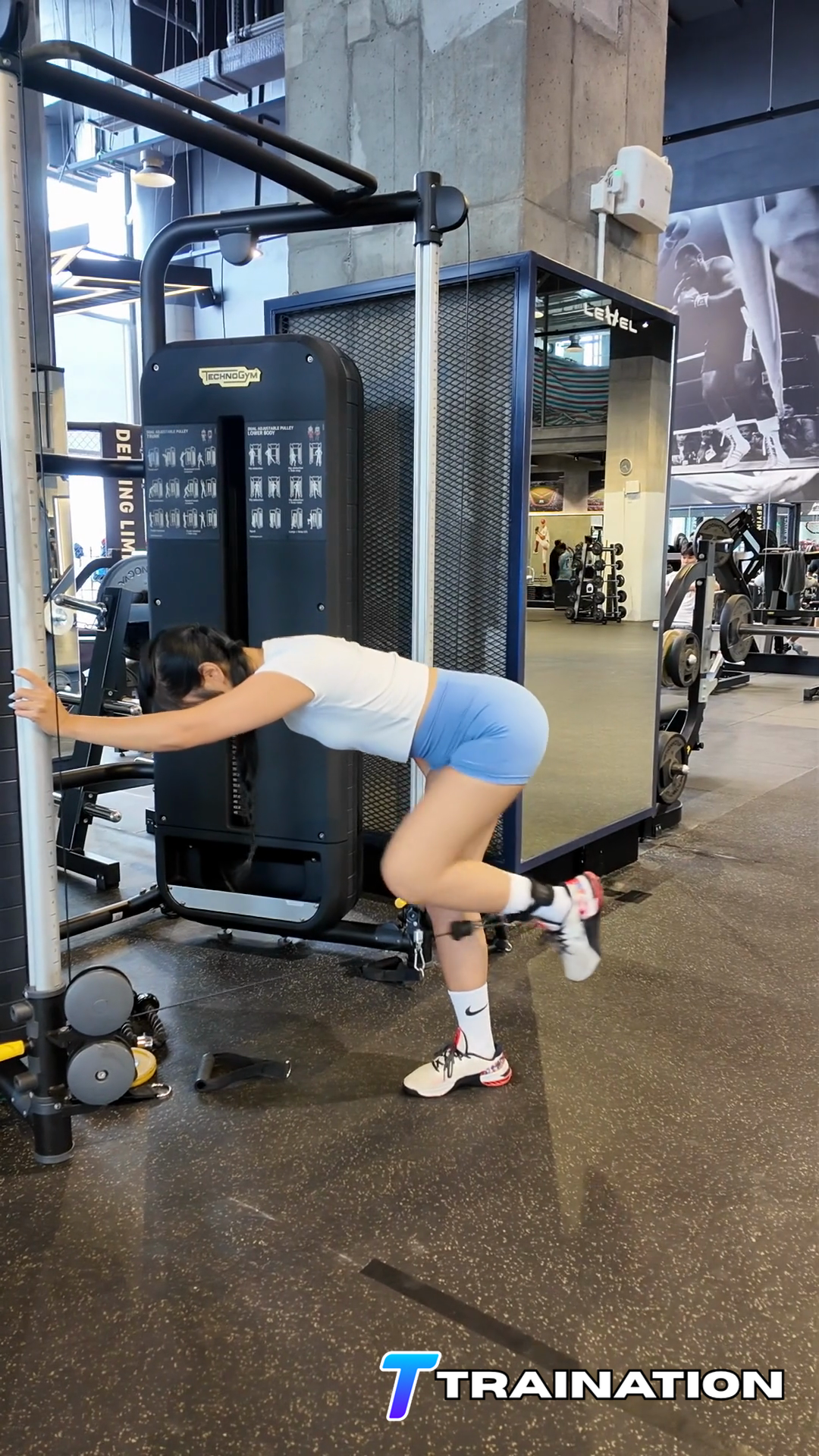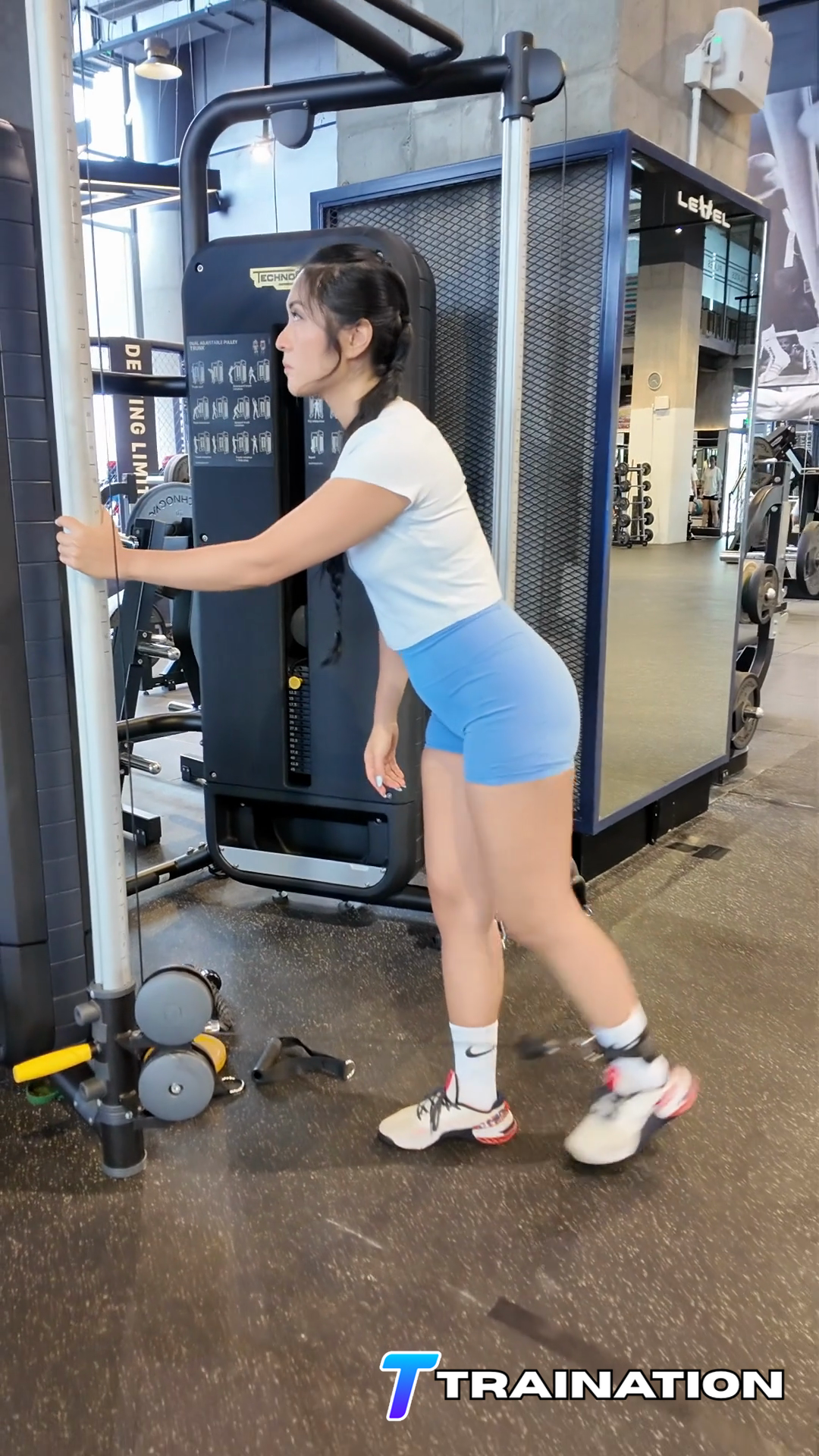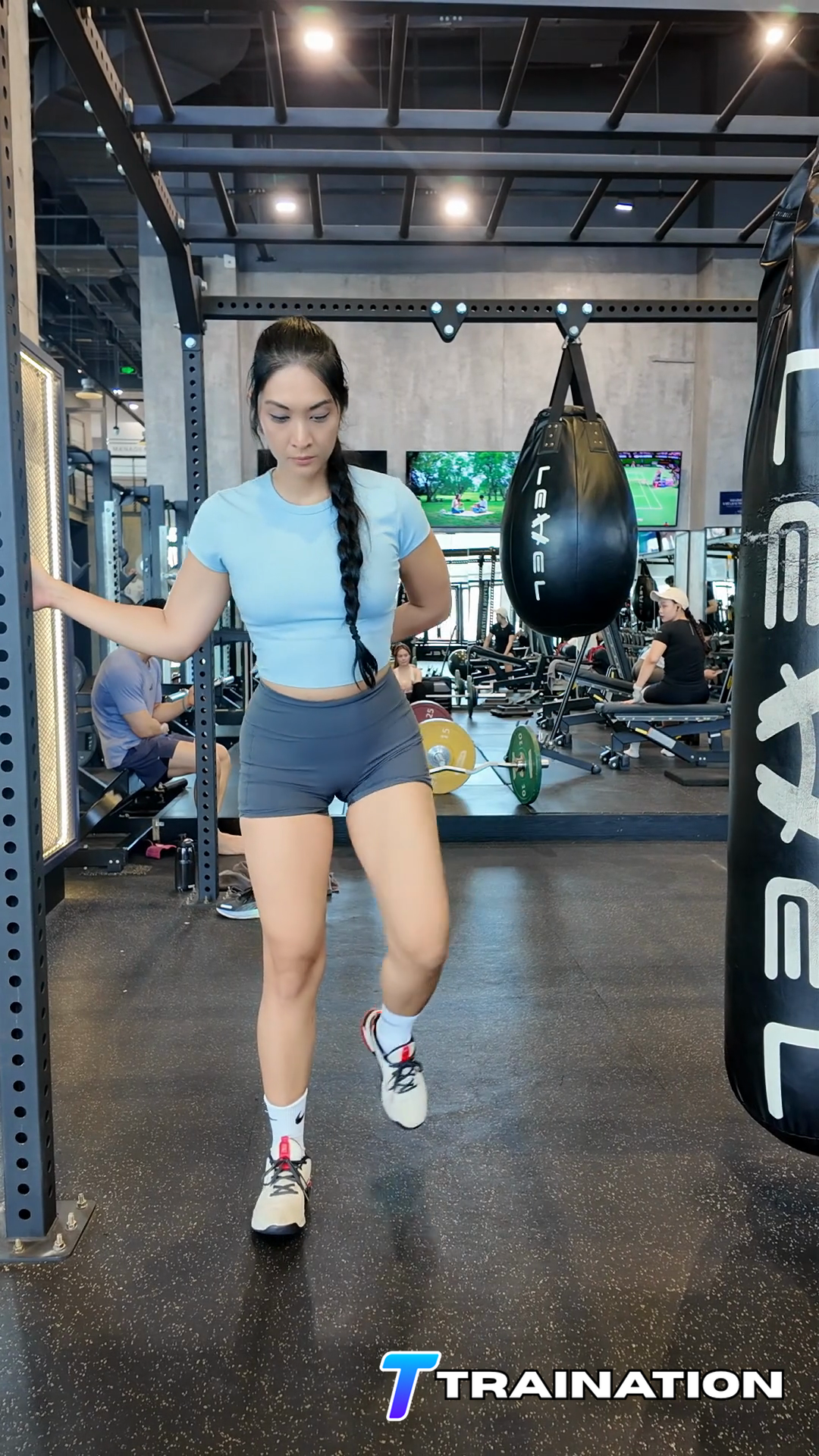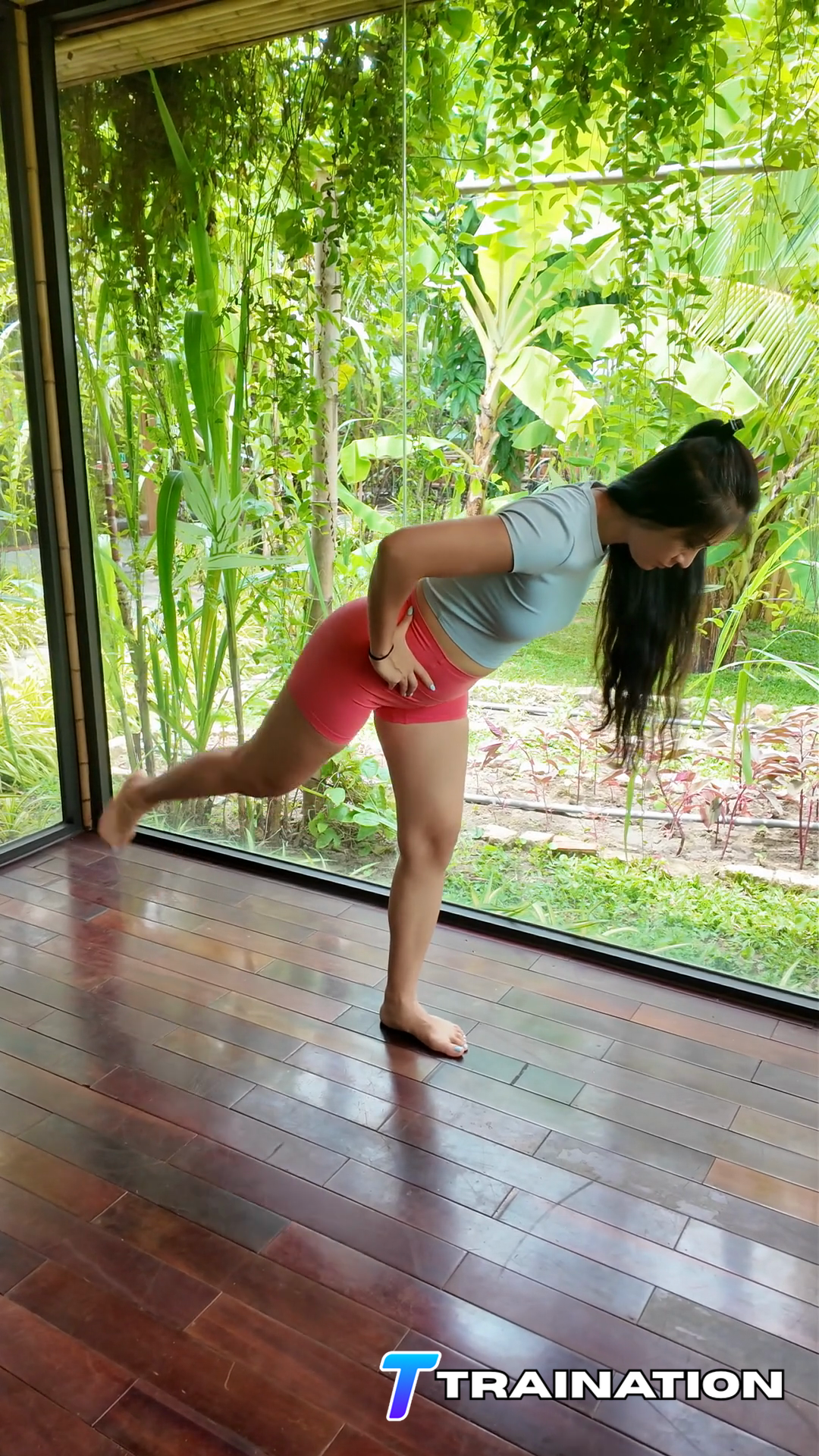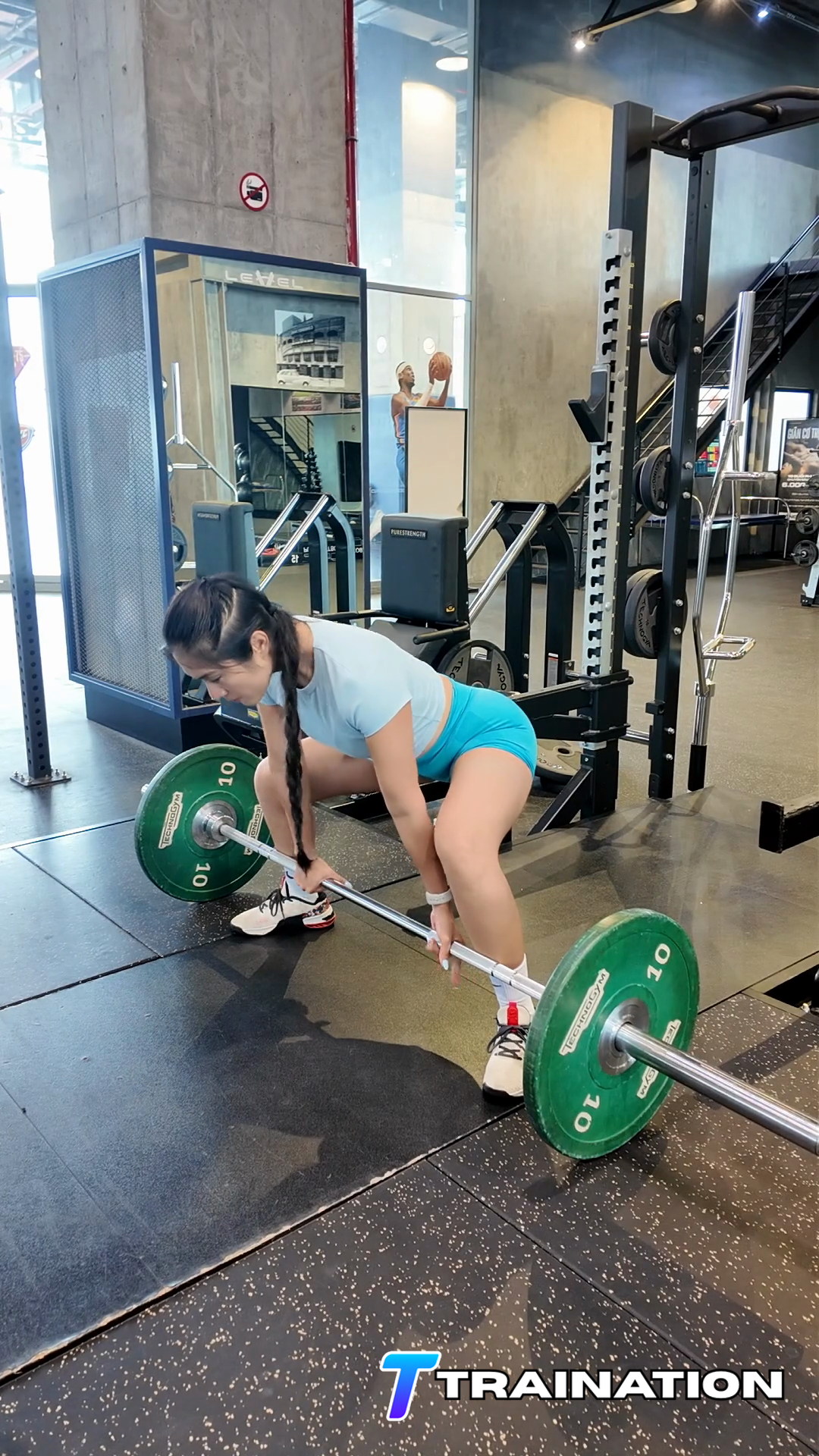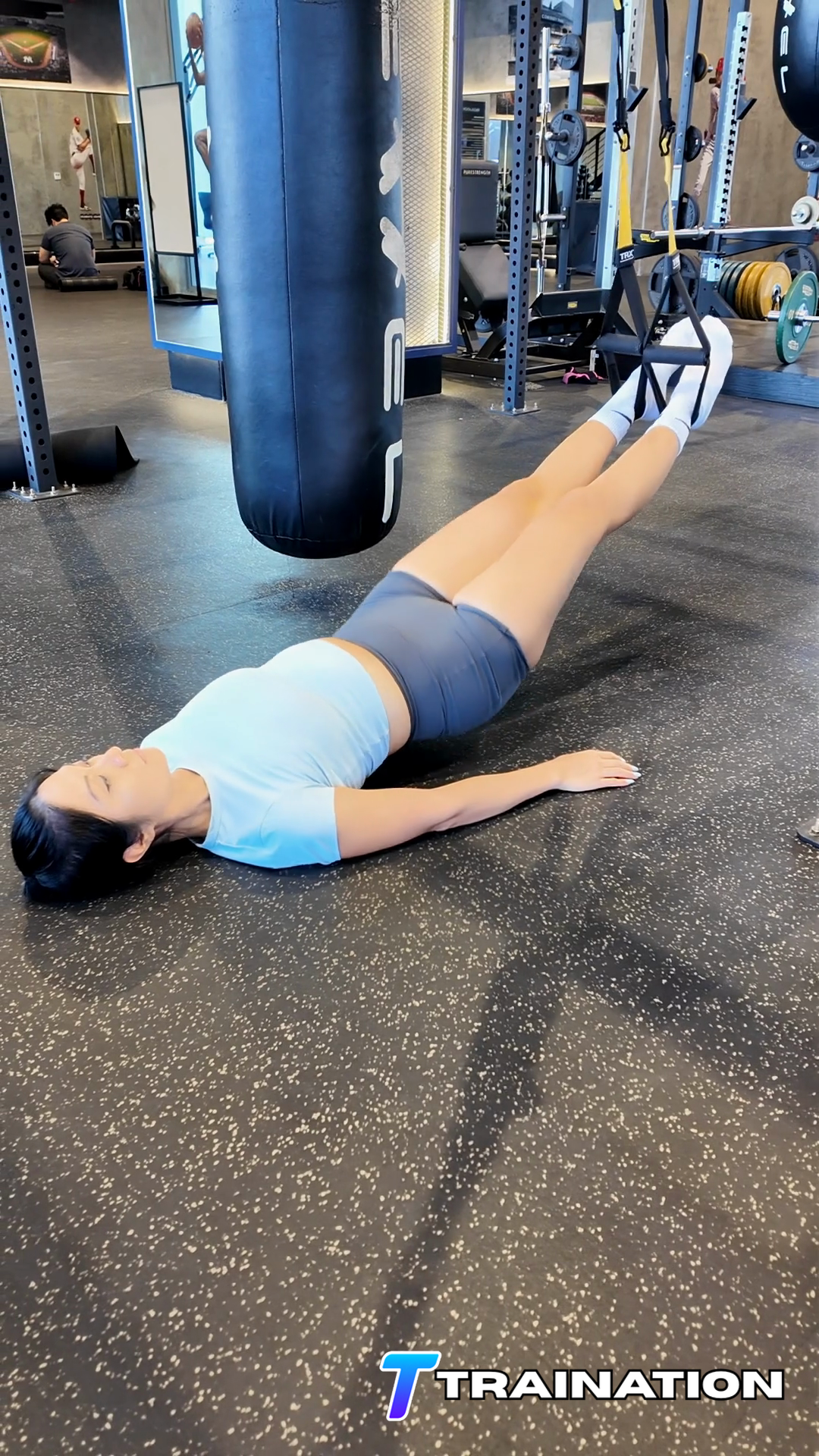
Feet touching the floor
Keep both legs off the floor throughout the set; the glutes lift the legs from the hips.
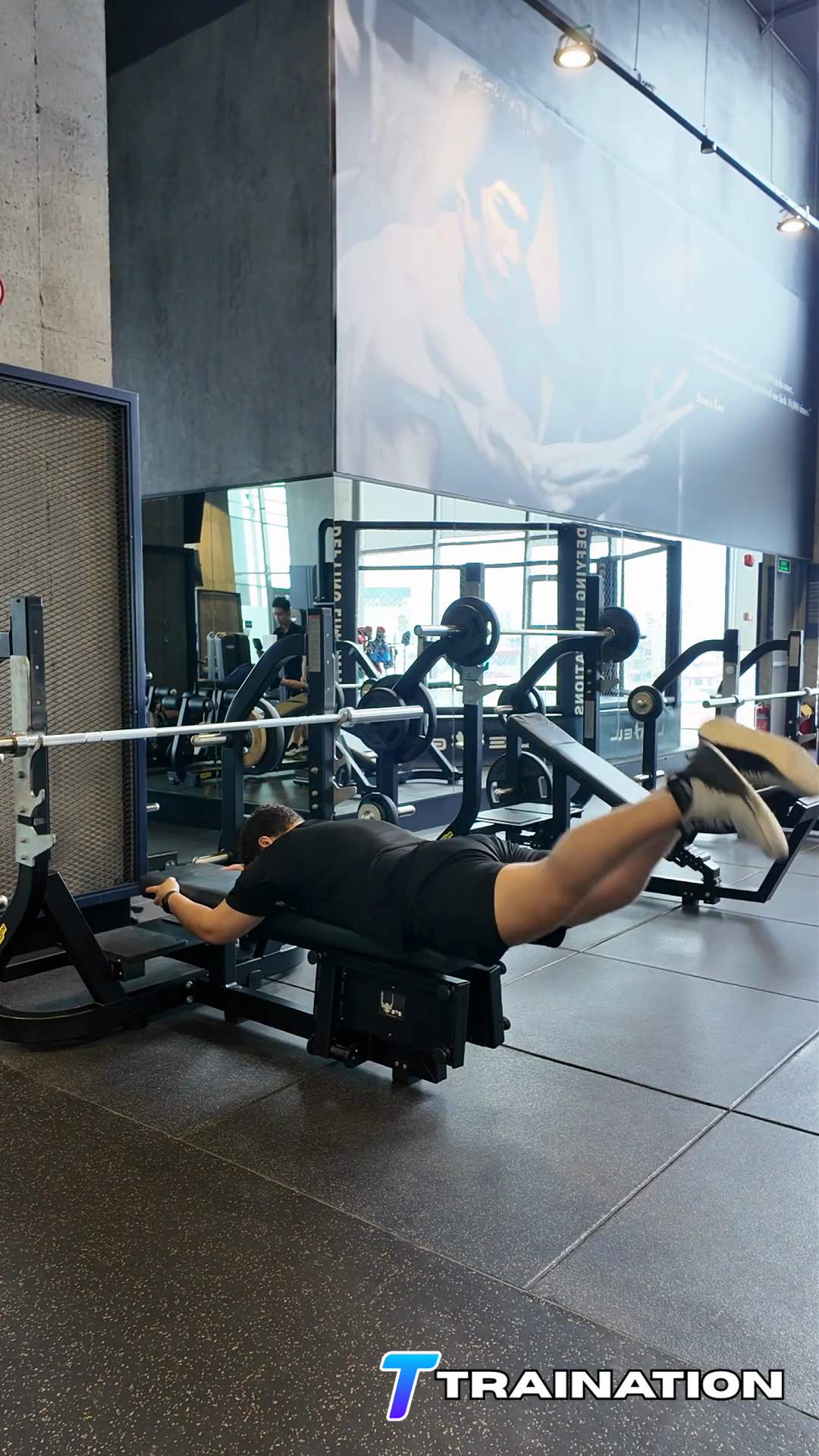
Prone Hip Extension on Bench trains the glutes by lifting the legs from the hips while the torso remains face down and supported on a bench.
Primary musclesGluteus maximus
Secondary musclesHamstrings, Hip adductors, Erector spinae
Follow the sequence in order, paying attention to the starting position, movement path, and finish described in each step.
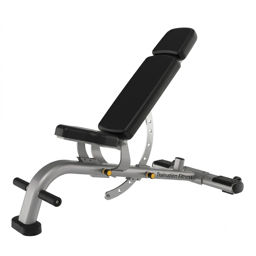
Lie face down lengthwise on a stable bench with the hips near the end, torso fully supported, and both legs hanging freely off the bench.
Hold the sides or underside of the bench securely, brace the abdomen, and keep the pelvis pressed into the bench.
Keep the knees straight or softly bent and lift both legs backward and upward by squeezing the glutes.
Stop when the legs approach the line of the torso or just before the lower back begins to arch; the feet remain off the floor throughout the set.
Lower the legs slowly until they hang beneath the bench again, keeping the torso and pelvis supported throughout the repetition.
Keep both legs off the floor throughout the set; the glutes lift the legs from the hips.
Stop the leg lift when the thighs approach the torso line and keep the pelvis against the bench.
Keep the knee angle steady so momentum from the lower legs does not replace hip extension.
Grip the bench securely and keep the chest, abdomen, and pelvis supported.
Place Prone Hip Extension on Bench after compound lower-body lifts or in a short glute accessory block where cable or bodyweight fatigue will not affect heavier work.
Use one to three times per week while counting bridges, hip thrusts, hinges, and squats toward total glute work.
| Goal | Sets | Reps or time | Rest | Effort and execution |
|---|---|---|---|---|
| Strength accessory | 2–4 | 6–10 | 75–150 sec | Leave 2–3 controlled reps in reserve |
| Muscle growth | 2–4 | 10–20 | 60–120 sec | Usually 1–3 clean reps in reserve |
Scale the movement
Lift one leg at a time with a smaller range while the pelvis remains pressed into the bench.
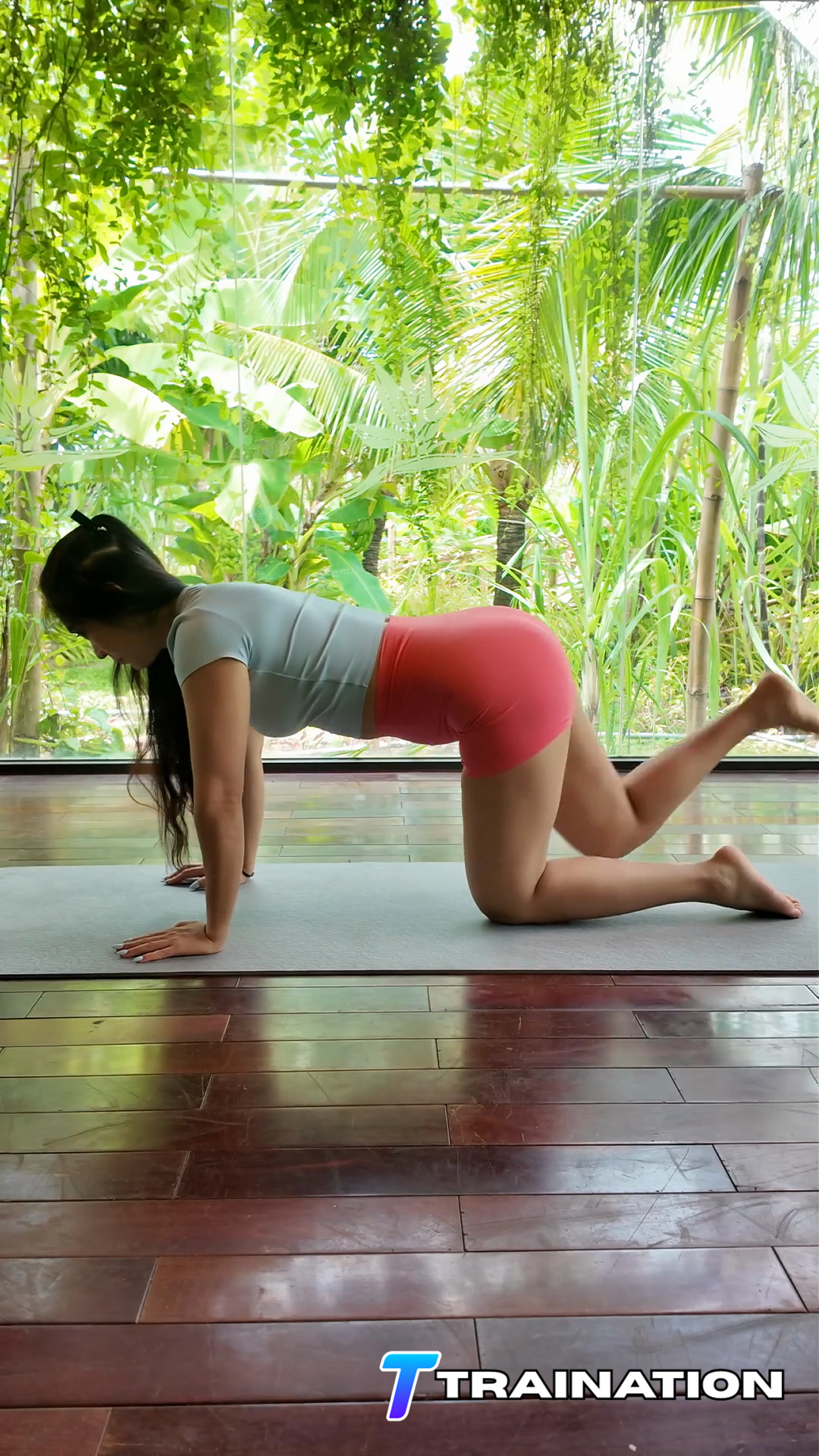
Use hands-and-knees support to practise lifting the thigh from the hip without arching the lower back.
Pause briefly with the legs near the torso line while the pelvis remains supported.
Add light ankle weights only after the full bodyweight range comes from the glutes without lower-back movement.
Turn Prone Hip Extension on Bench and the rest of your exercise library into repeatable client programs.
Explore the workout builder