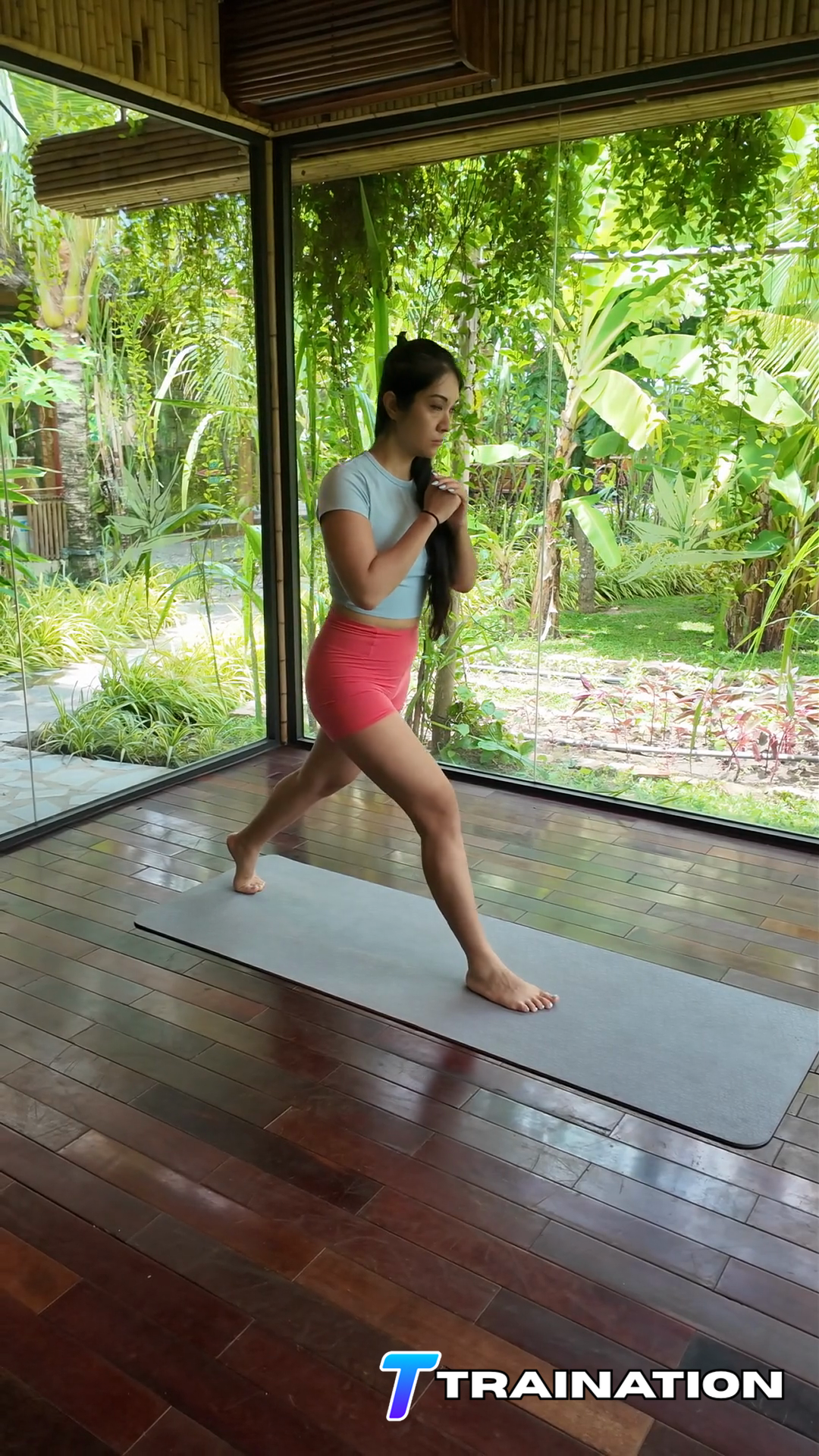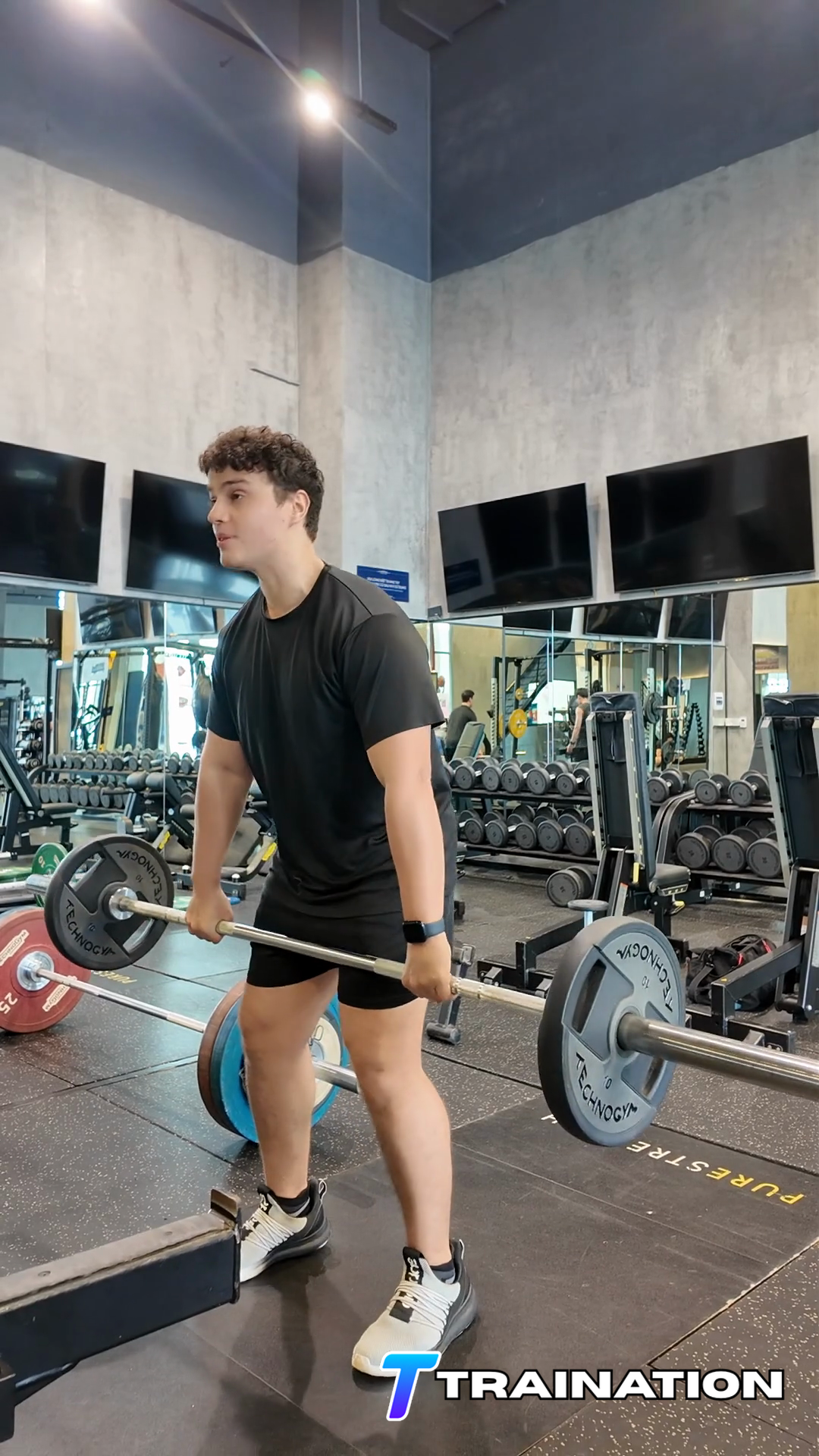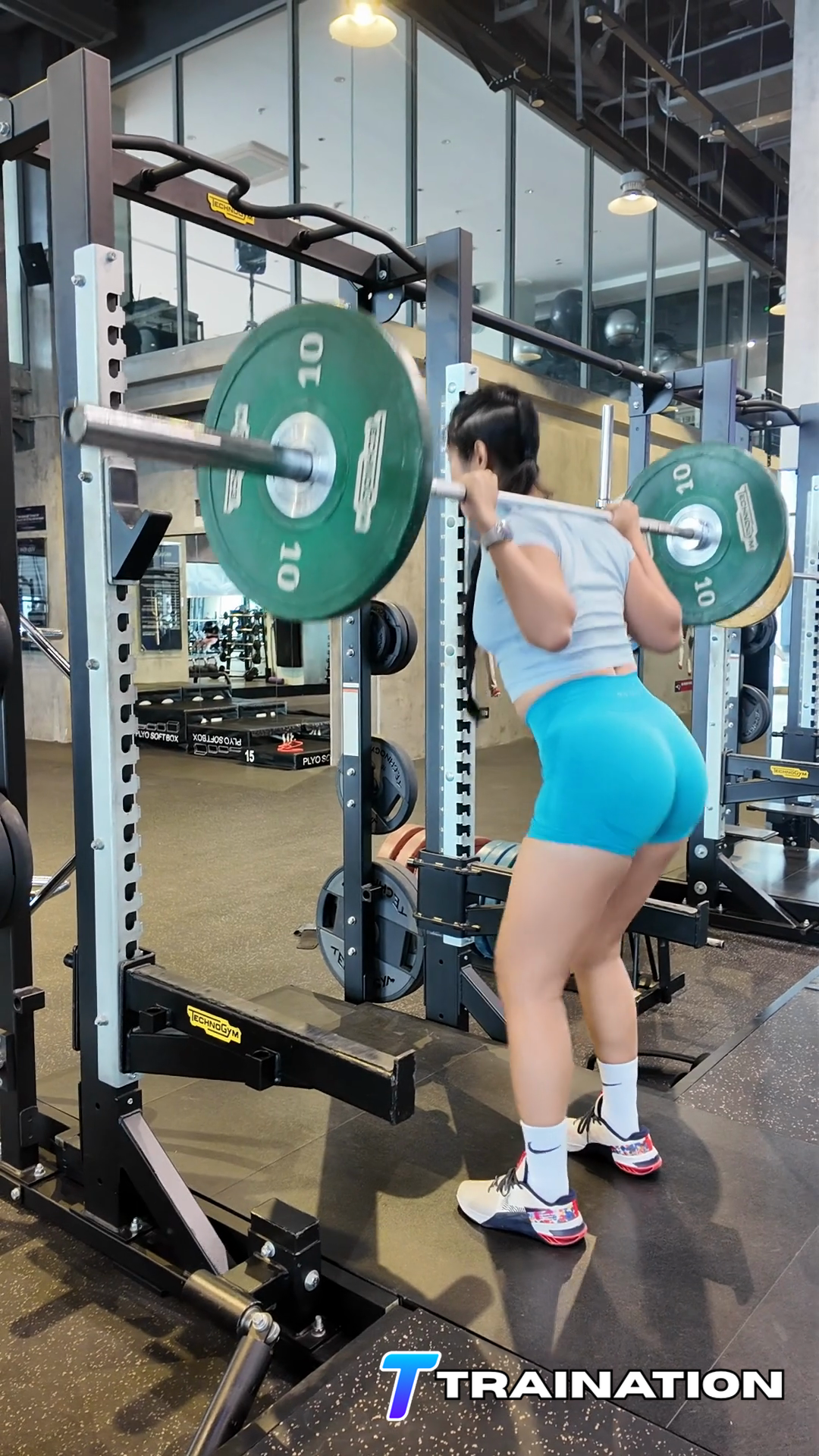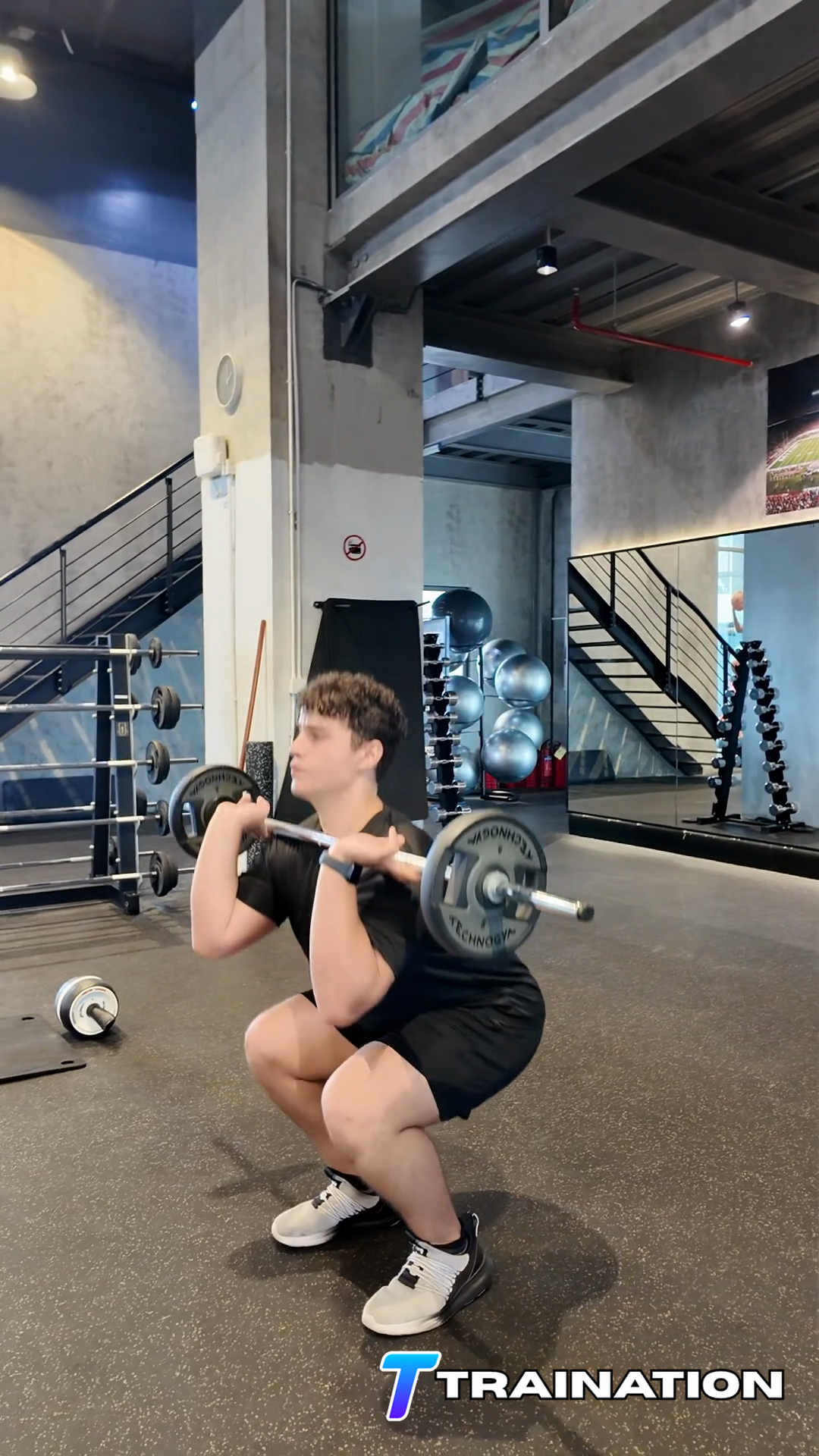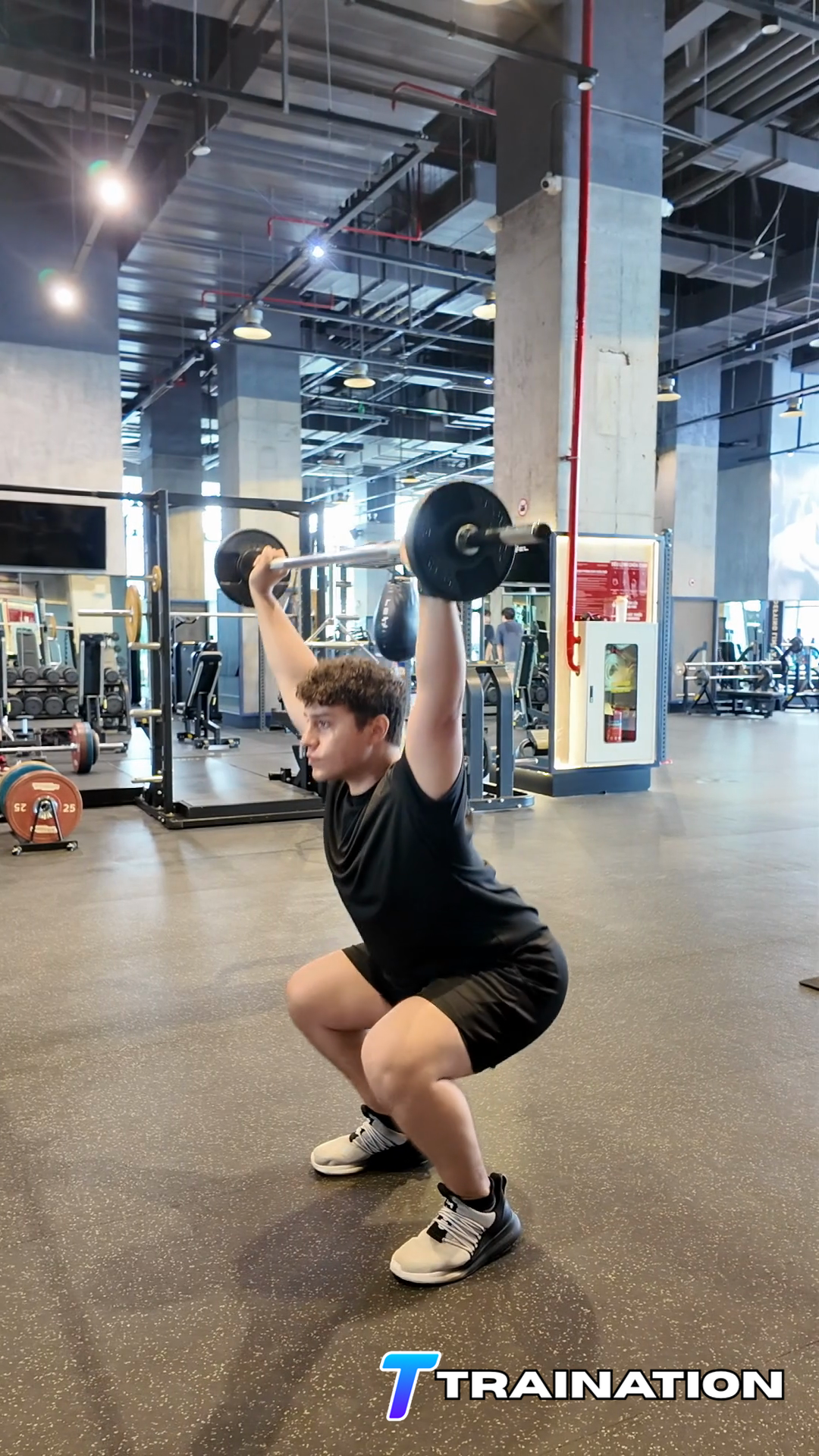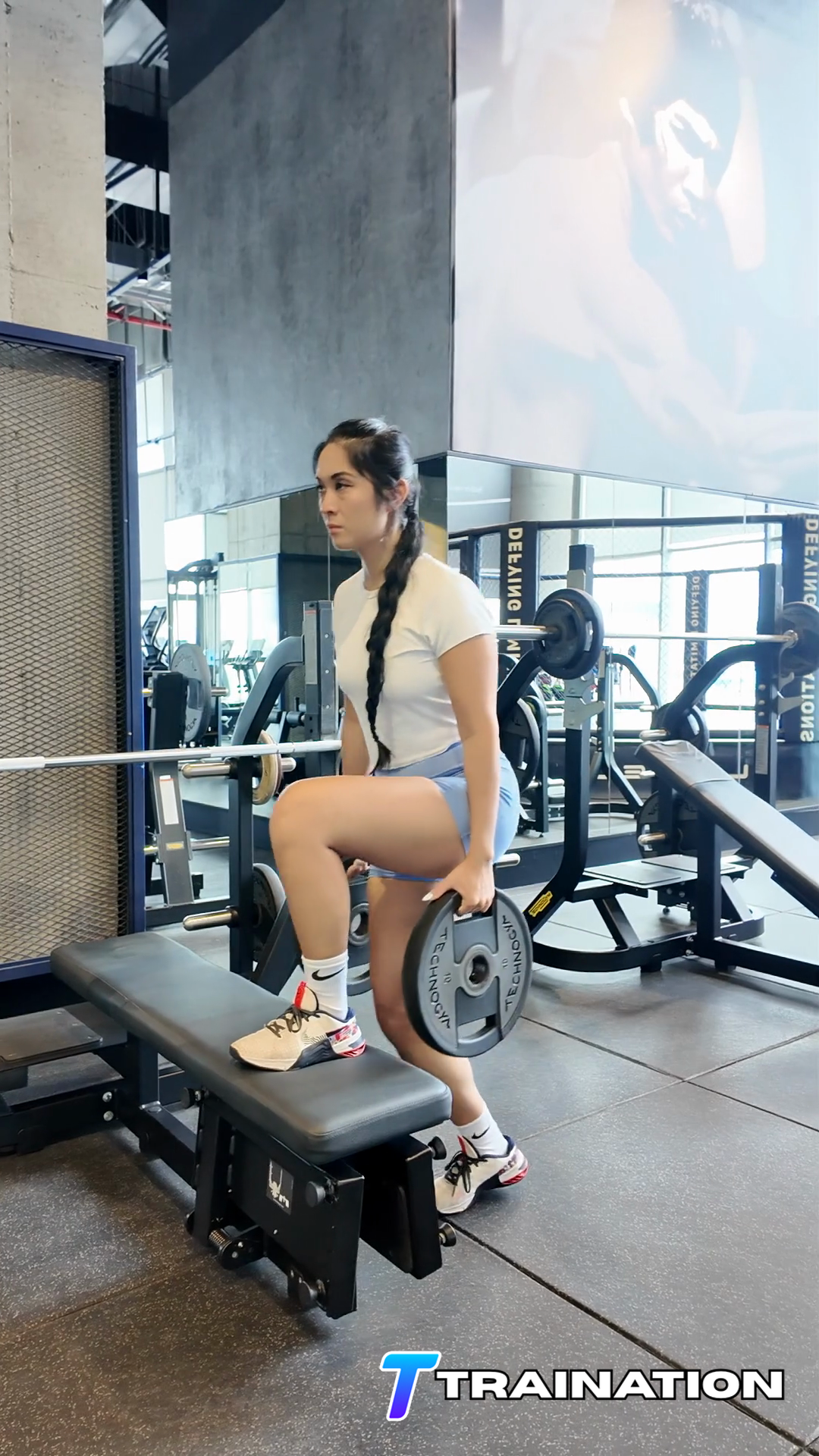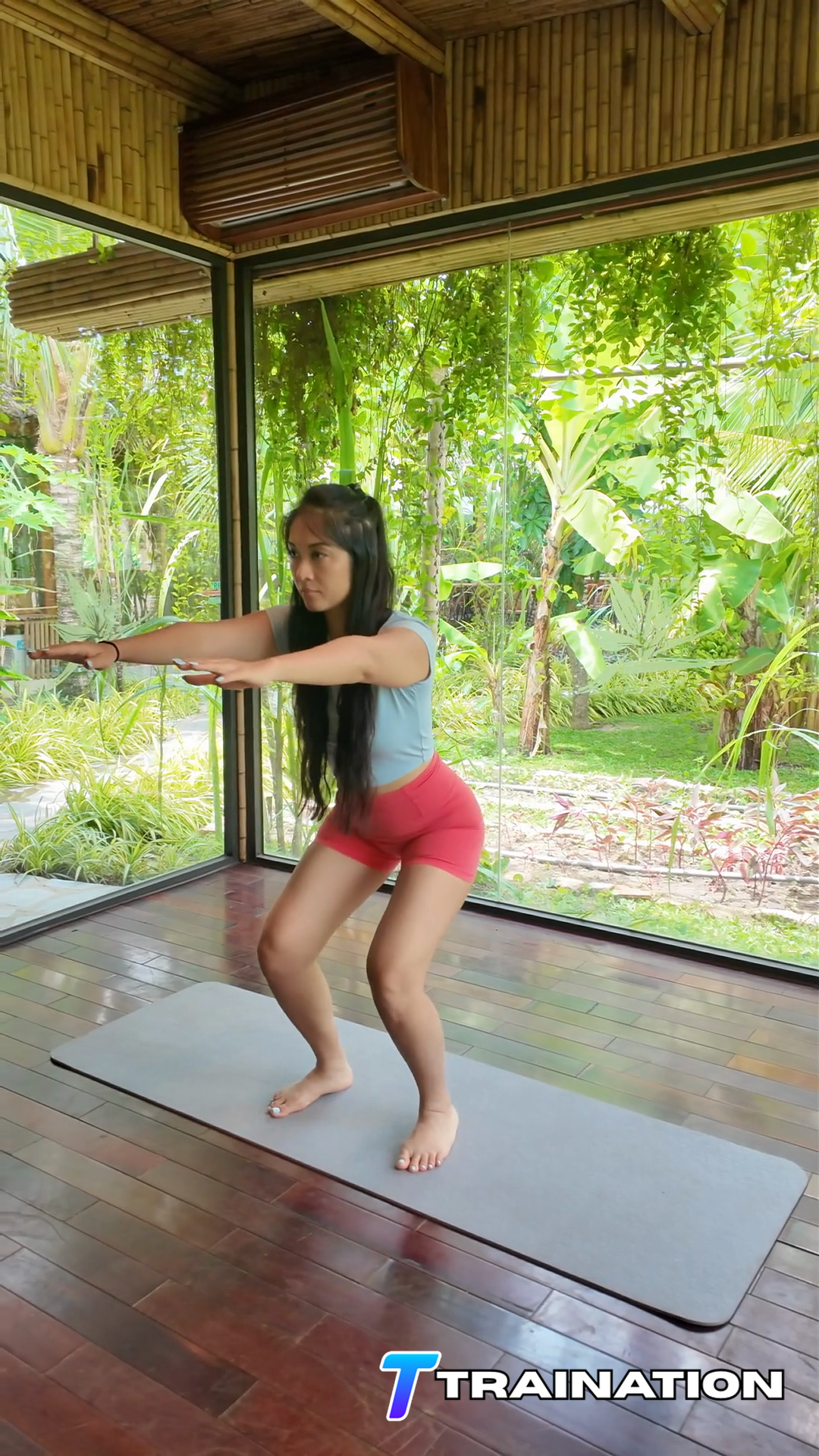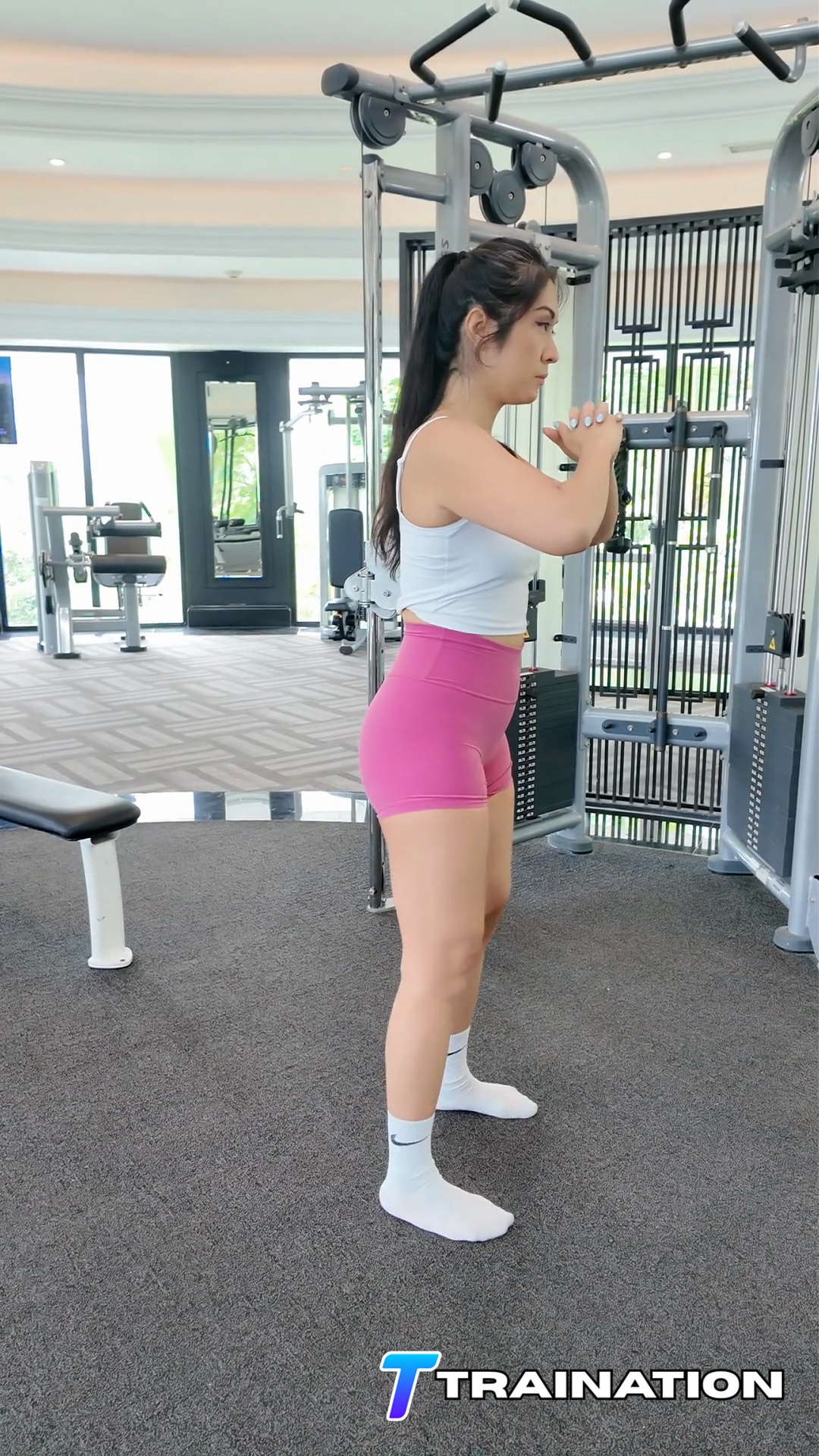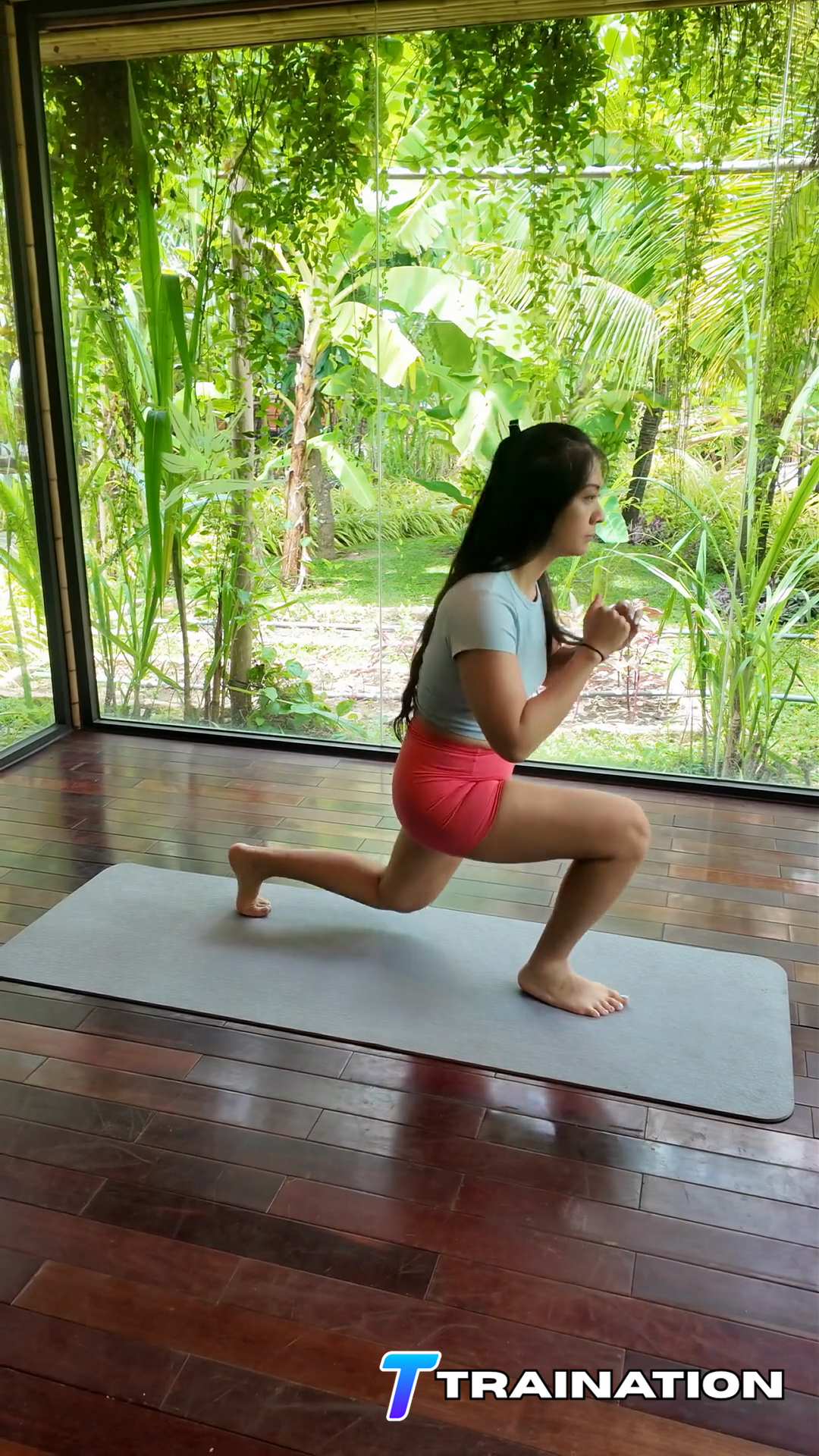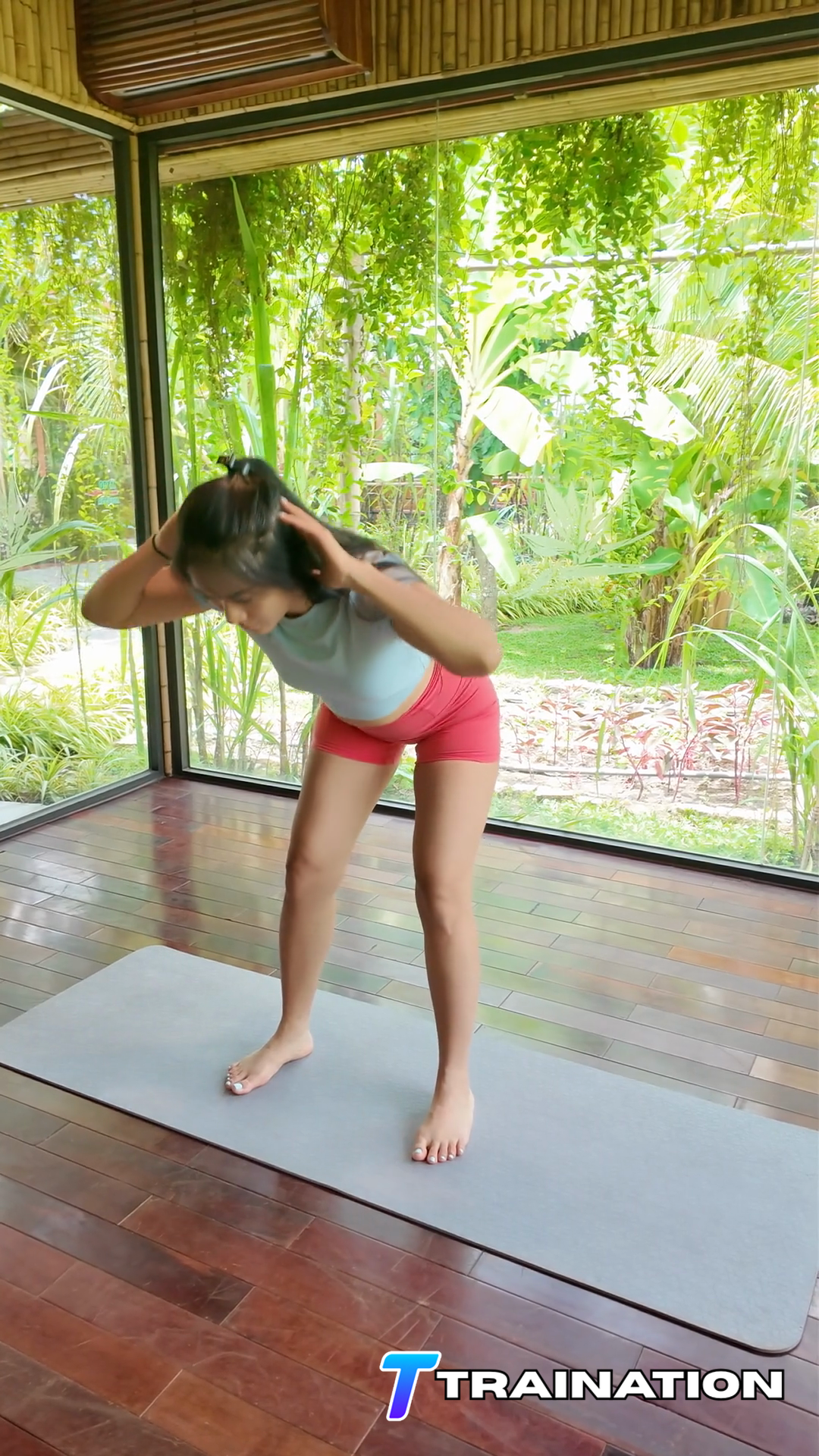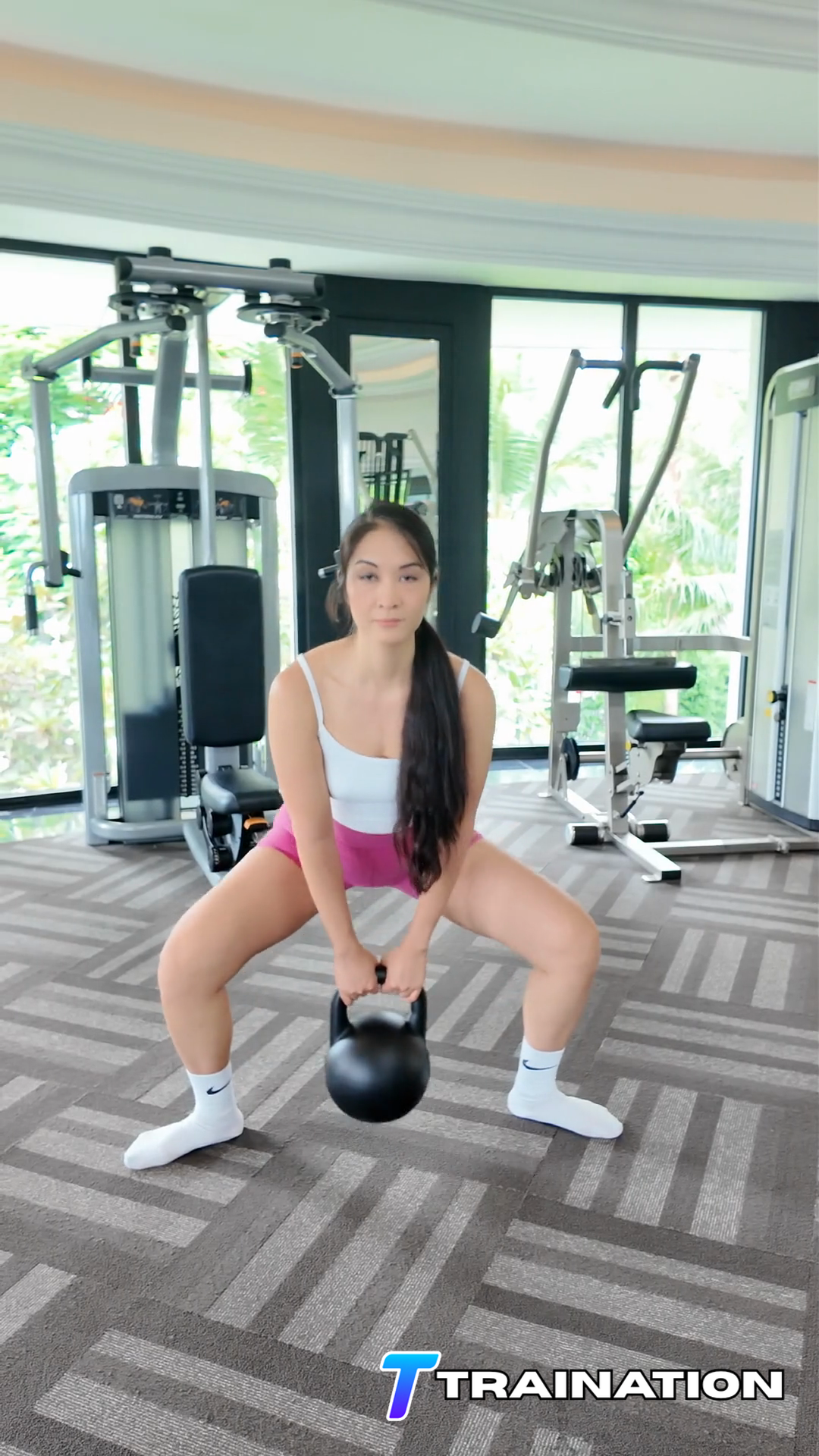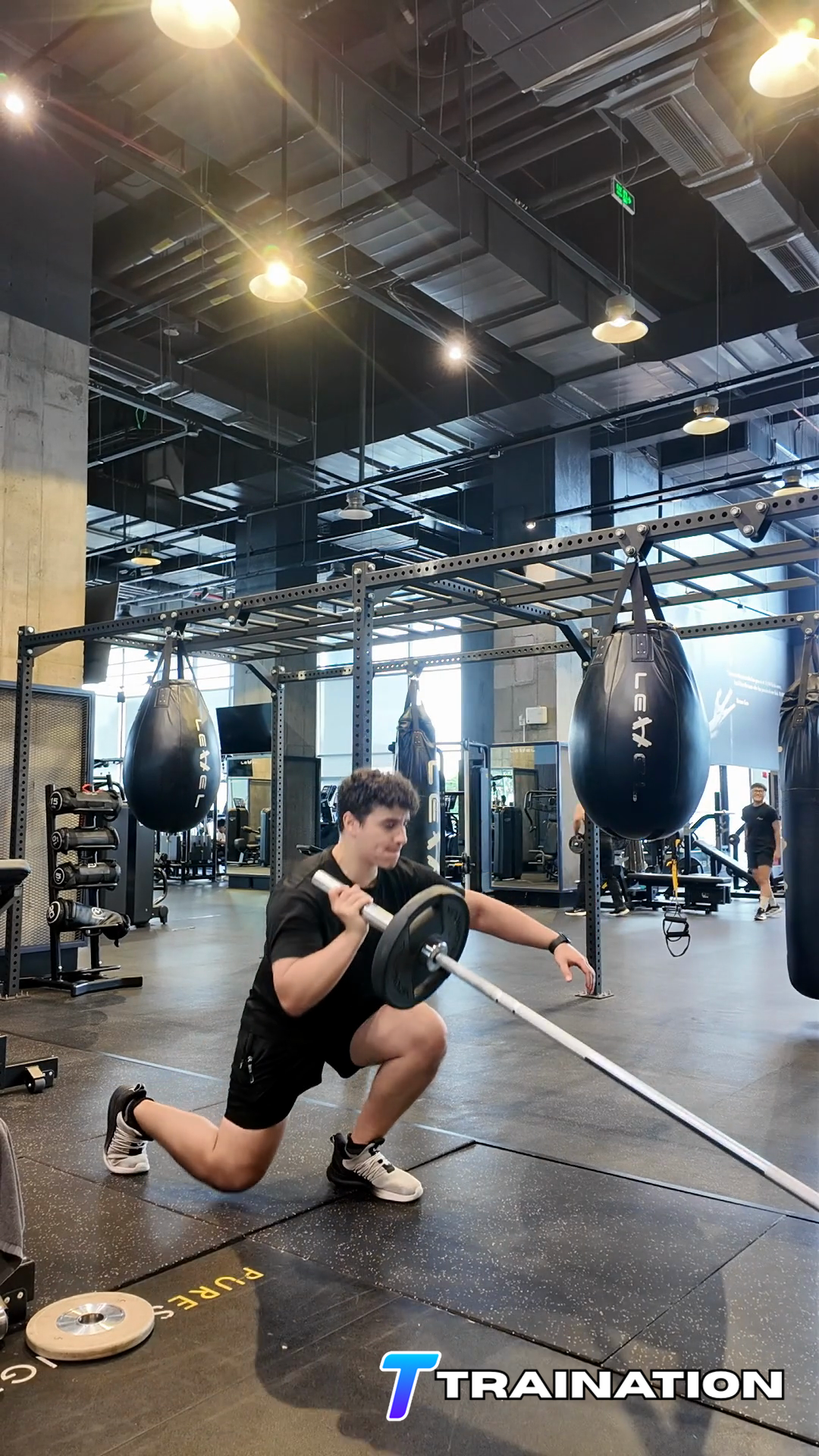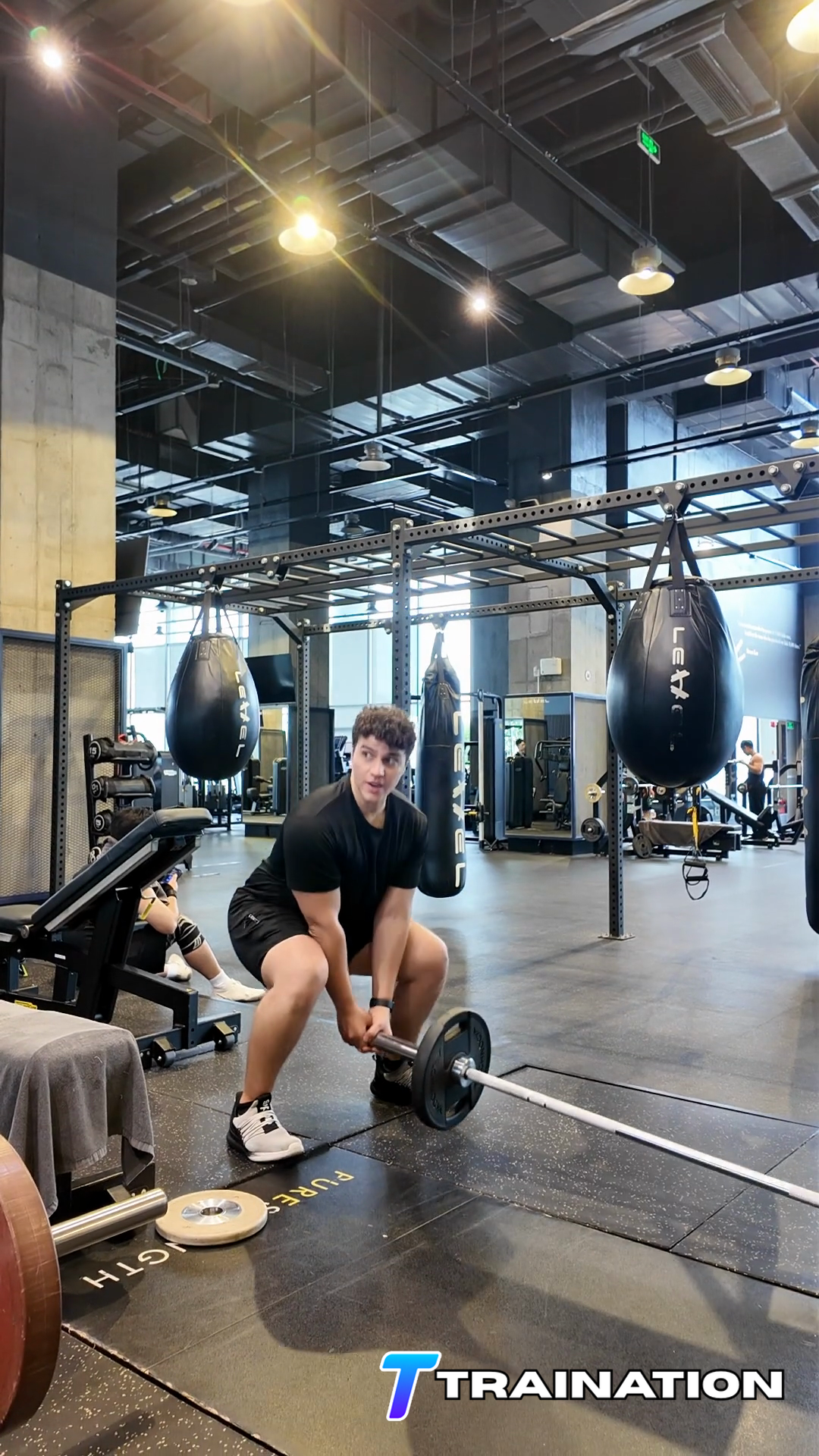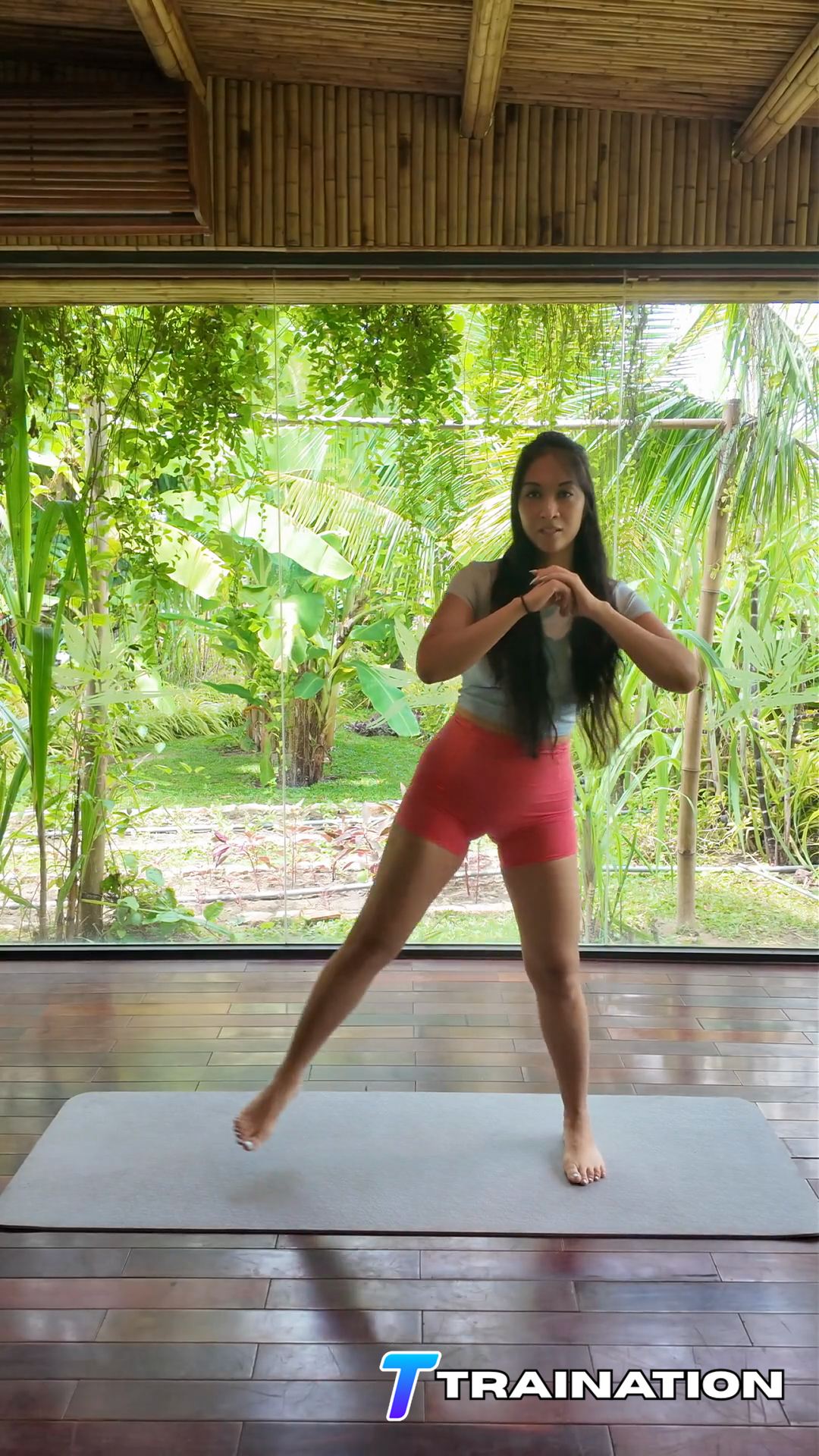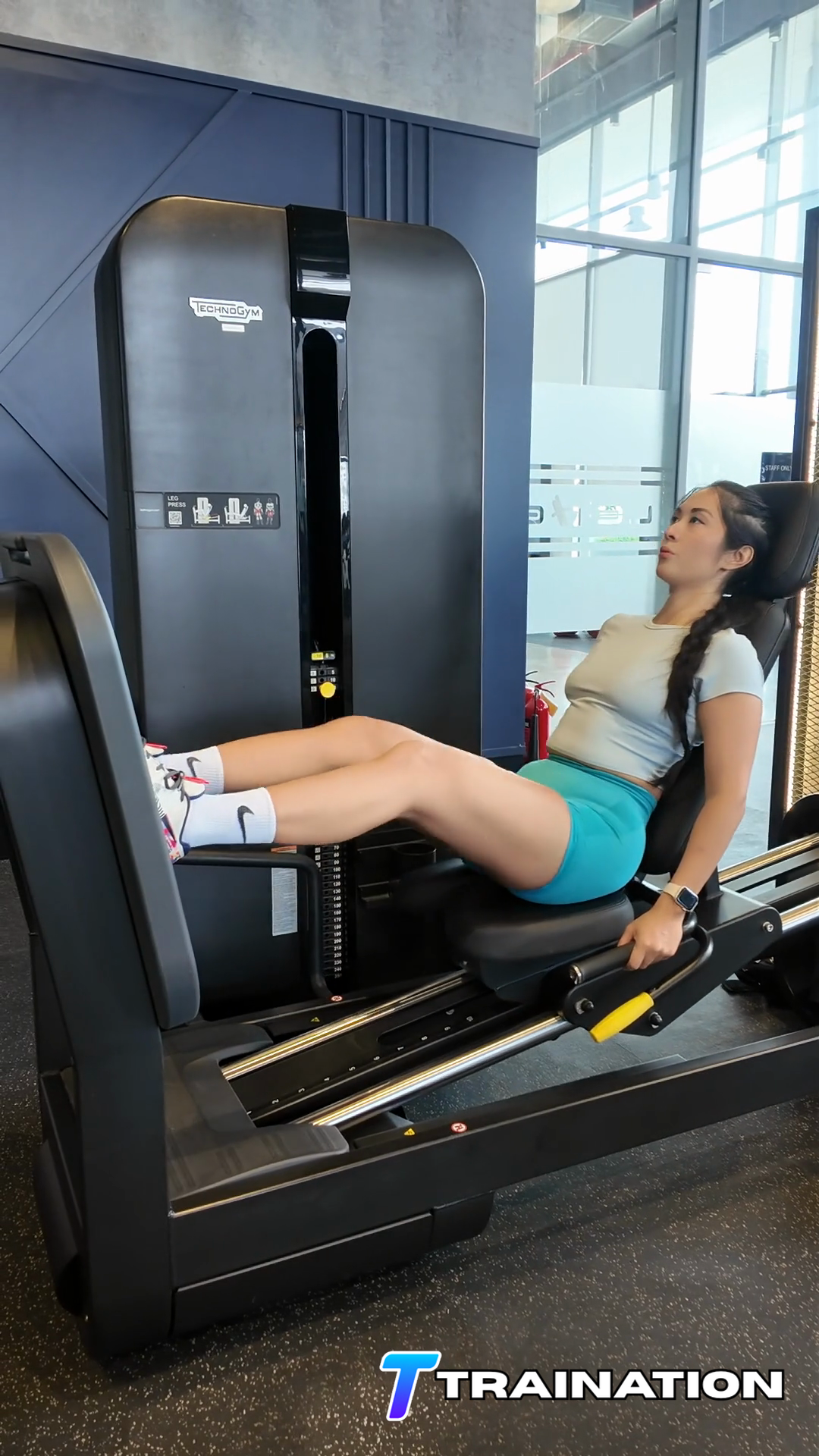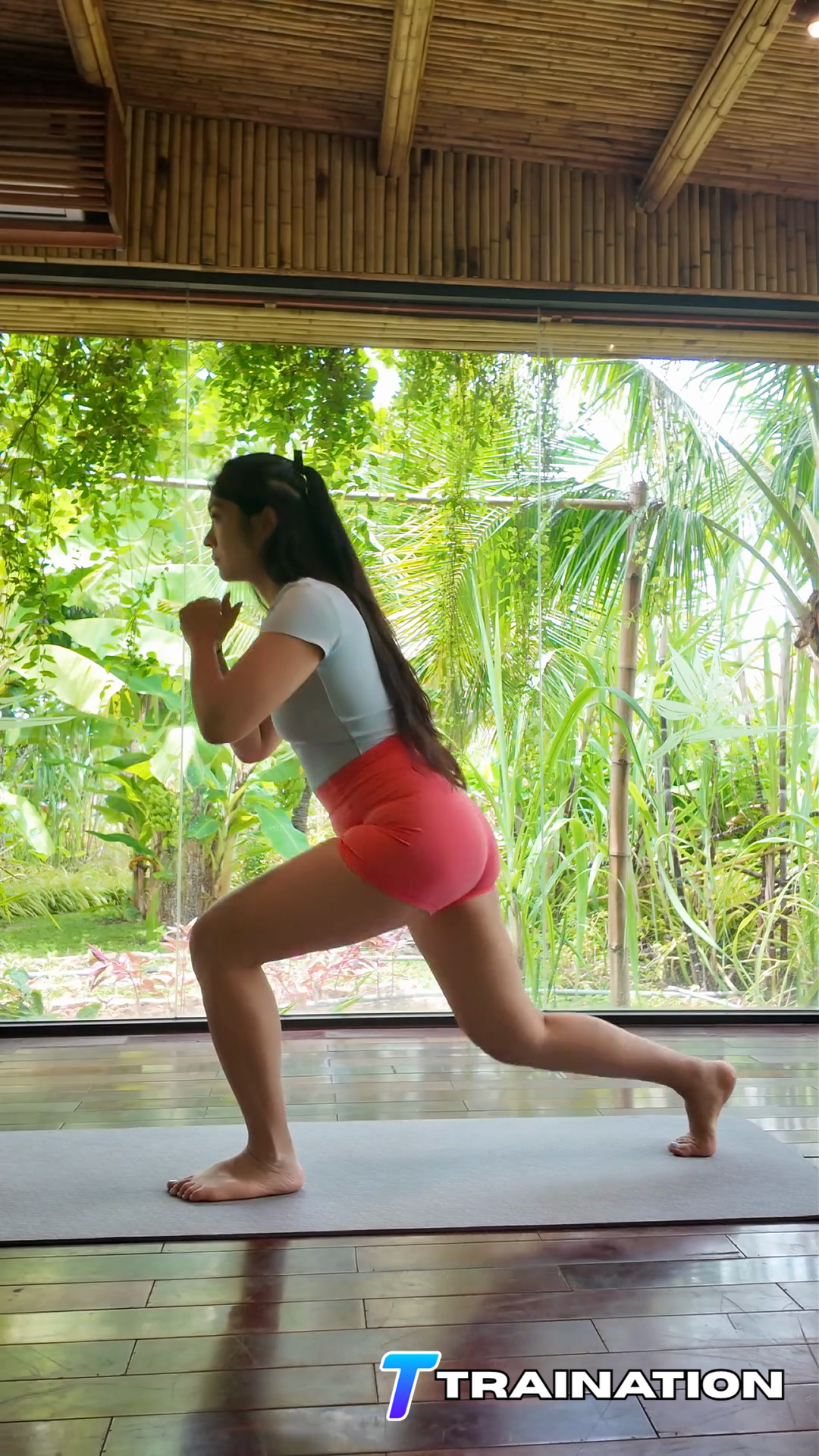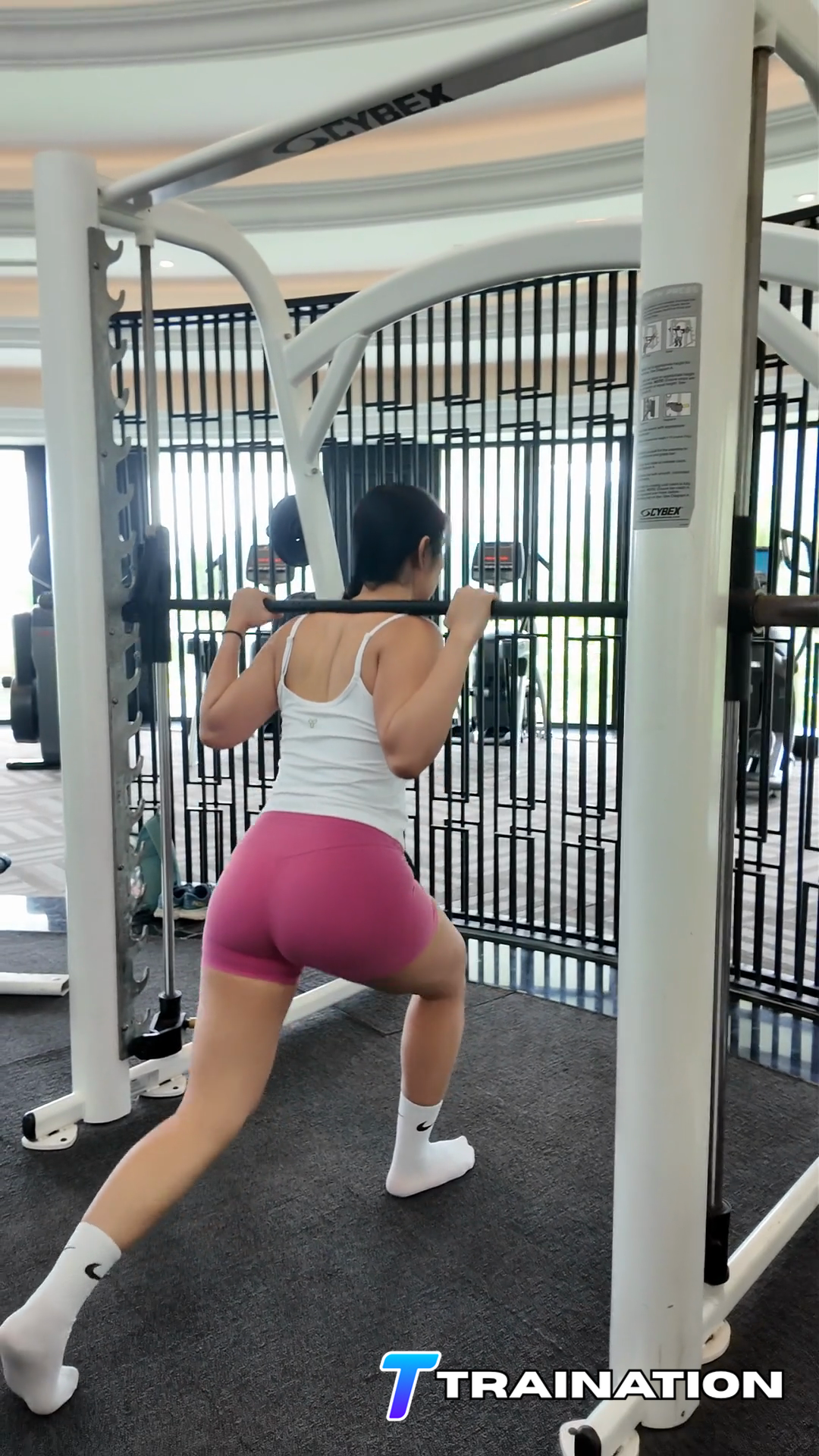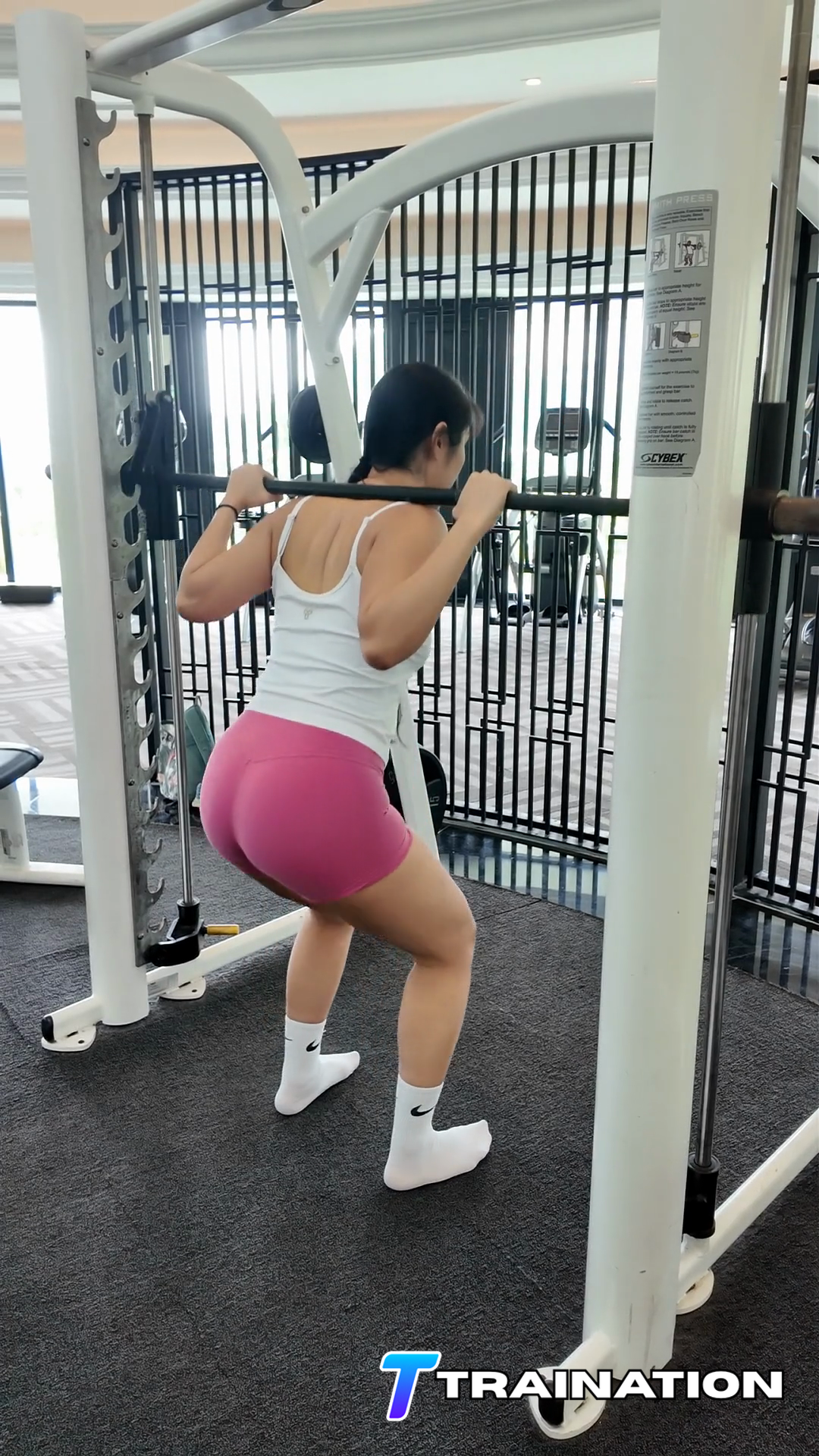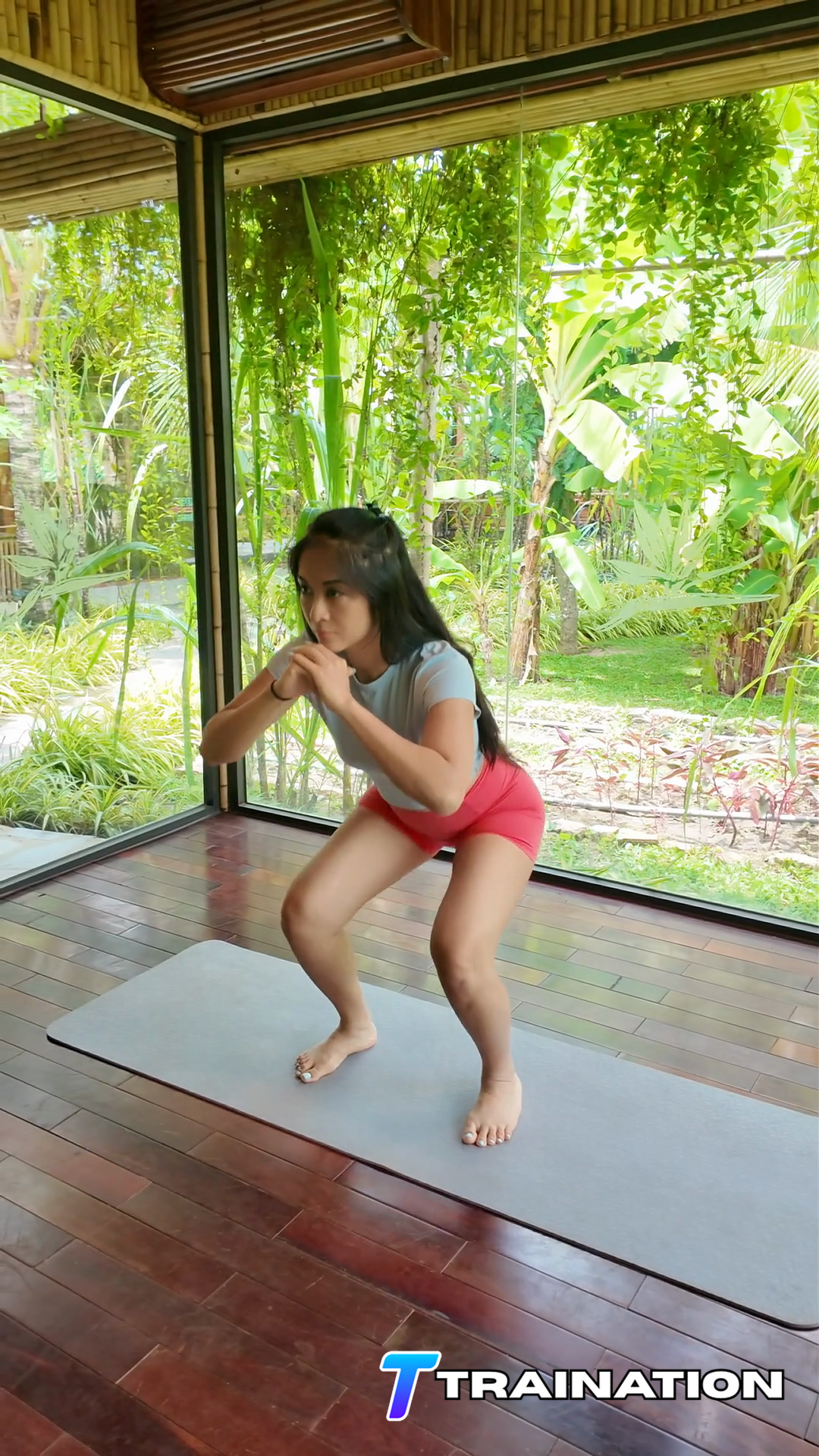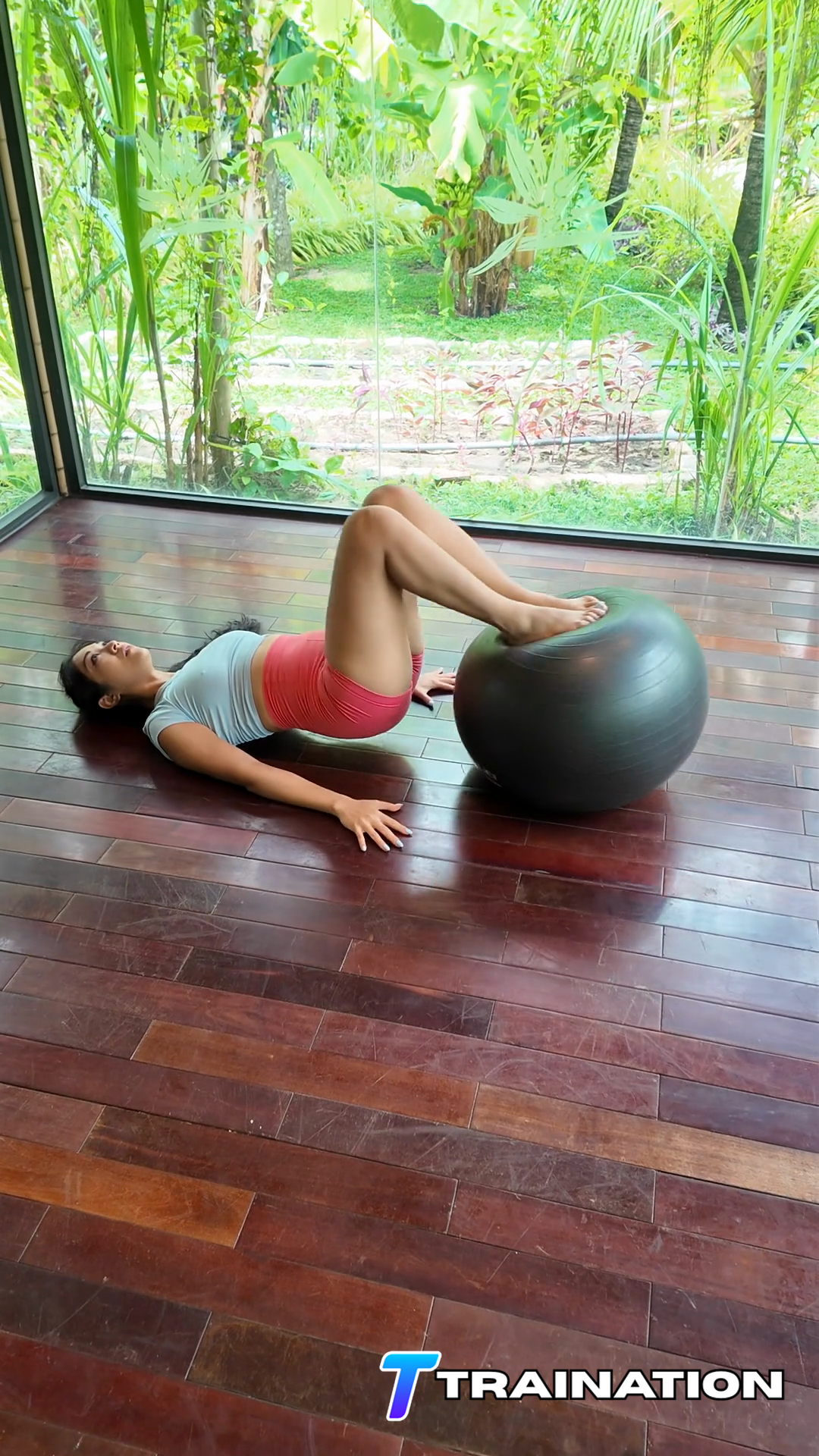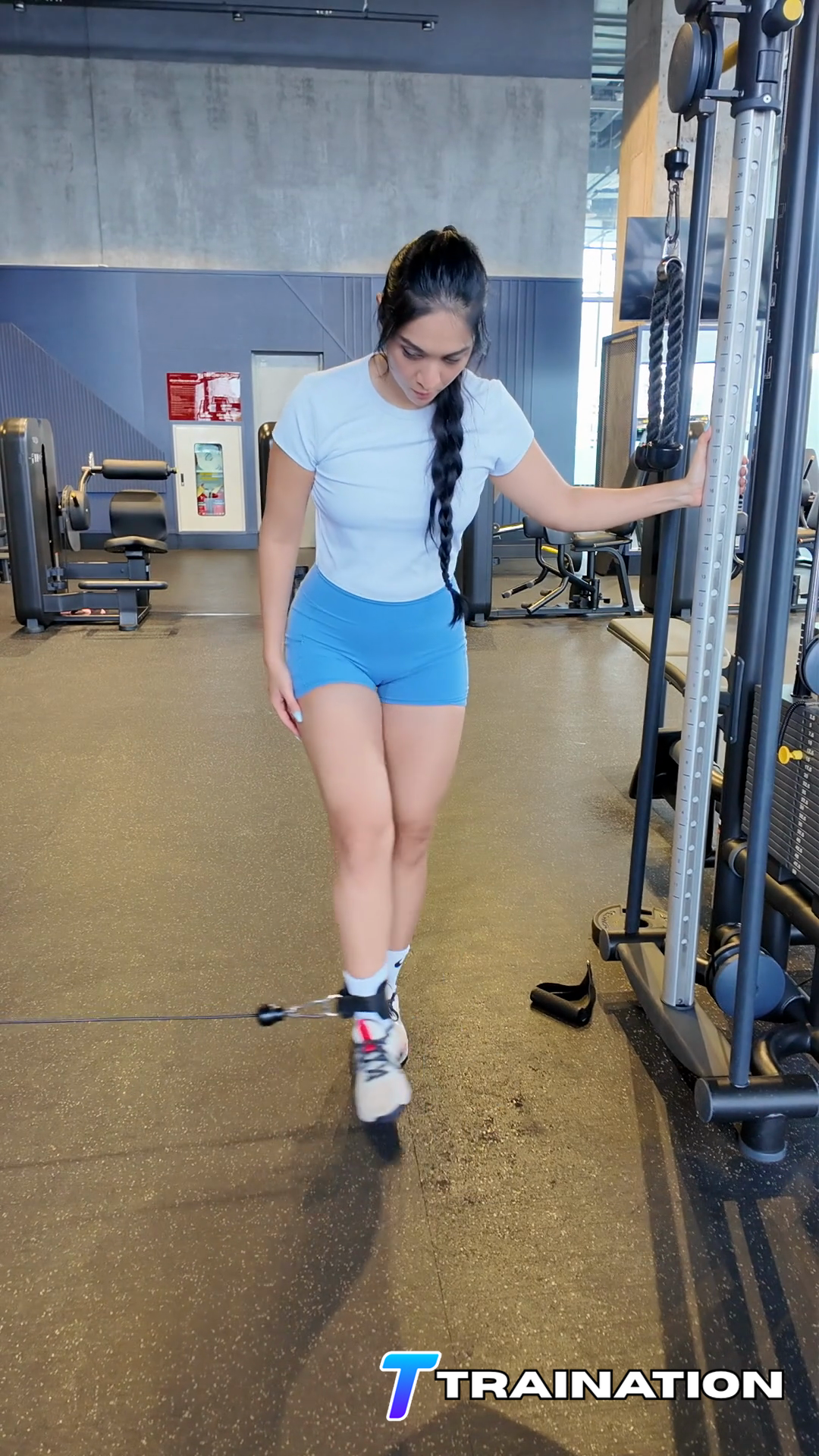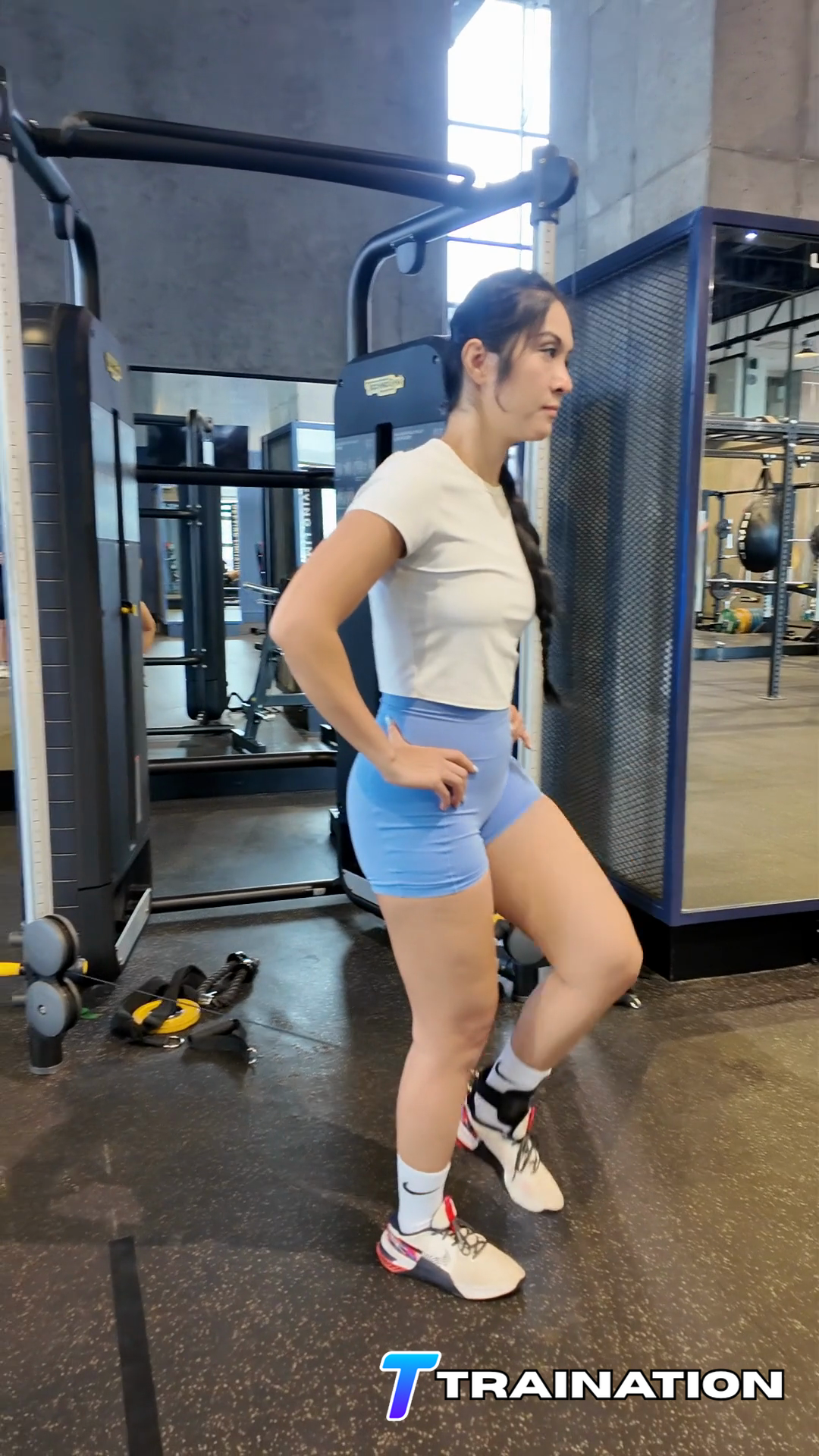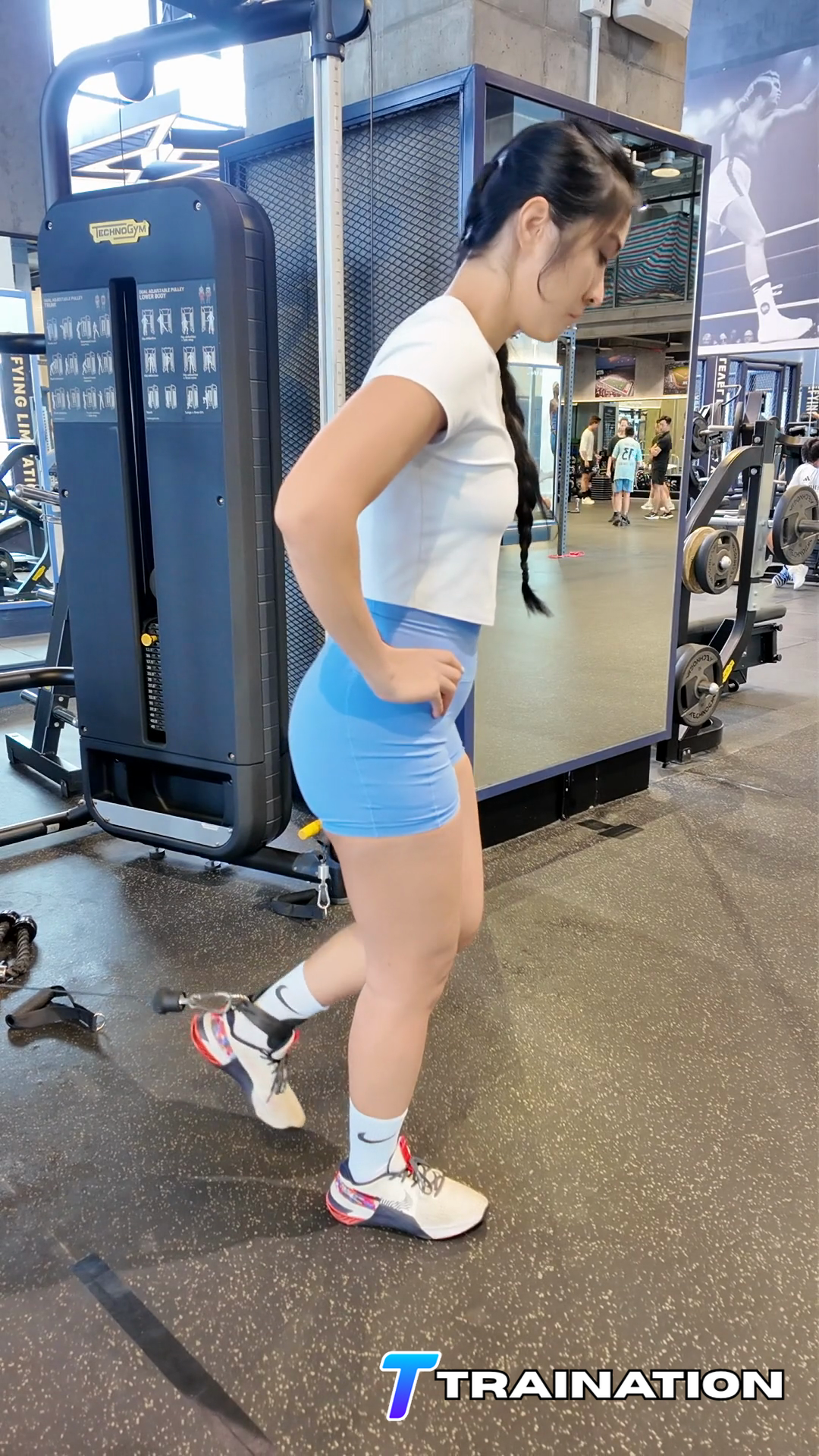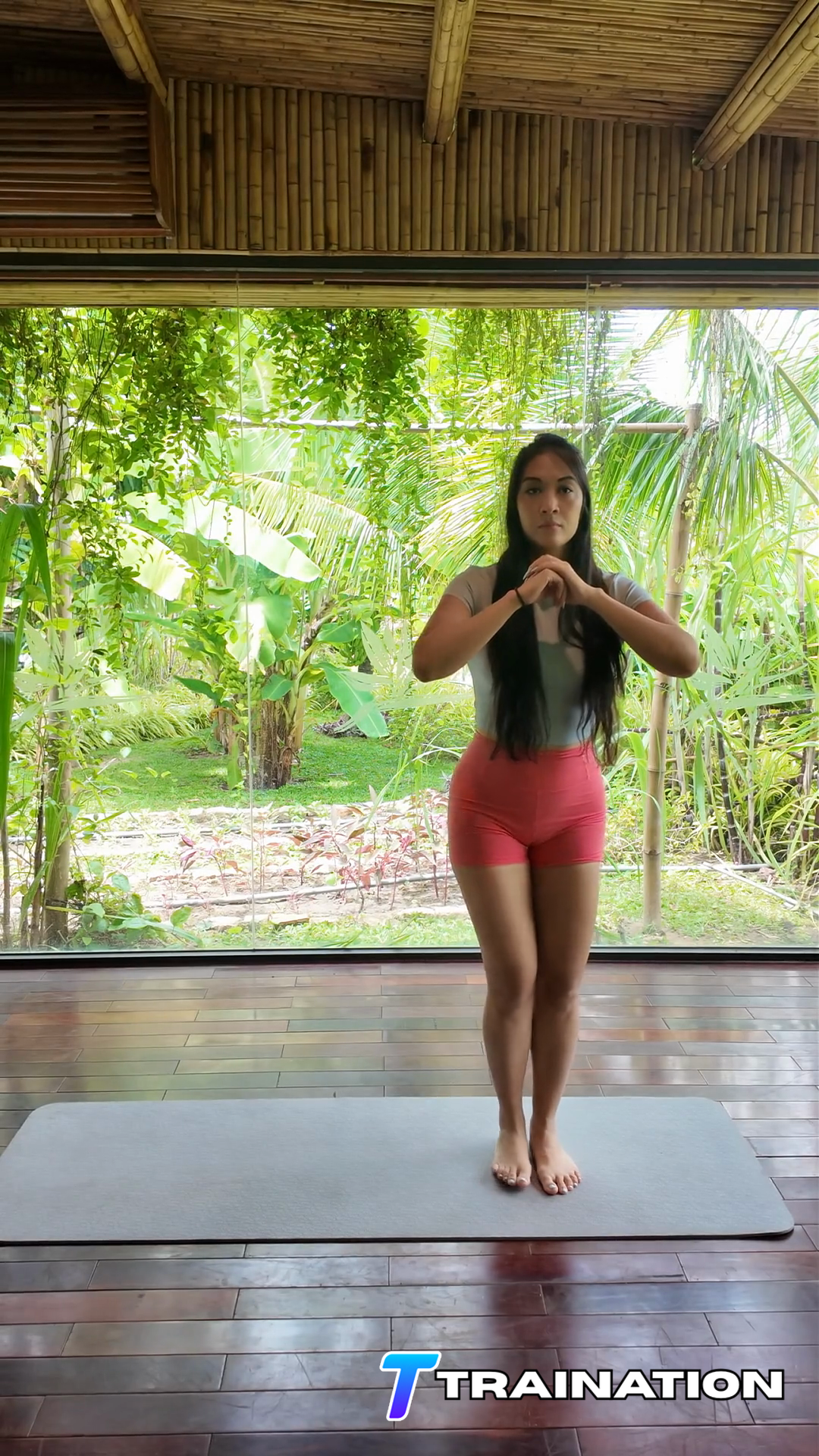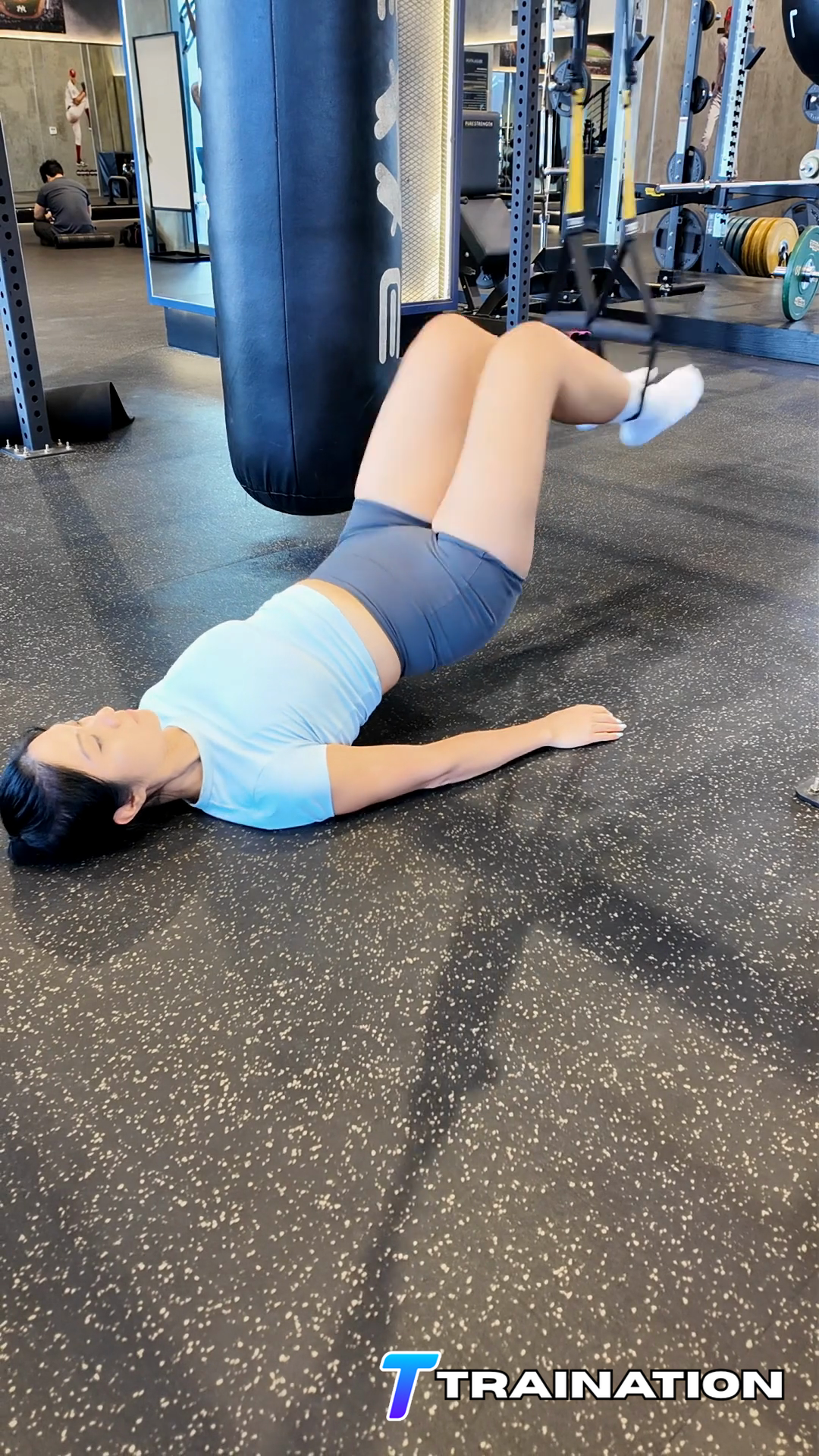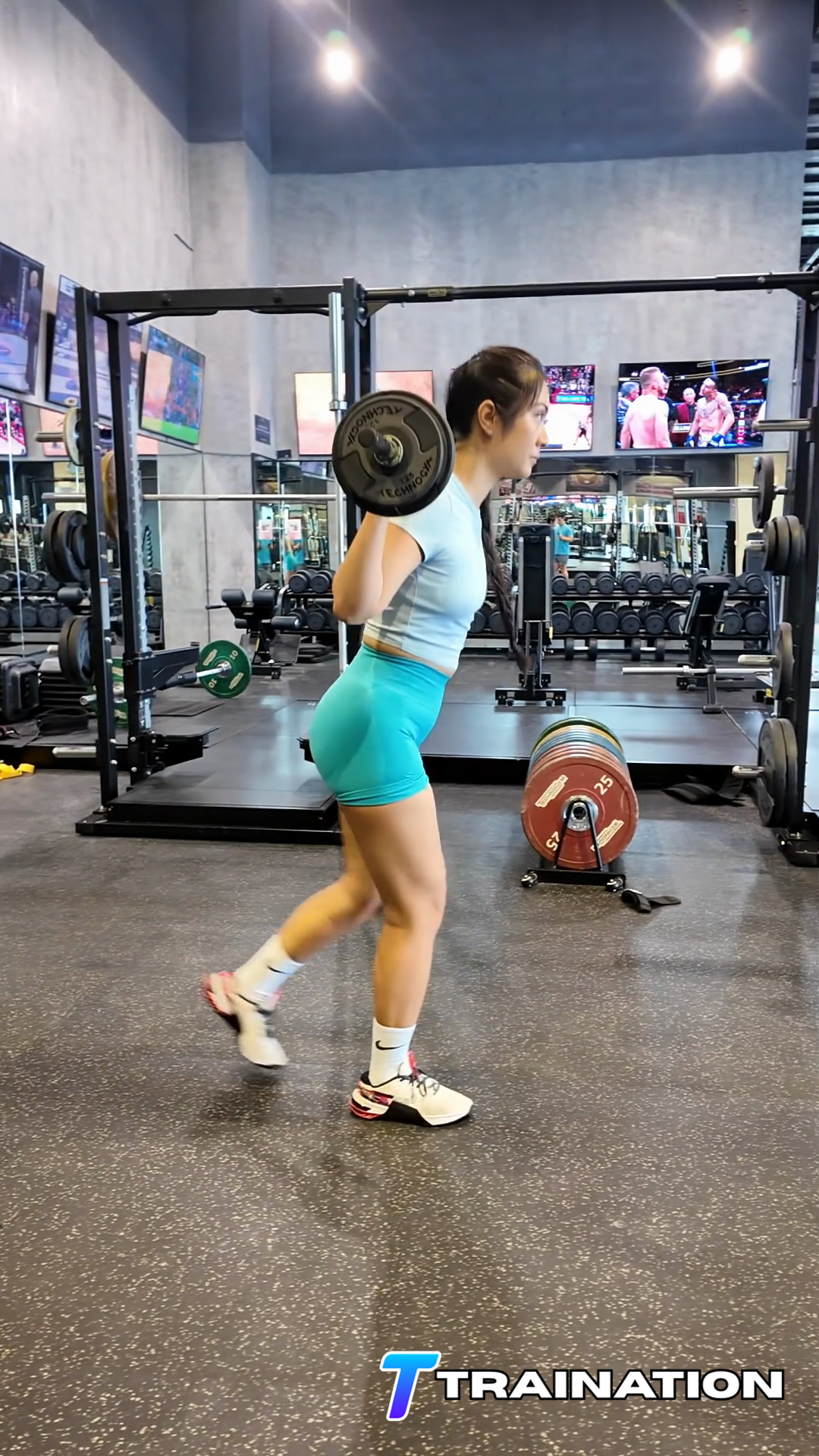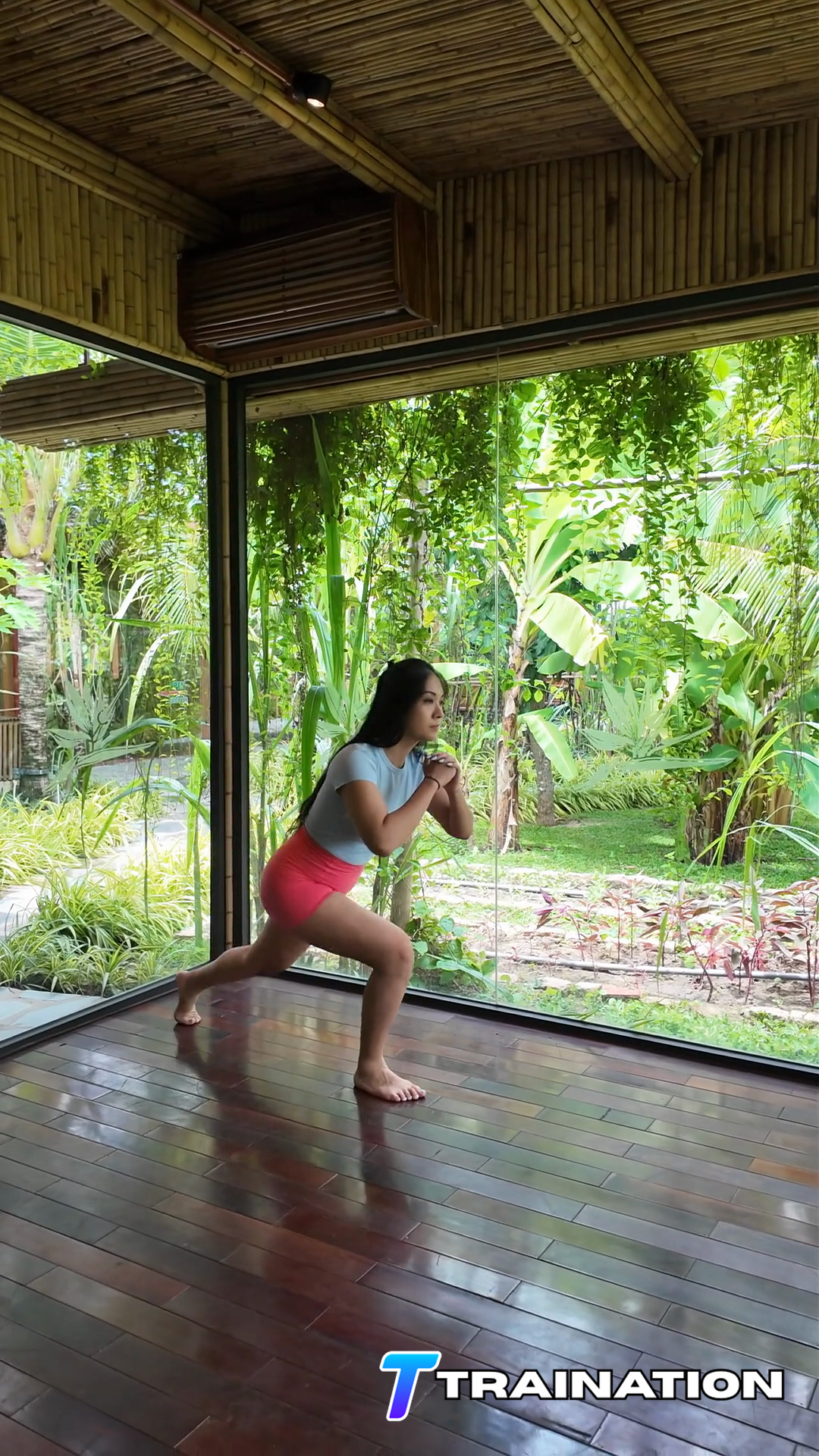
Stride is too short
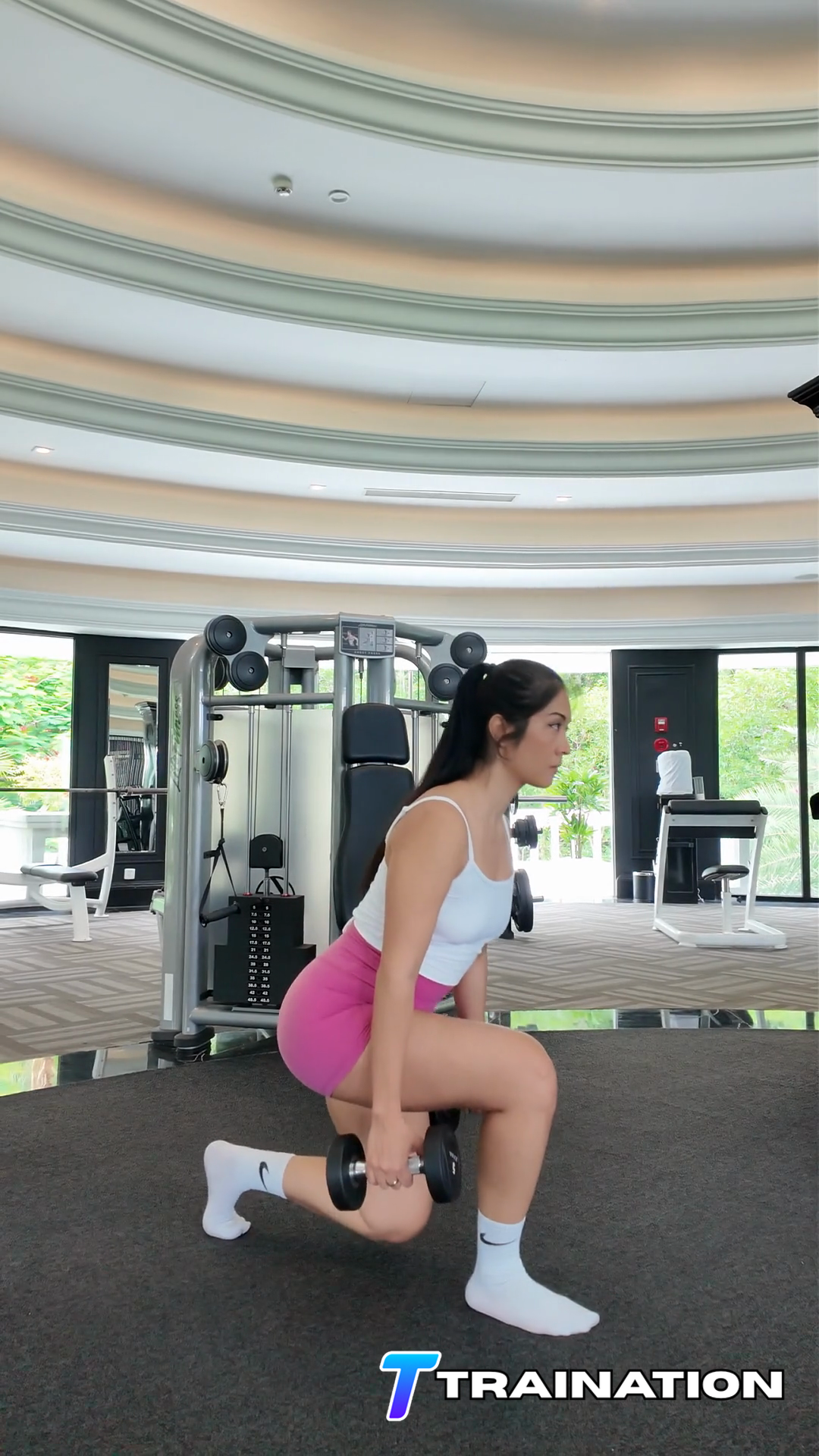
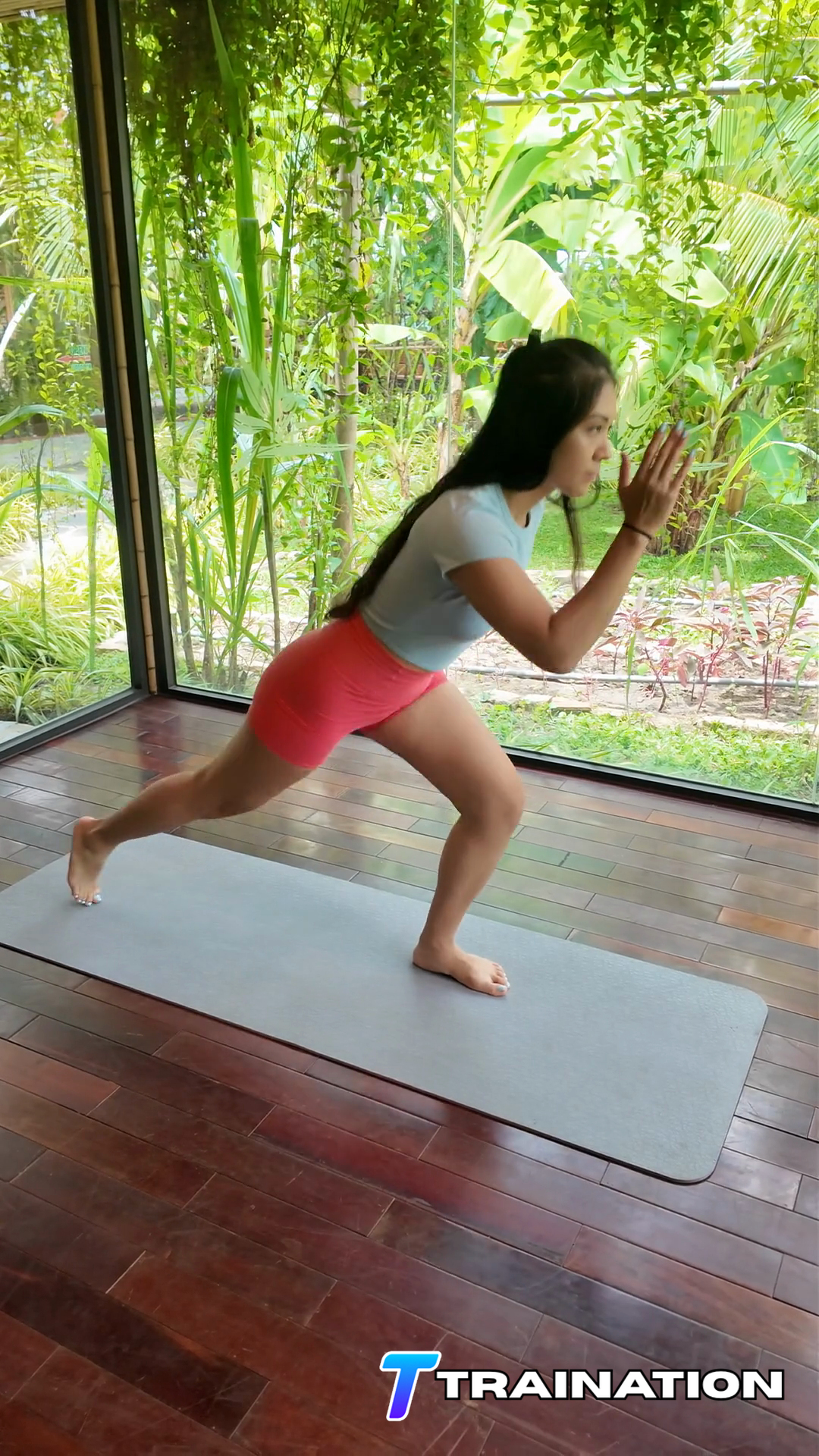
Use enough distance for the front heel to remain down and both knees to bend without crowding the stance.
Forward To Reverse Lunge is a split-stance lower-body exercise that develops single-leg strength, balance, and hip control.
Primary musclesQuadriceps, Gluteus maximus
Secondary musclesHamstrings, Hip adductors, Gluteus medius, Calves
Follow the sequence in order, paying attention to the starting position, movement path, and finish described in each step.
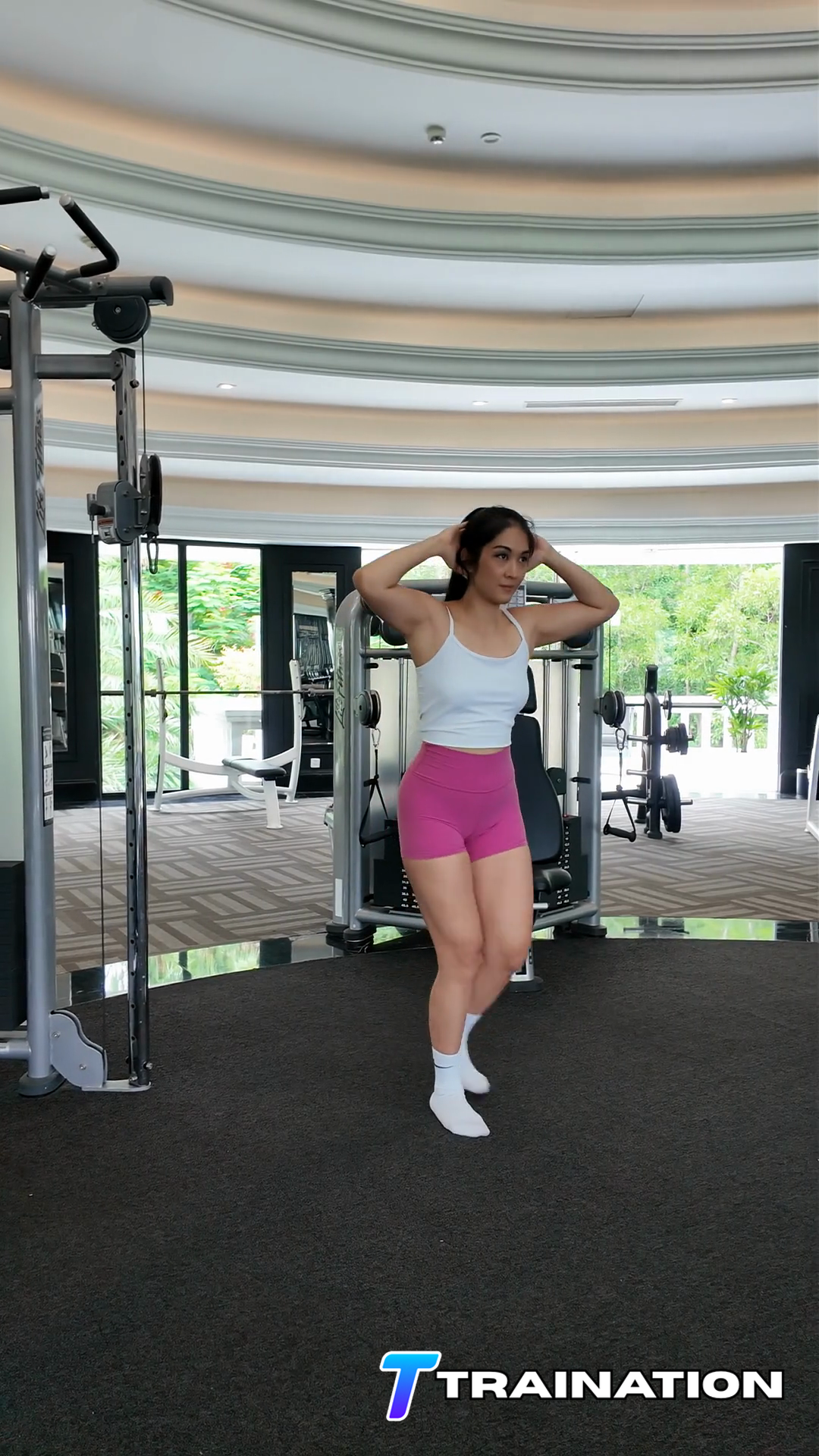
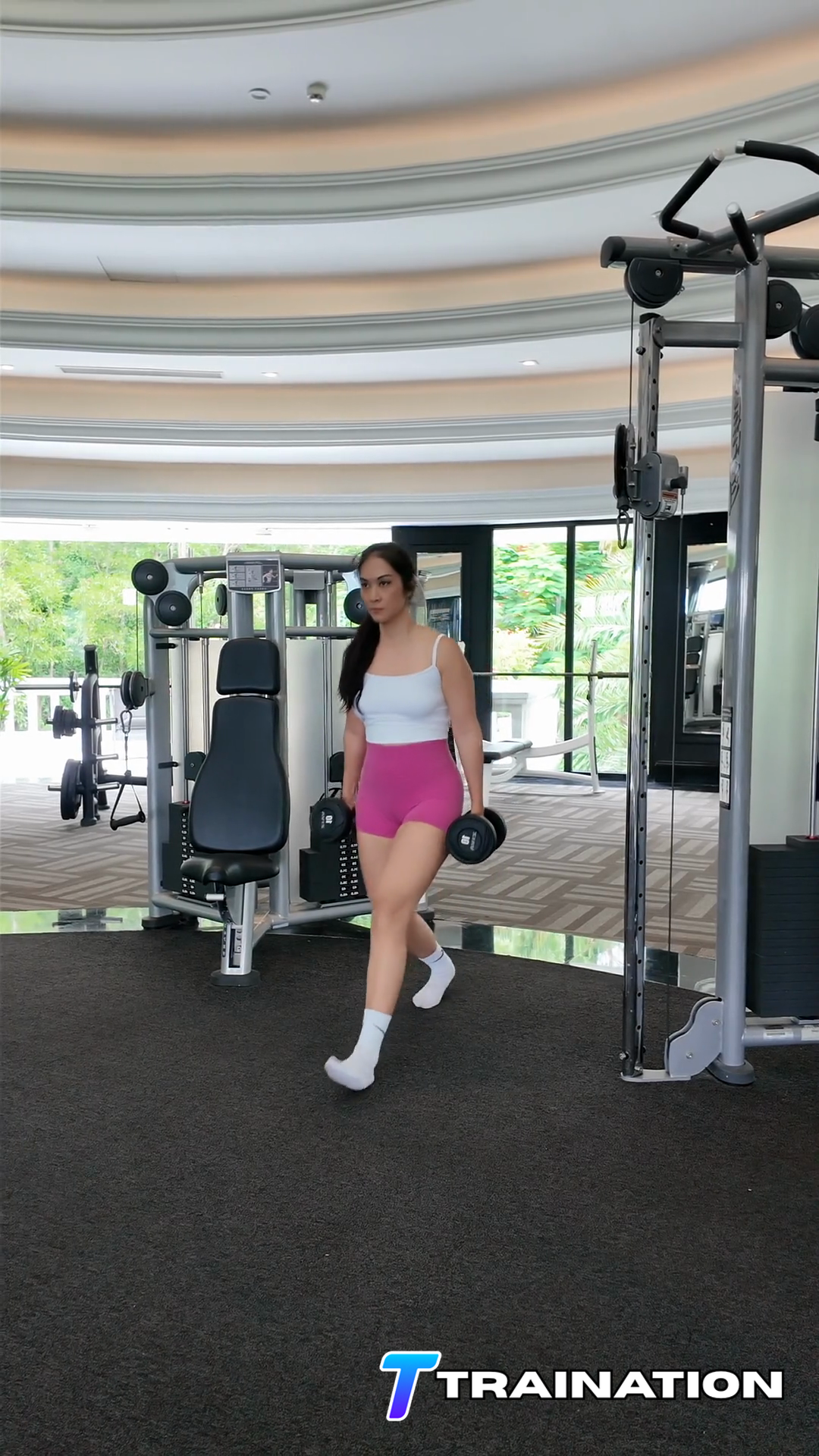
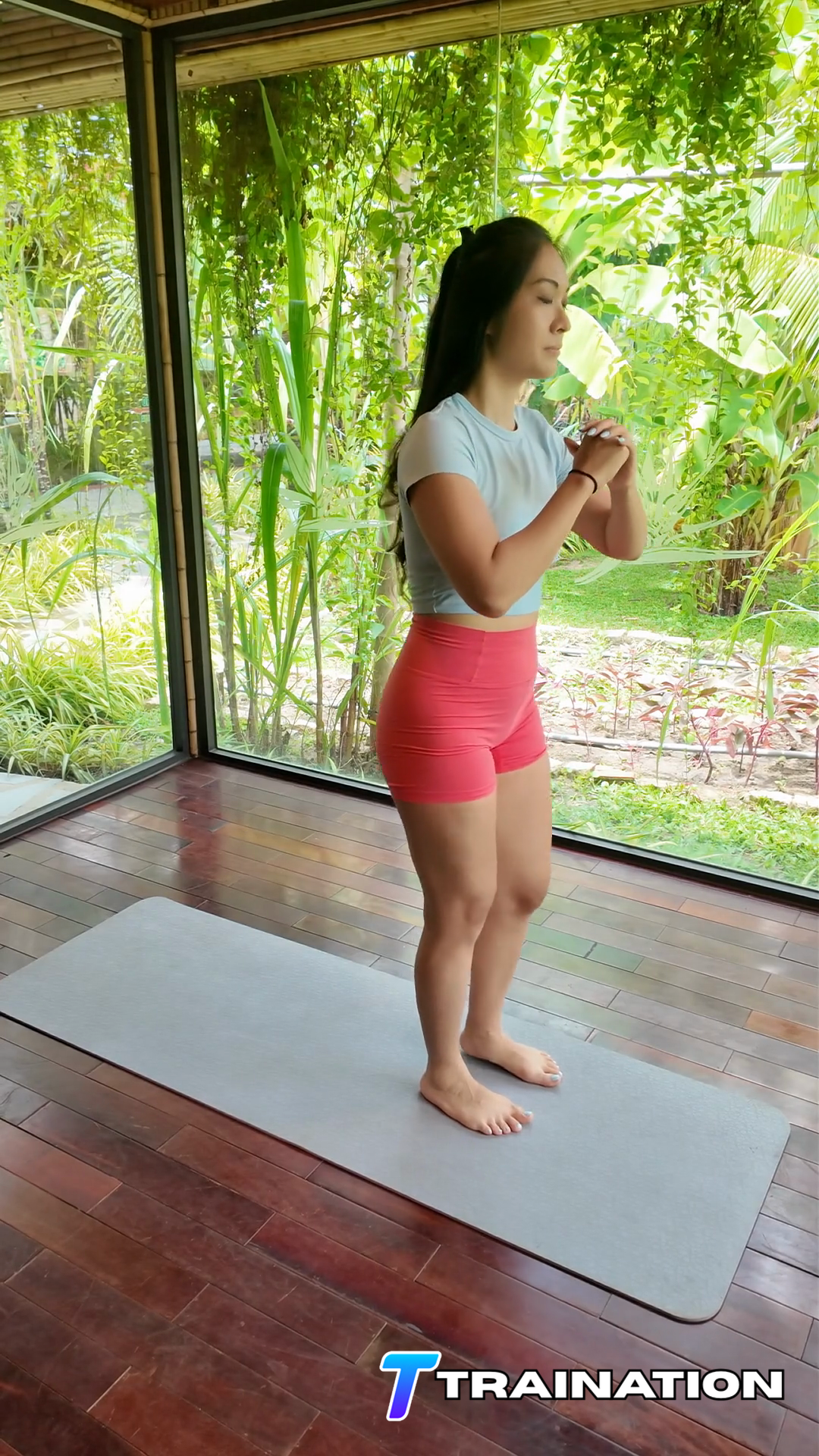
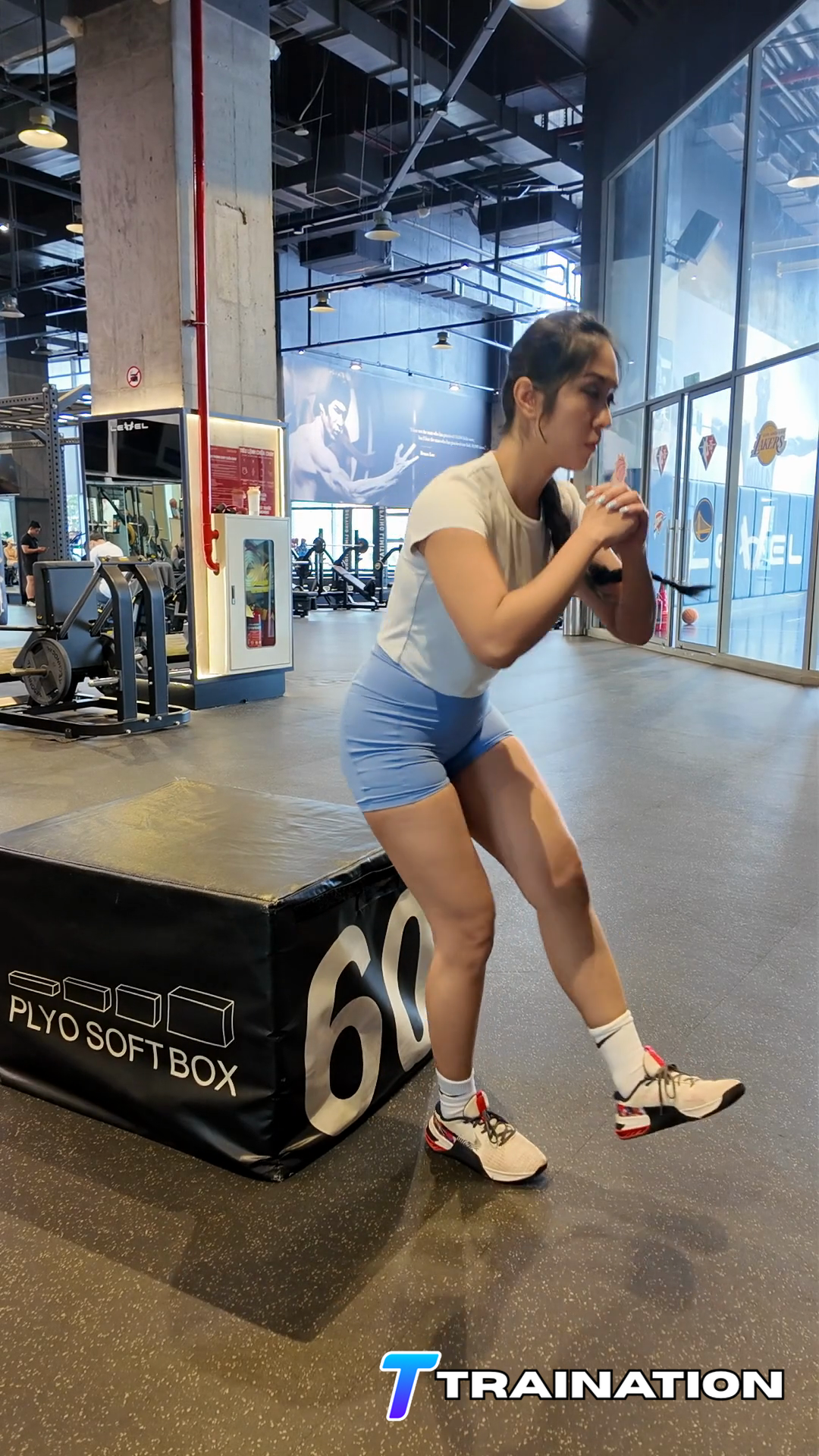
Stand tall, then step one foot forward and lower into a controlled forward lunge.
Keep the front foot fully planted and the knee tracking with the toes before changing direction.
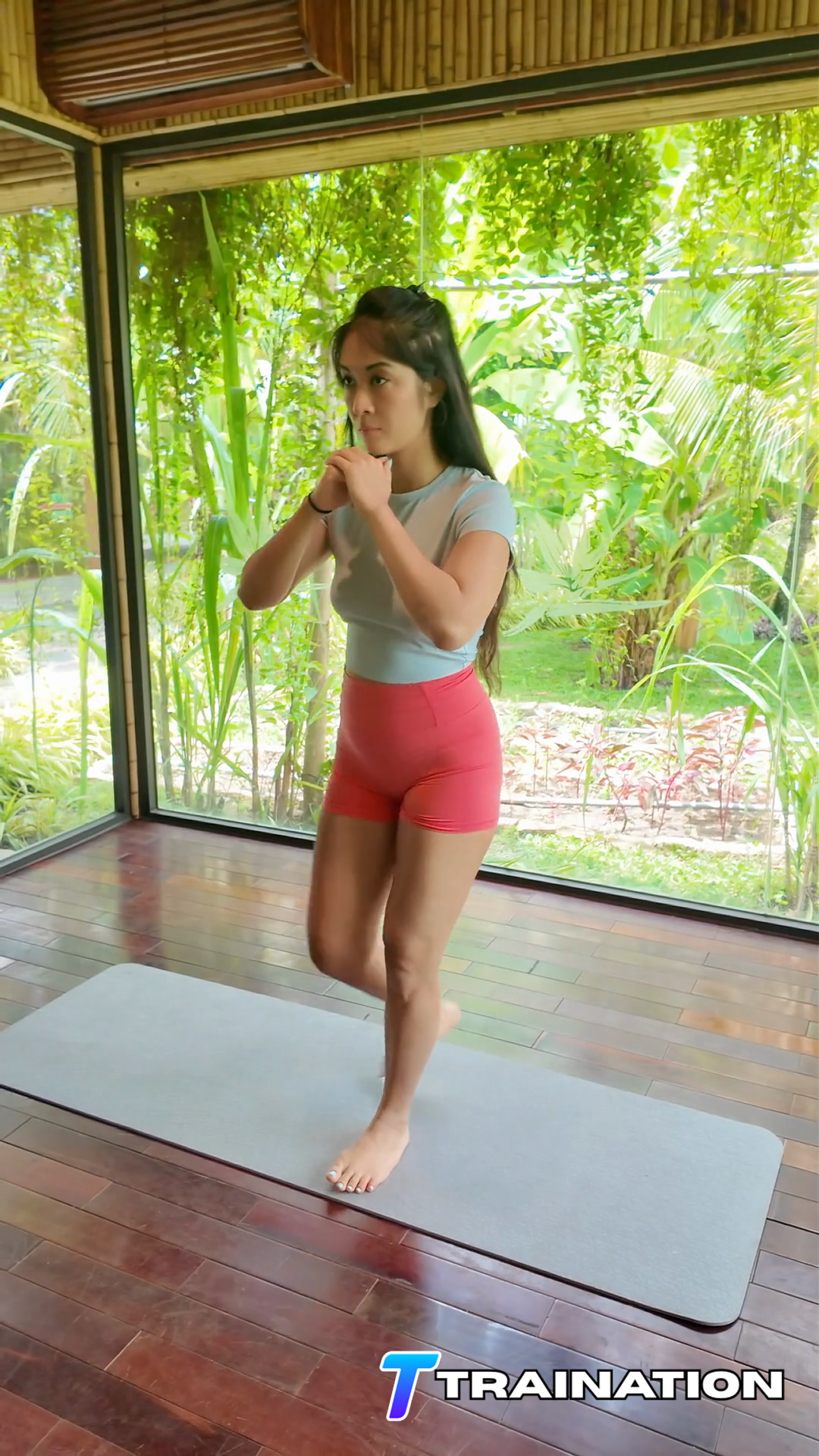
Drive through the front foot to pass through standing without placing that foot down beside the other.
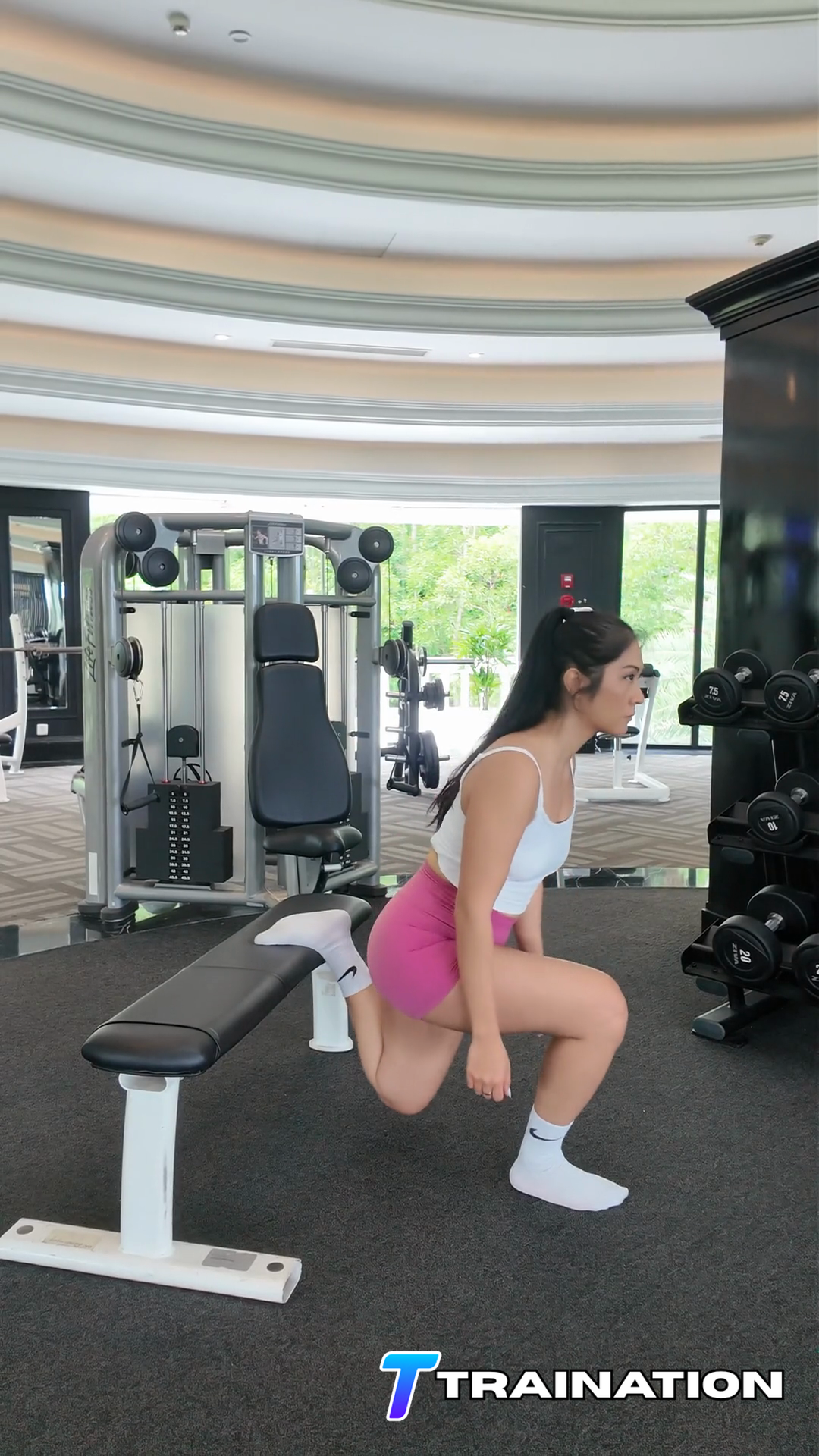
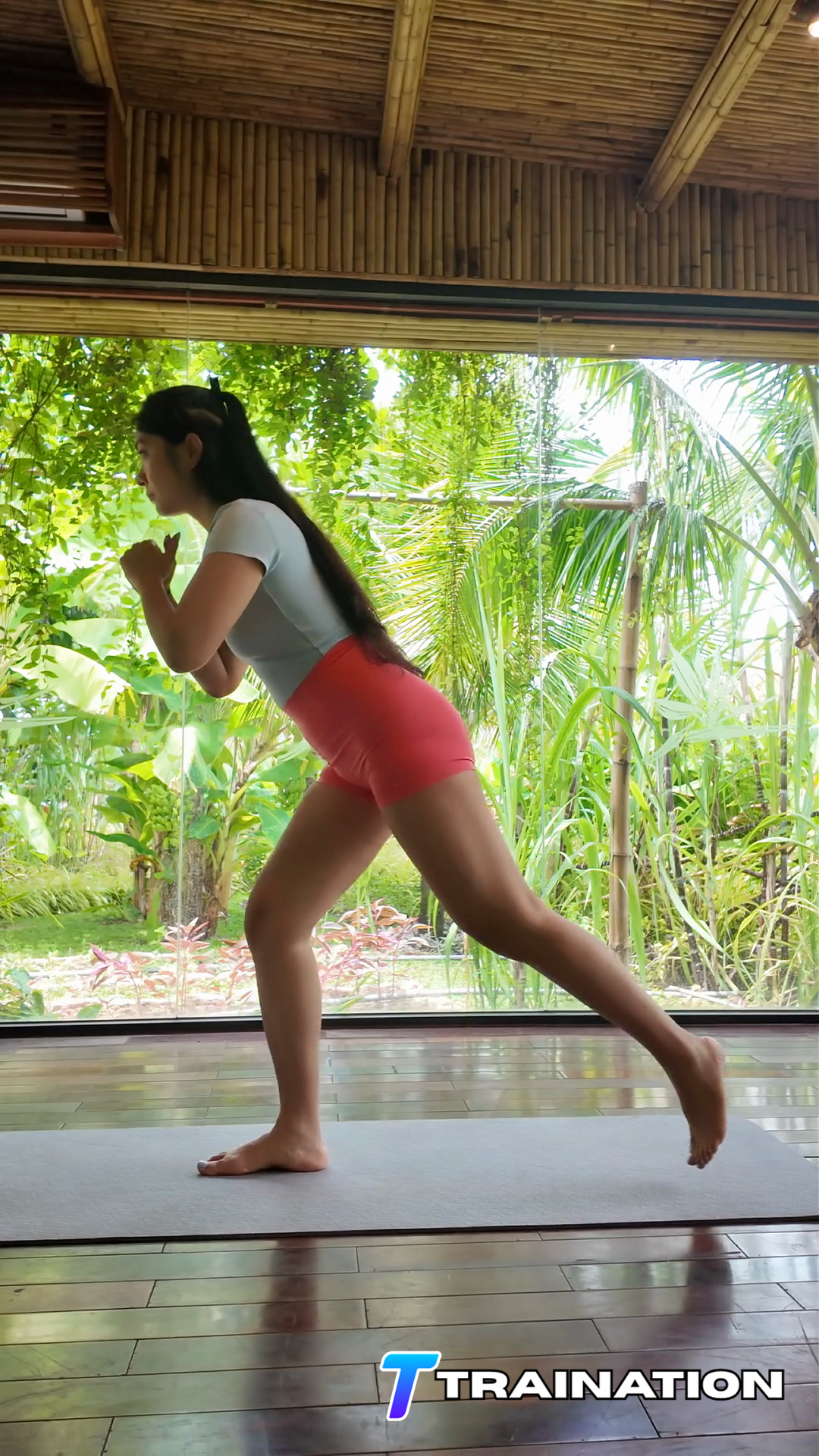
Take the same foot directly backward and lower into a reverse lunge while the standing knee tracks with the toes.
Return to standing to complete one repetition, then finish the set before changing lead legs.
Use enough distance for the front heel to remain down and both knees to bend without crowding the stance.
Track the front knee with the toes and keep pressure across the whole front foot.
Let the working leg produce the return instead of bouncing from the rear foot or floor.
Keep the hips level and facing forward rather than twisting or dropping to one side.
Place Forward To Reverse Lunge after the main two-leg lift, or first in the strength block when loaded lunging and single-leg control are the primary goals.
Use one or two focused exposures per week and count them with other demanding quad and glute work.
| Goal | Sets | Reps or time | Rest | Effort and execution |
|---|---|---|---|---|
| Strength accessory | 2–4 | 6–10 per side | 75–150 sec | Leave 2–3 controlled reps in reserve |
| Muscle growth | 2–4 | 8–15 per side | 60–120 sec | Usually 1–3 clean reps in reserve |
Scale the movement
Hold a rack or suspension trainer and lower in a fixed stance before adding a step.
Stepping backward often makes balance and front-foot pressure easier to control than a forward or walking lunge.
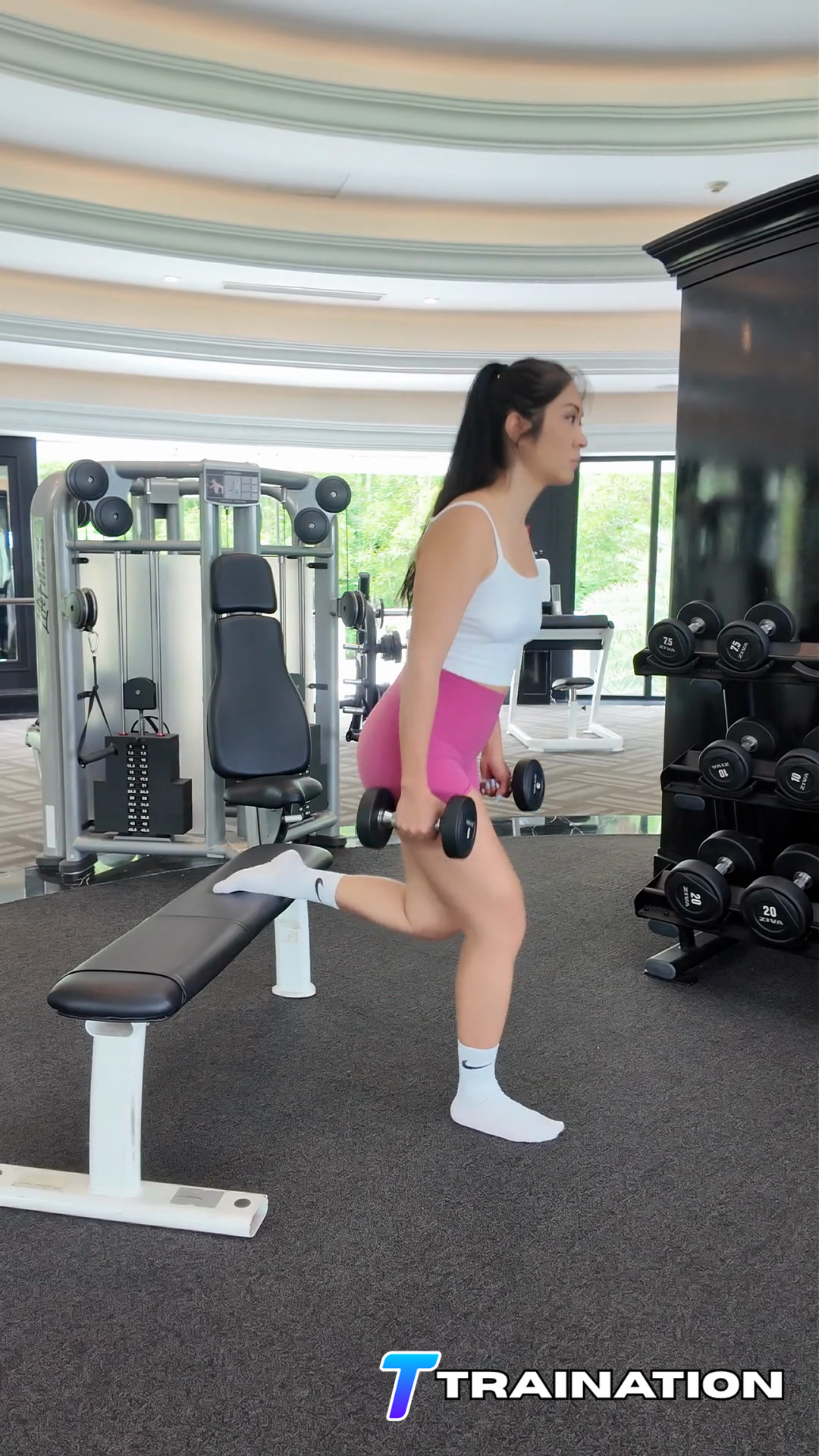
Add dumbbells only after stride, balance, and knee alignment stay consistent.
Pause just above the floor without resting the rear knee before returning.
Turn Forward To Reverse Lunge and the rest of your exercise library into repeatable client programs.
Explore the workout builder