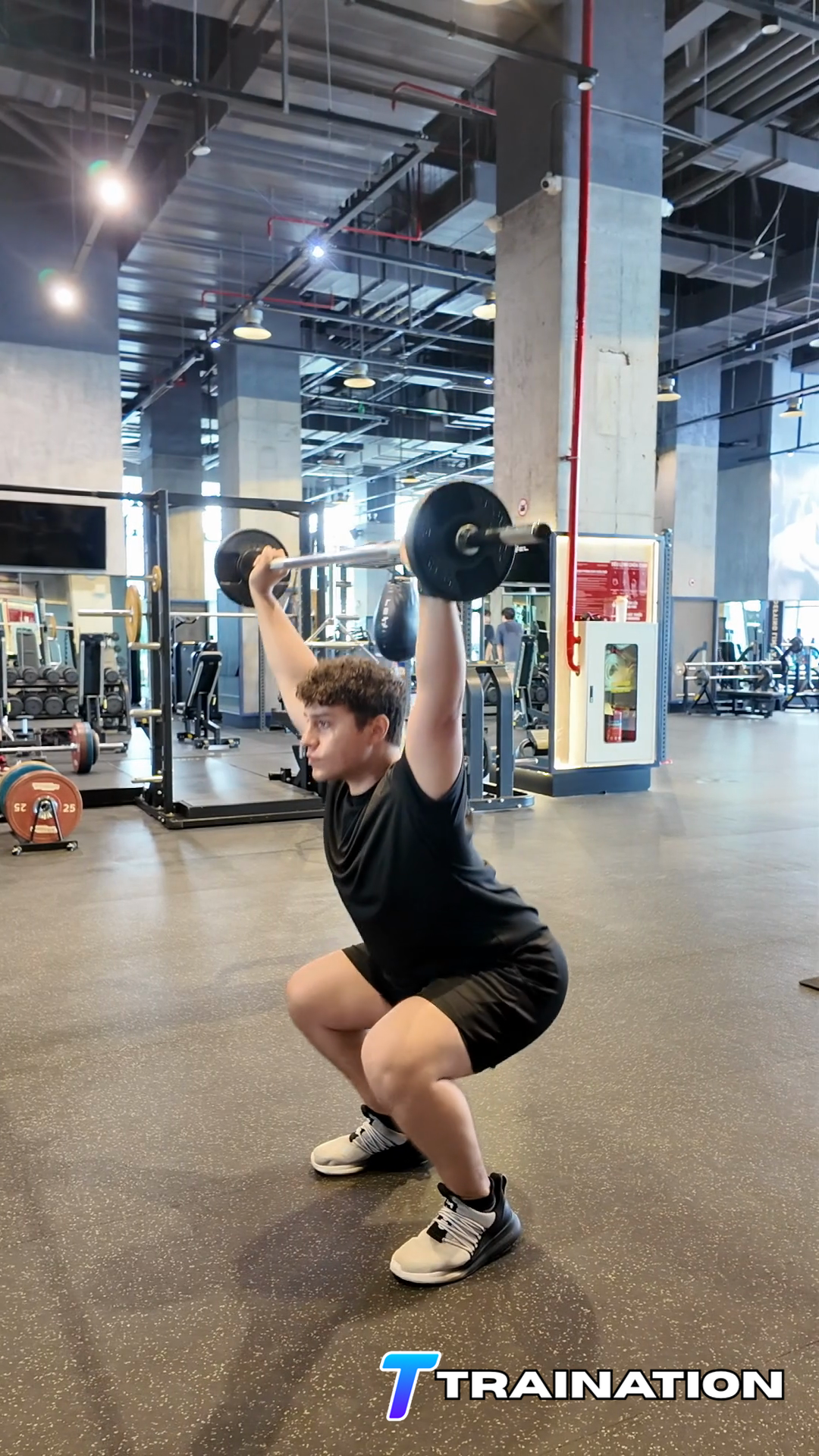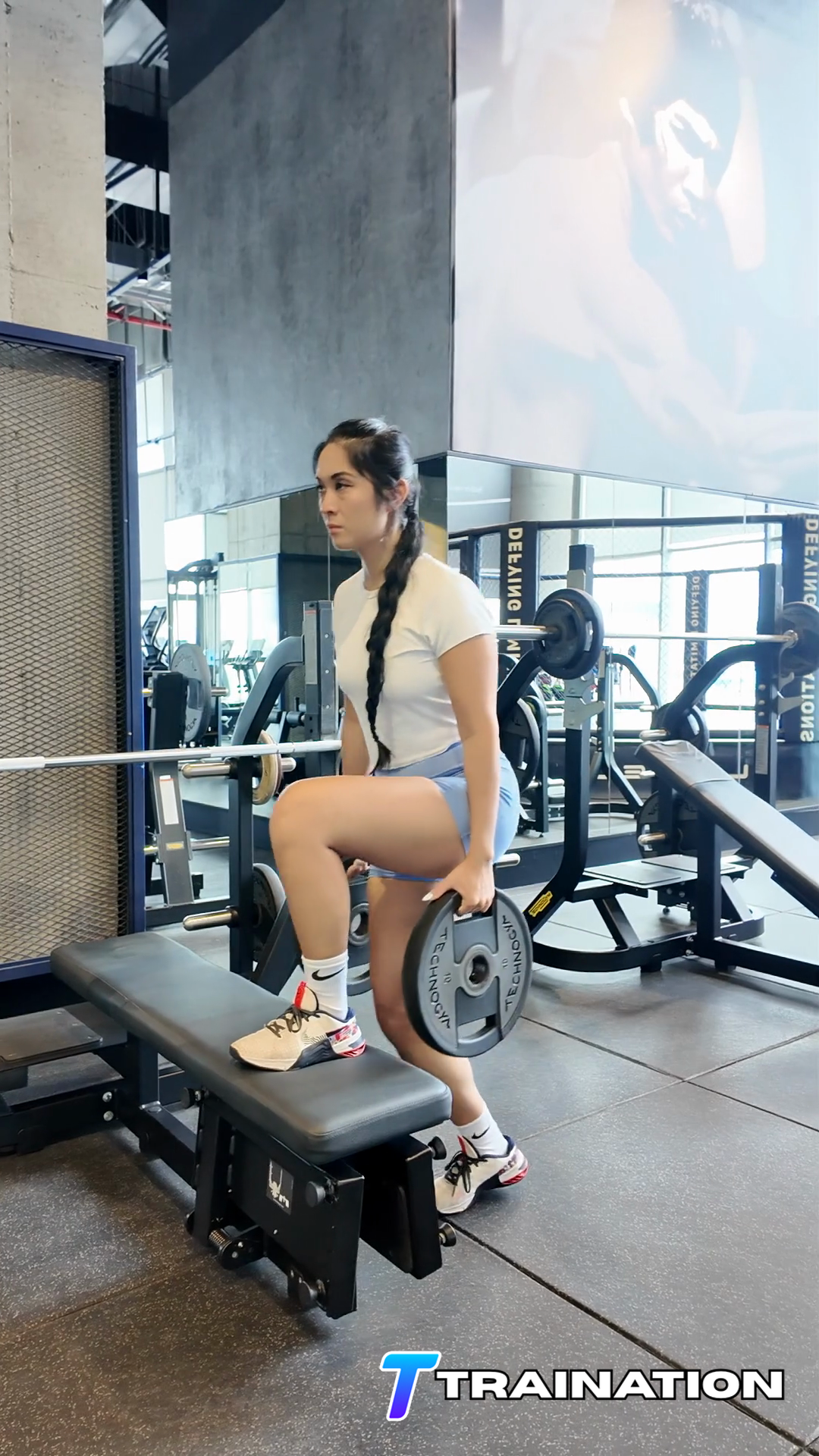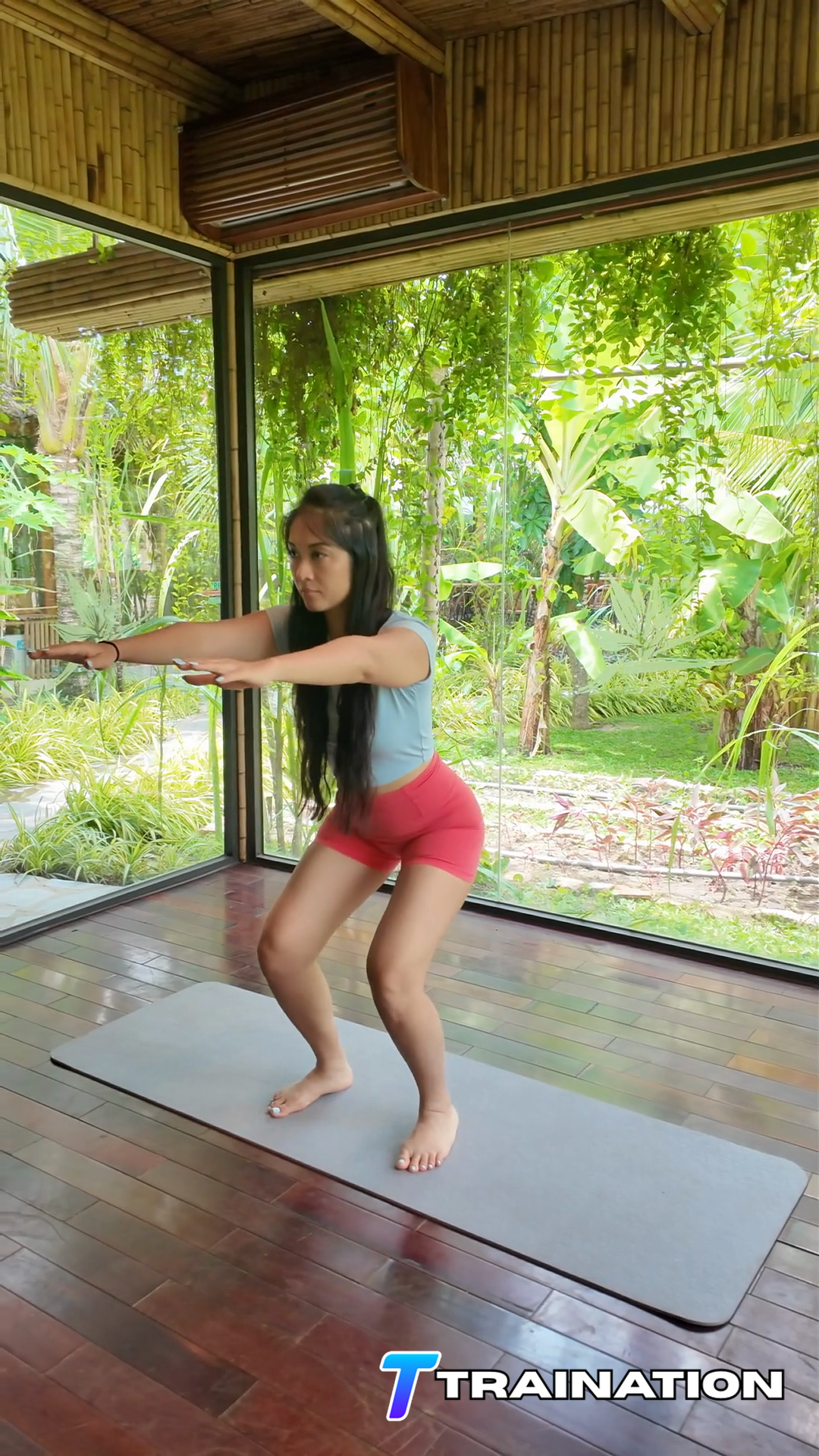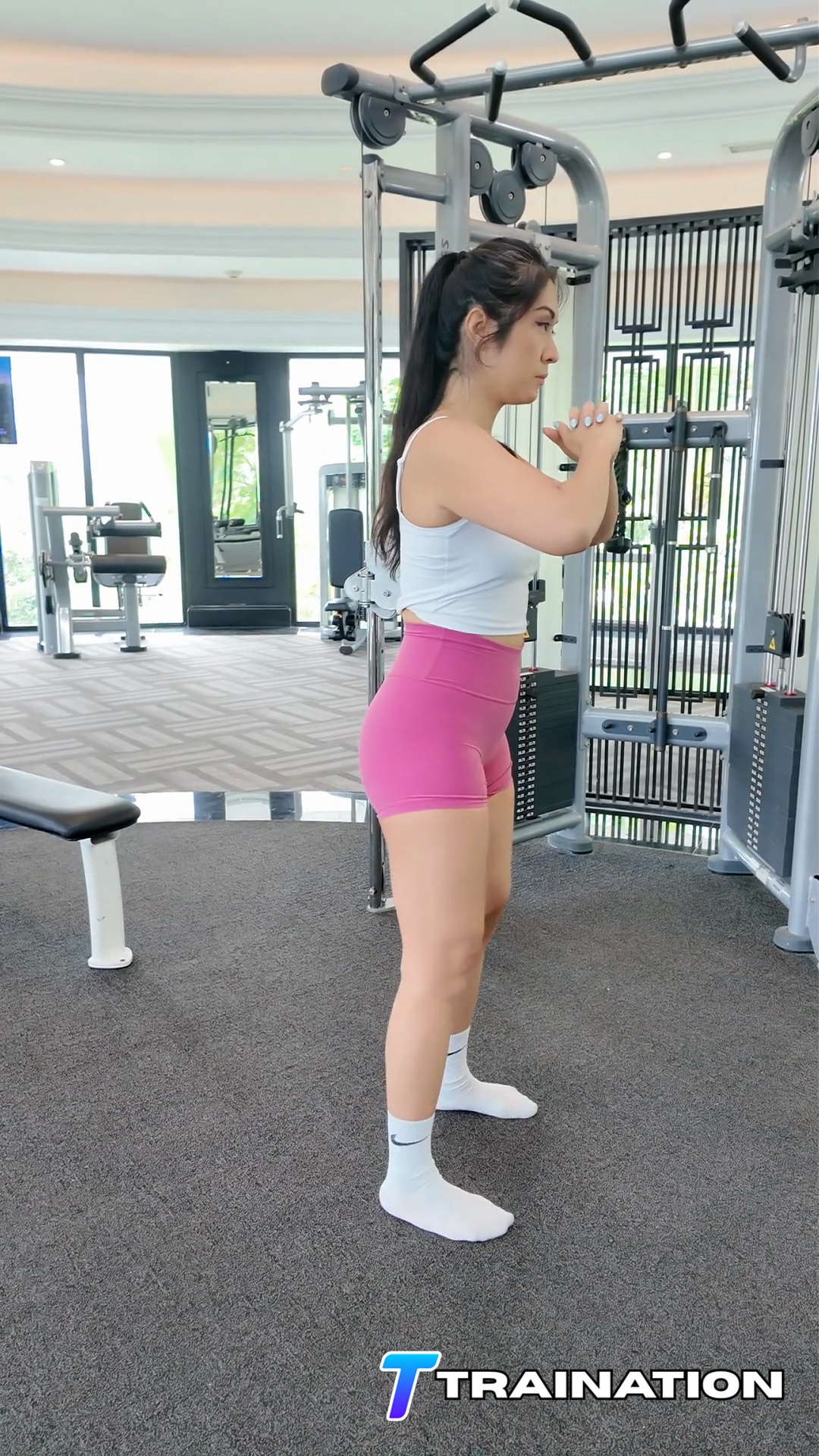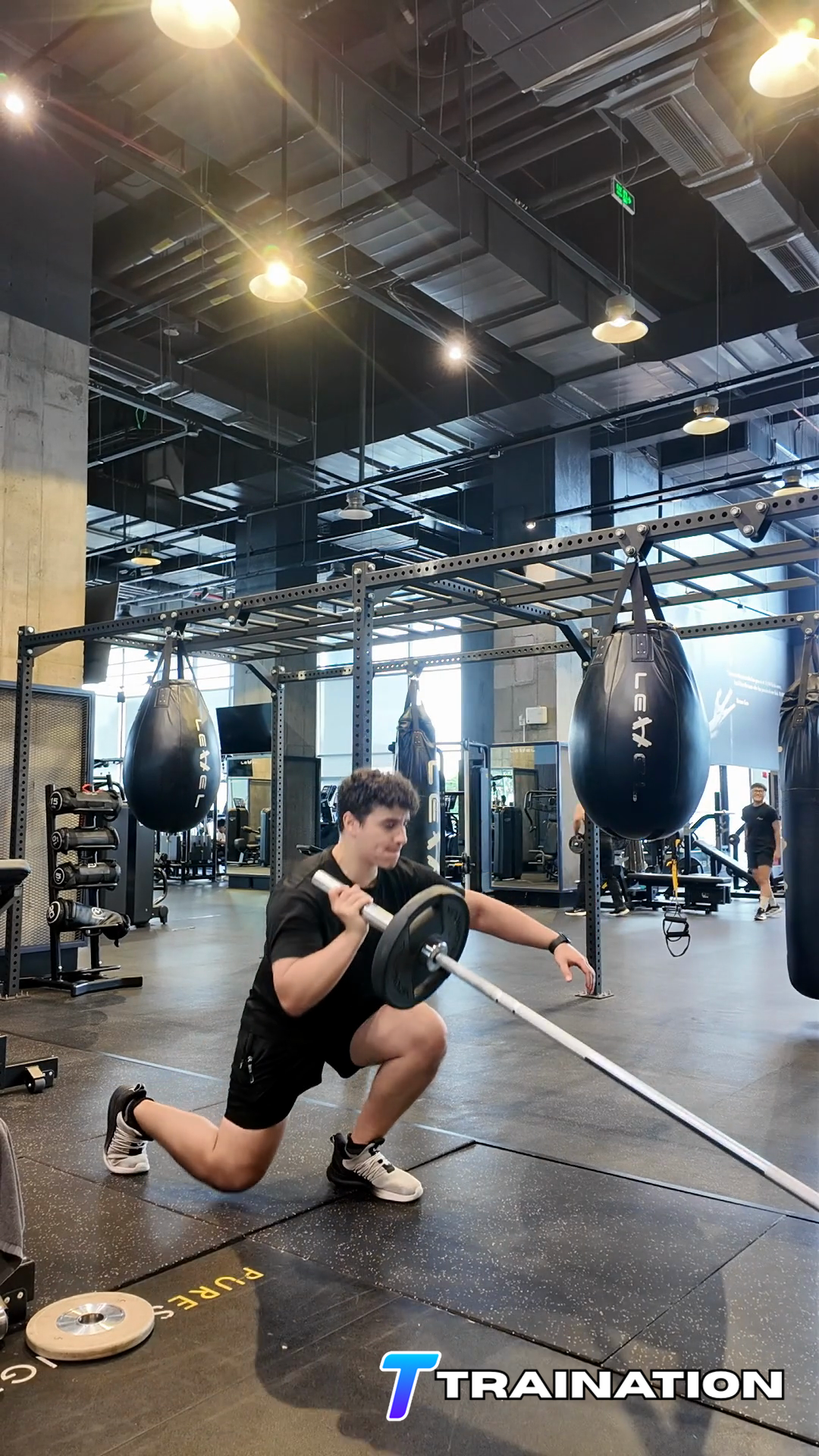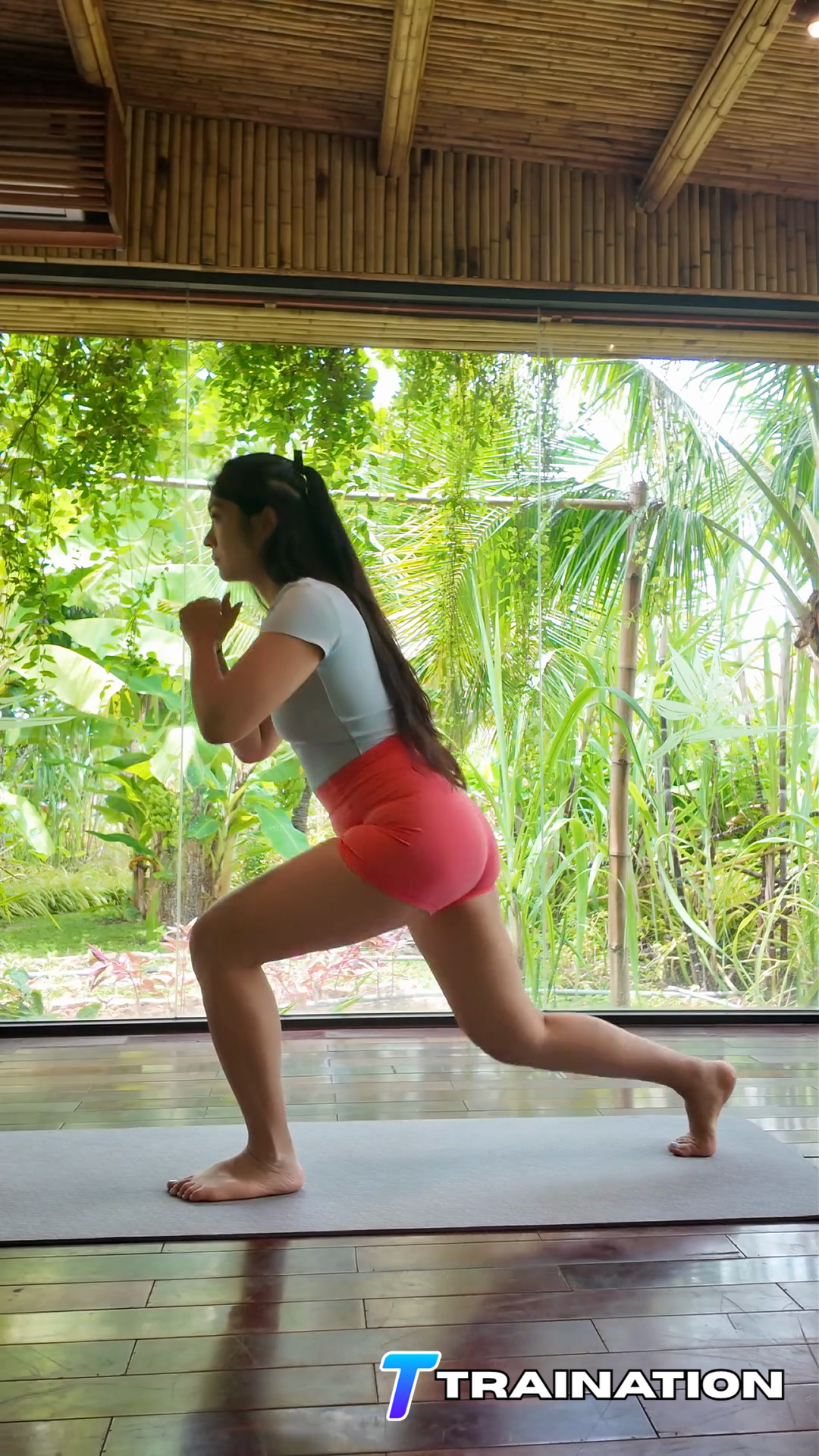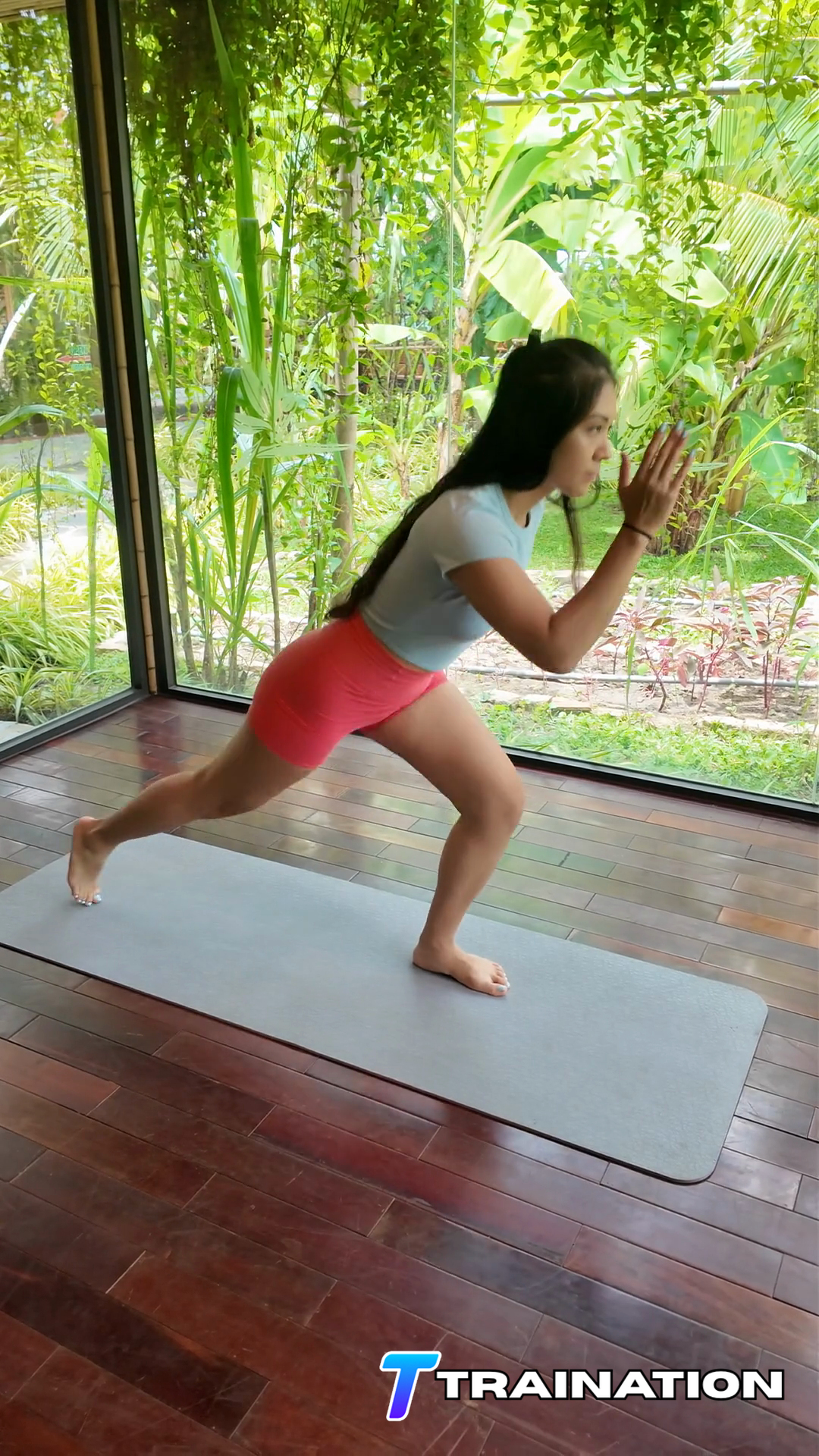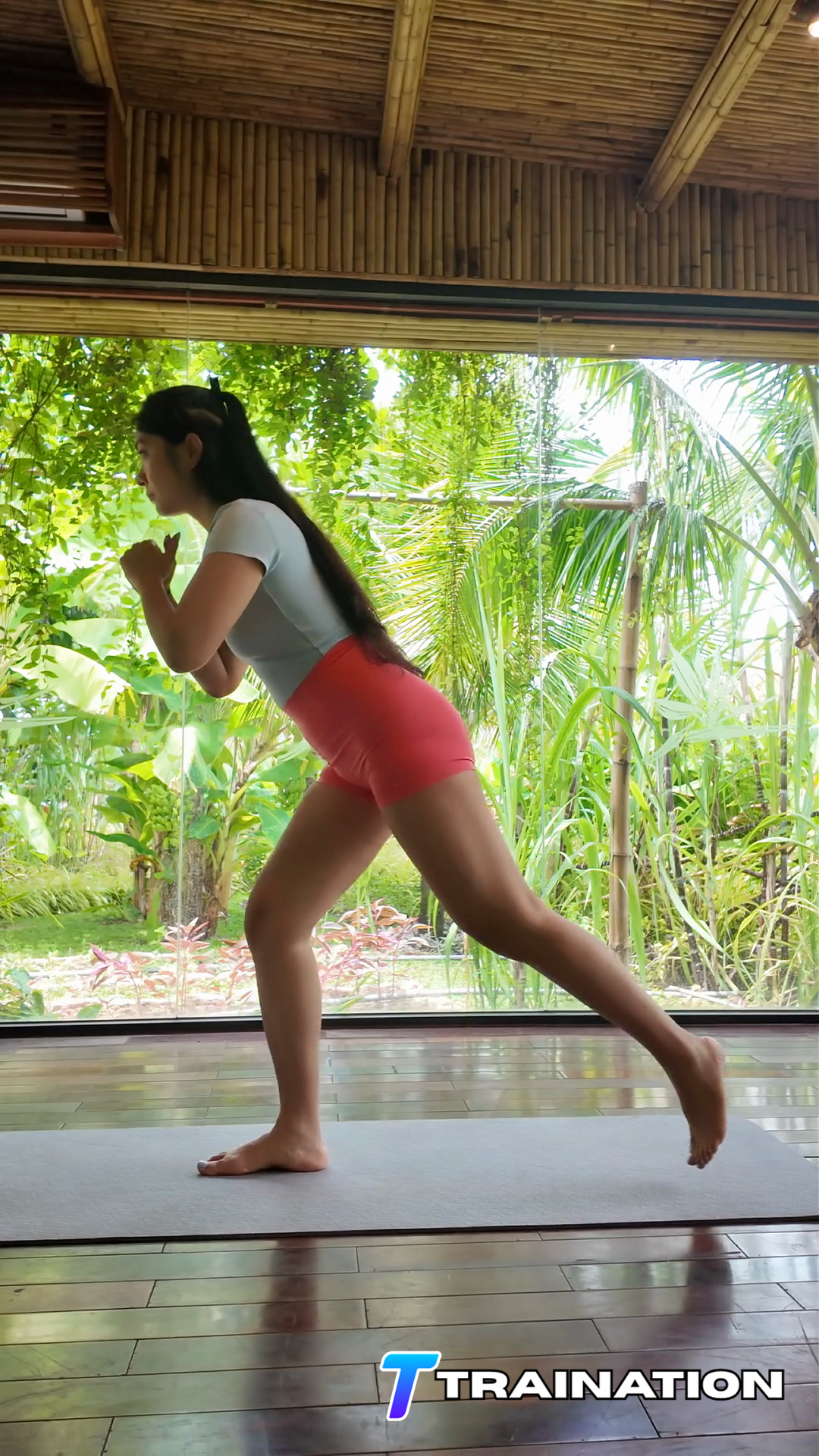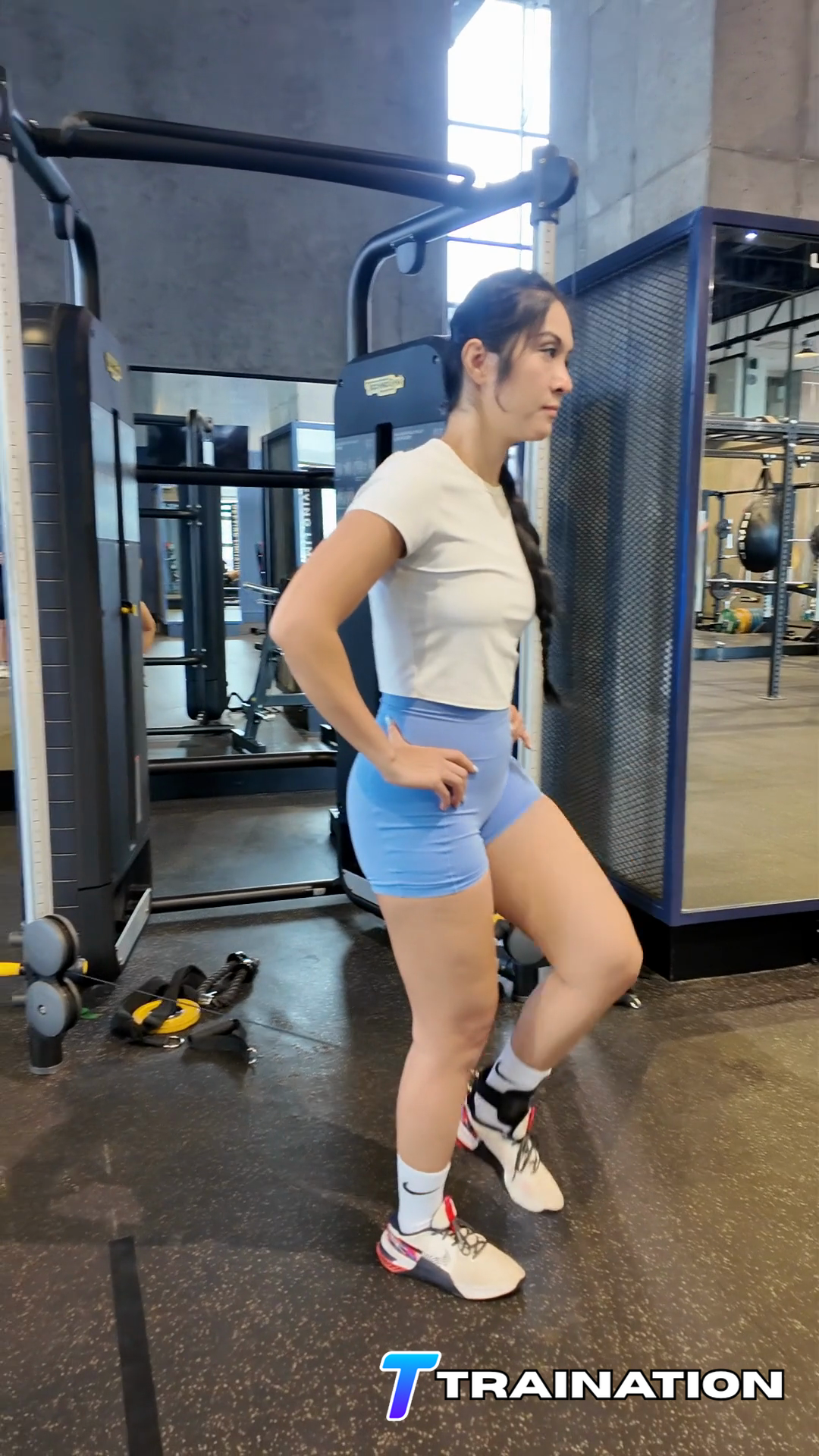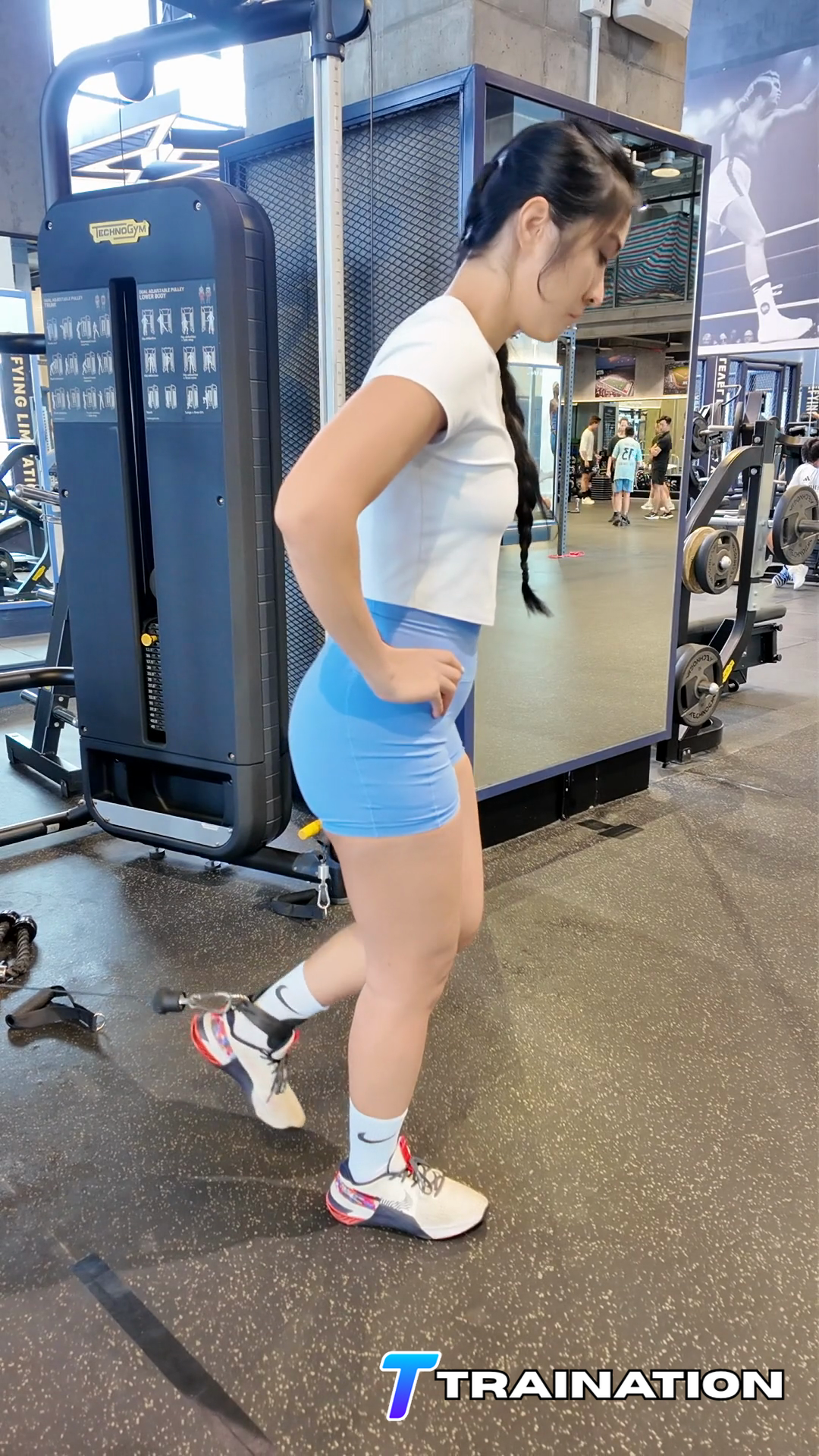
Twisting through the planted knee
Keep the pelvis forward and rotate the rib cage rather than forcing the knee to turn.
Reverse Lunge With A Twist combines a controlled lunge with an upper-body or balance challenge to train coordination and single-leg strength.
Primary musclesQuadriceps, Gluteus maximus, Obliques
Secondary musclesHamstrings, Gluteus medius, Calves, Transverse abdominis
Follow the sequence in order, paying attention to the starting position, movement path, and finish described in each step.
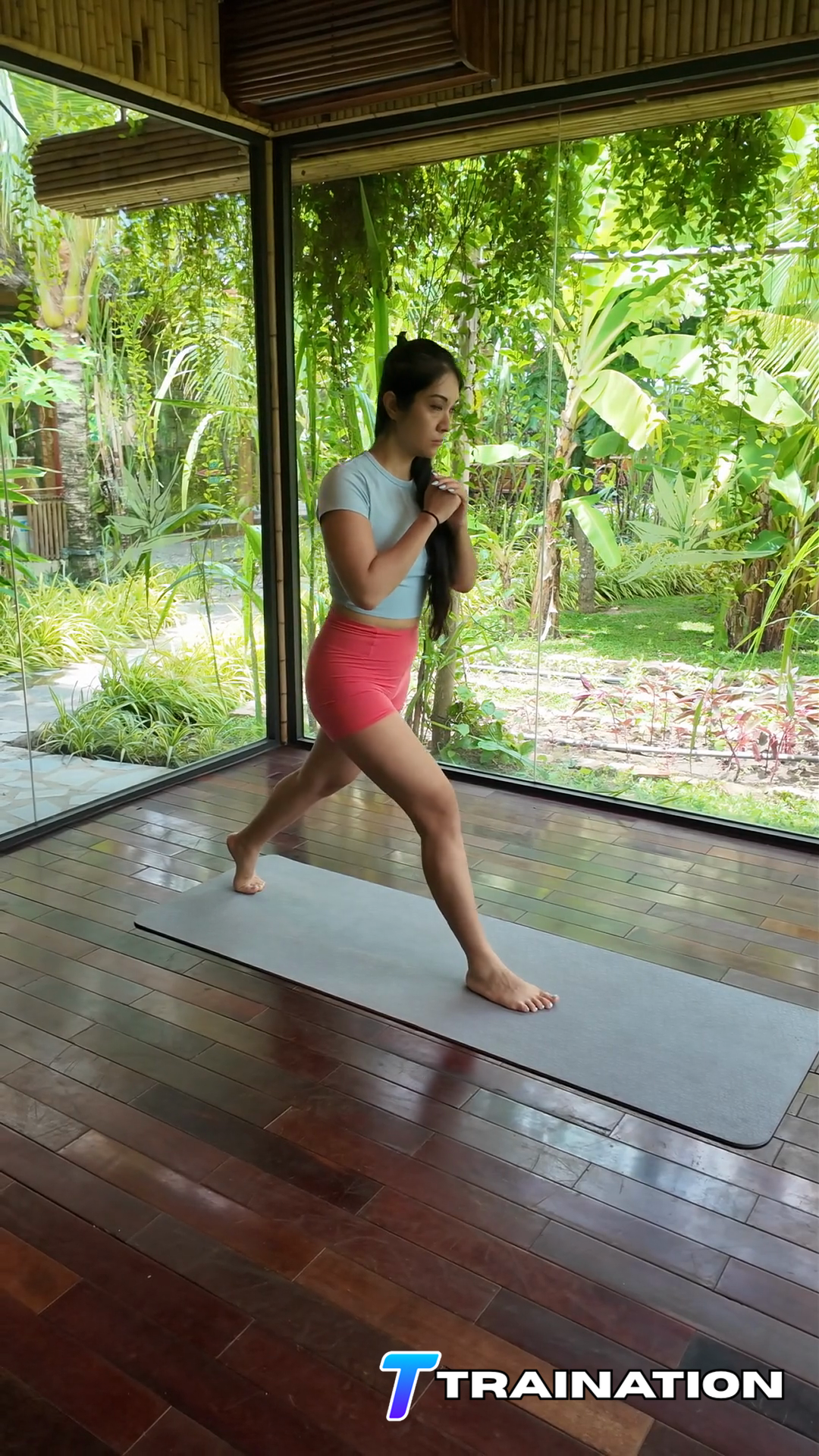
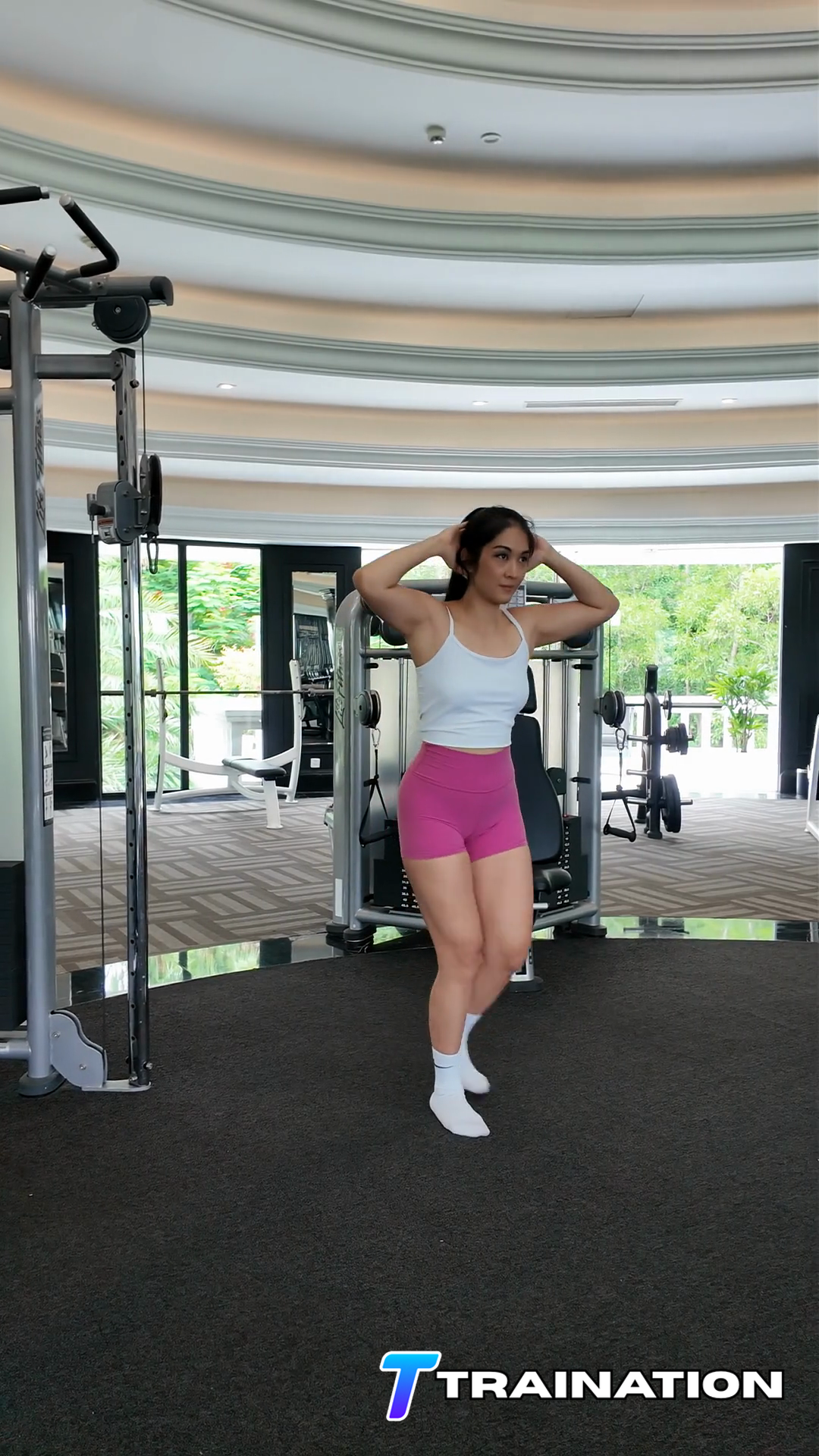
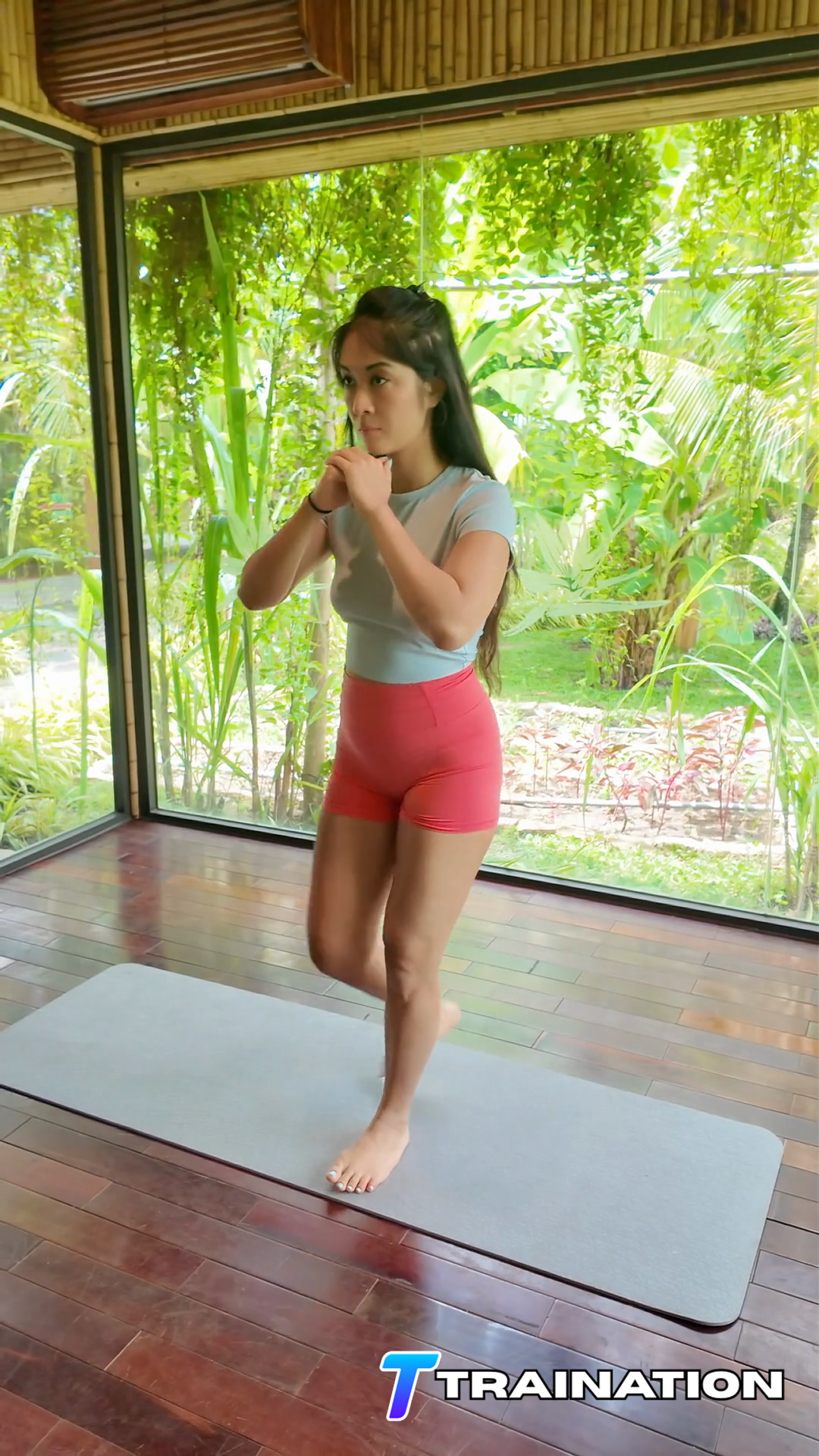
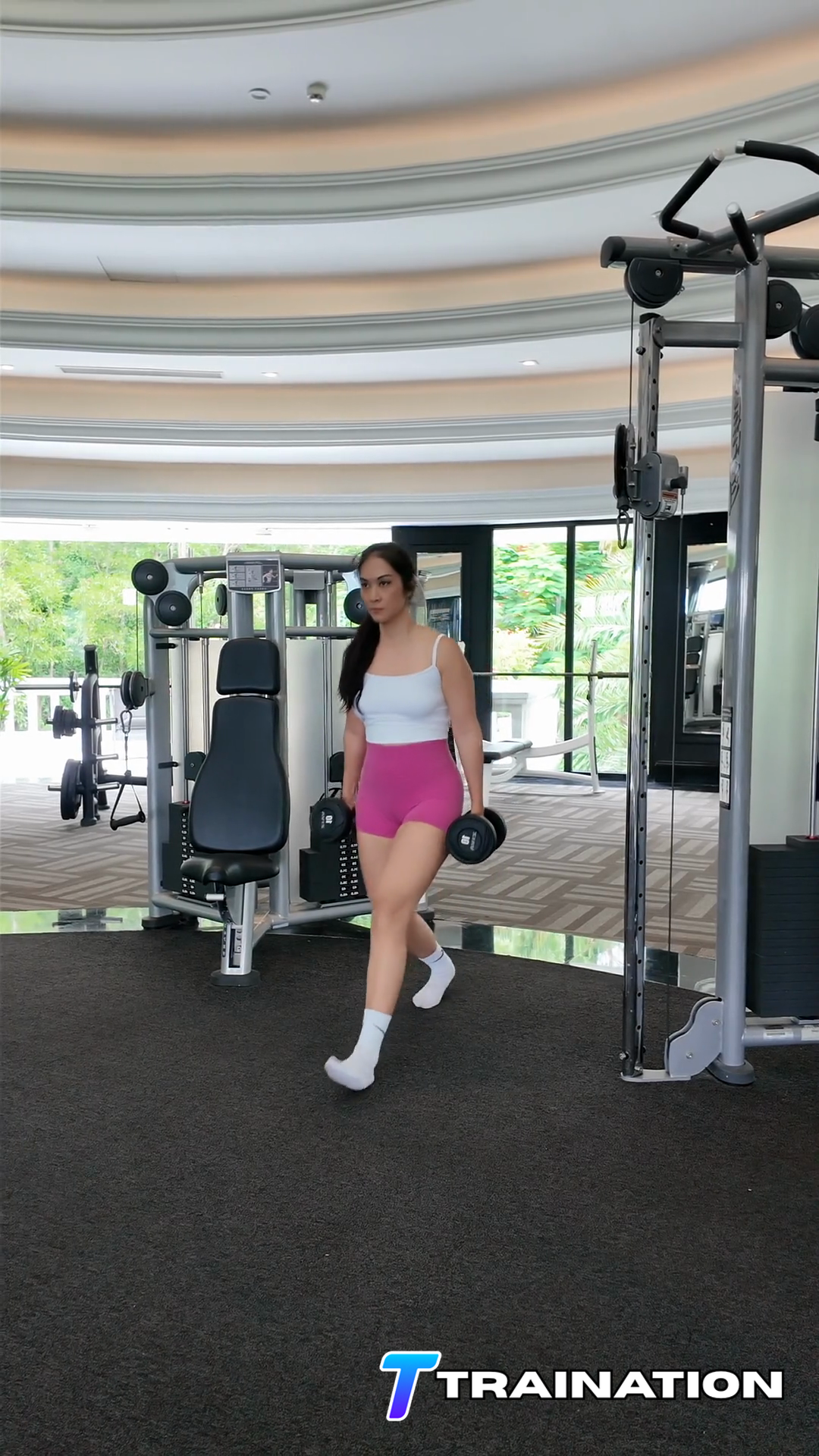
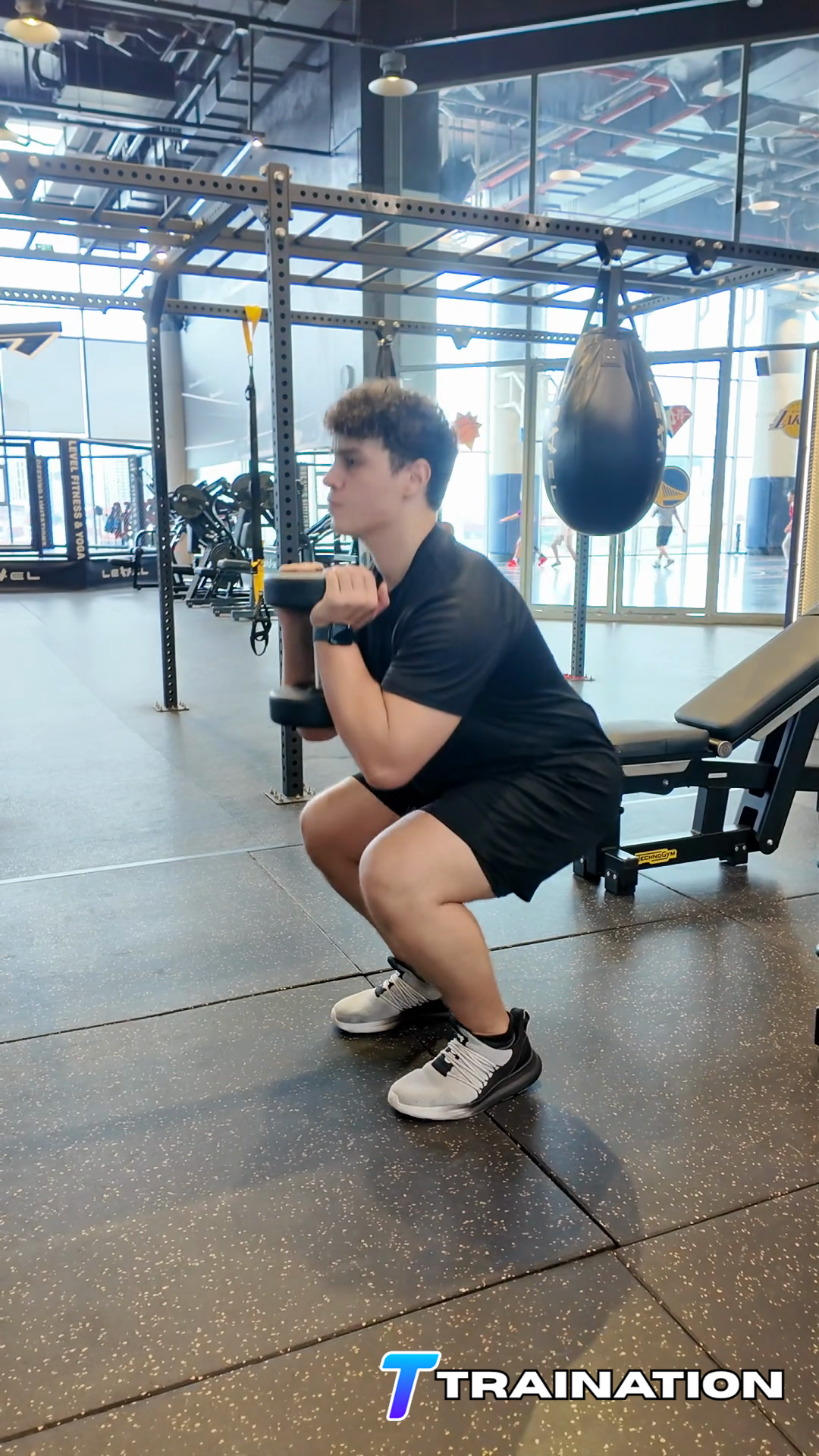
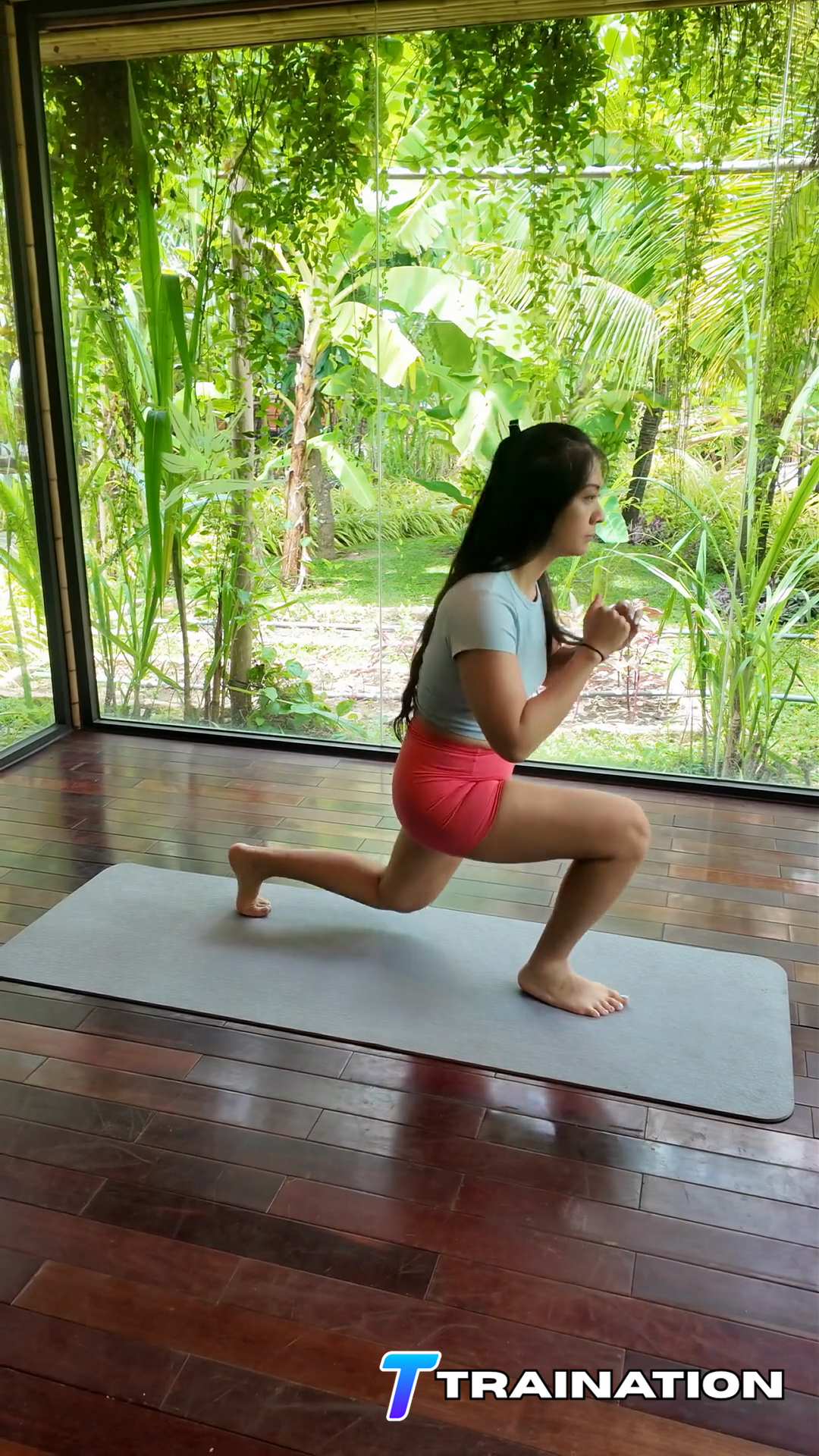
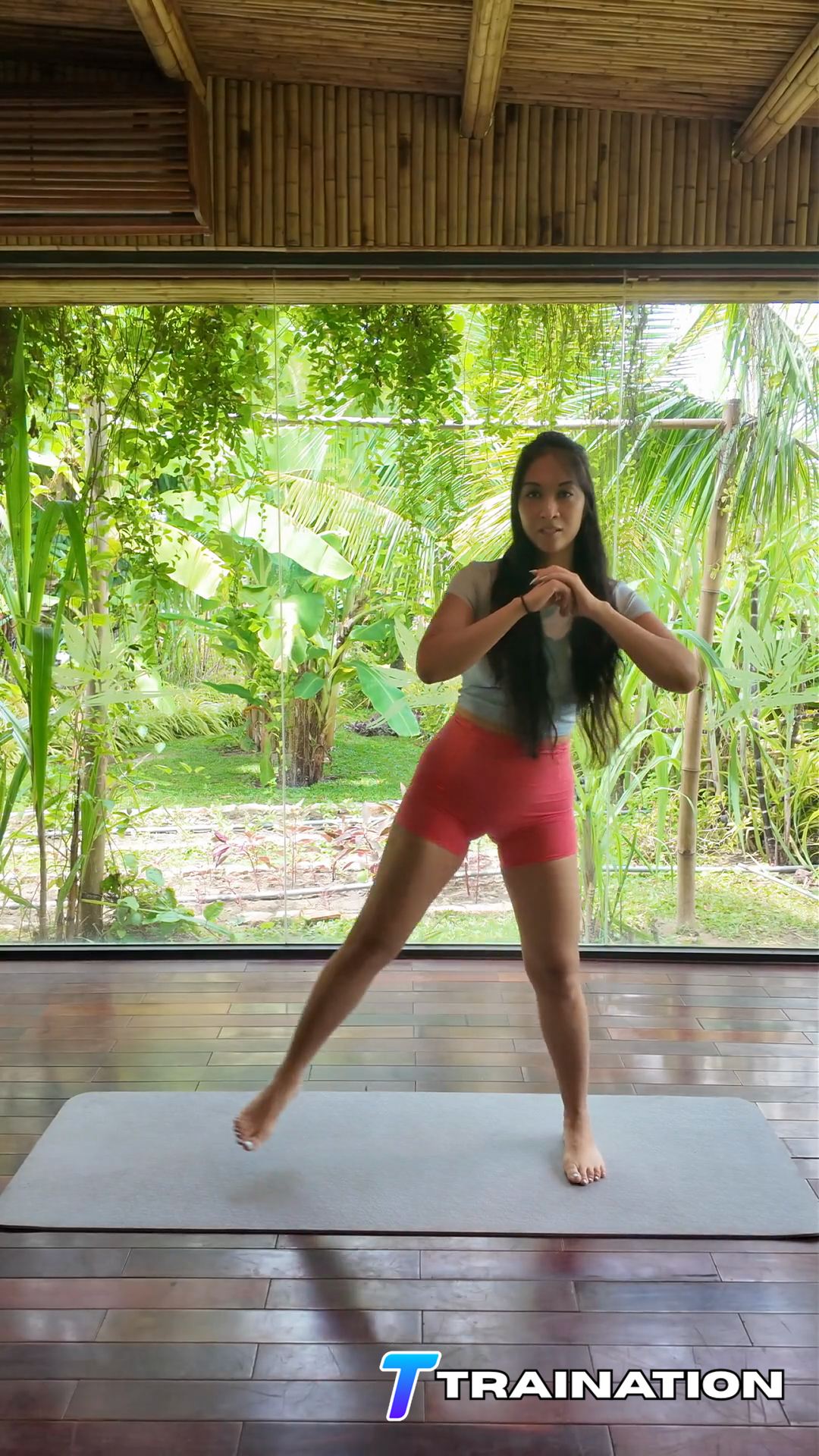
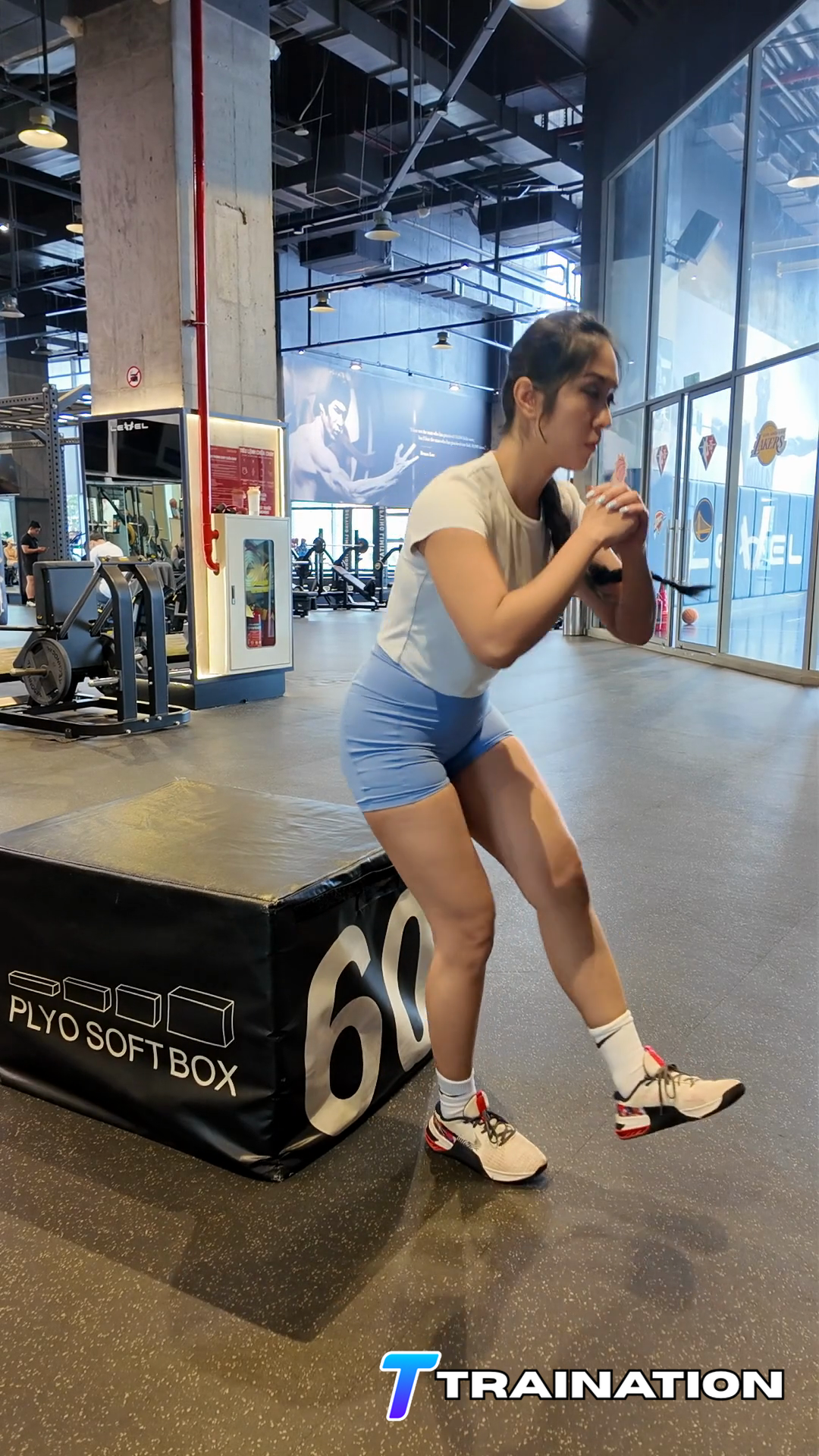
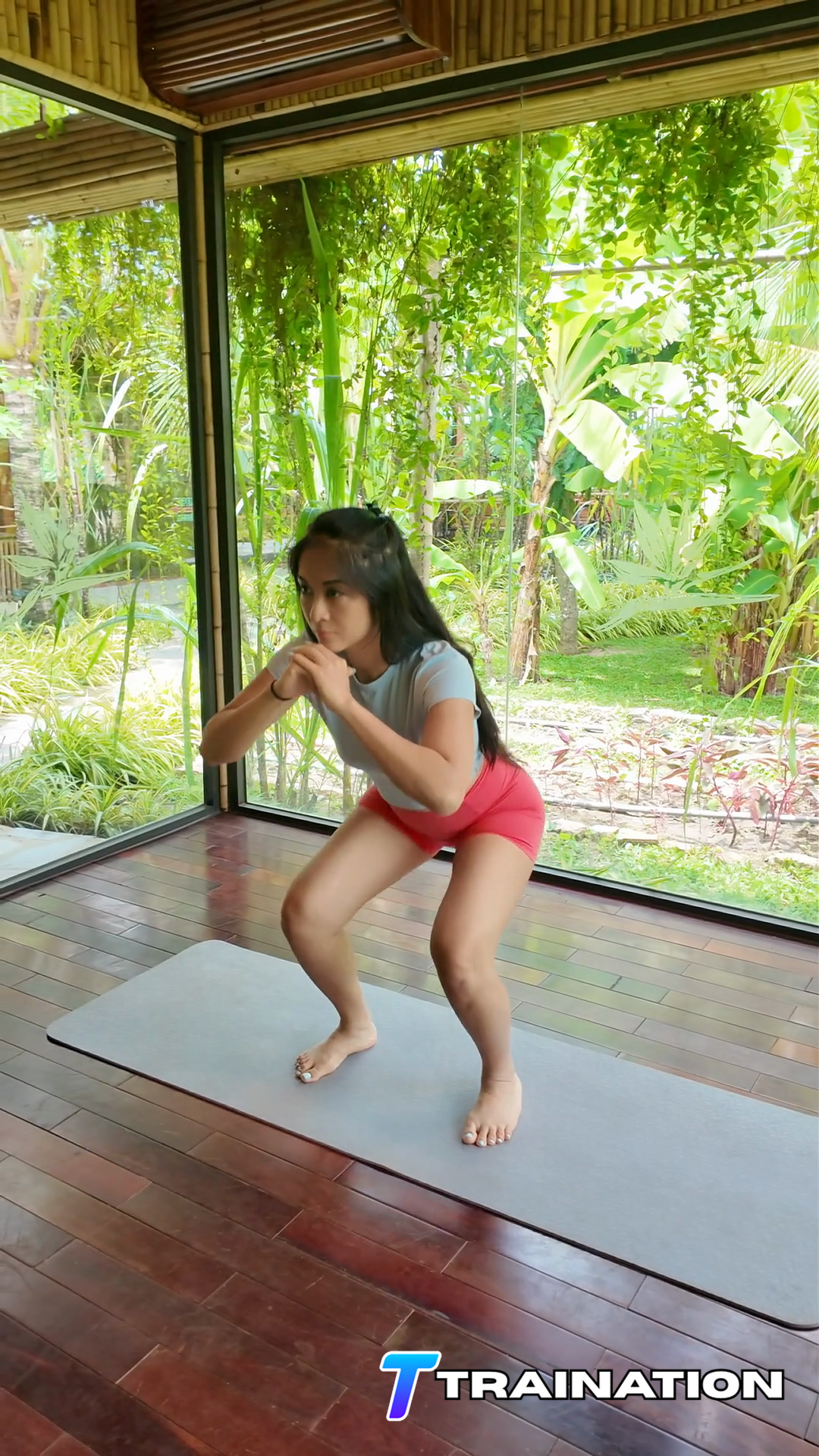
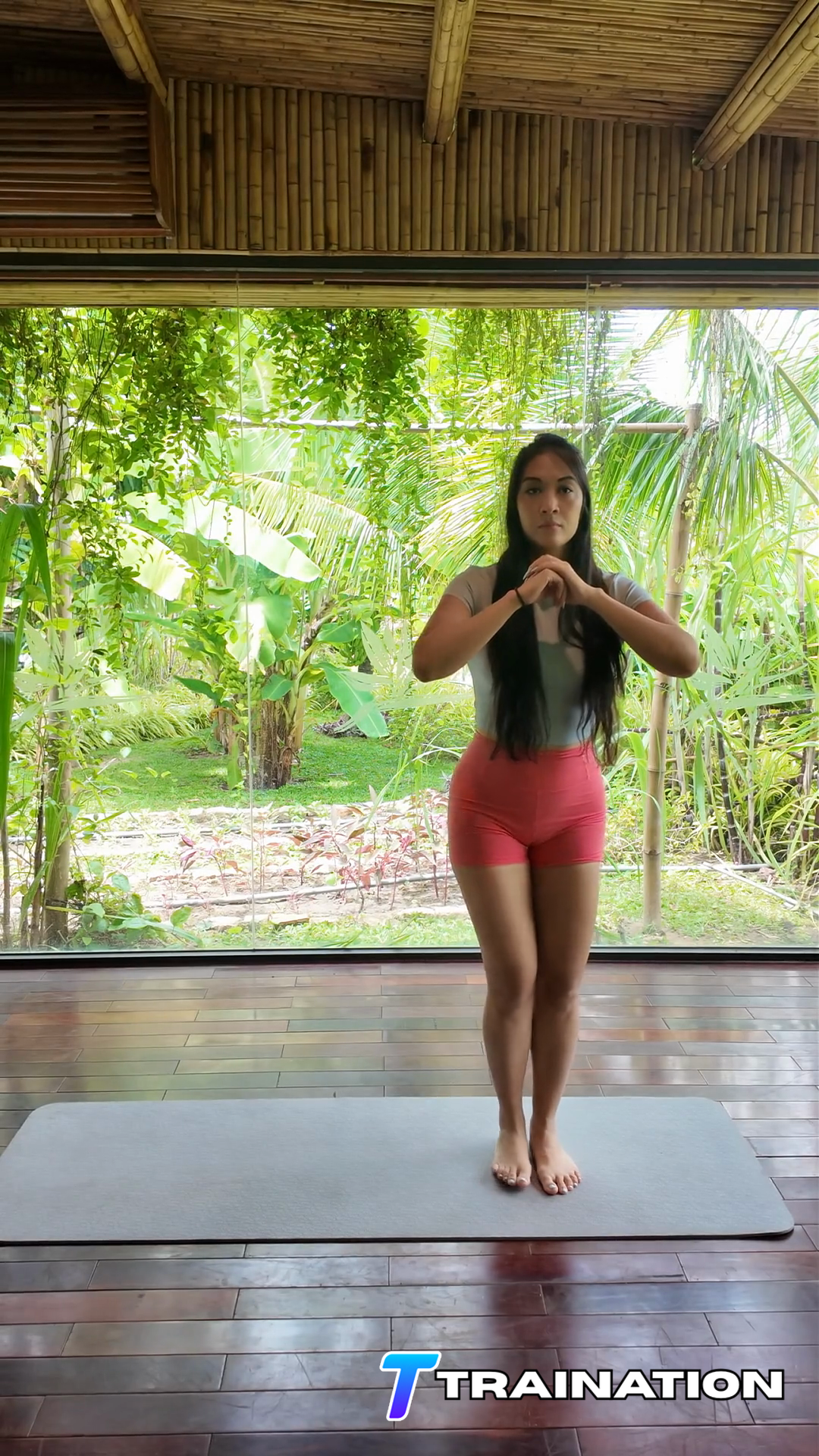
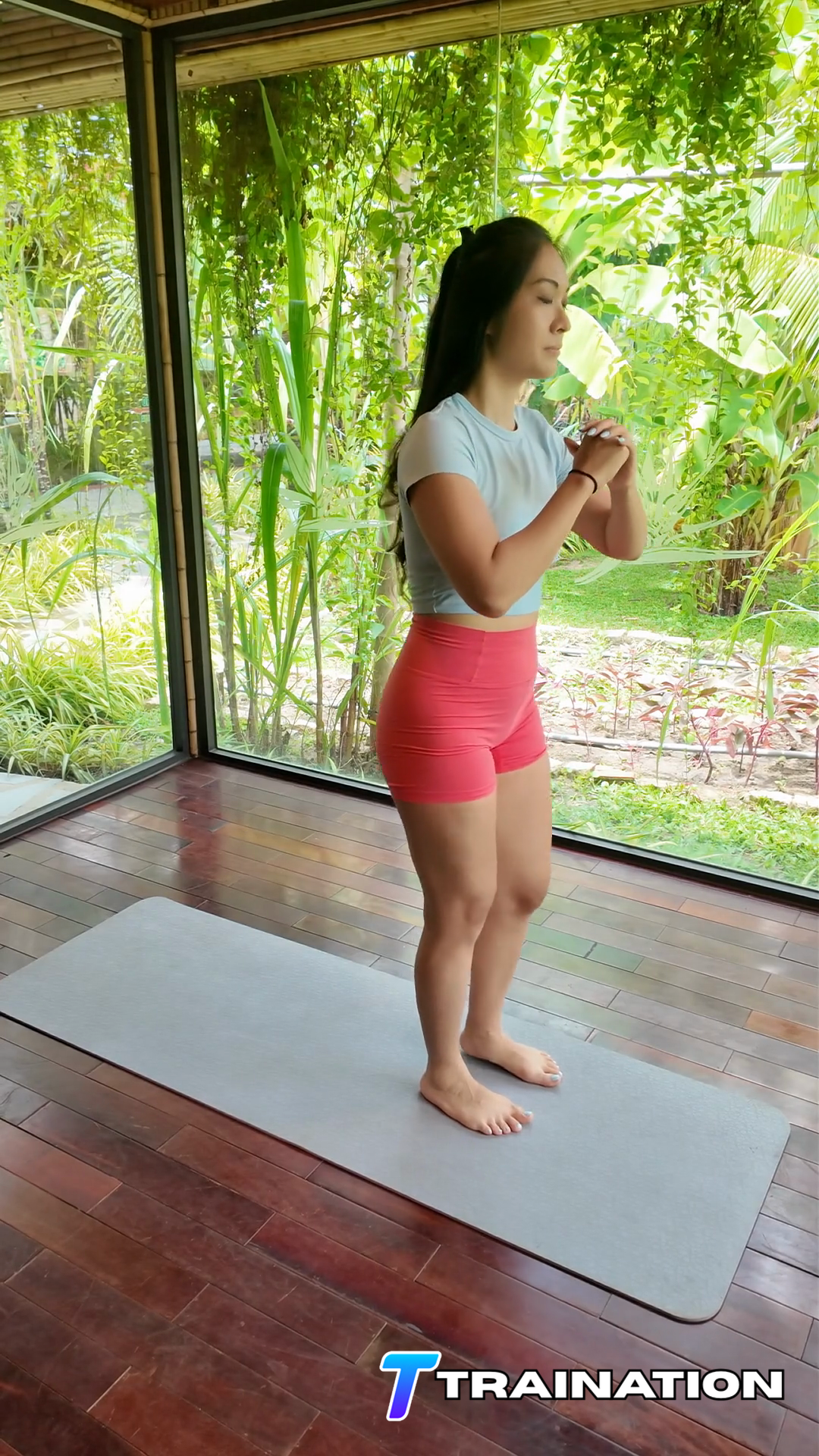
Stand tall with the feet about hip width and hold the hands together in front of the chest.
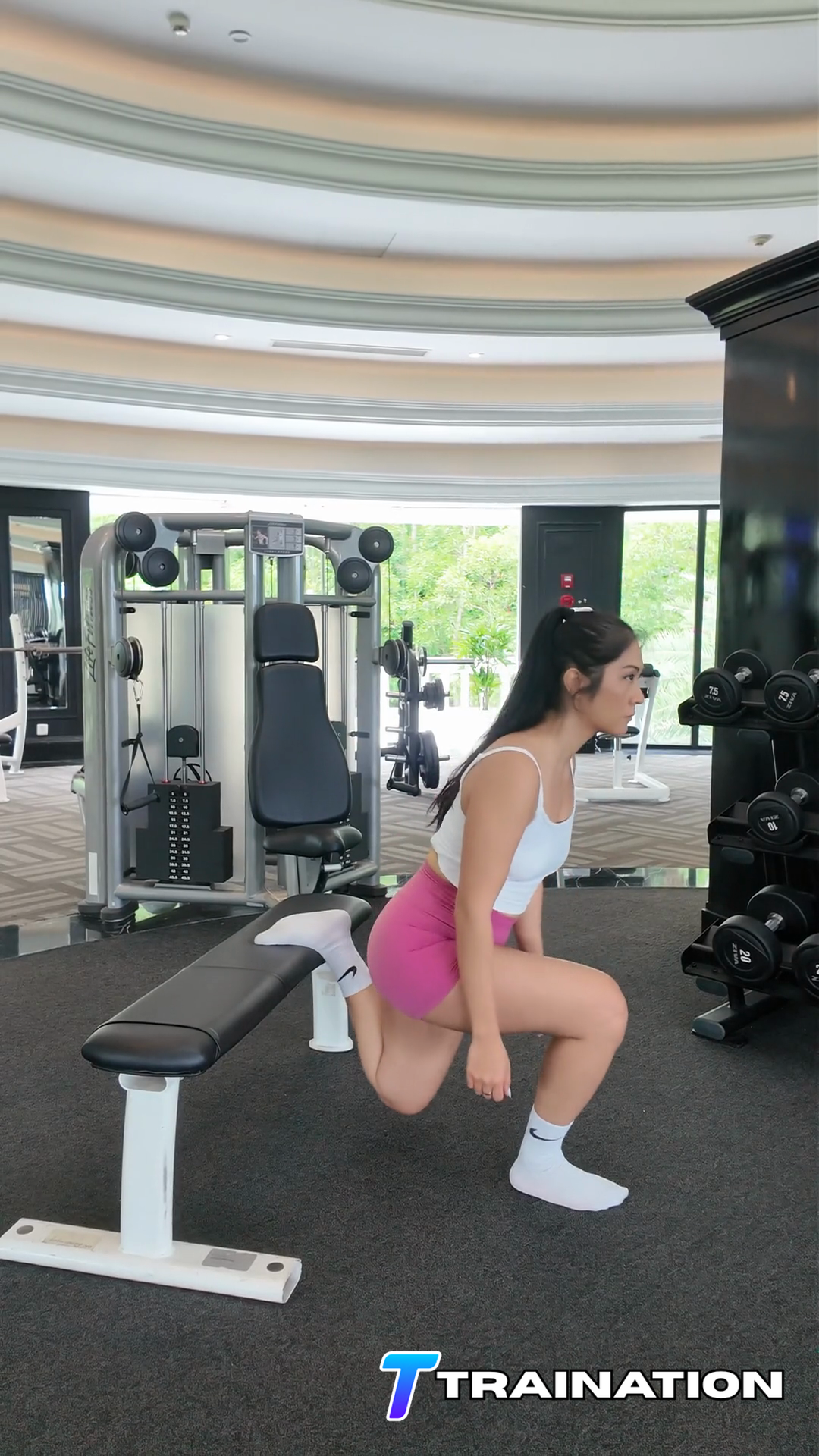
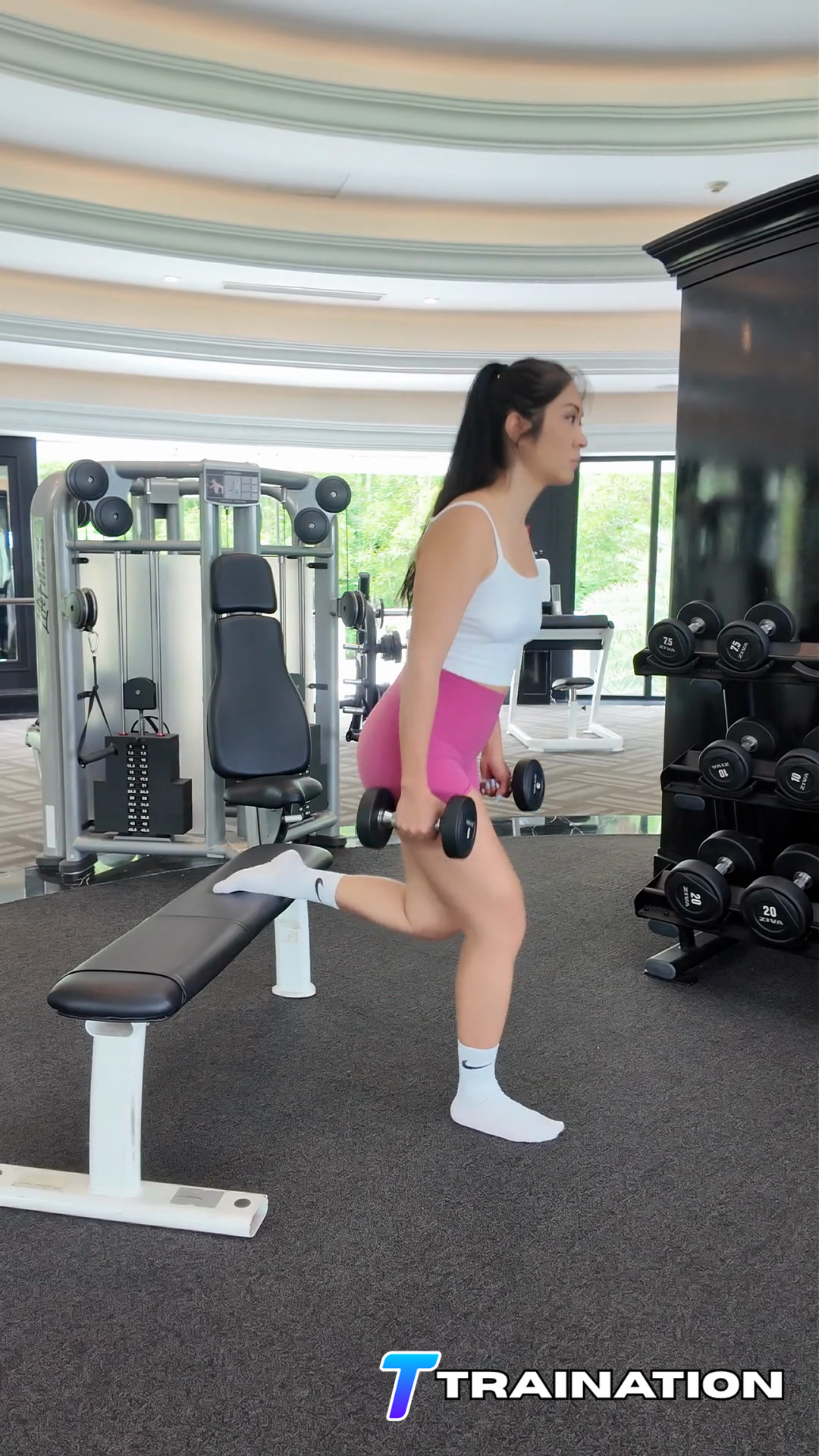
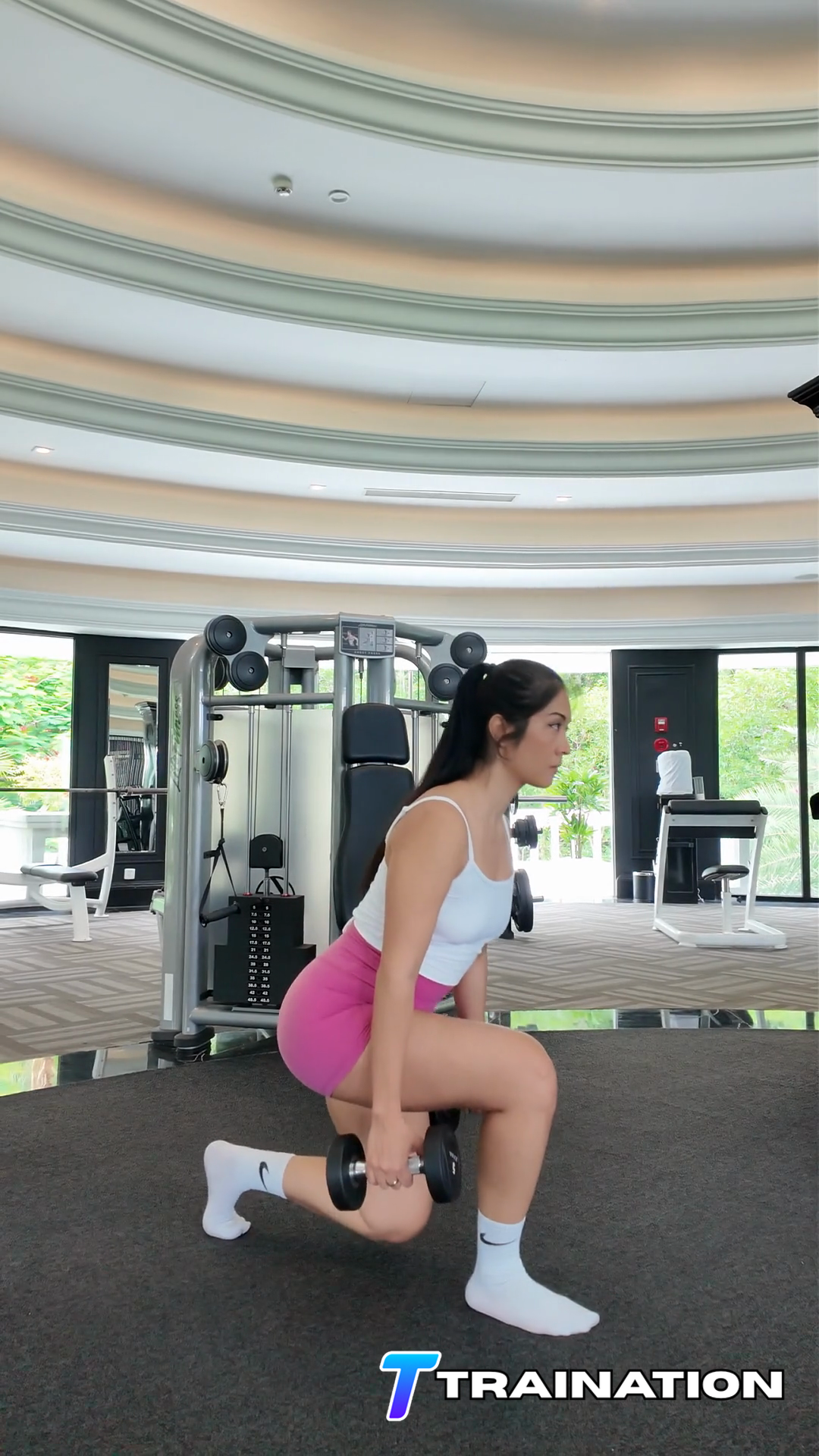
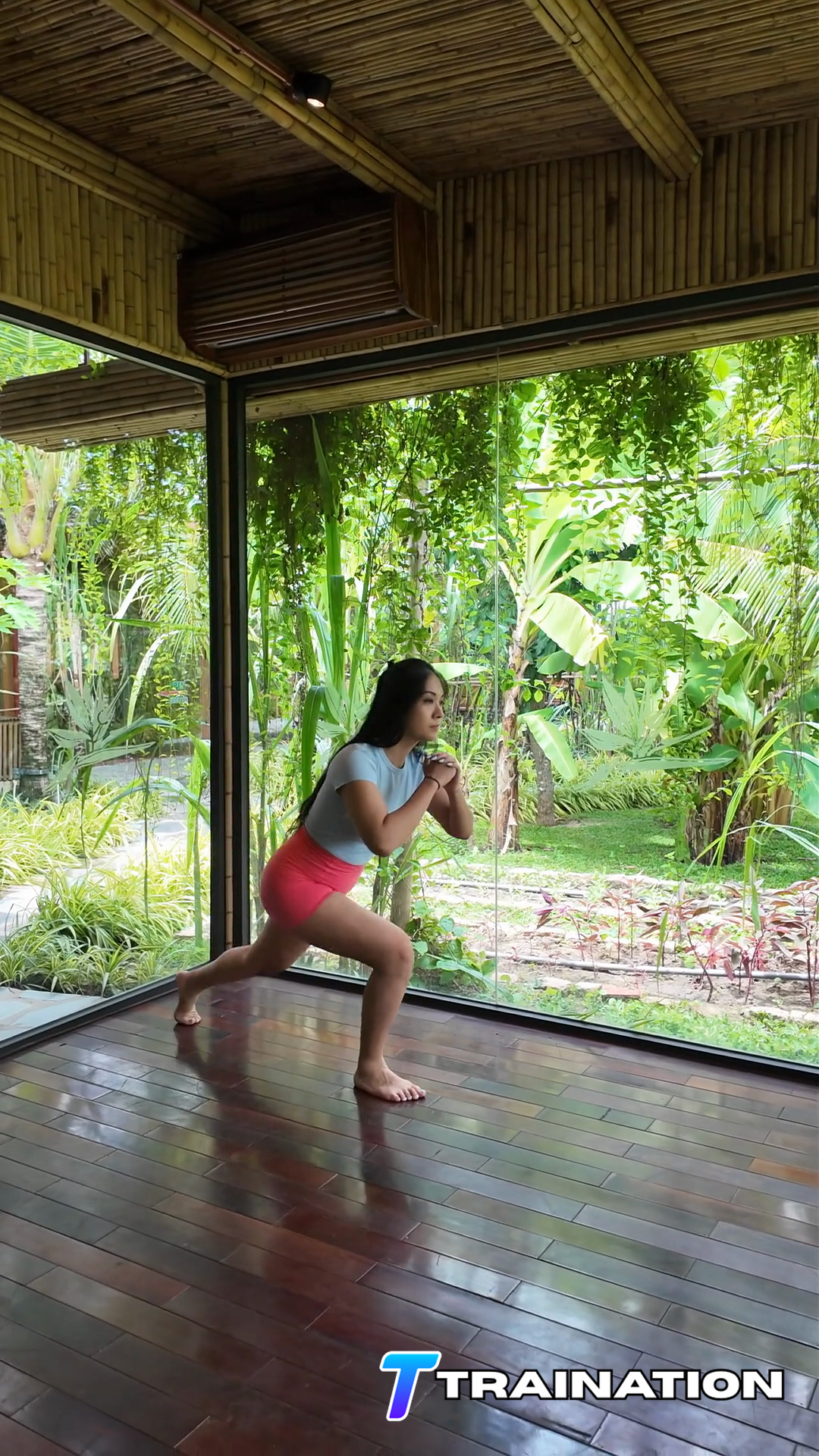
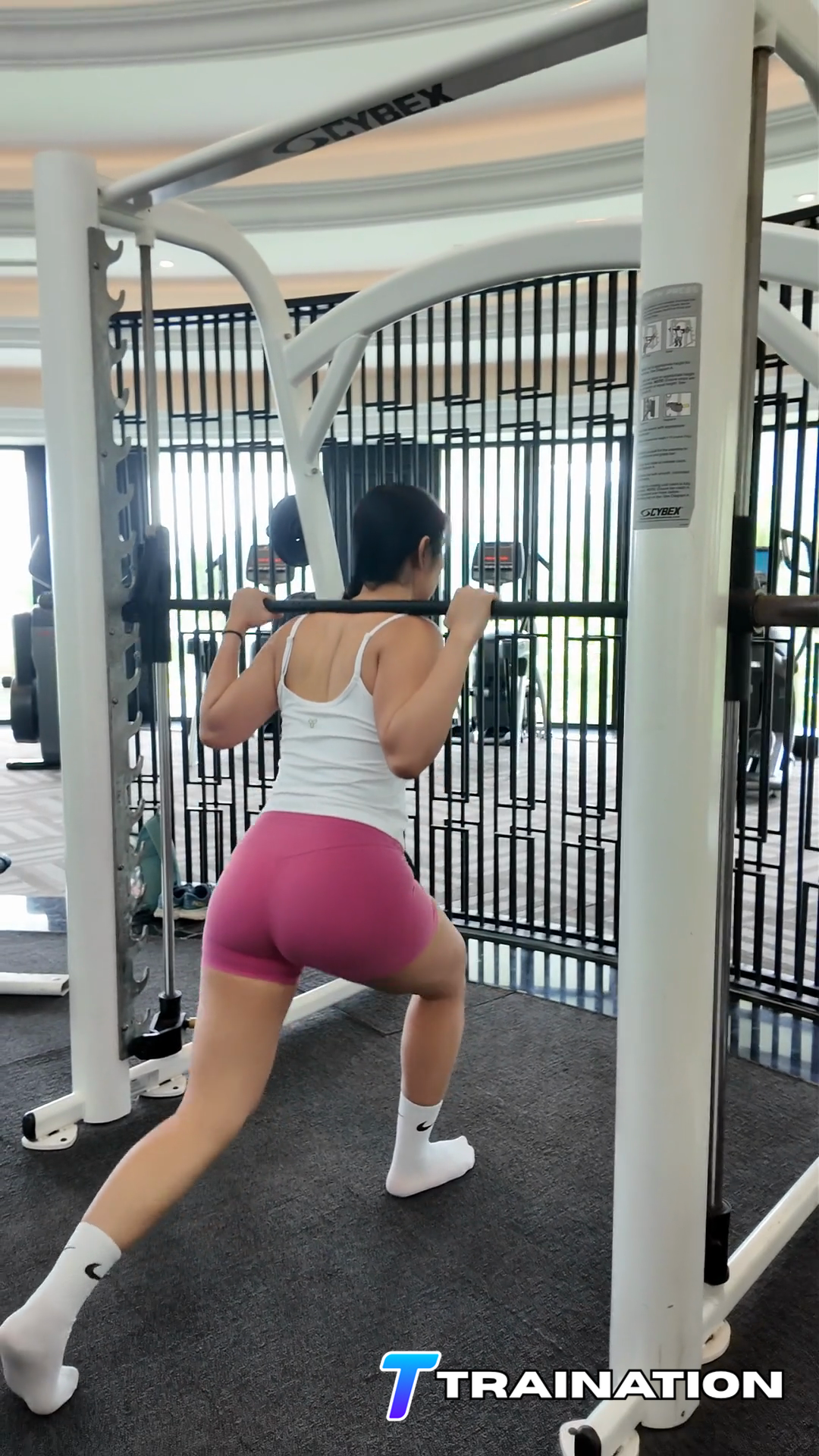
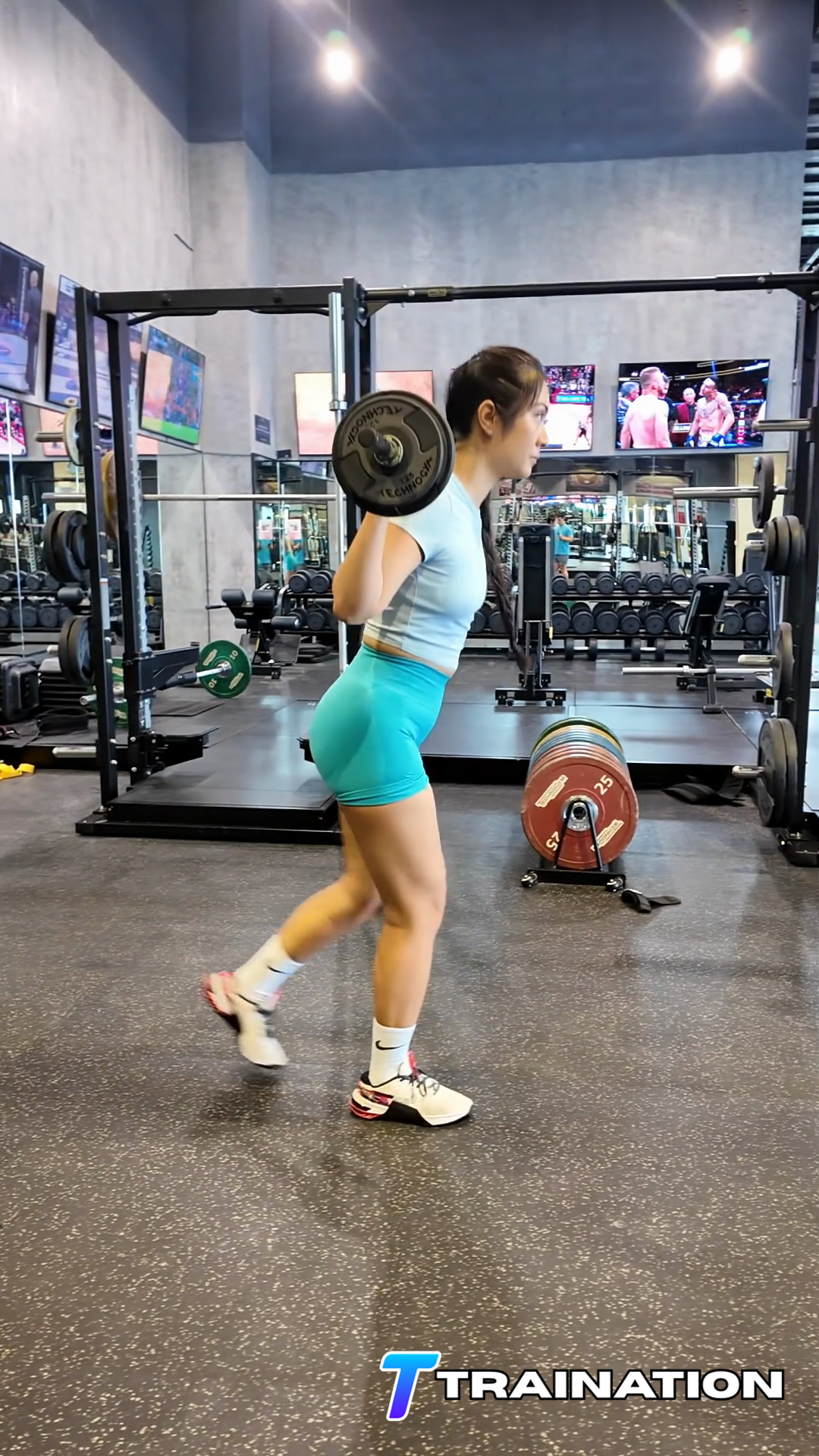
Brace the trunk, step one foot backward, and lower into a reverse lunge while the front knee tracks with the toes.
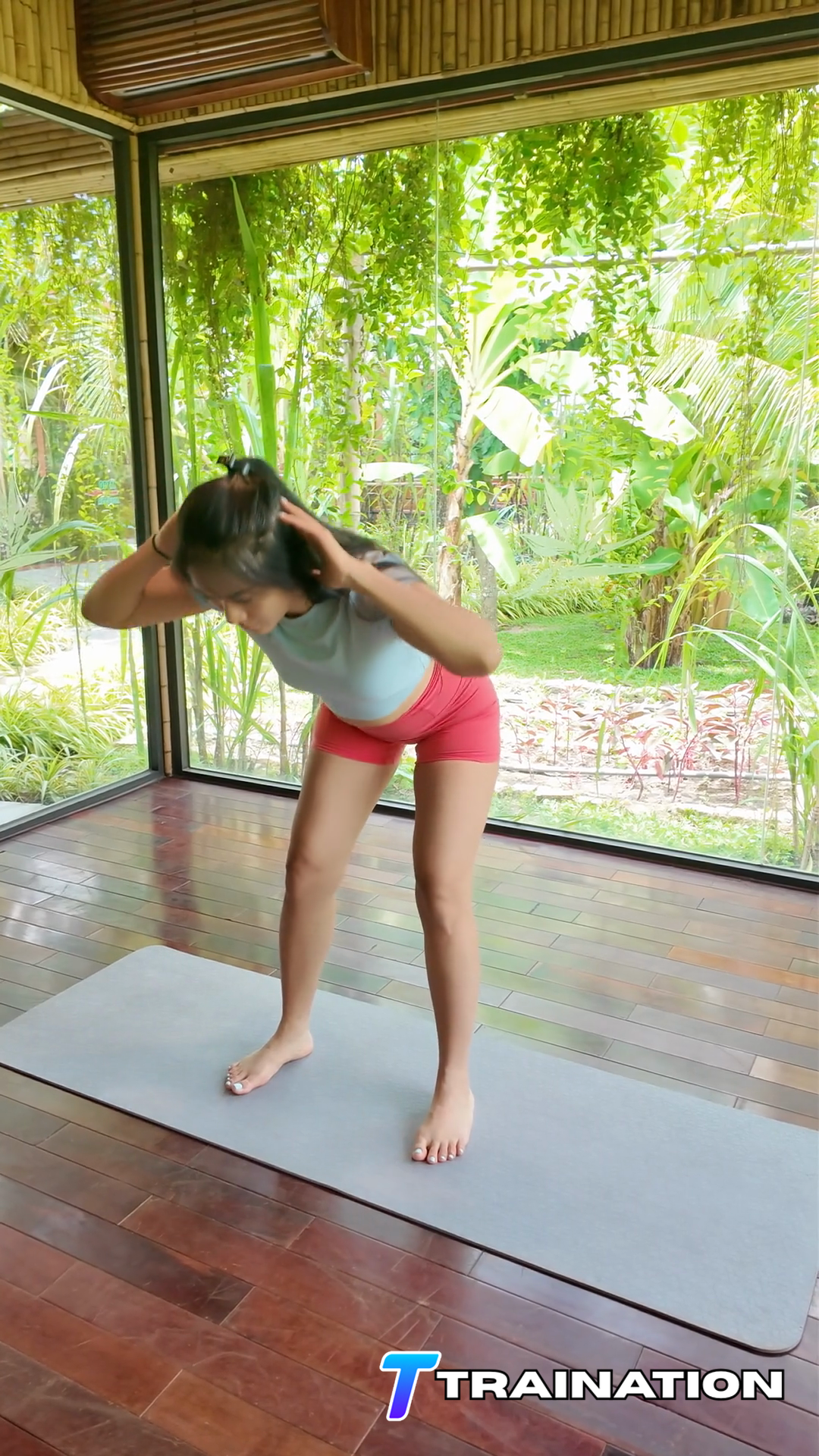
Keep the pelvis facing forward and rotate the rib cage toward the front thigh without twisting through either planted knee.
Rotate the trunk back to centre before pushing through the front foot to stand.
Reset in a tall stance and complete the planned repetitions evenly on both sides.
Keep the pelvis forward and rotate the rib cage rather than forcing the knee to turn.
Settle into the lunge before adding the upper-body turn.
Keep the heel and both sides of the forefoot planted throughout the twist.
Turn and return smoothly instead of throwing the arms across the body.
Place Reverse Lunge With A Twist in the middle of a full-body session or a technique circuit after each component has been learned separately.
Use once or twice per week when the combination directly supports the program; otherwise train the component movements separately.
| Goal | Sets | Reps or time | Rest | Effort and execution |
|---|---|---|---|---|
| Technique | 2–4 | 4–6 per side | 90–150 sec | Use the load the weakest component controls |
| Full-body accessory | 2–4 | 6–10 per side | 90–180 sec | Keep 2–3 clean reps in reserve |
Scale the movement
Hold a stable support or use an easier setup while learning the movement.
Use a shorter pain-free range and expand it only as control improves.
Slow the lowering phase without changing the start, finish, or joint alignment.
Add a brief pause at the hardest controlled position before increasing load.
Turn Reverse Lunge With A Twist and the rest of your exercise library into repeatable client programs.
Explore the workout builder