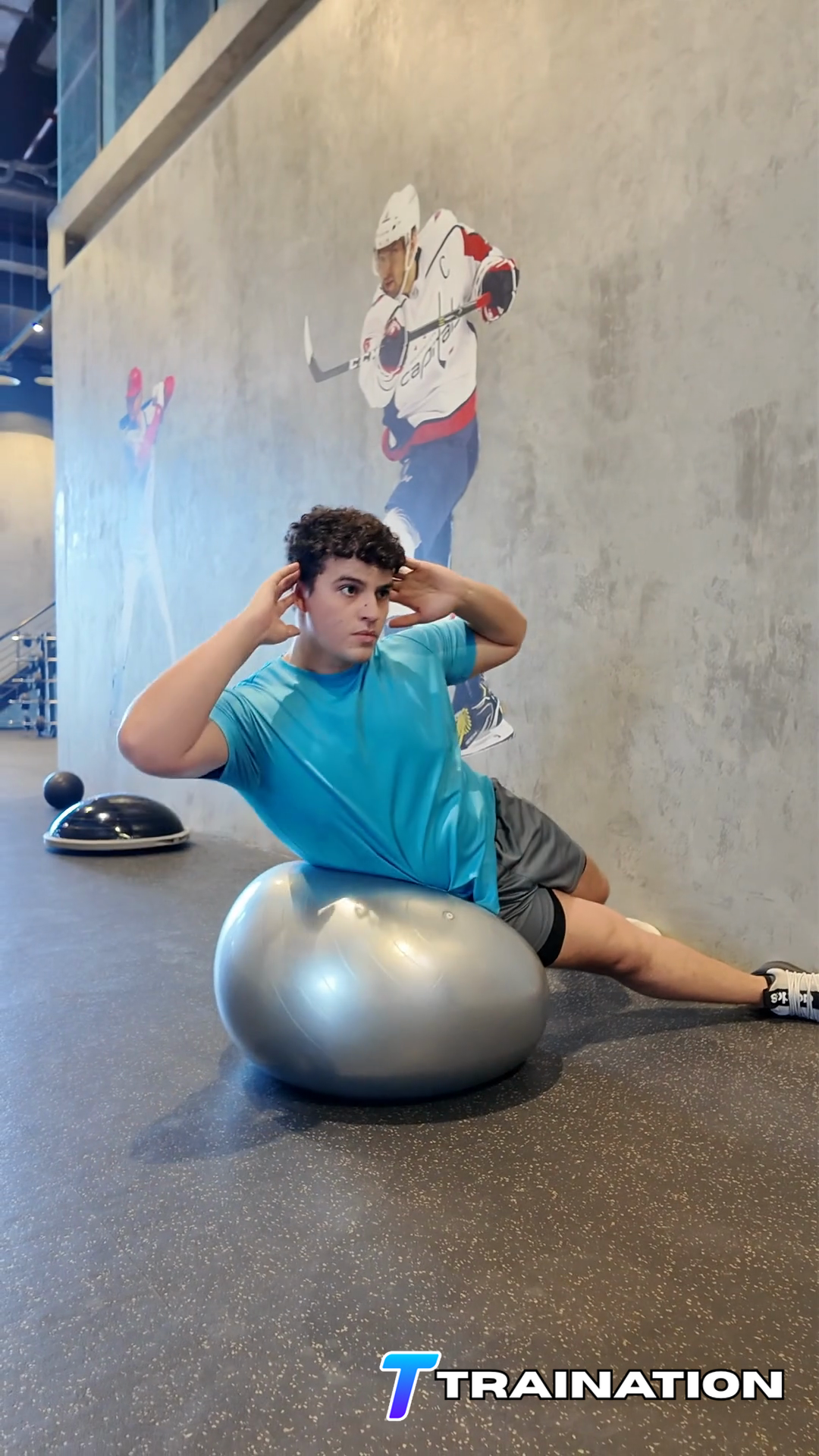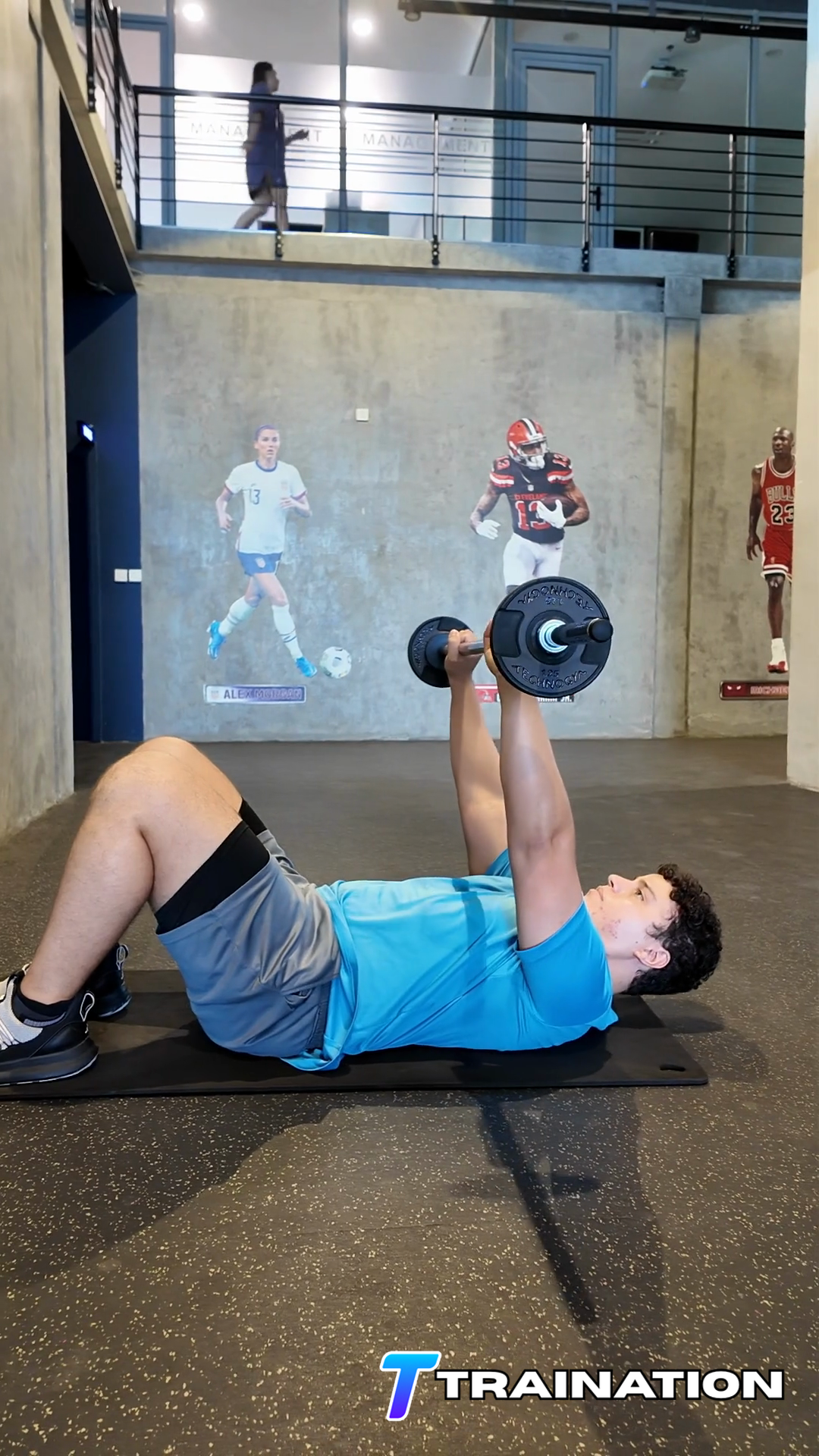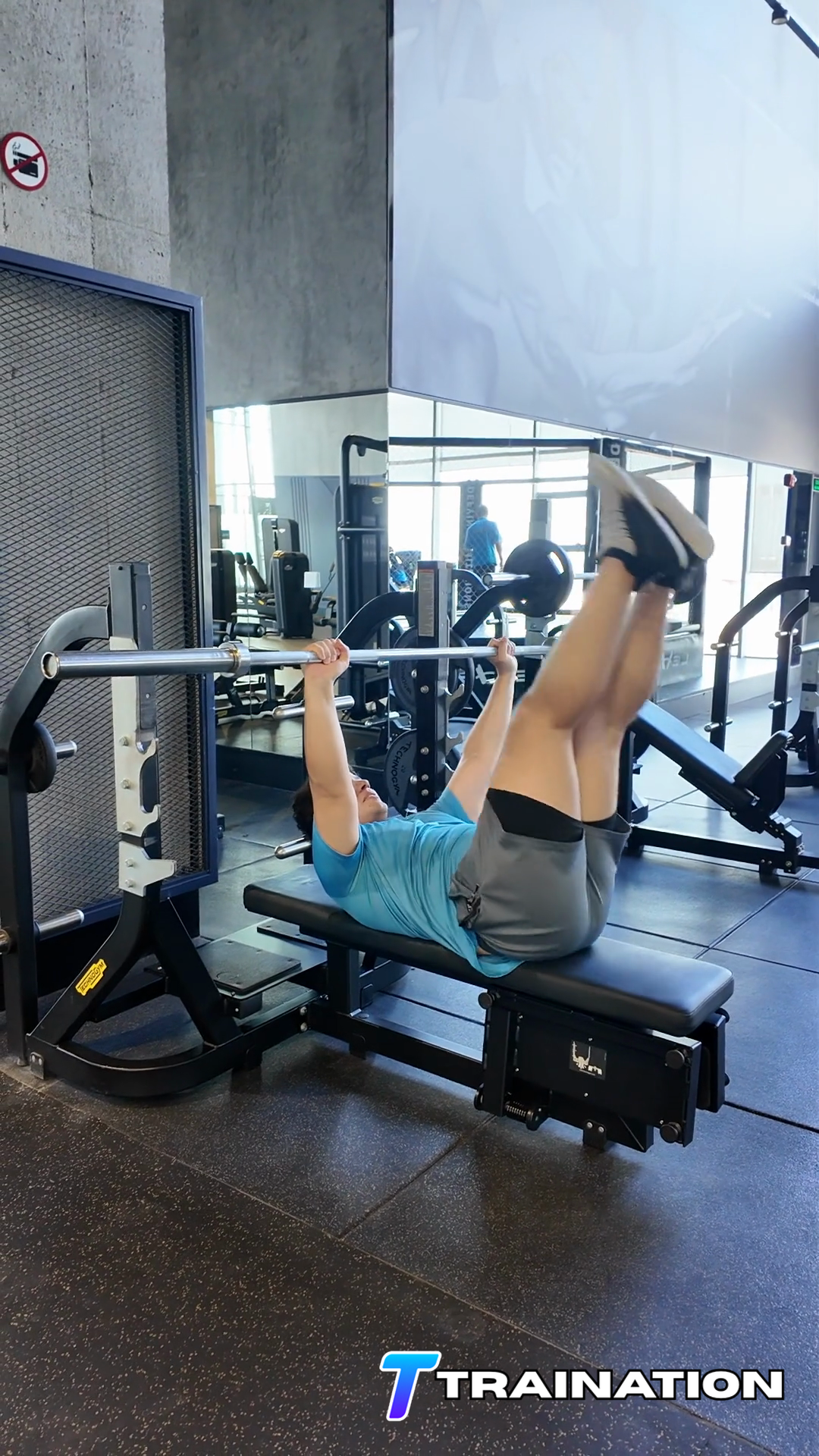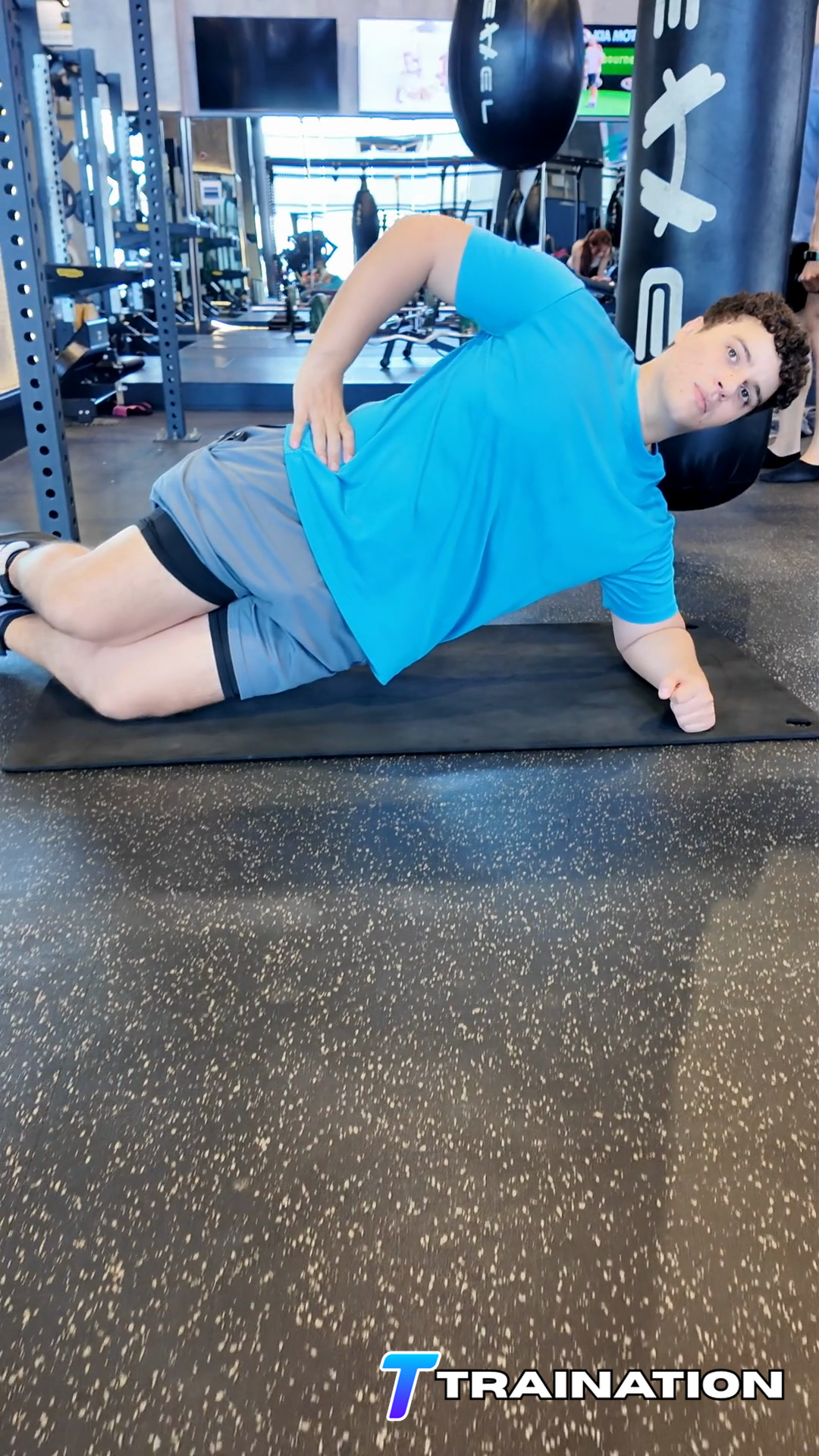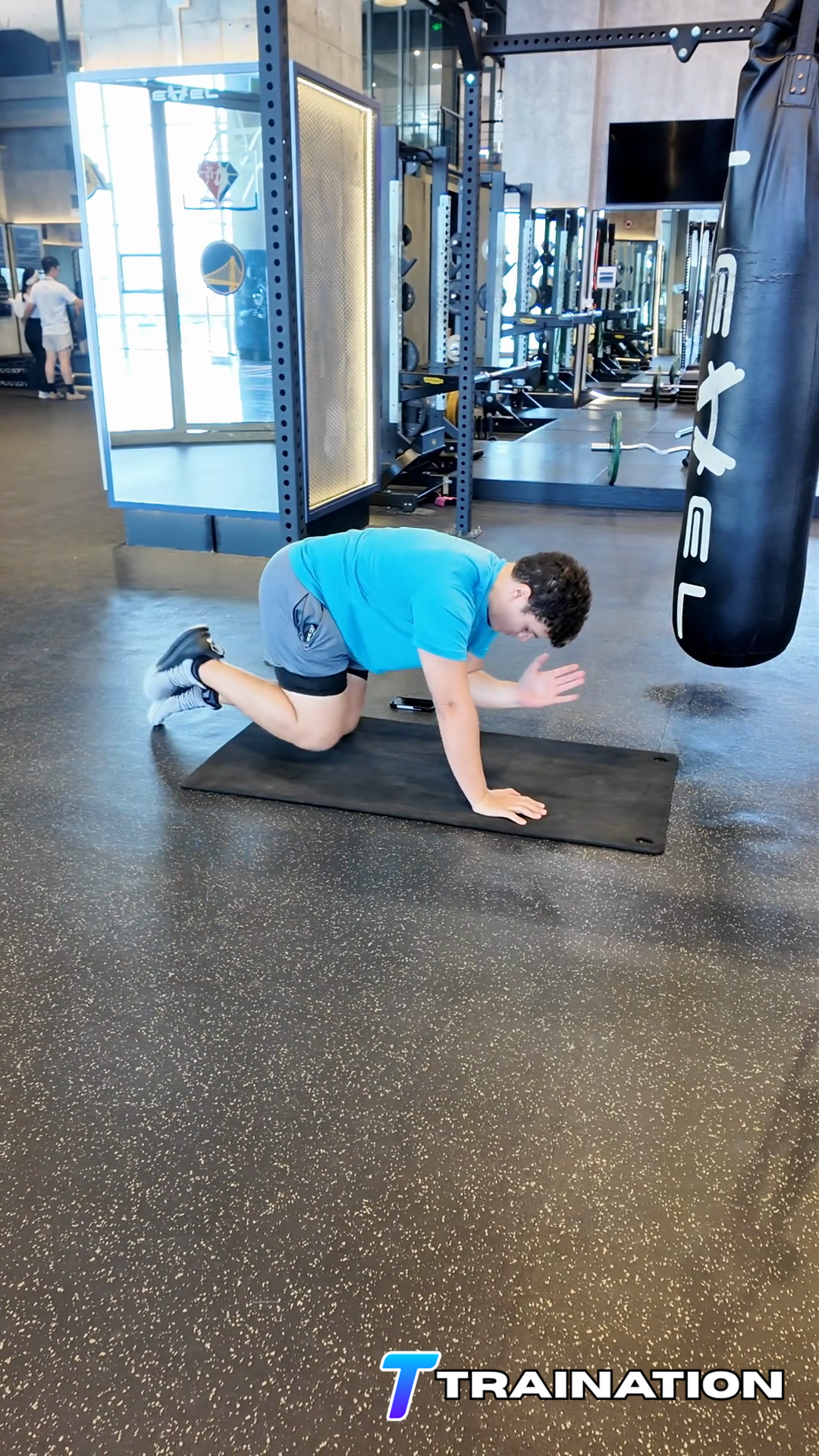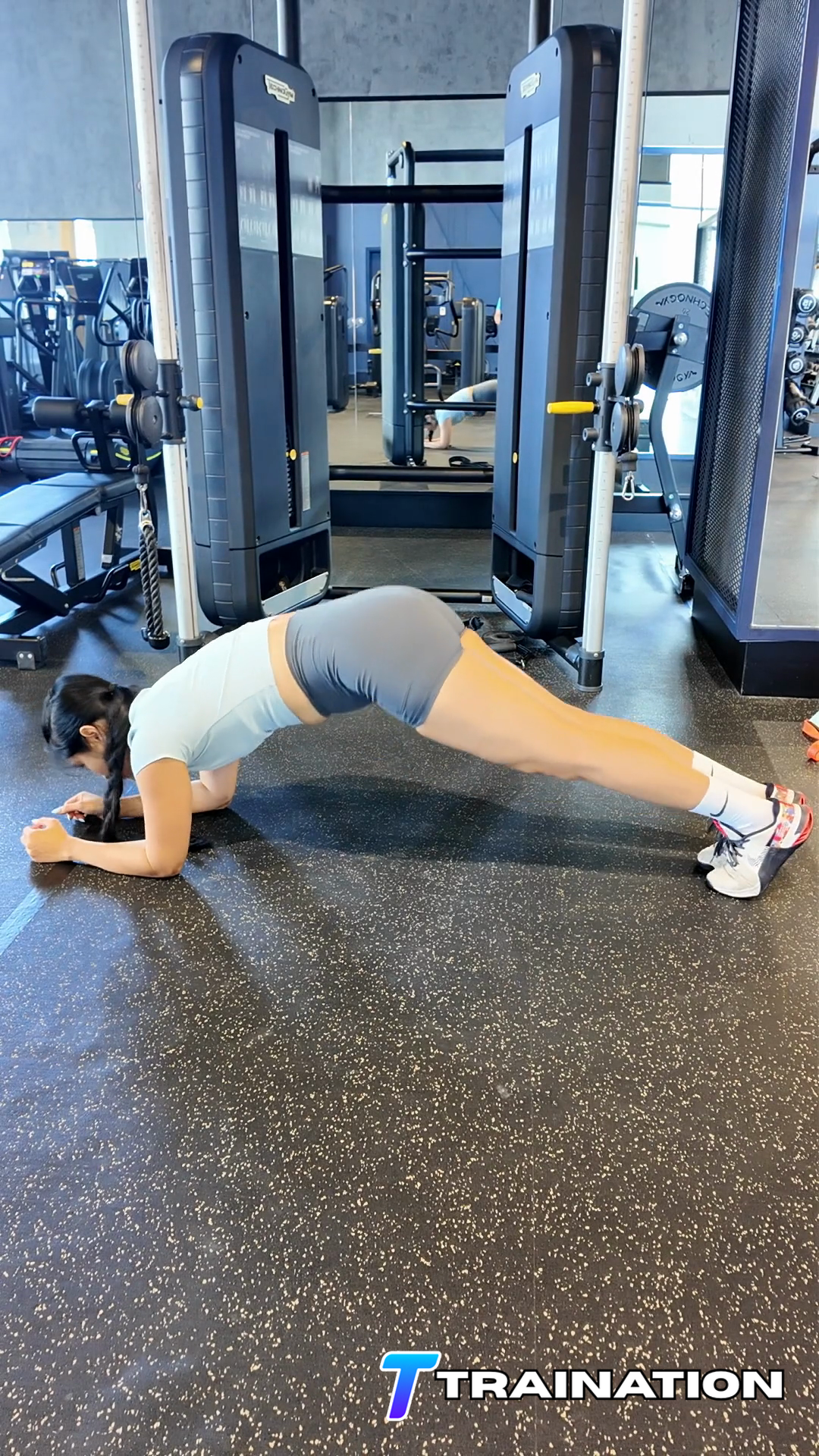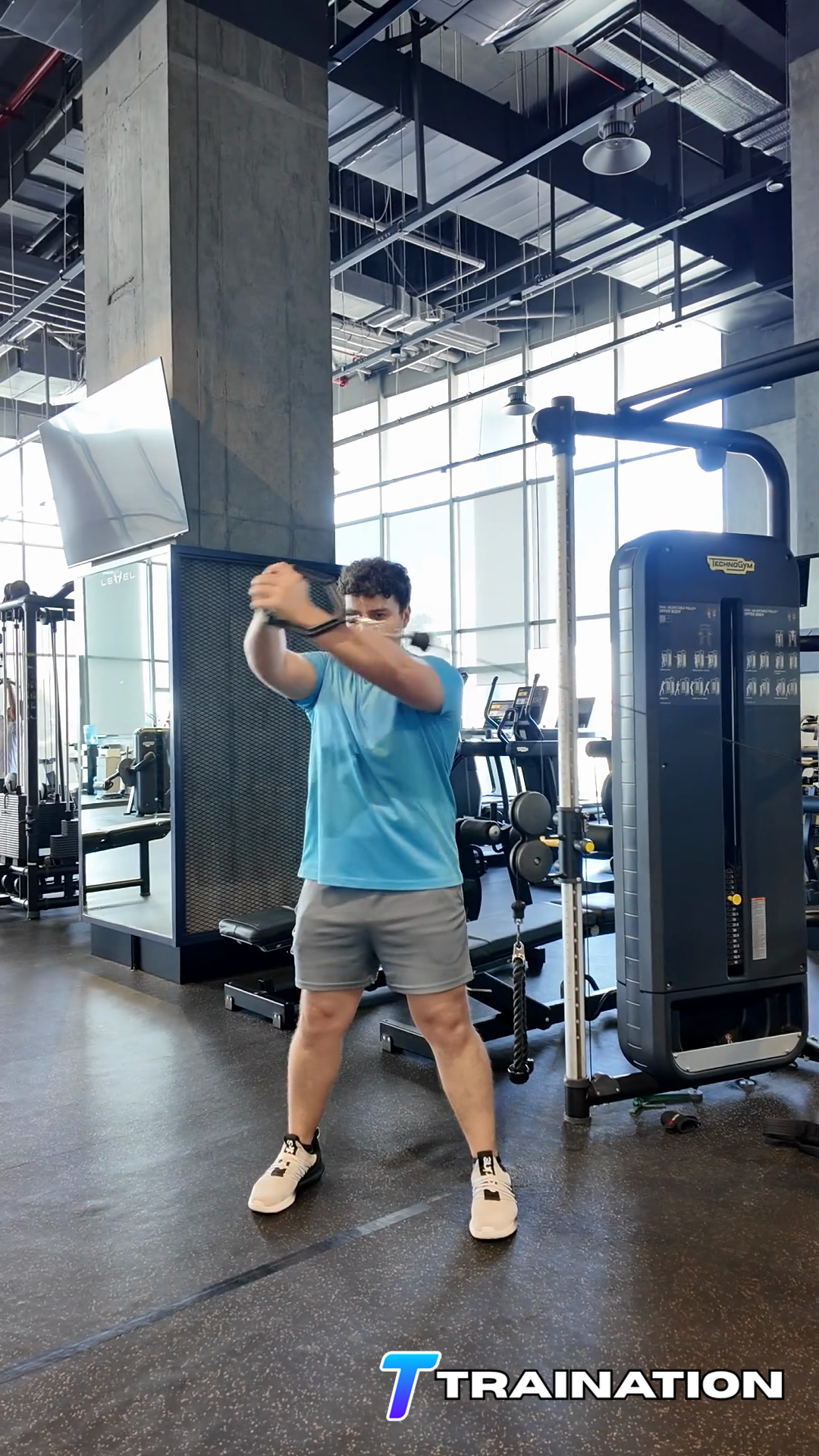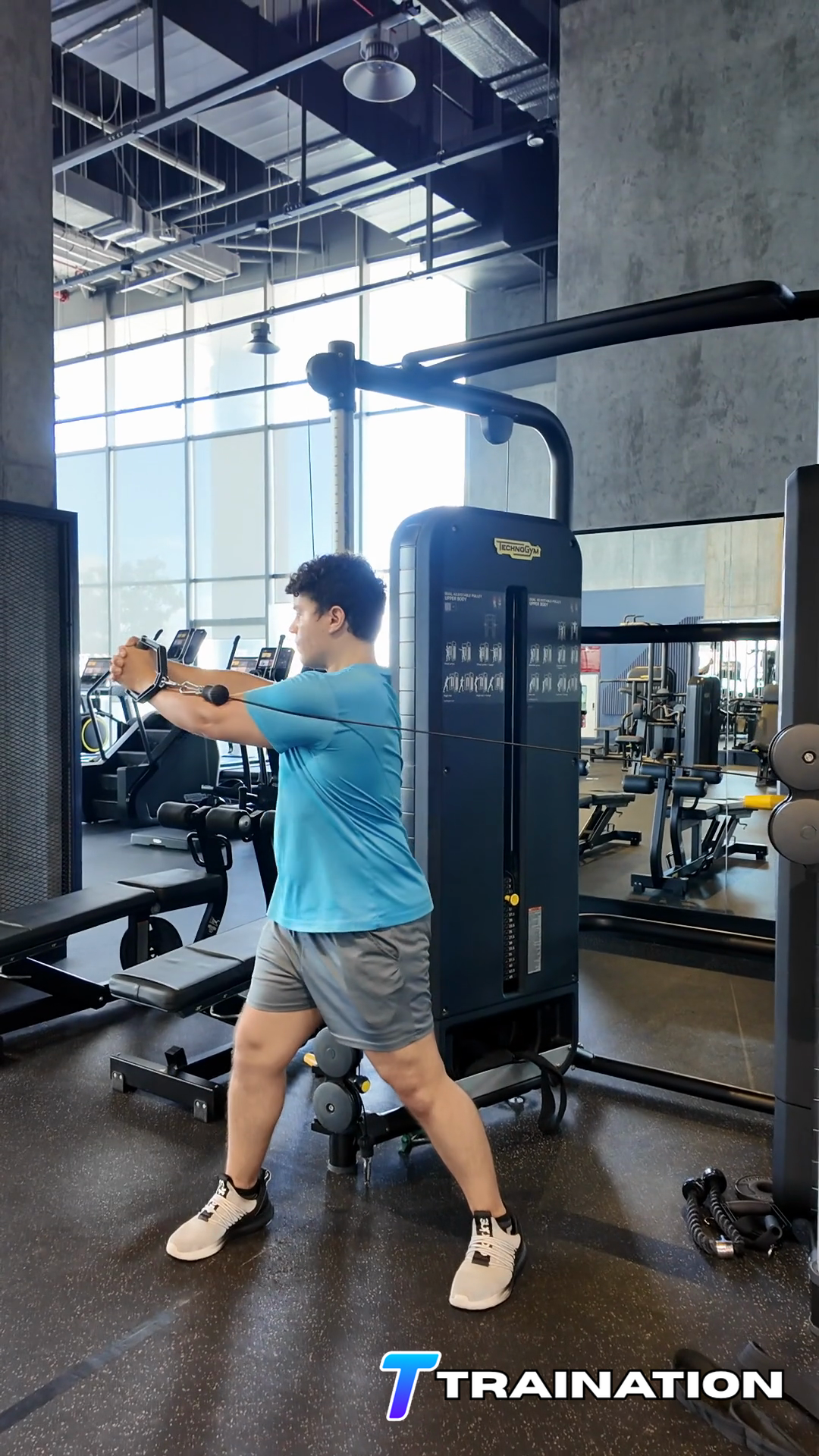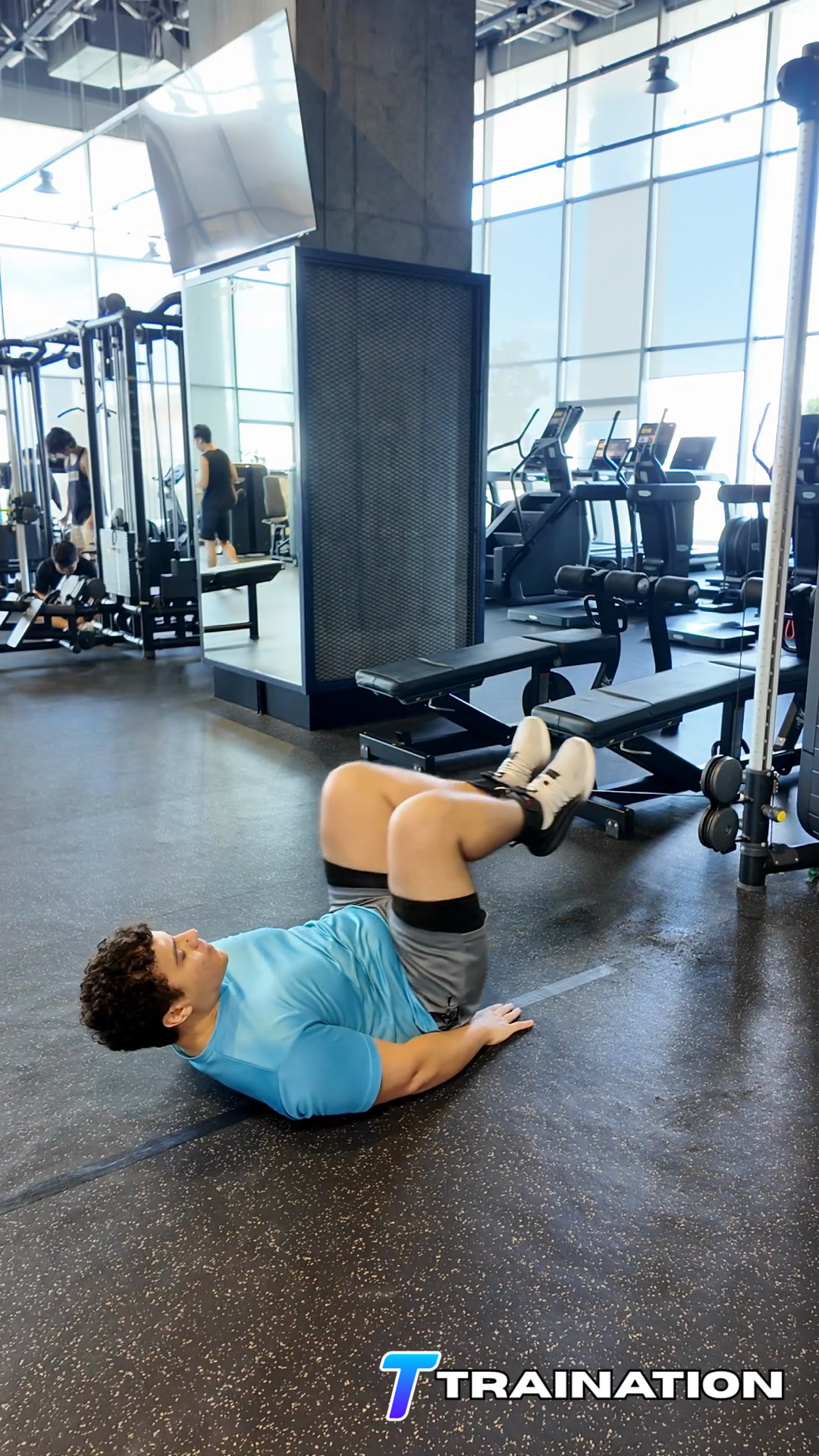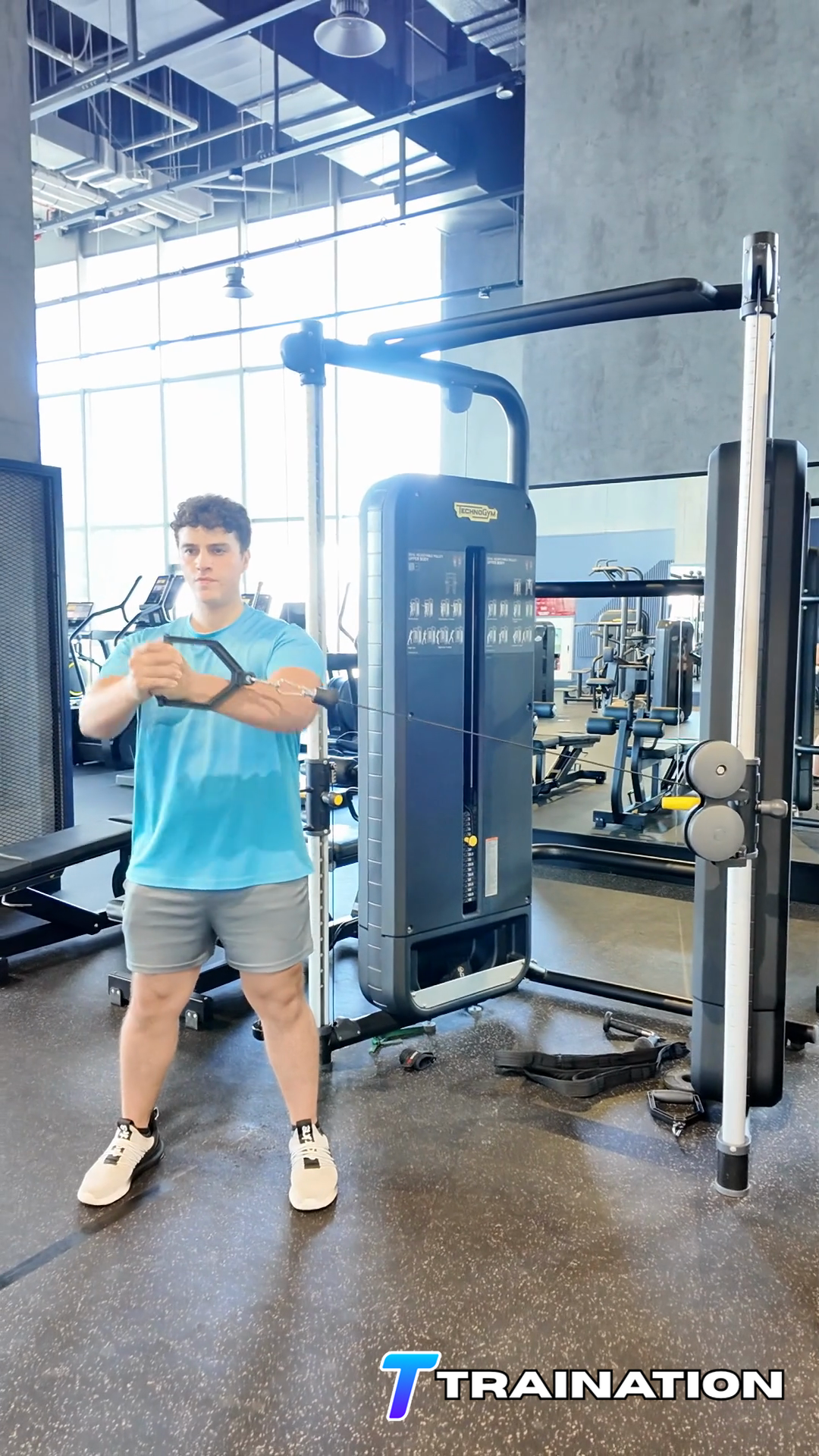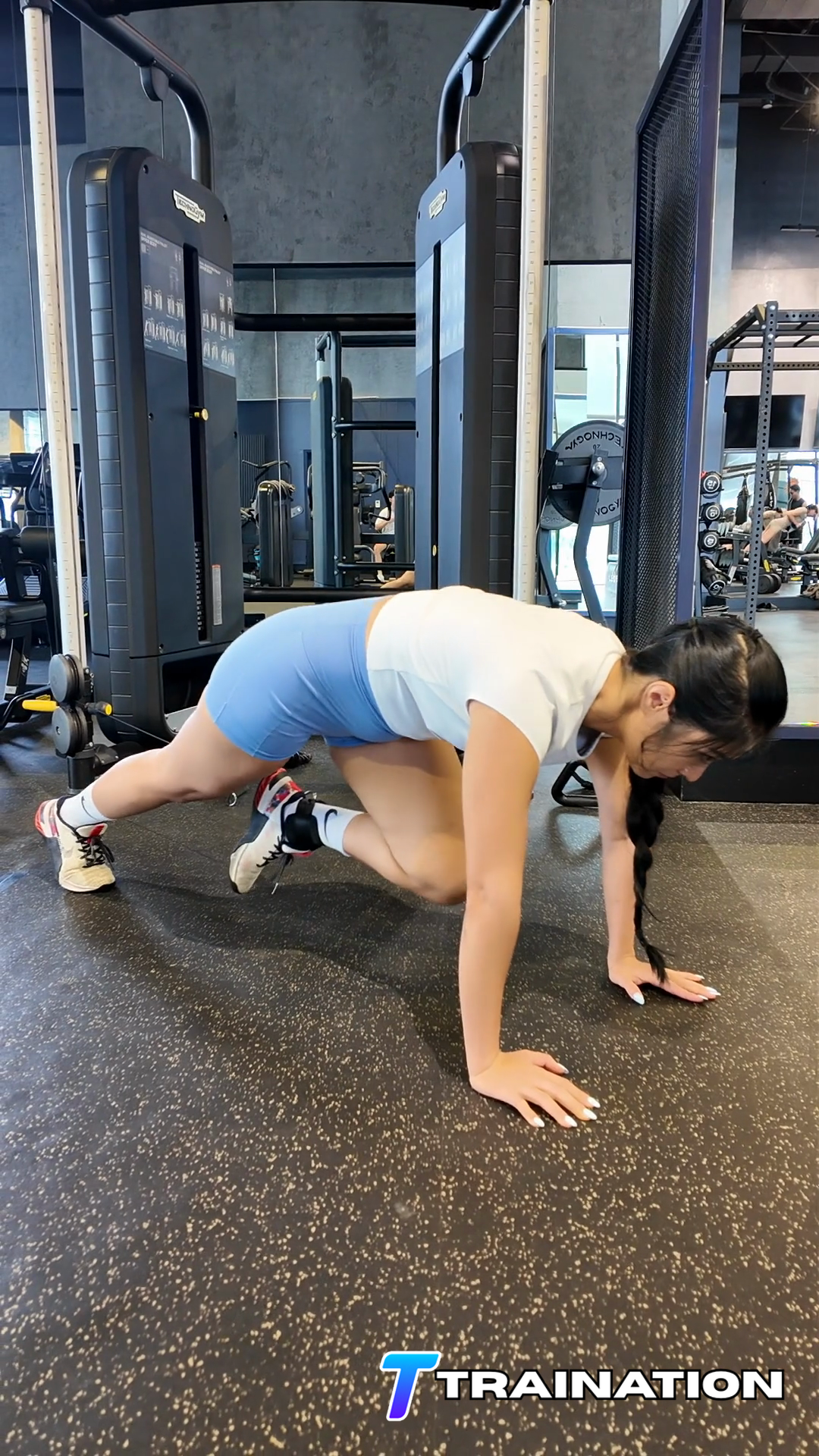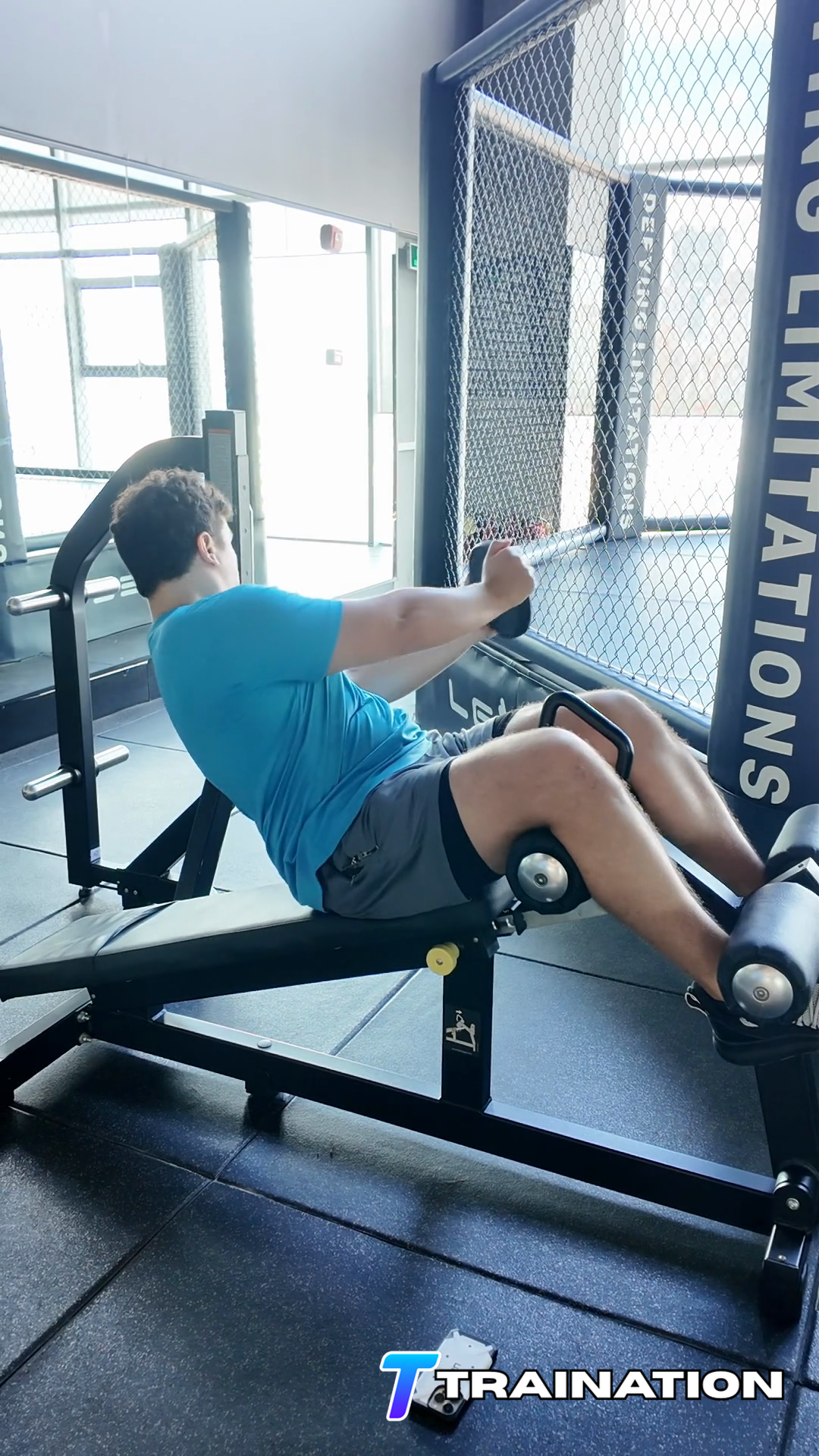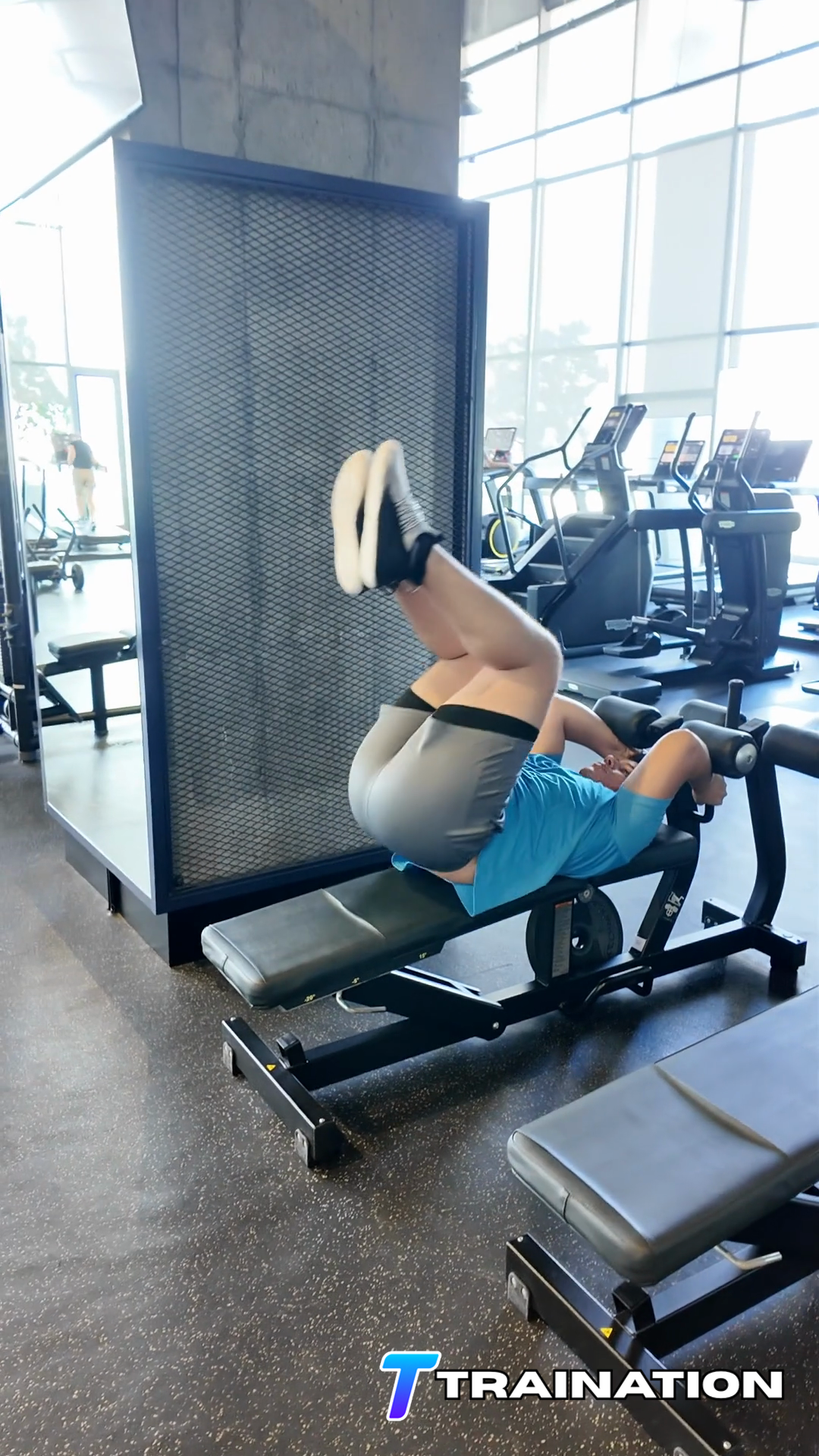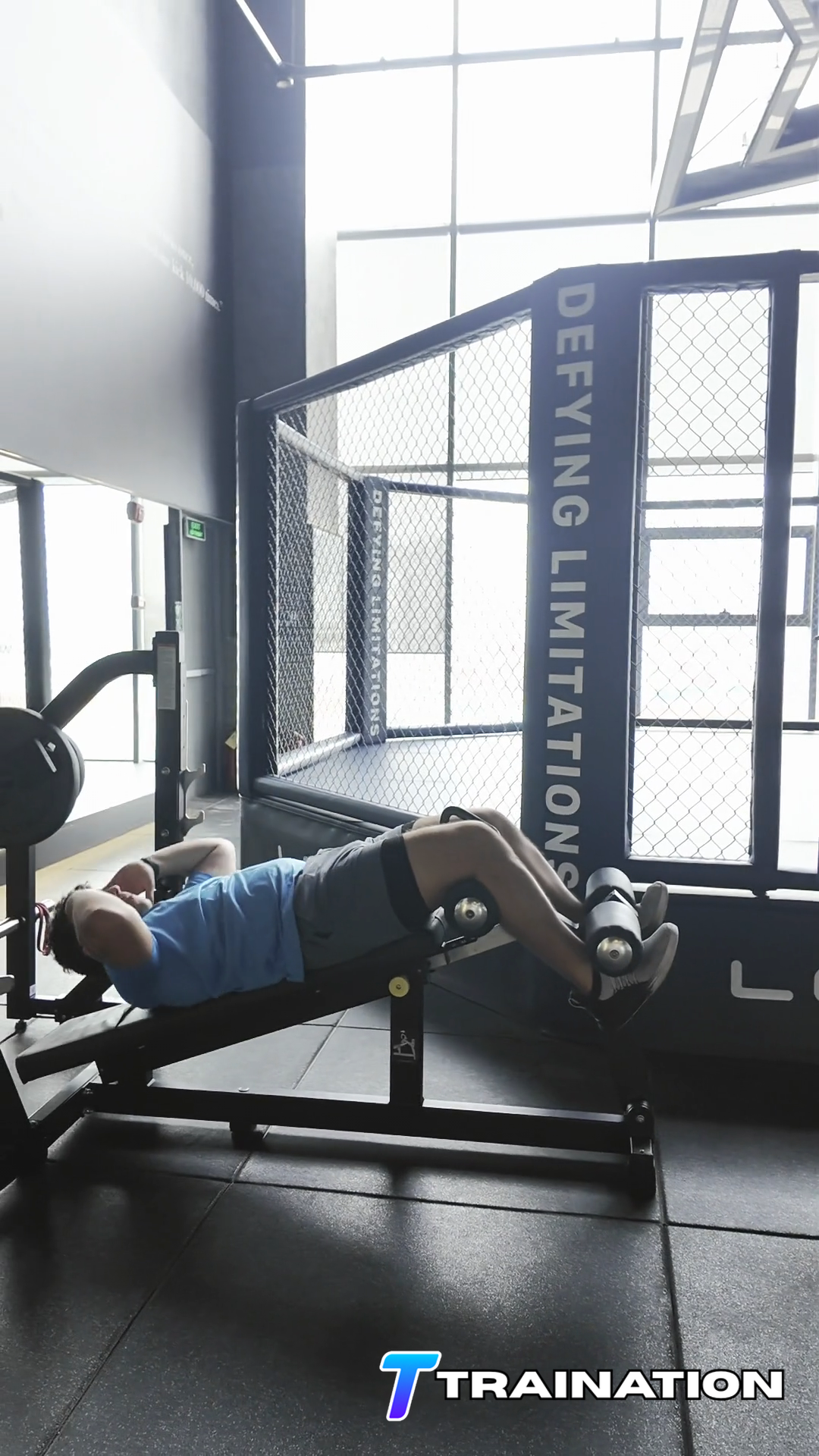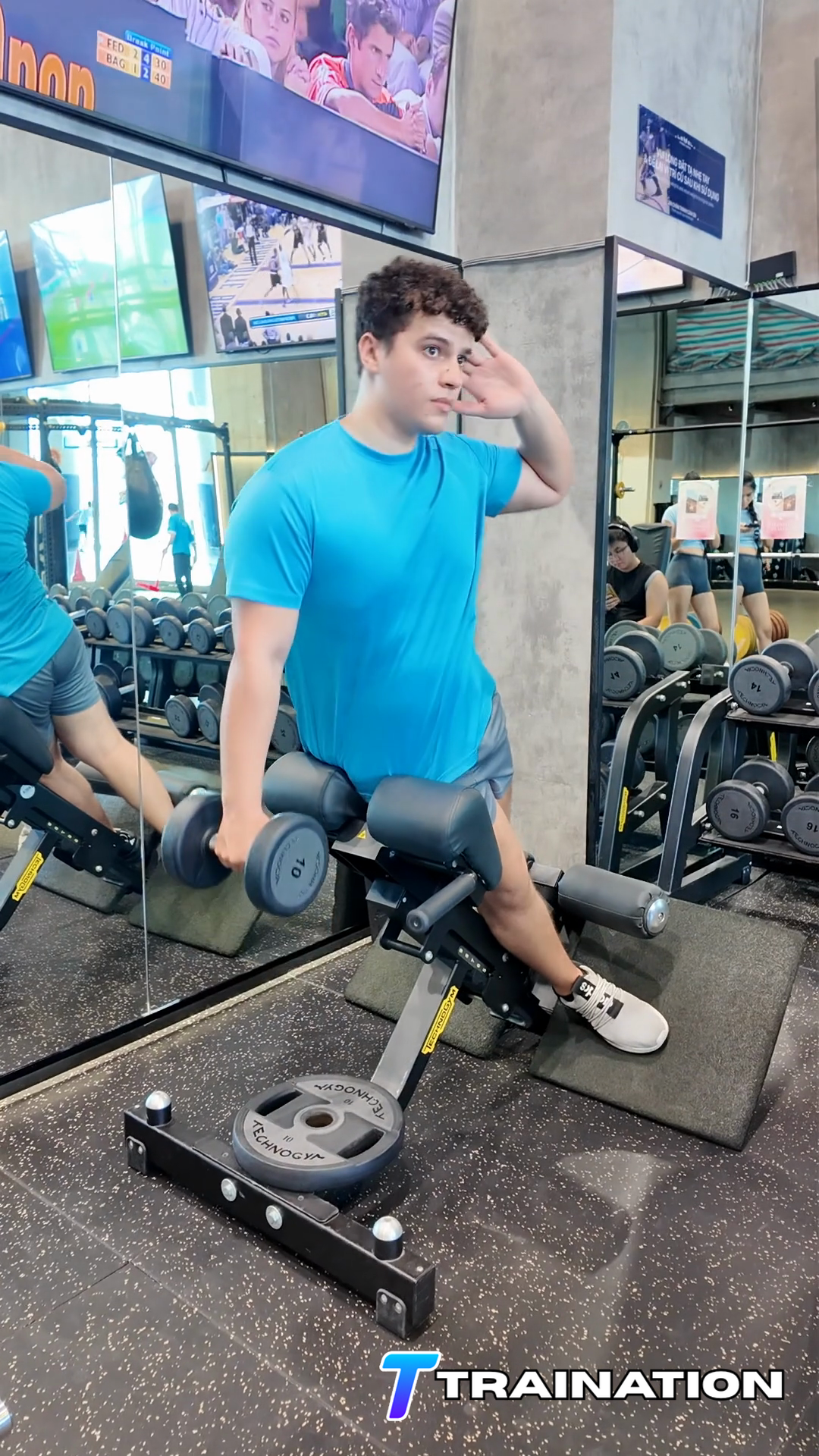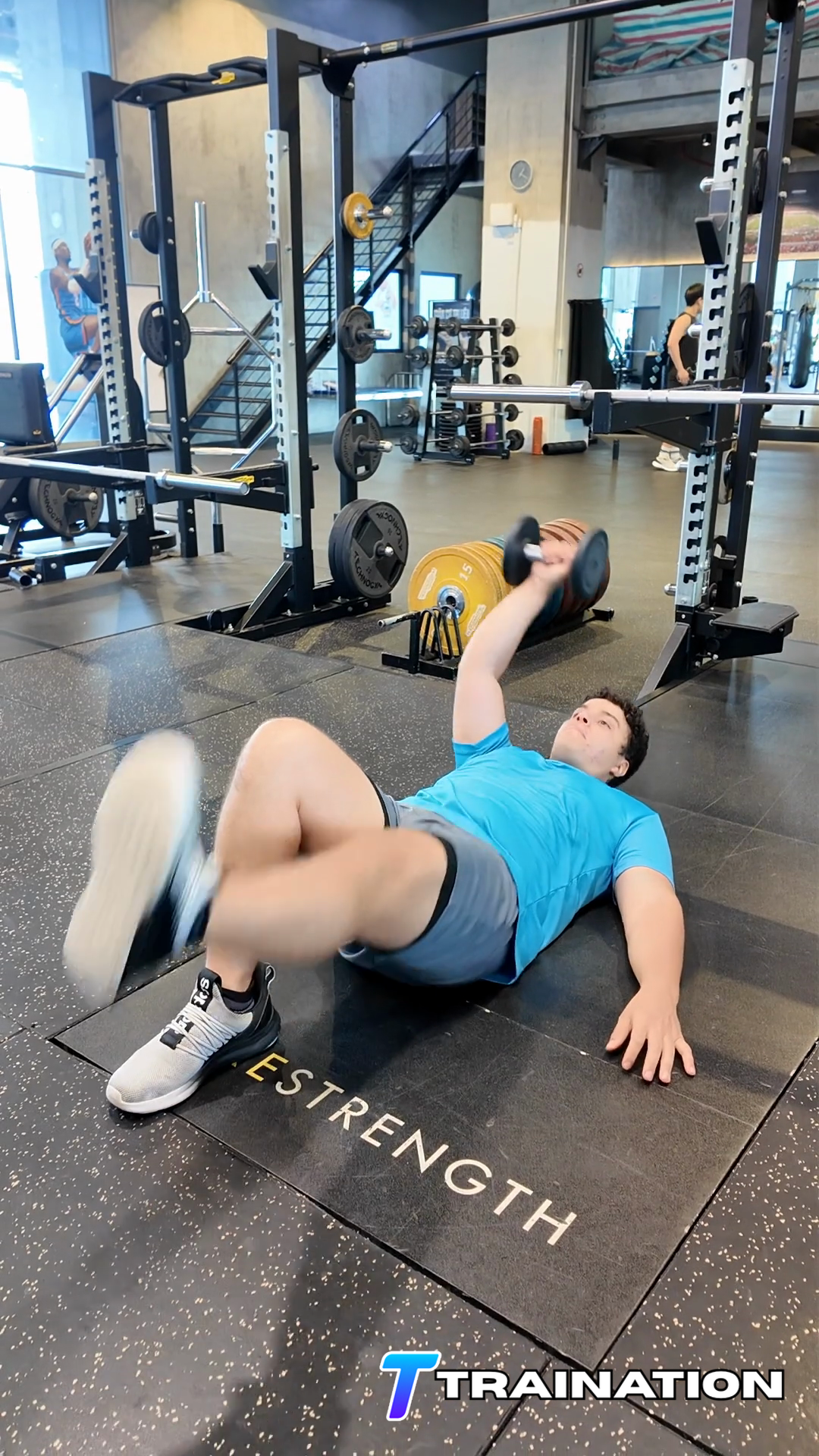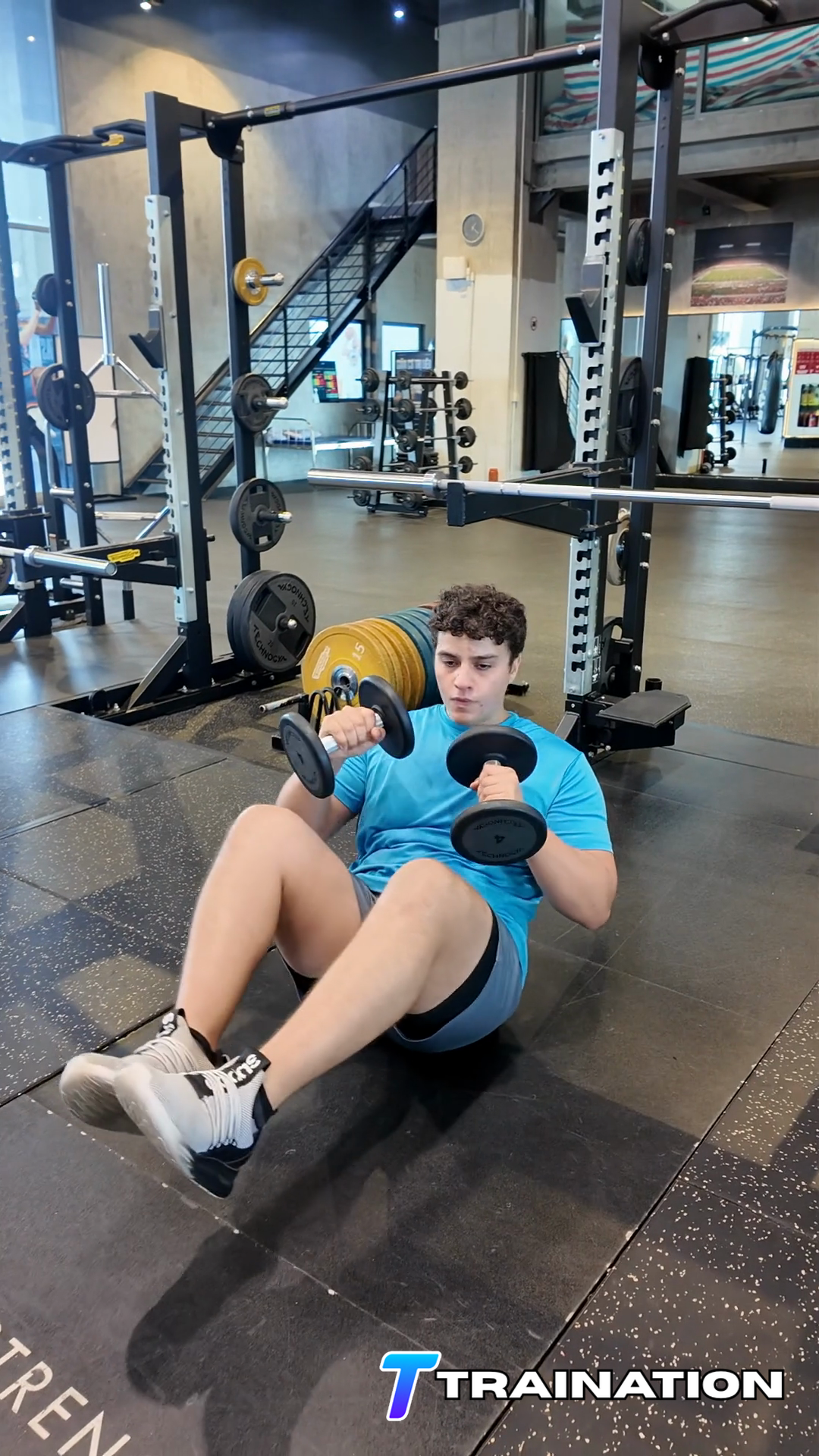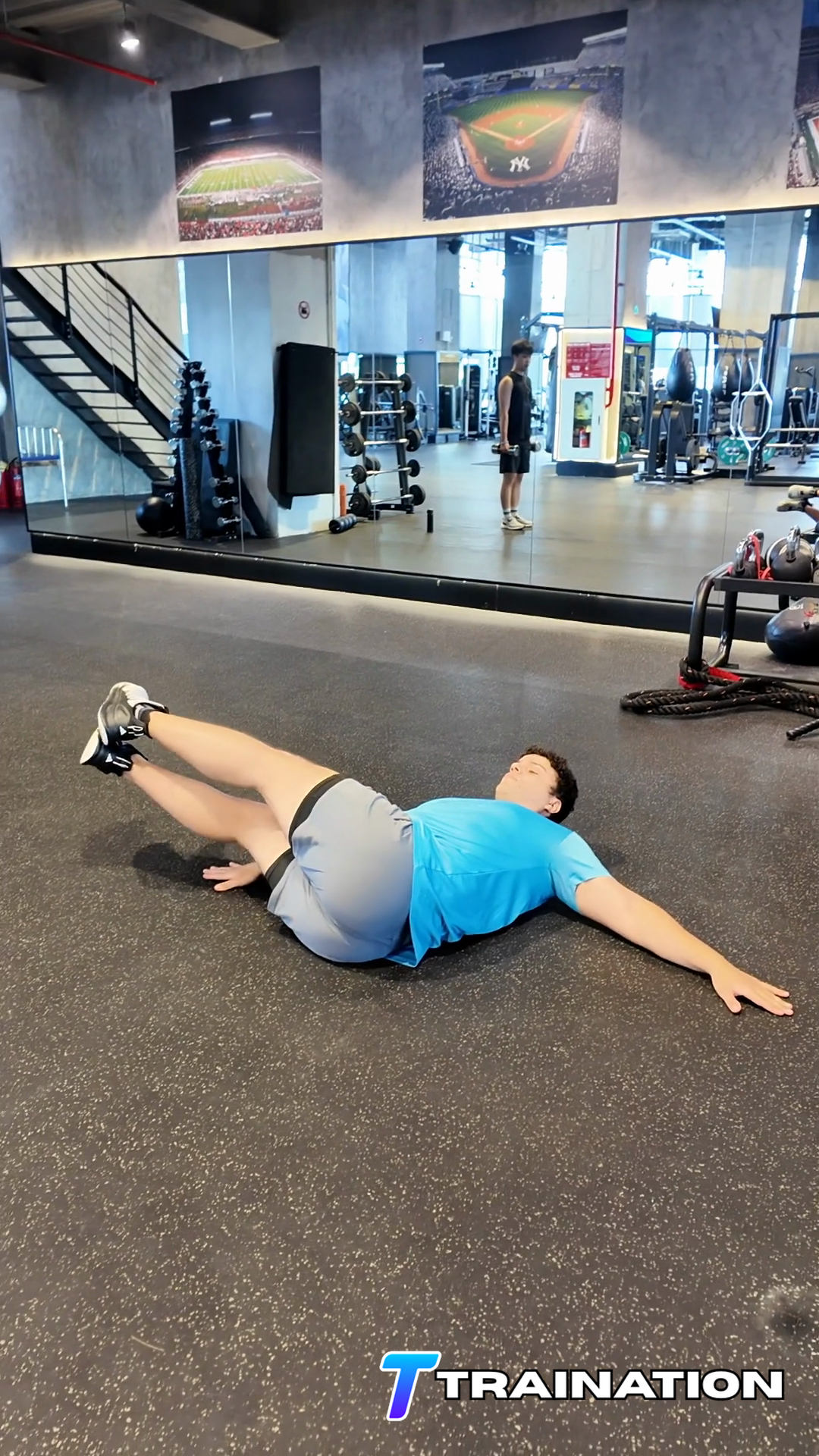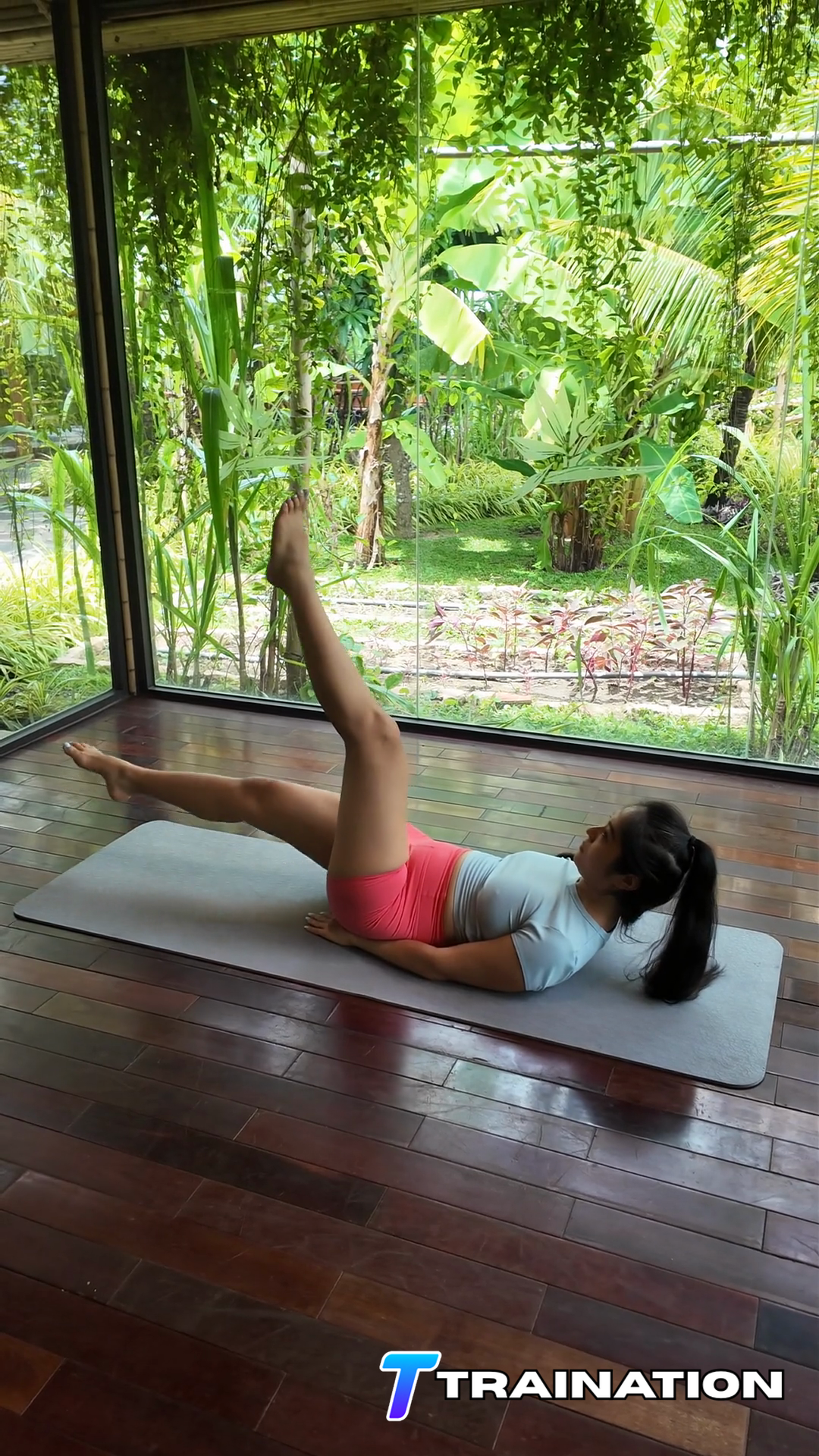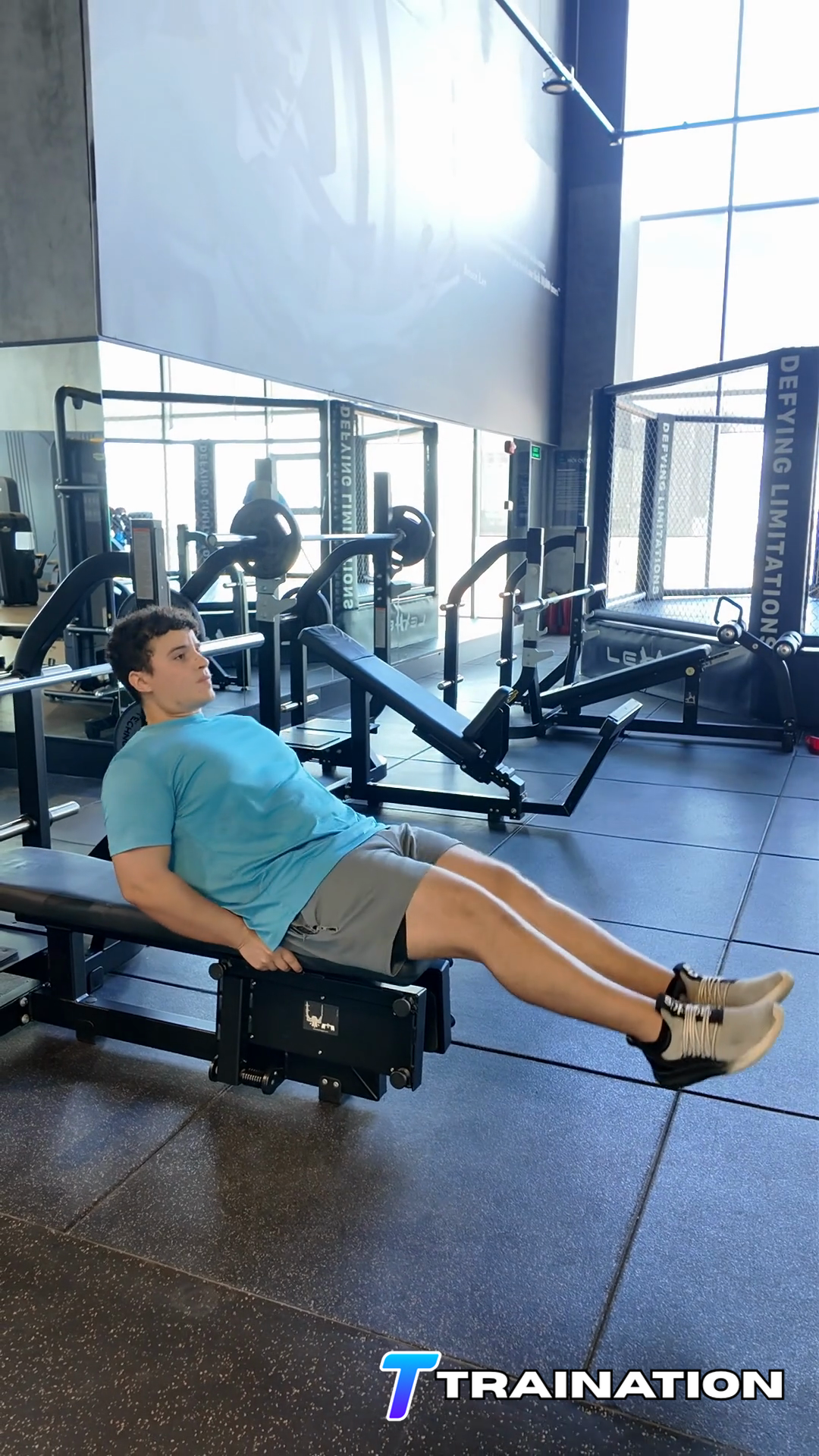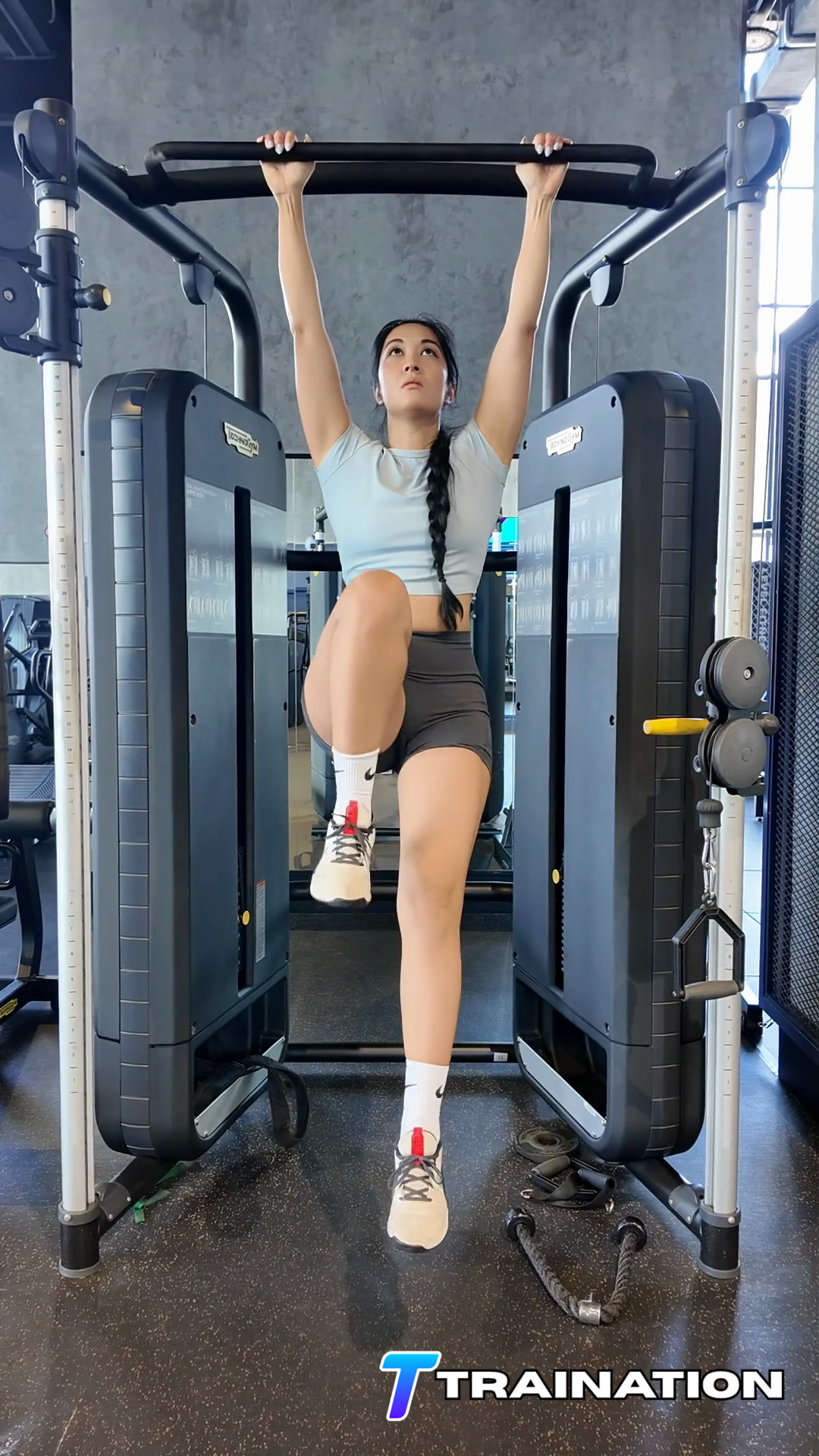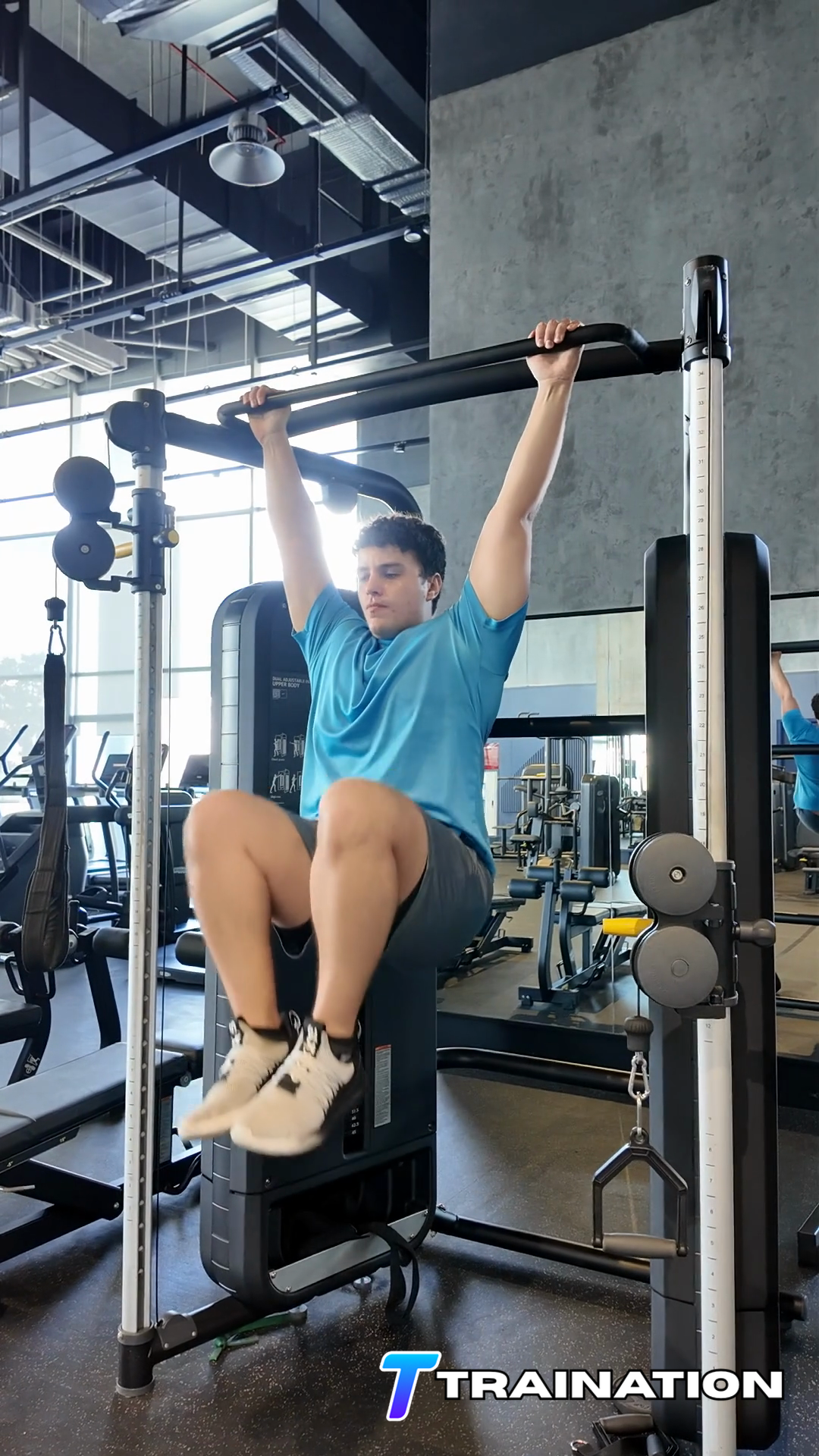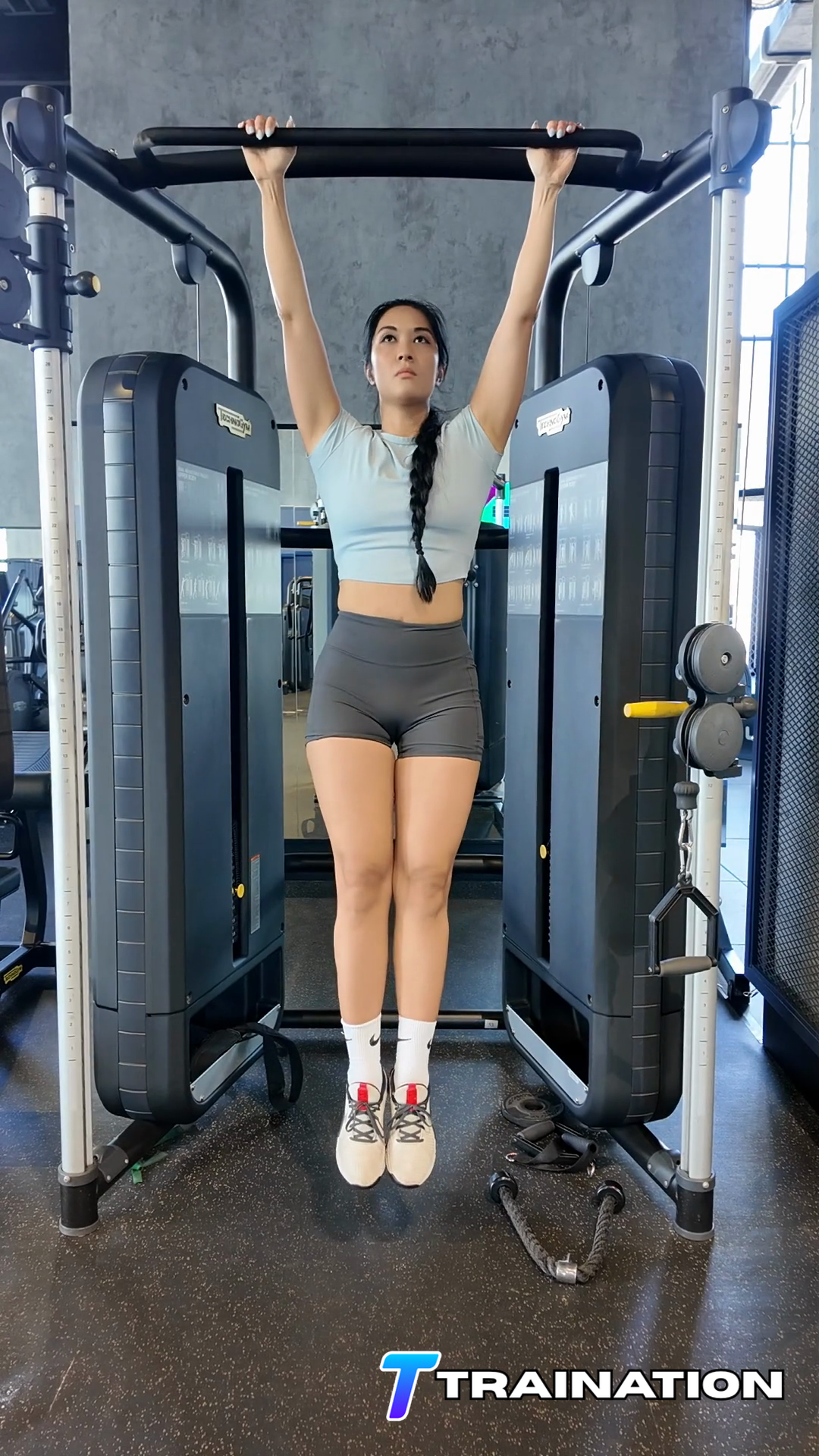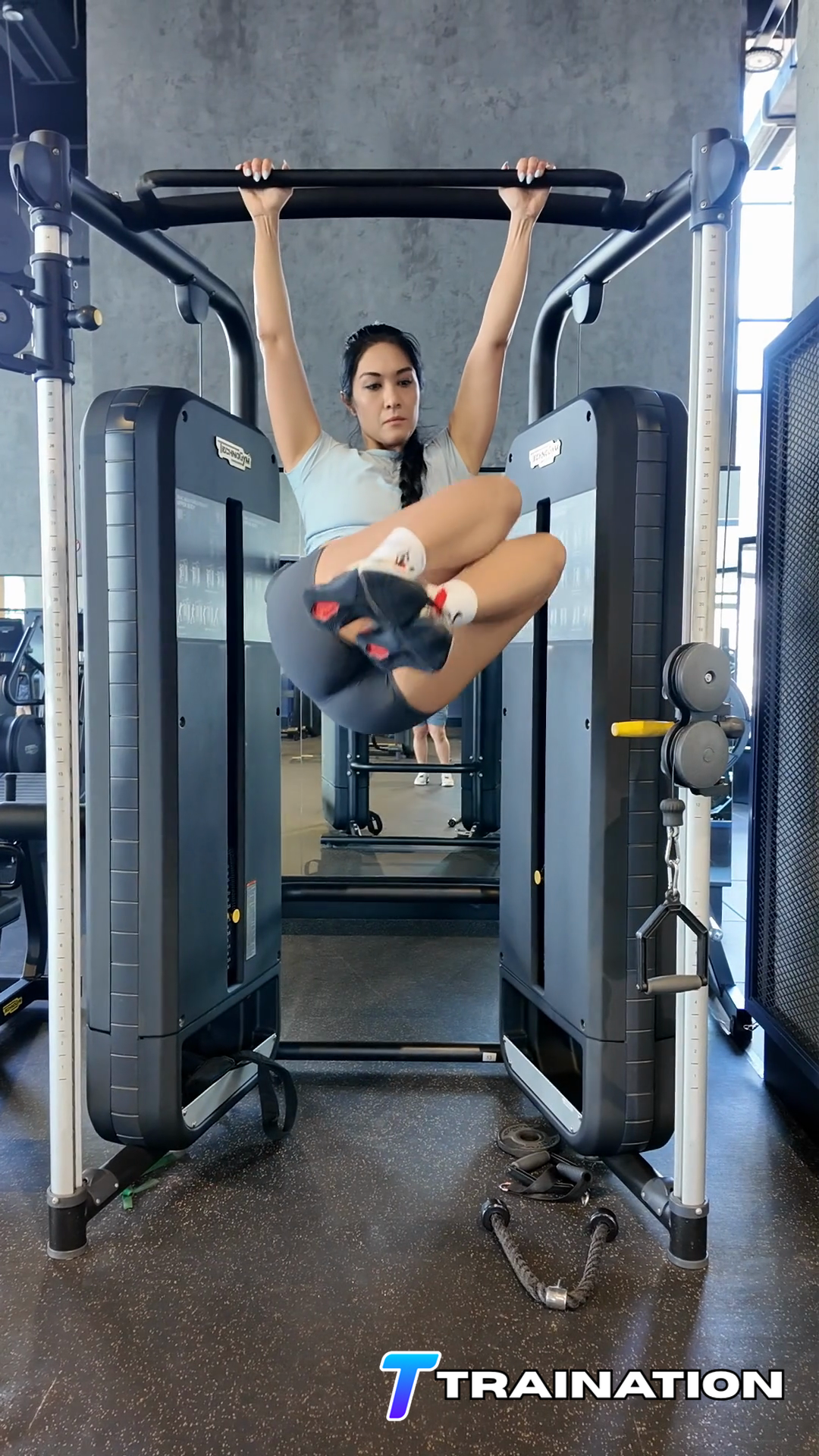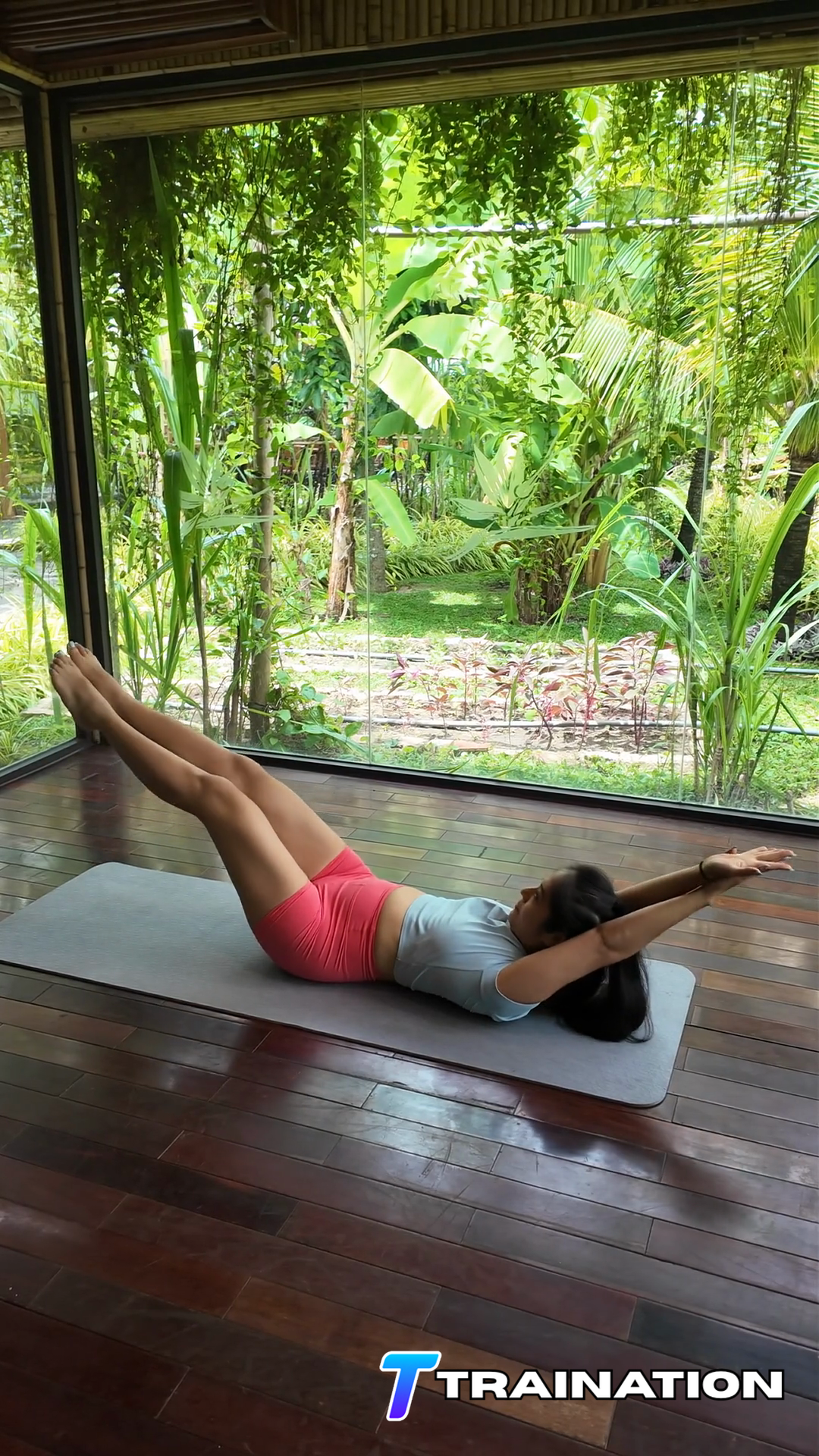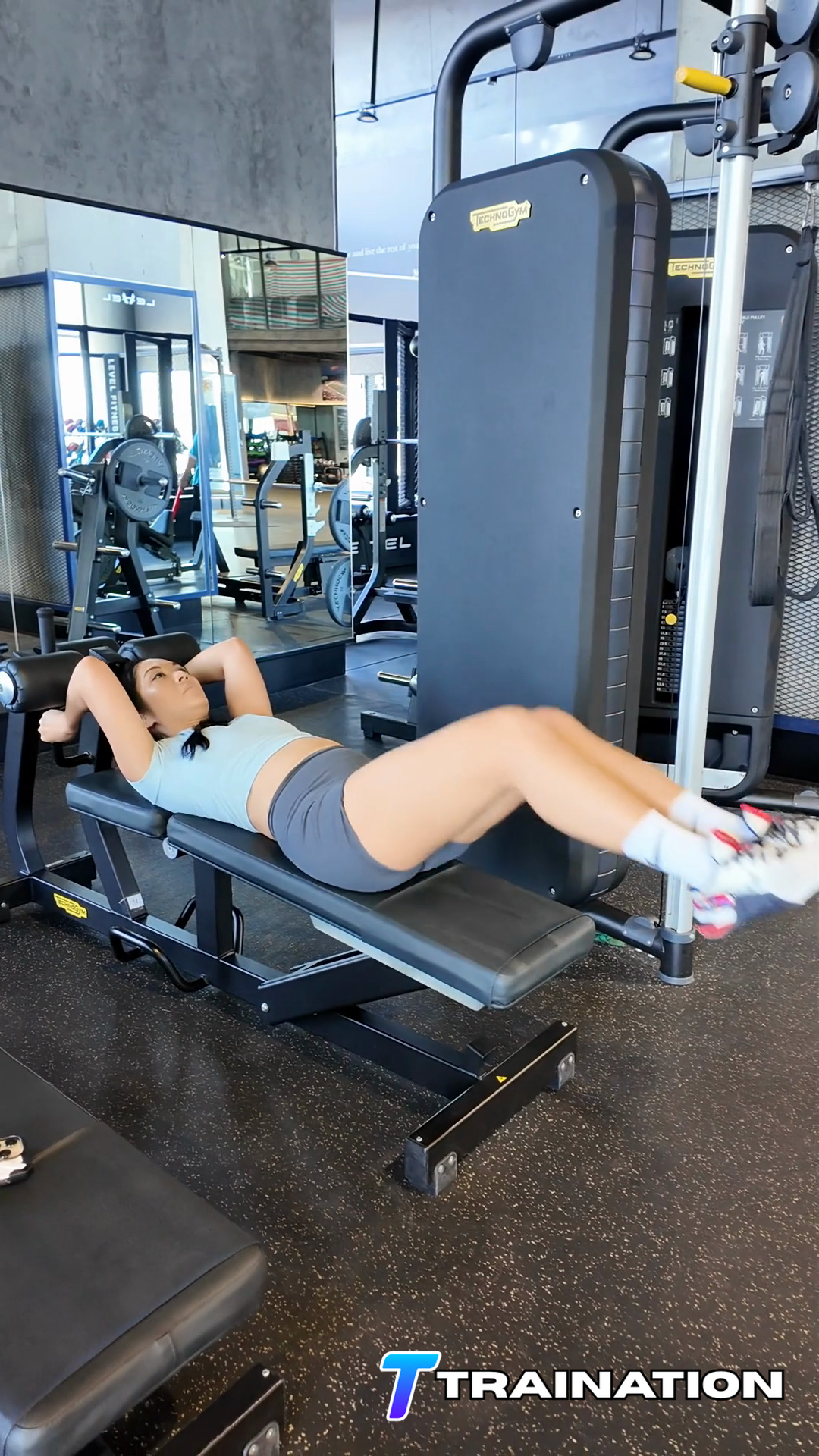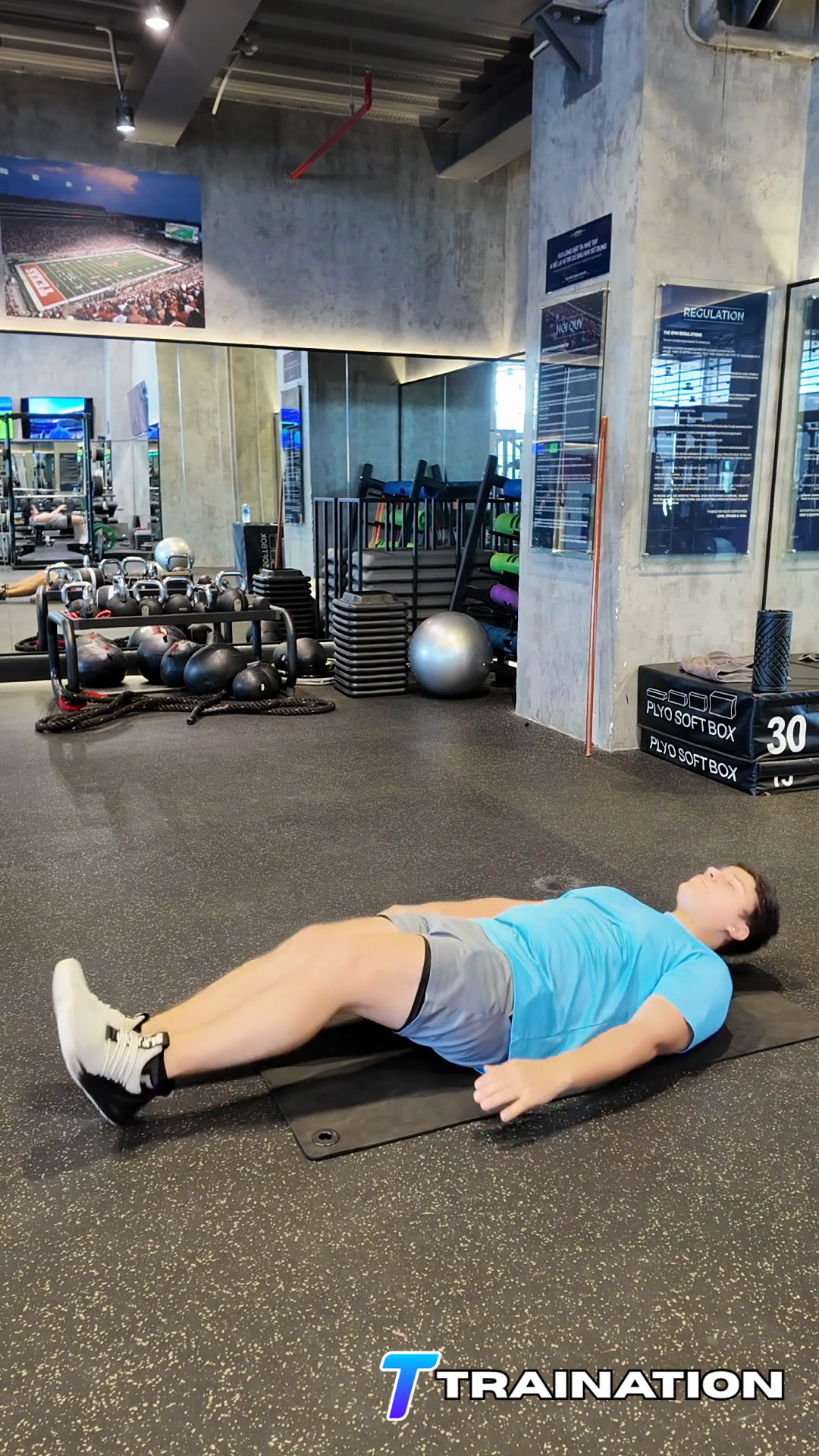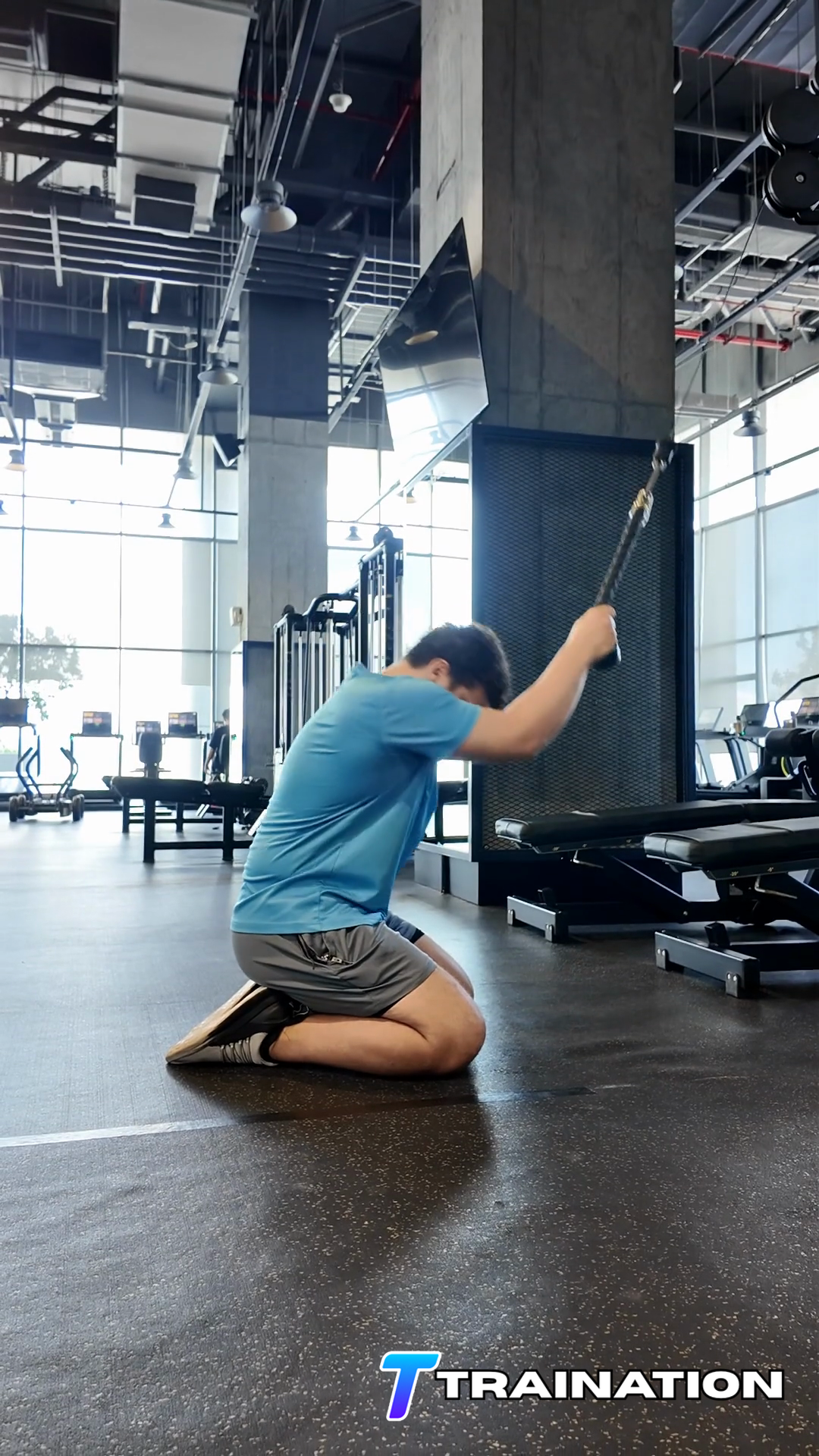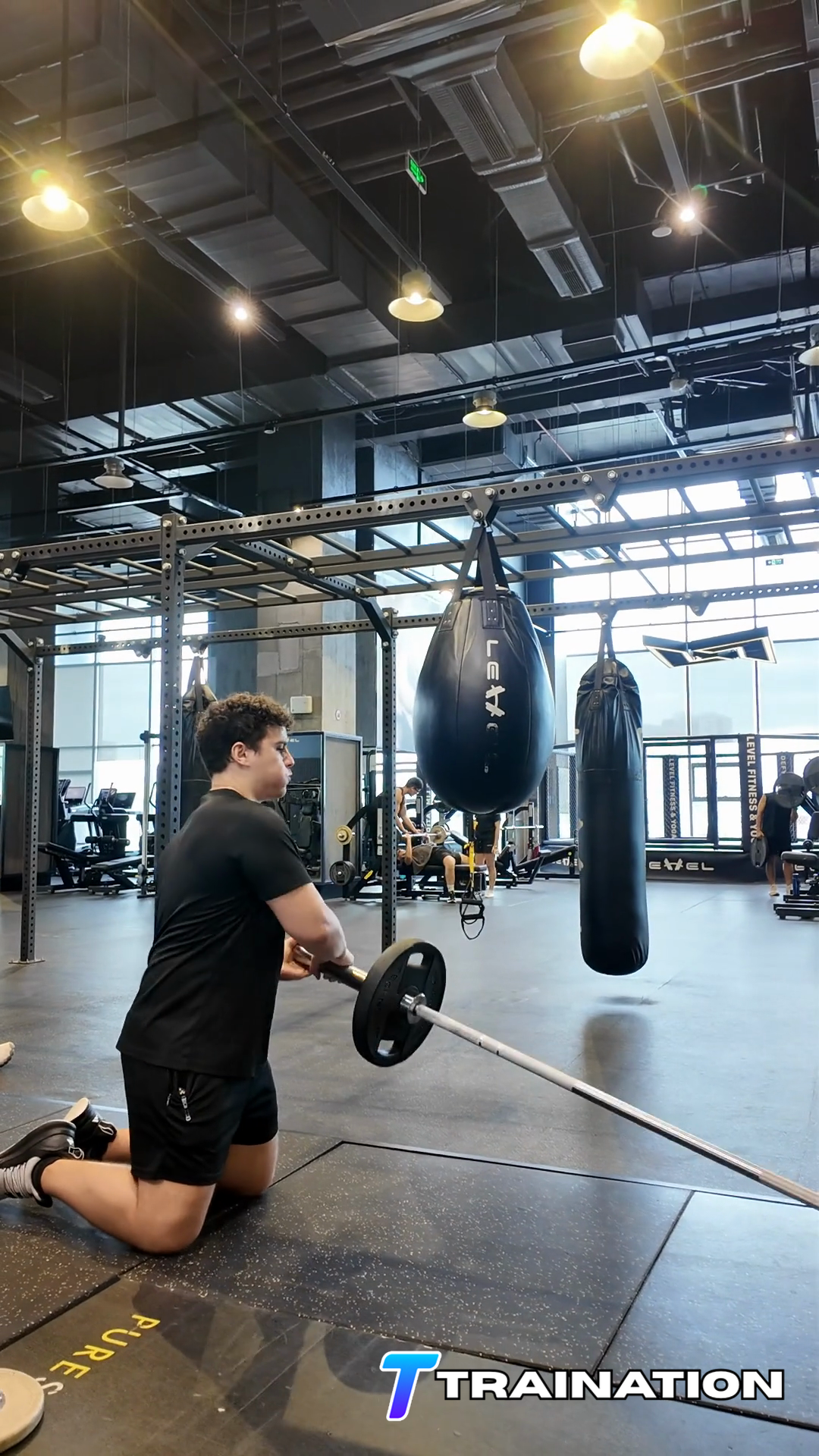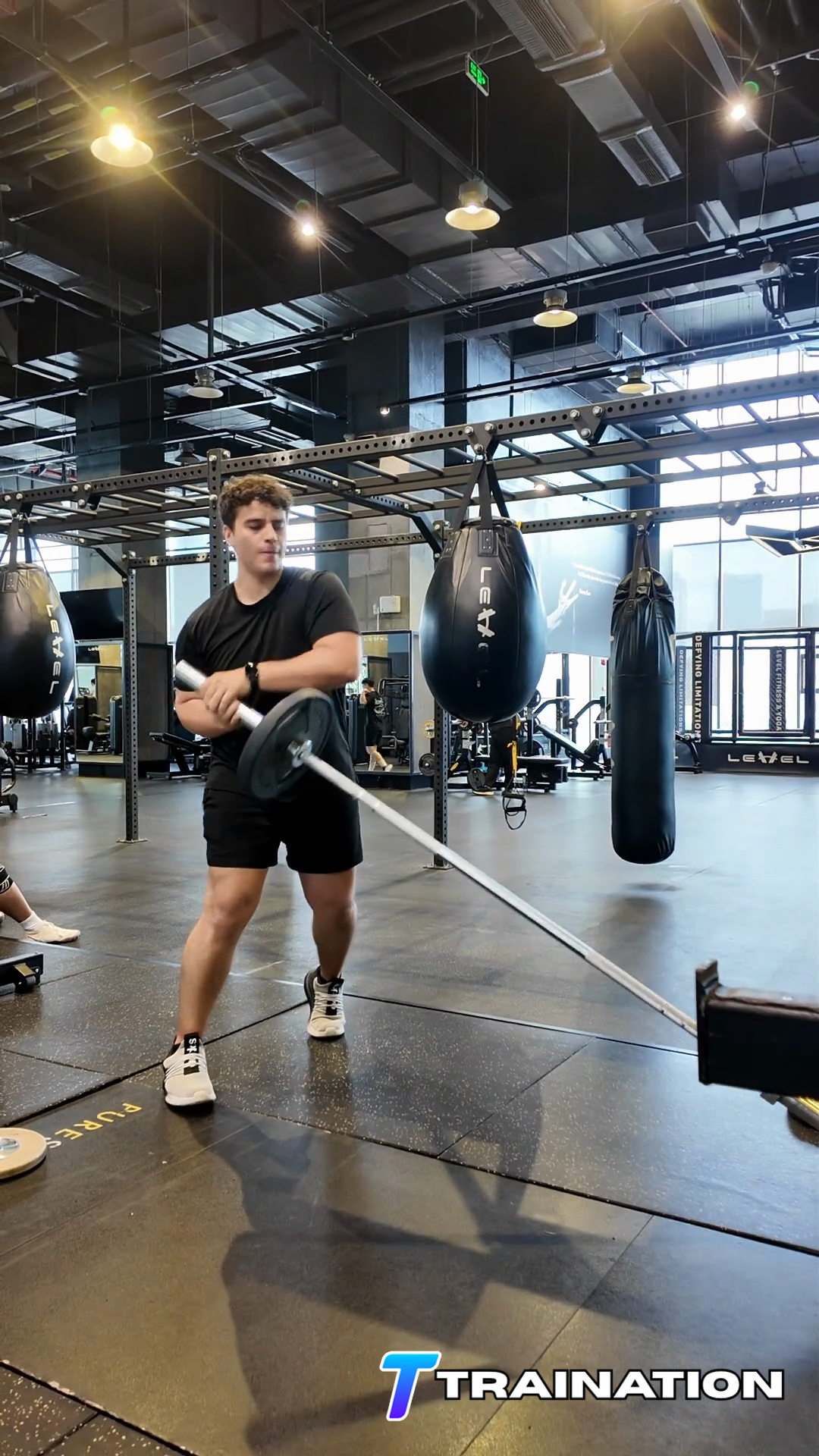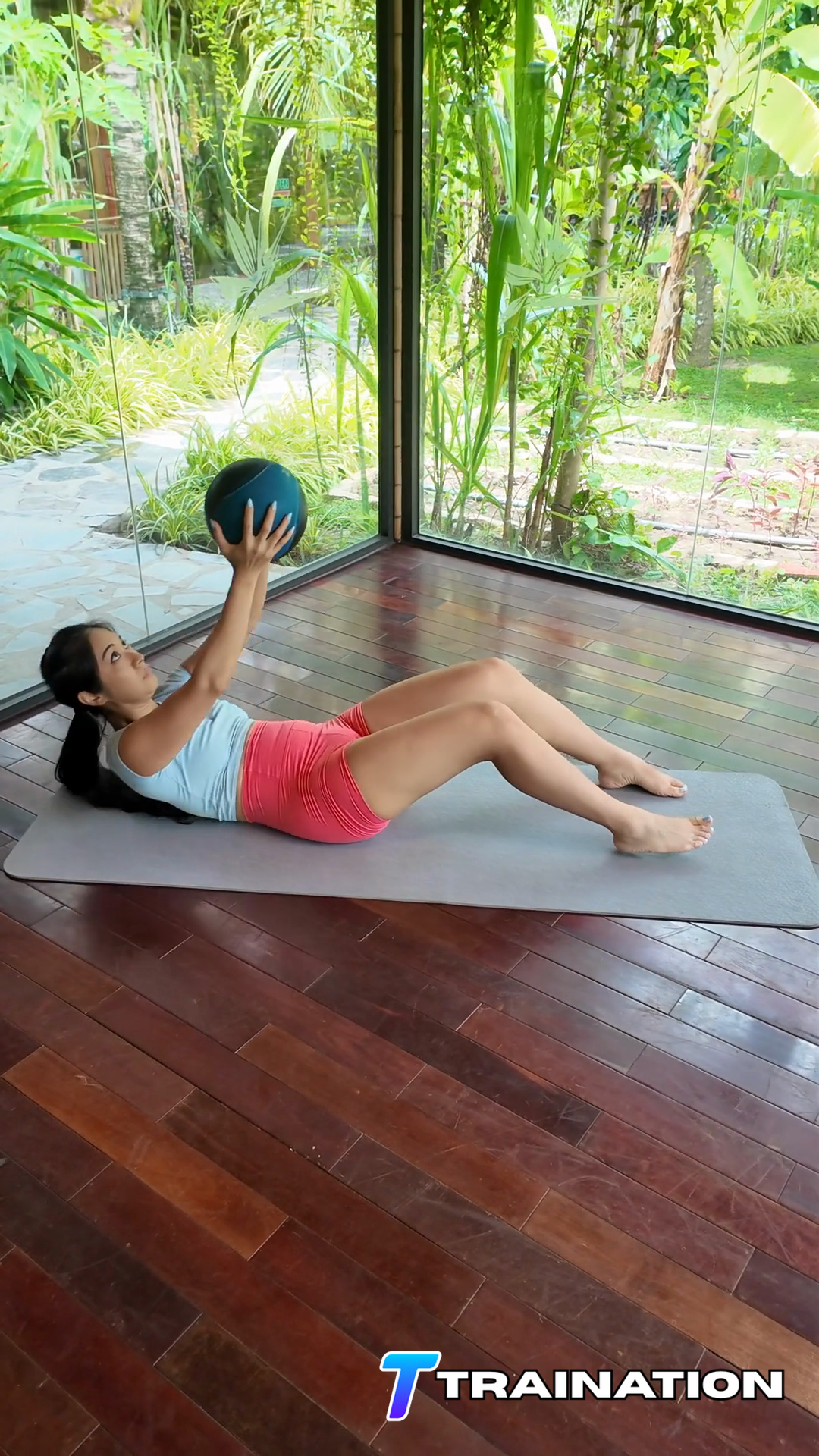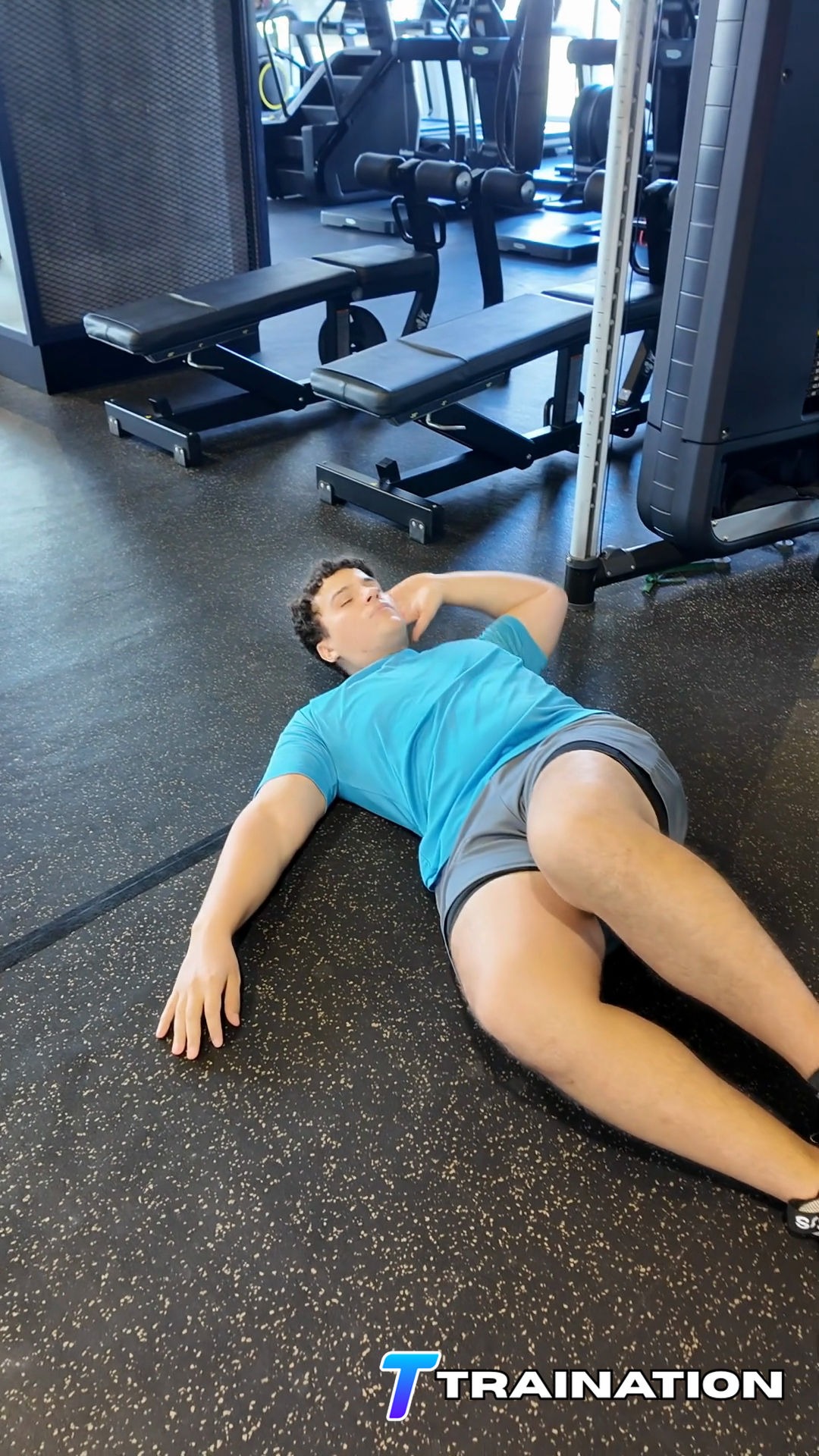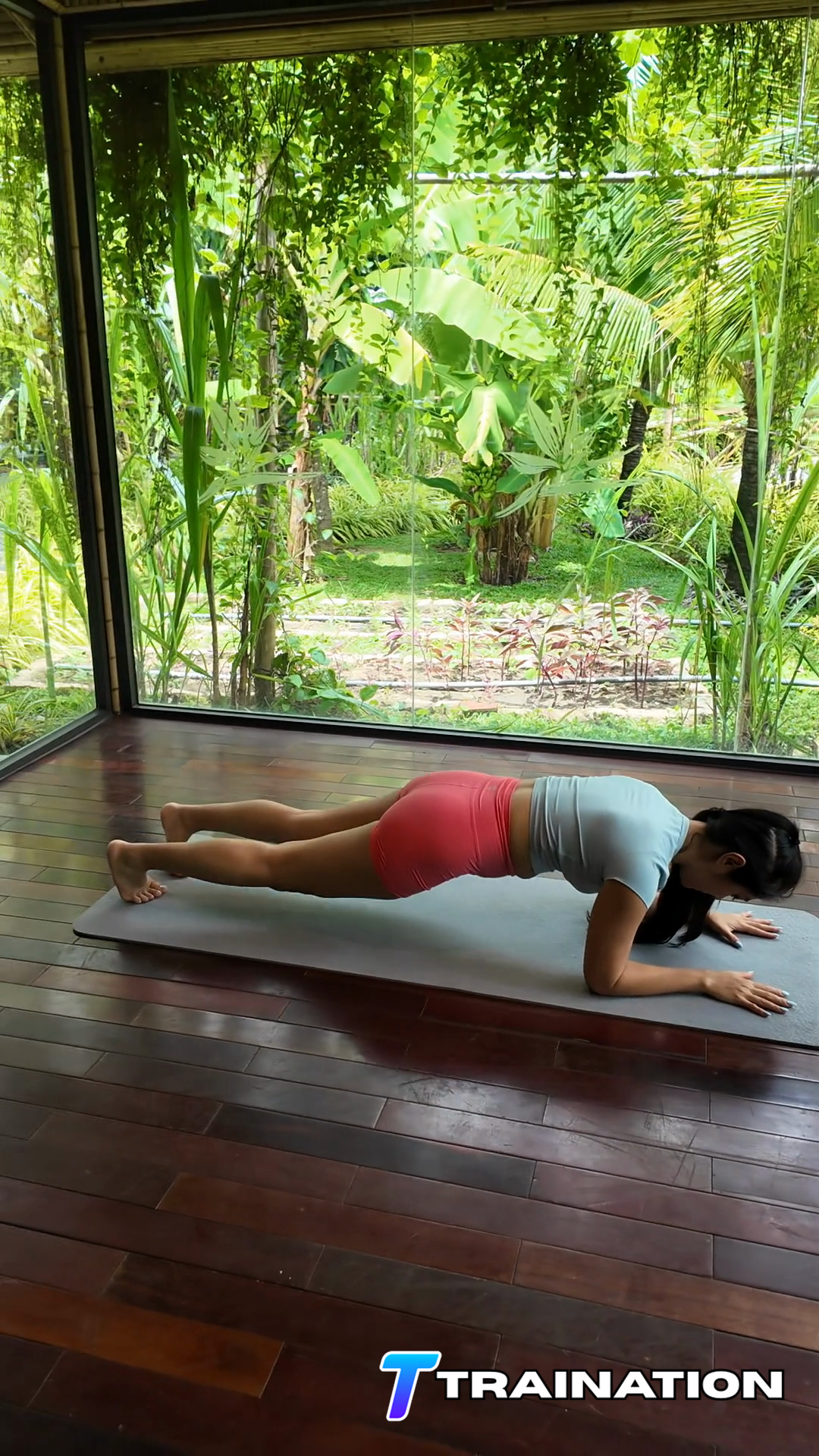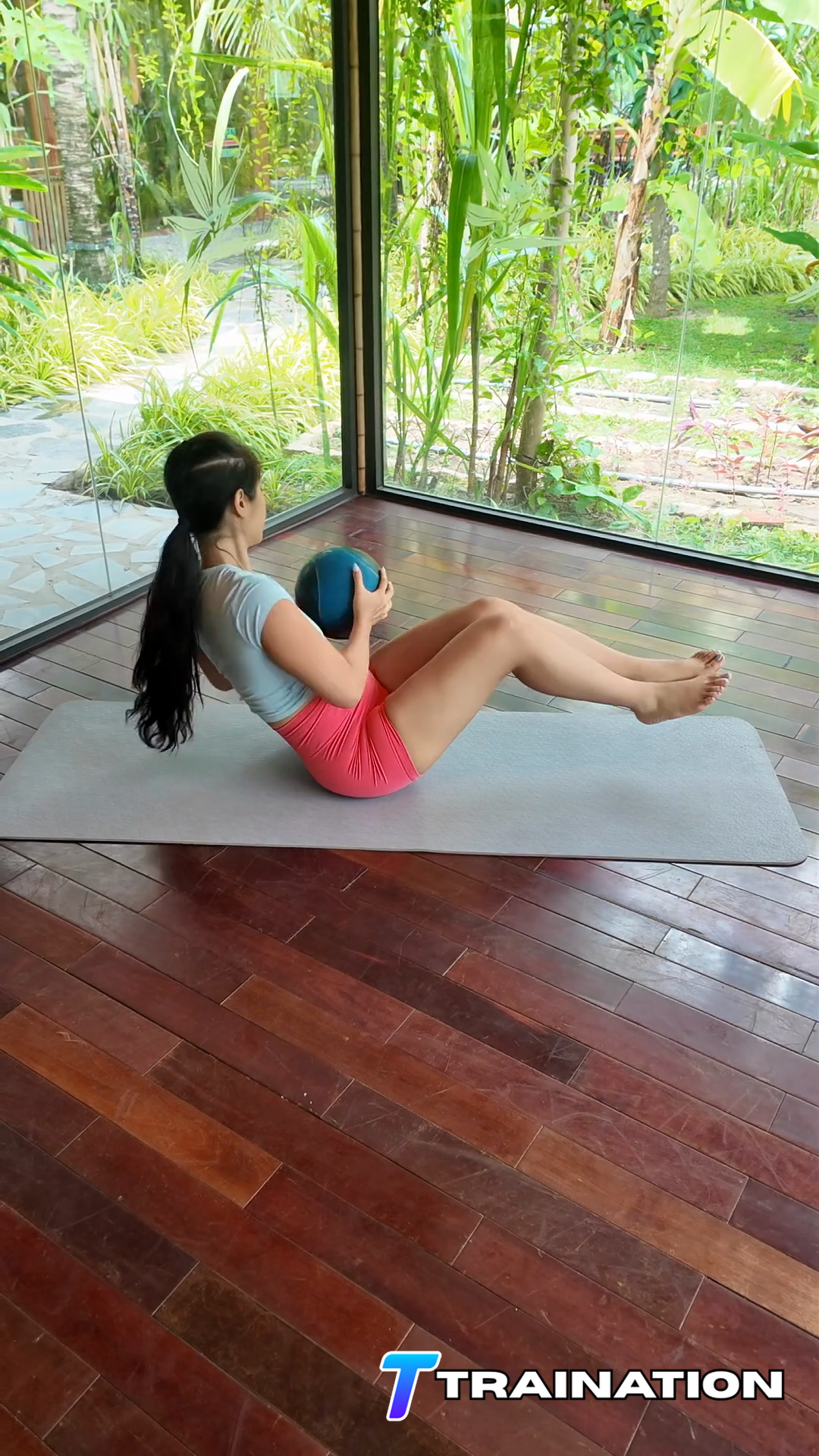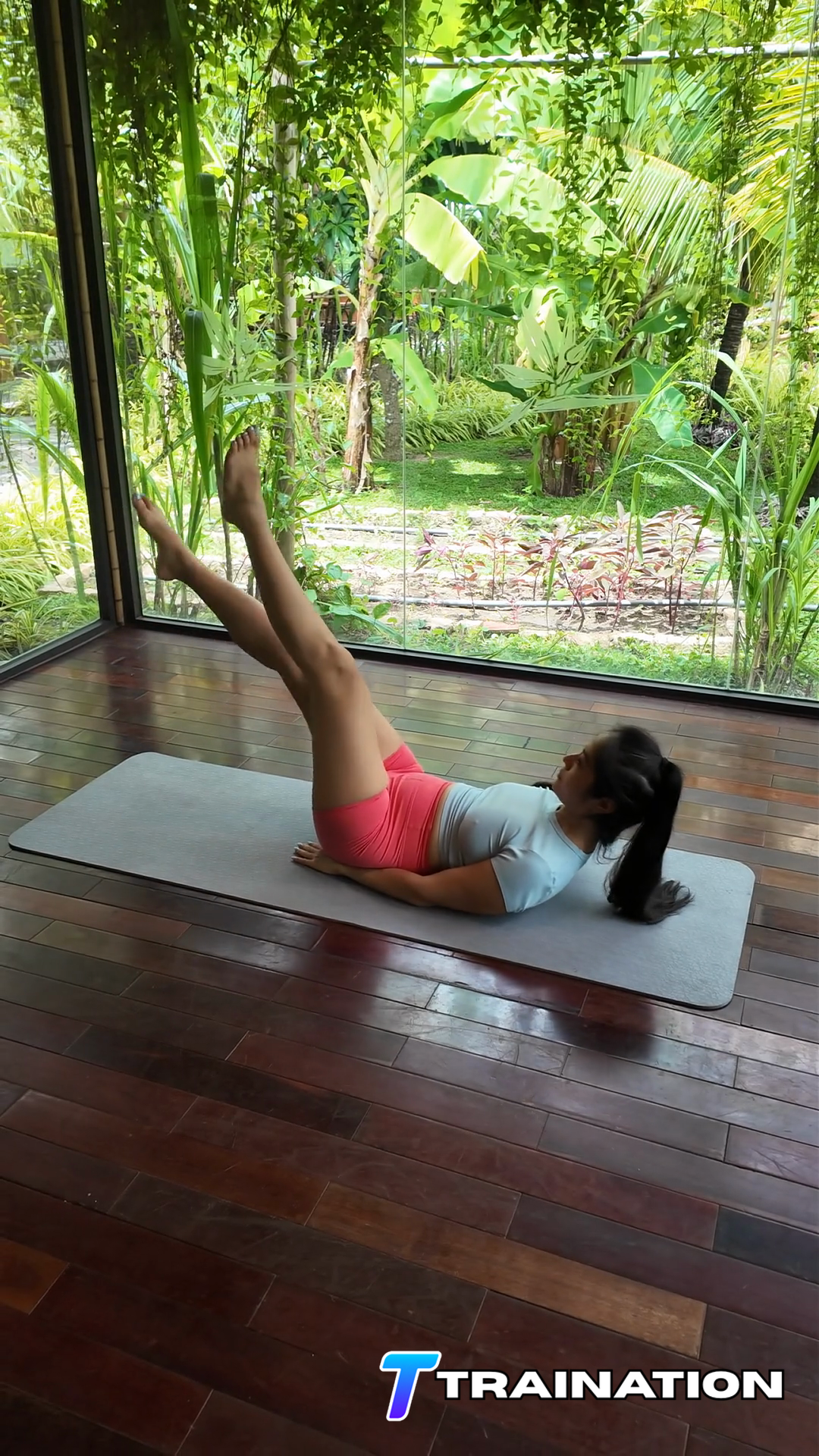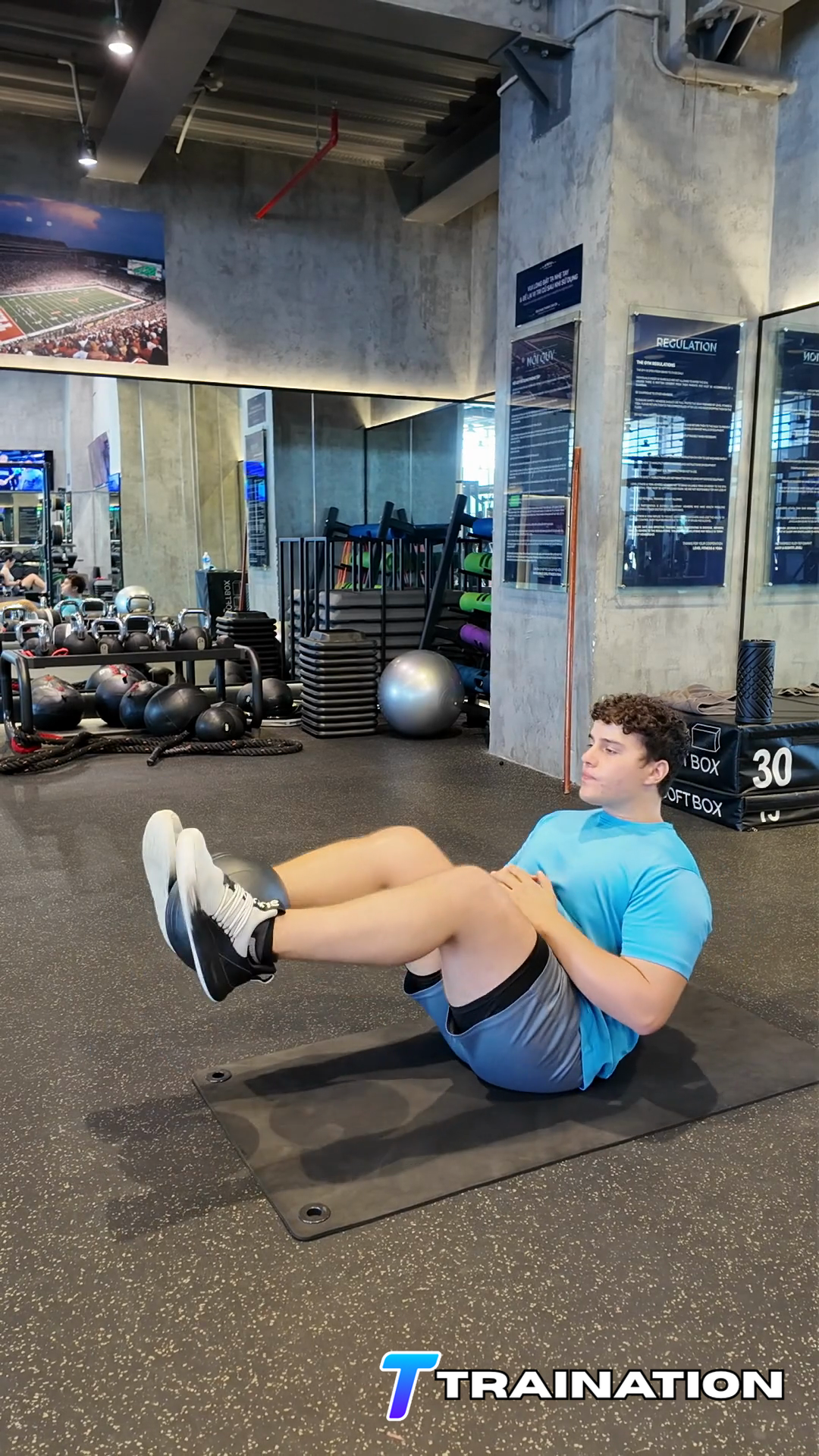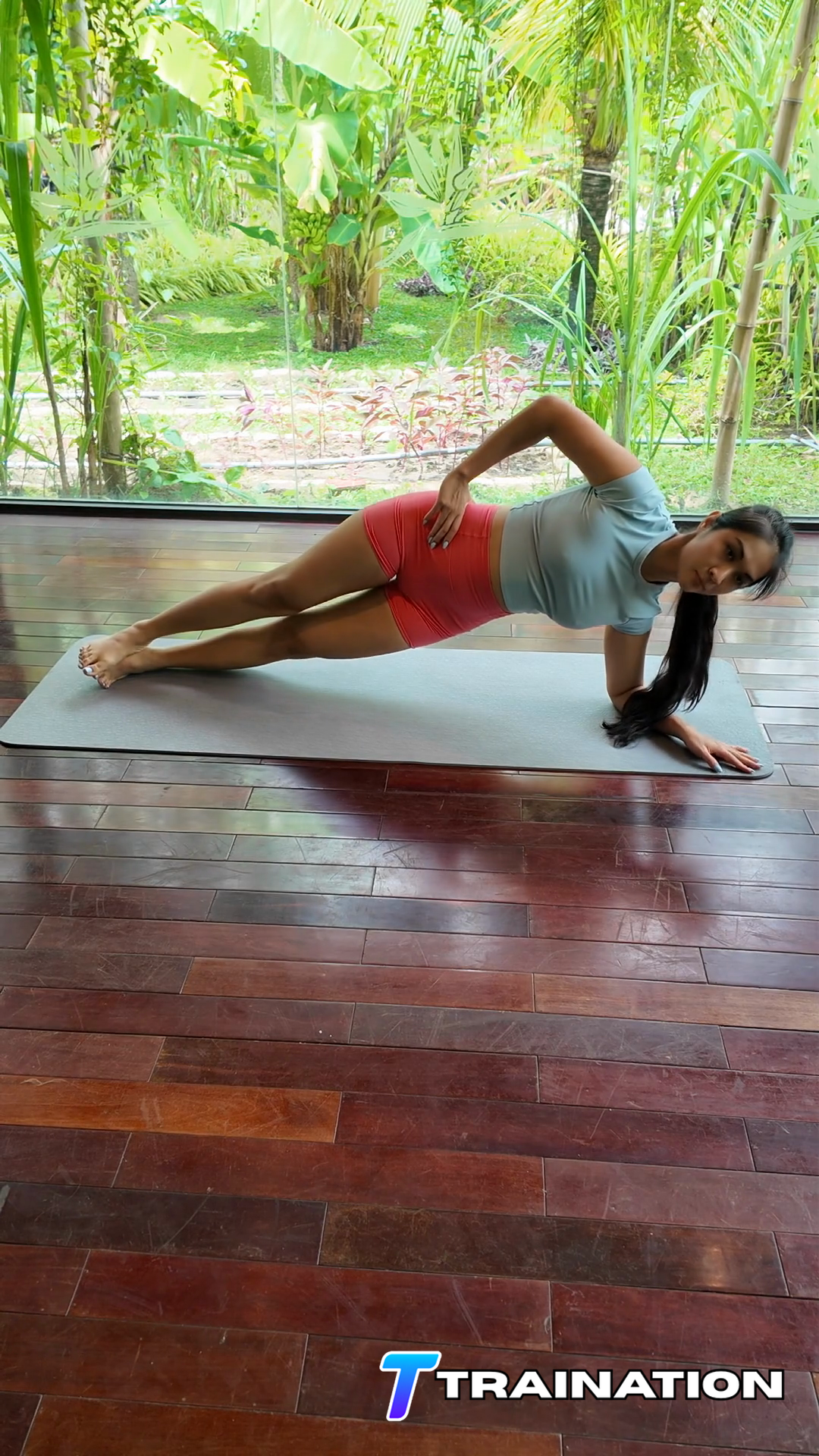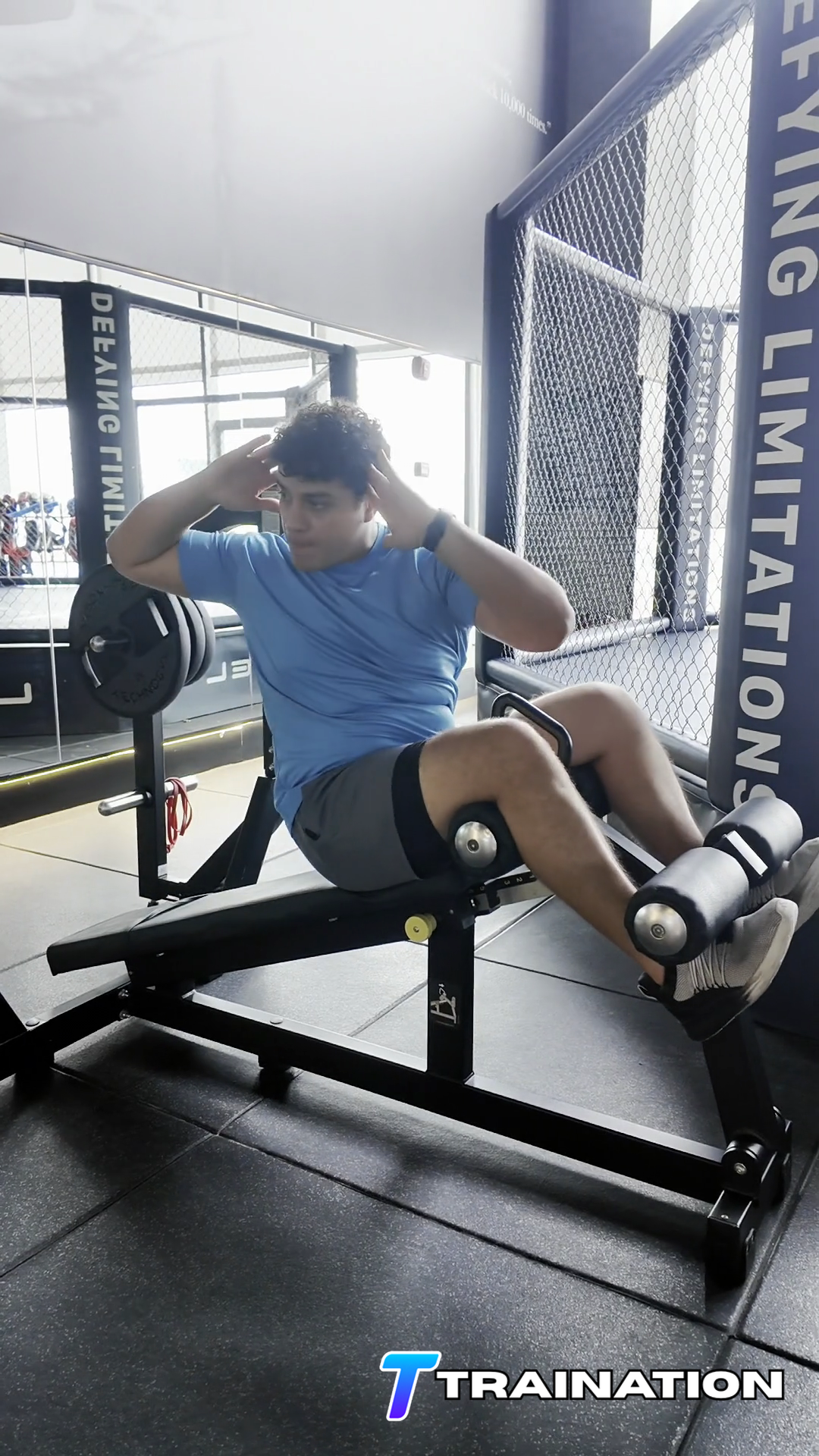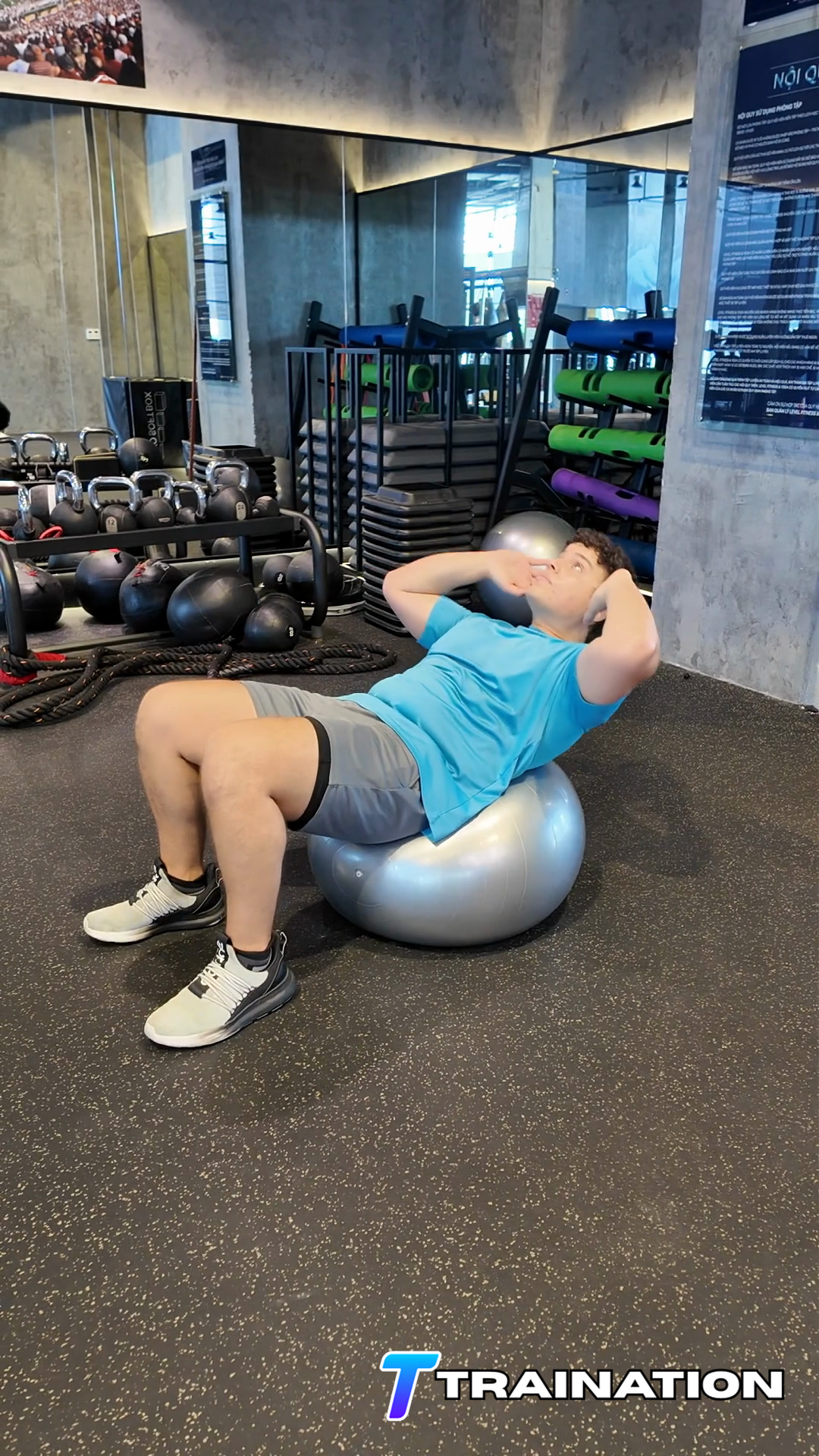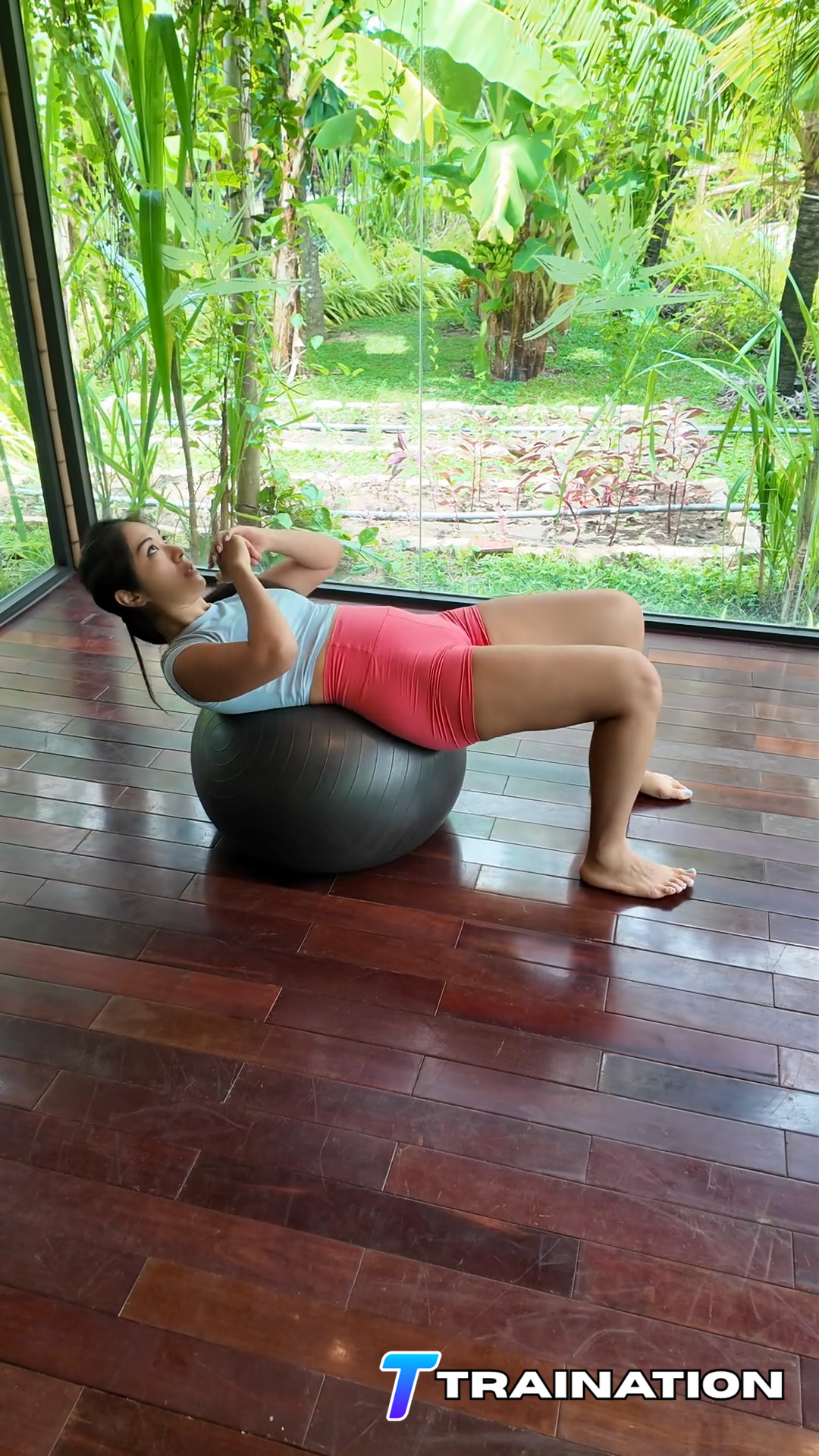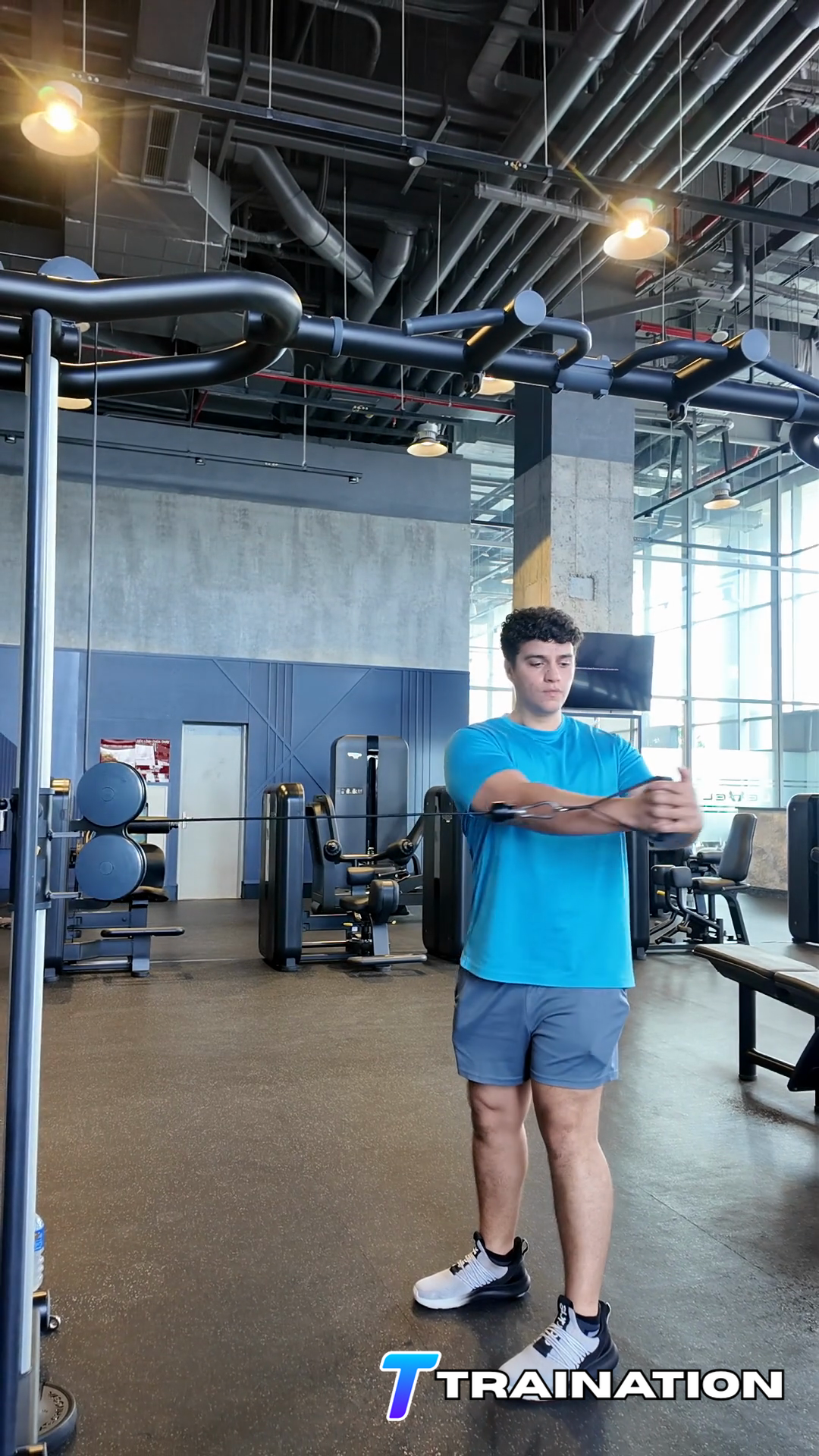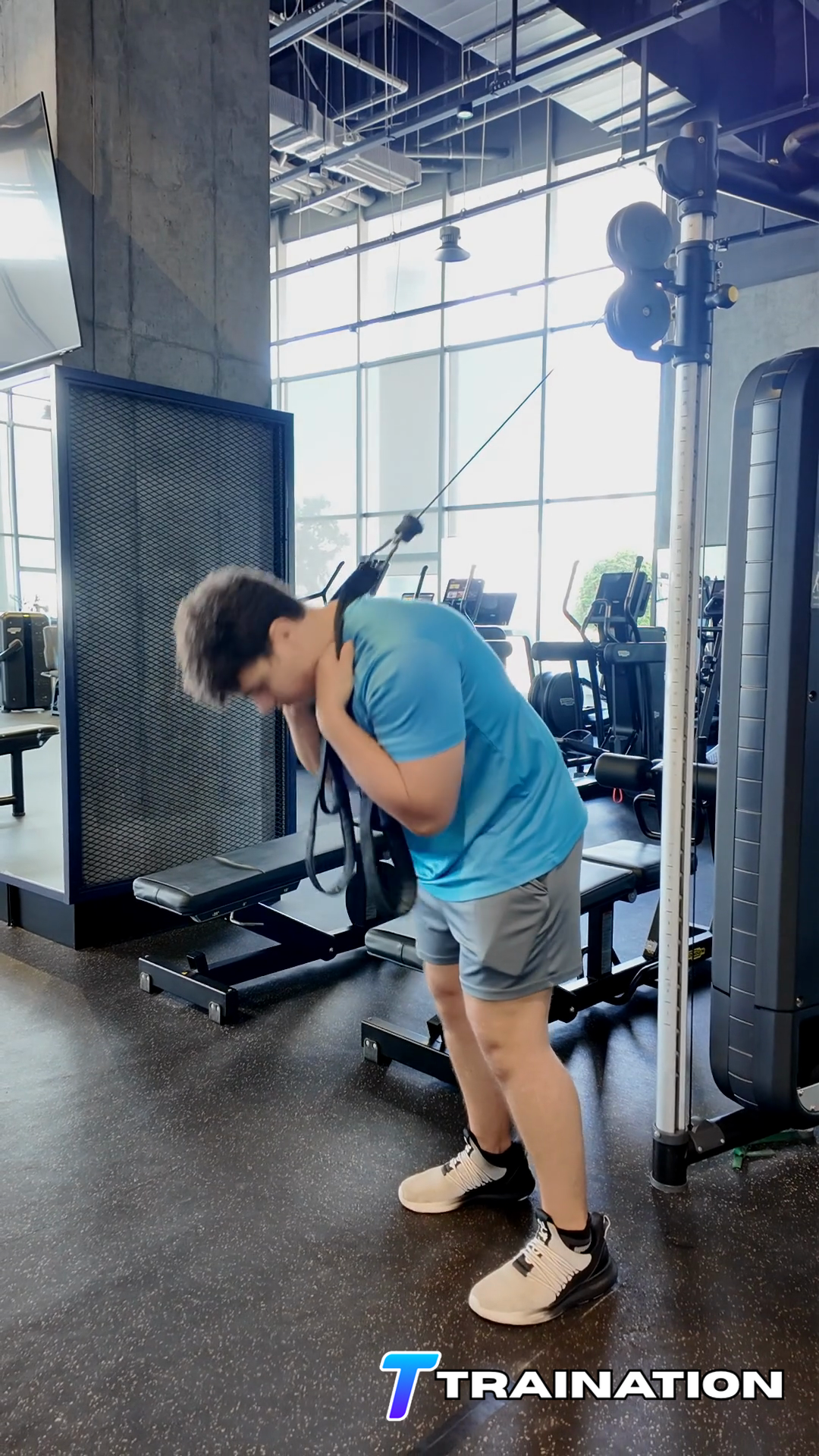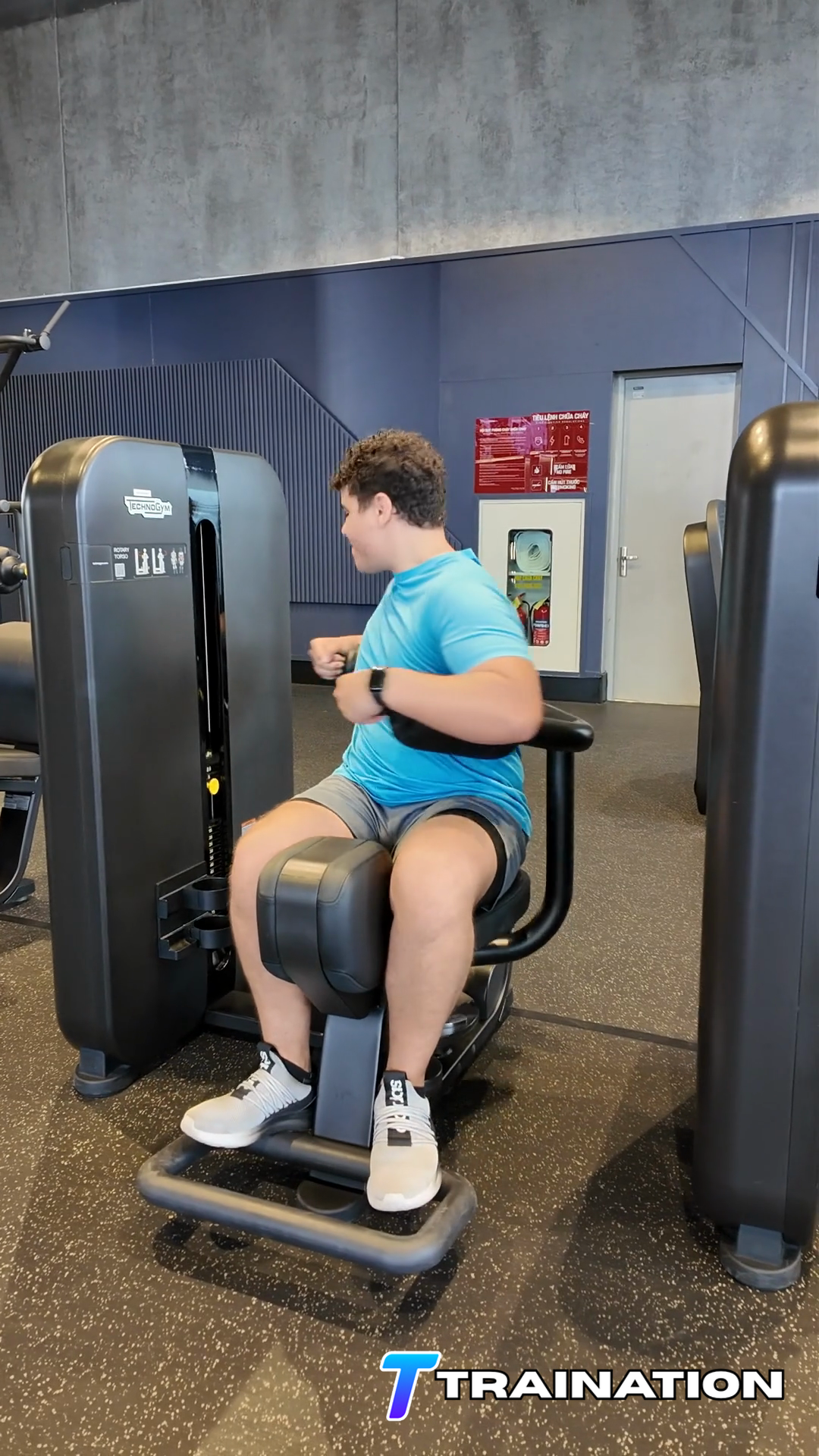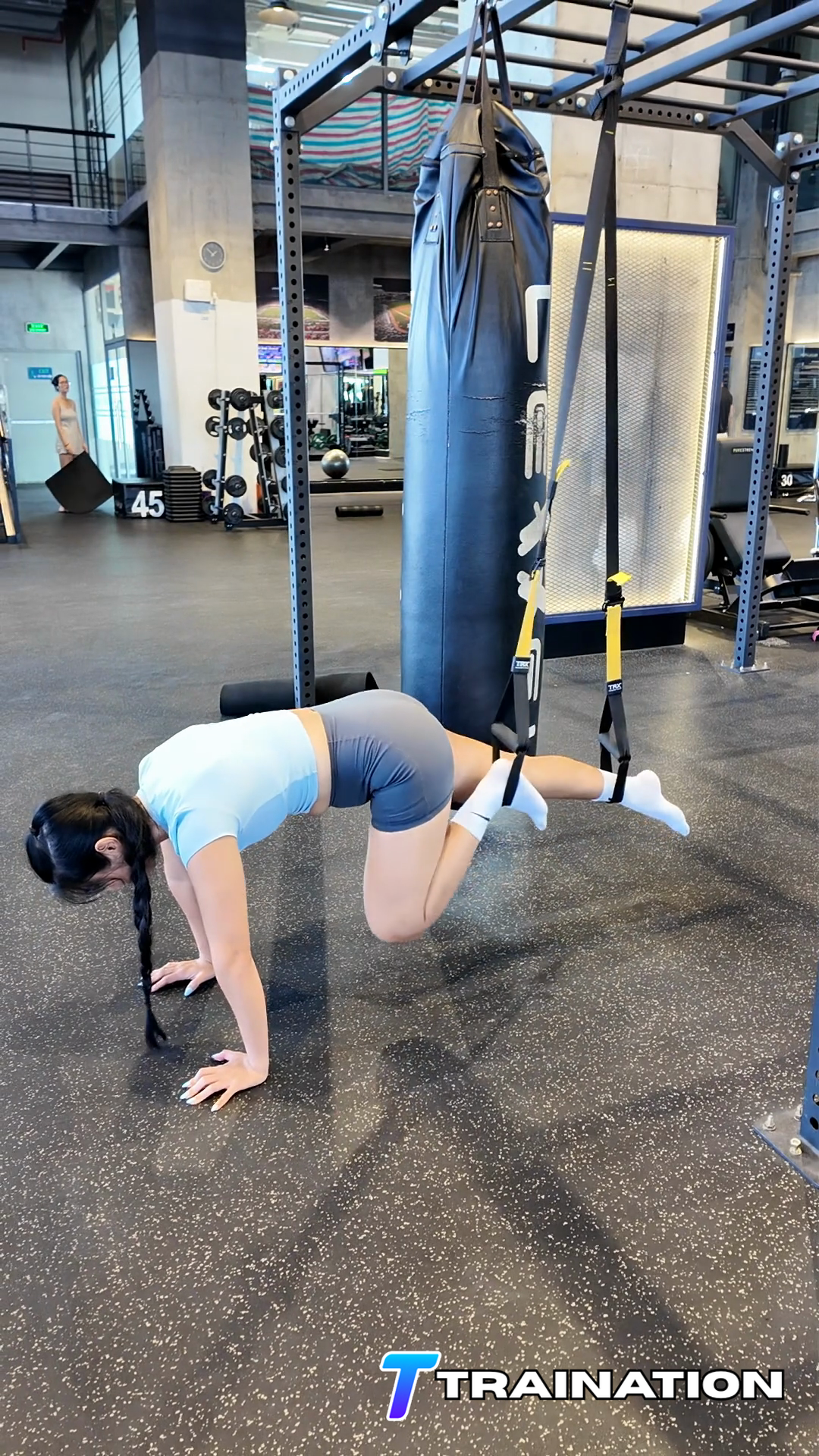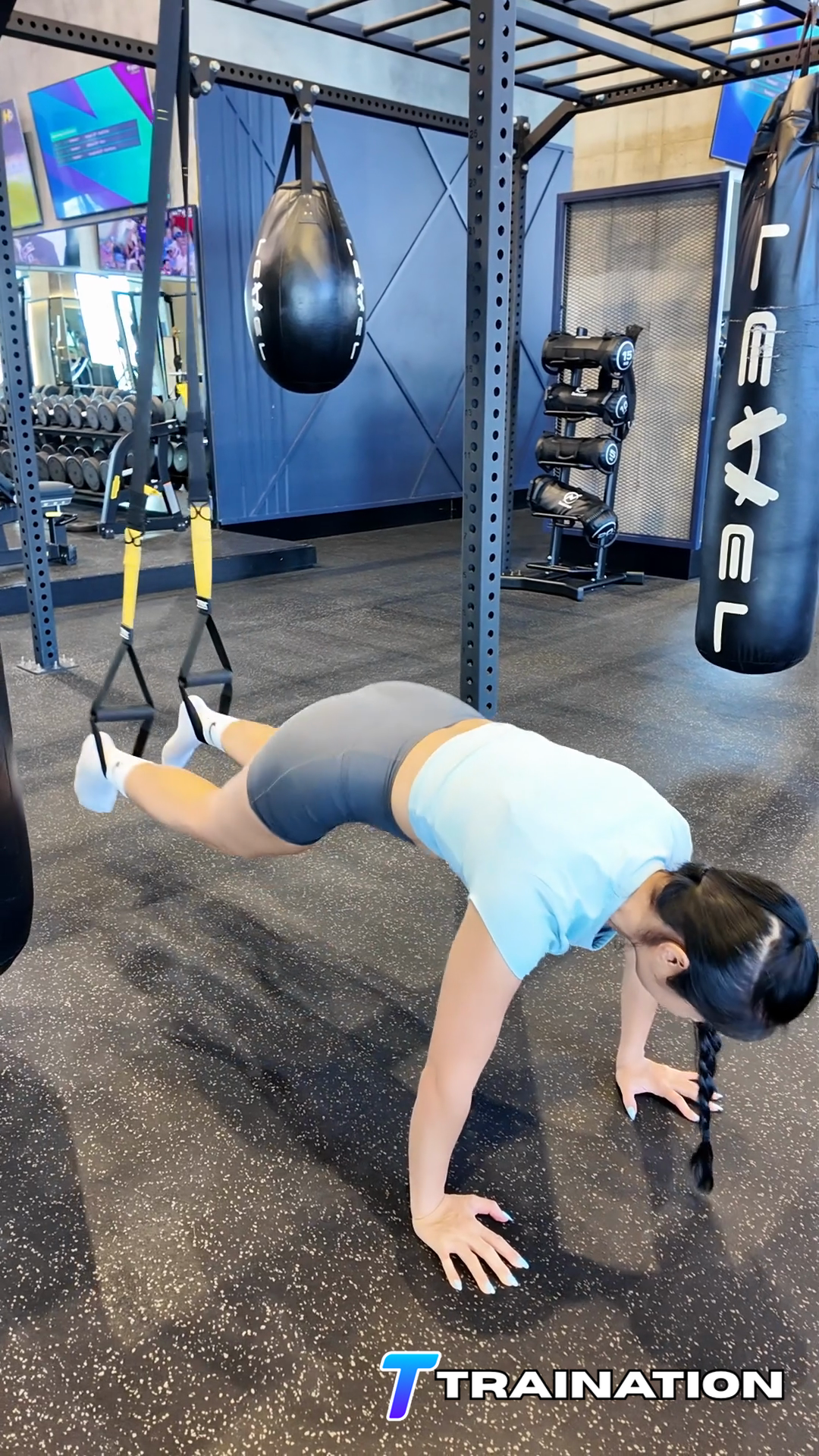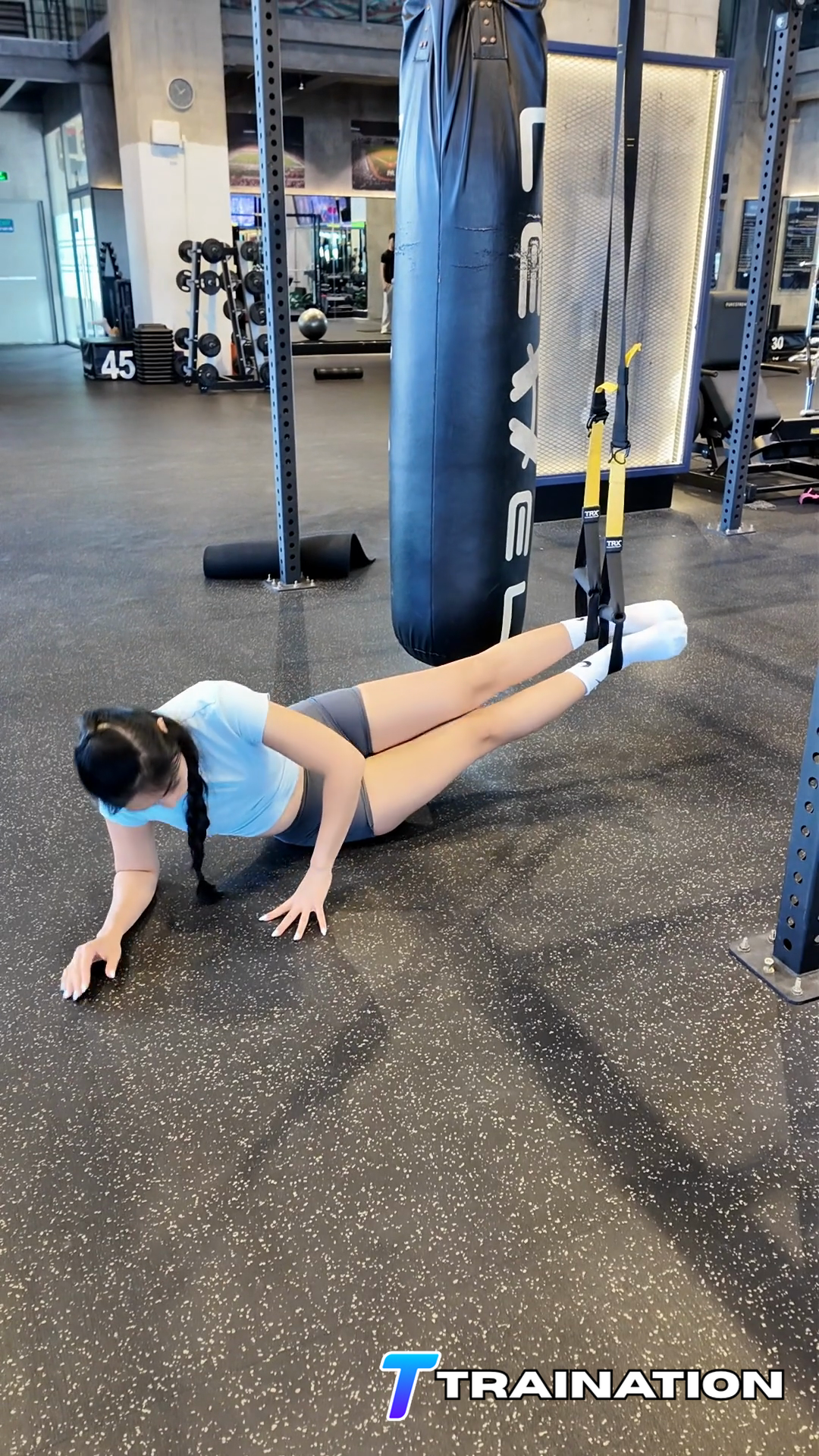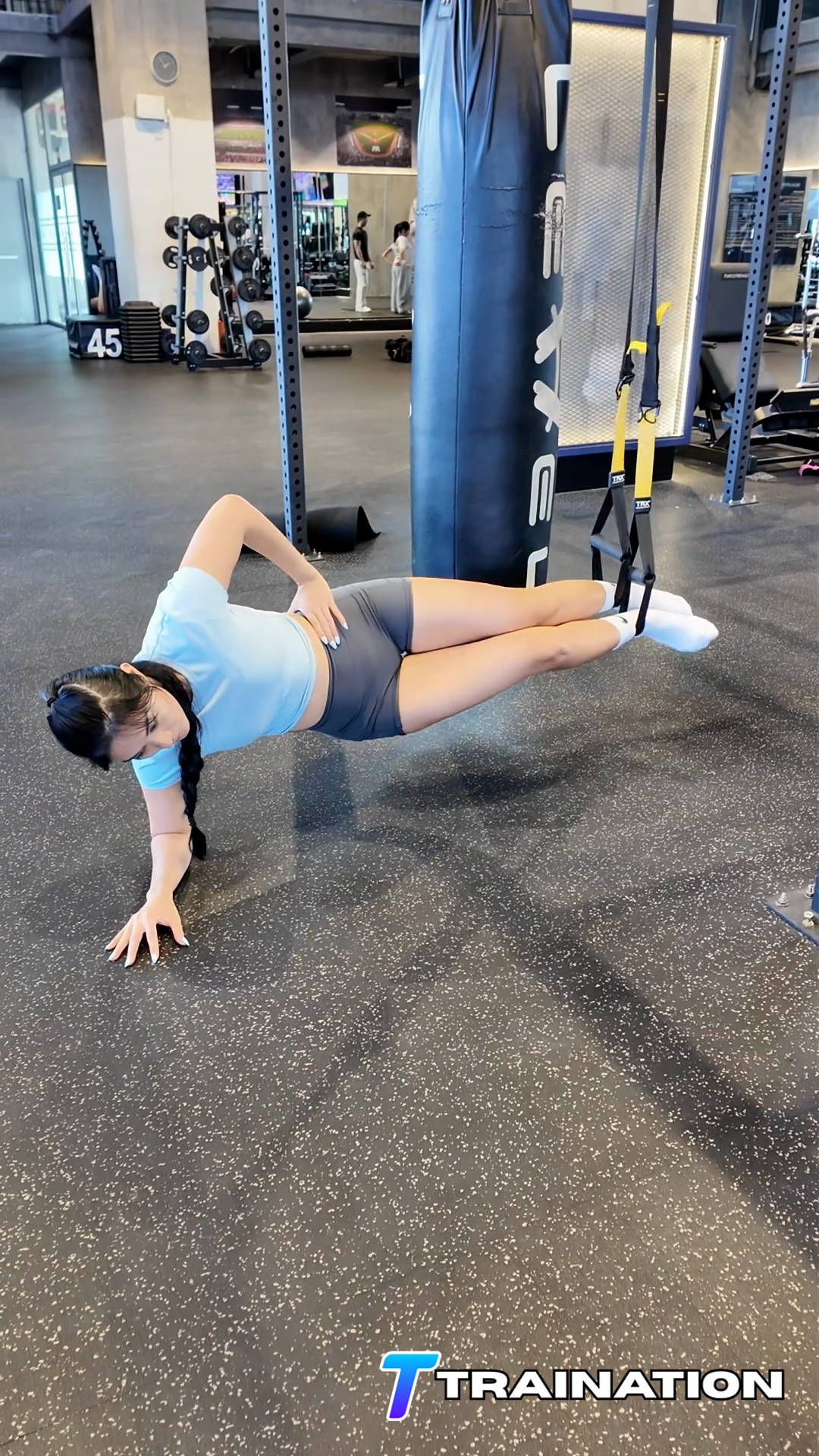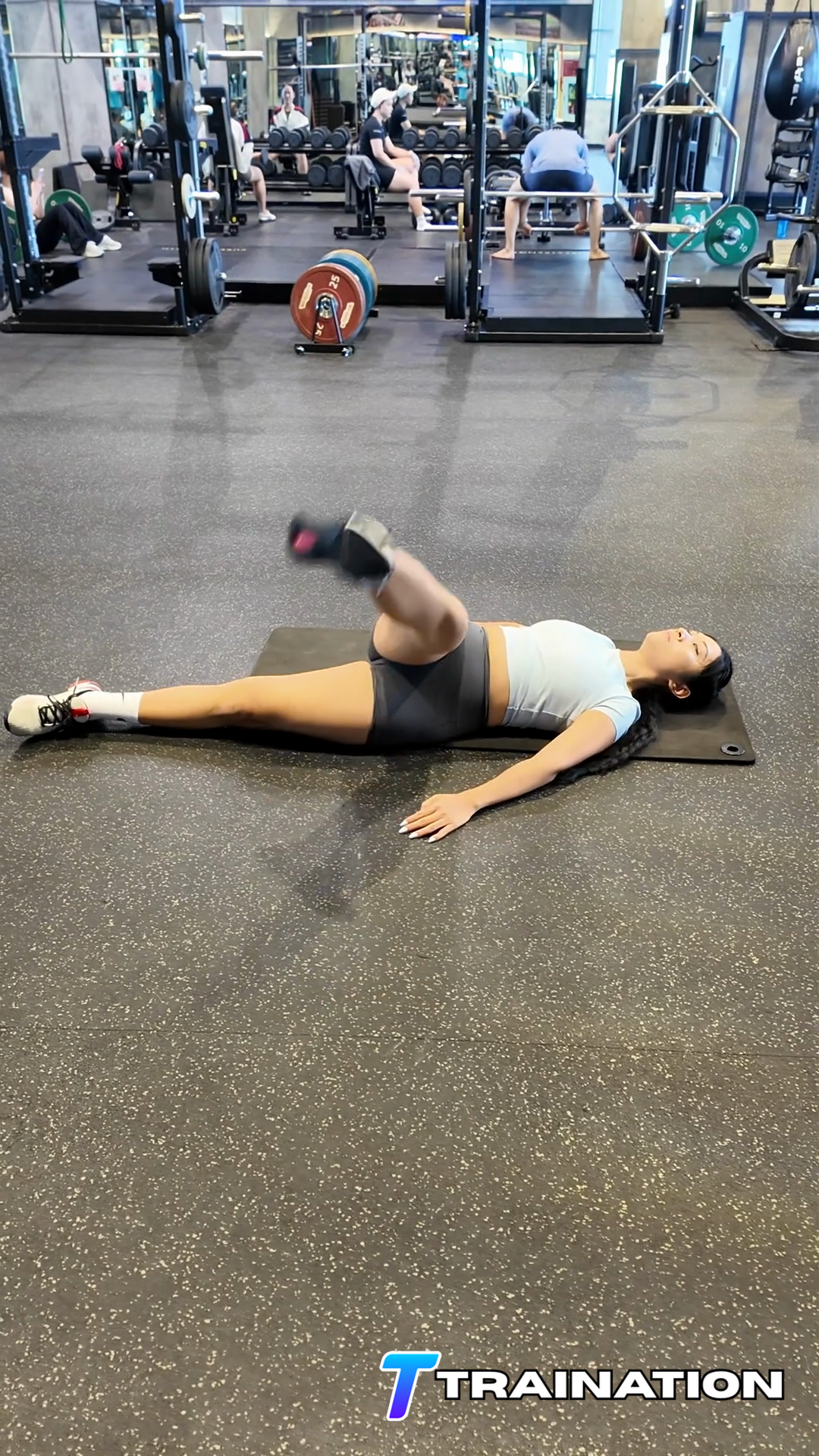
Twisting through the knees
Keep the knees aligned; if the hips turn with the rib cage, pivot the feet instead of twisting through planted knees.
Alternate Heel Touches trains controlled trunk rotation or lateral flexion without using momentum.
Primary musclesObliques, Quadratus lumborum
Secondary musclesRectus abdominis, Erector spinae, Gluteus medius
Follow the sequence in order, paying attention to the starting position, movement path, and finish described in each step.
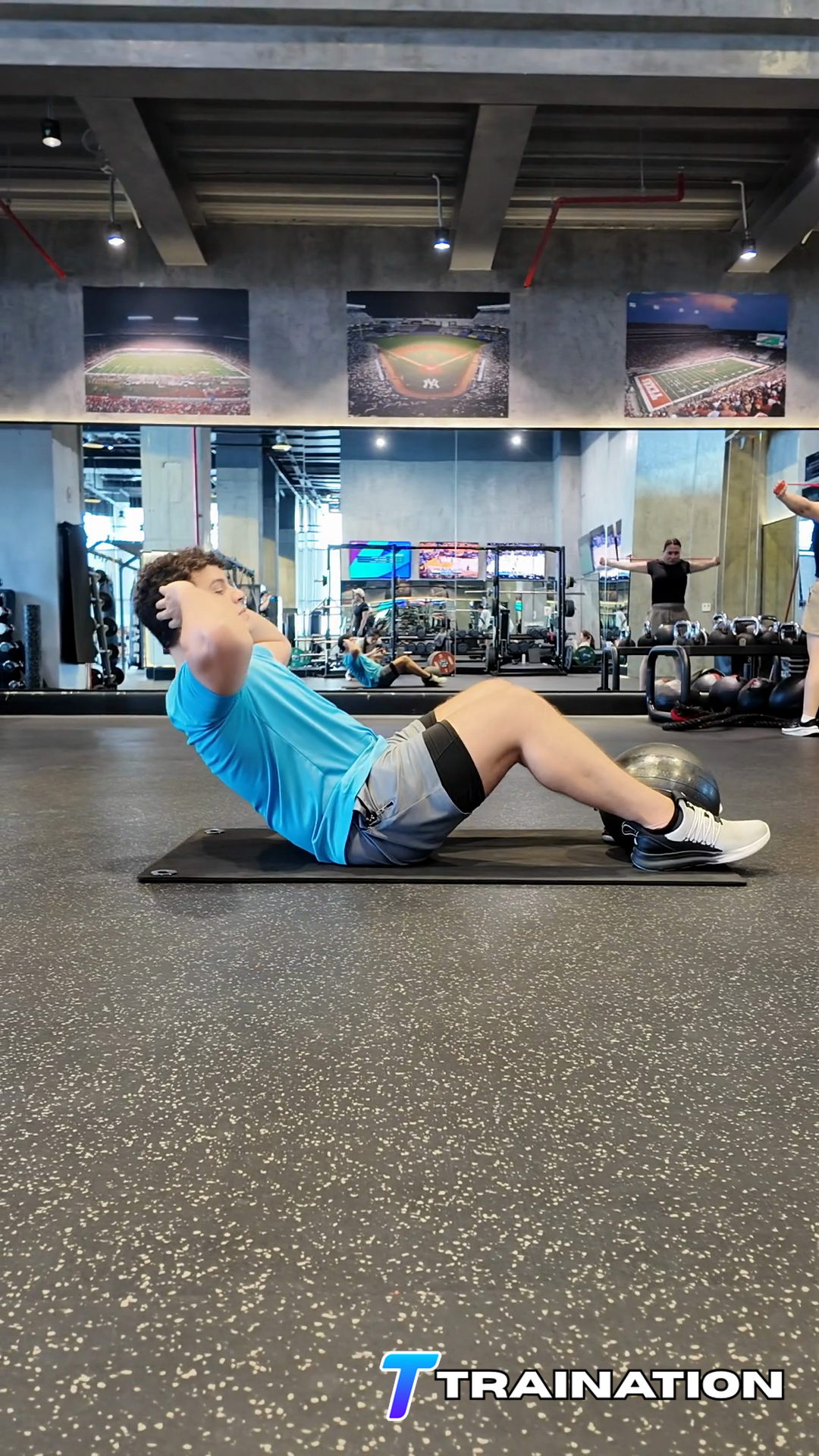
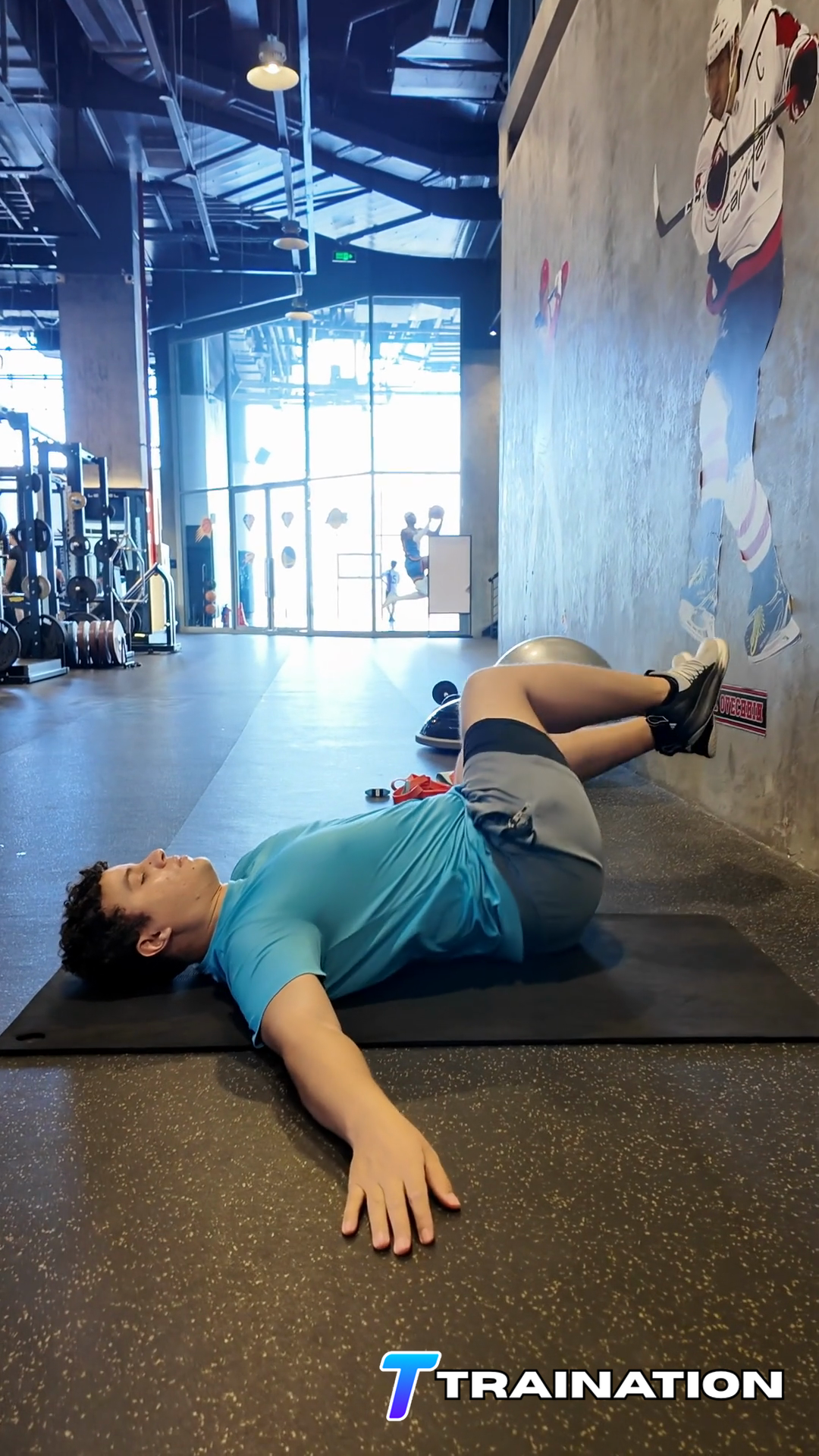
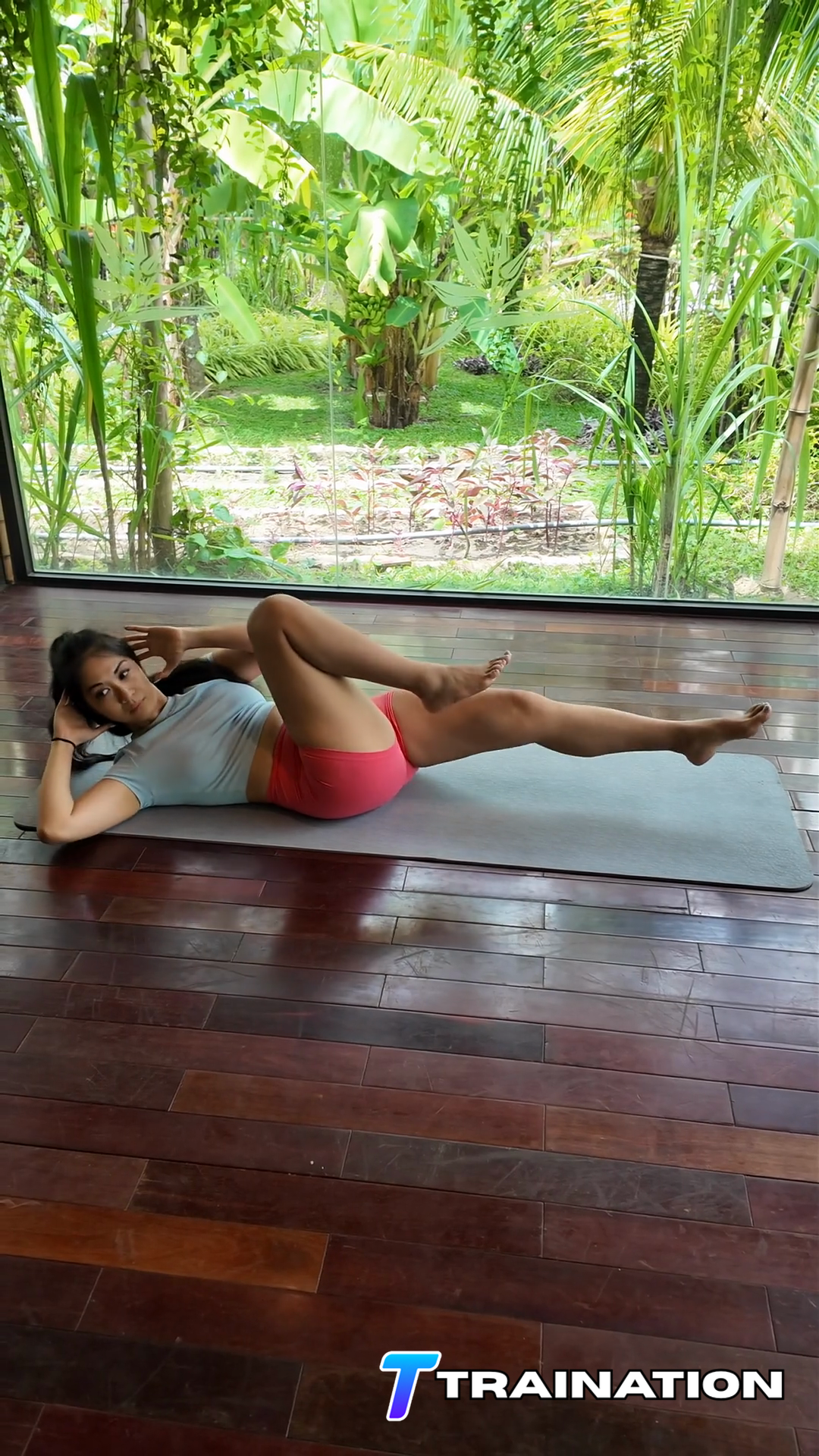
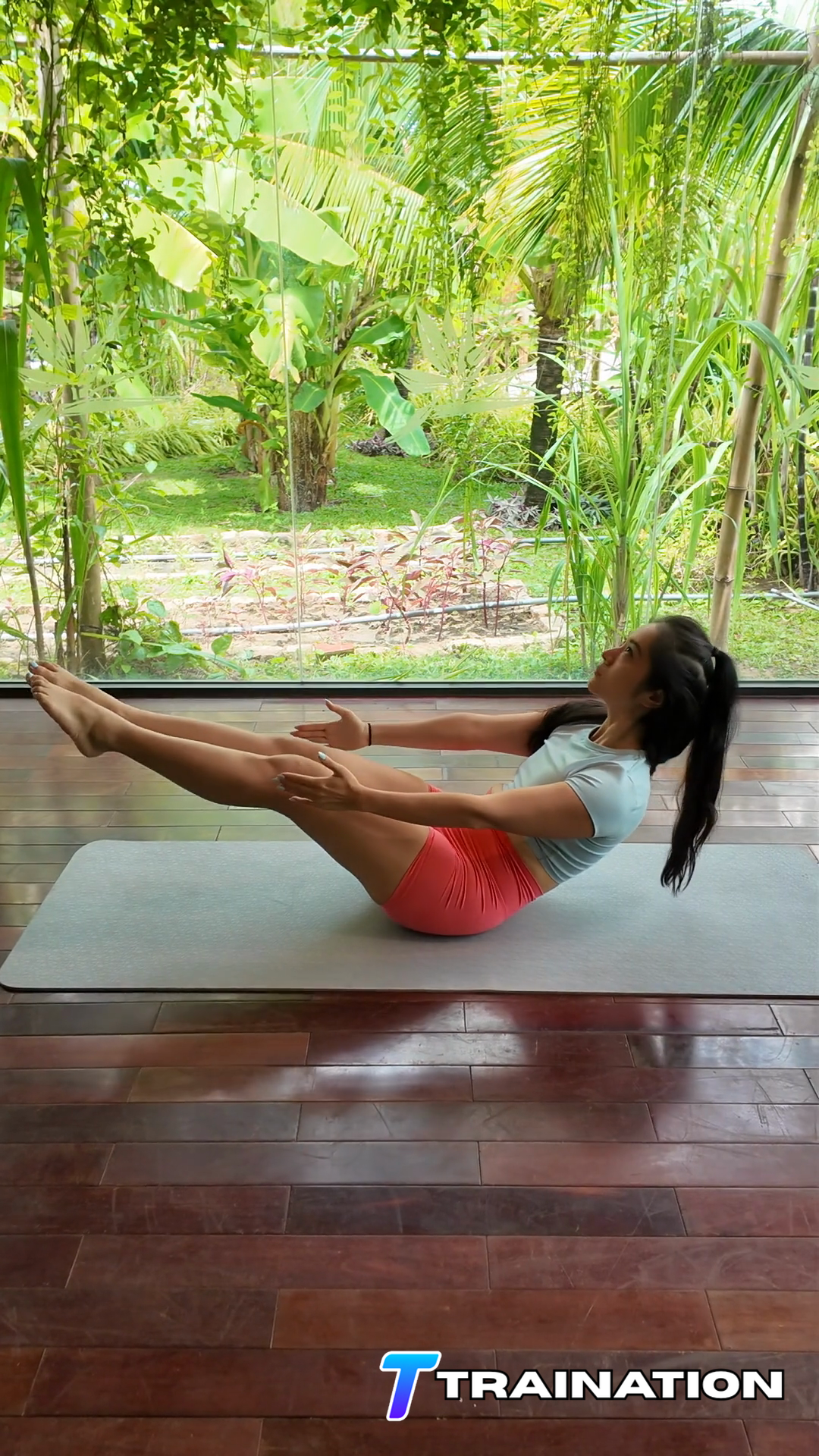
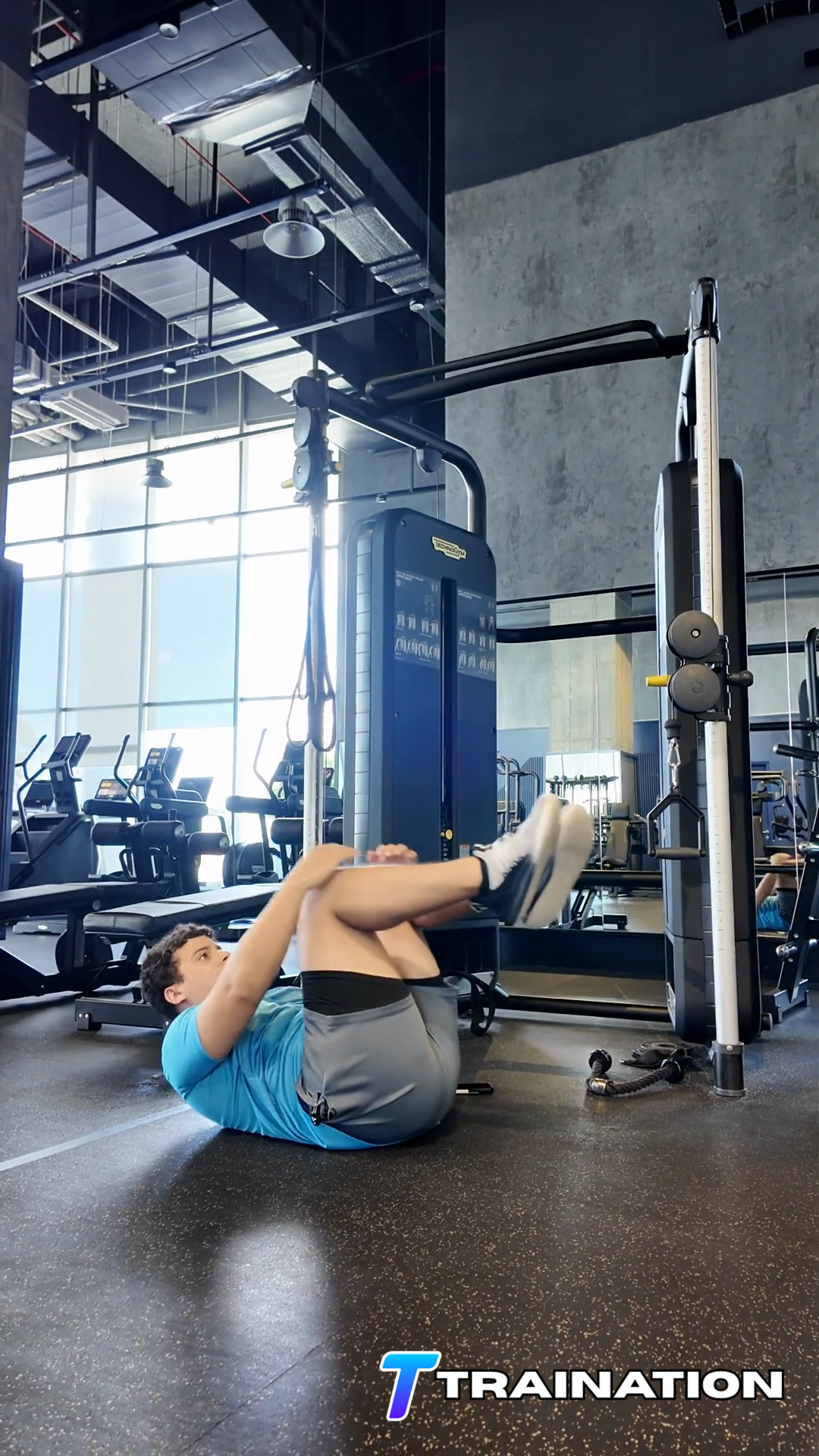
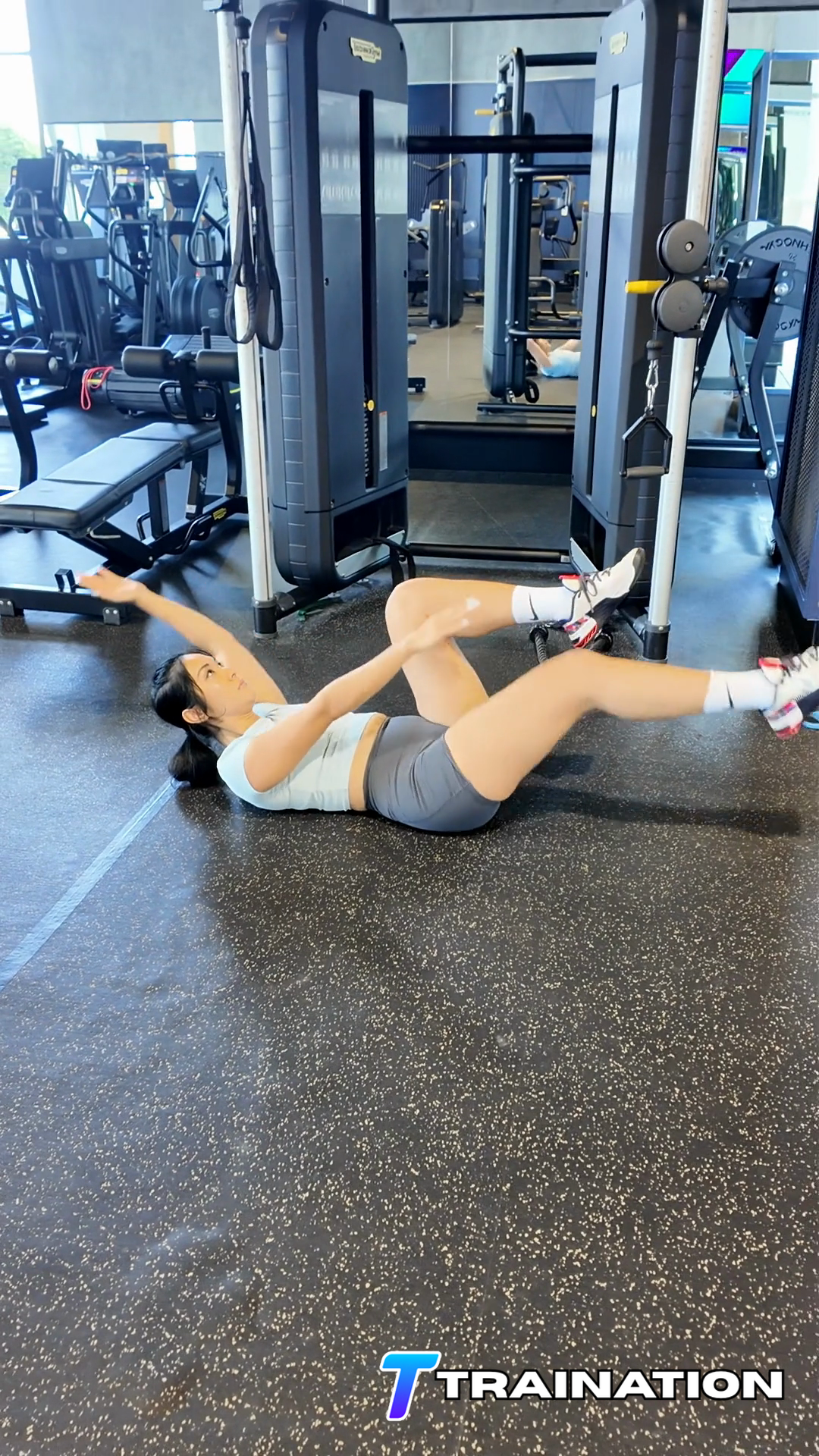
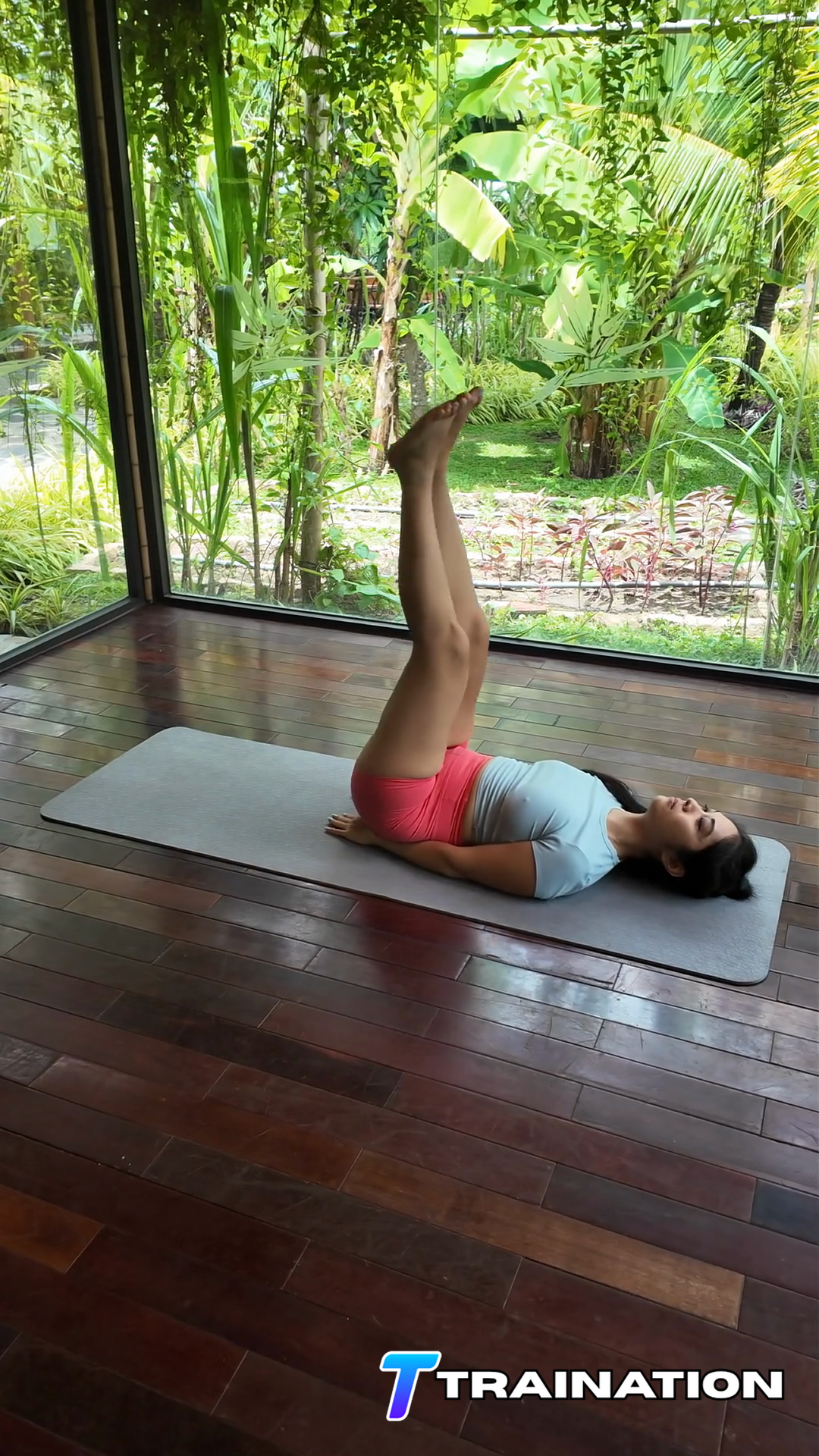
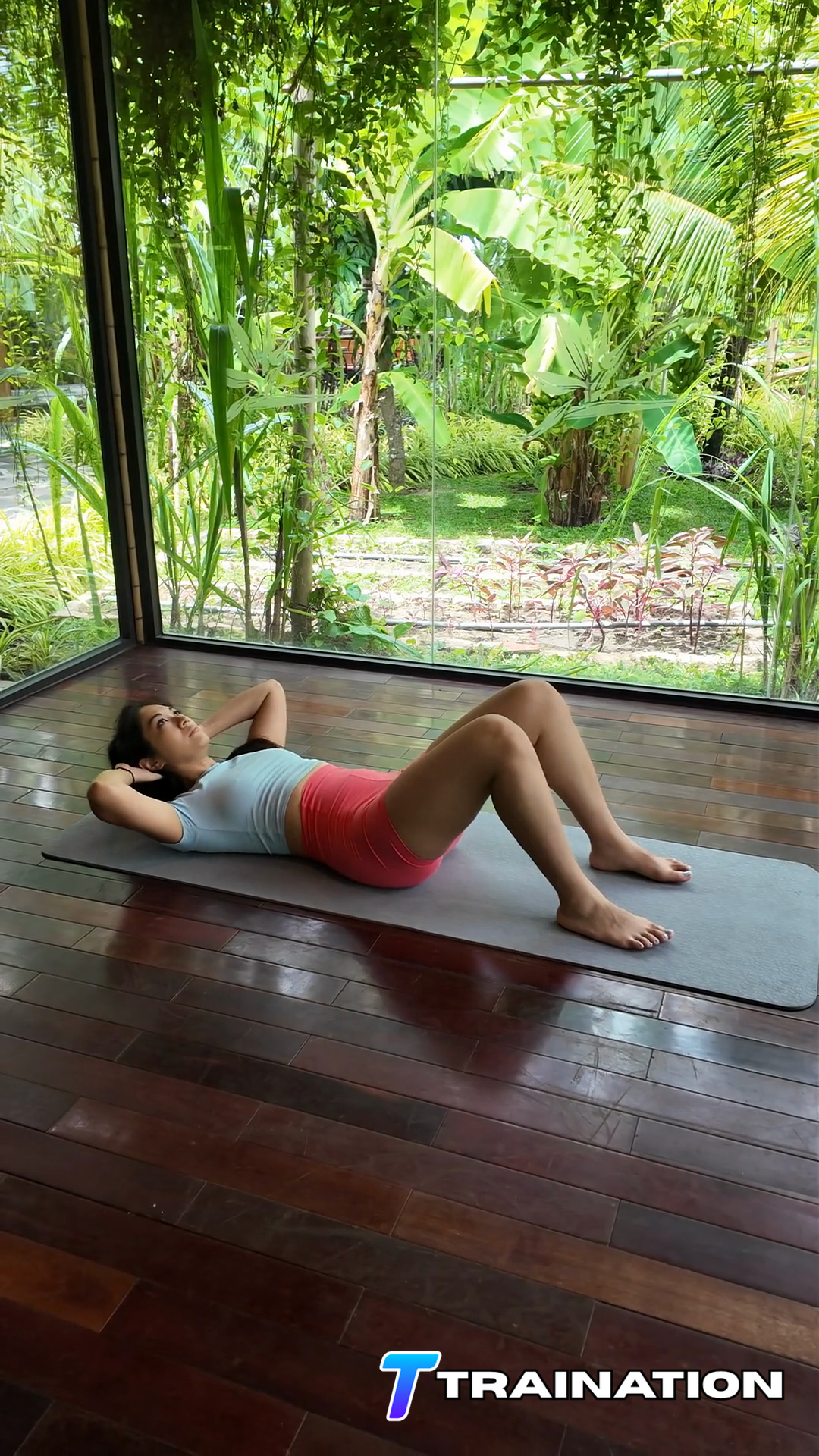
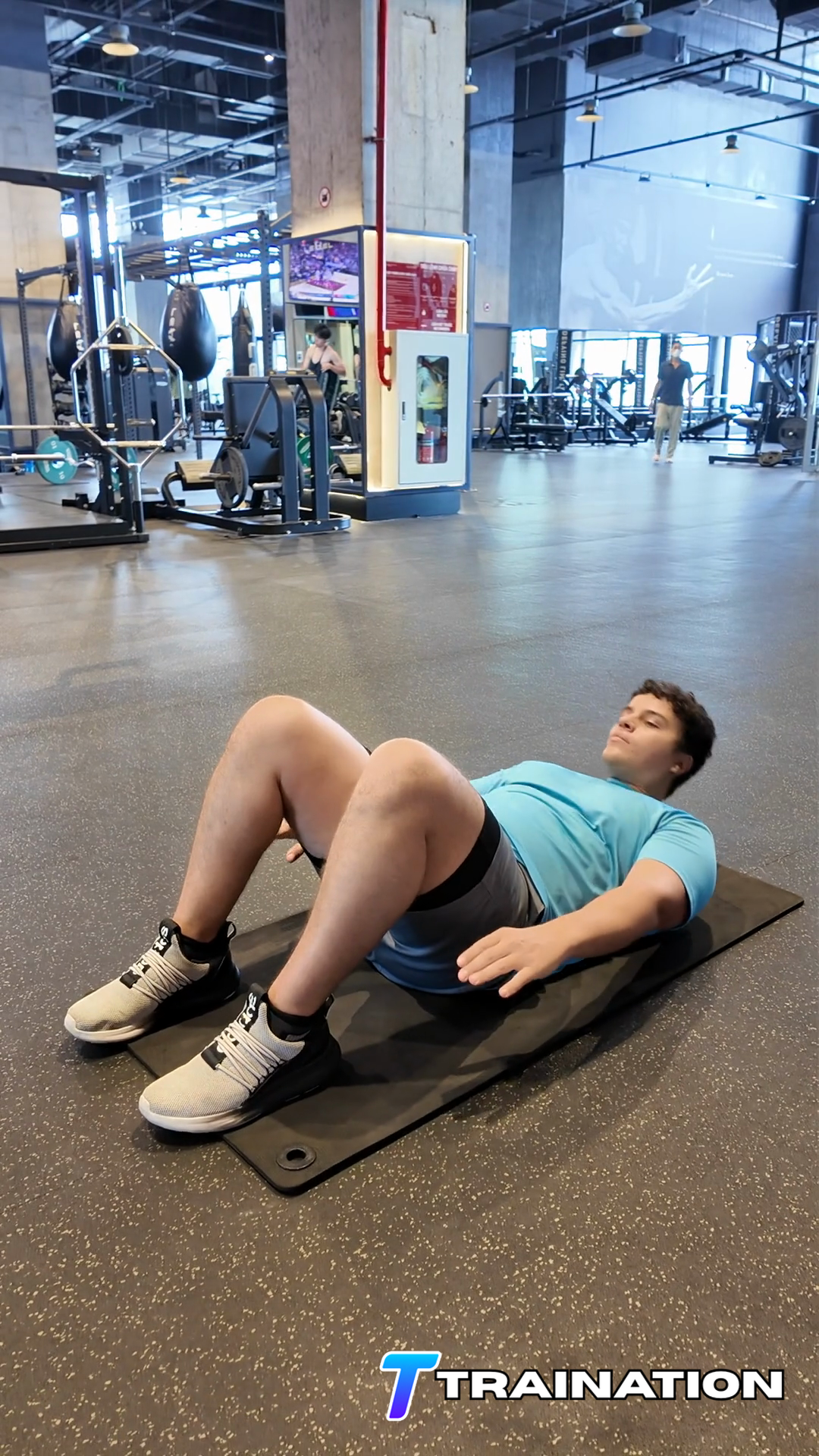
Lie on your back with the knees bent, feet planted, and arms reaching toward the heels. Keep the knees frozen so the legs remain completely still throughout the set.
Glue your lower back to the mat by pressing the lower spine down to remove any arch and lock the pelvis in place.
Bring the ribs down to the hips by drawing the rib cage slightly toward the pelvis to engage the transverse abdominis before moving.
Hold an apple under your chin by keeping space between the chin and chest so the neck stays relaxed.
Slide, do not swing. Move the rib cage laterally toward one hip and heel without throwing the shoulders back and forth.
Create an accordion squeeze by shortening the distance between the lowest rib and the hip crest as you reach.
Breathe out on each reach, pause at the pinch for one full second, and breathe in as you return smoothly to the centre.
Alternate sides while keeping the lower back pressed down, the ribs controlled, and both knees completely still.
Keep the knees aligned; if the hips turn with the rib cage, pivot the feet instead of twisting through planted knees.
Move through a smooth trunk range rather than throwing the arms or load from side to side.
Stop before the resistance drags the ribs away from a stable pelvis.
Keep the shoulders and pelvis supported throughout both directions.
Place Alternate Heel Touches after the main compound lifts, in a focused core block, or beside an exercise that does not require a fresh trunk.
Use two to four times per week while accounting for trunk work already supplied by squats, hinges, carries, and overhead lifting.
| Goal | Sets | Reps or time | Rest | Effort and execution |
|---|---|---|---|---|
| Control / technique | 2–3 | 5–8 reps per side | 45–75 sec | Stop well before position changes |
| Strength / endurance | 2–4 | 8–15 reps per side | 60–90 sec | Stop while 1–3 good-form reps are still possible |
Scale the movement
Train the trunk to resist rotation before producing a larger rotational range.
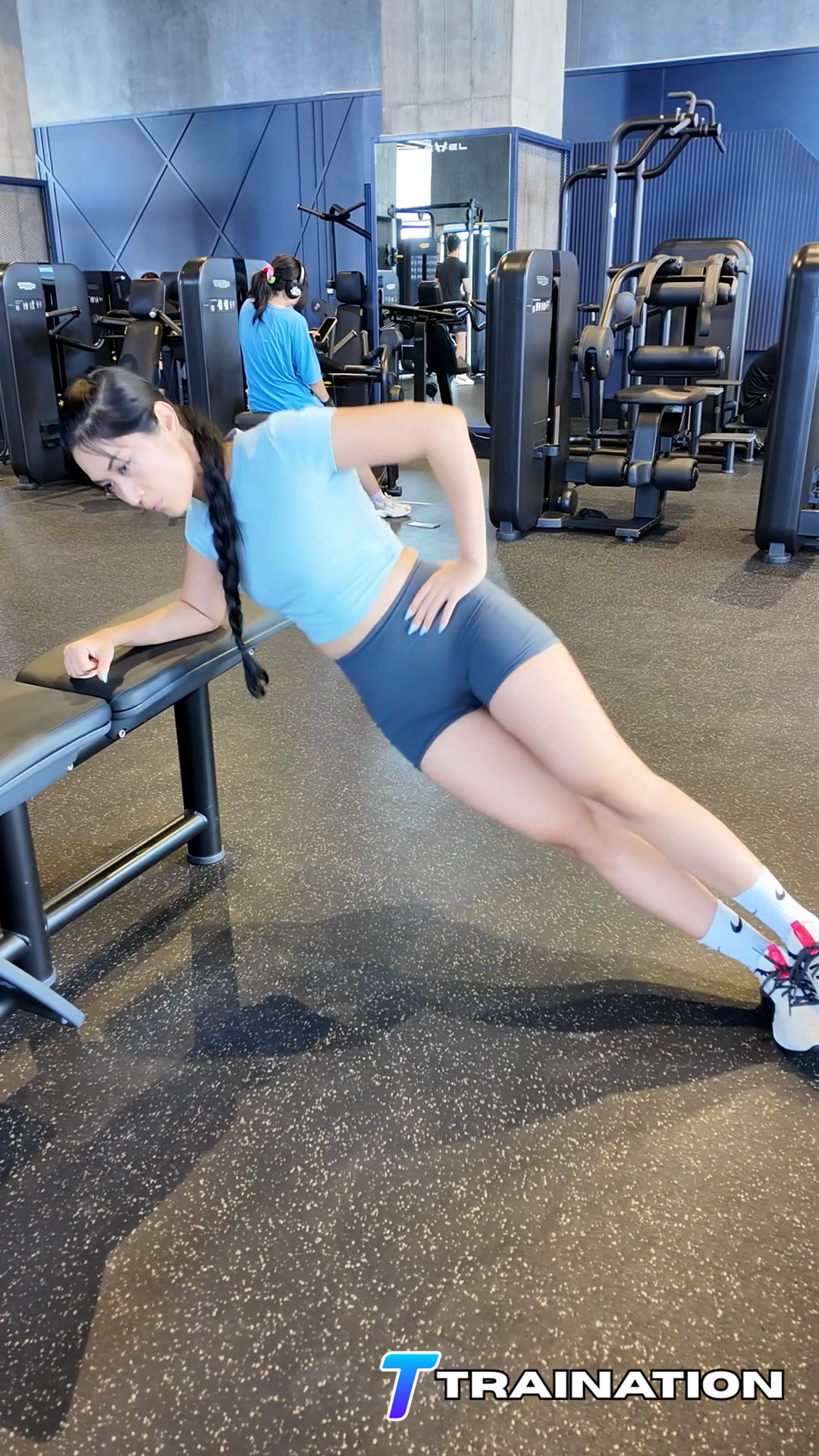
Stand tall with a dumbbell in one hand and shorten one side of the waist at a time while keeping the hips still.
Pause at the end of the controlled range without letting the resistance pull farther.
Reduce lower-body contribution and increase trunk control with a kneeling base.
Turn Alternate Heel Touches and the rest of your exercise library into repeatable client programs.
Explore the workout builder