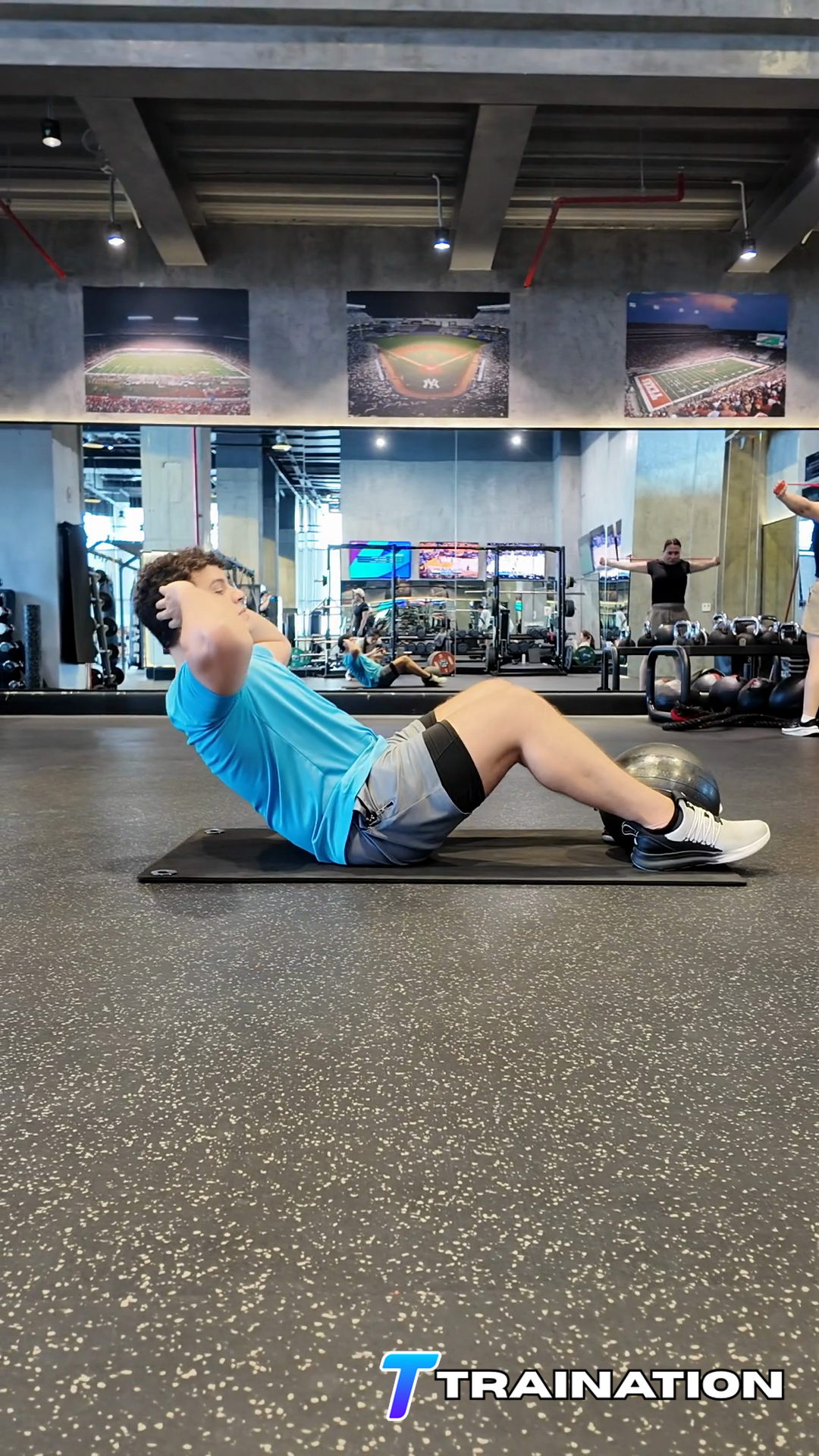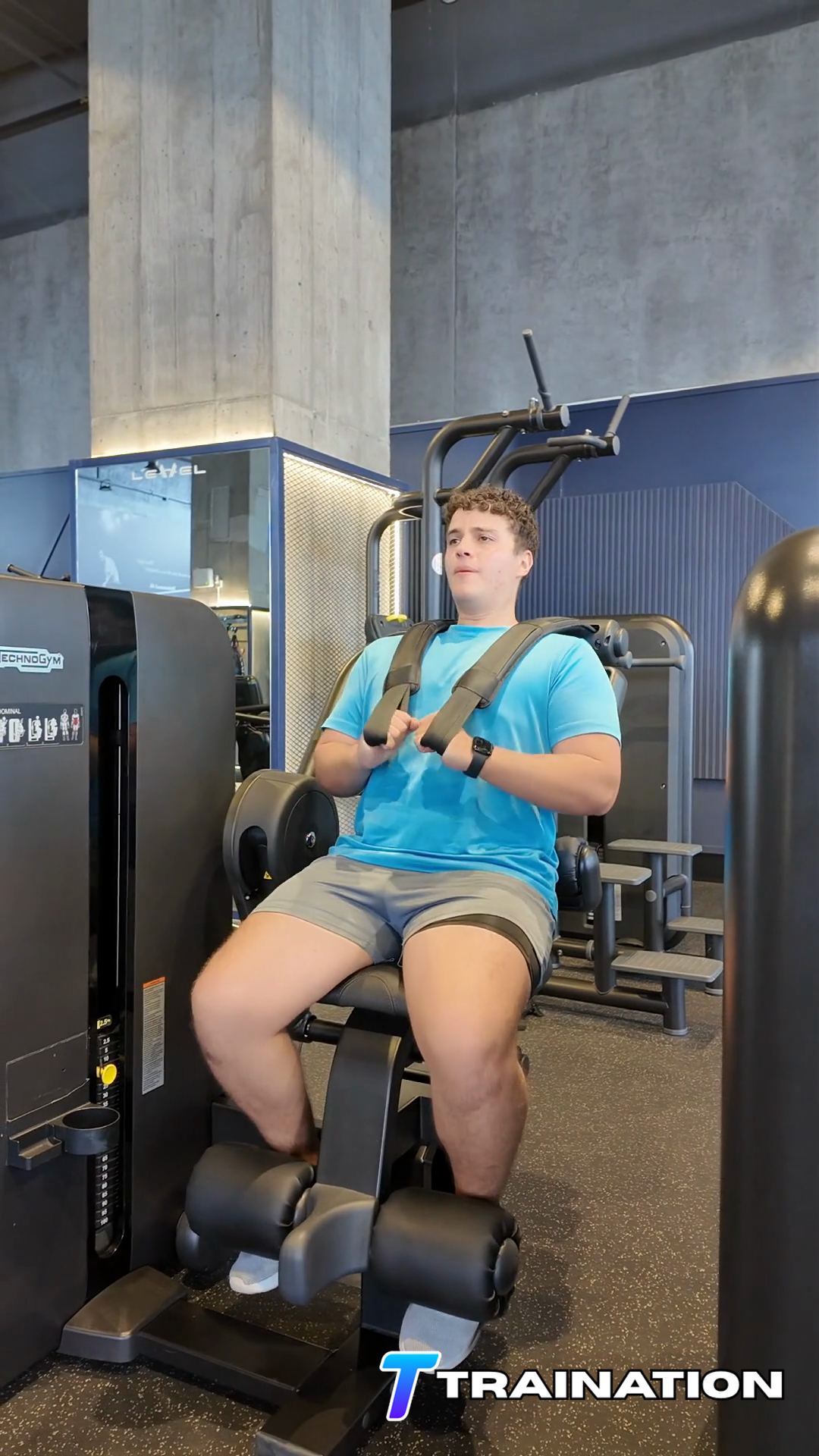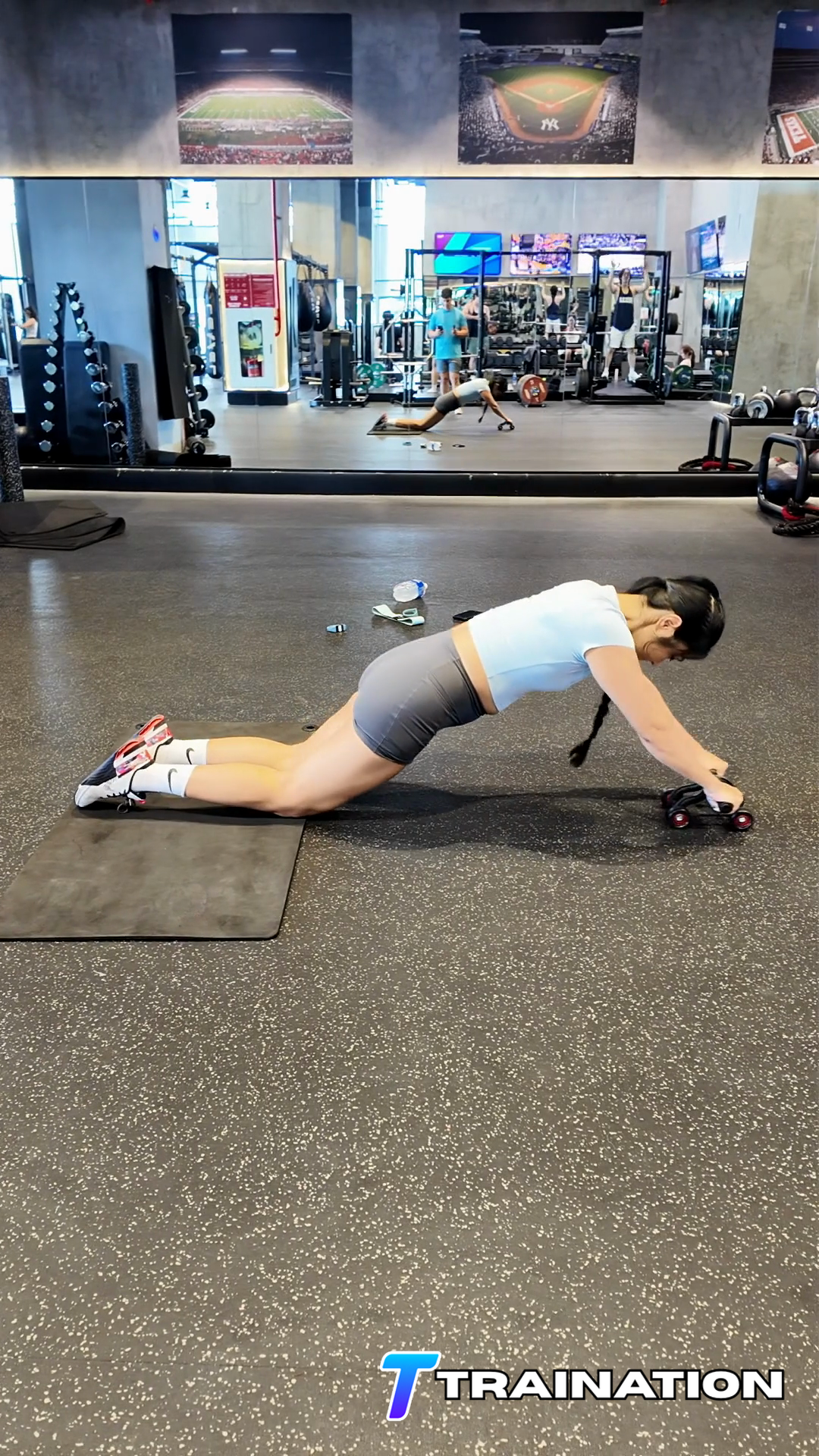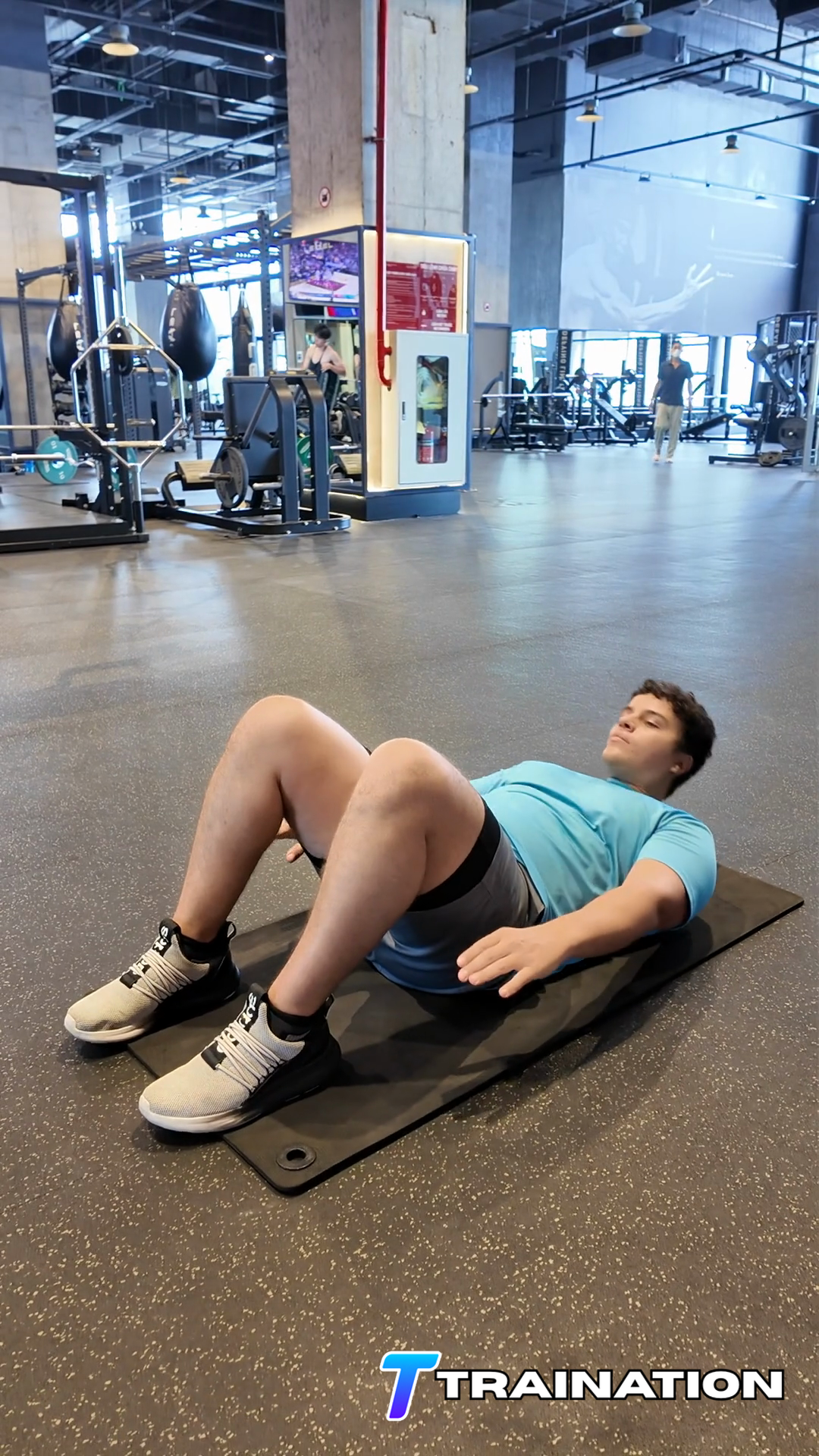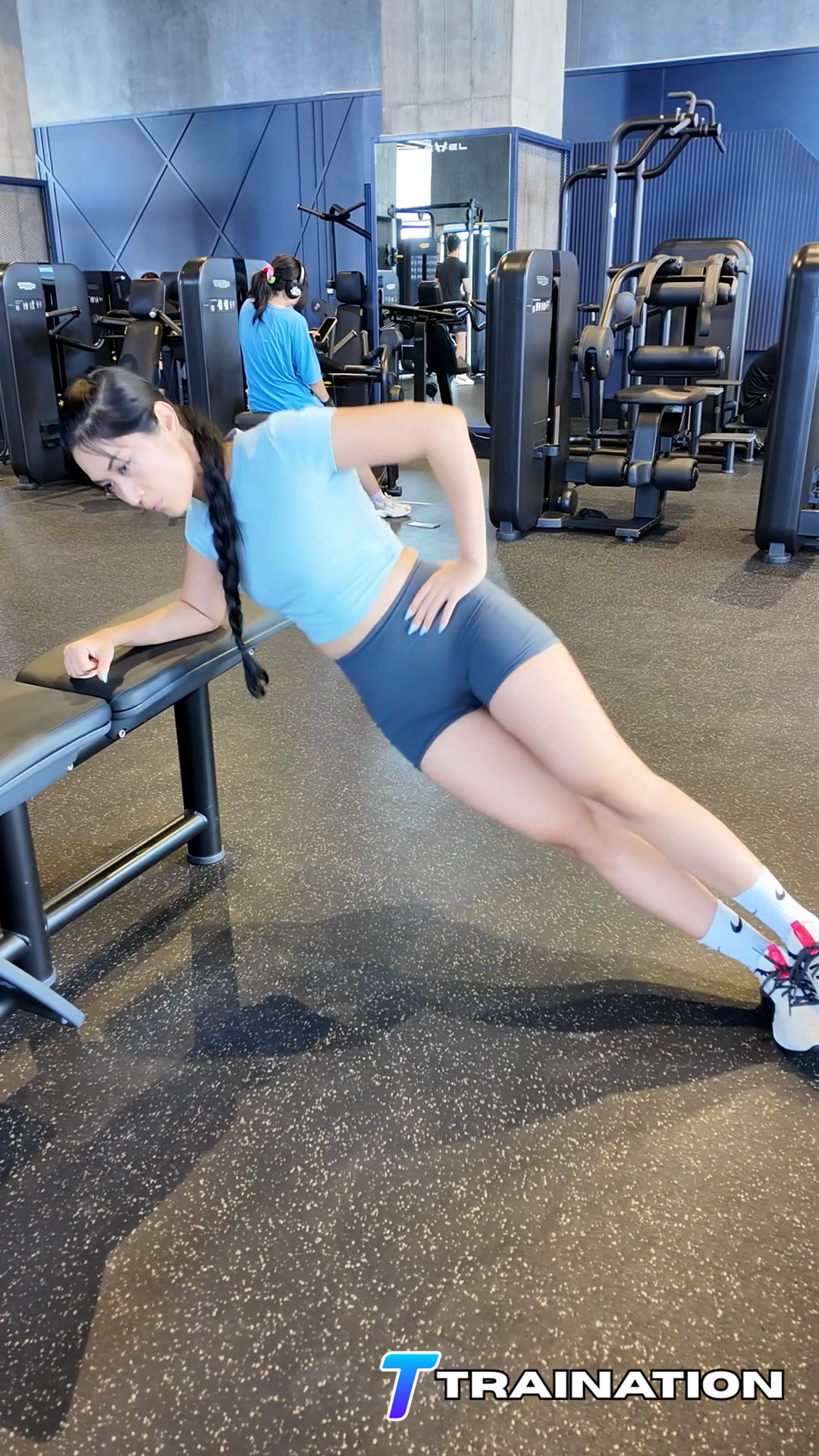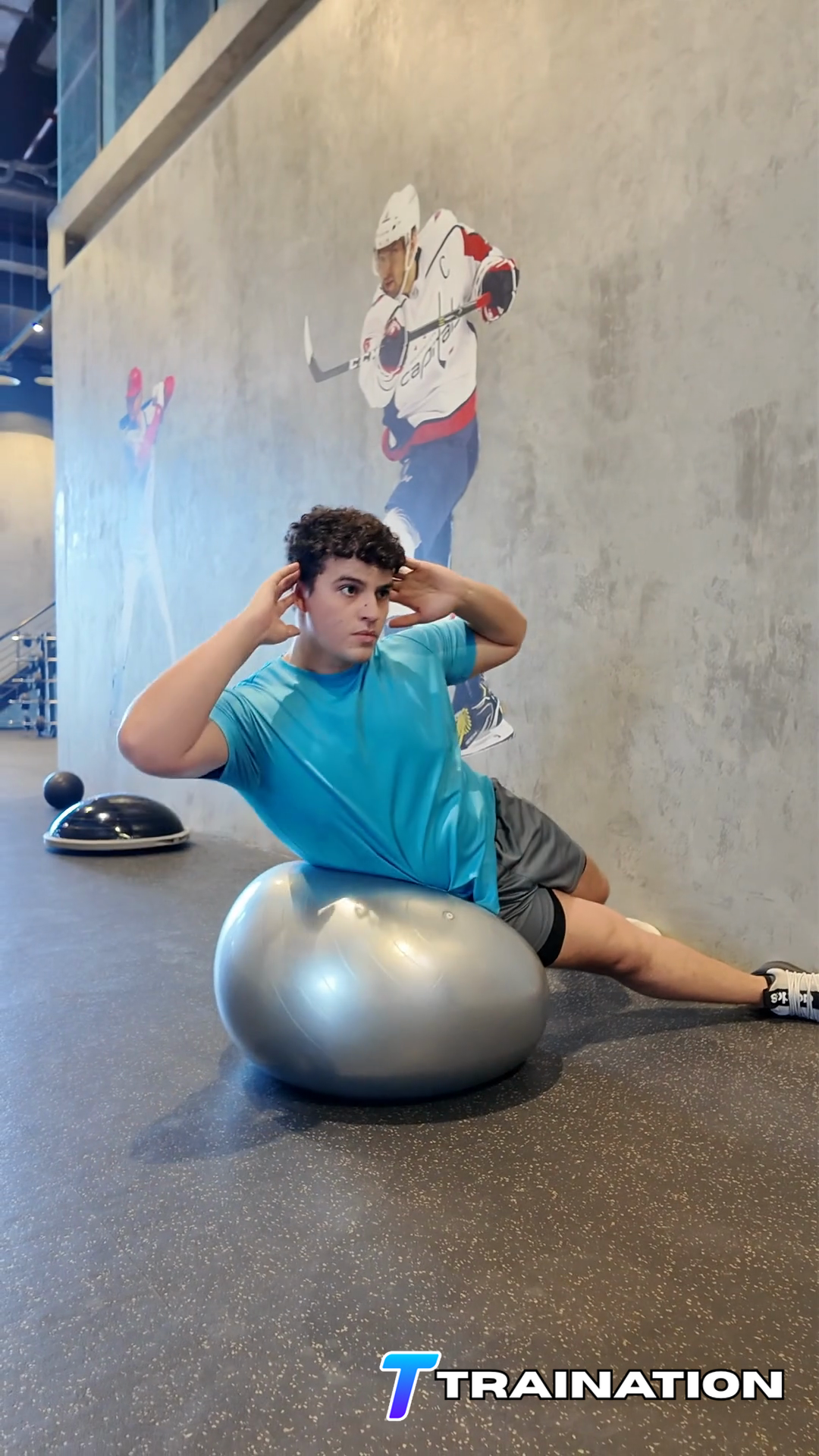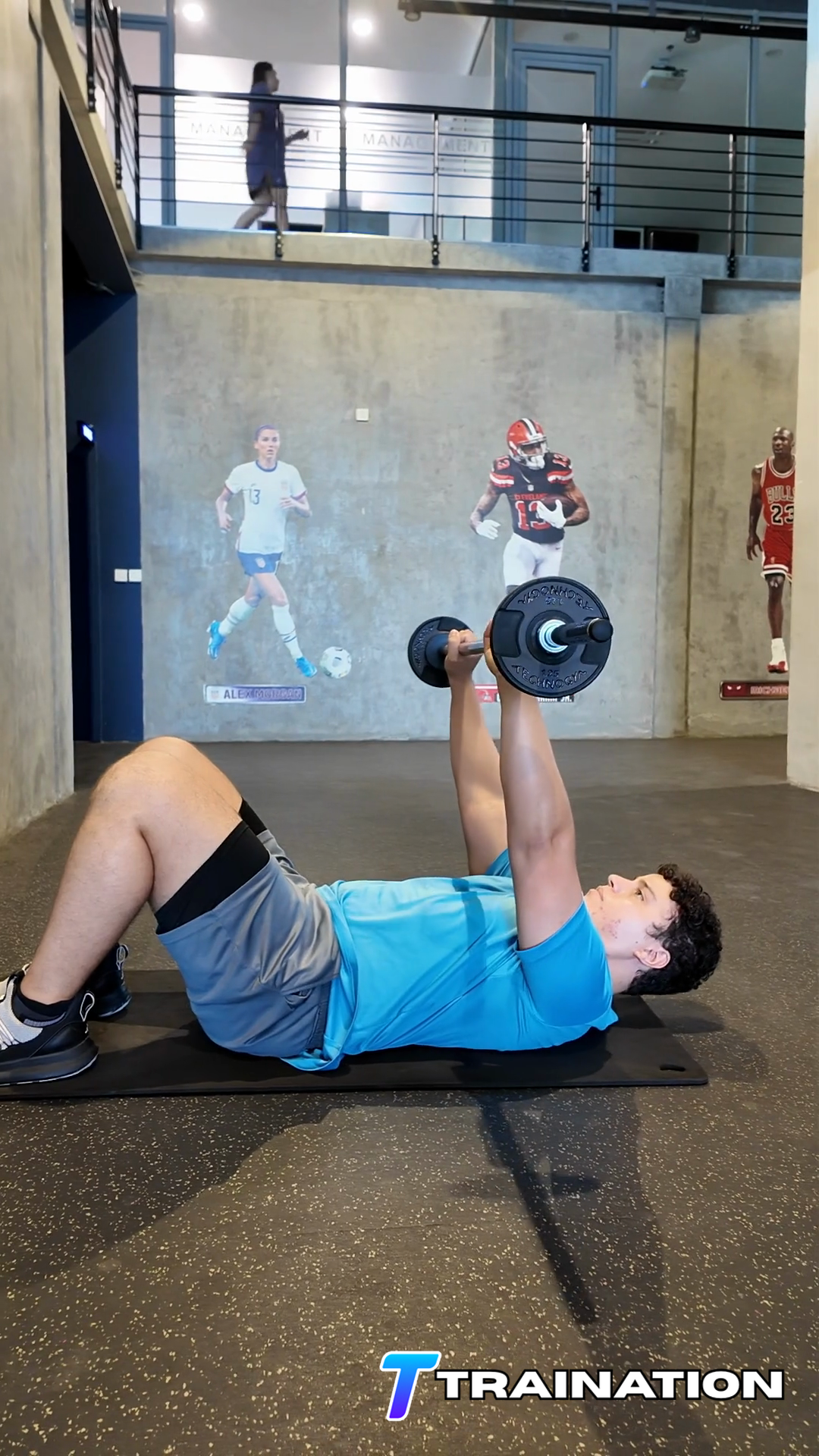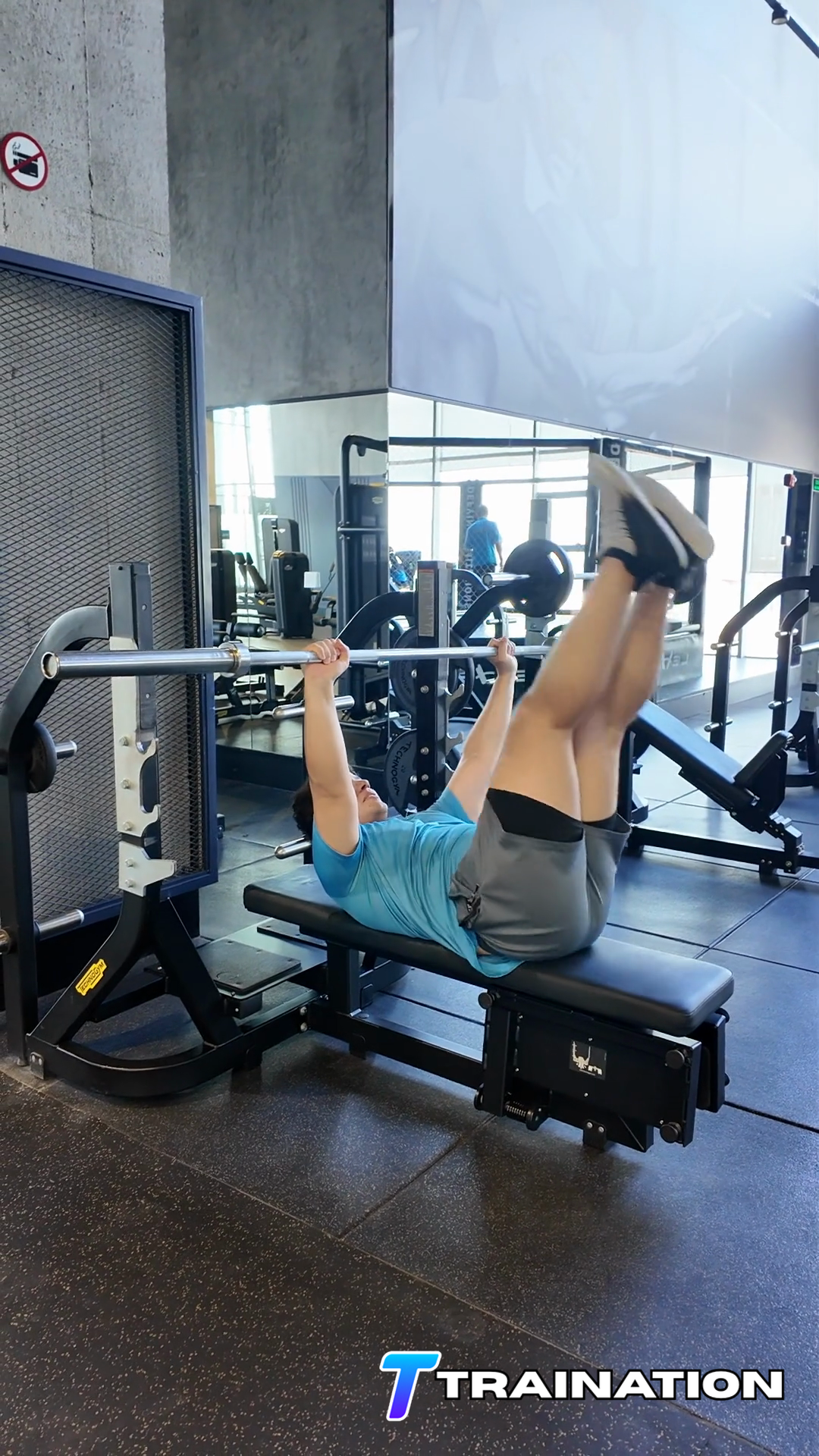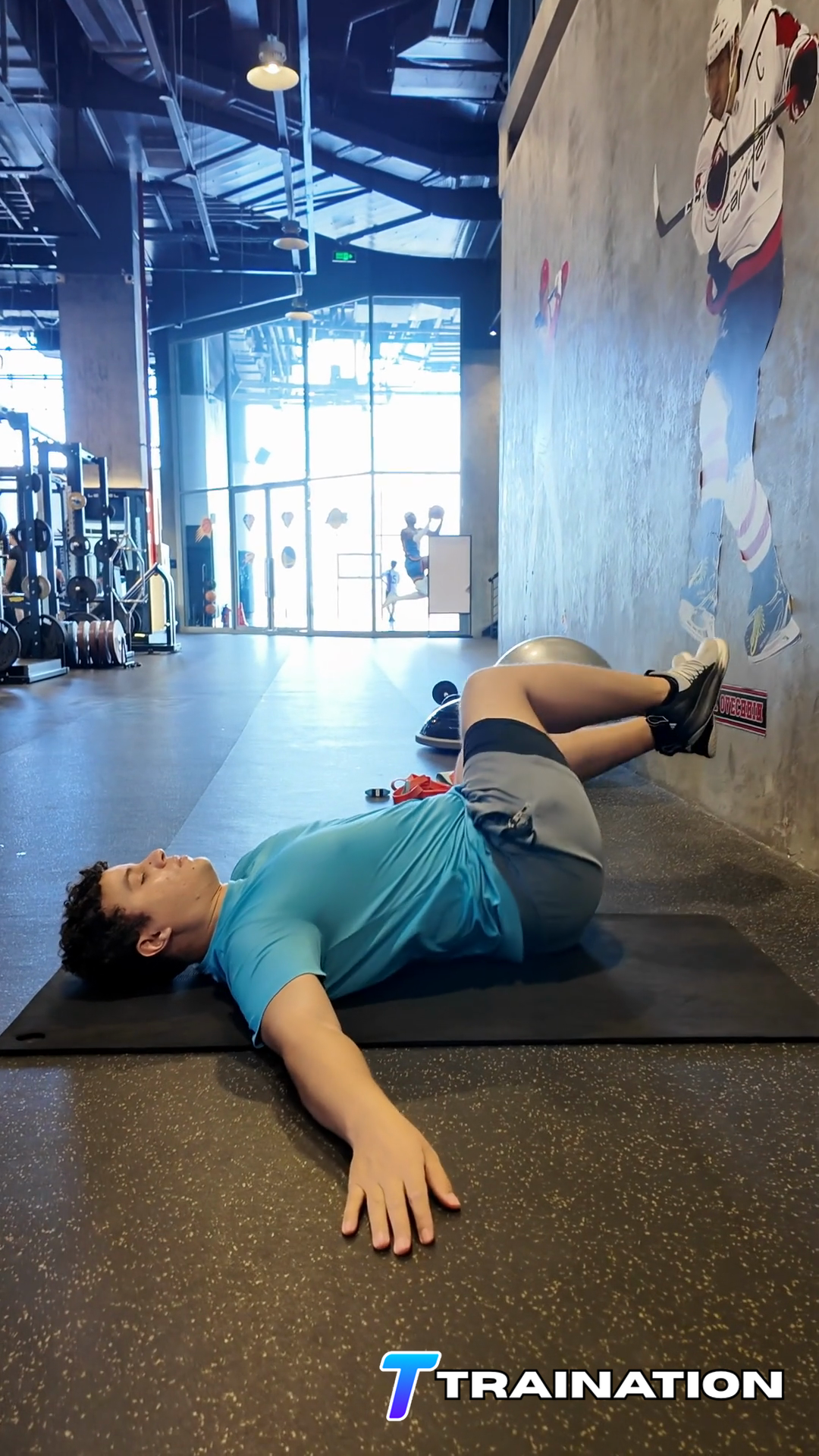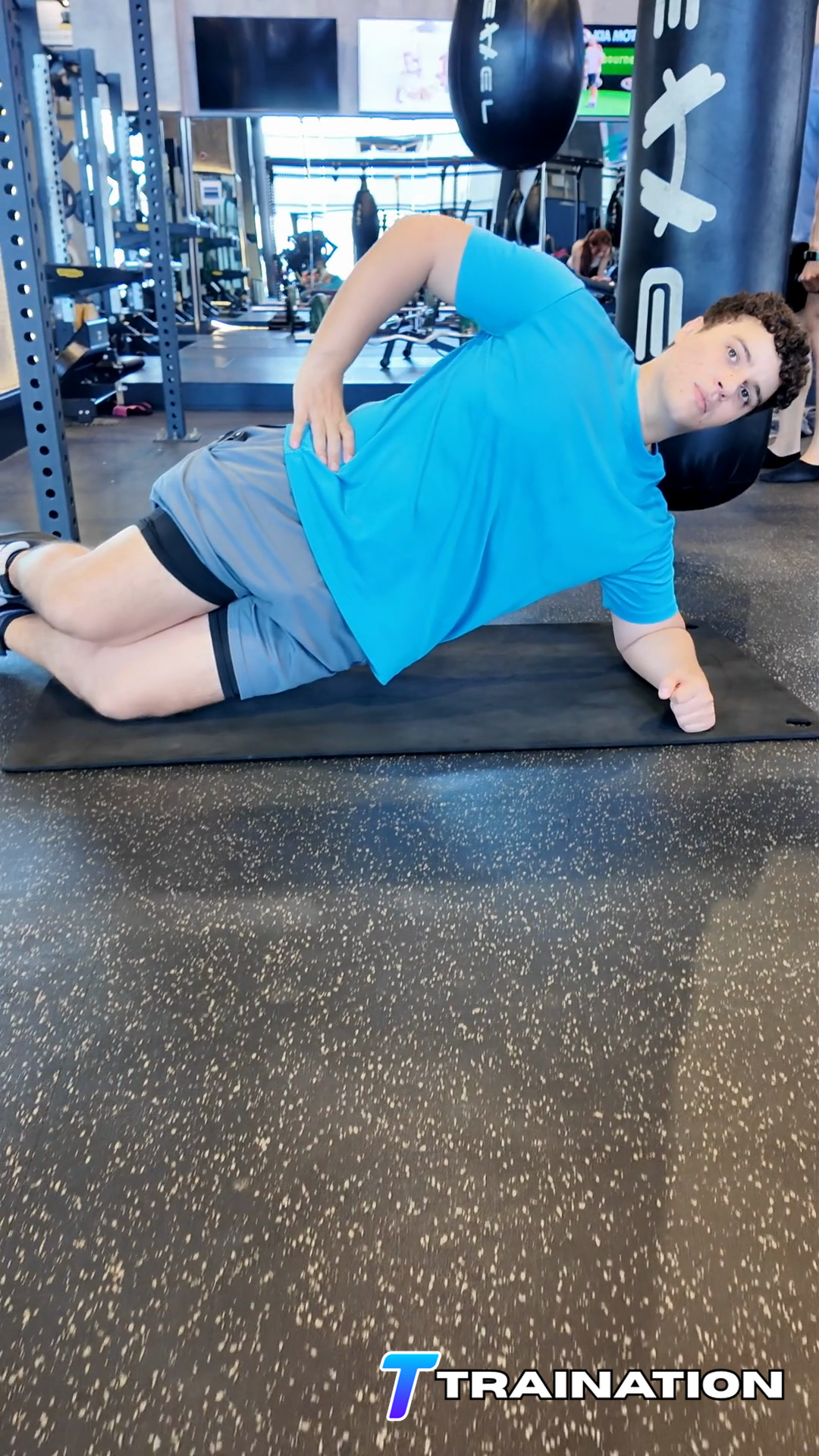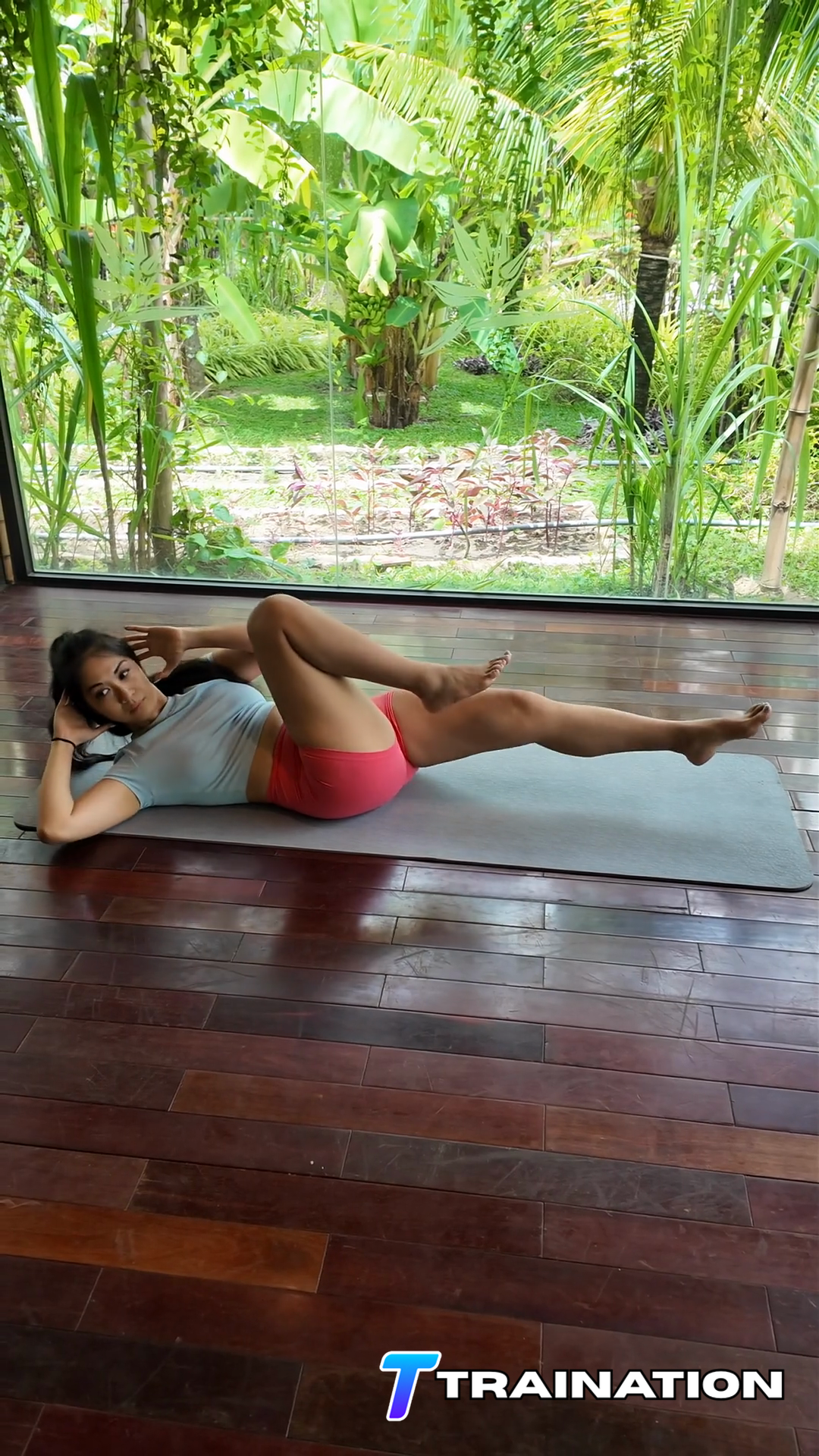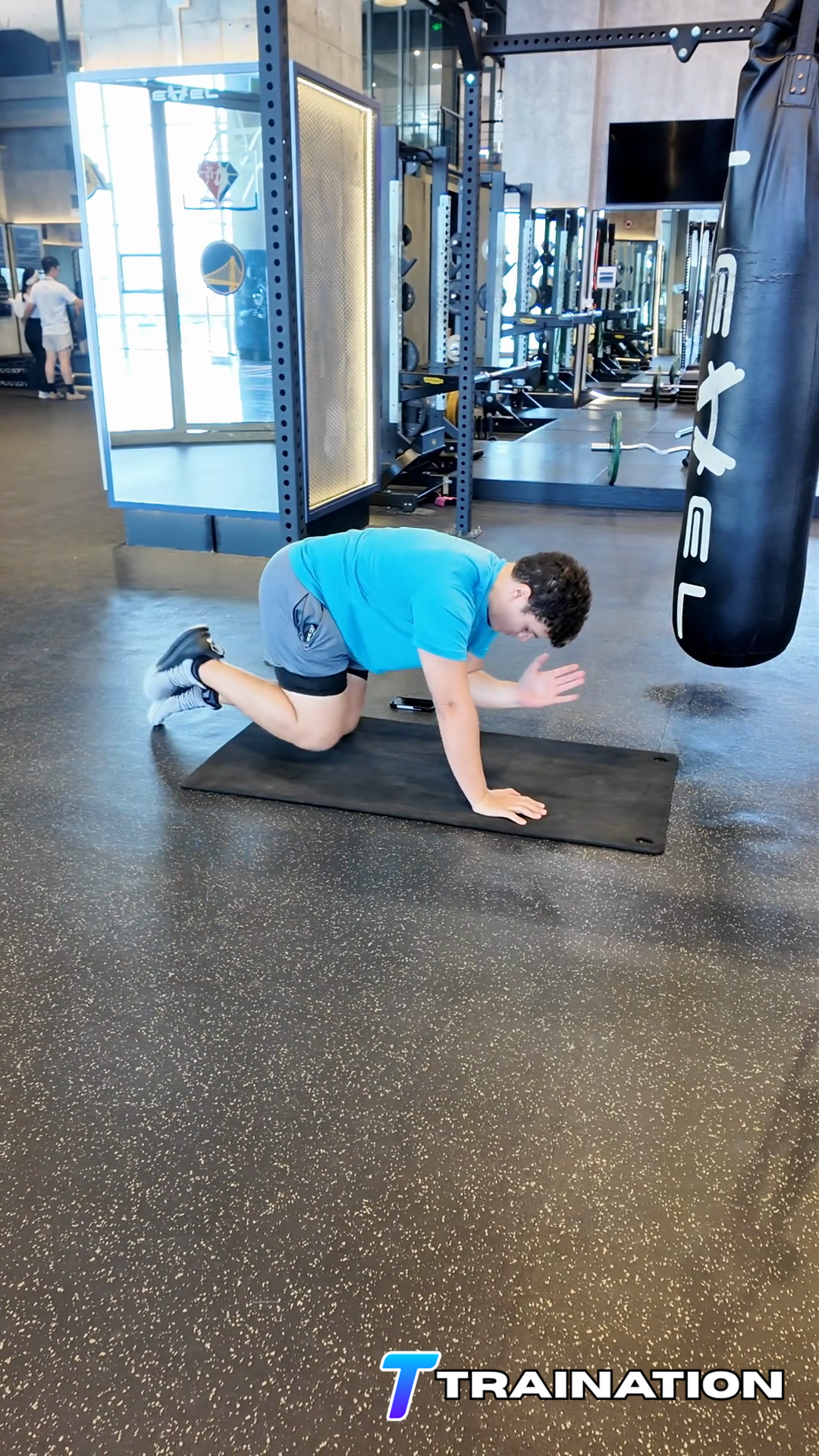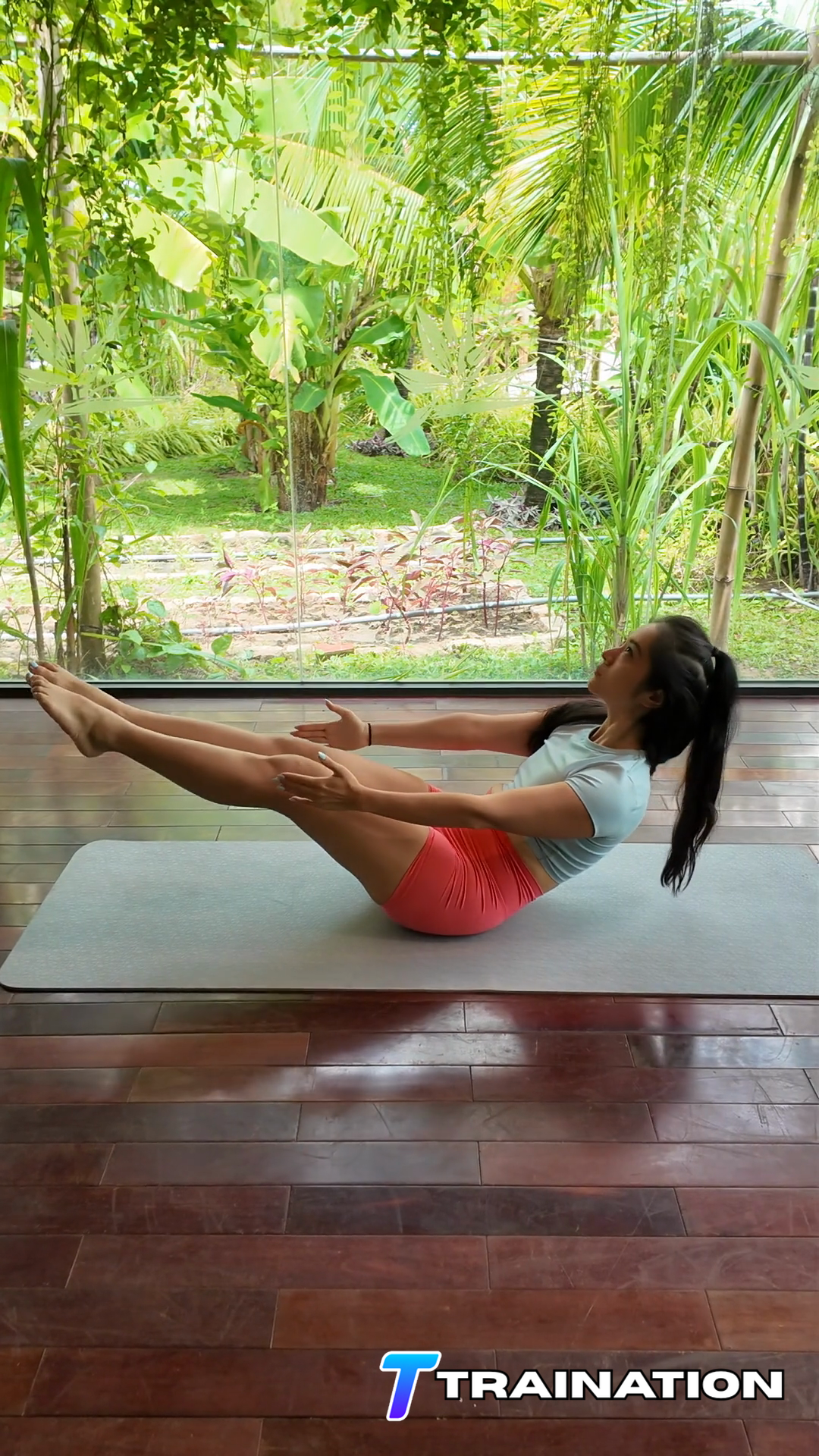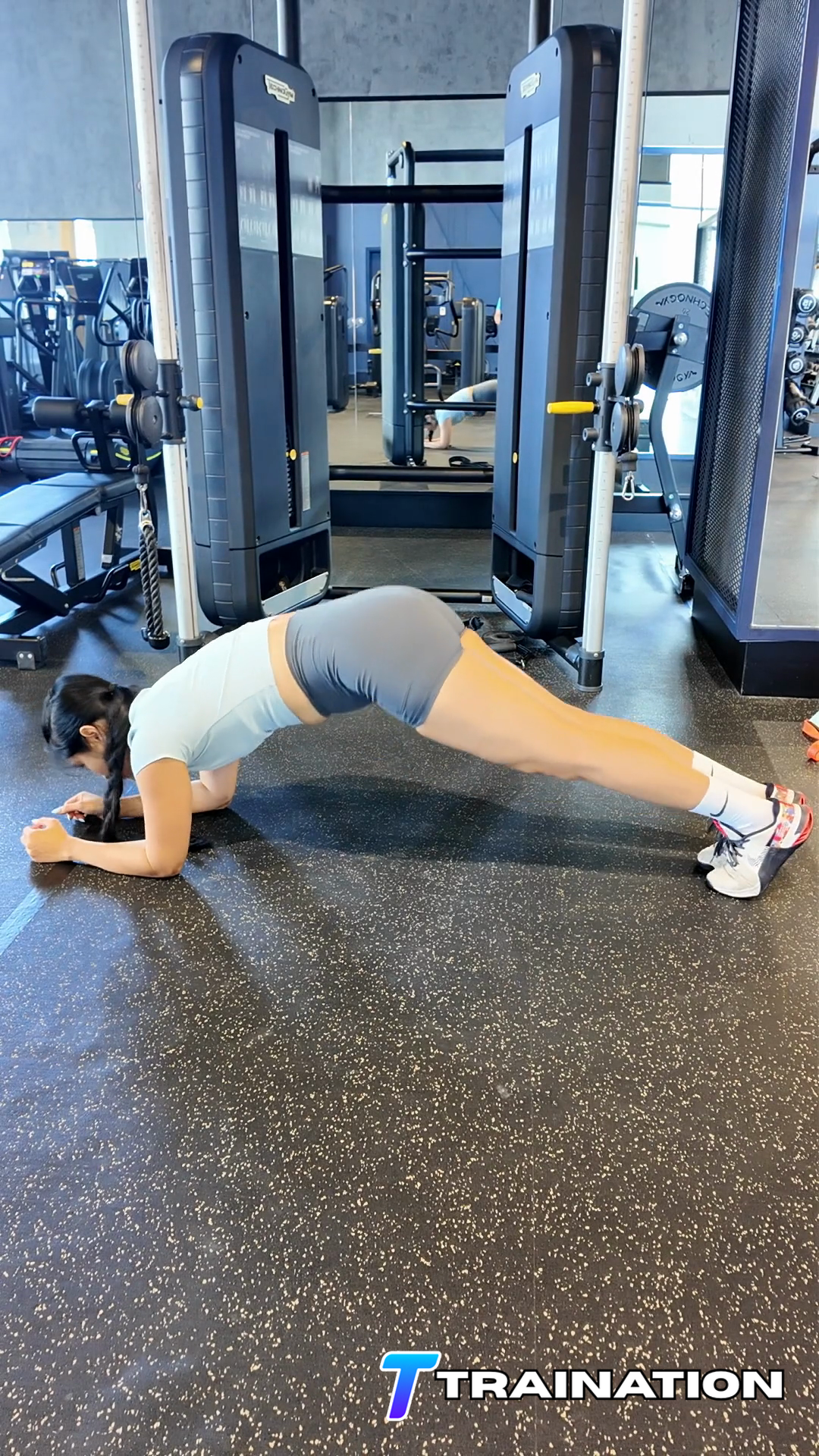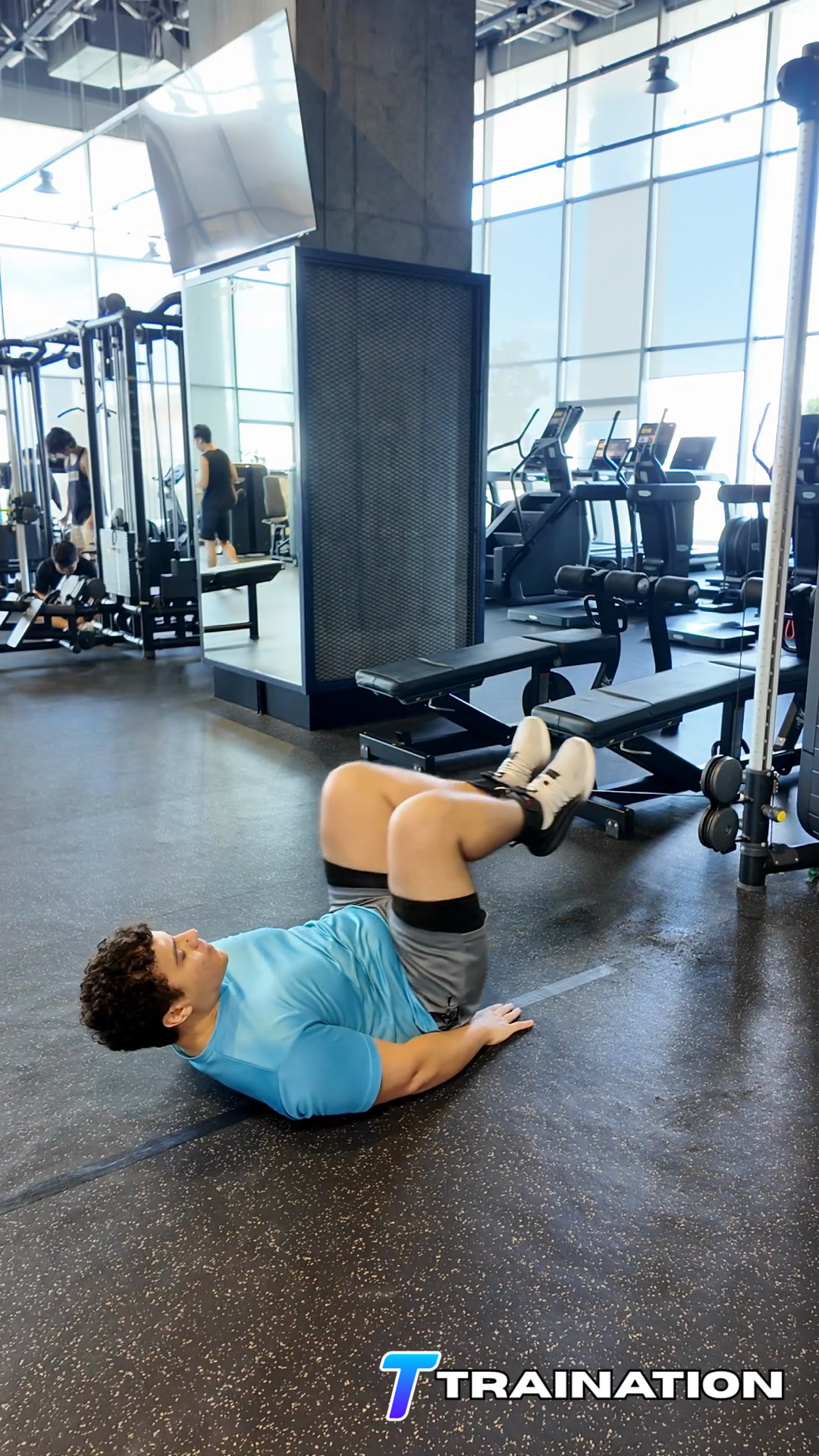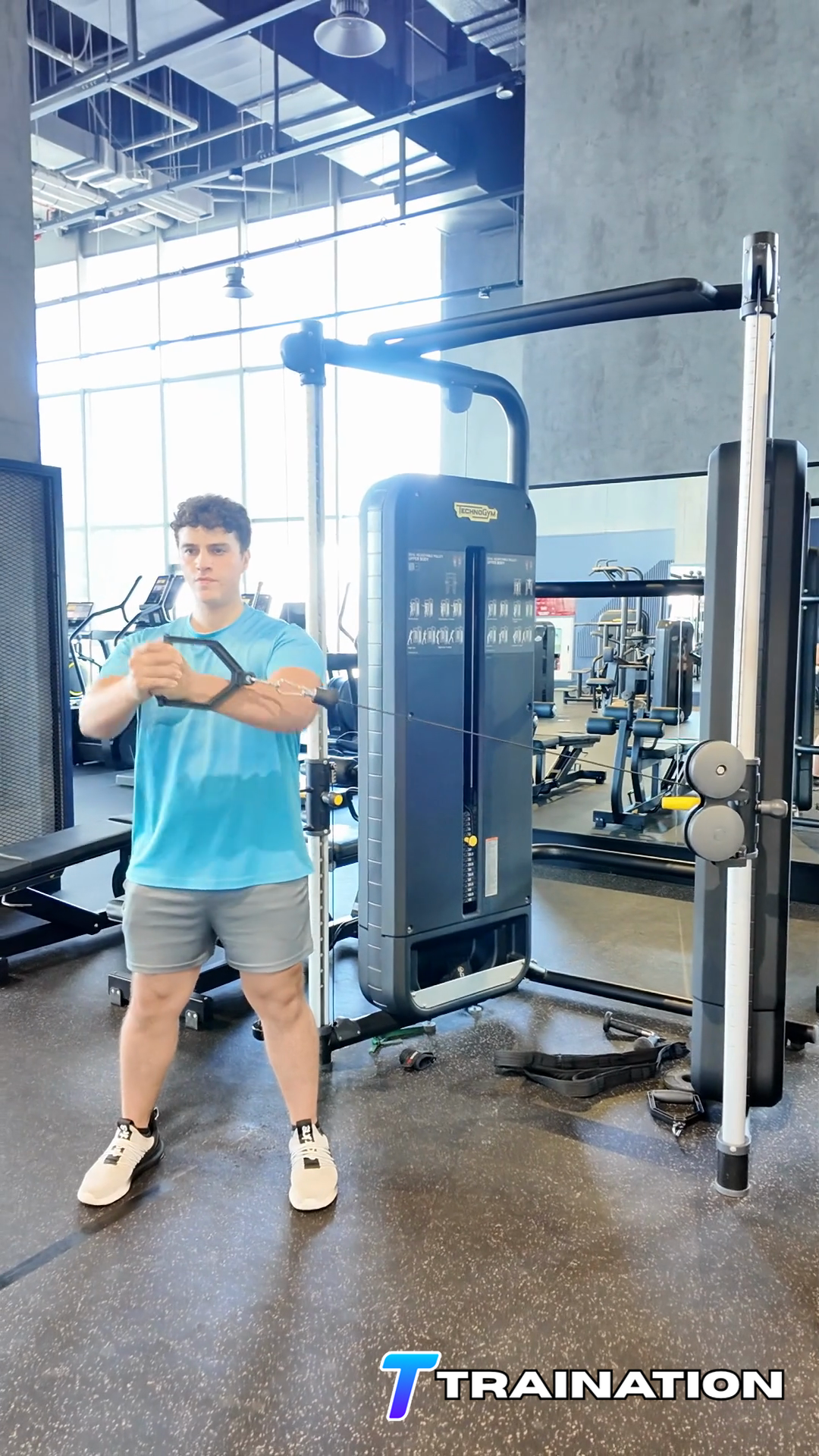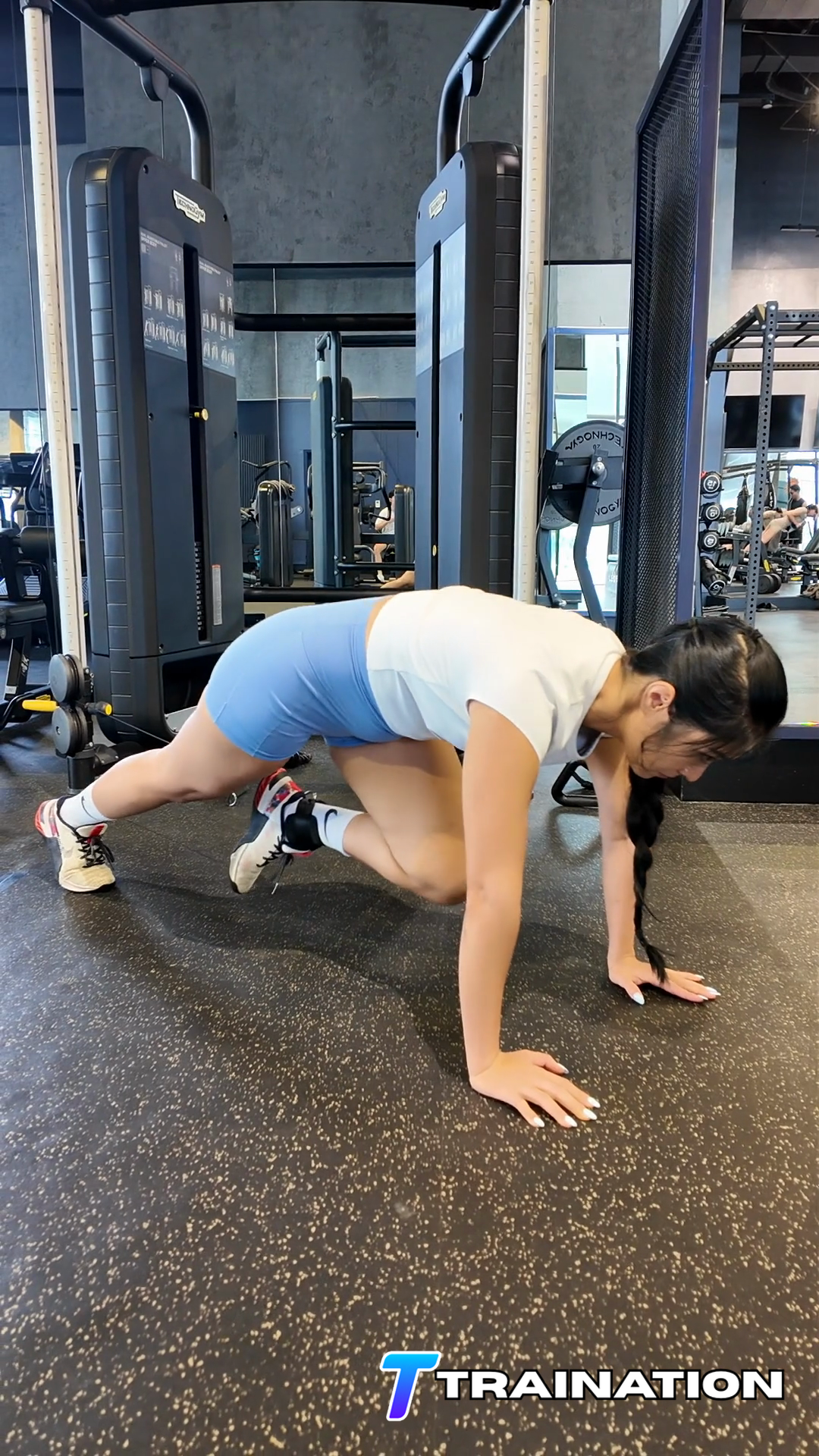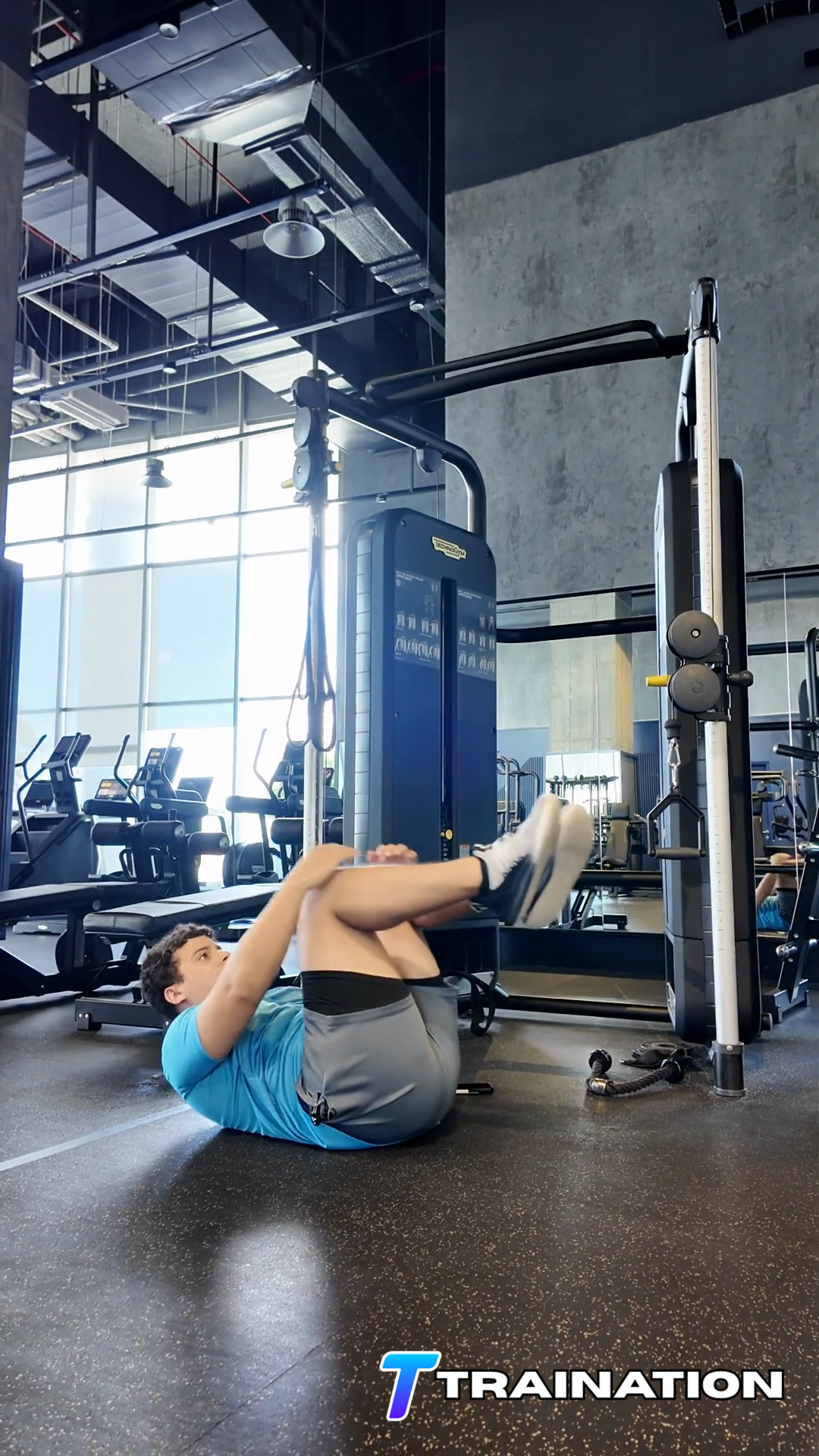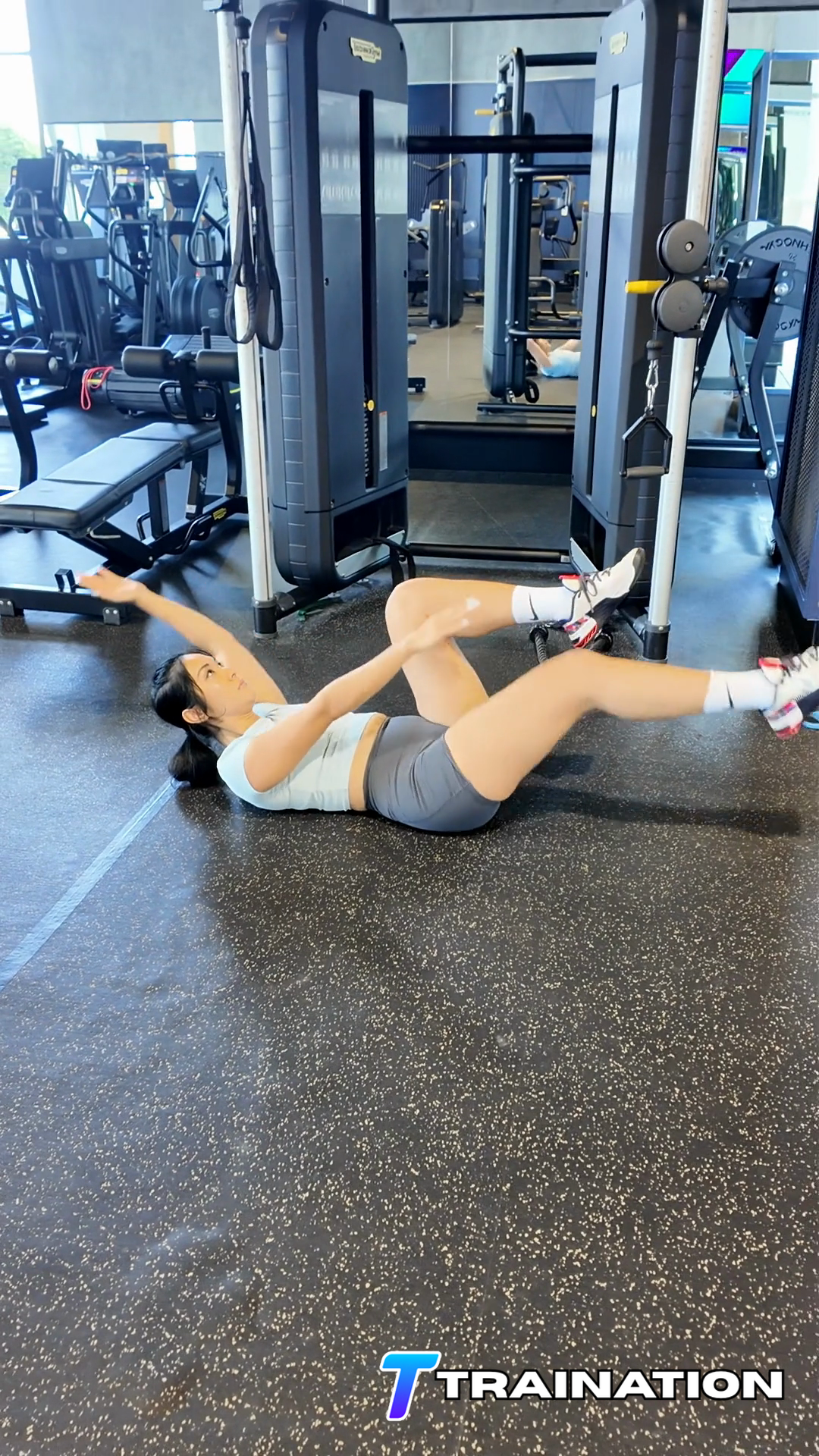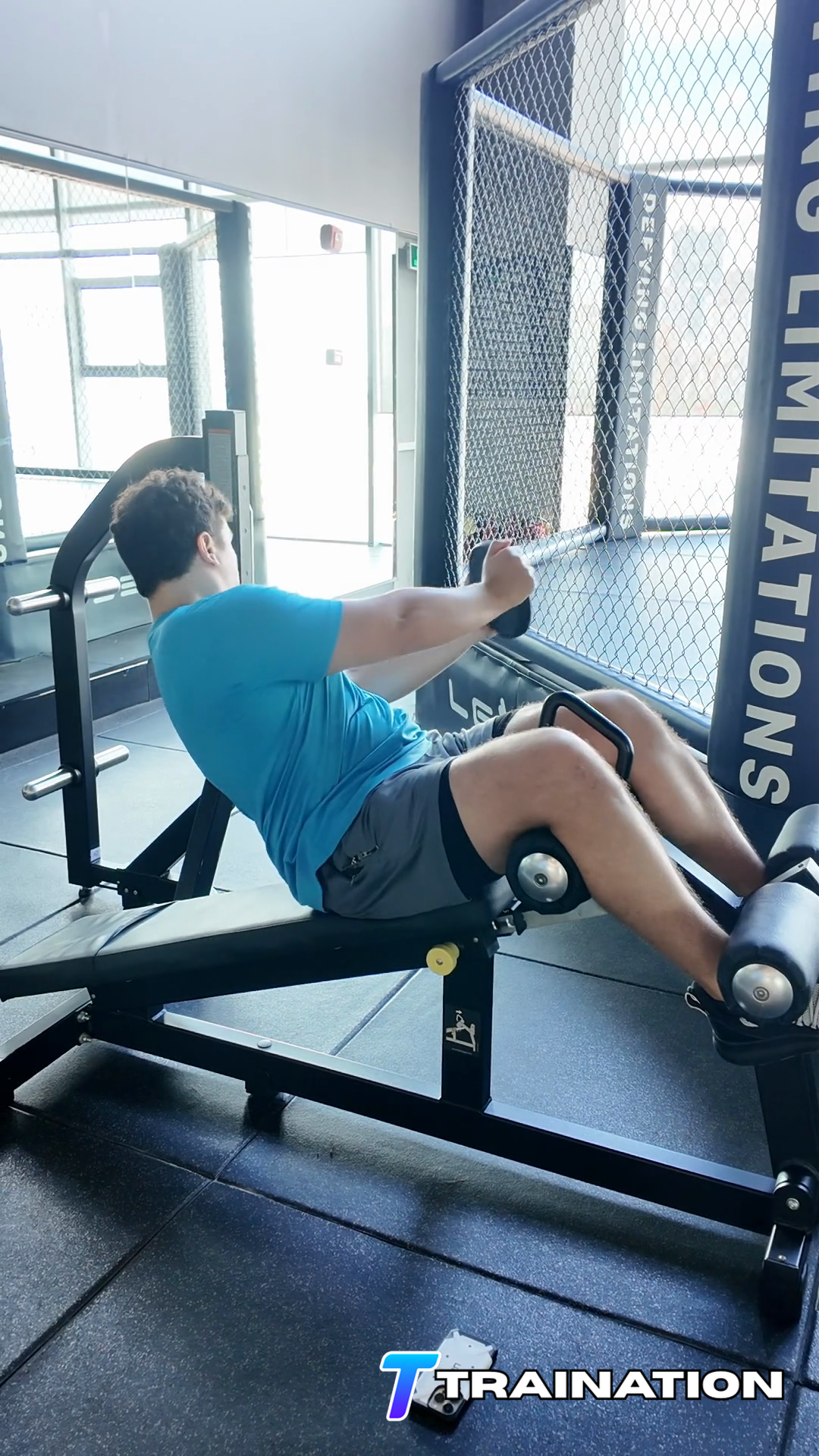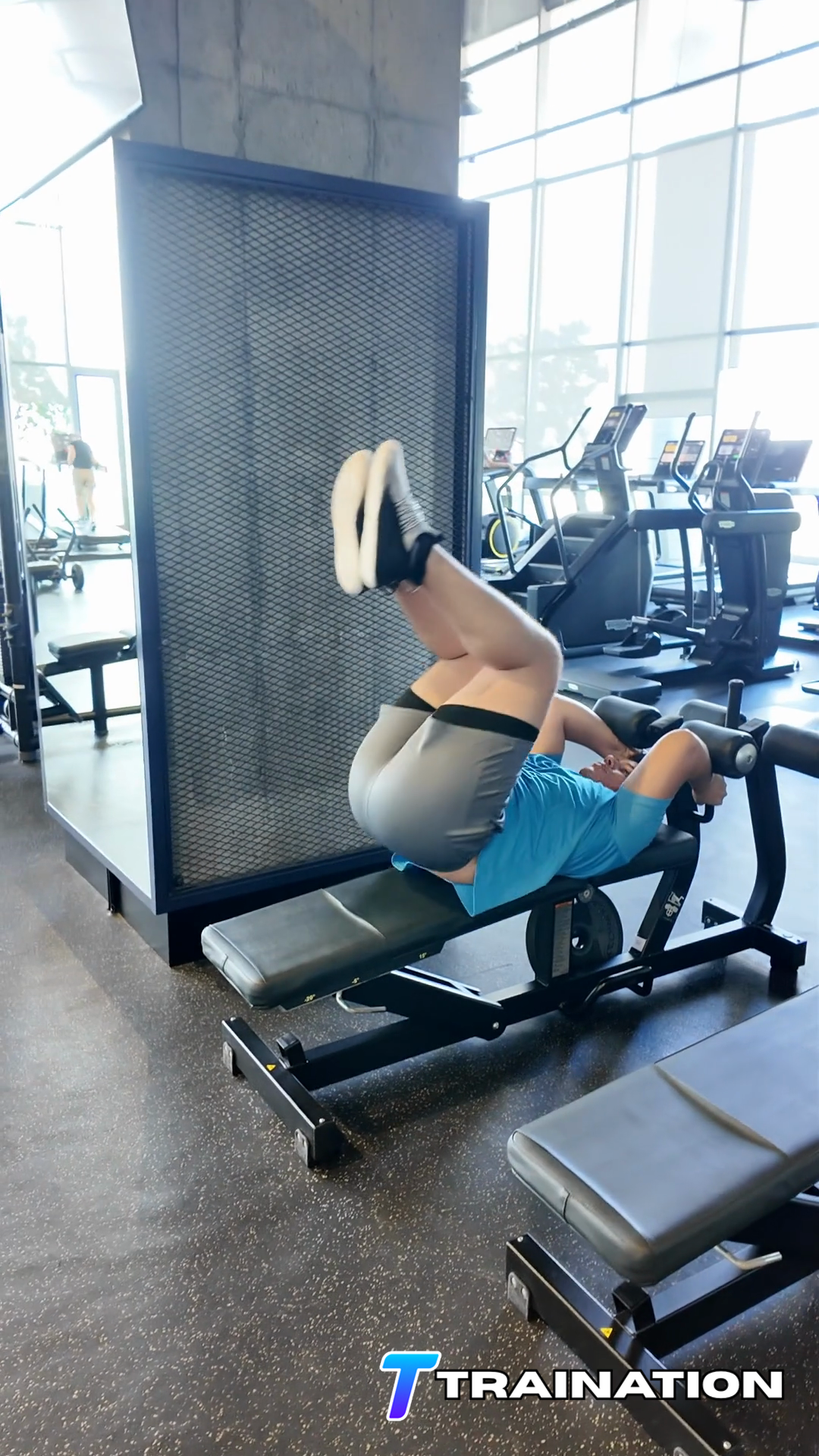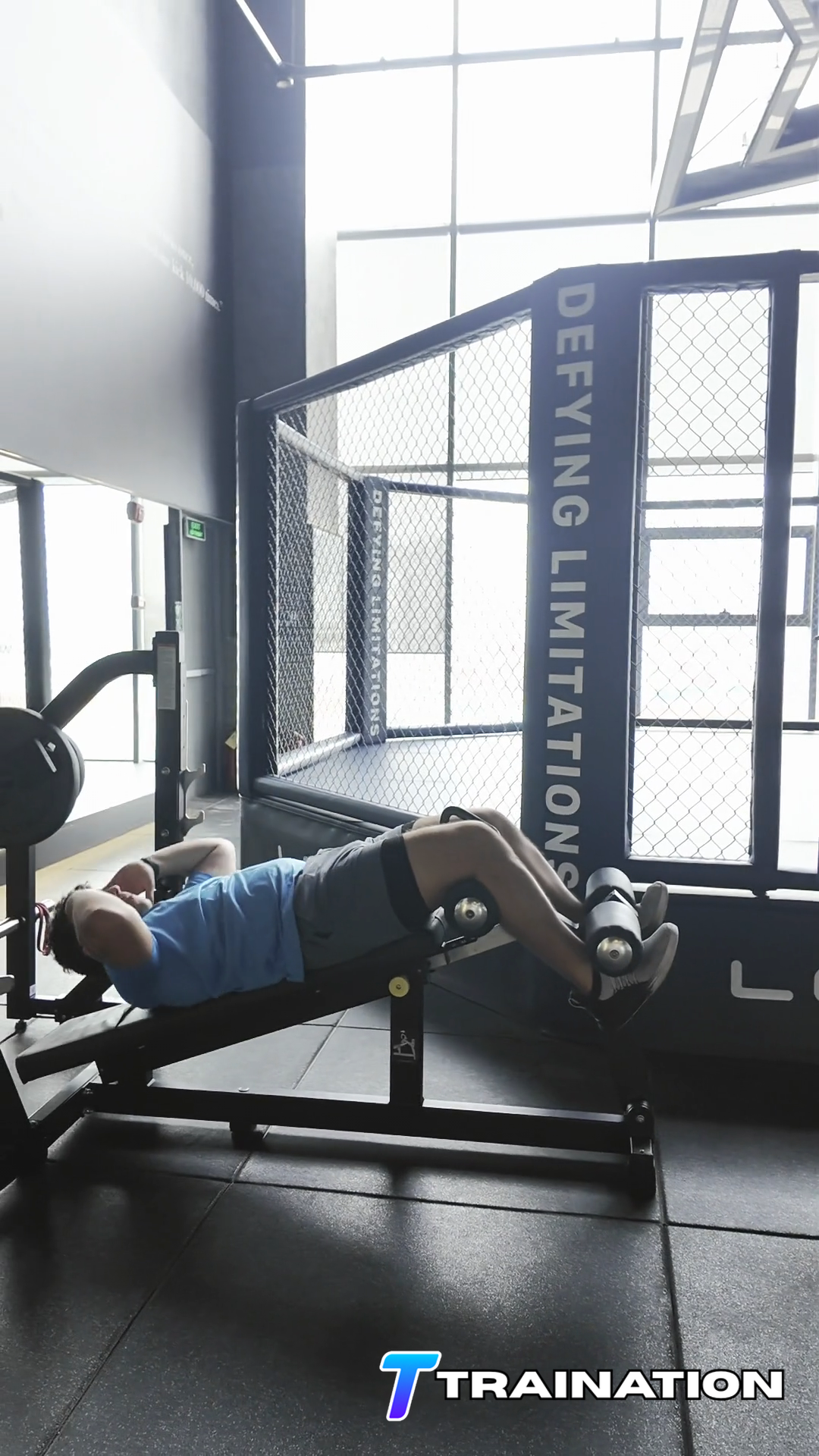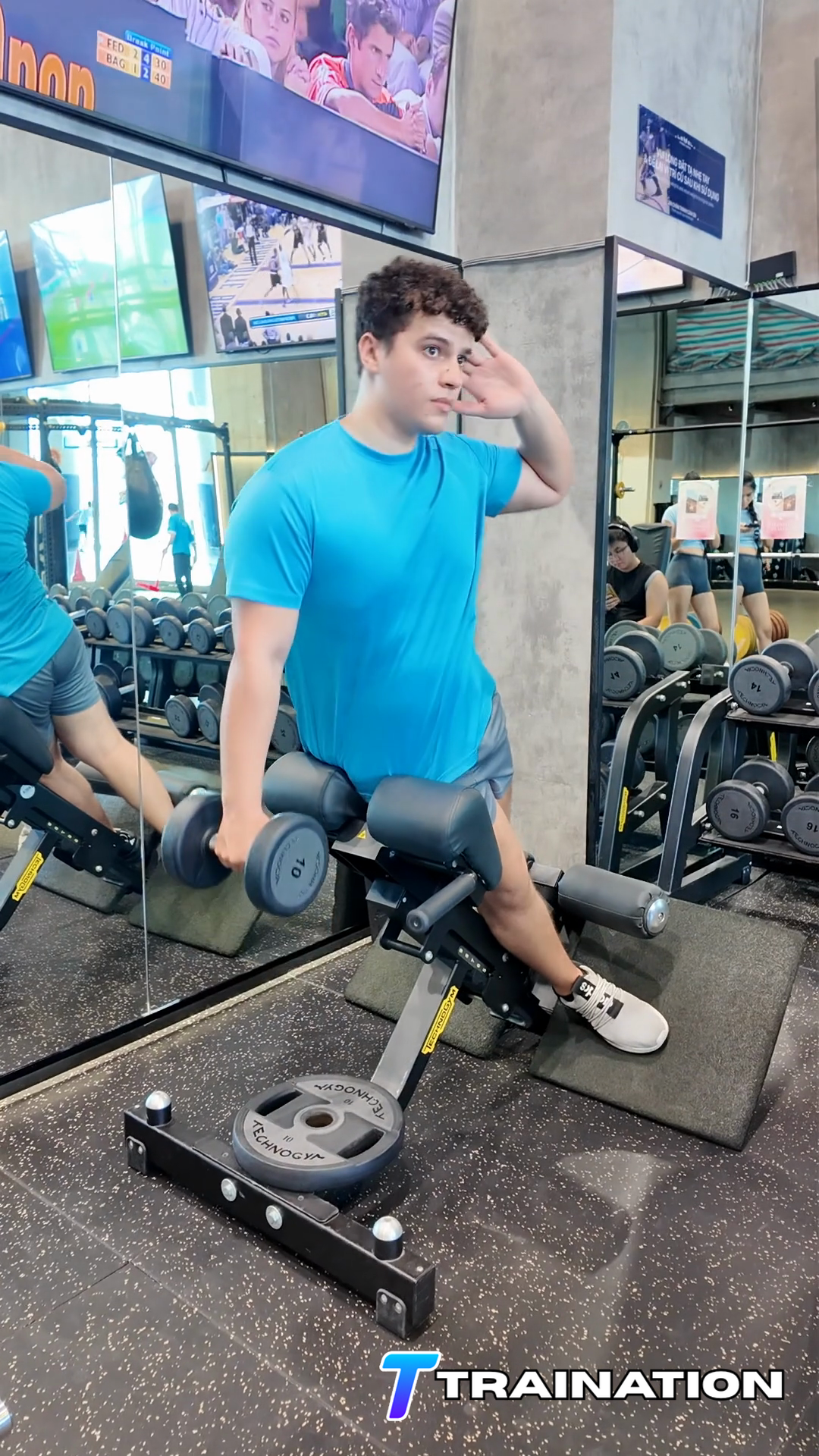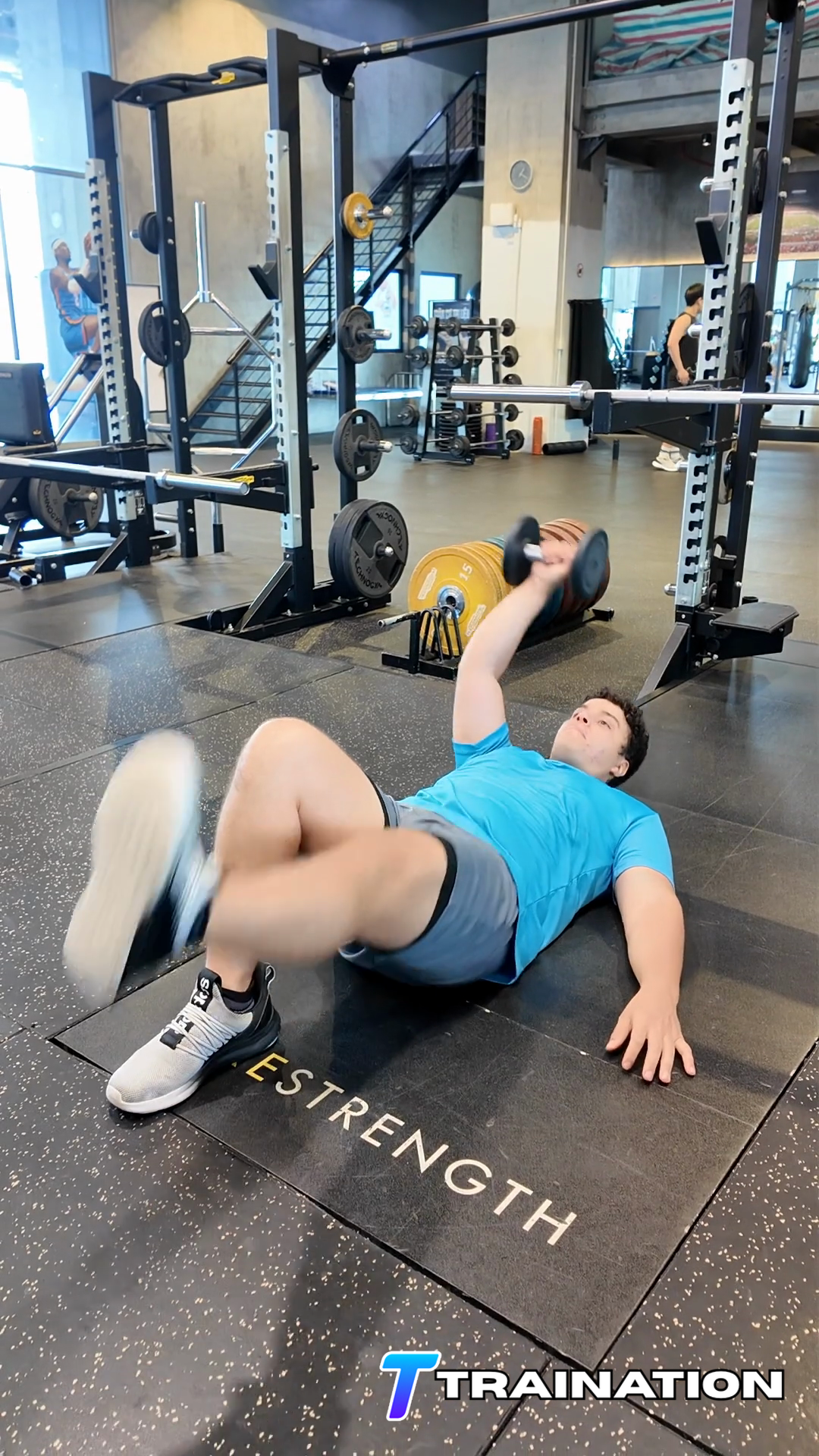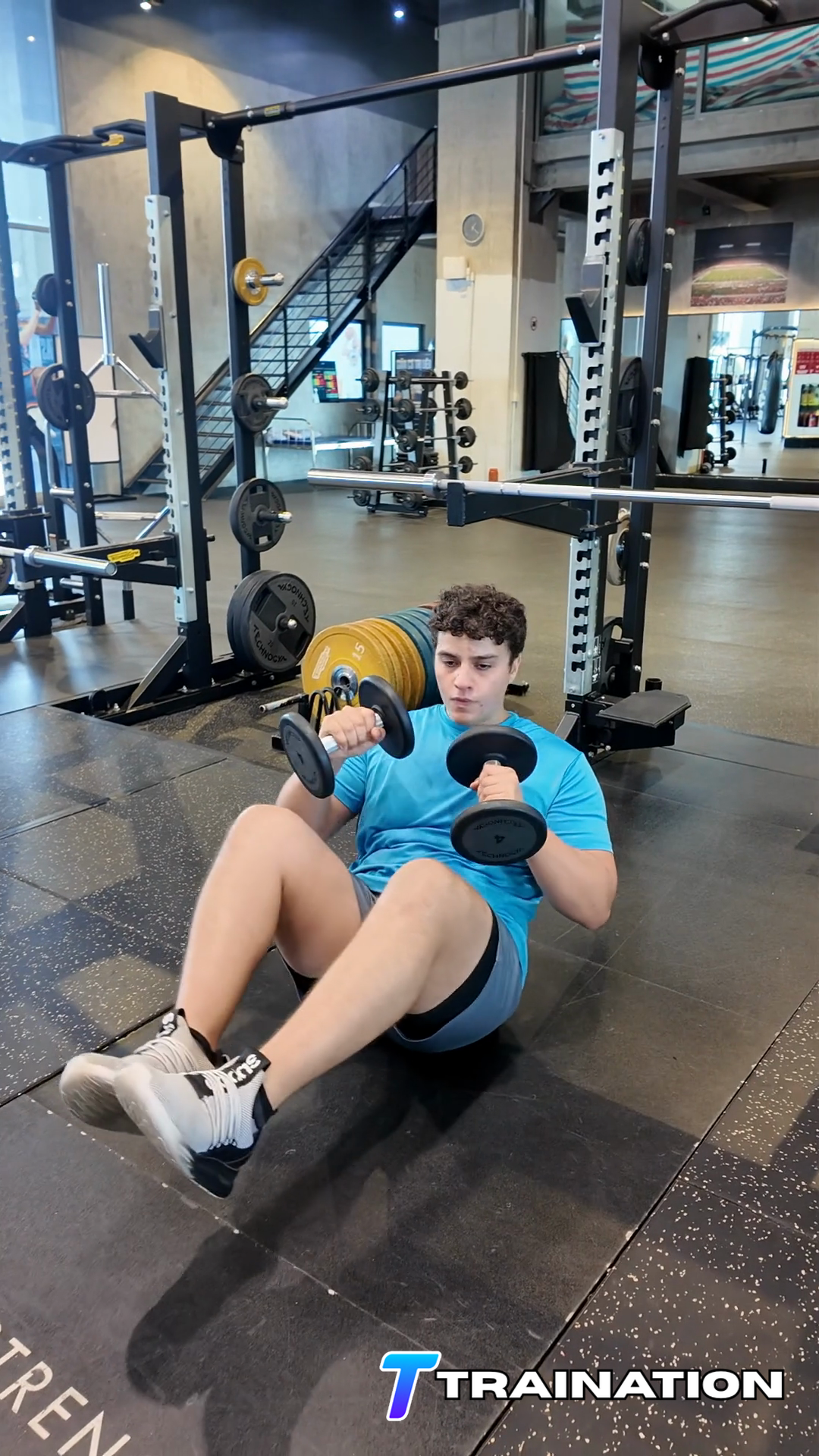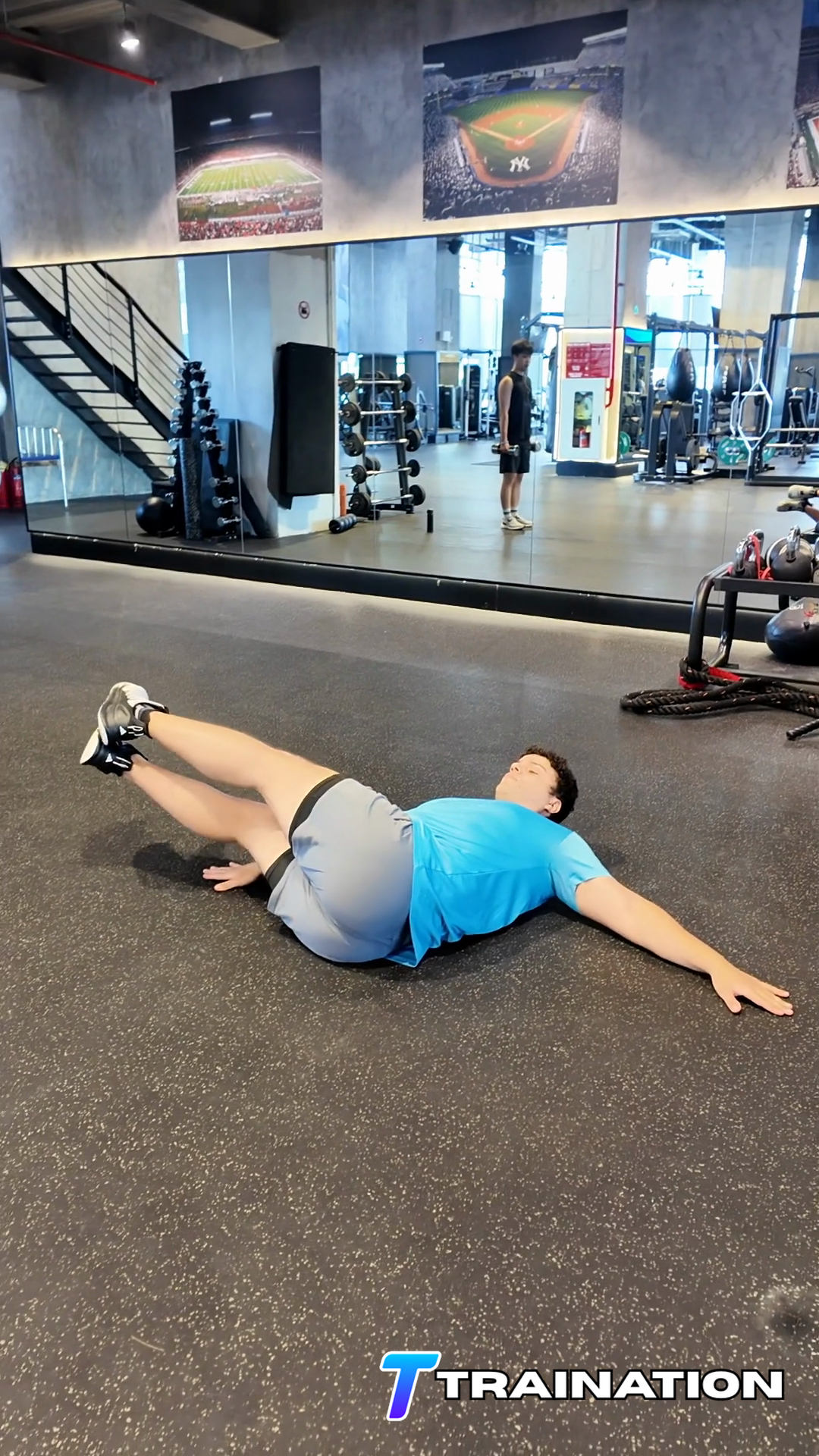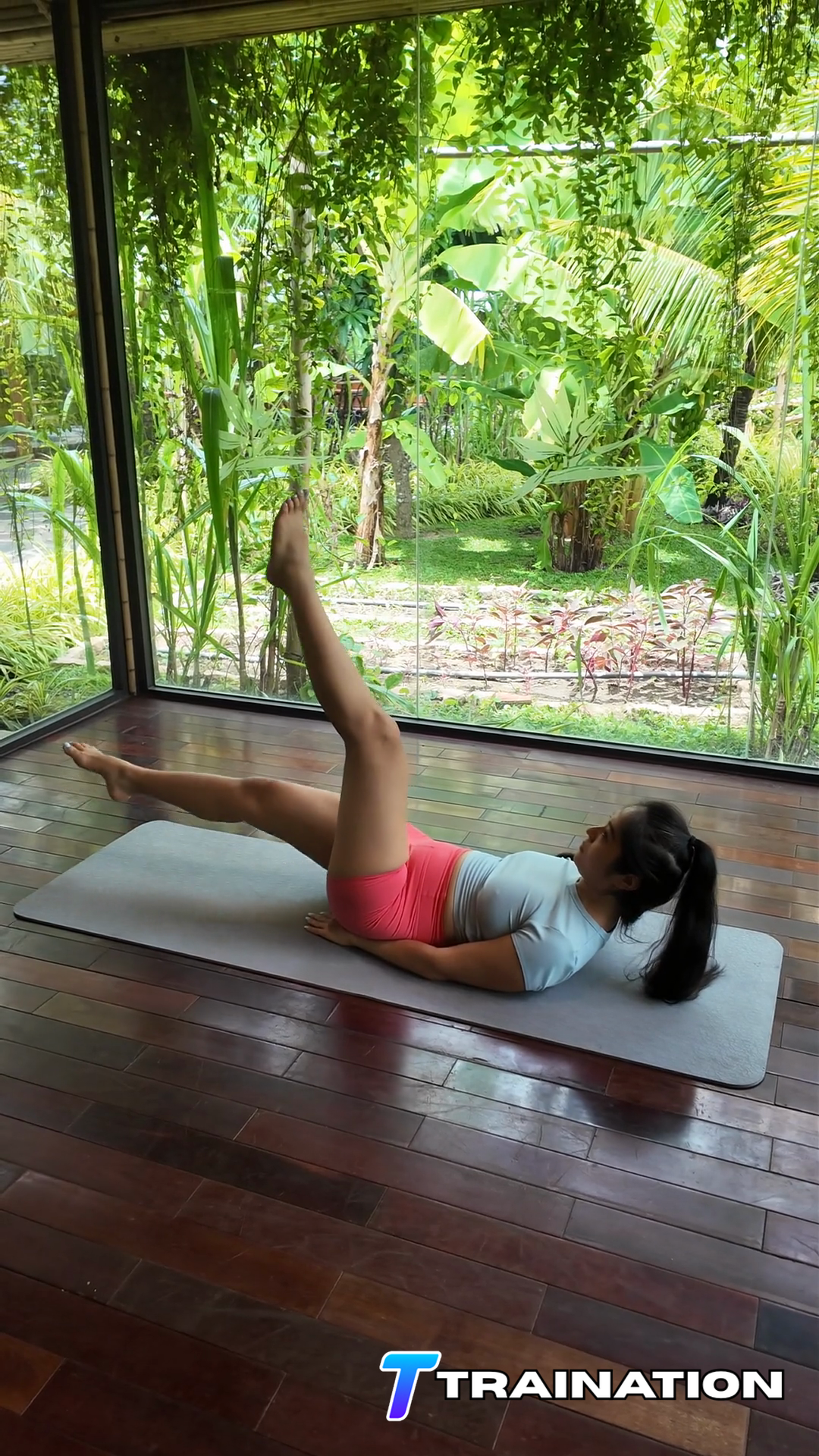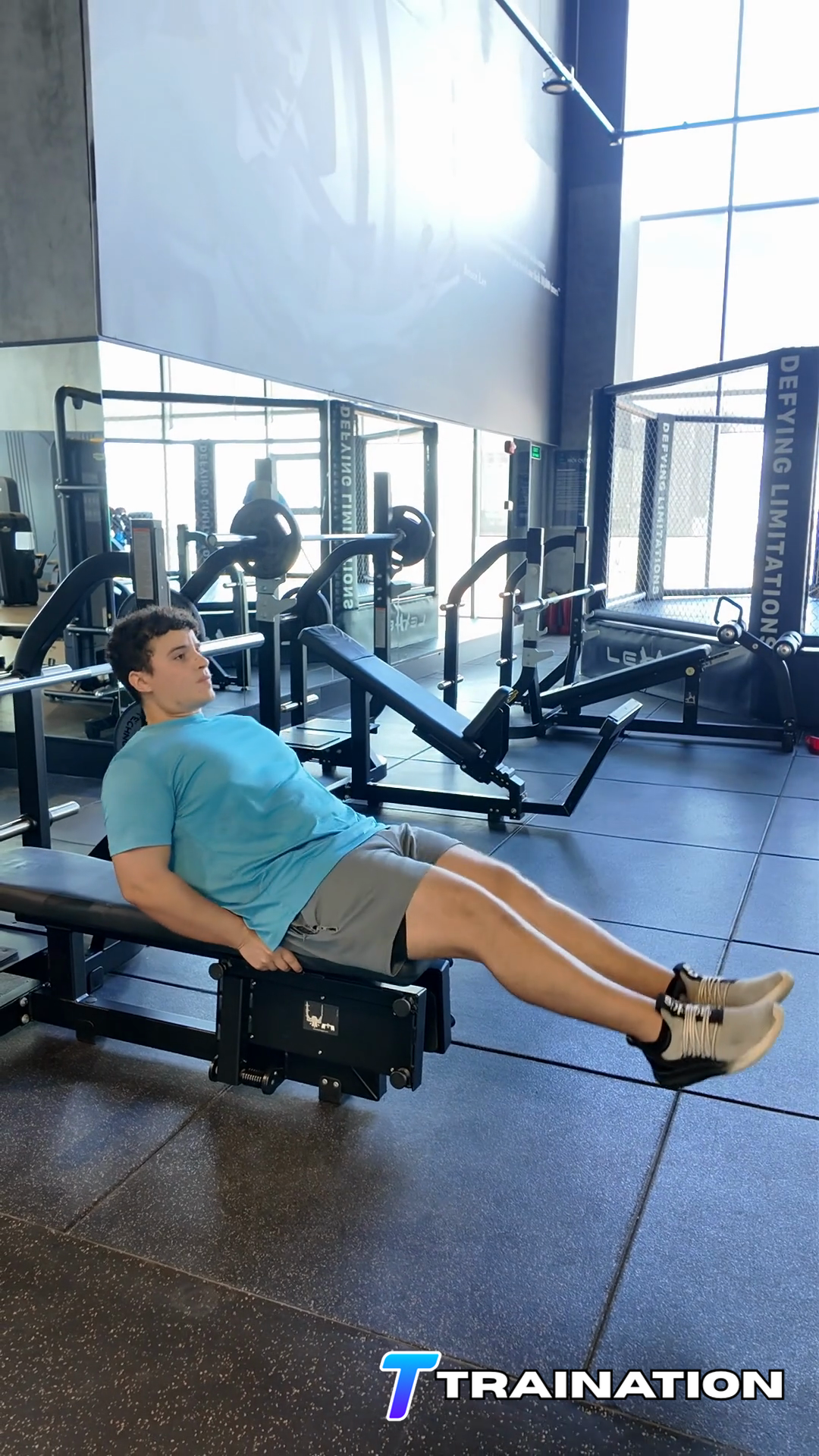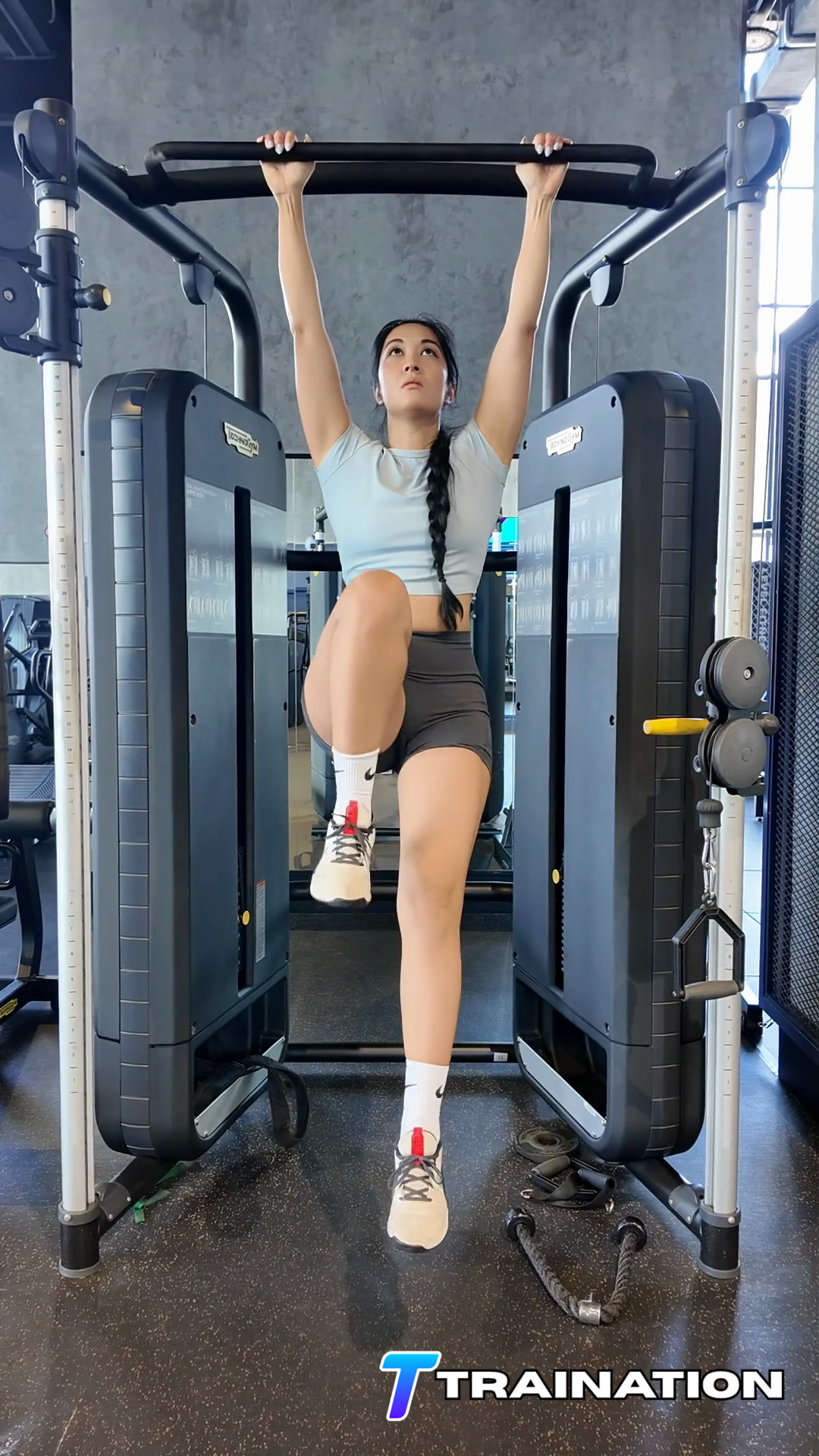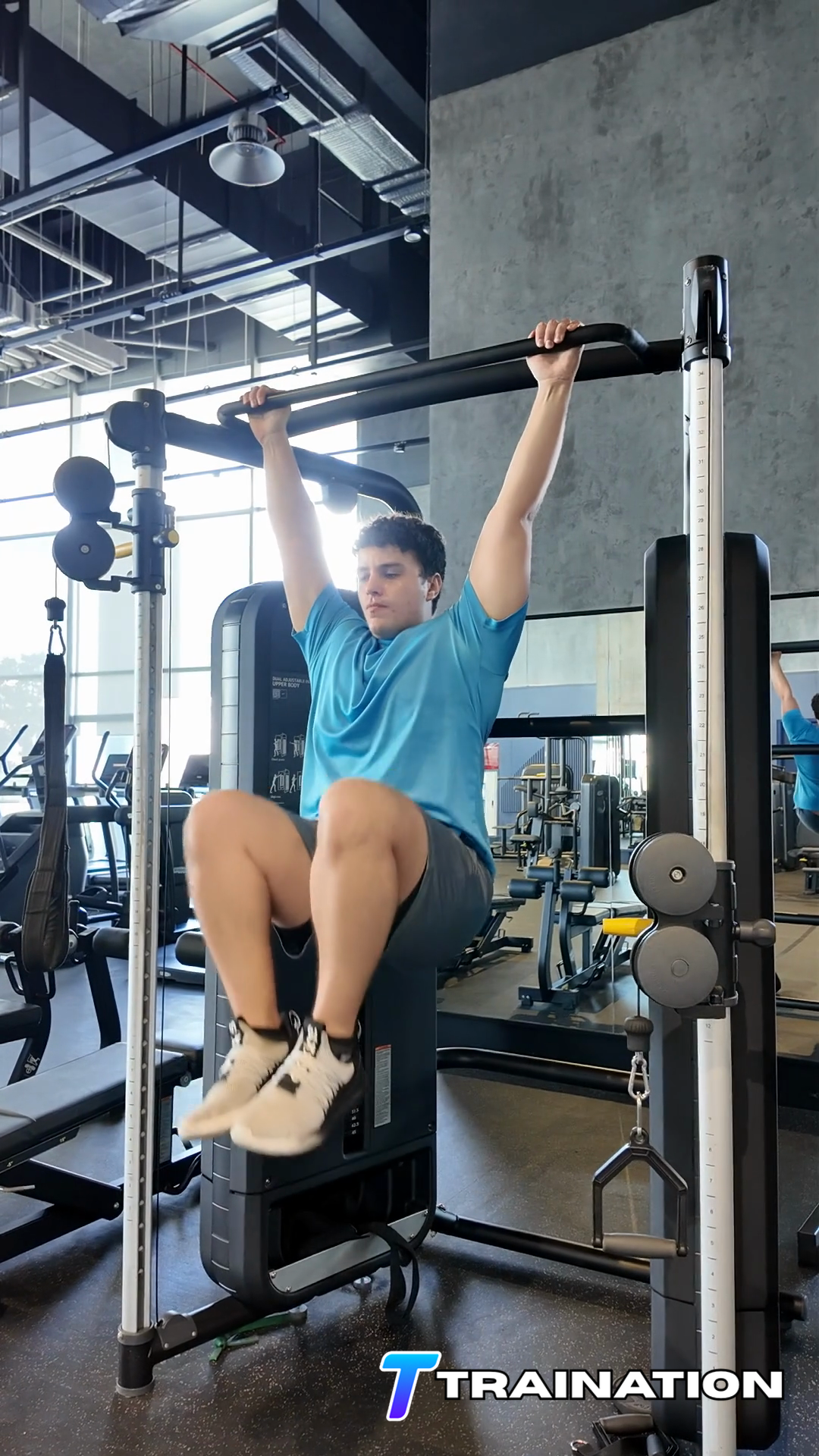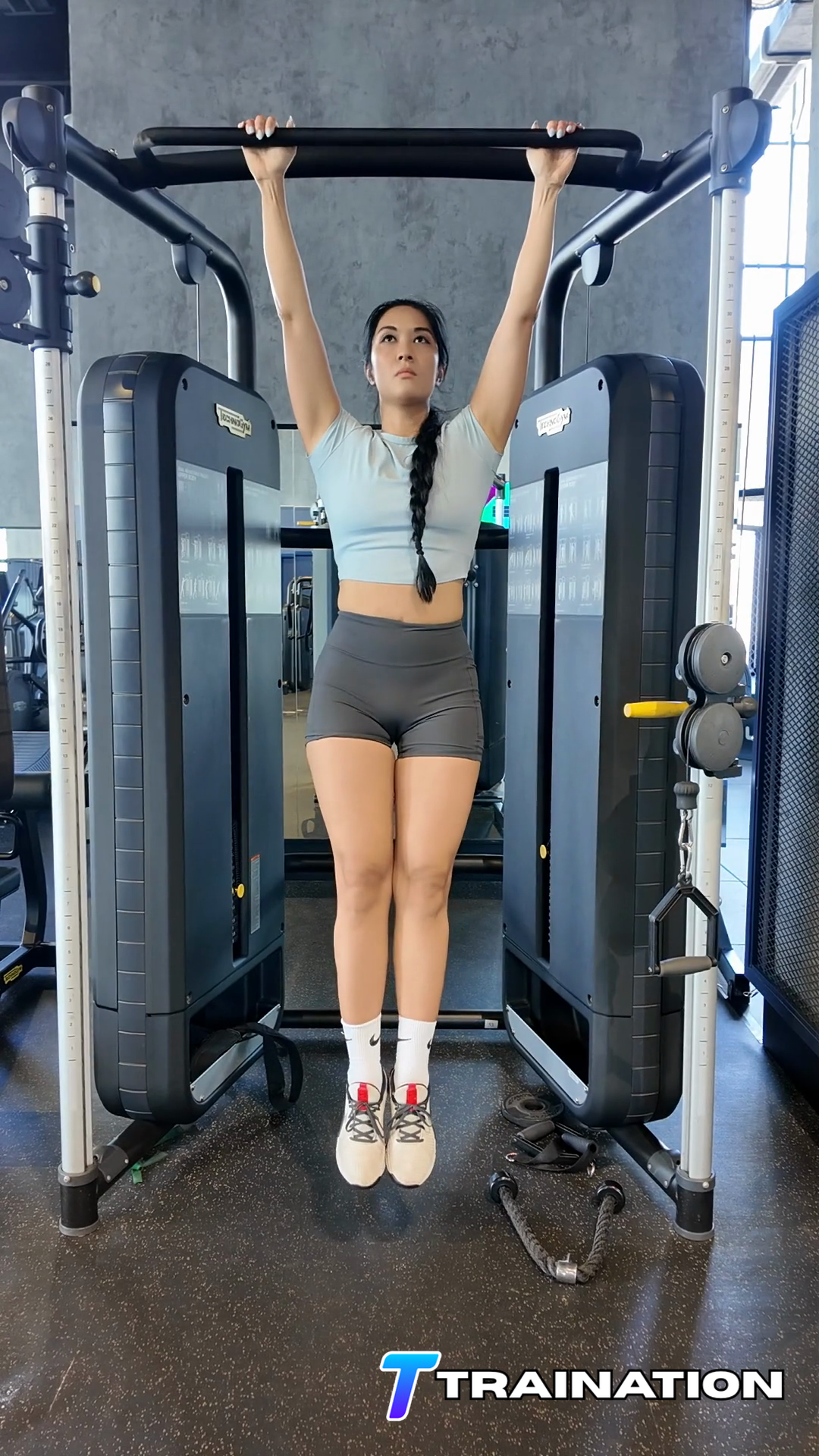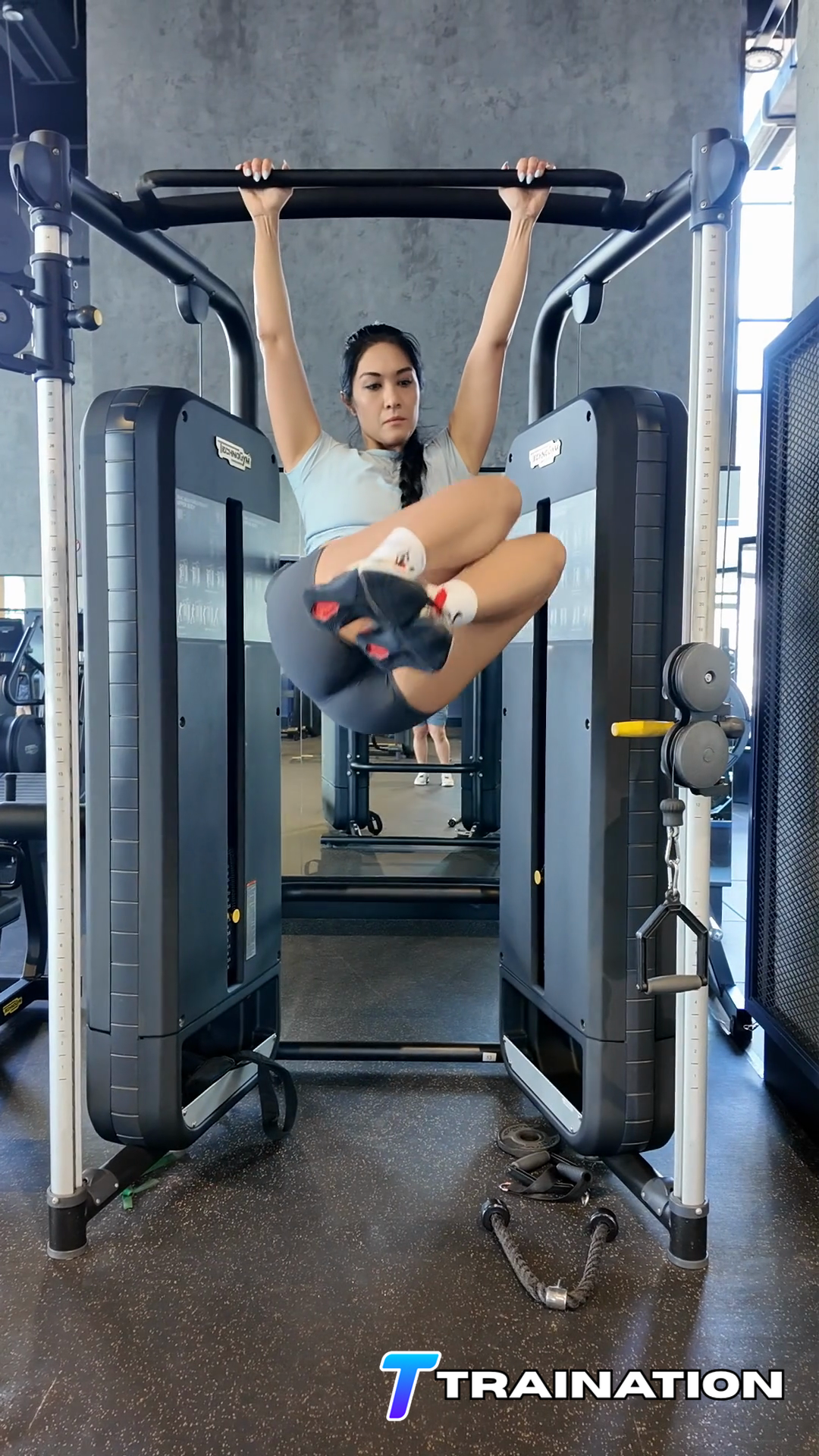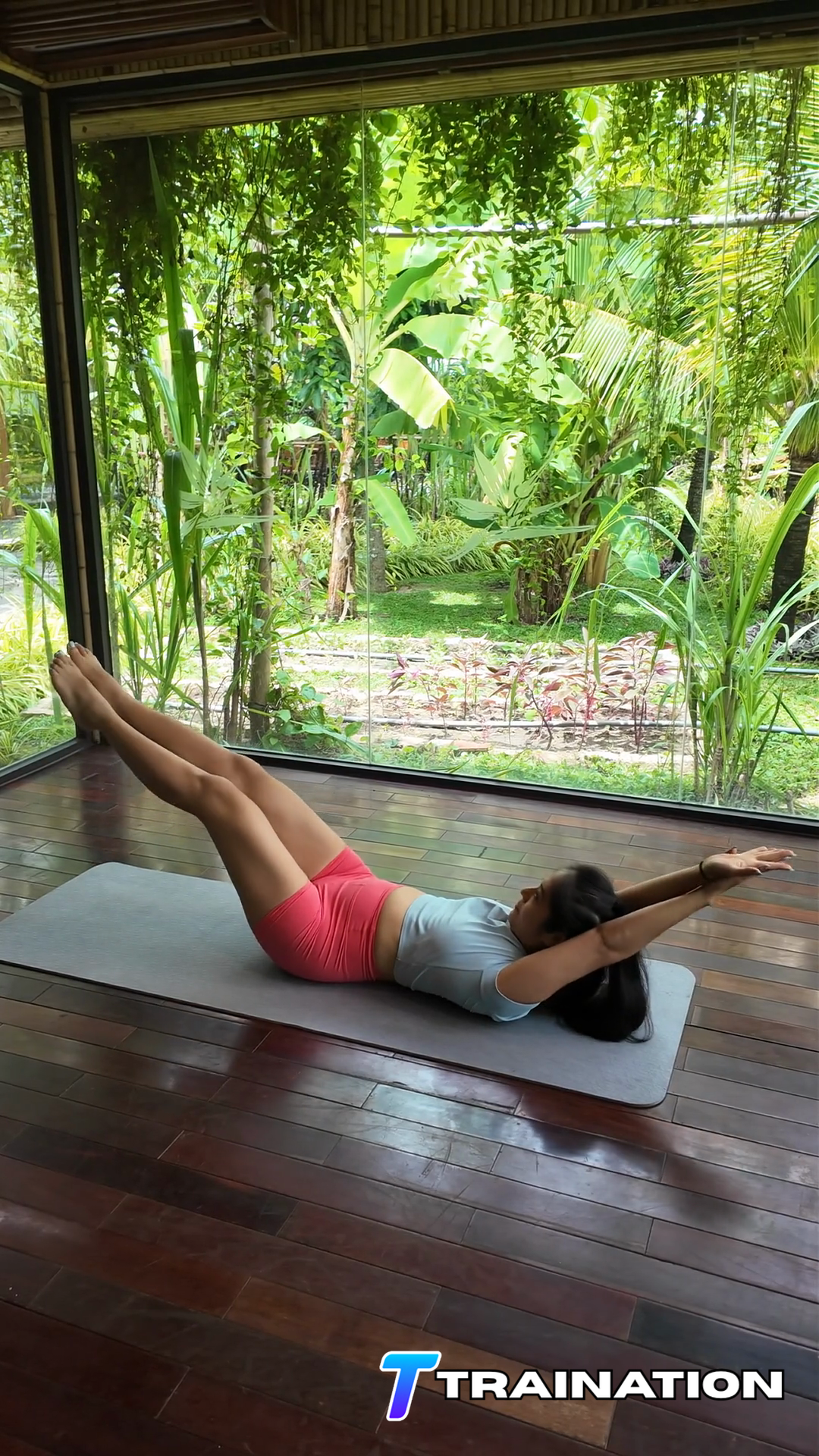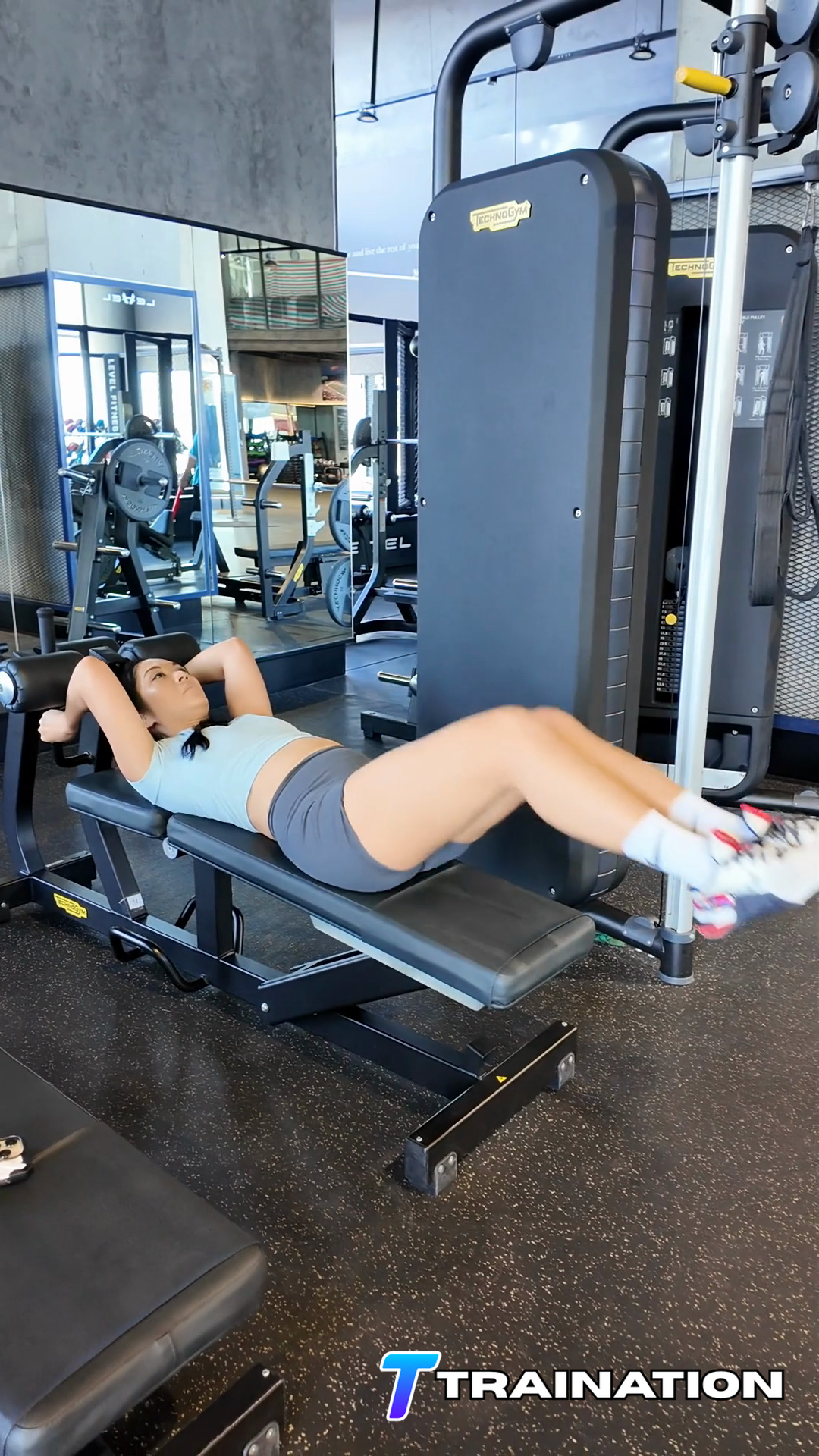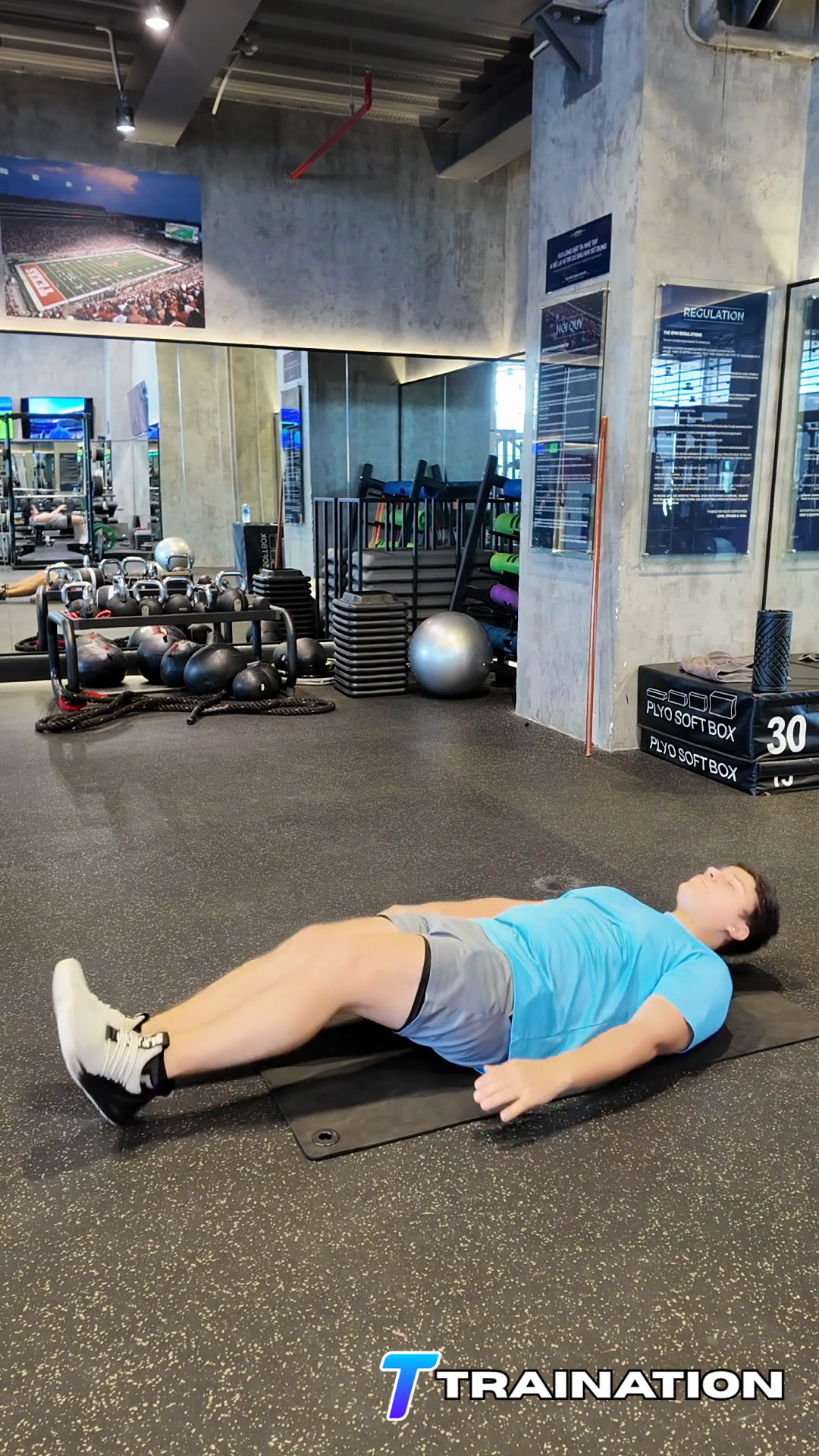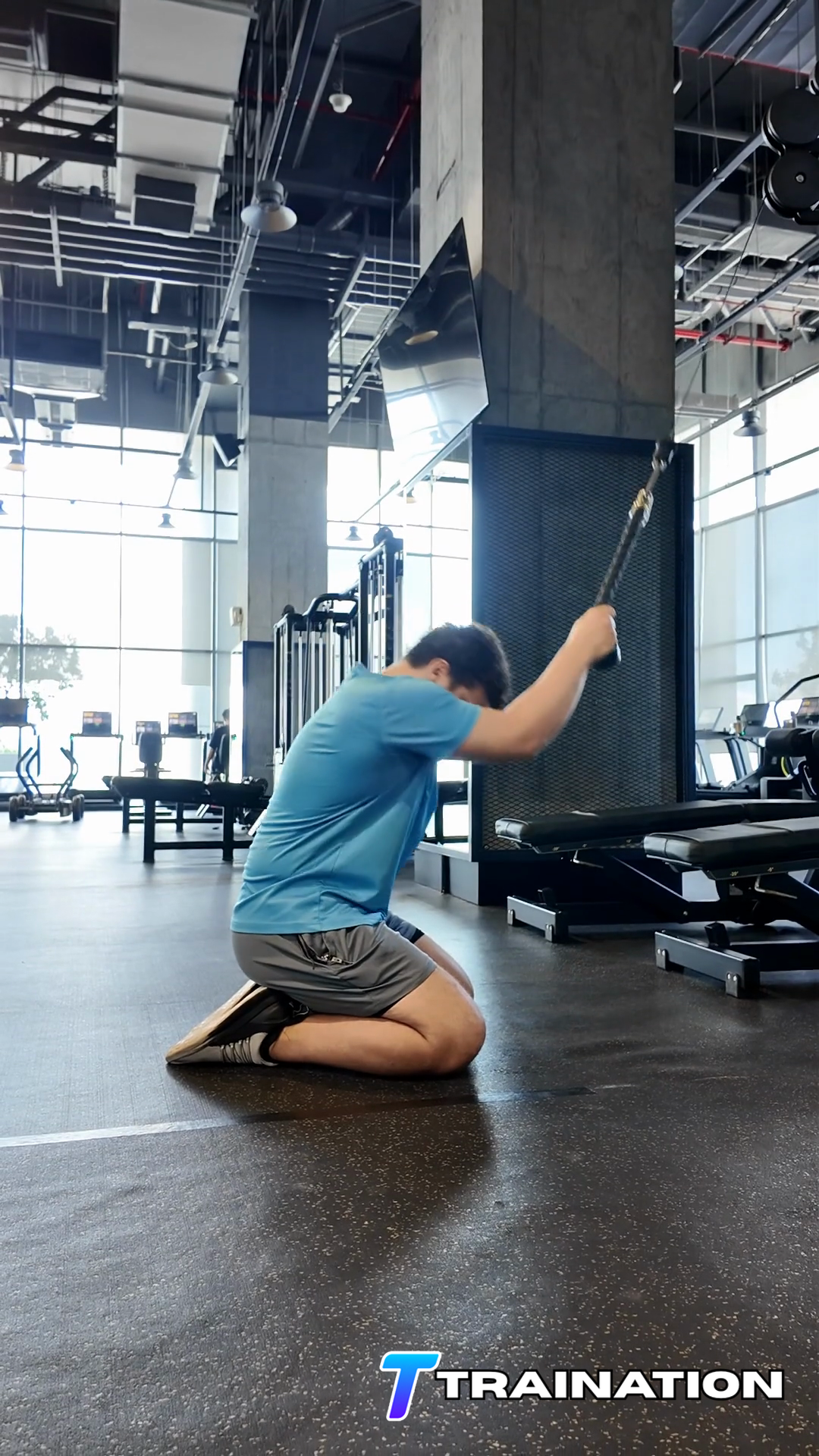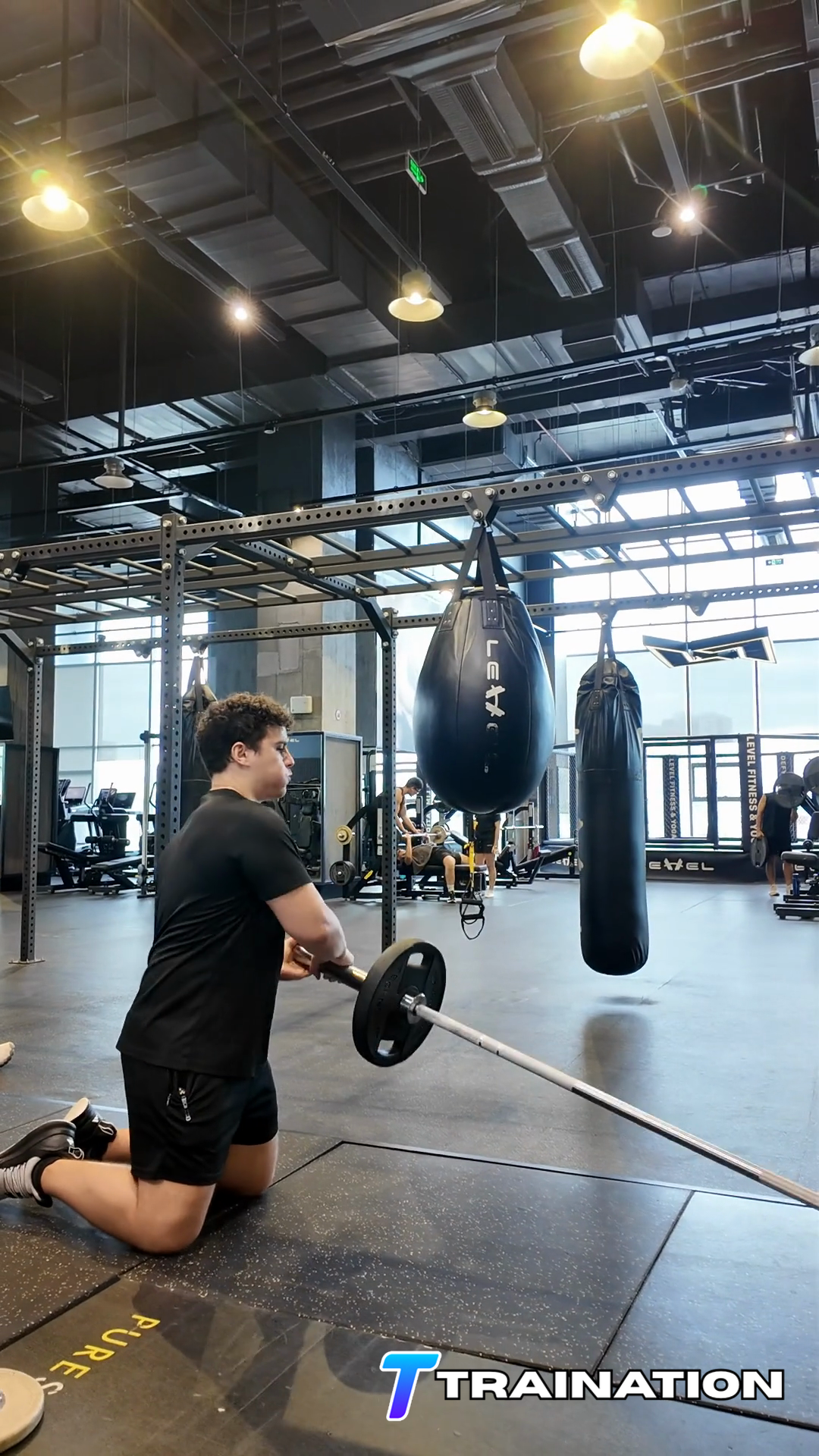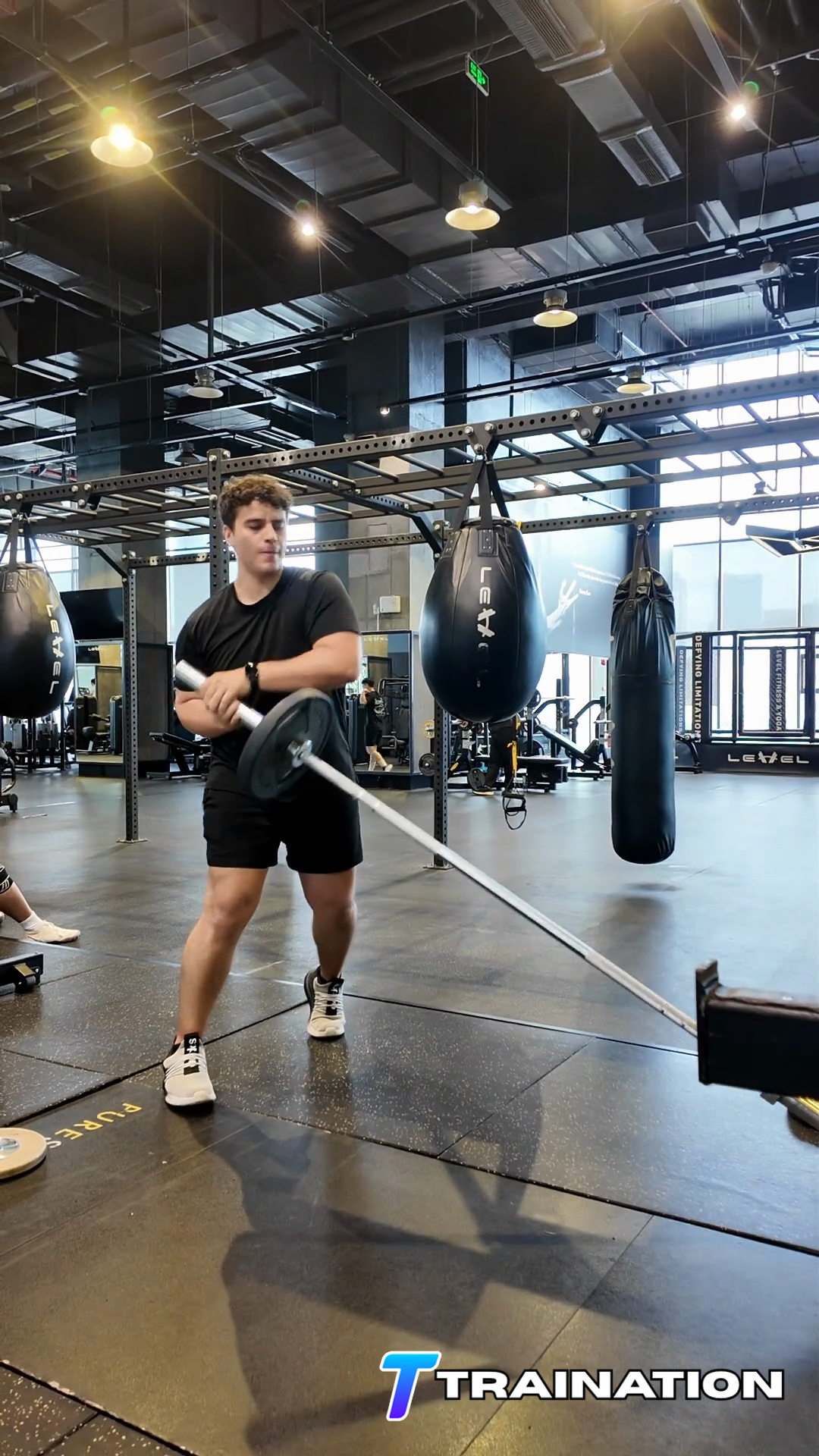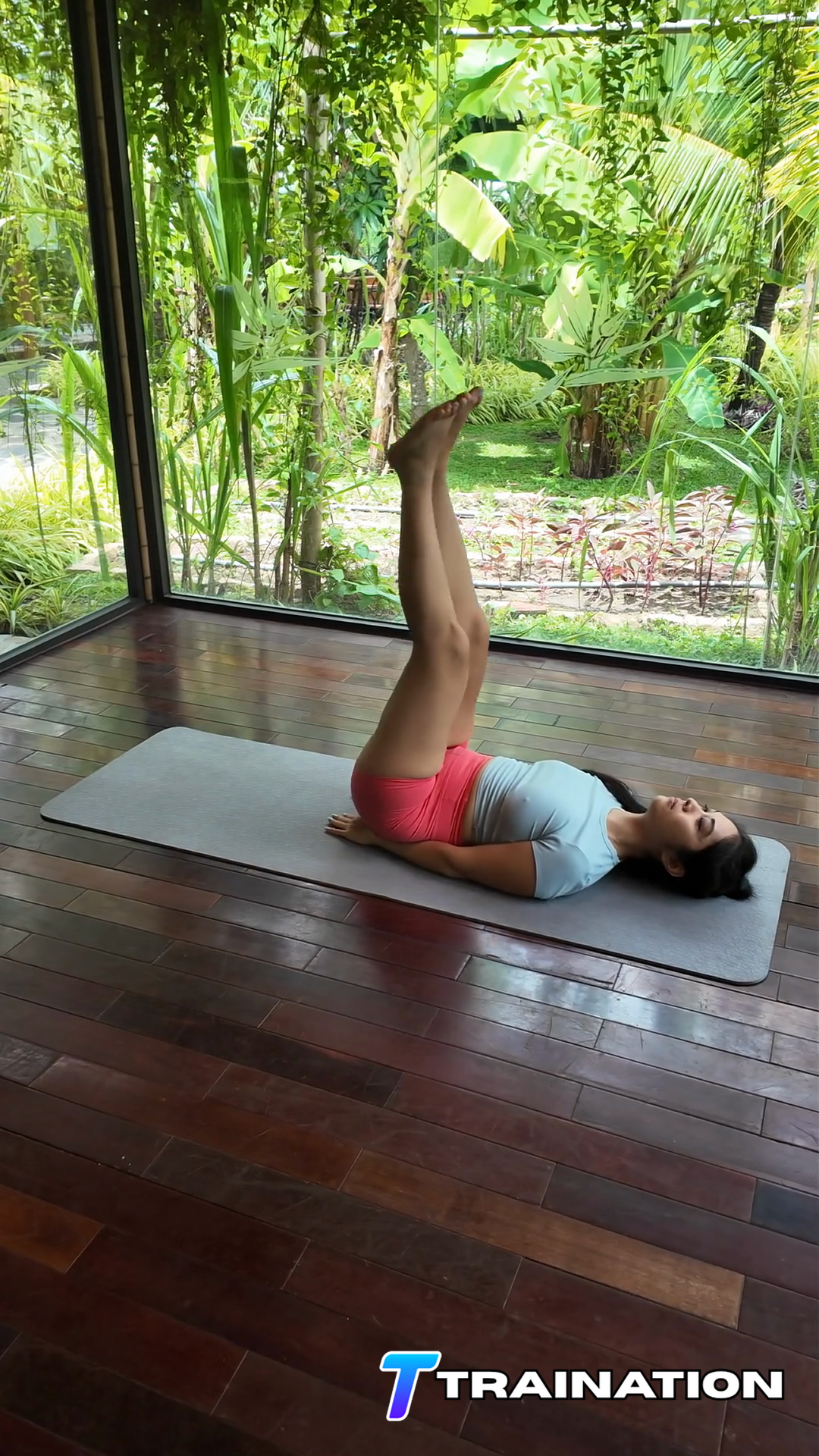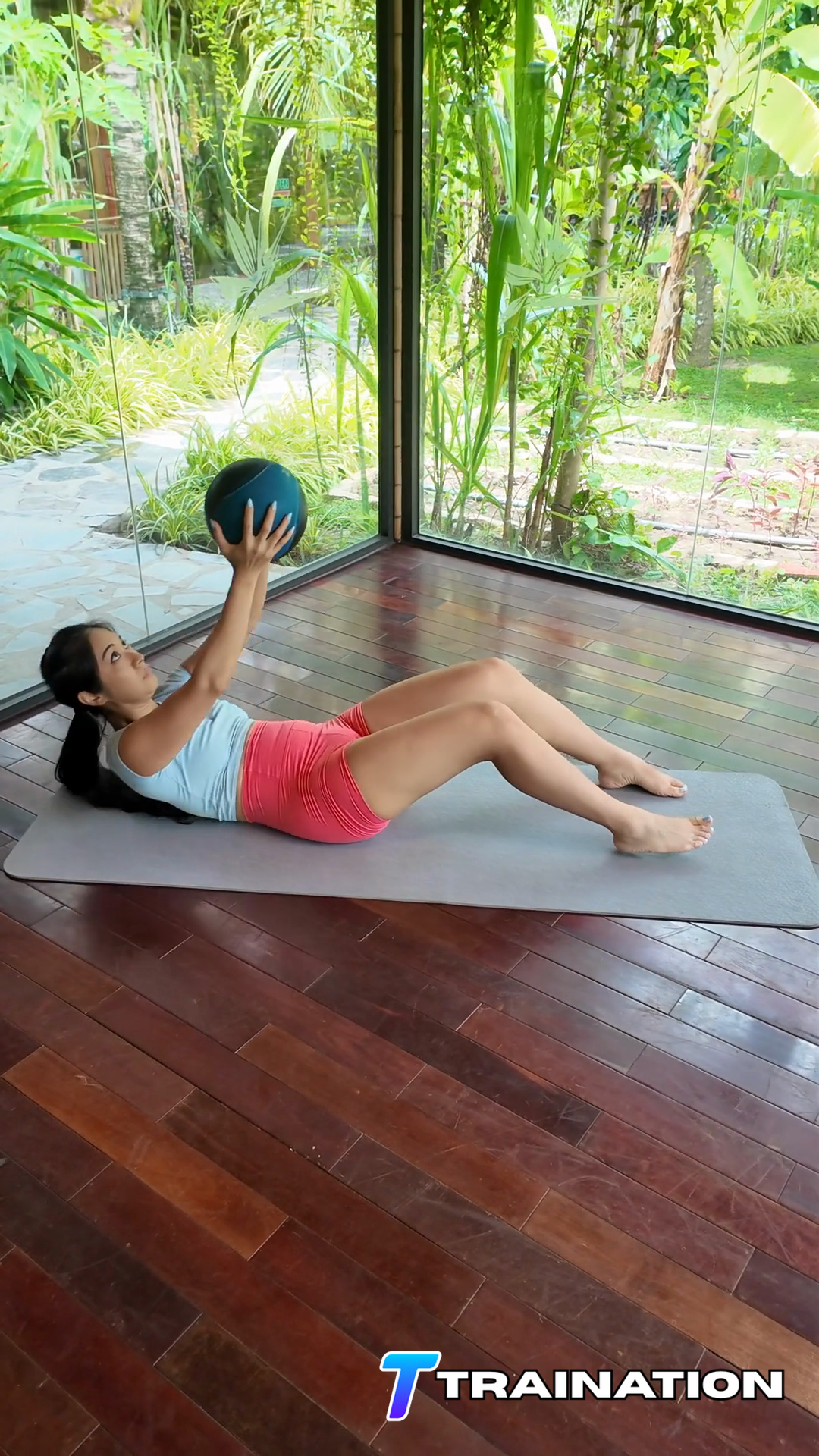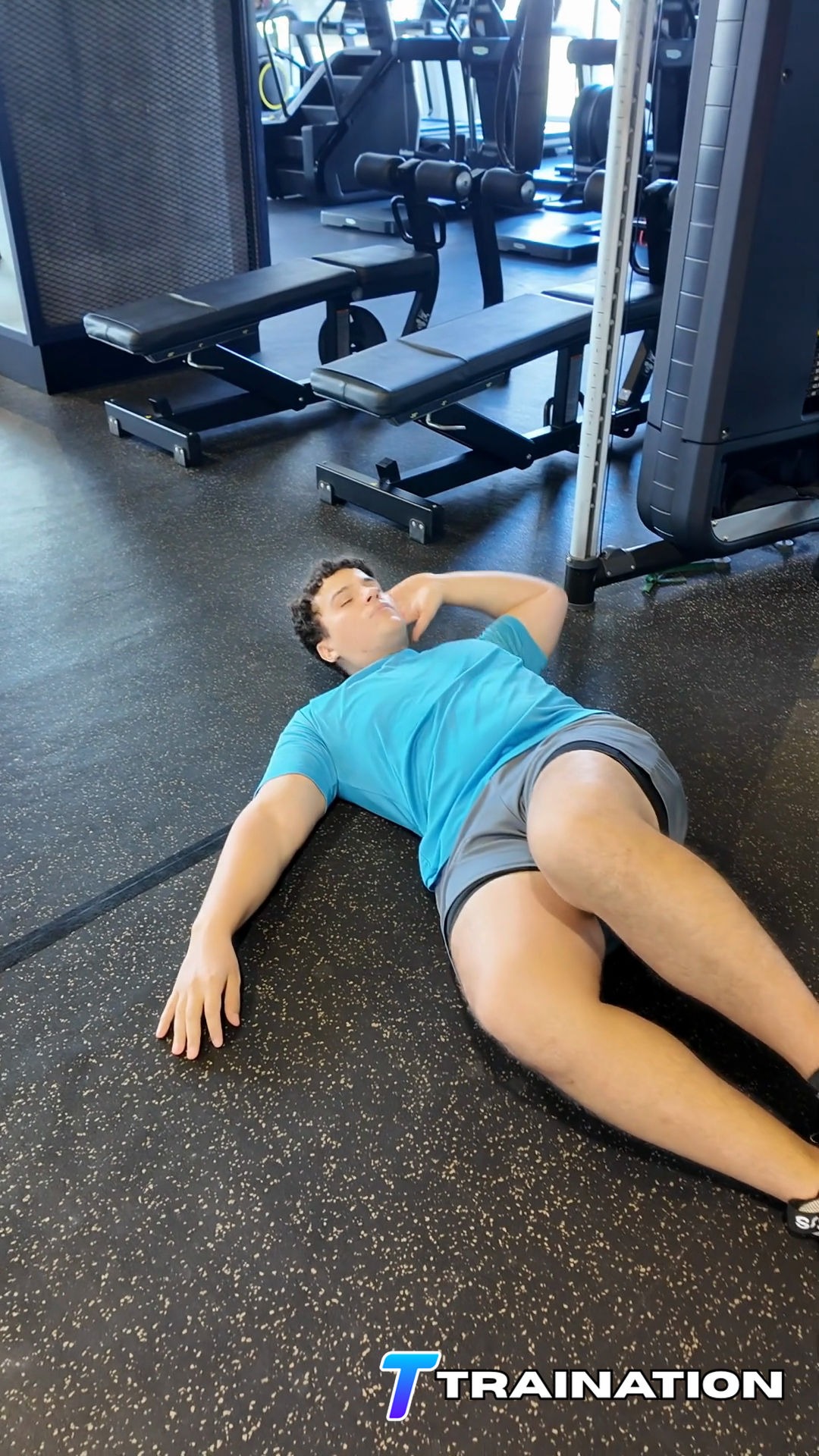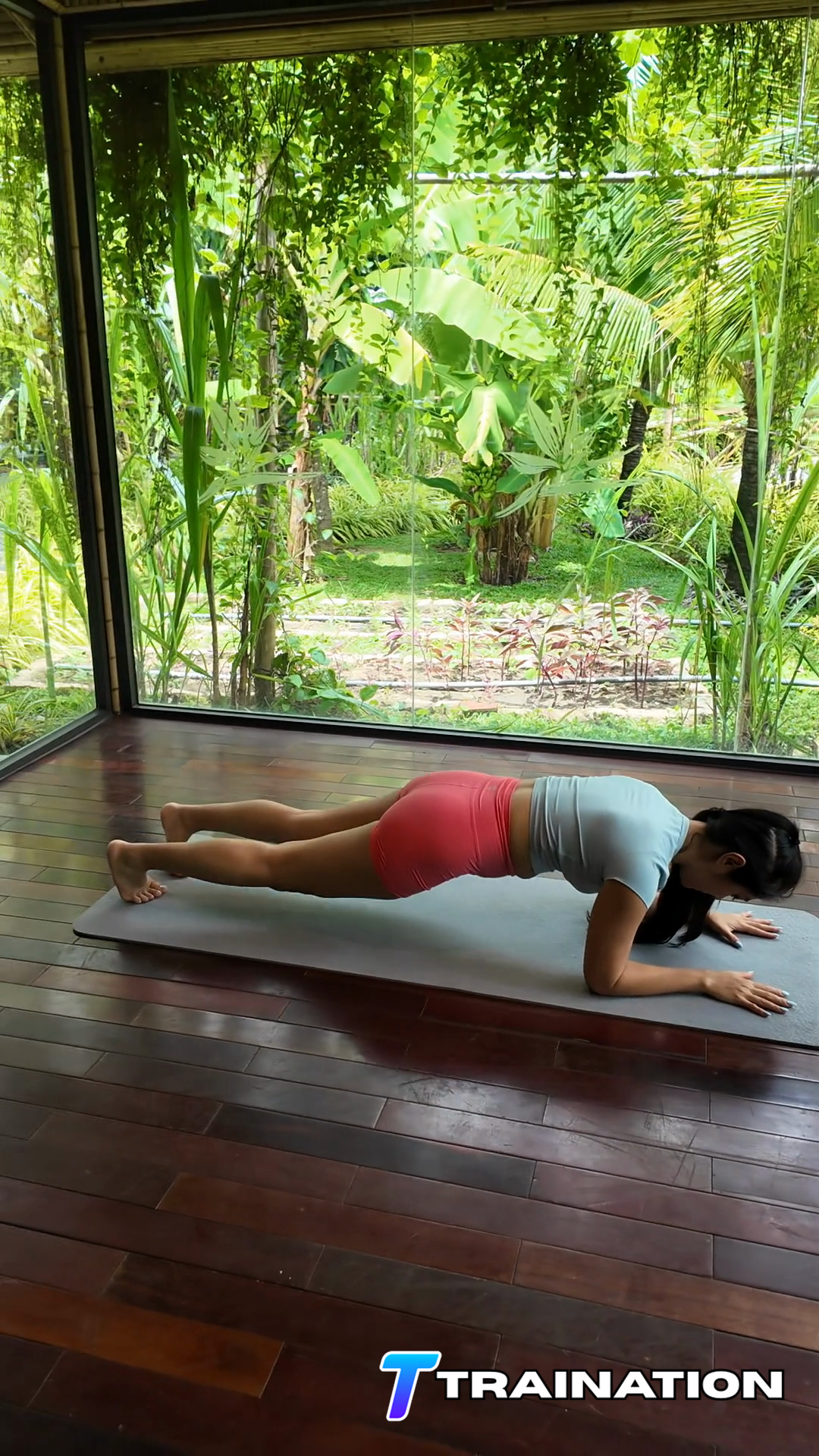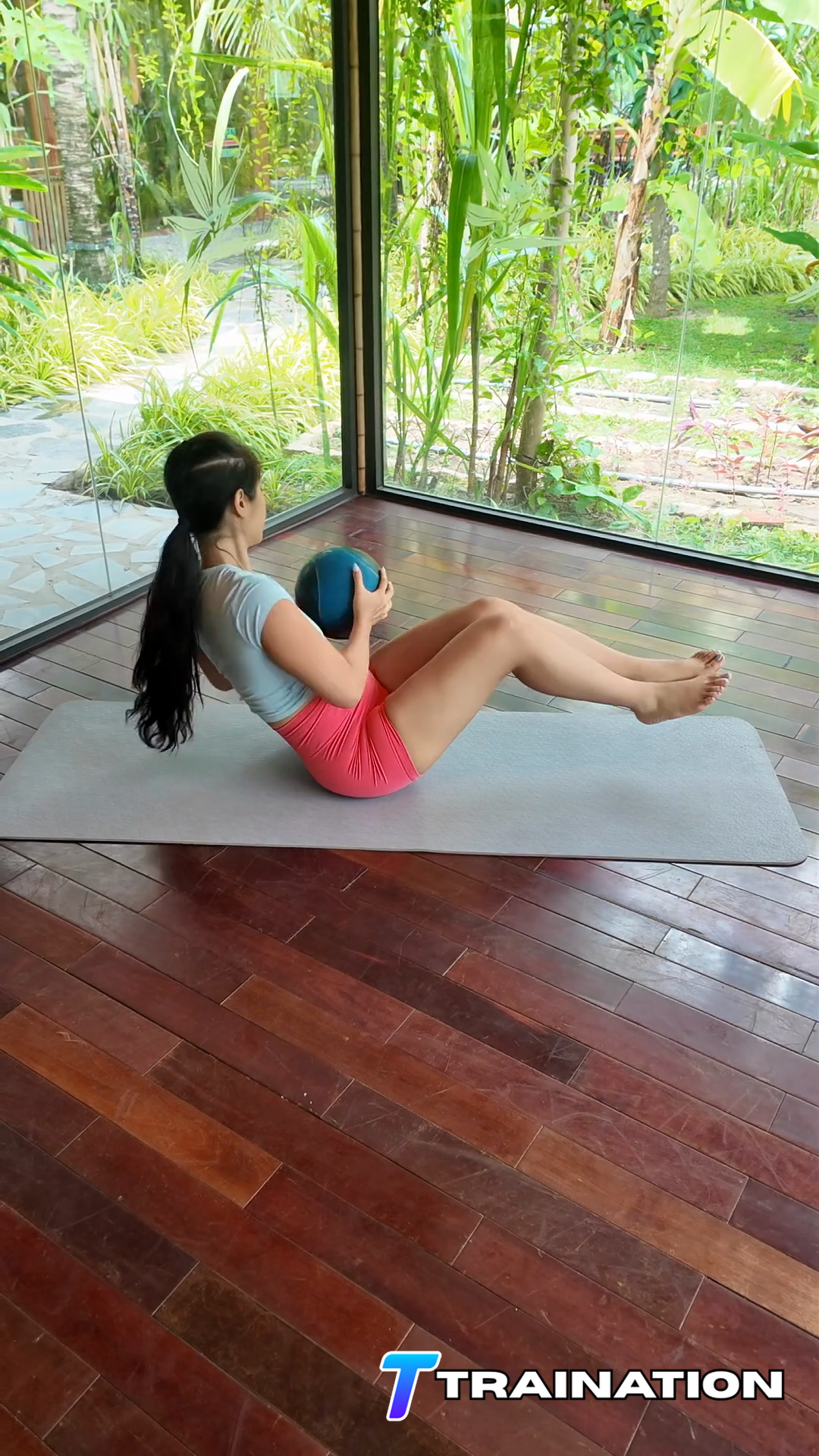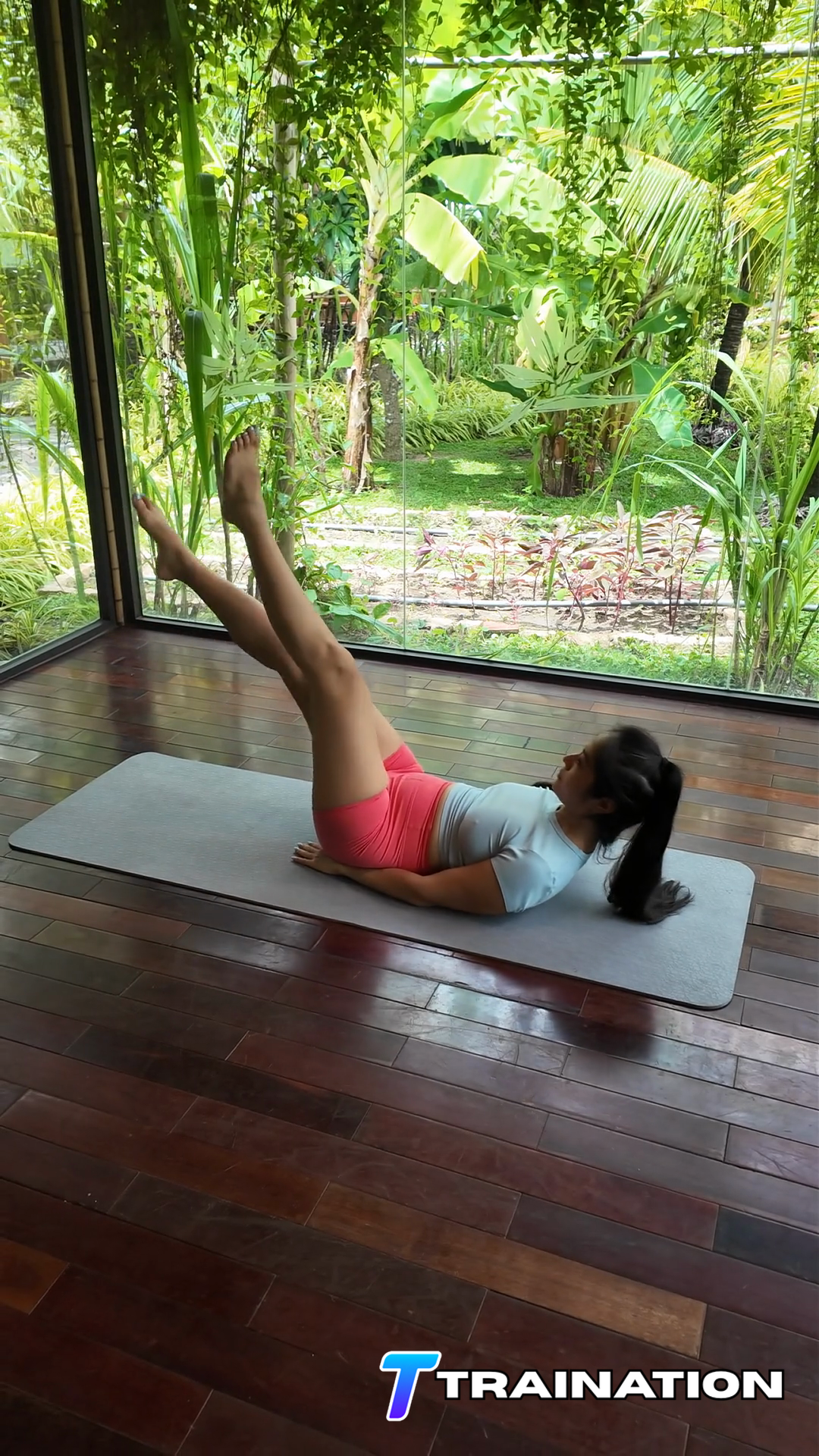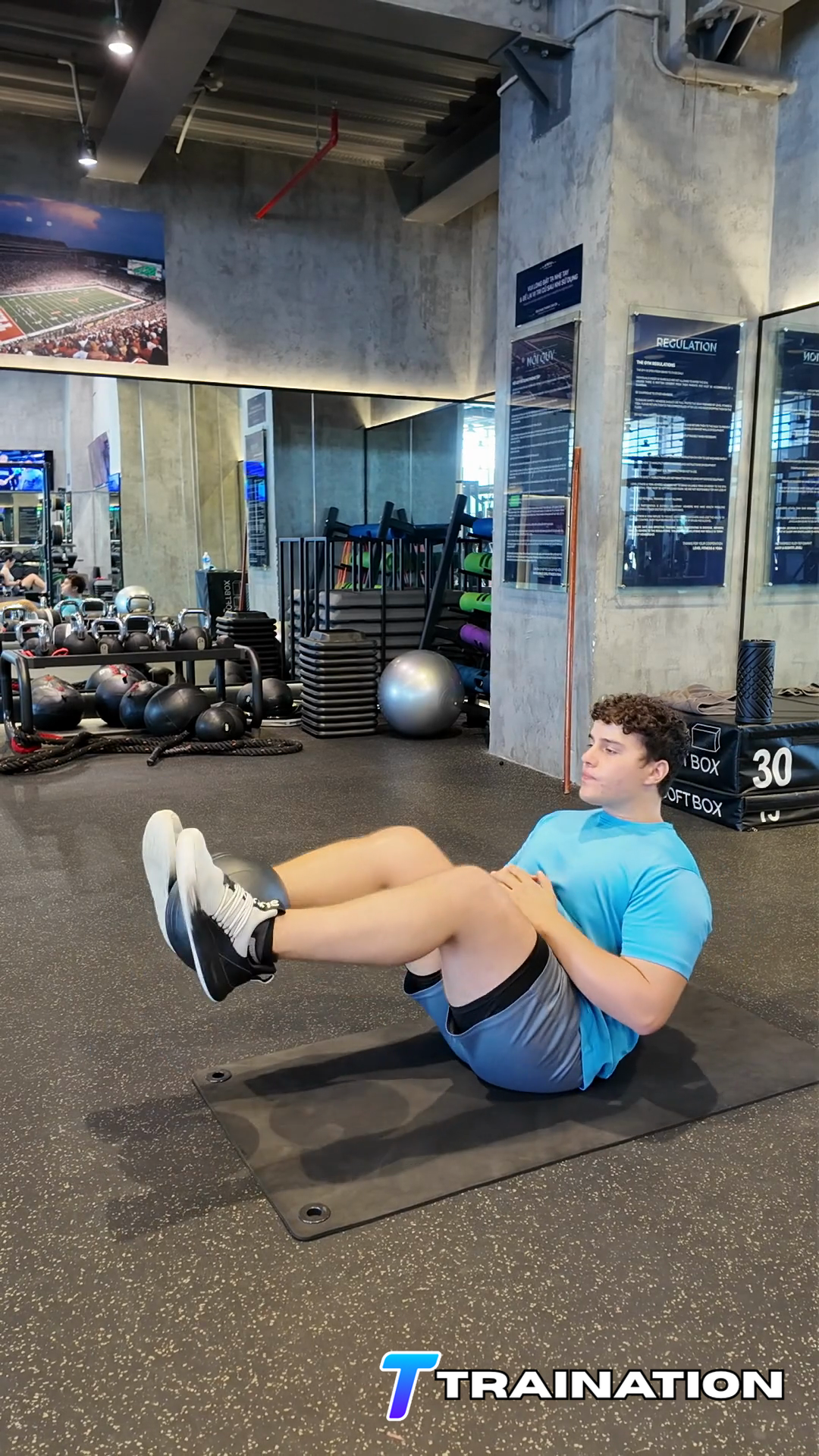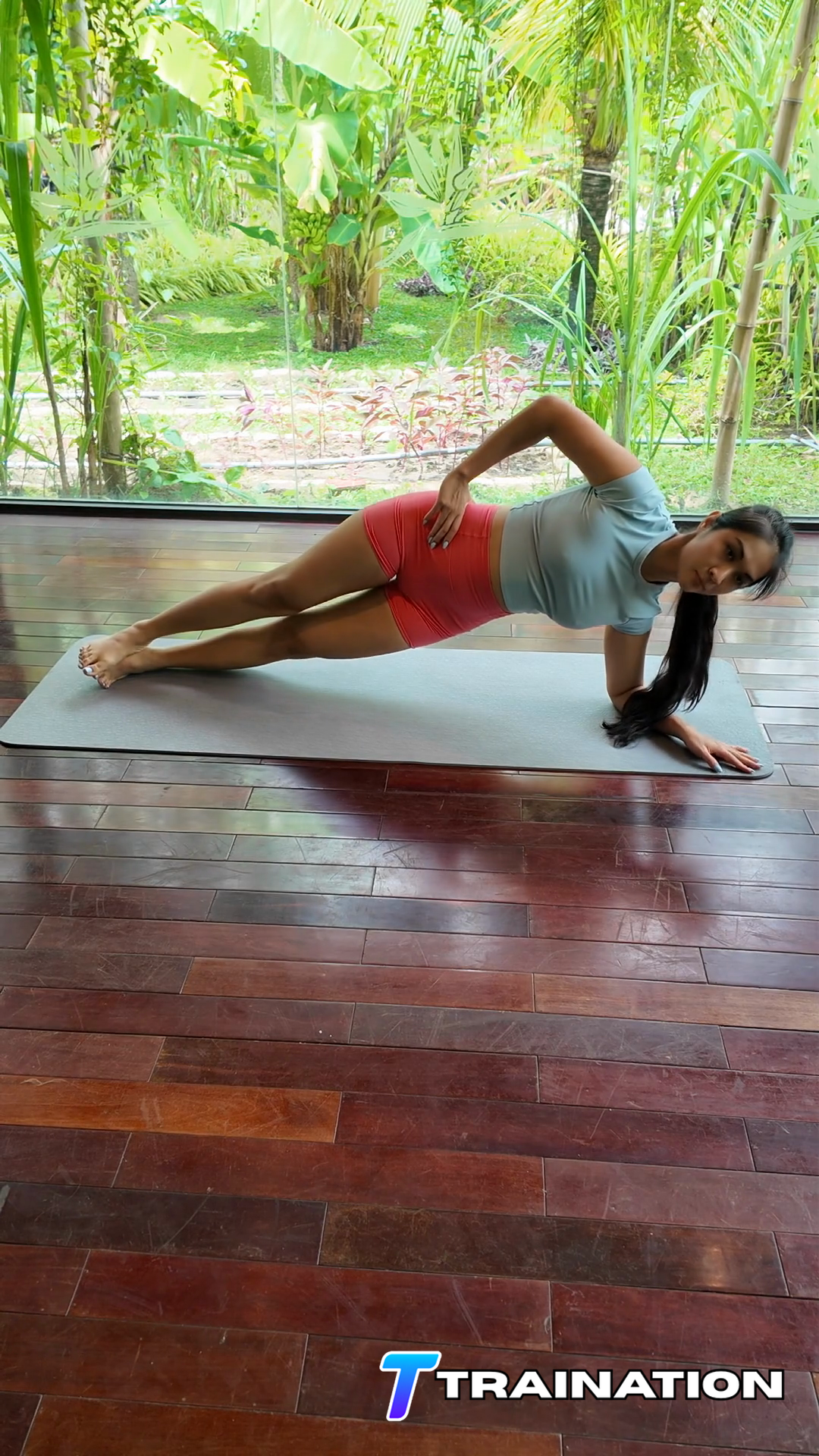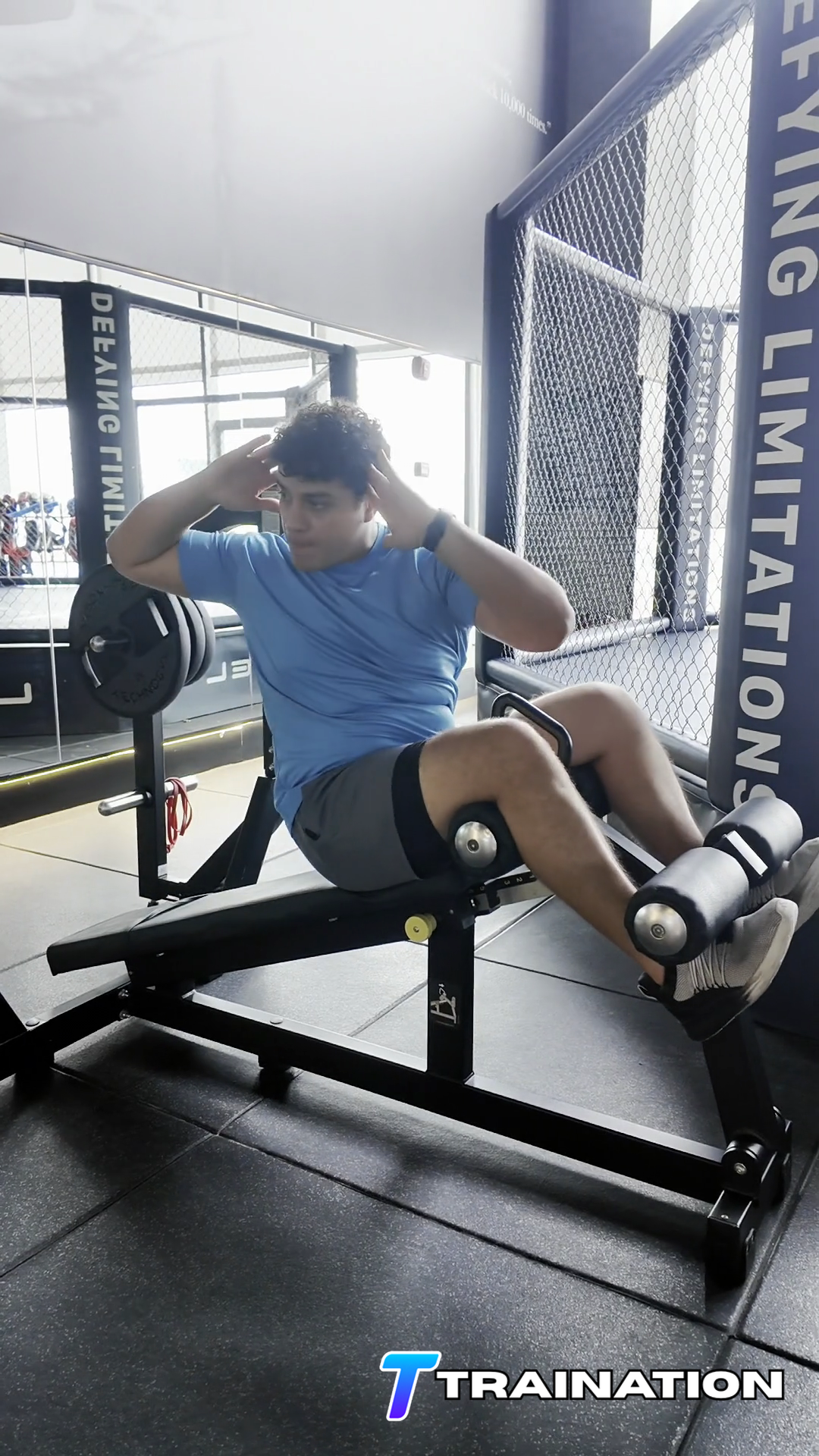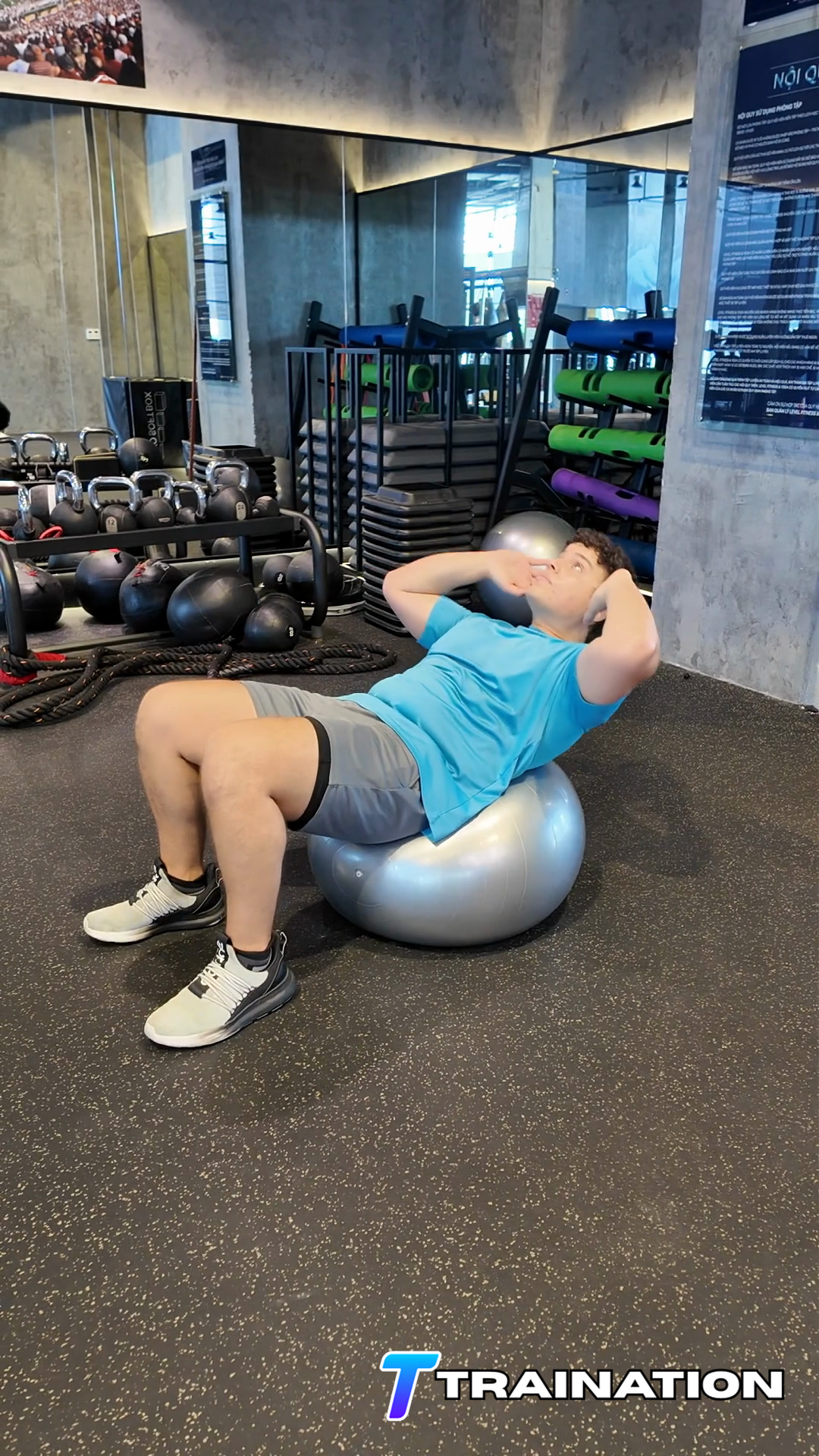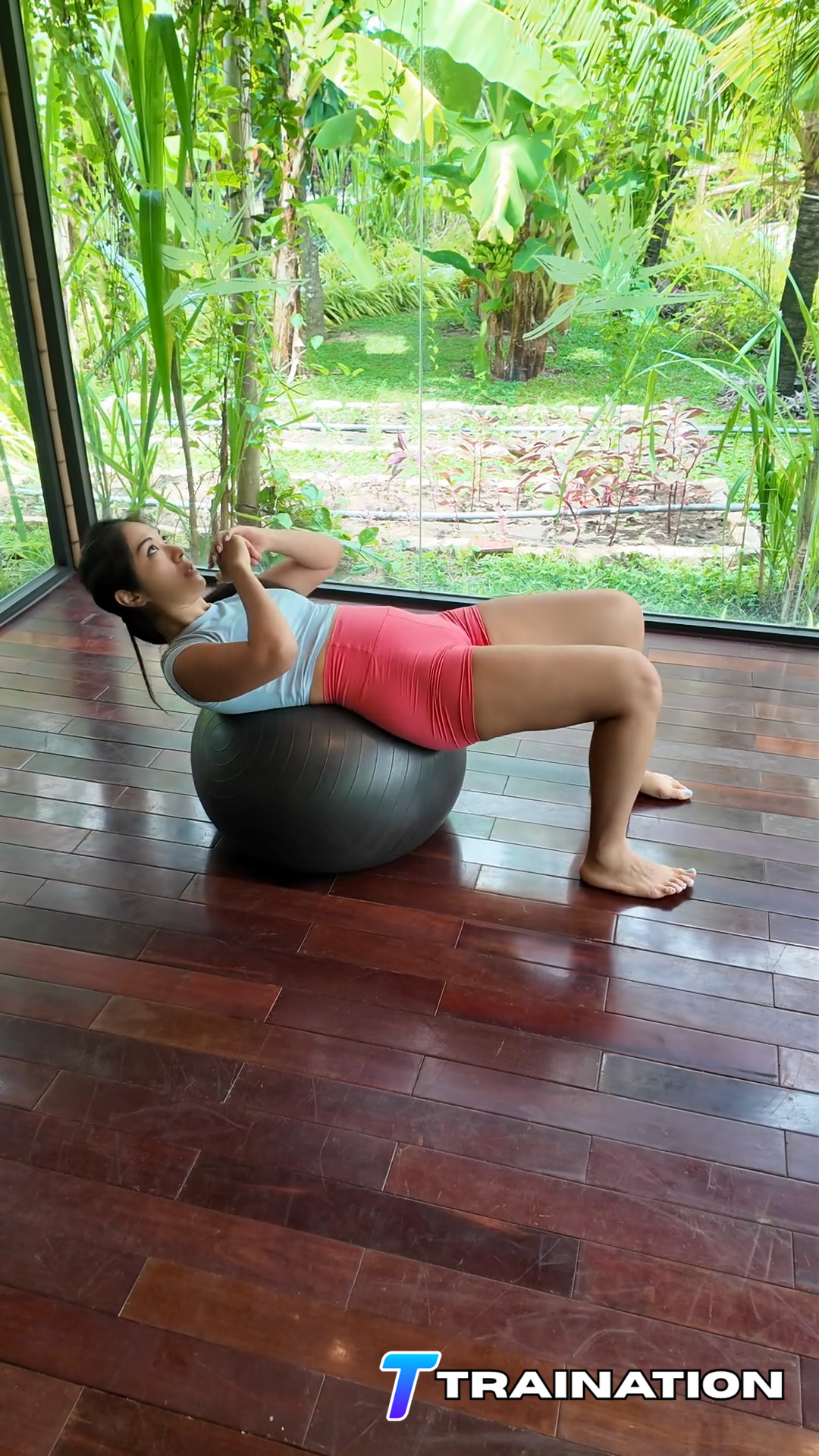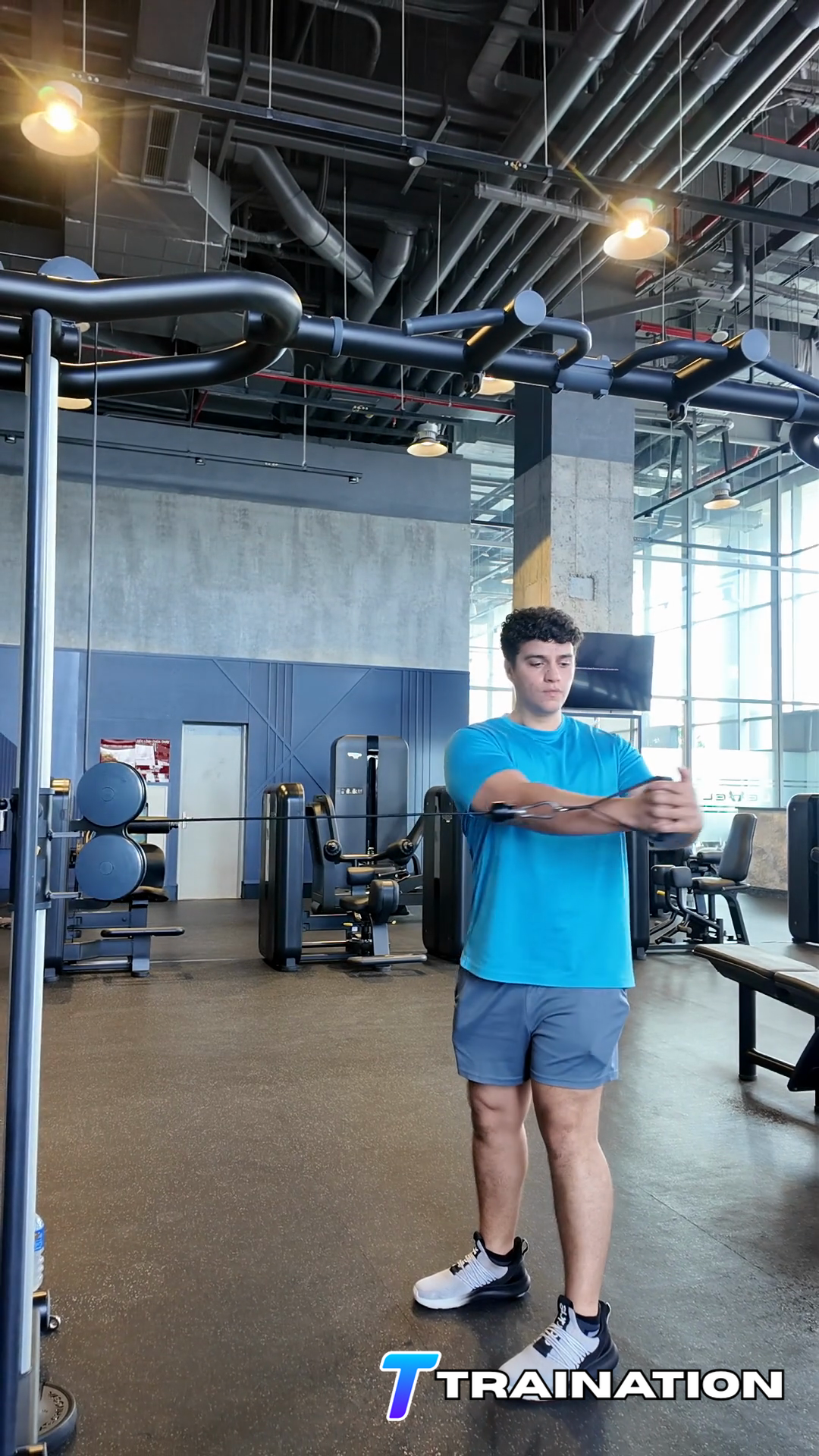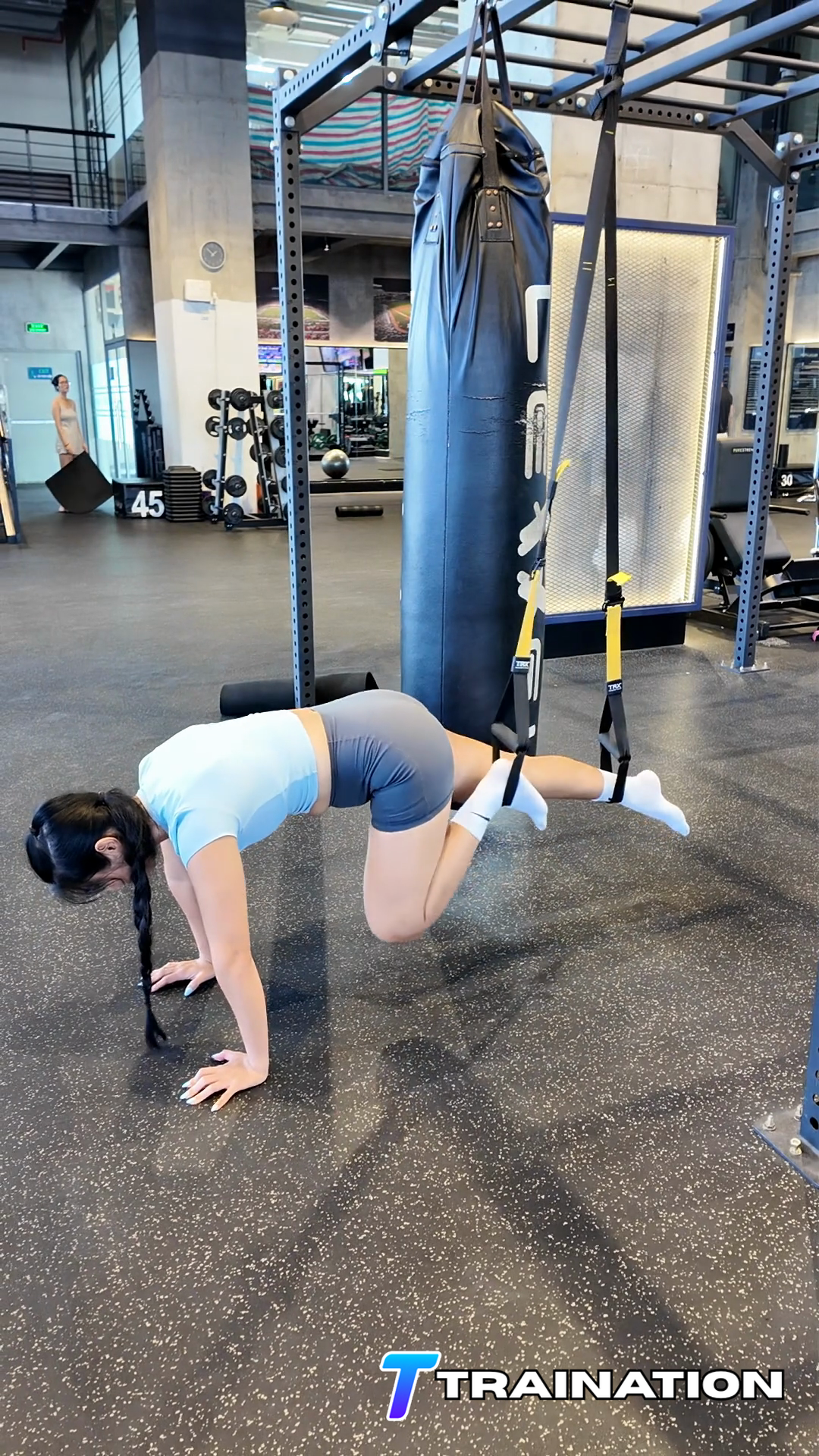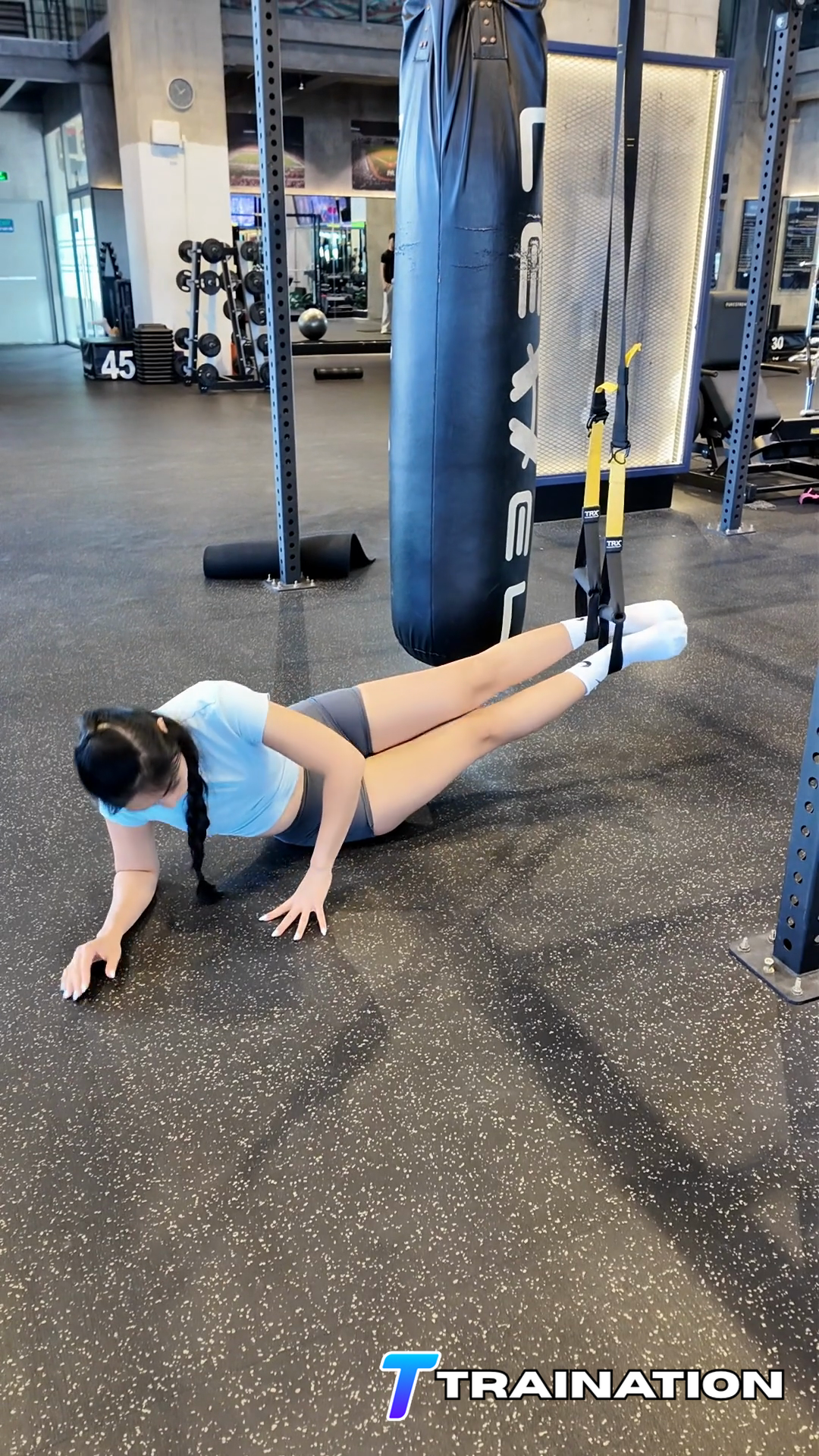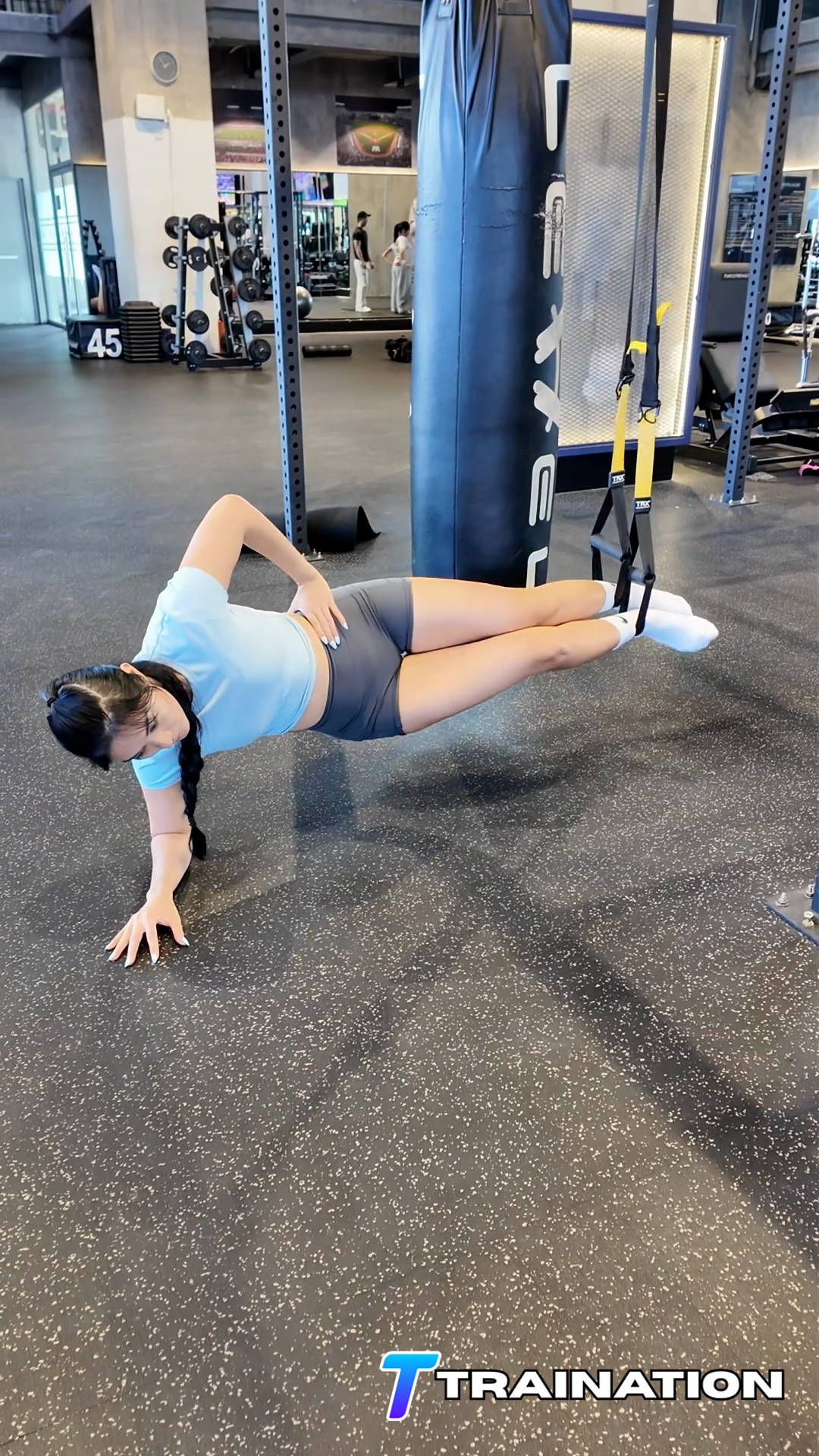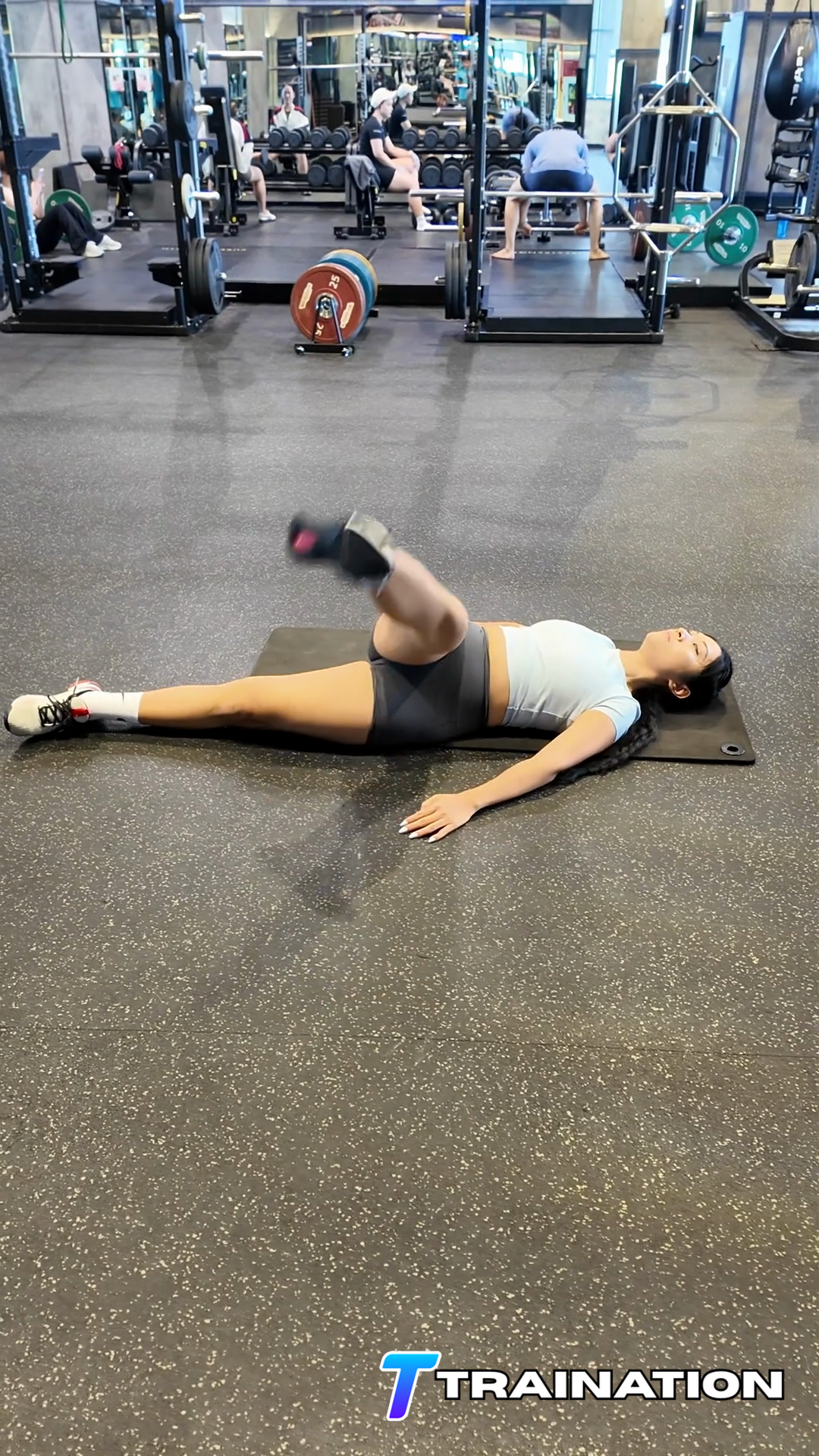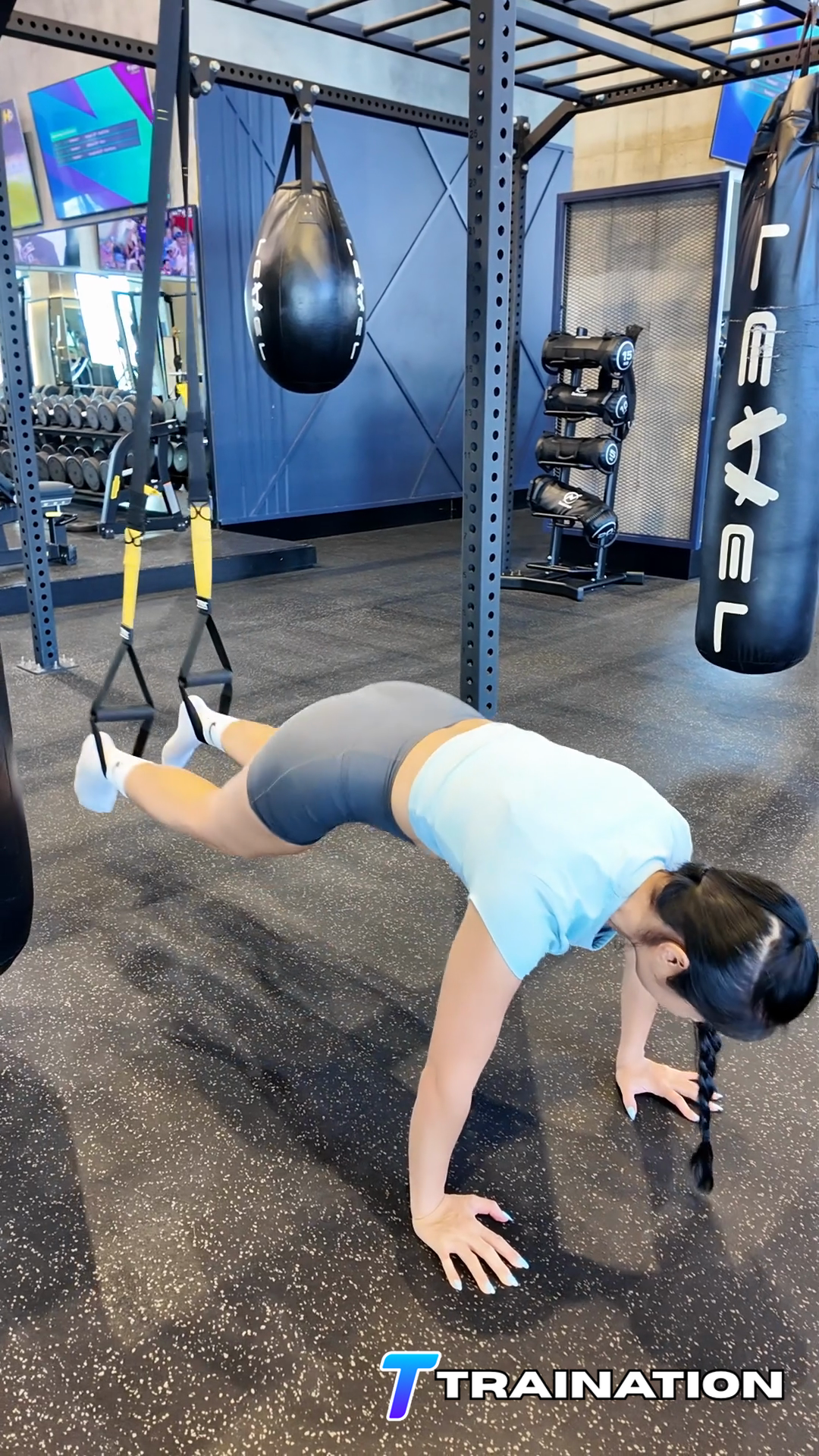
Hips piking
Keep the shoulders over the hands and draw the knees forward without lifting the pelvis high.
TRX Plank Crunch Knee Tuck trains the trunk to resist unwanted extension or rotation while the body maintains a specific support position.
Primary musclesRectus abdominis, Transverse abdominis, Iliopsoas
Secondary musclesObliques, Deltoids, Triceps brachii, Quadriceps
Follow the sequence in order, paying attention to the starting position, movement path, and finish described in each step.
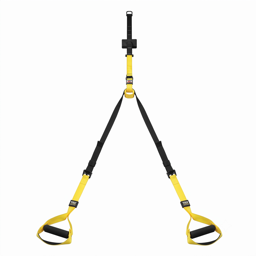
For TRX Plank Crunch Knee Tuck, place both feet securely in the TRX cradles, set the hands below the shoulders, and form one line from the head through the hips to the heels.
Brace the trunk and press the floor away so the shoulder blades remain supported against the ribs.
Draw both knees toward the chest without allowing the hips to sag, pike, or rotate.
Pause only as long as the shoulders remain above the hands and the lower back stays controlled.
Extend the leg or legs slowly to the plank position before repeating. Repeat without changing the established position.
Keep the shoulders over the hands and draw the knees forward without lifting the pelvis high.
Brace before extending the legs and shorten the range if the pelvis drops.
Press the floor away and maintain the original upper-body position.
Extend the legs slowly so the foot cradles and straps do not swing between repetitions.
Place TRX Plank Crunch Knee Tuck after the main compound lifts, in a focused core block, or beside an exercise that does not require a fresh trunk.
Use two to four times per week while accounting for trunk work already supplied by squats, hinges, carries, and overhead lifting.
| Goal | Sets | Reps or time | Rest | Effort and execution |
|---|---|---|---|---|
| Control / technique | 2–3 | 5–8 reps | 45–75 sec | Stop well before position changes |
| Strength / endurance | 2–4 | 8–15 reps | 60–90 sec | Stop while 1–3 good-form reps are still possible |
Scale the movement
Hold the shoulder and pelvis position before adding knee movement.
Keep both feet on the floor and move one knee at a time without suspension instability.
Extend the return phase while keeping the shoulders fixed above the hands.
Use a more difficult body angle or strap position only after the hips stay level.
Turn TRX Plank Crunch Knee Tuck and the rest of your exercise library into repeatable client programs.
Explore the workout builder