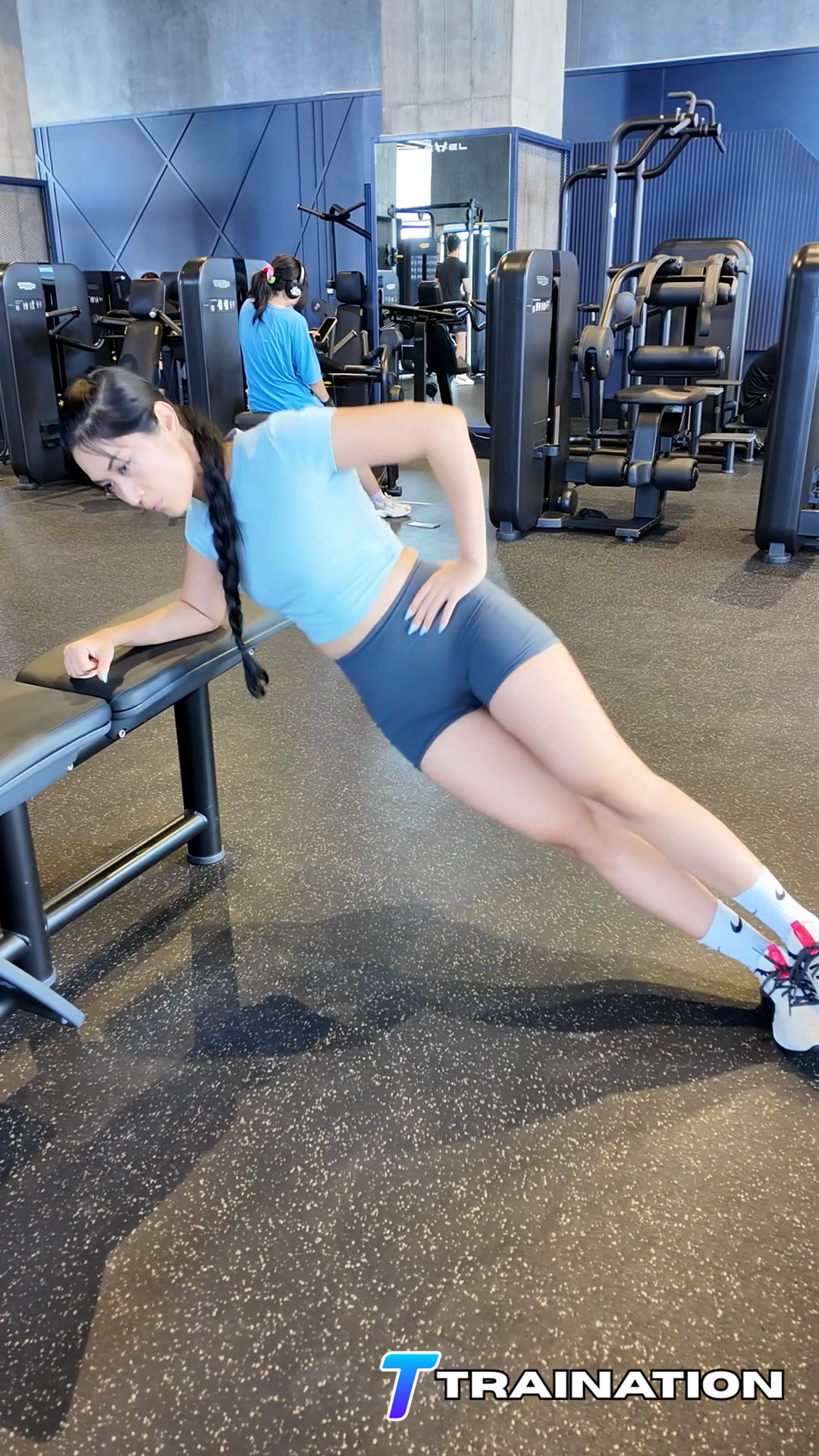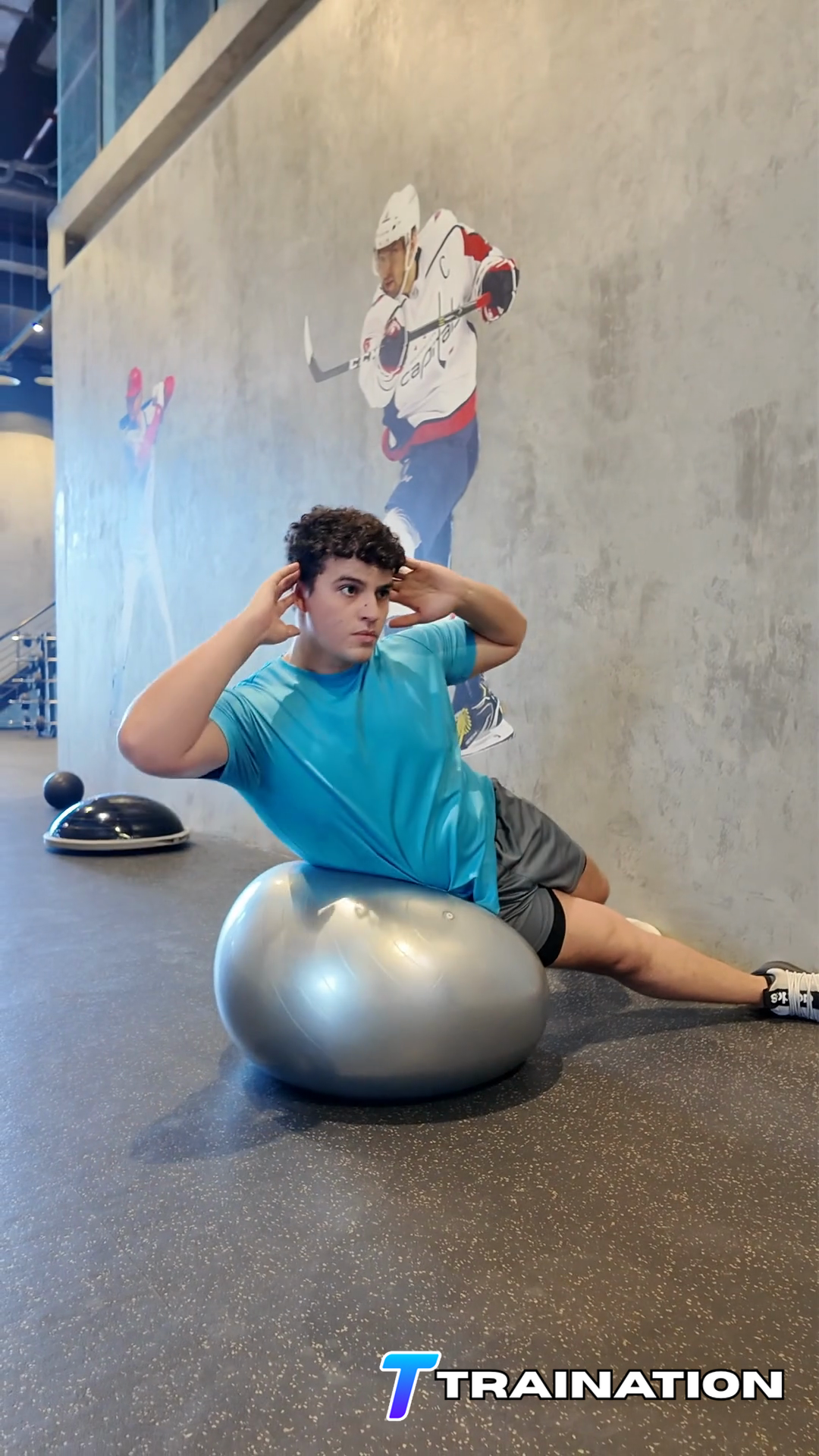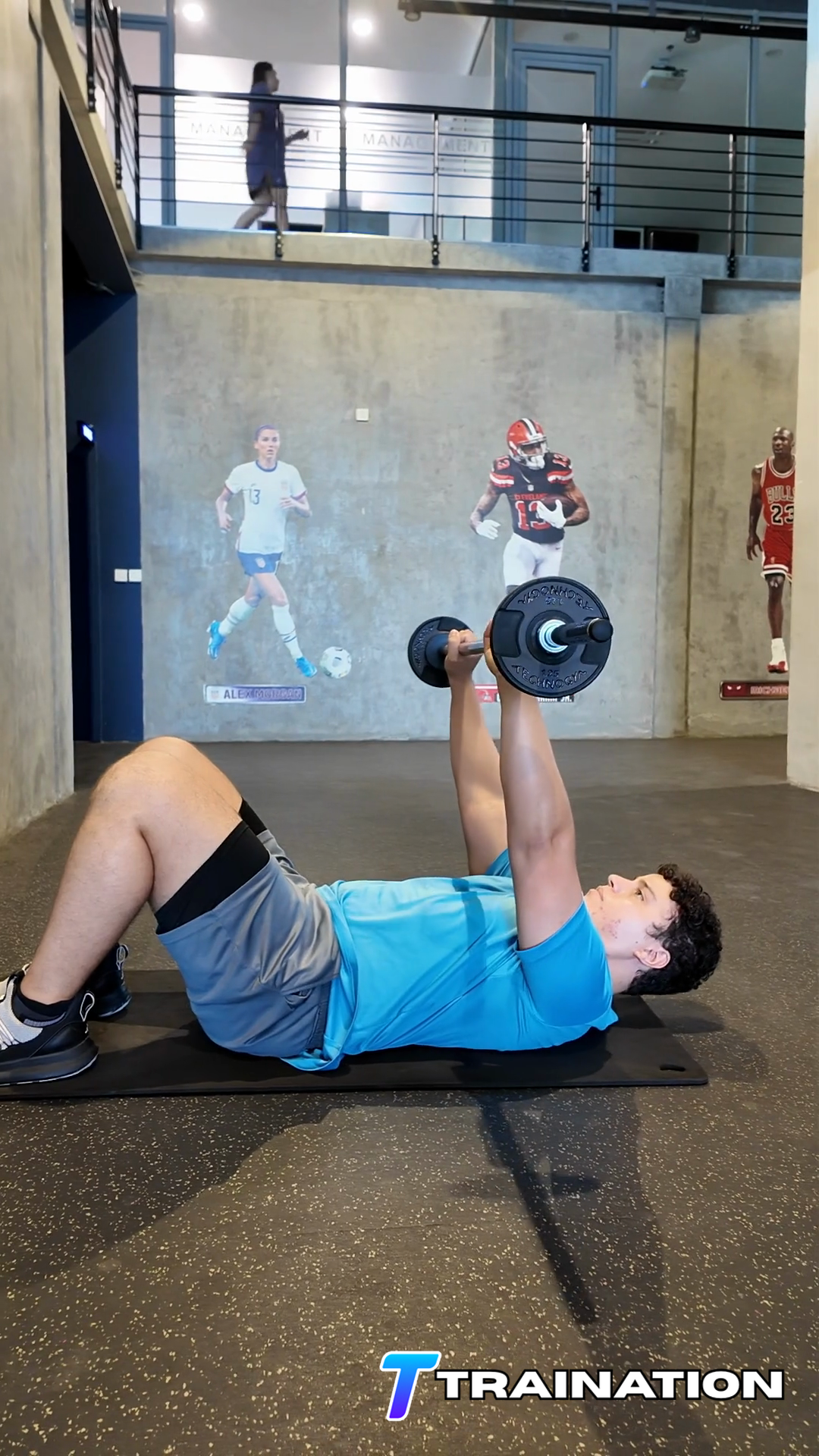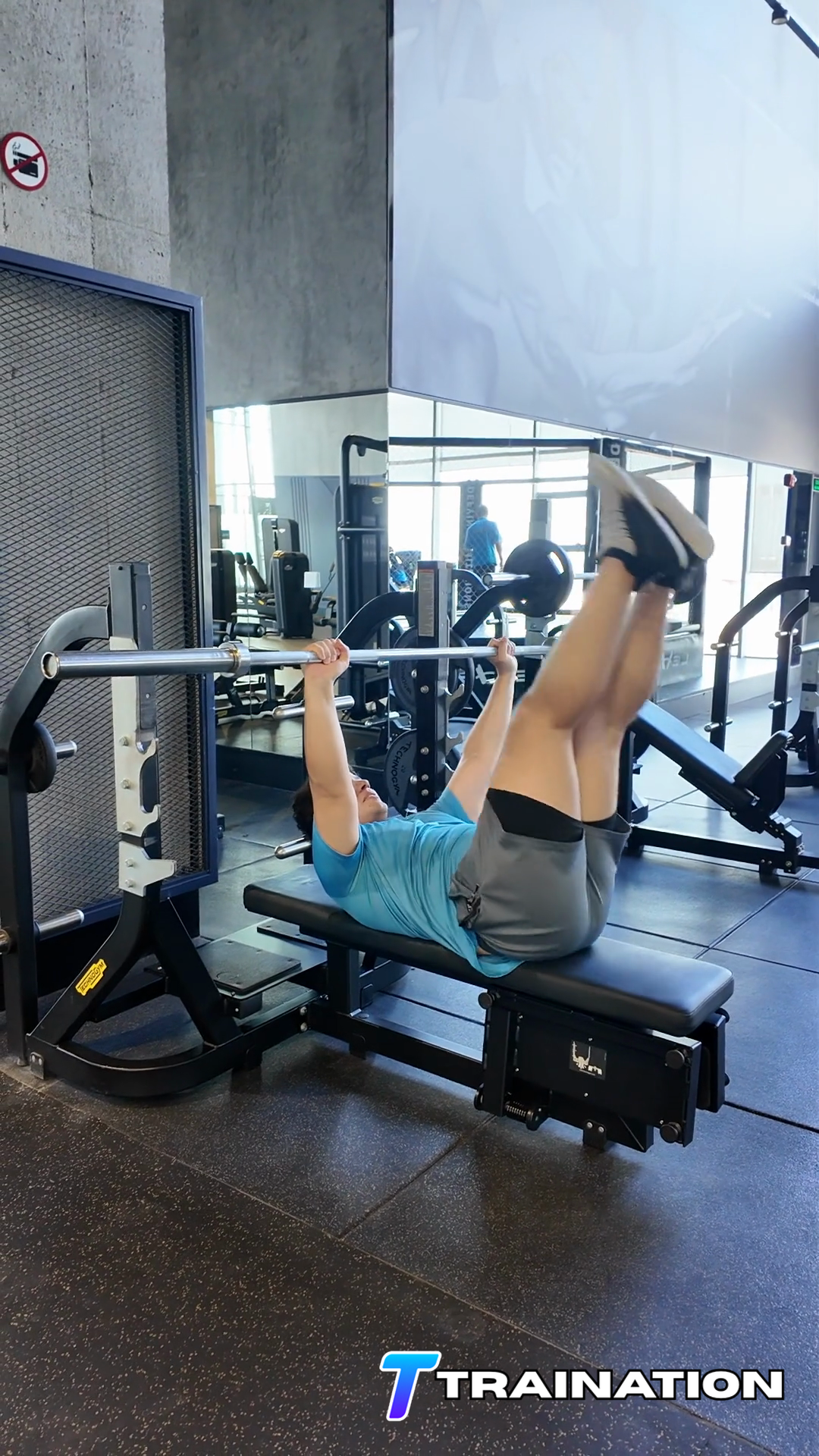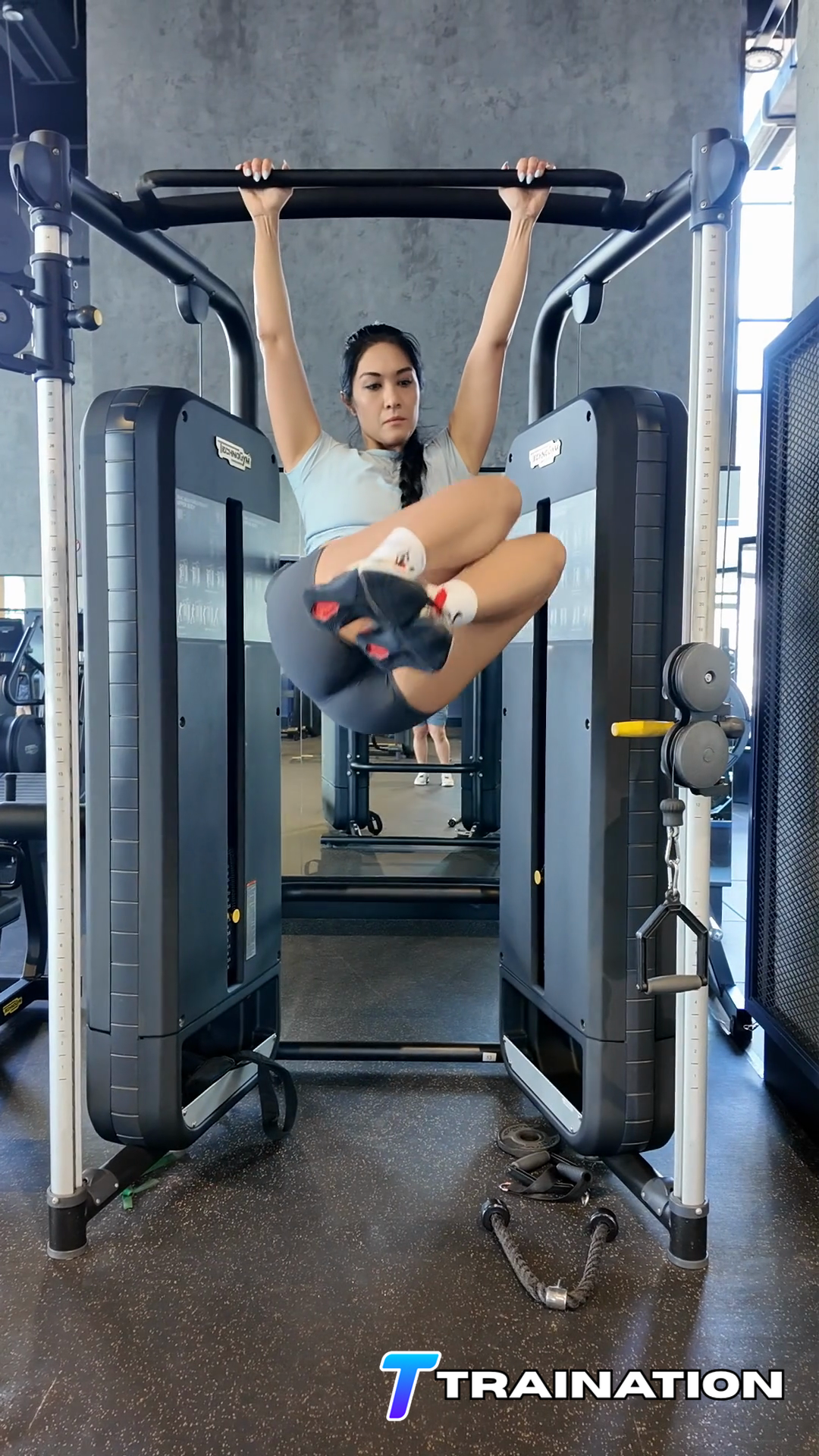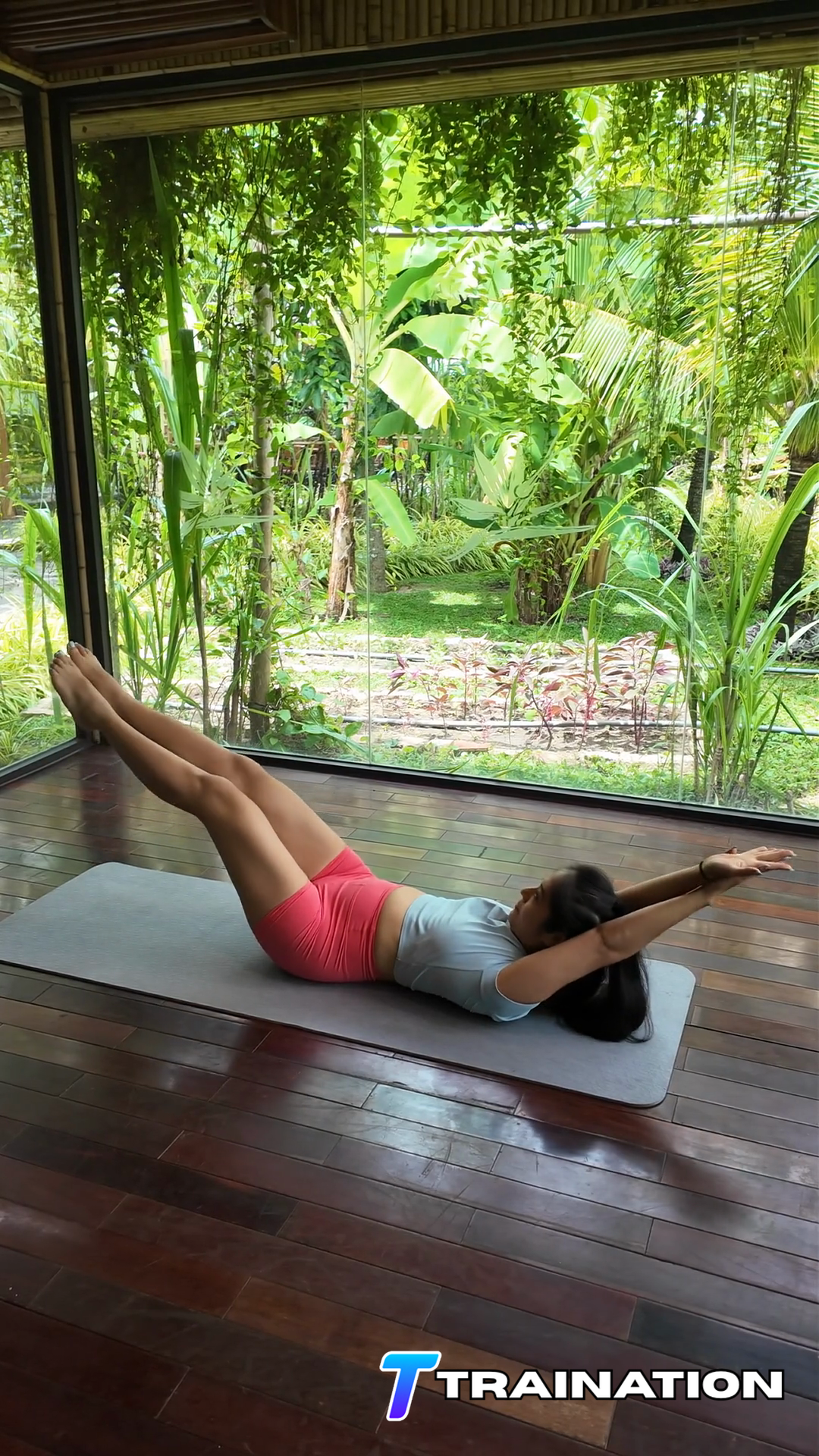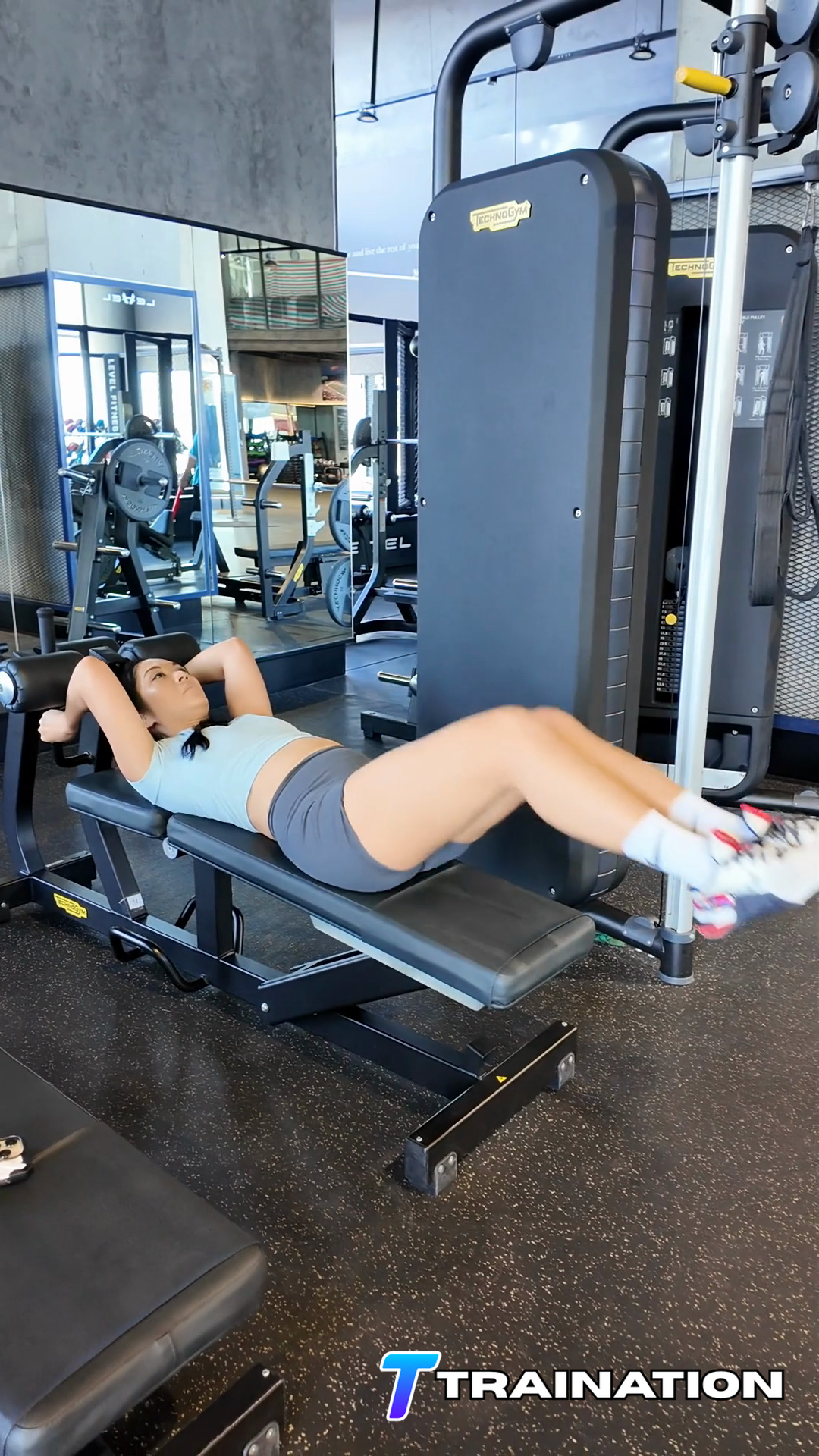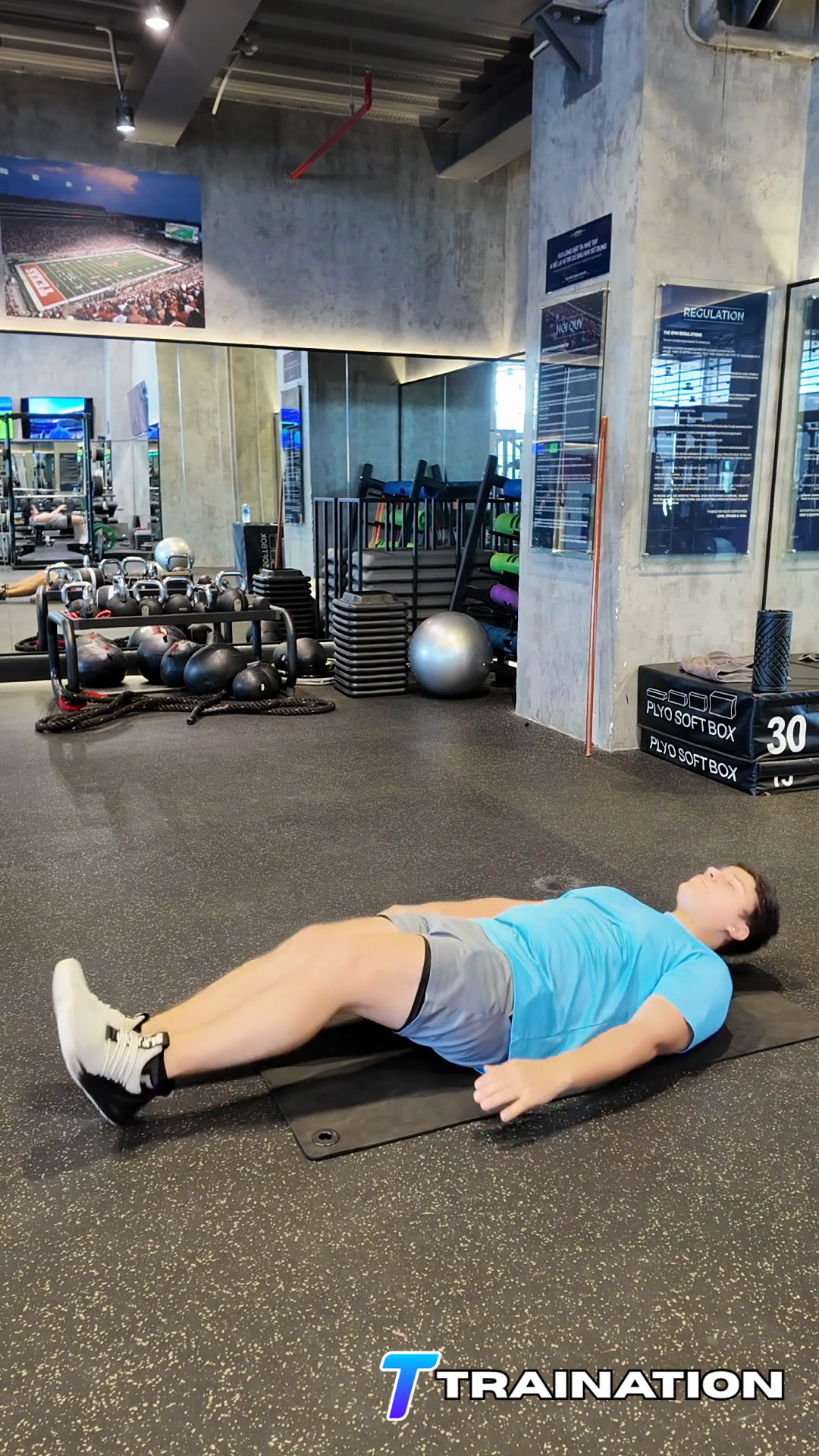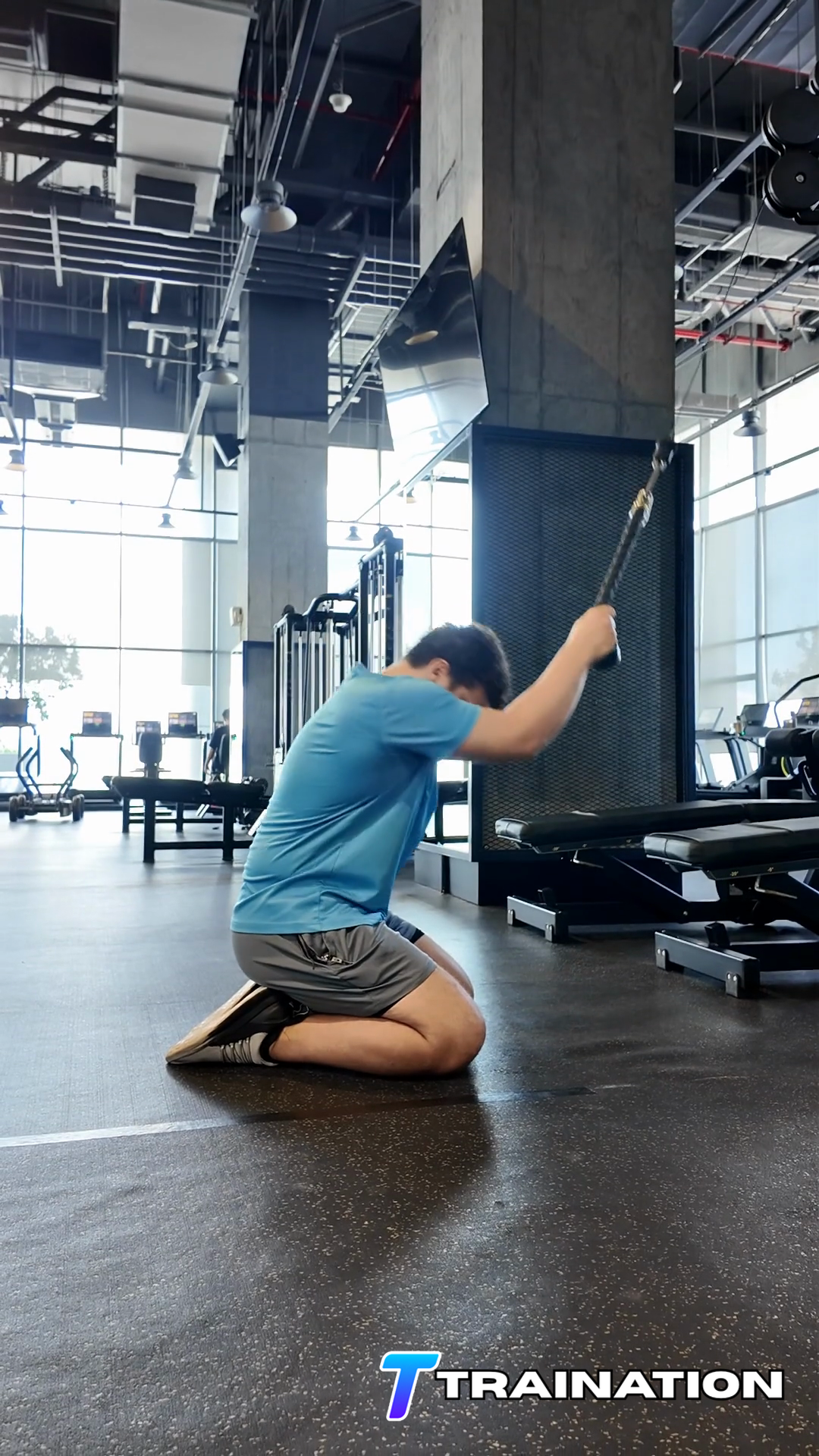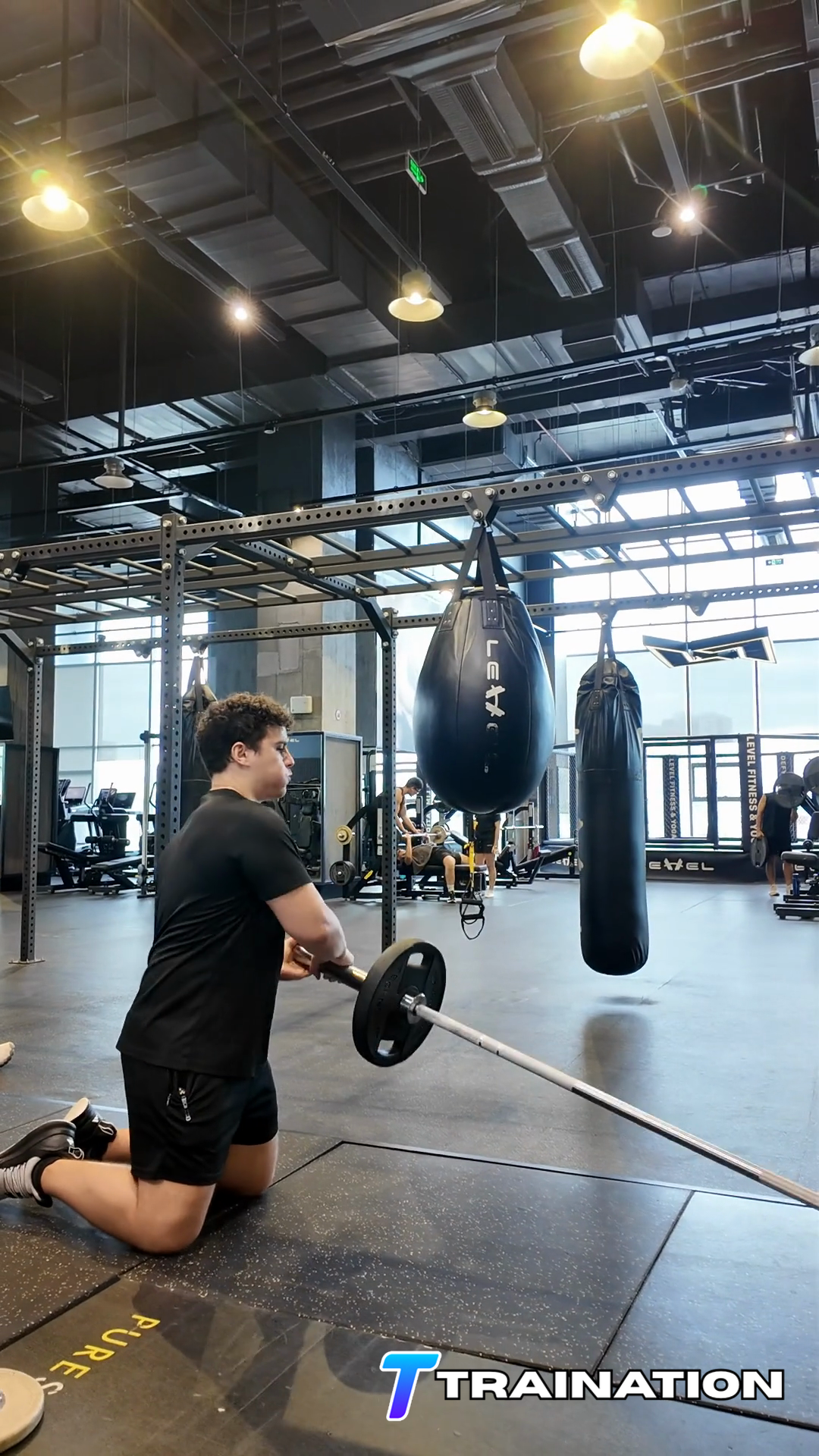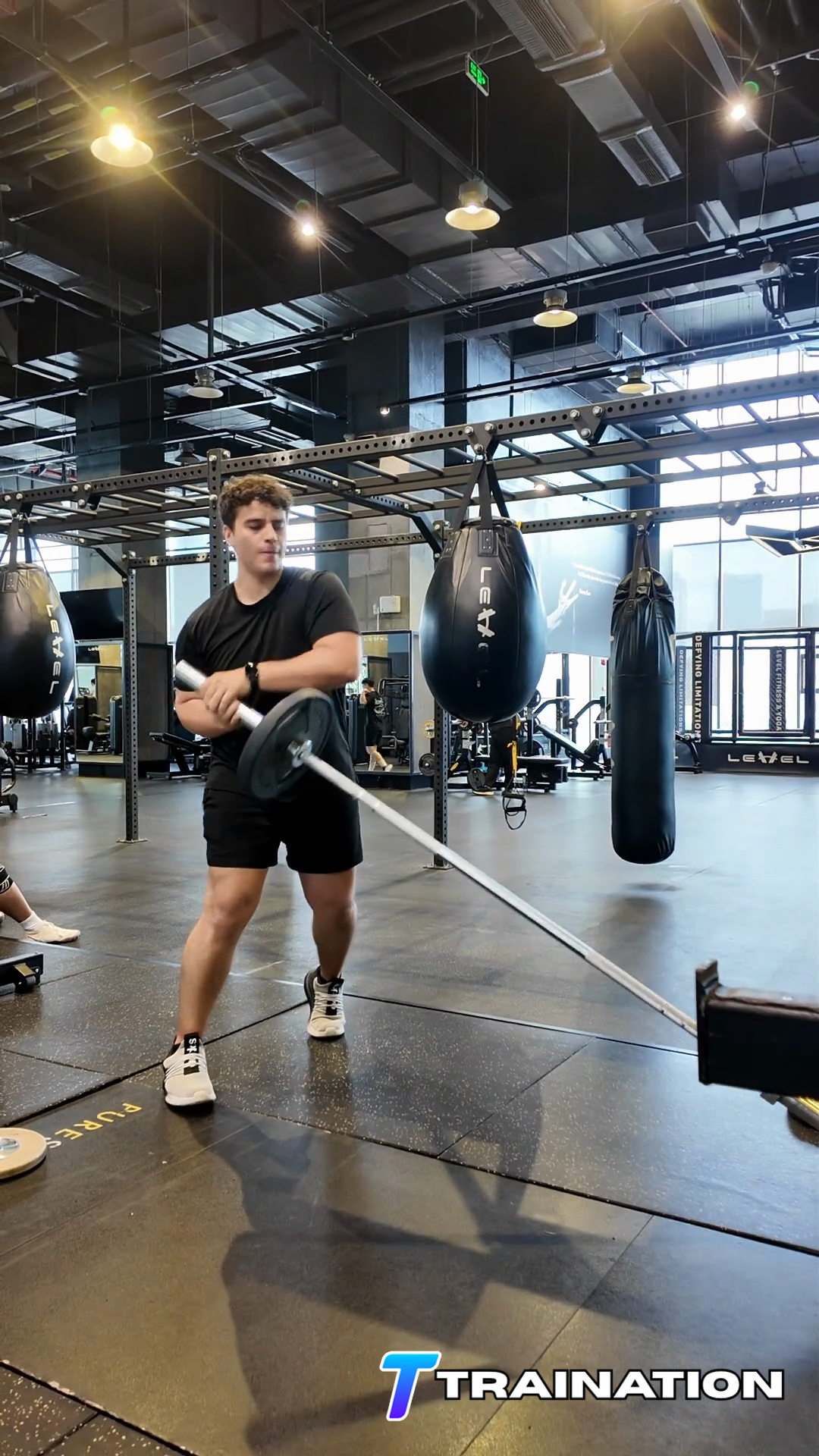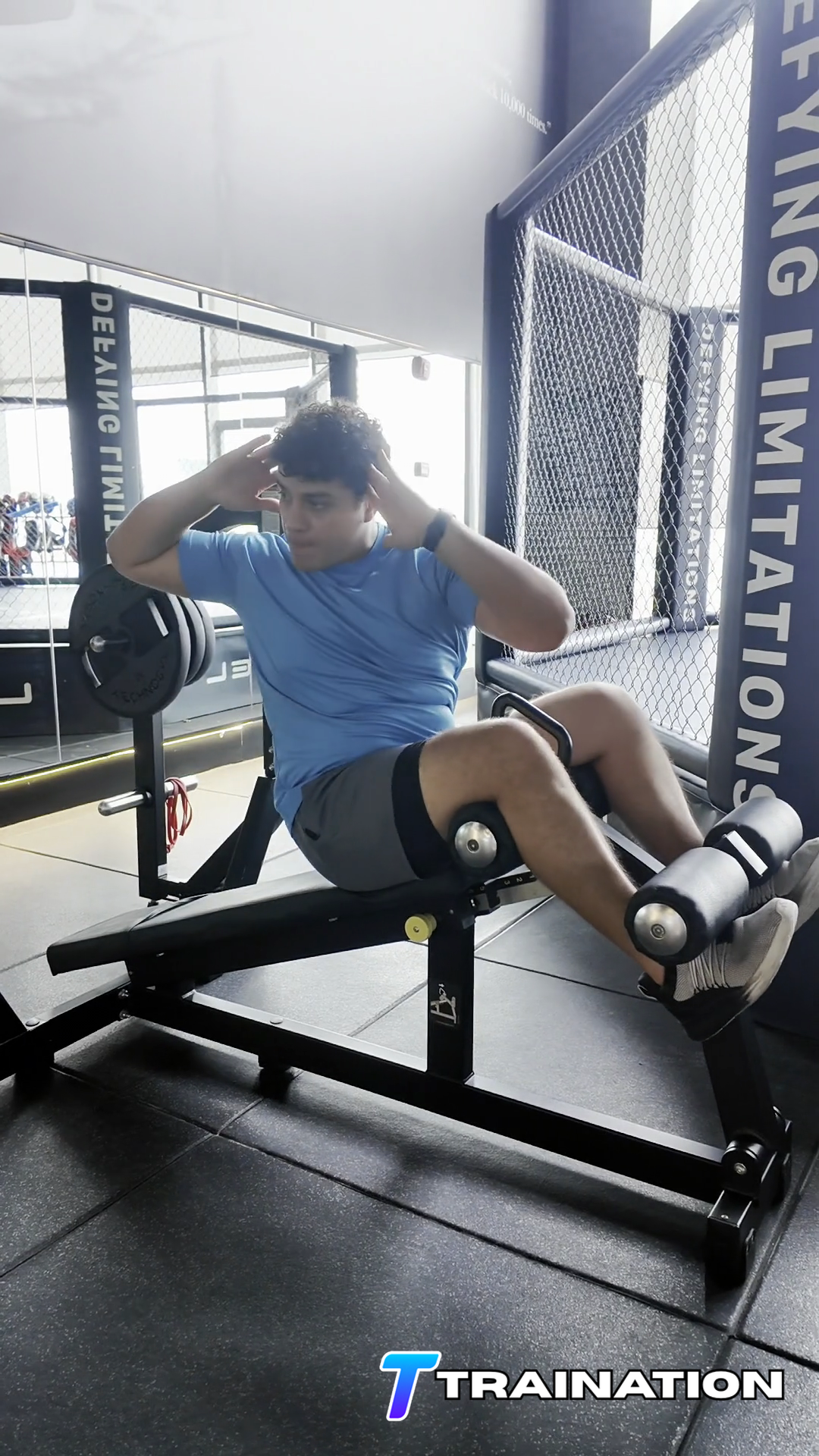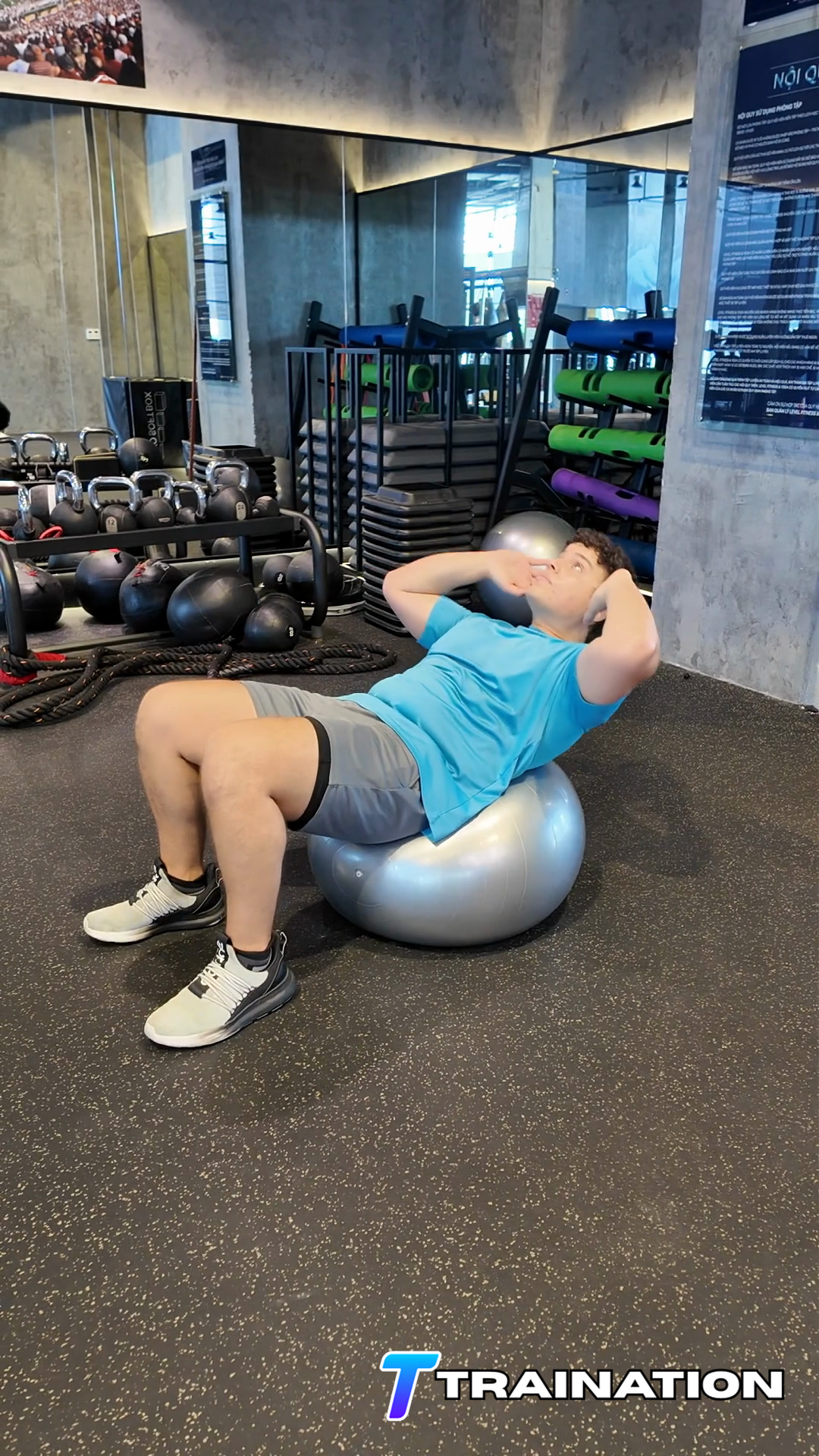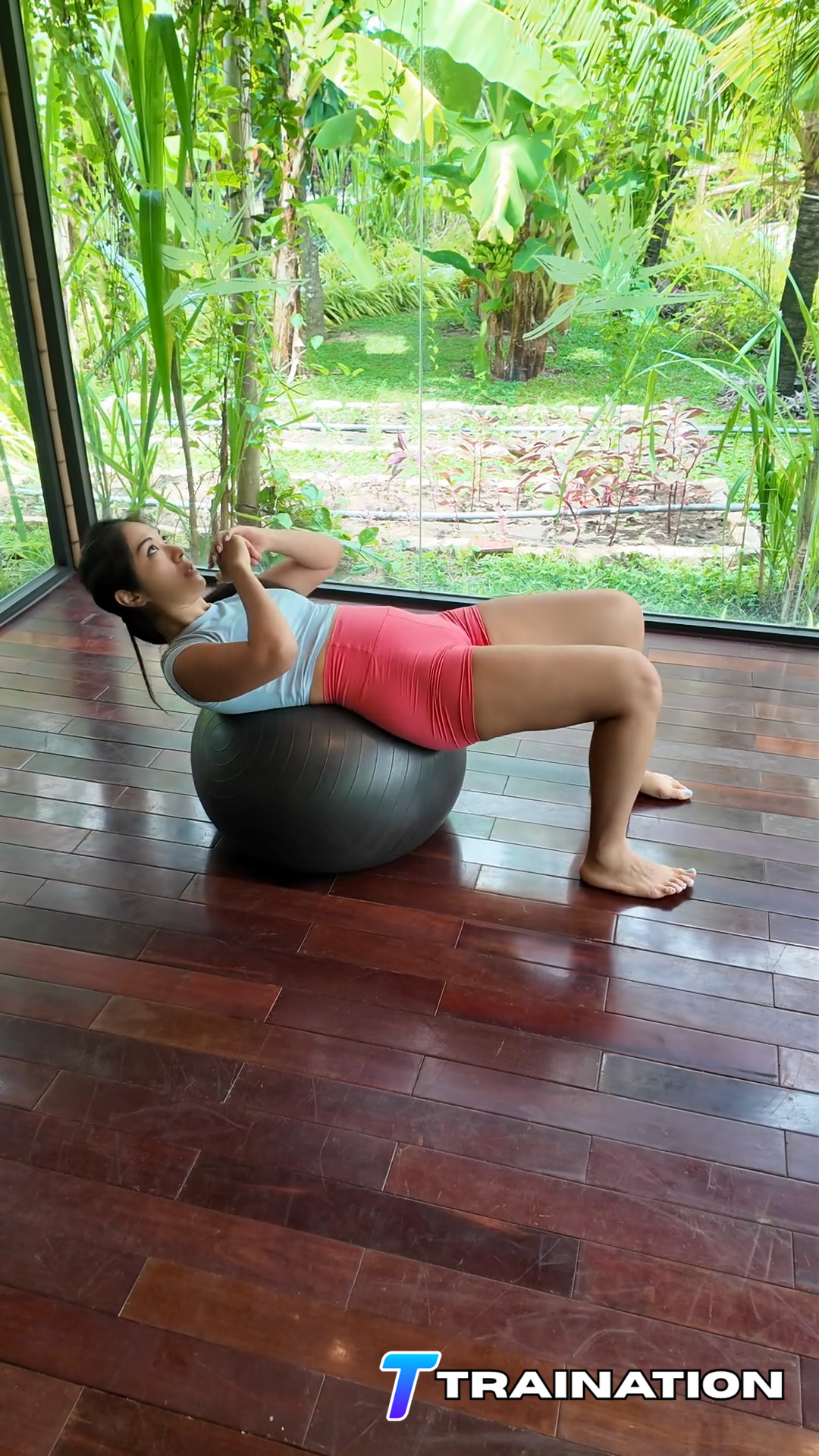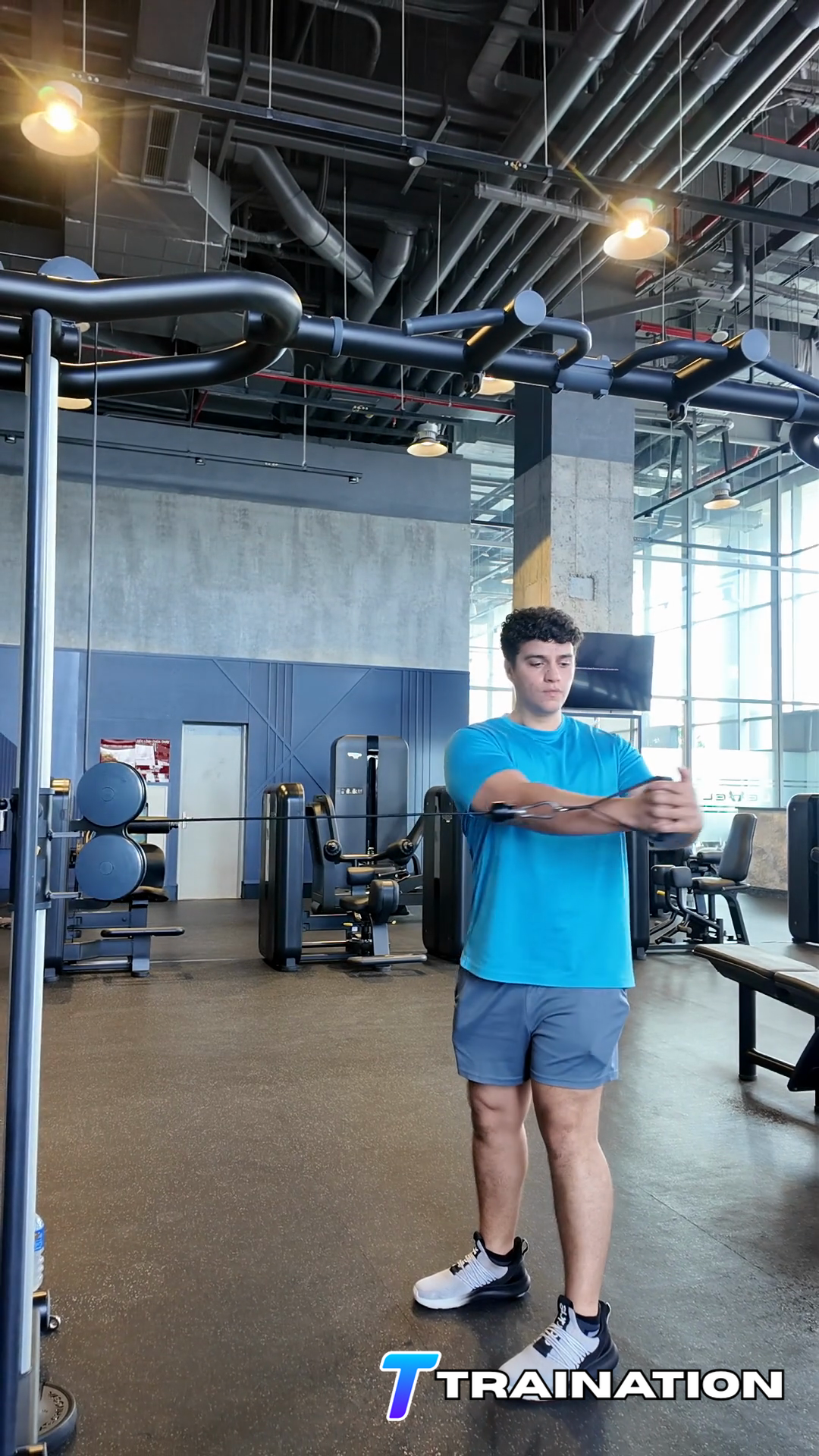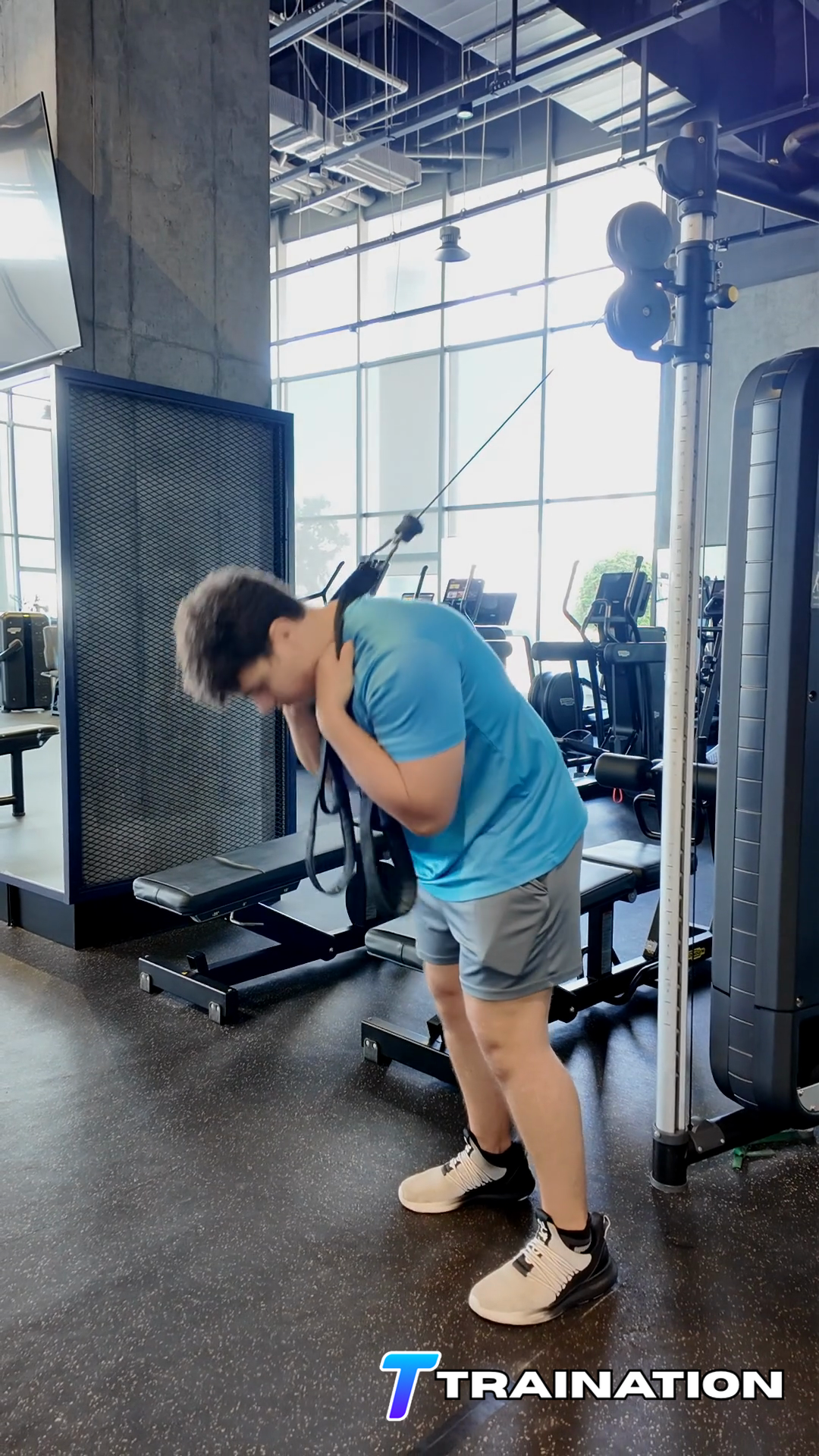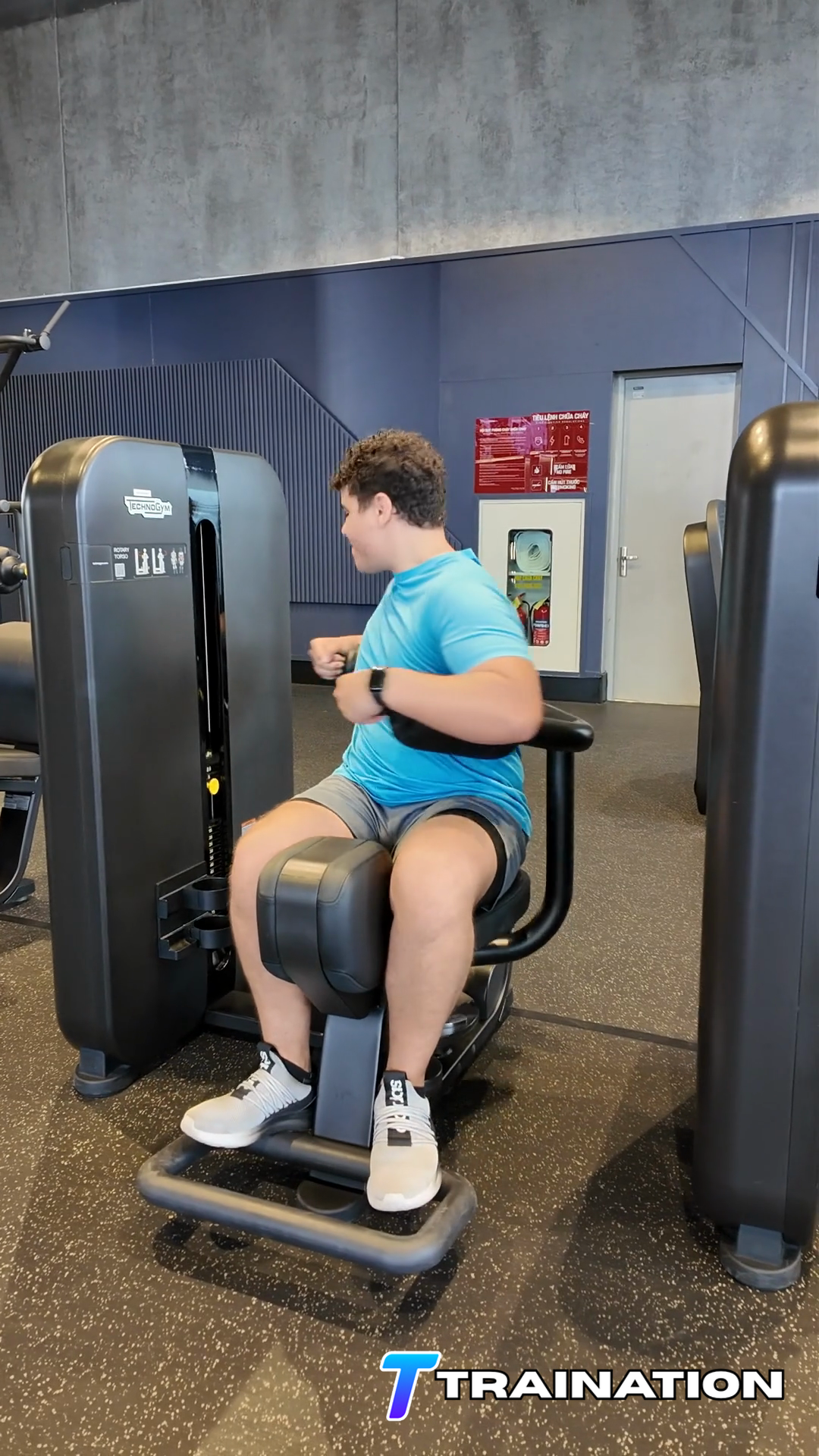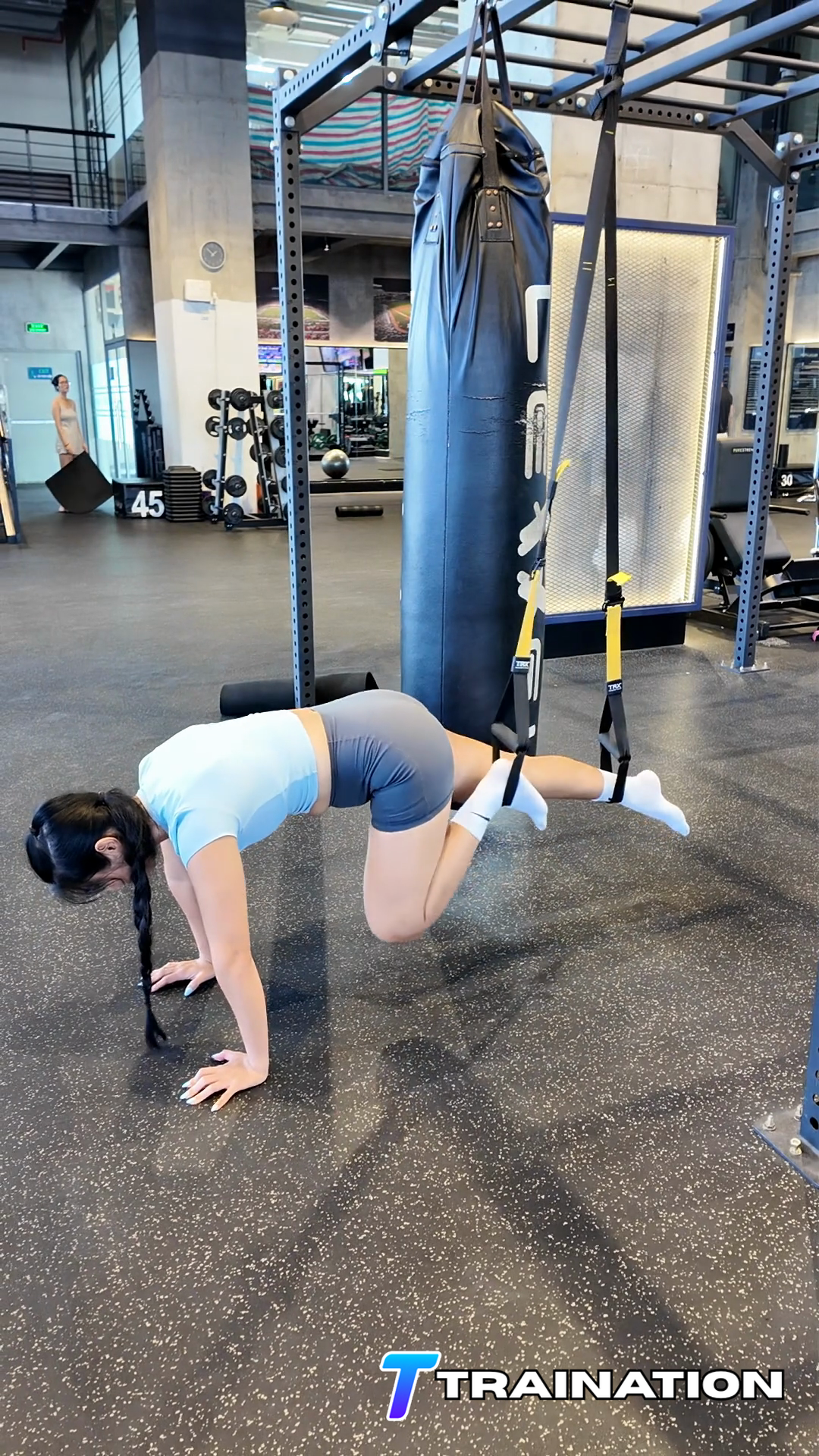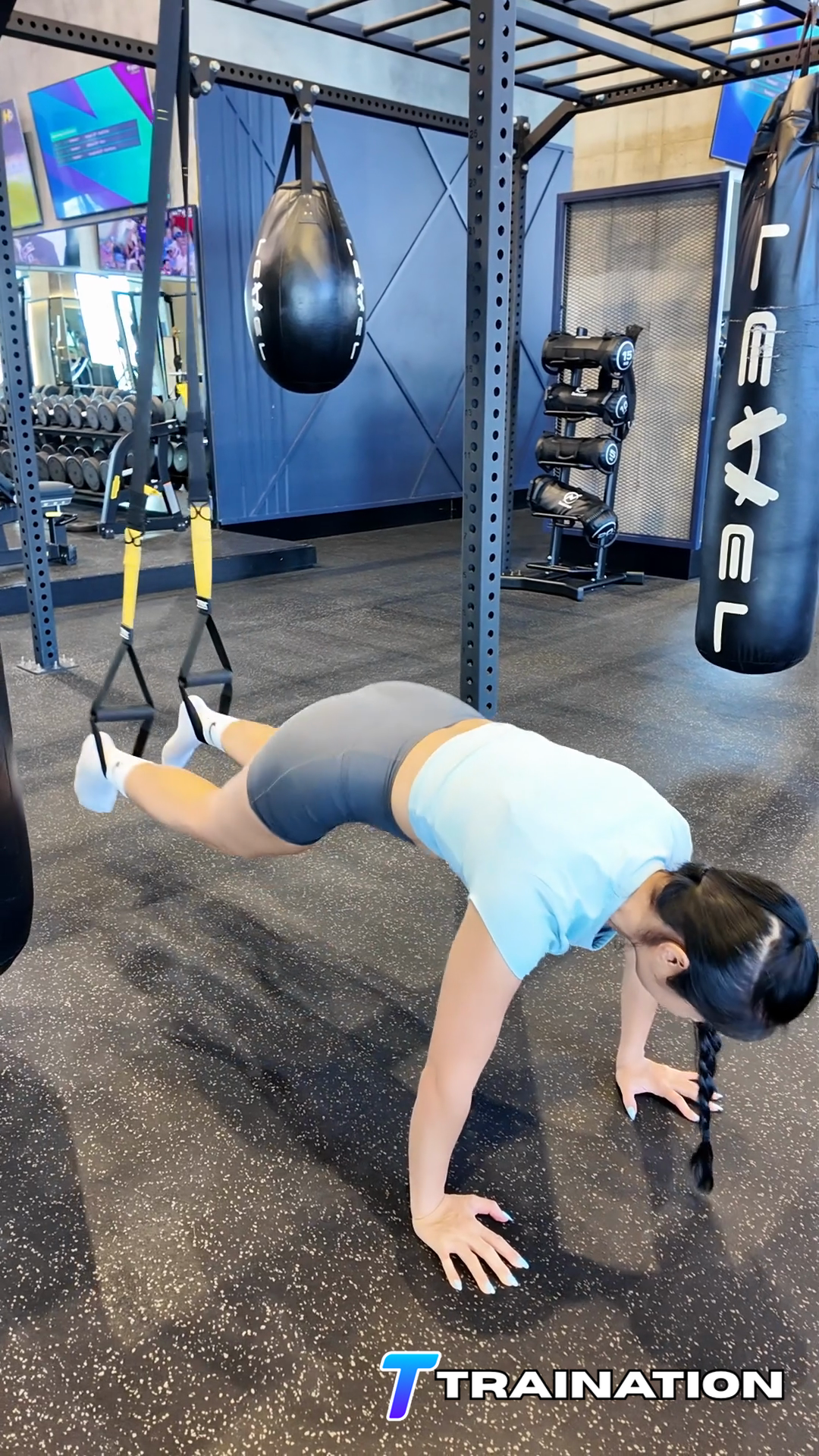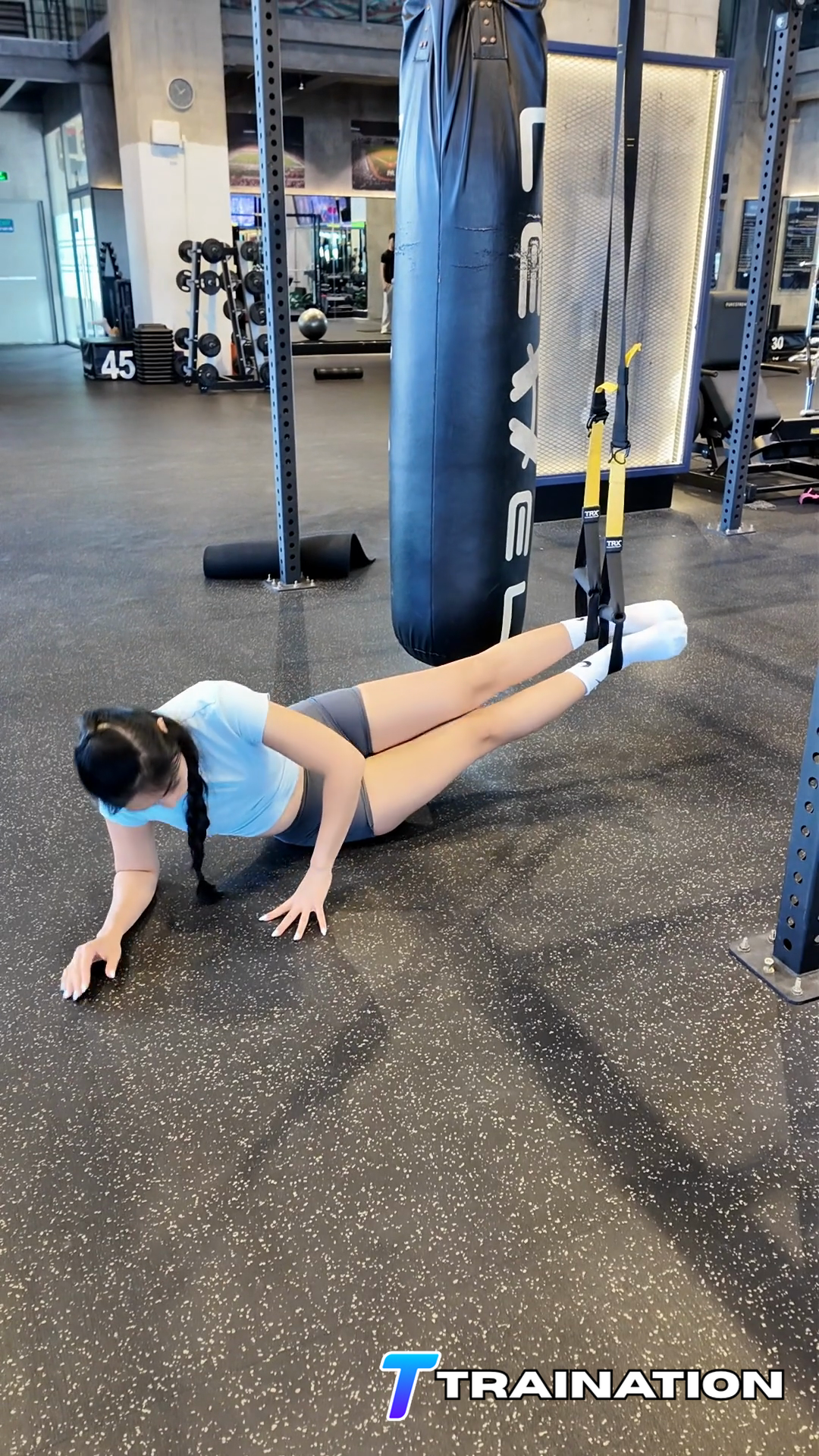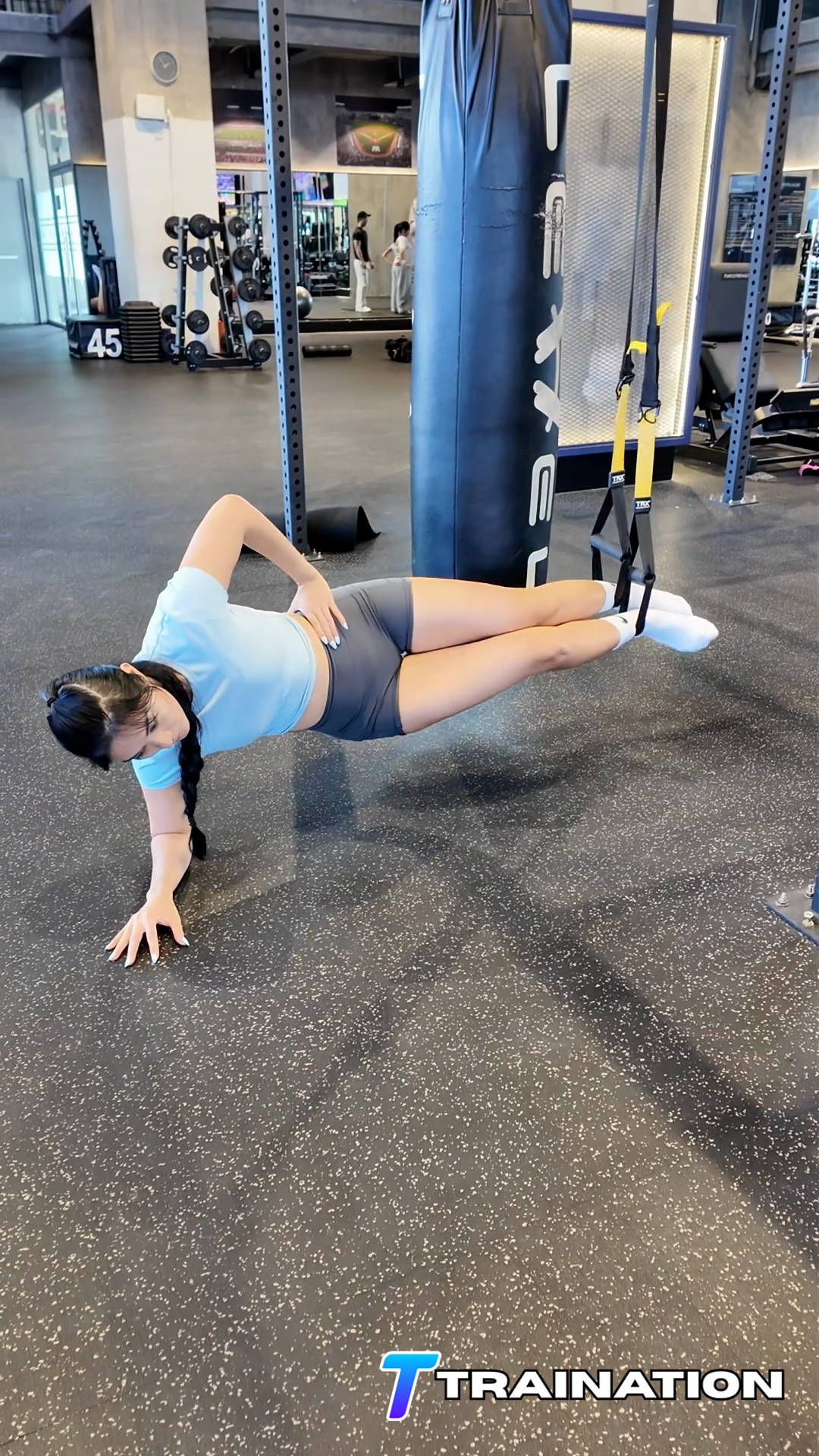
Pulling on the neck
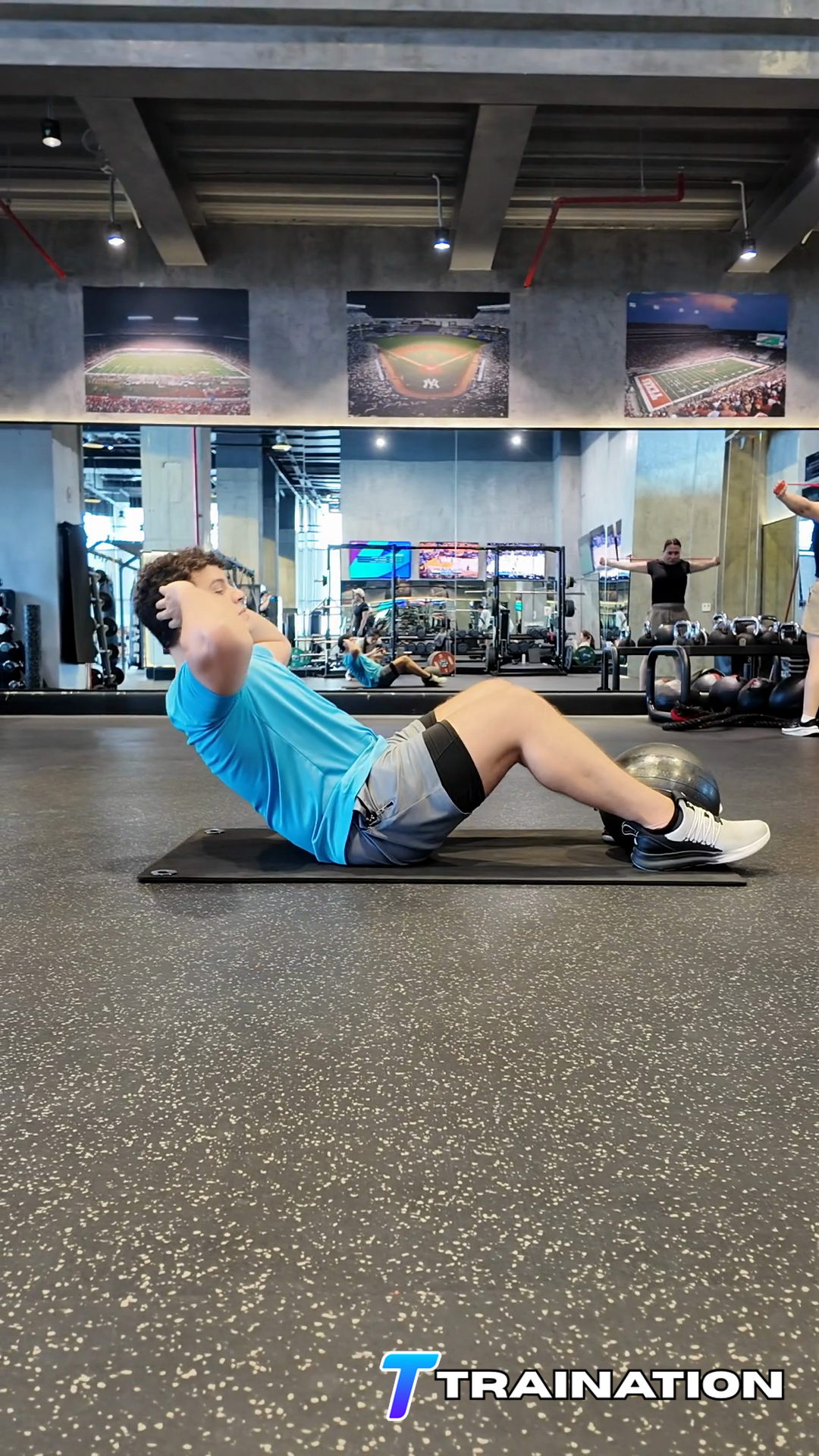
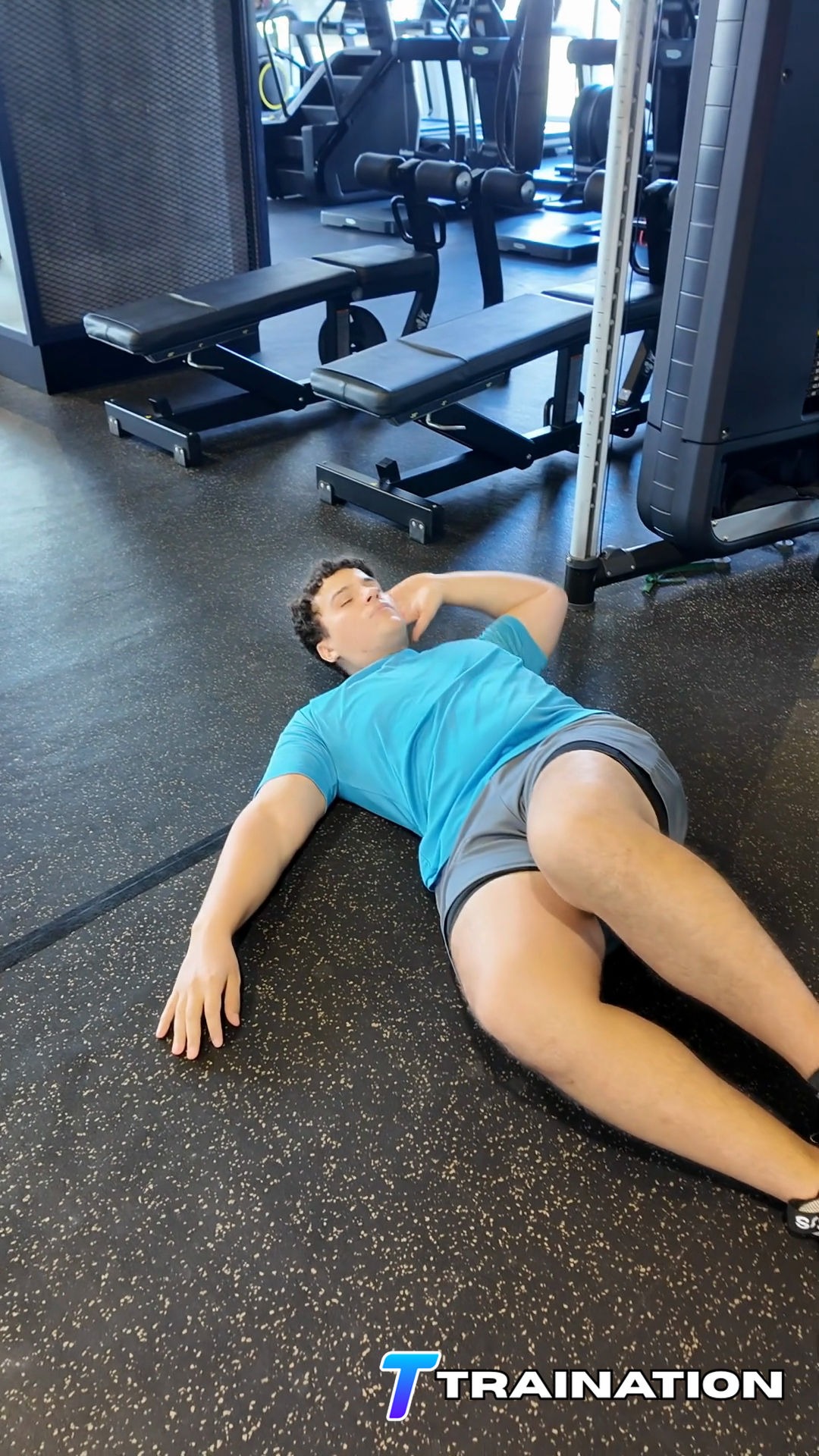
Support the head lightly or cross the arms; the abdominals should move the rib cage.
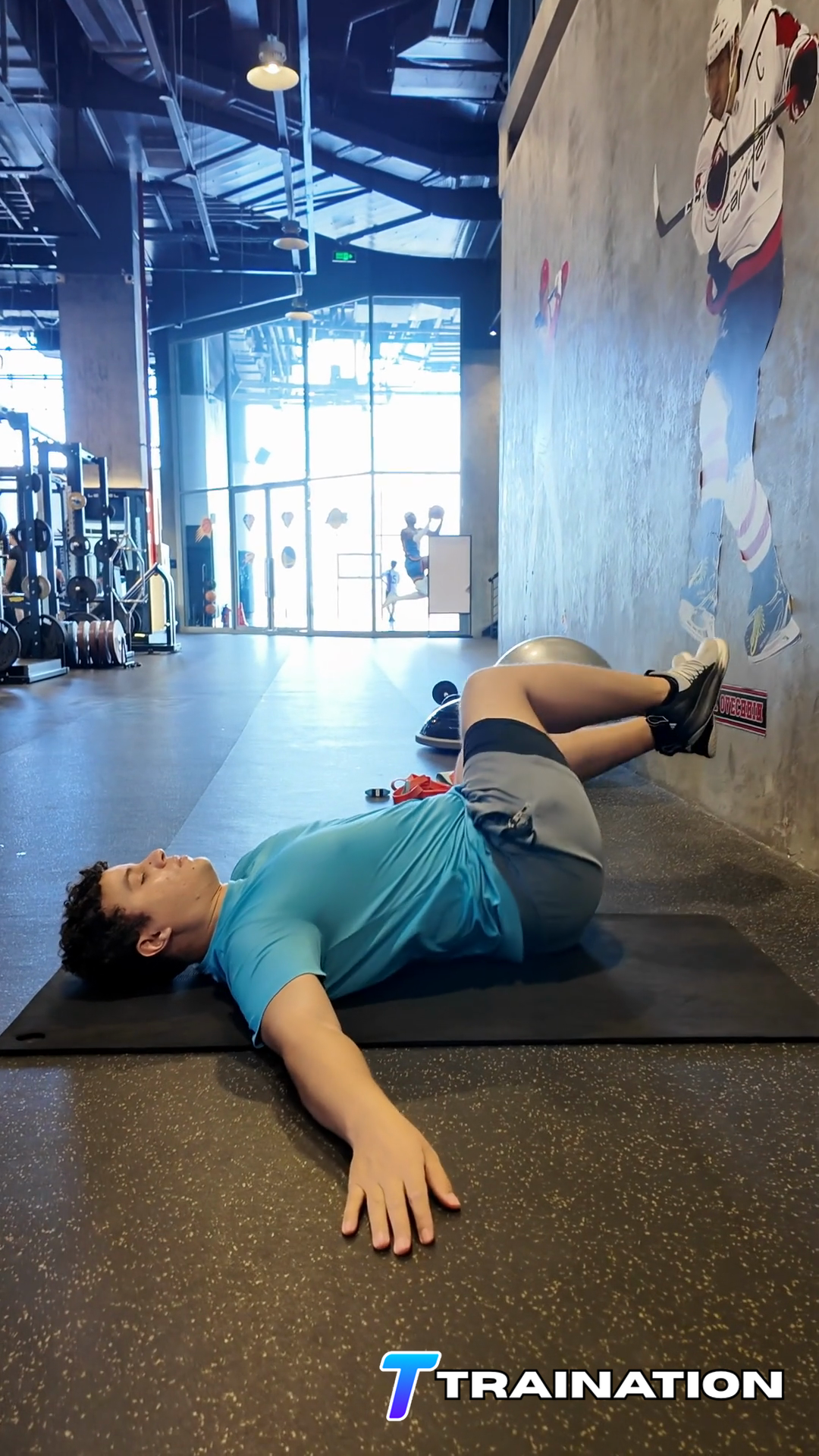
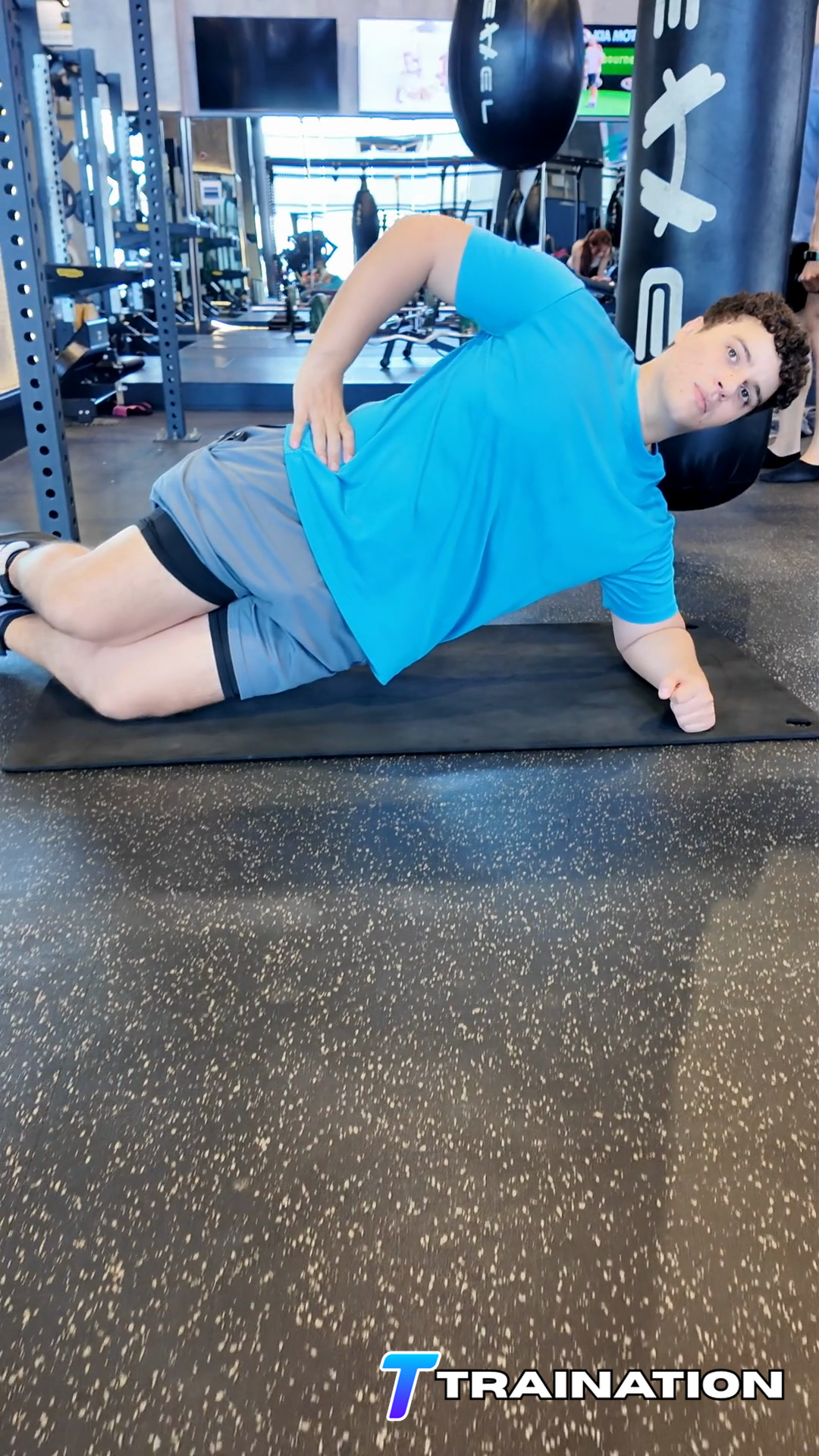
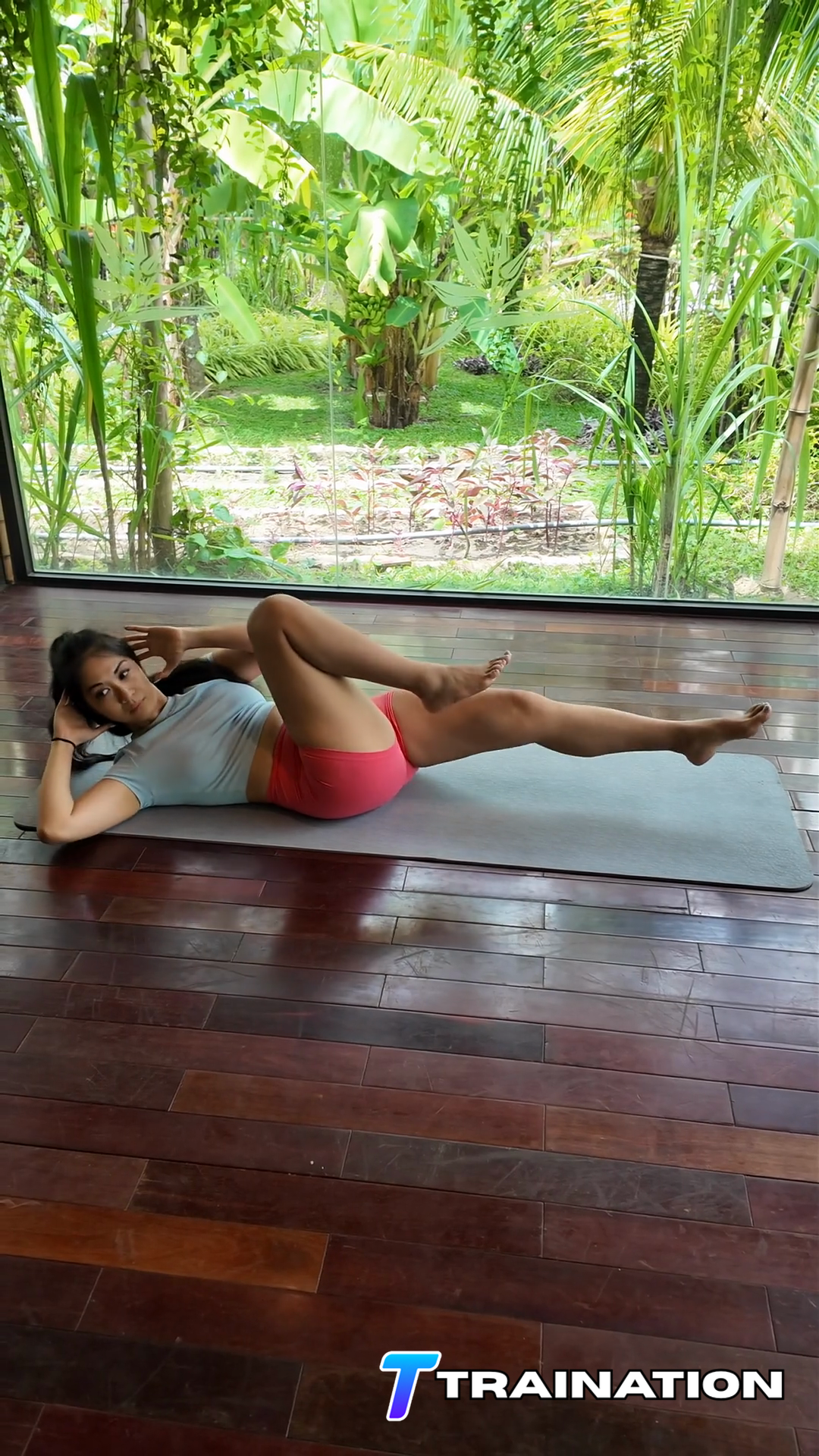
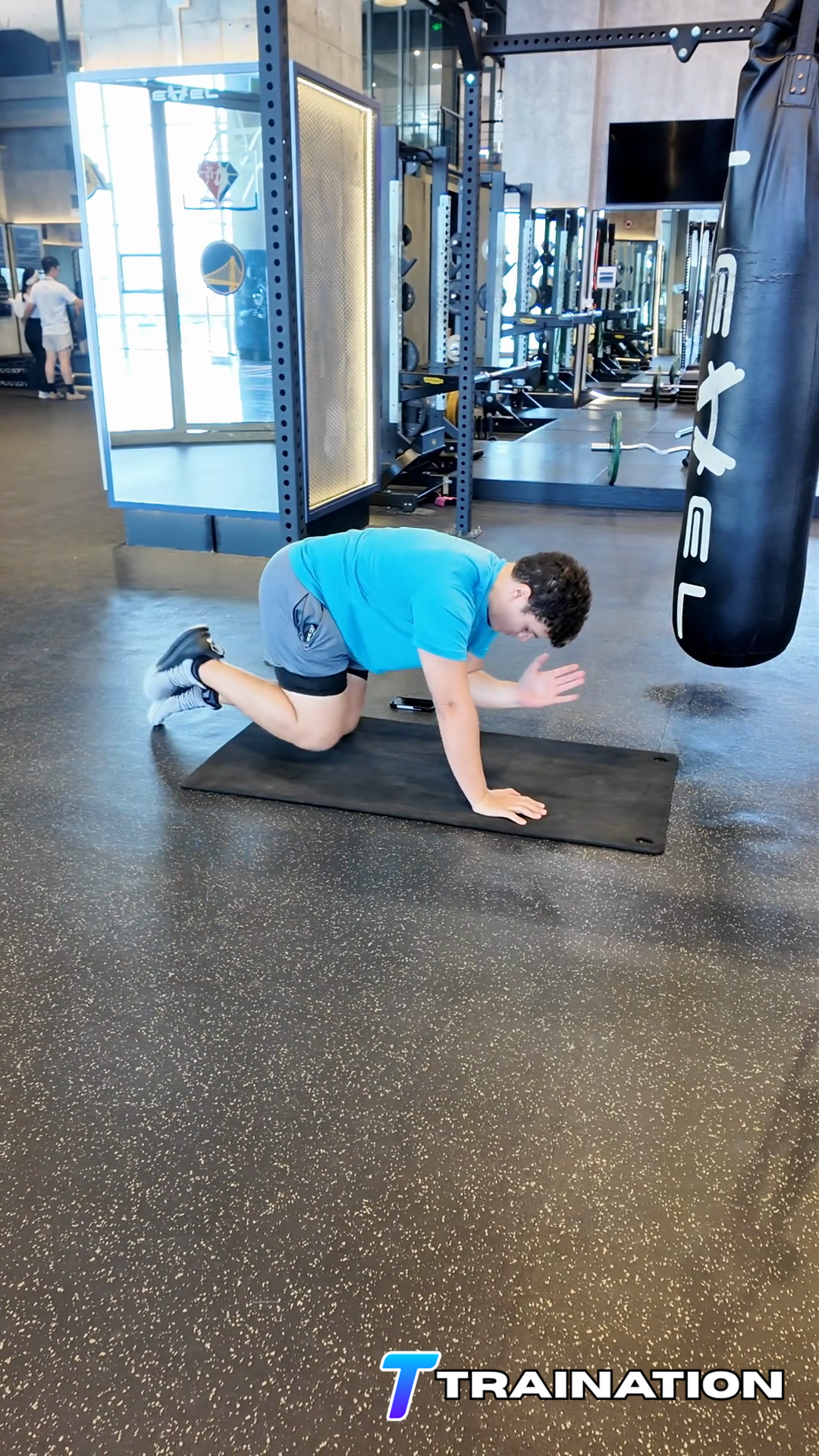
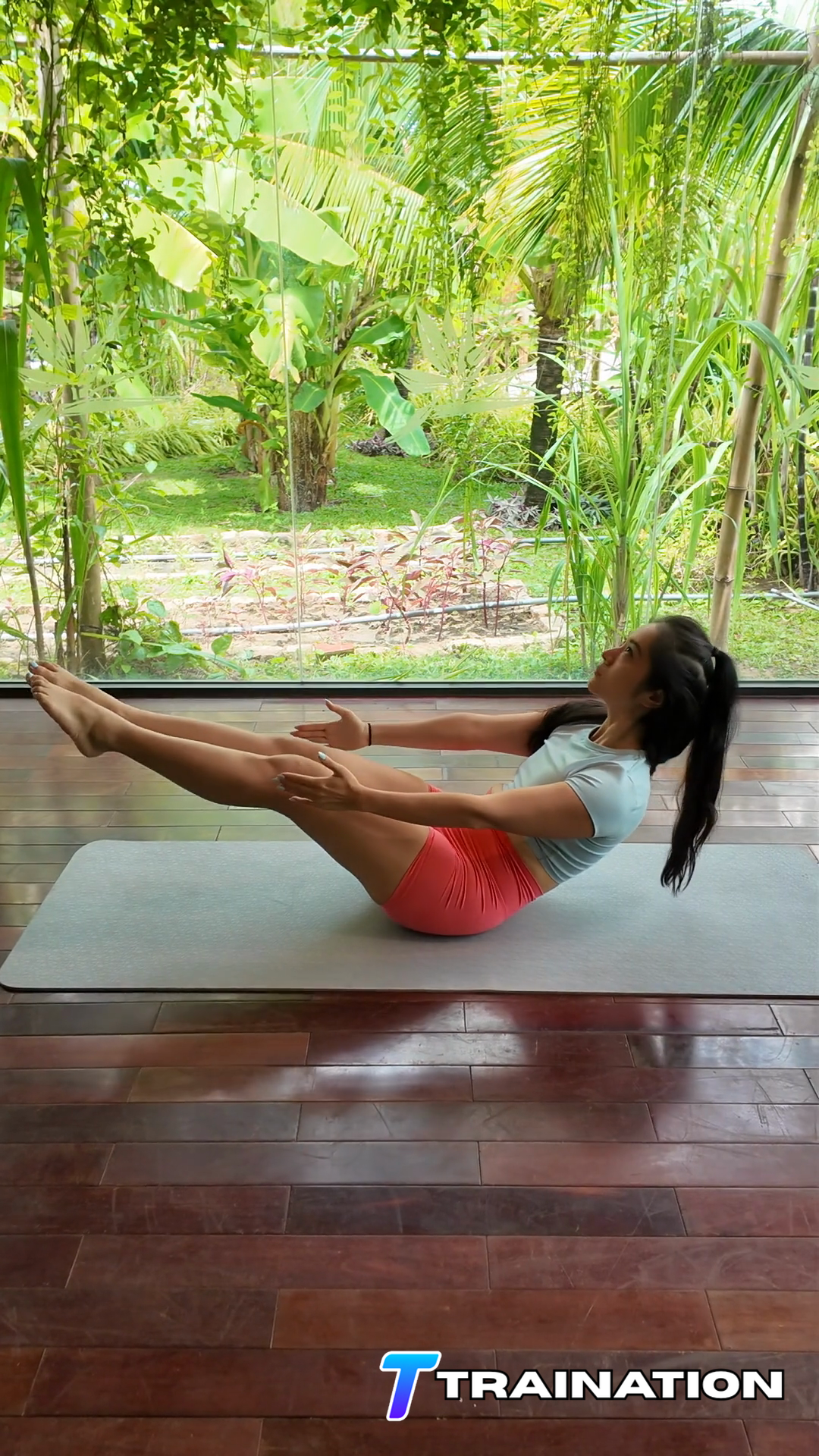
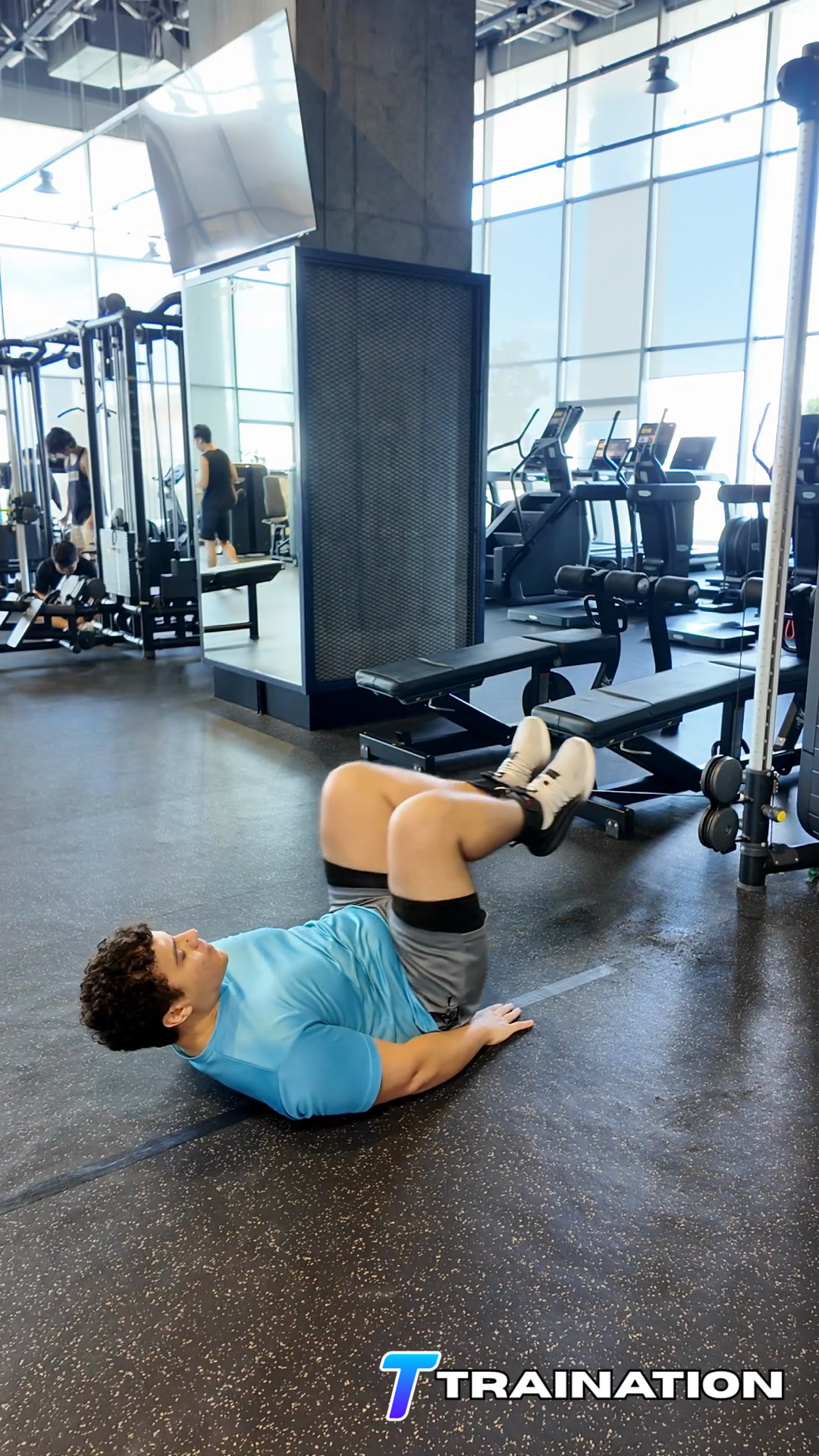
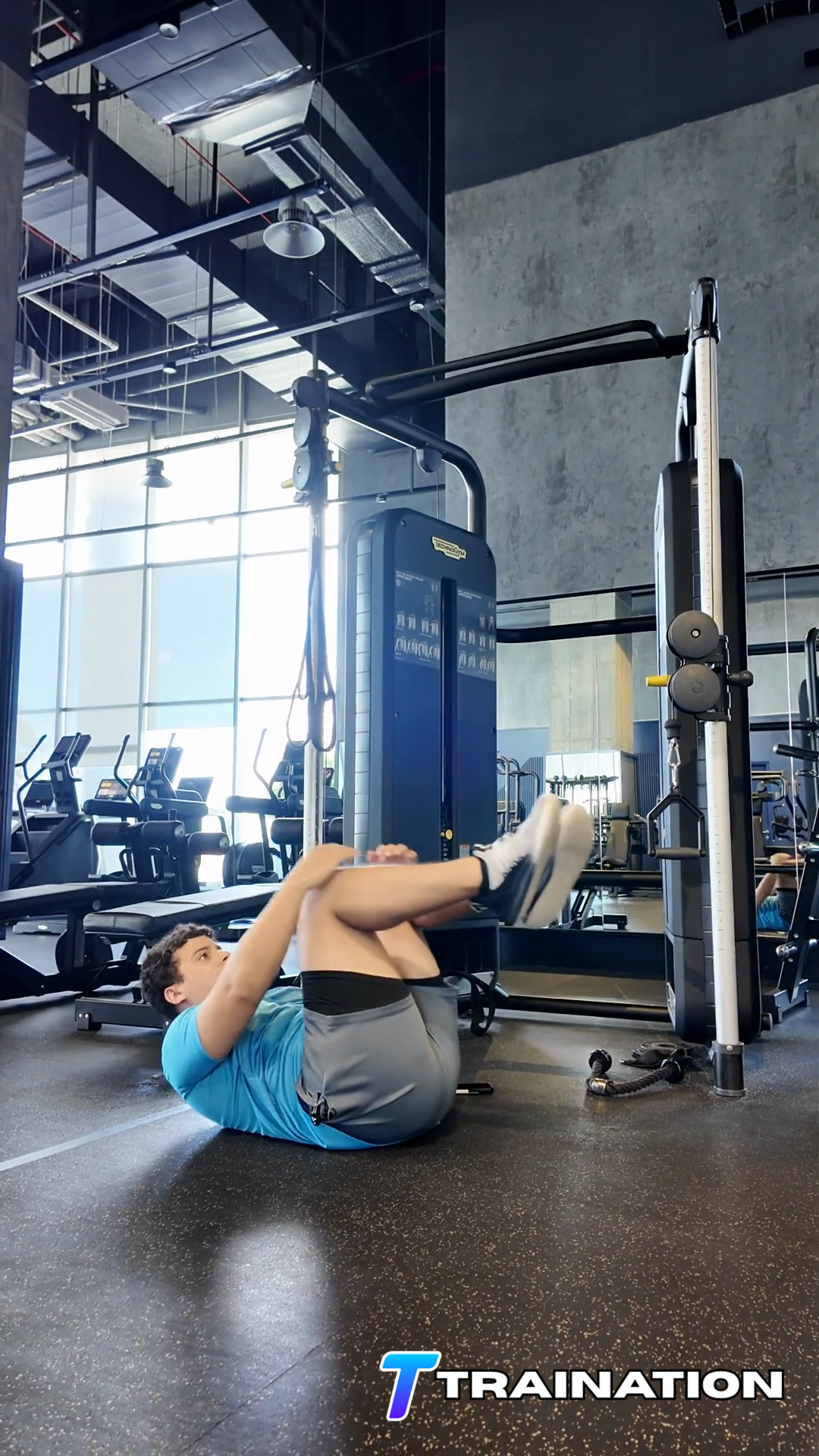
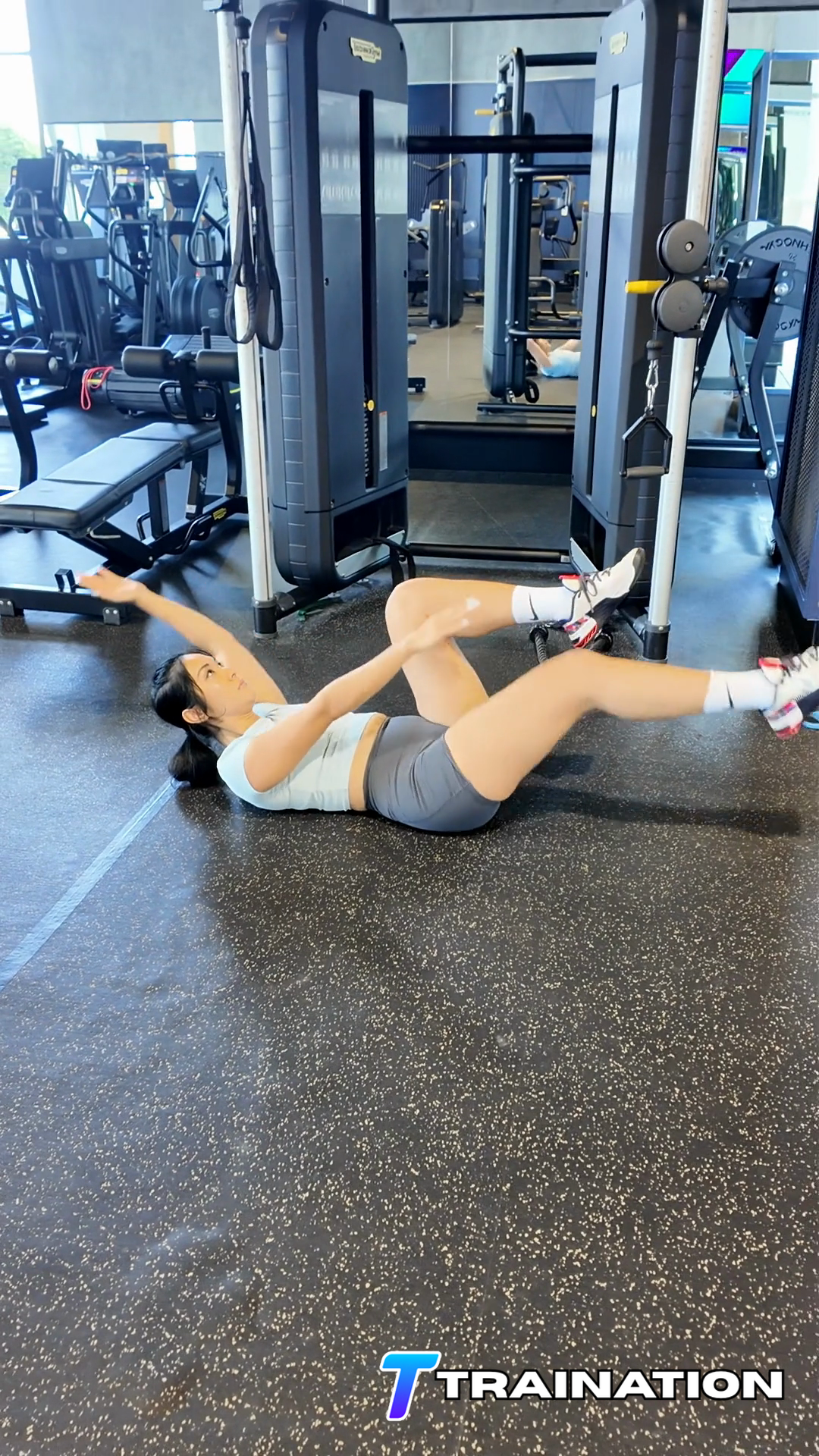
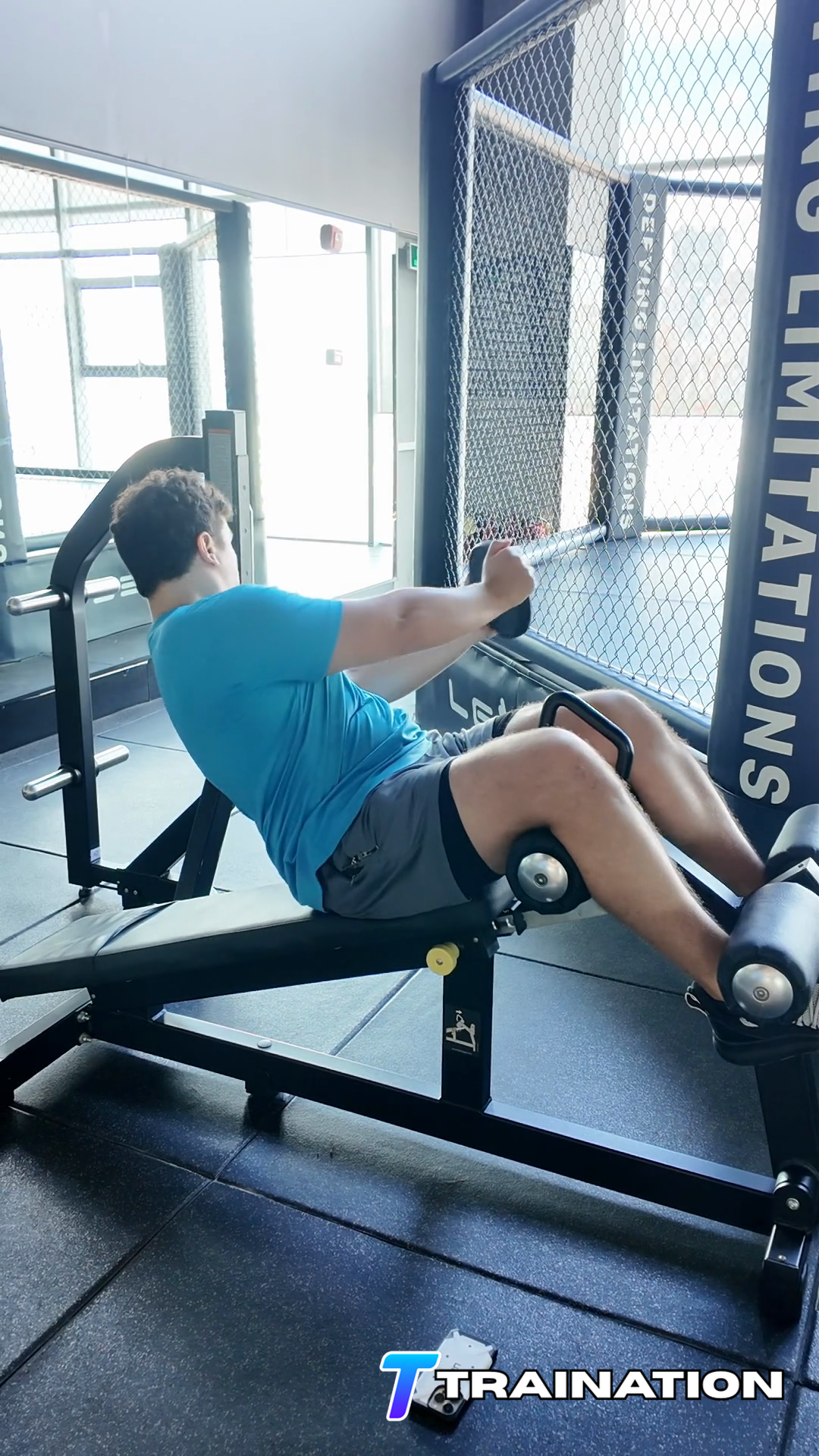
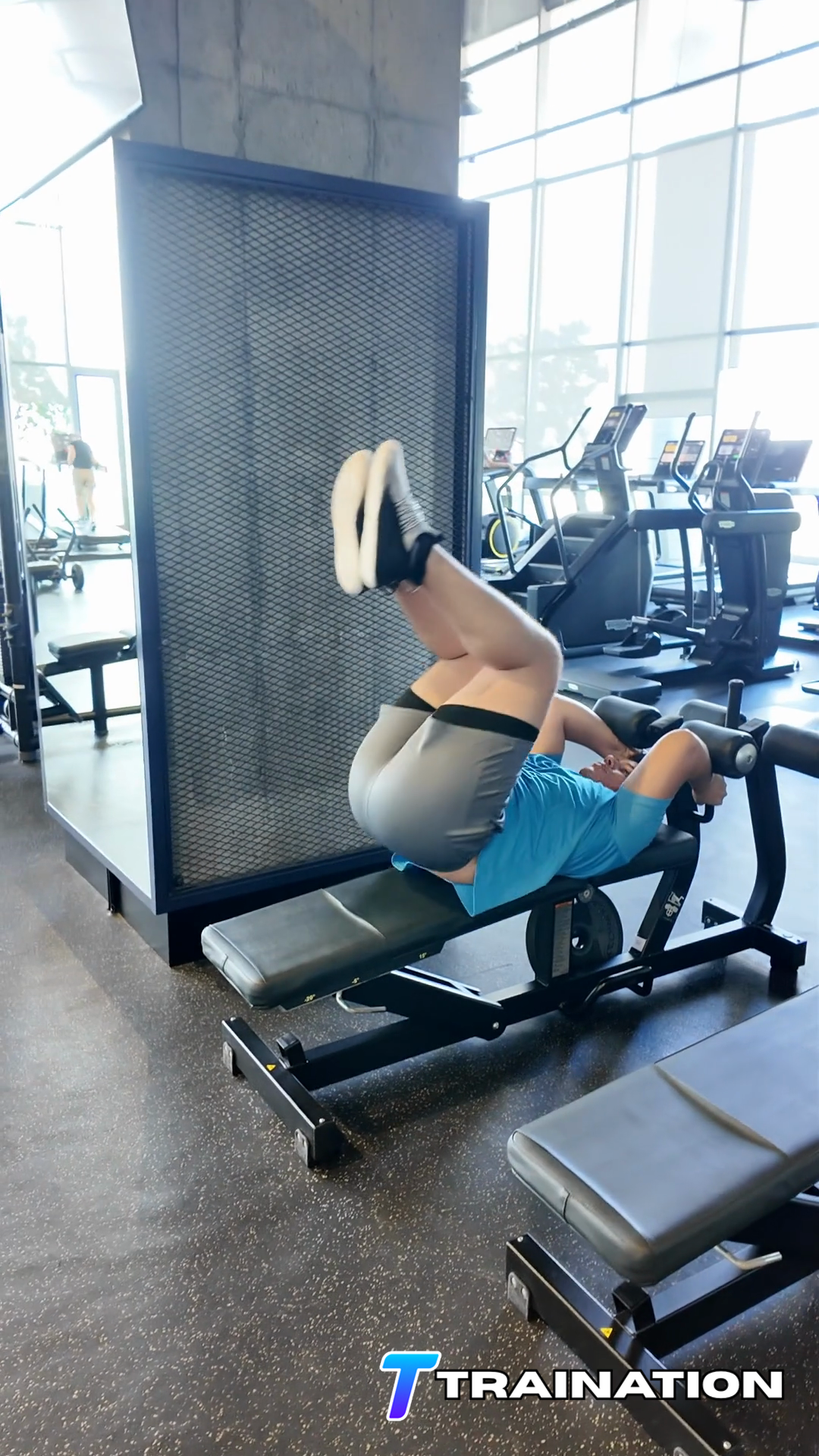
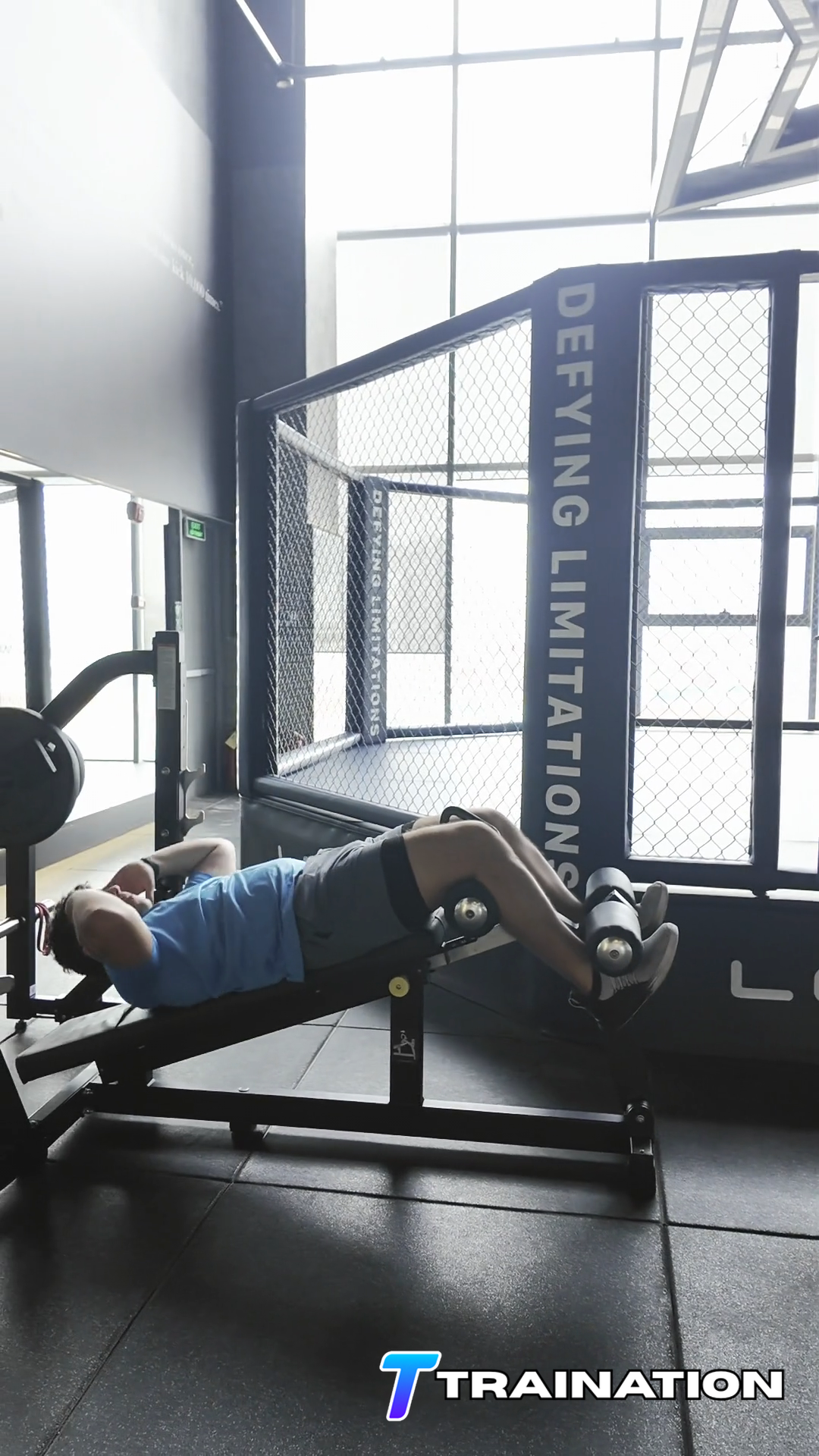
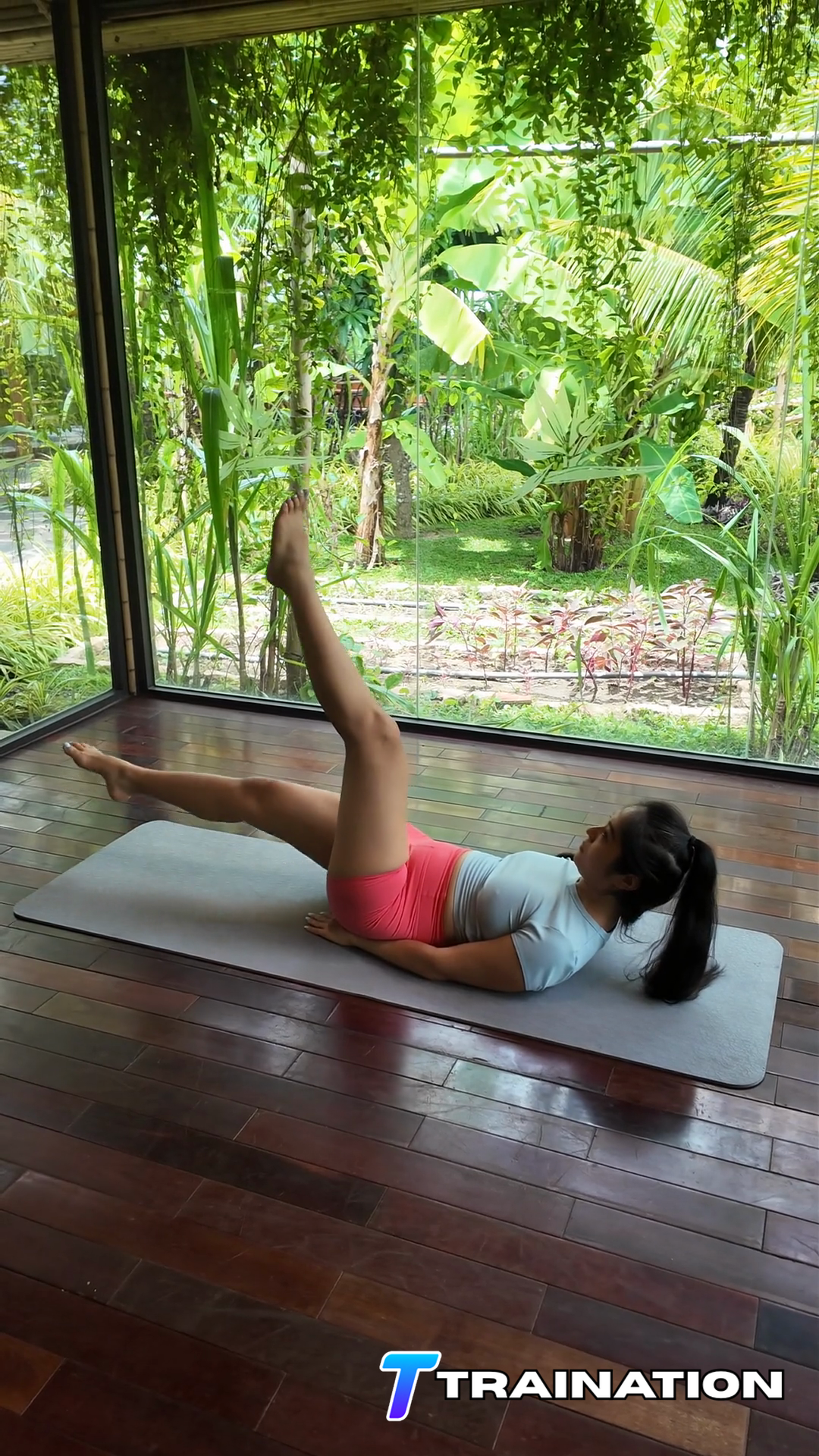
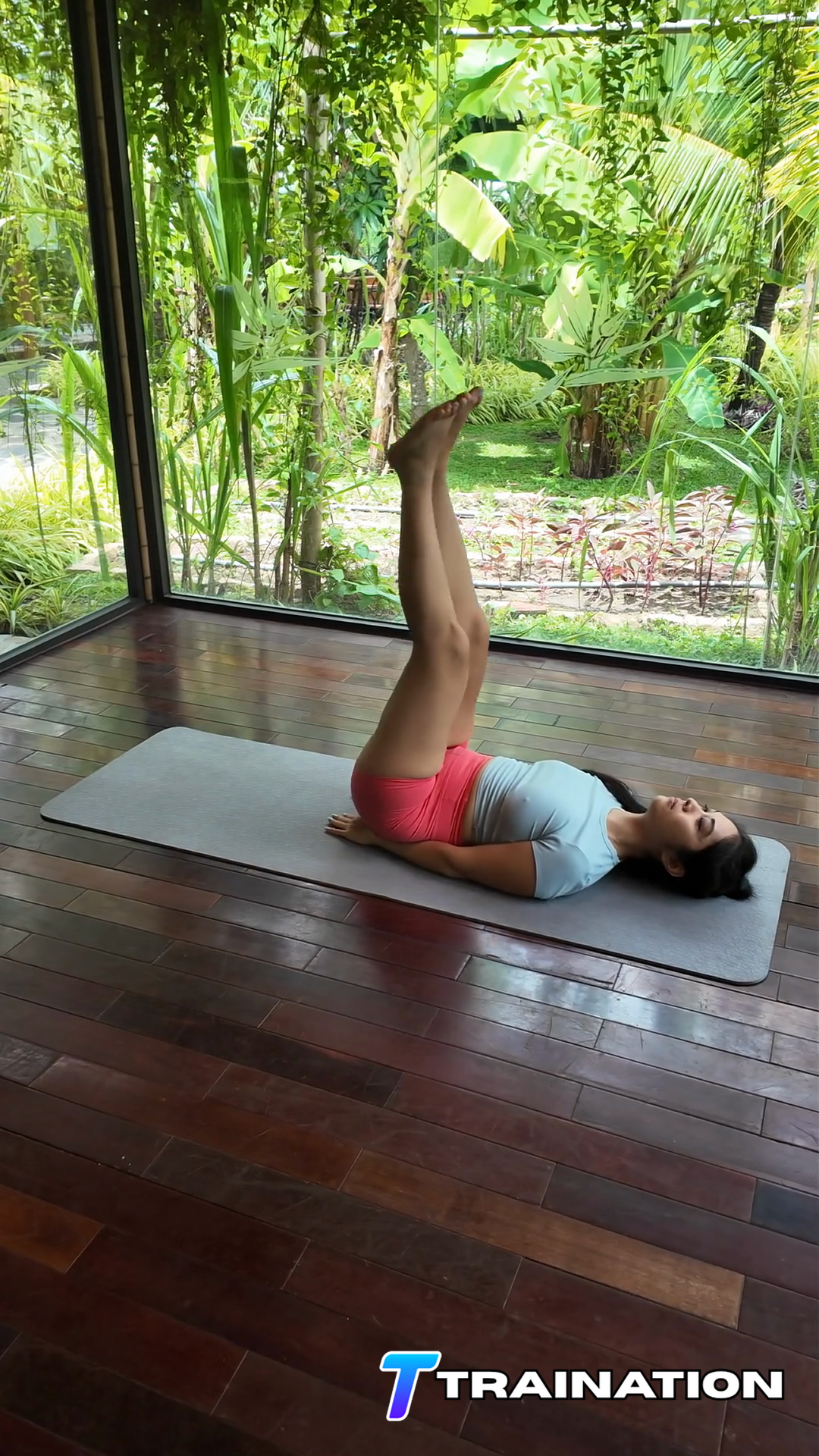
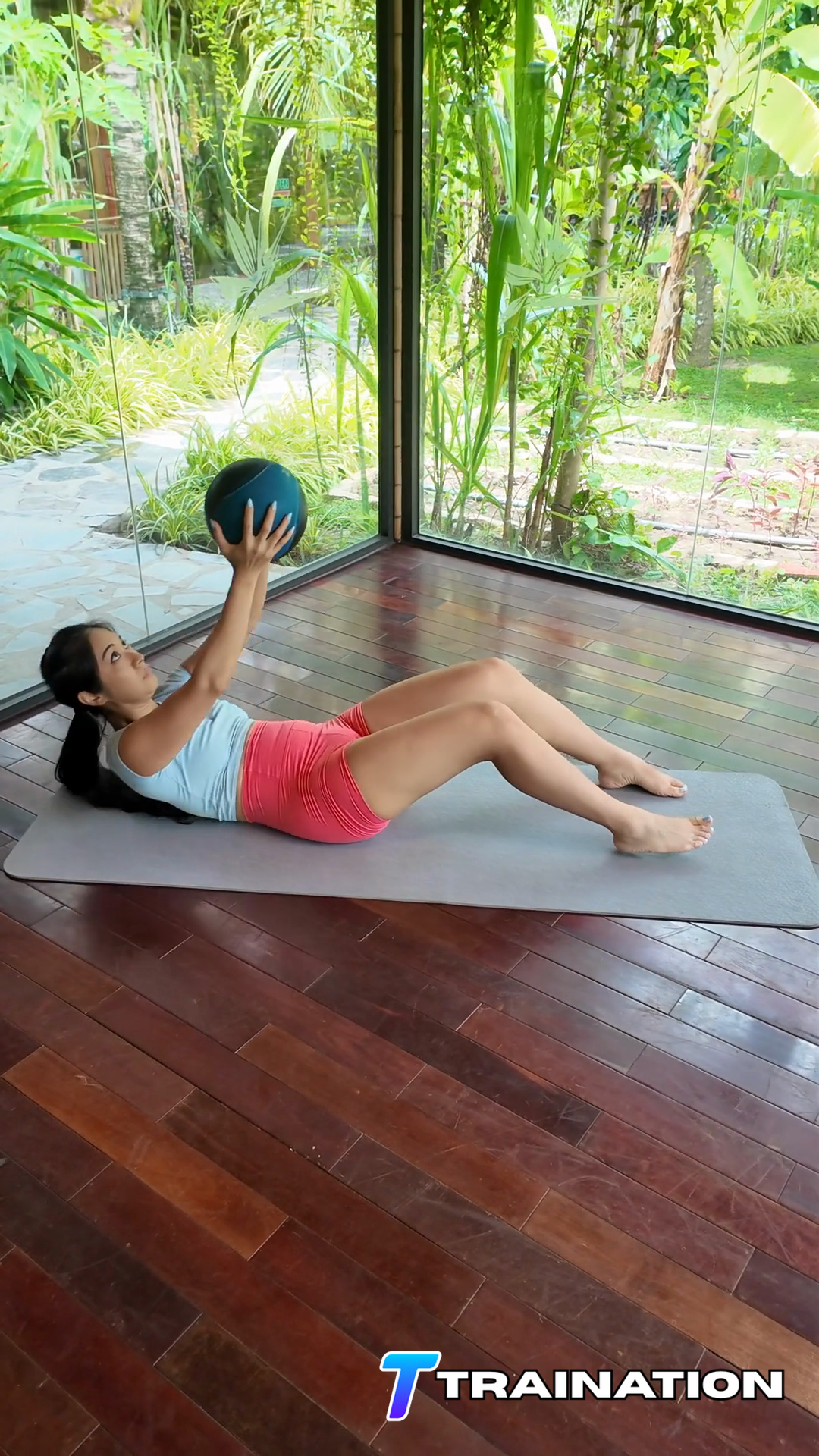
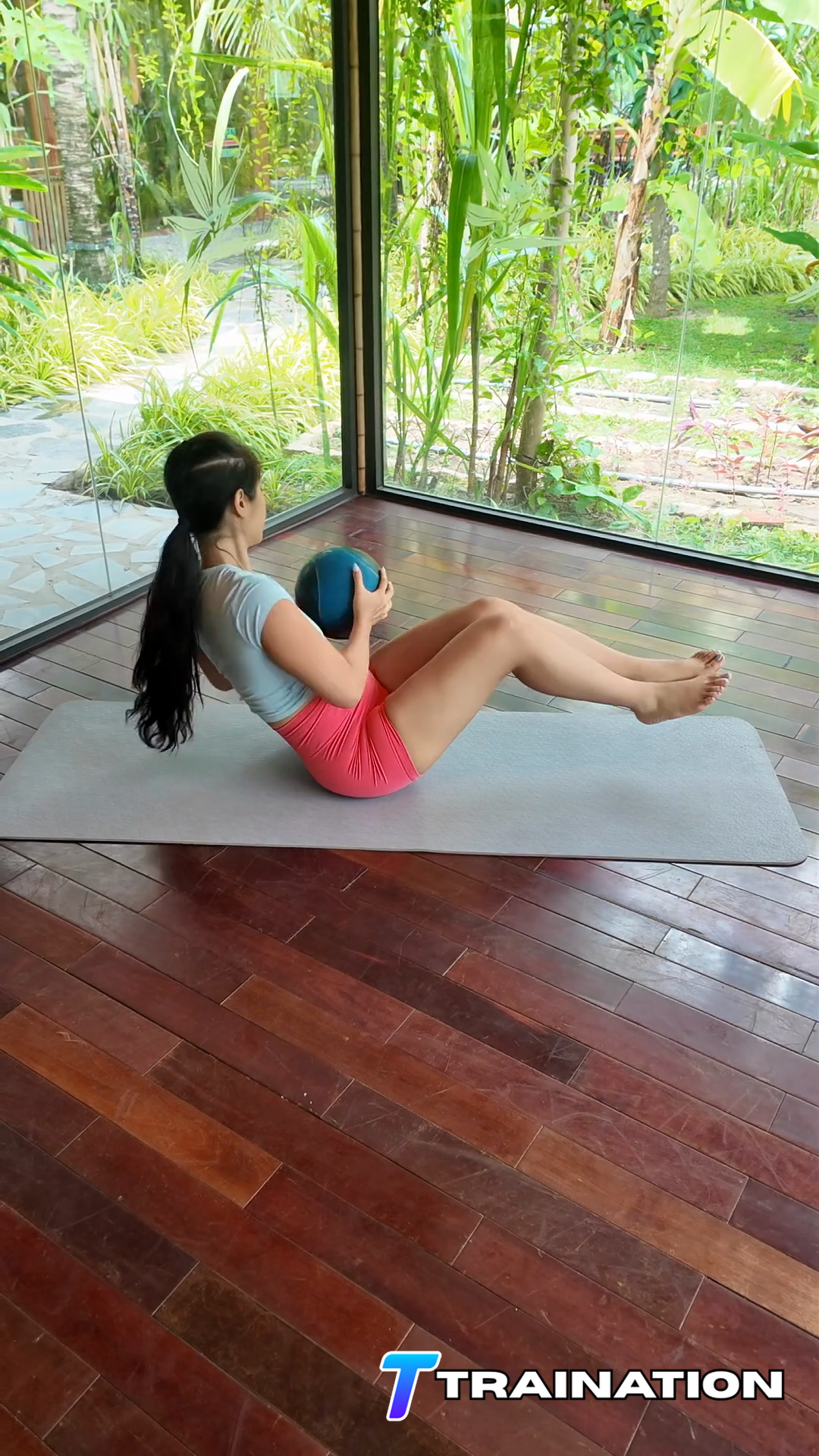
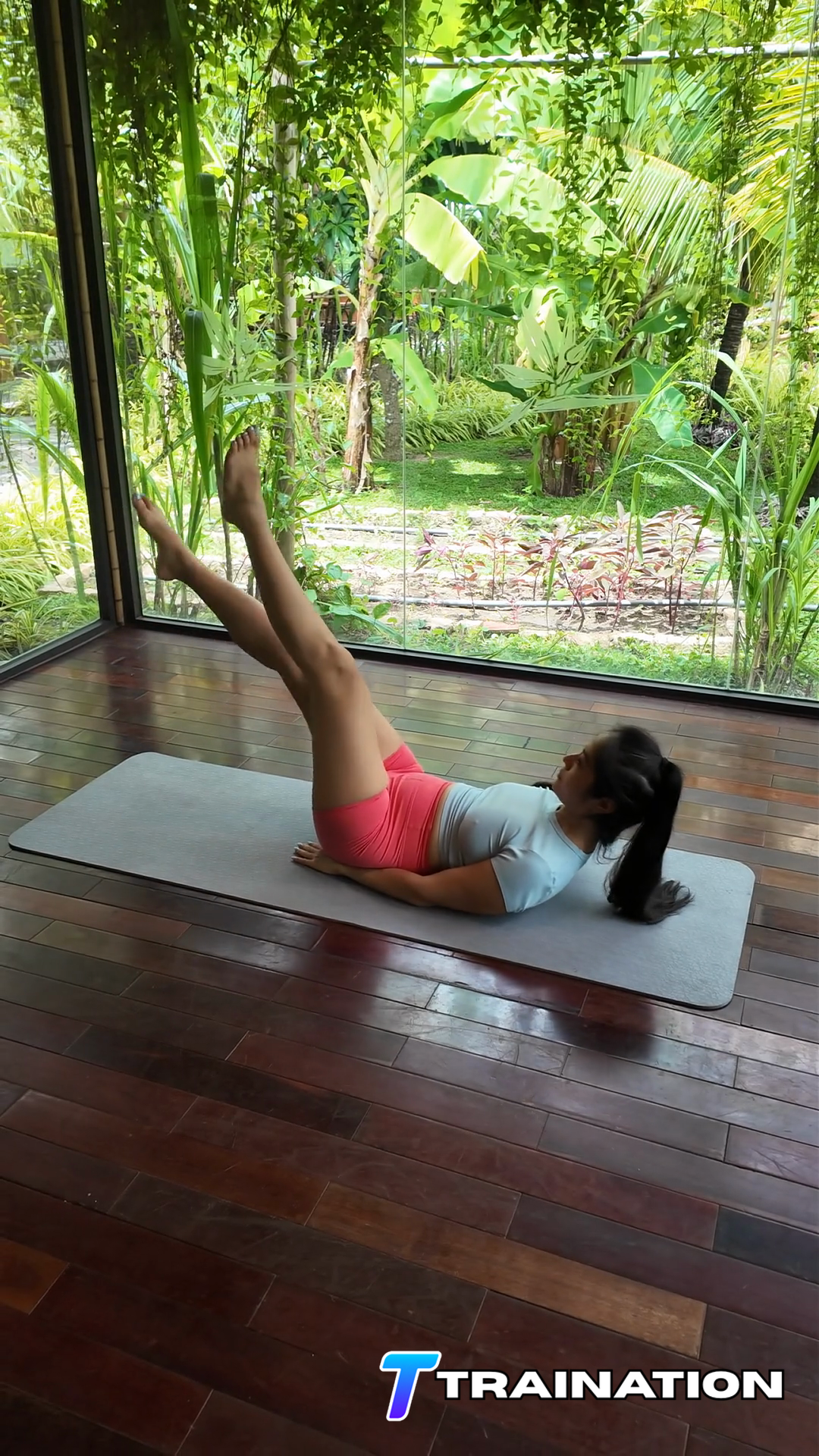
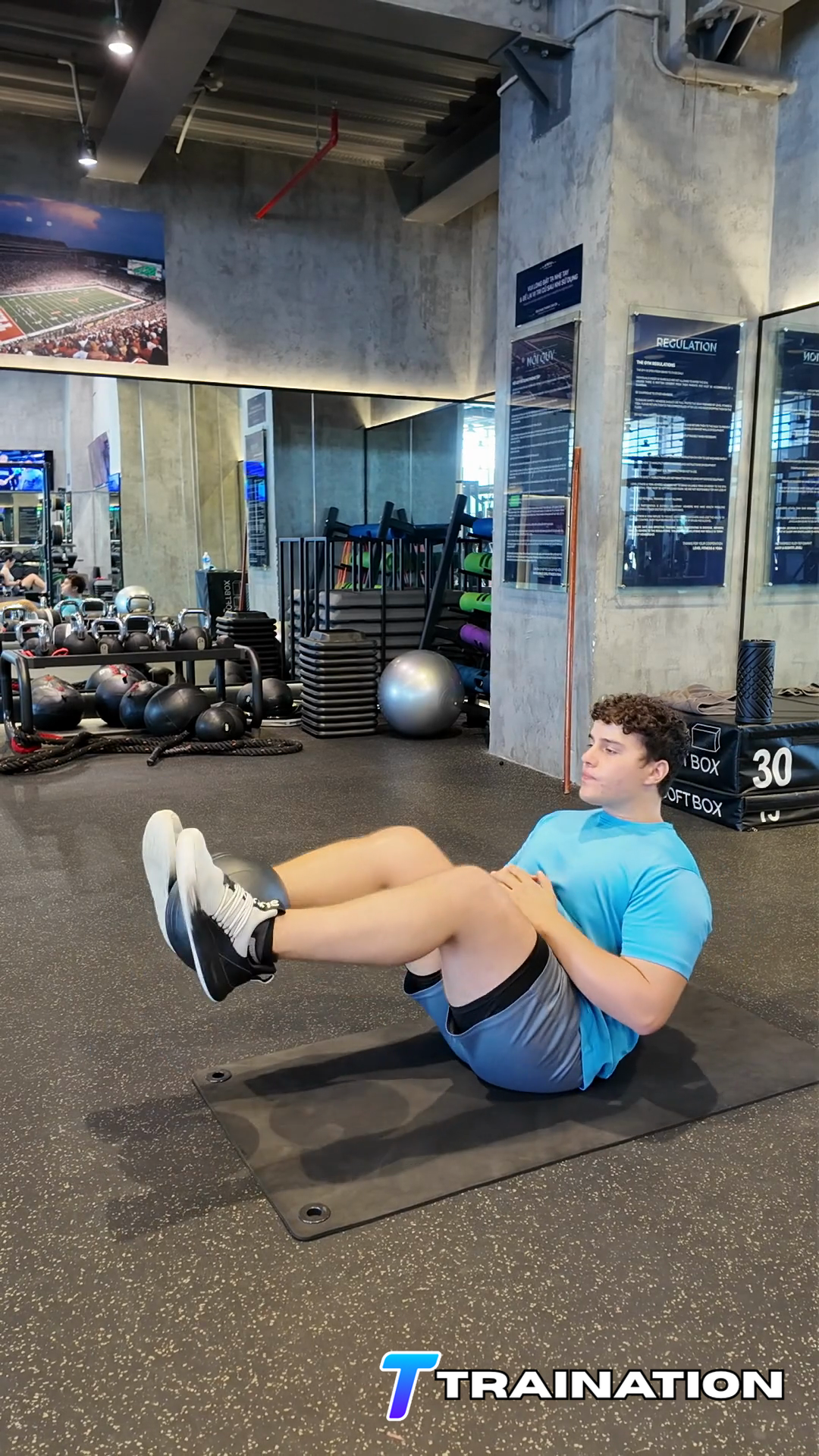
Half V Up trains the abdominal muscles by bringing the rib cage and pelvis toward one another under control.
Primary musclesRectus abdominis
Secondary musclesInternal and external obliques, Iliopsoas
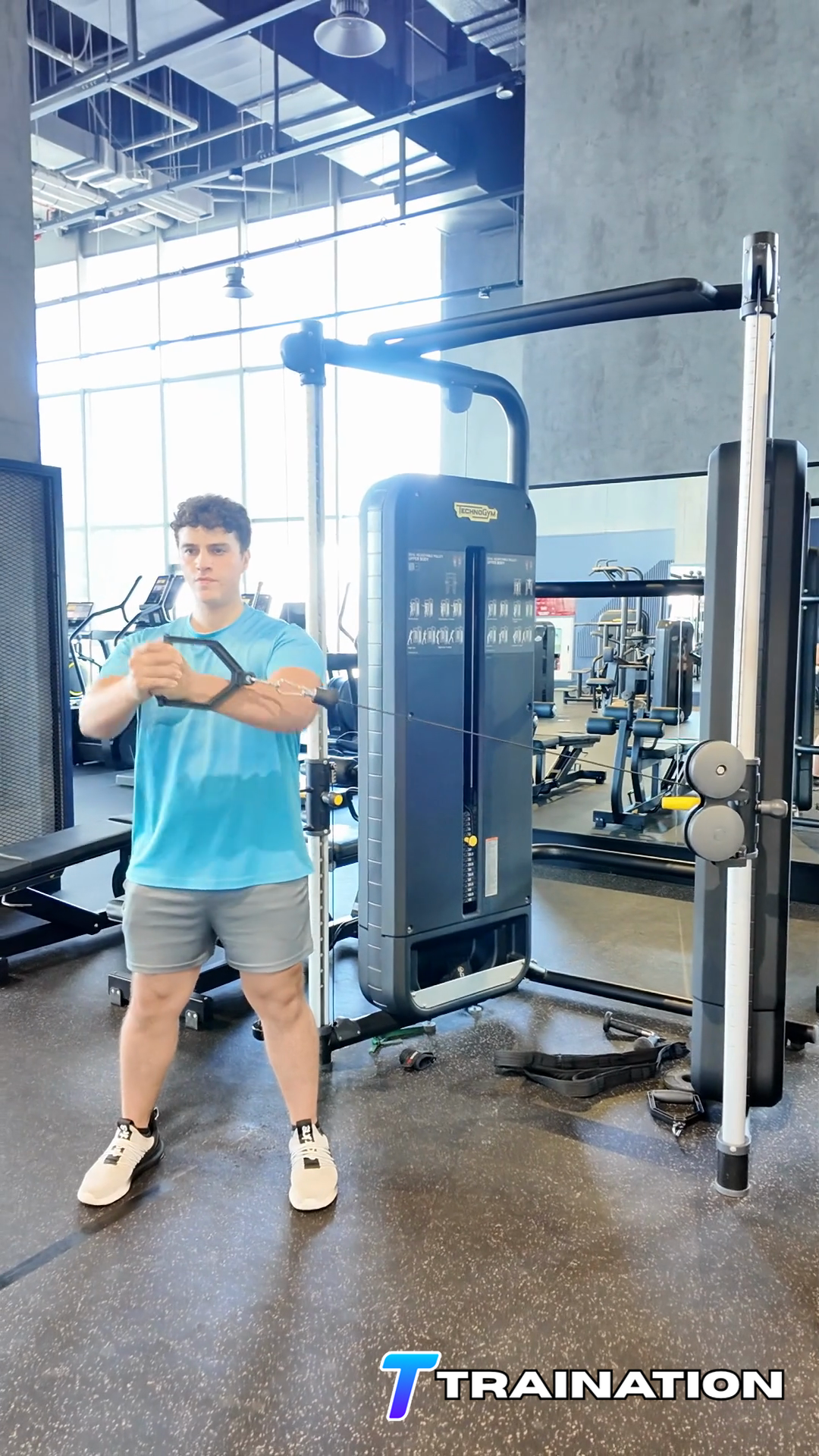
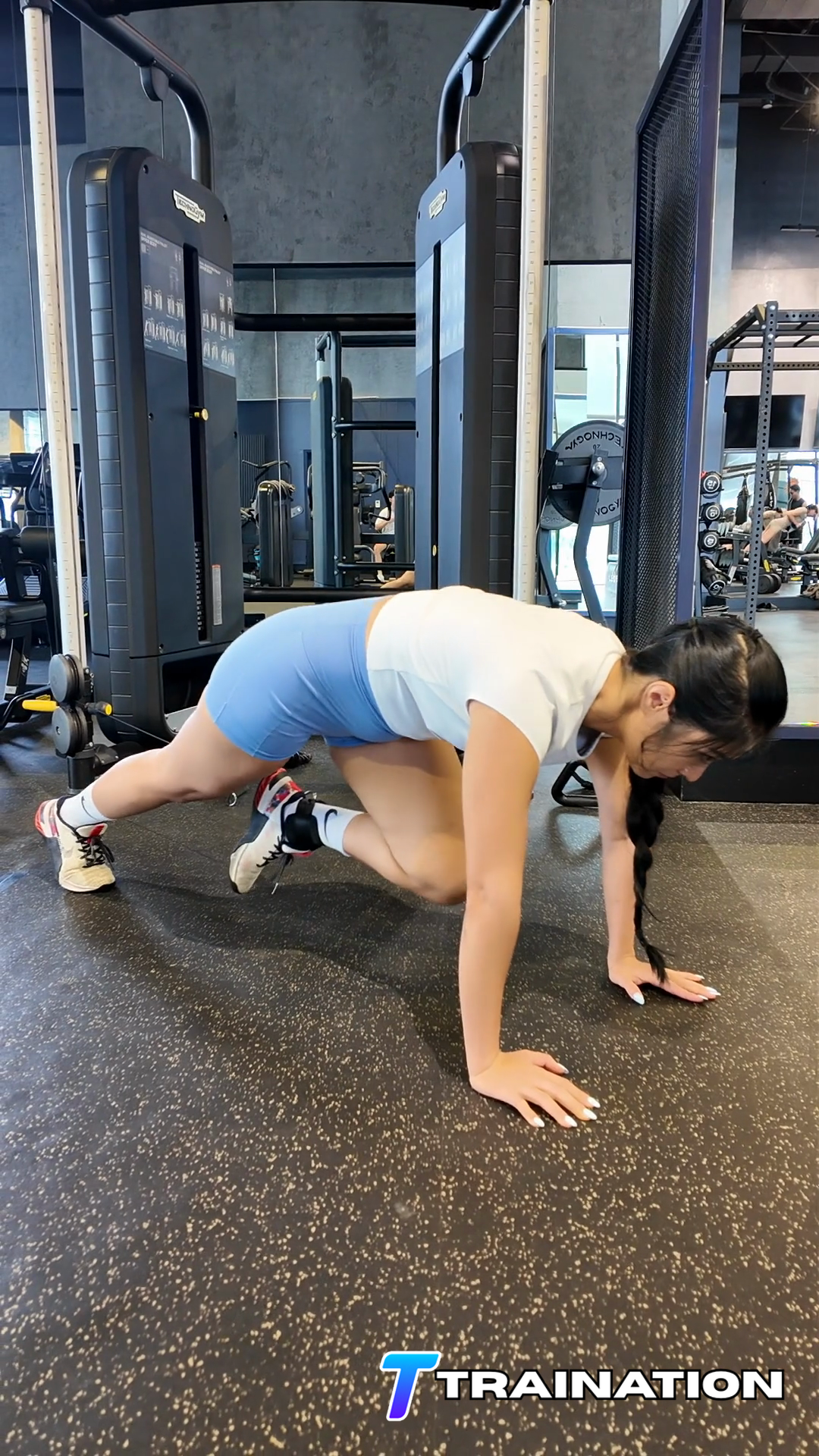
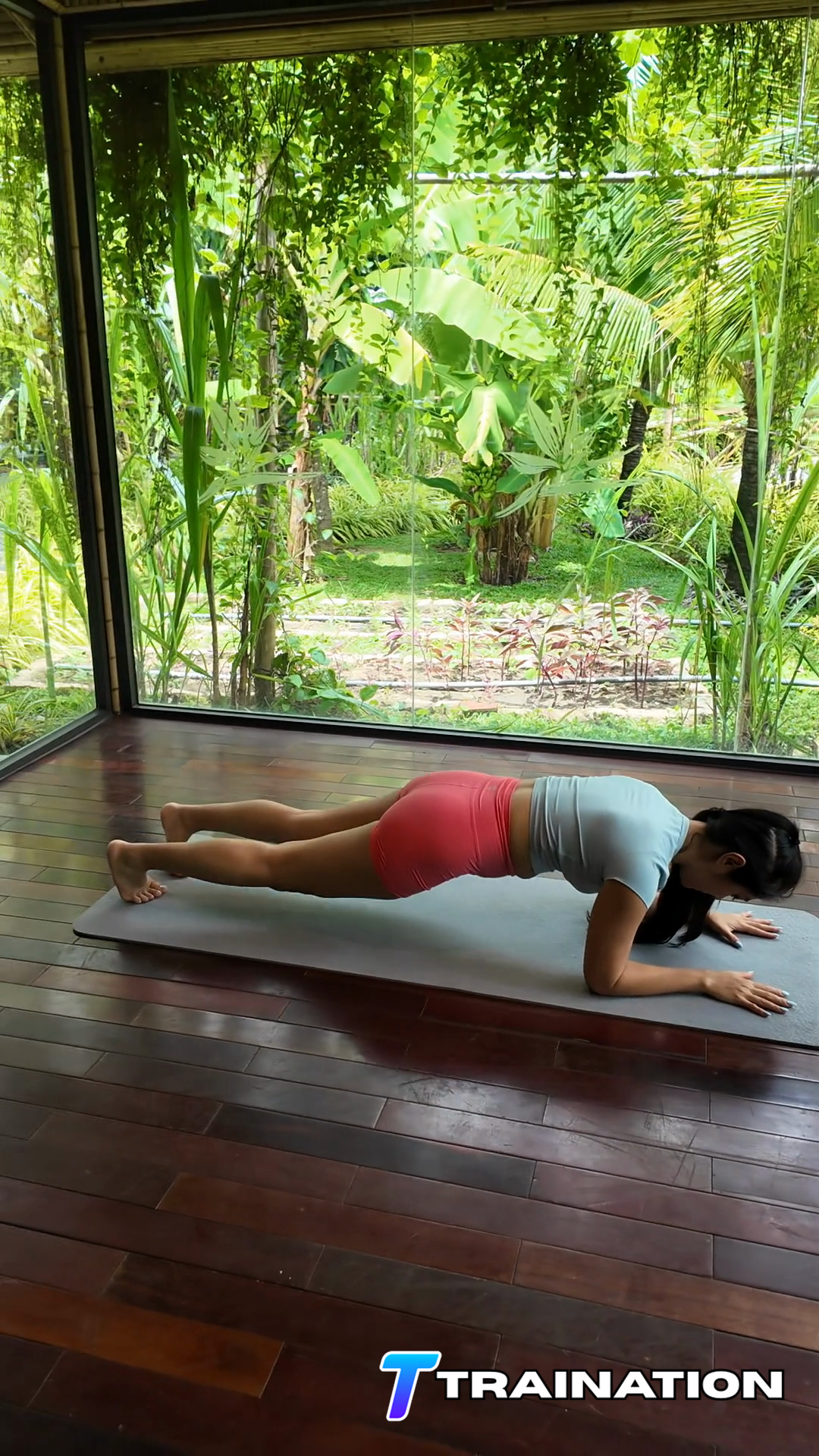
Follow the sequence in order, paying attention to the starting position, movement path, and finish described in each step.
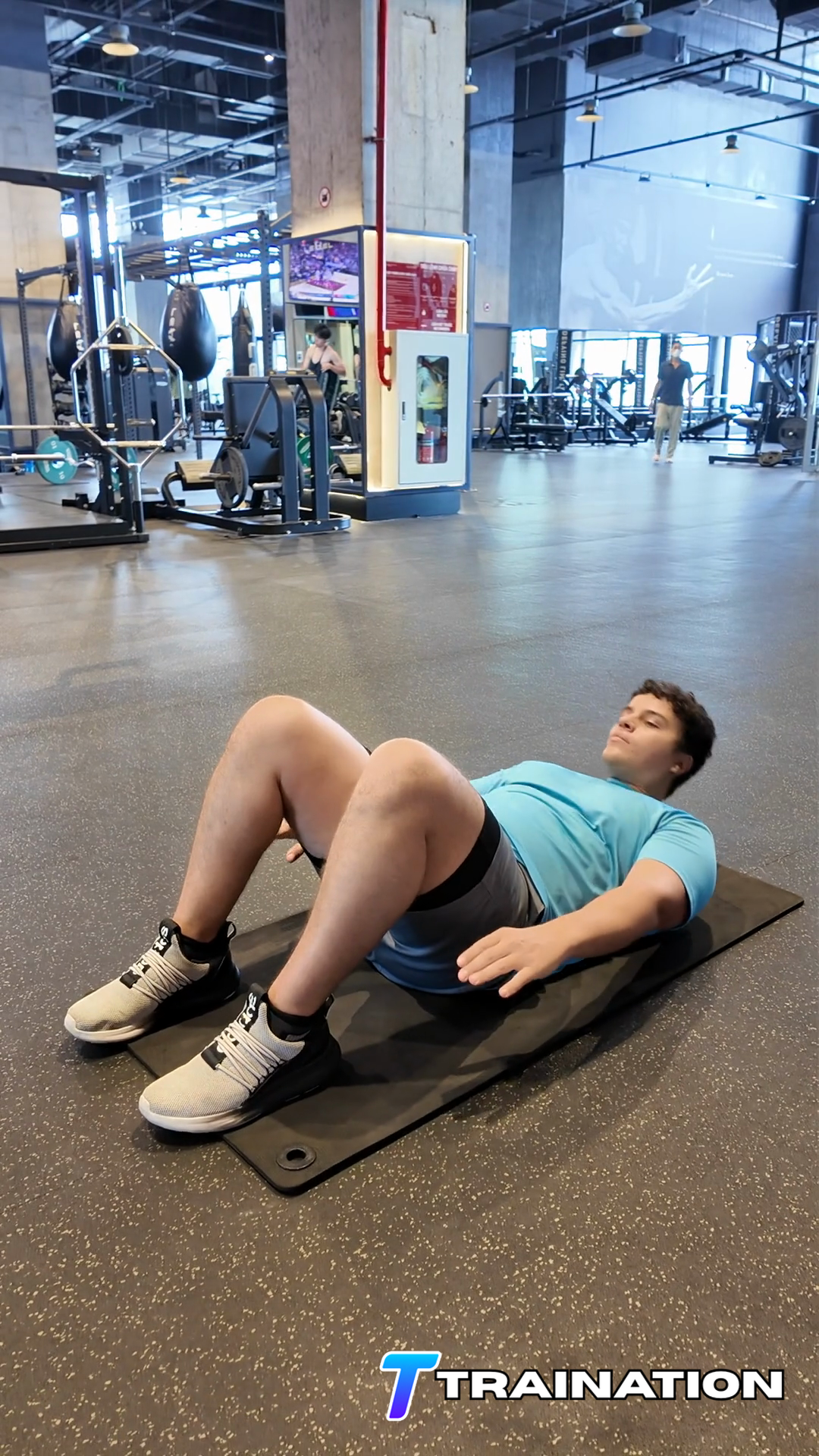
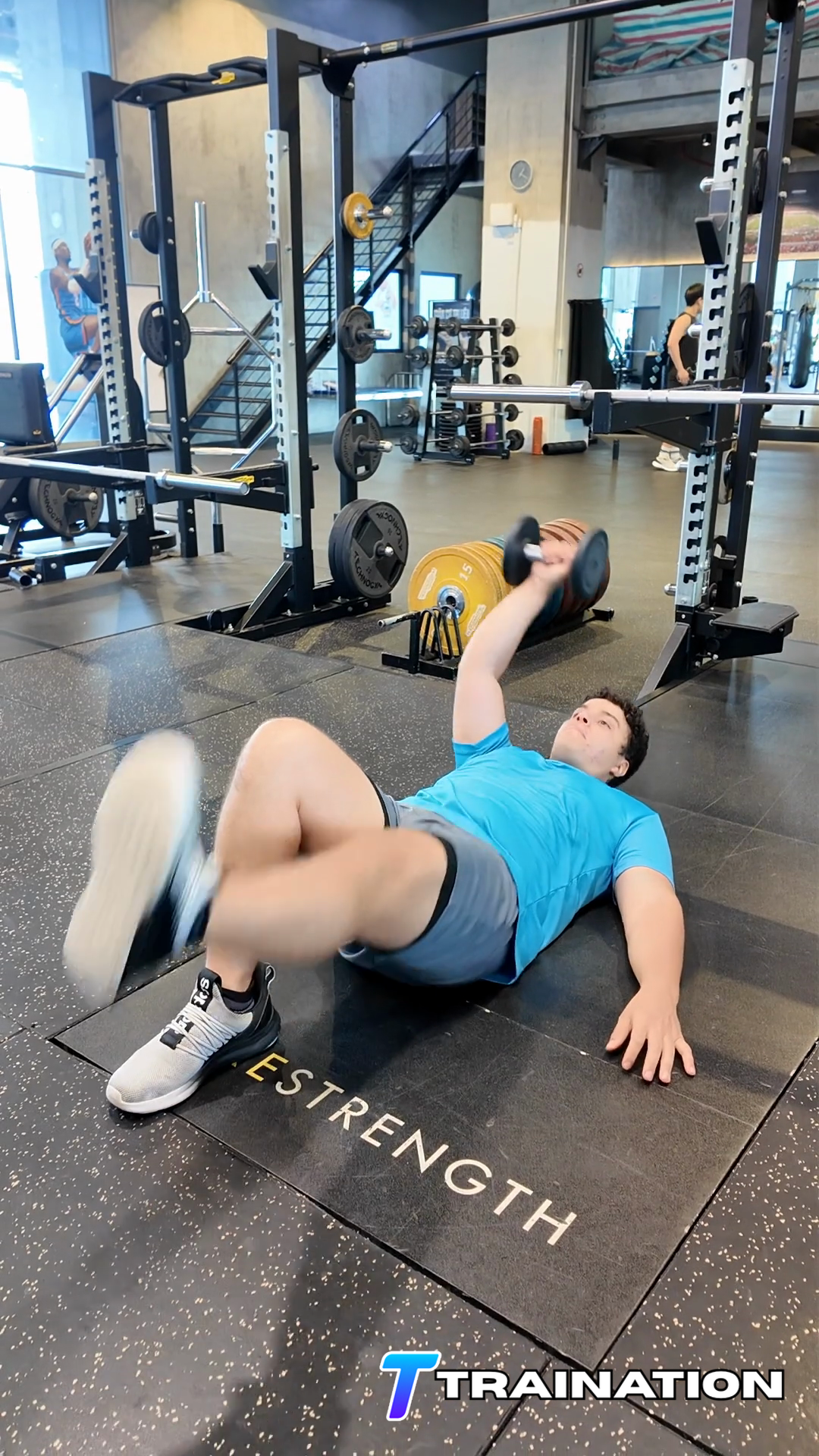
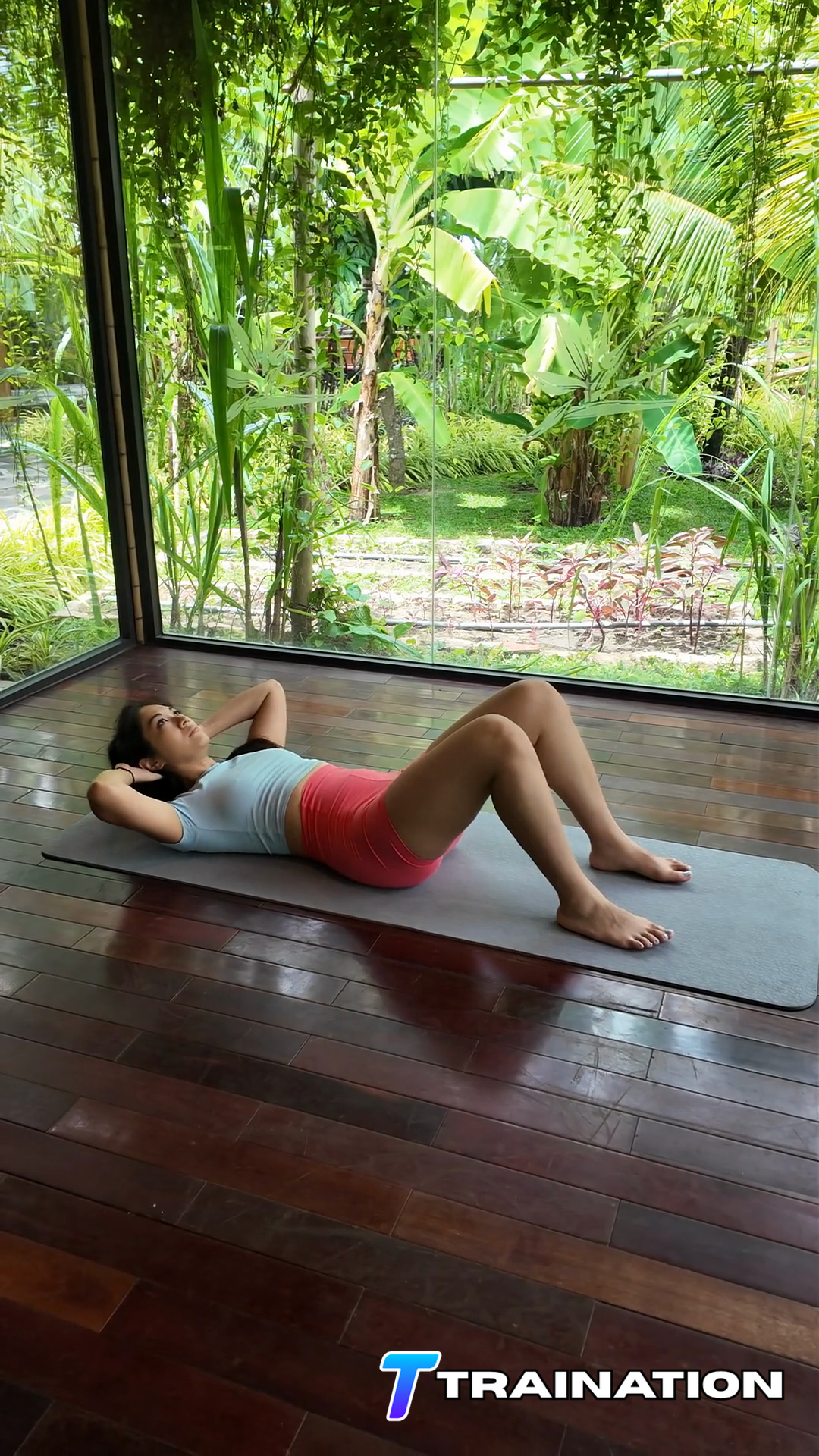
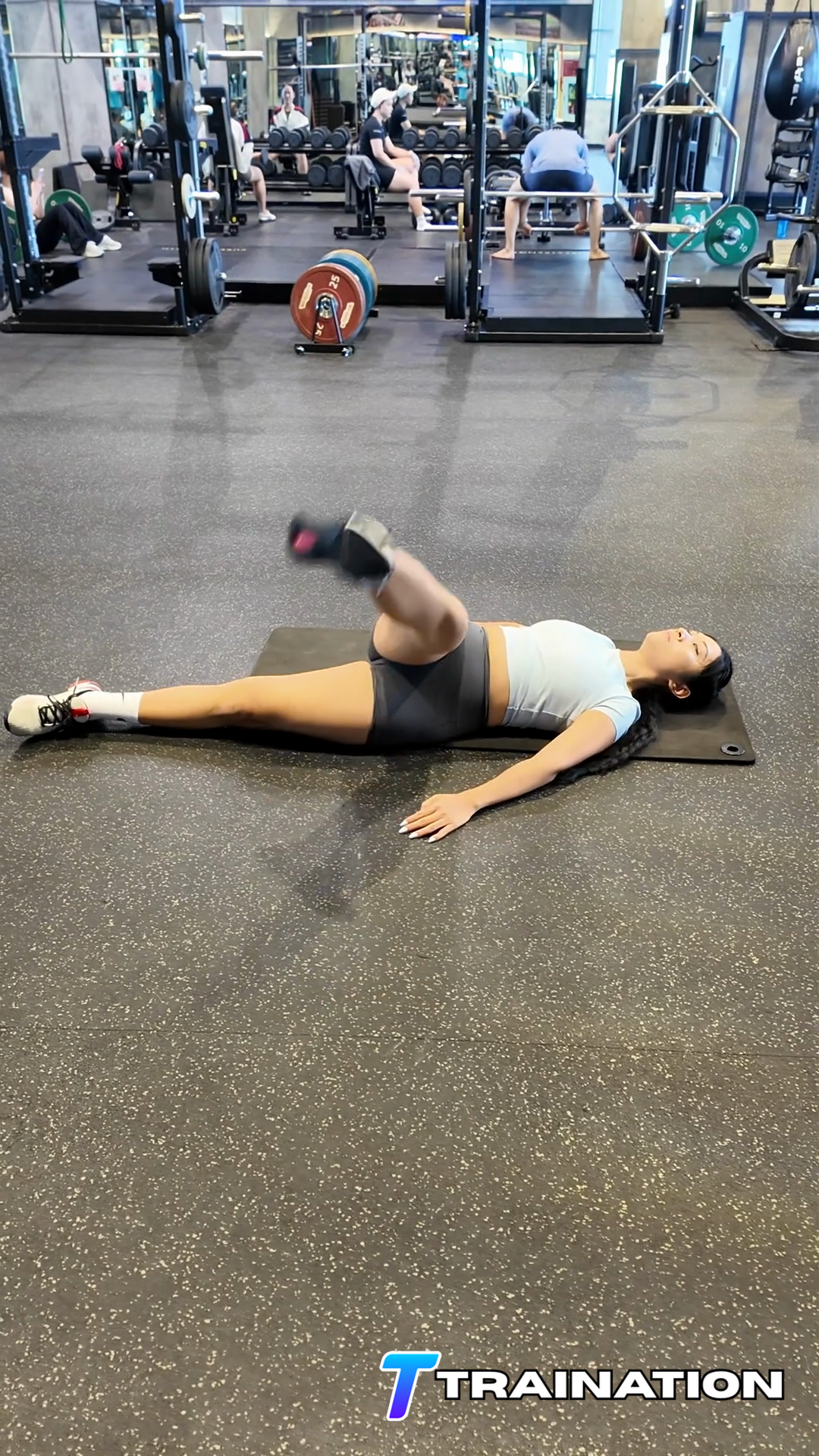
Lie on the back with the legs long and arms reaching overhead without letting the lower back arch.
Brace the abdomen and begin lifting the shoulders as one or both legs rise.
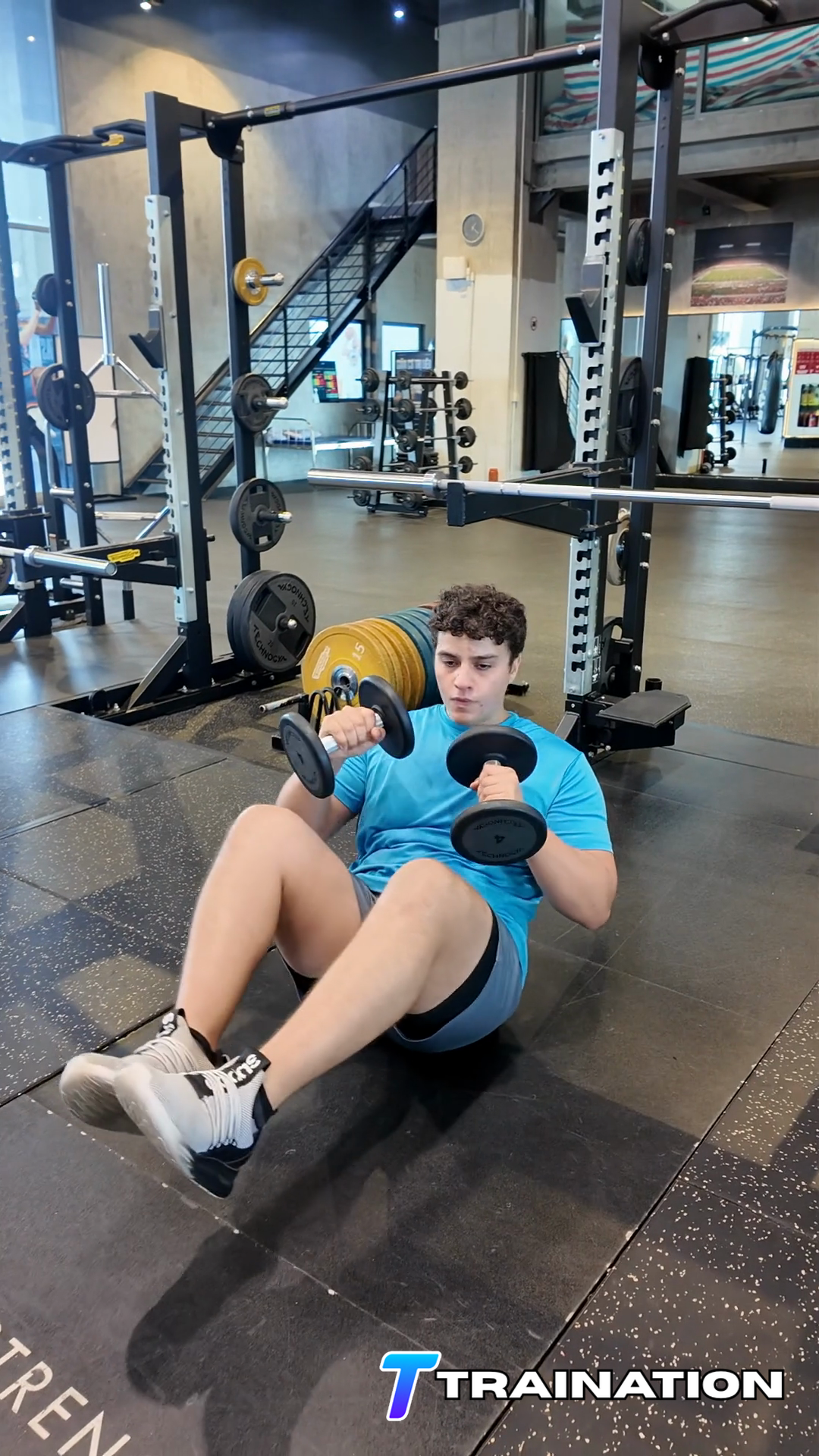
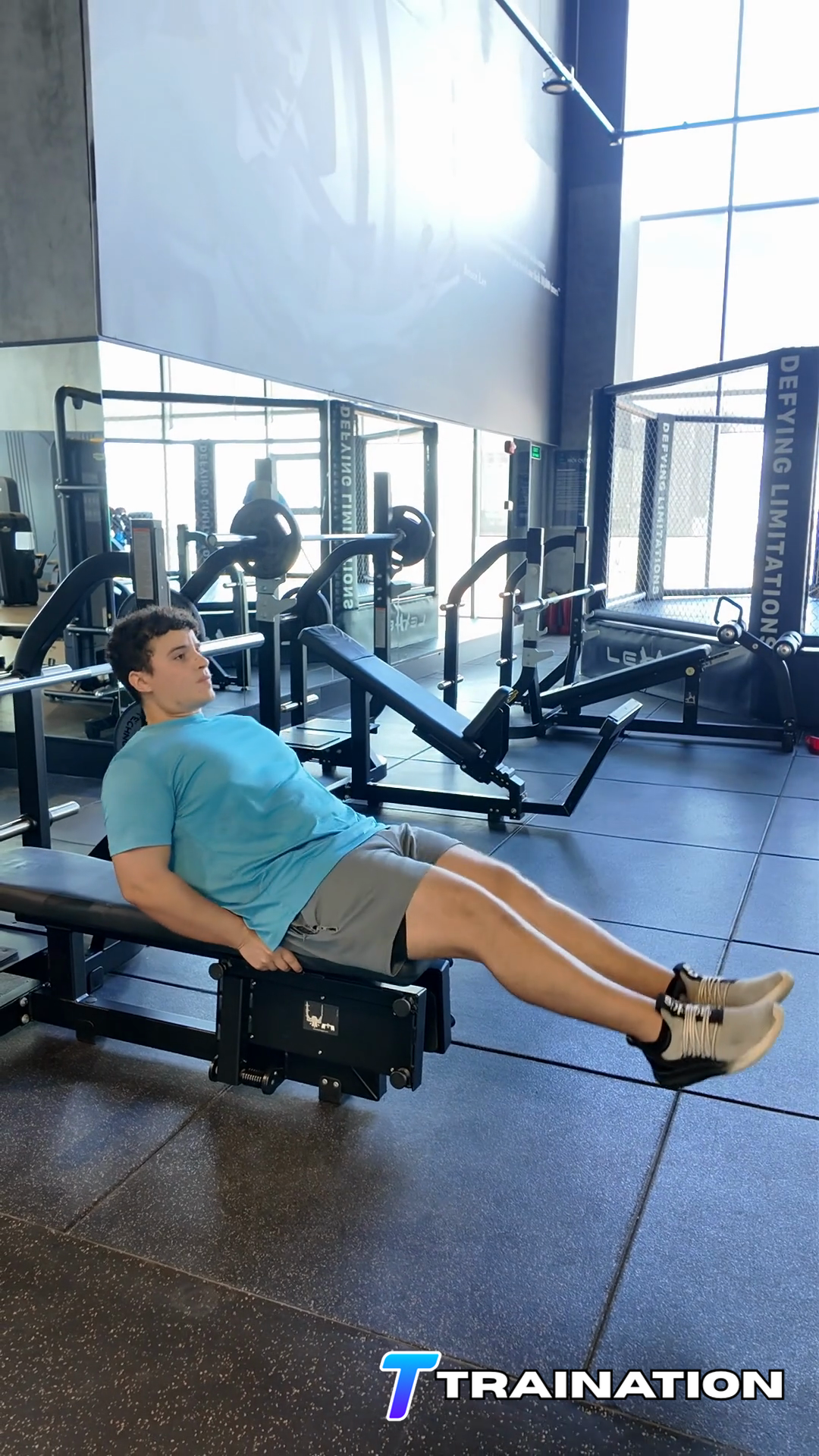
Reach the hands toward the shins while the torso and legs form a shallow V rather than sitting fully upright.
Pause at the highest controlled point with the neck relaxed and pelvis steady.
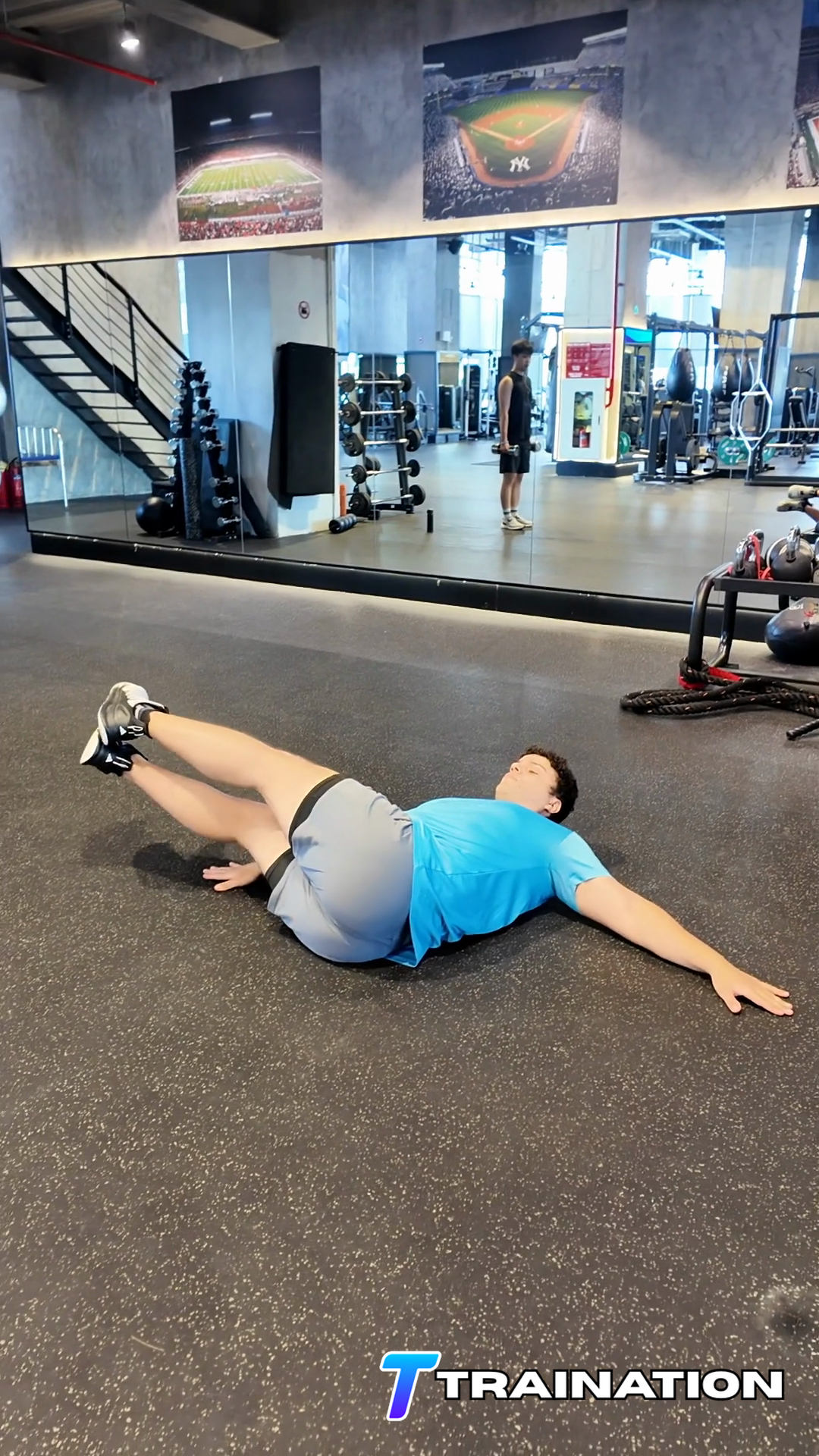
Lower the torso and legs together under control, stopping before the lower back loses contact with the floor.
Support the head lightly or cross the arms; the abdominals should move the rib cage.
Keep the arms still and let the abdominal muscles move the rib cage toward the pelvis.
Begin by bringing the ribs toward the pelvis rather than simply sitting upright with the hip flexors.
Lower the spine or torso gradually and keep tension through the longest position.
Place Half V Up after the main compound lifts, in a focused core block, or beside an exercise that does not require a fresh trunk.
Use two to four times per week while accounting for trunk work already supplied by squats, hinges, carries, and overhead lifting.
| Goal | Sets | Reps or time | Rest | Effort and execution |
|---|---|---|---|---|
| Control / technique | 2–3 | 5–8 reps | 45–75 sec | Stop well before position changes |
| Strength / endurance | 2–4 | 8–15 reps | 60–90 sec | Stop while 1–3 good-form reps are still possible |
Scale the movement
Lift only the head and shoulder blades while the pelvis and feet remain supported.
Train abdominal bracing without repeated spinal flexion.
Use a slow lowering phase and pause in the shortened position without pulling on the neck.
Add a small load only after the full bodyweight range remains controlled.
Turn Half V Up and the rest of your exercise library into repeatable client programs.
Explore the workout builder