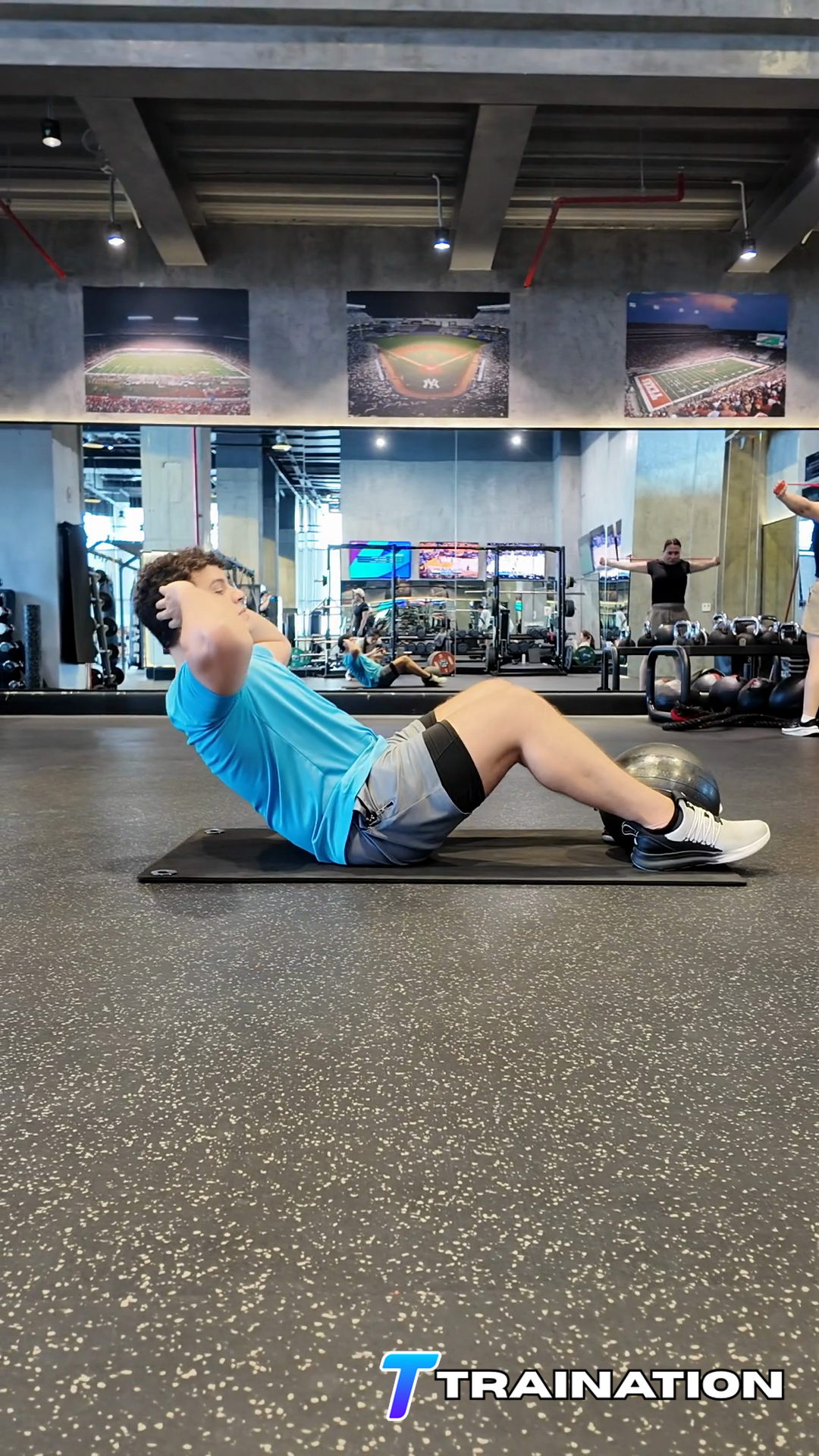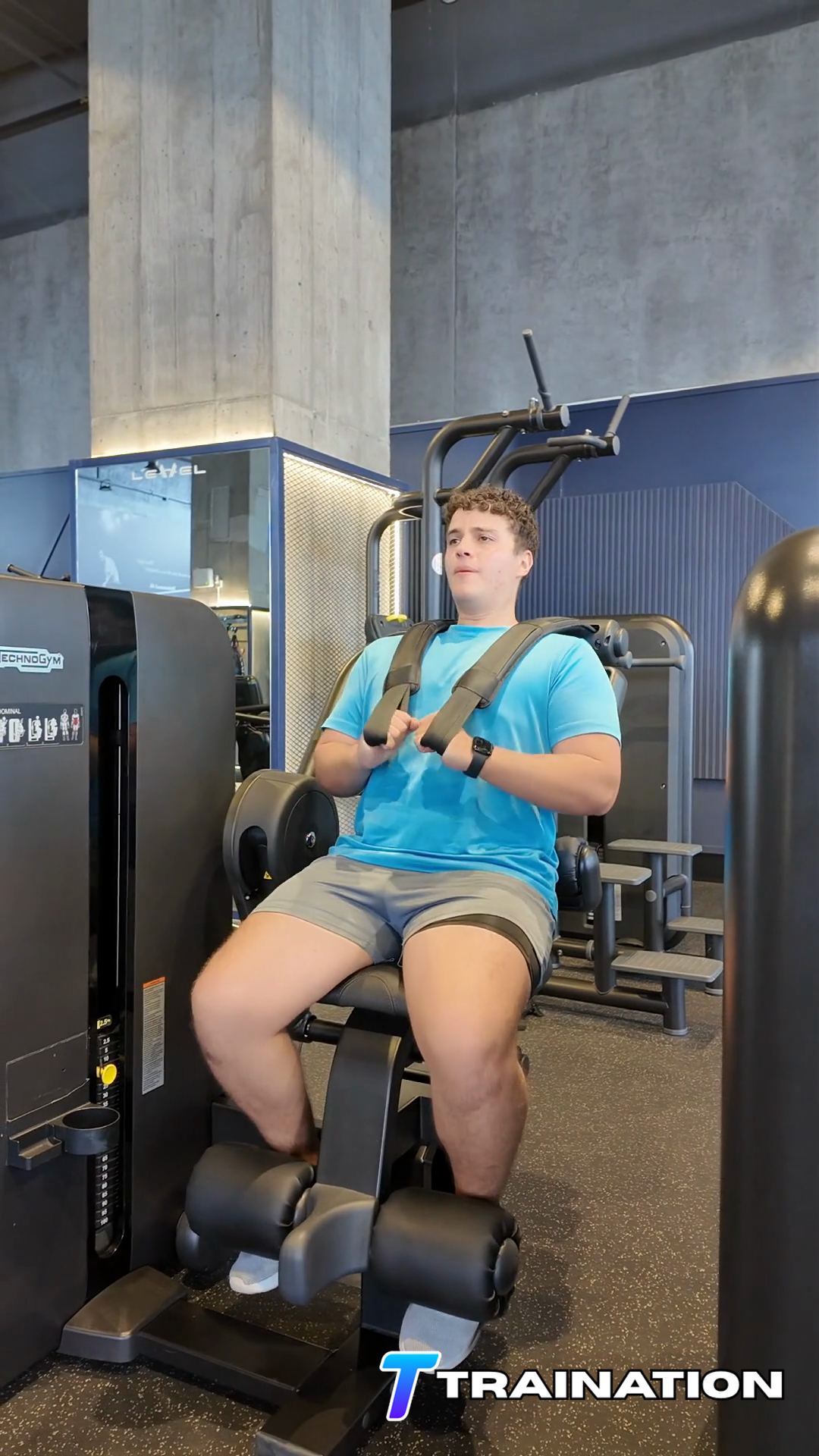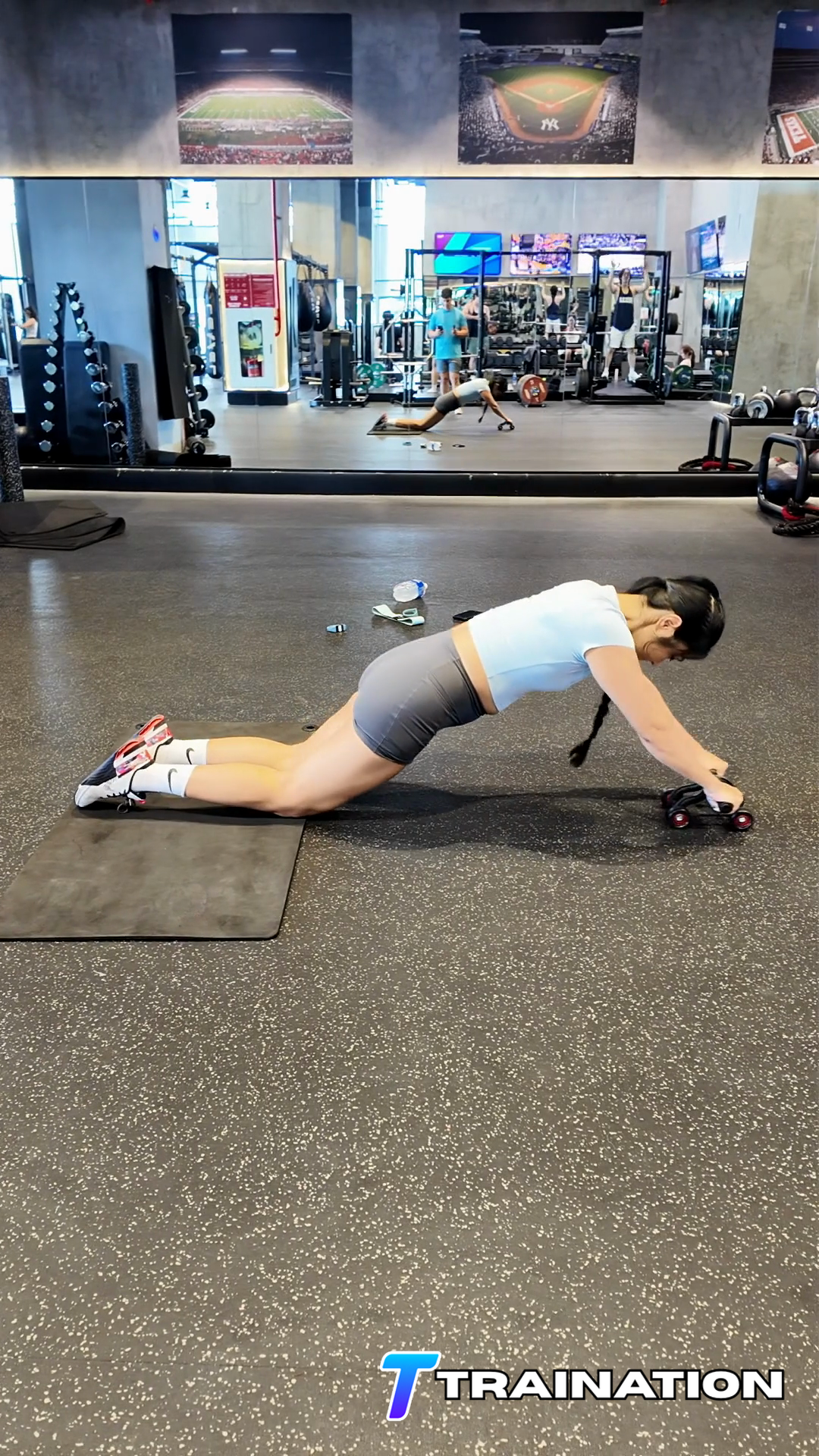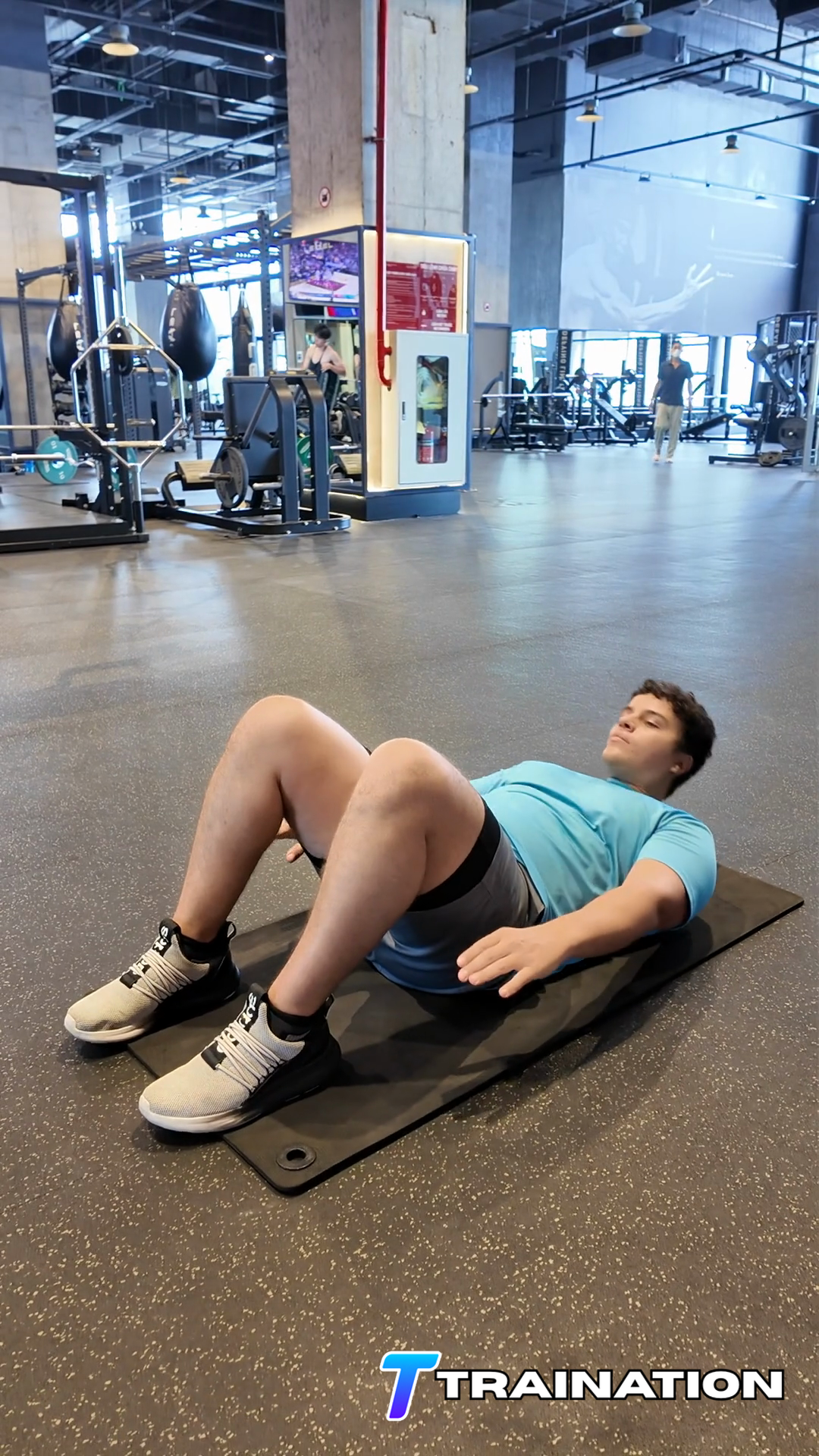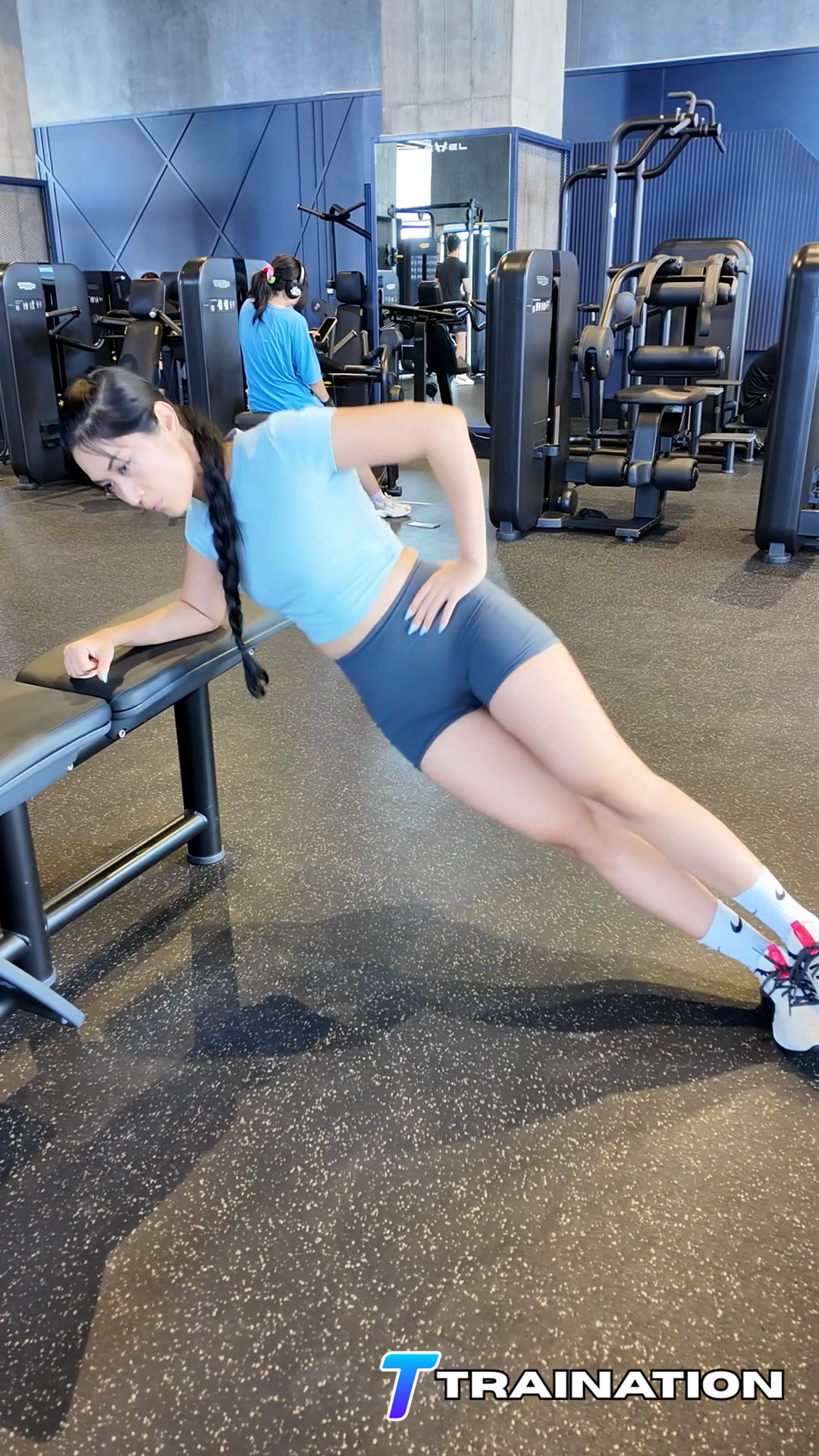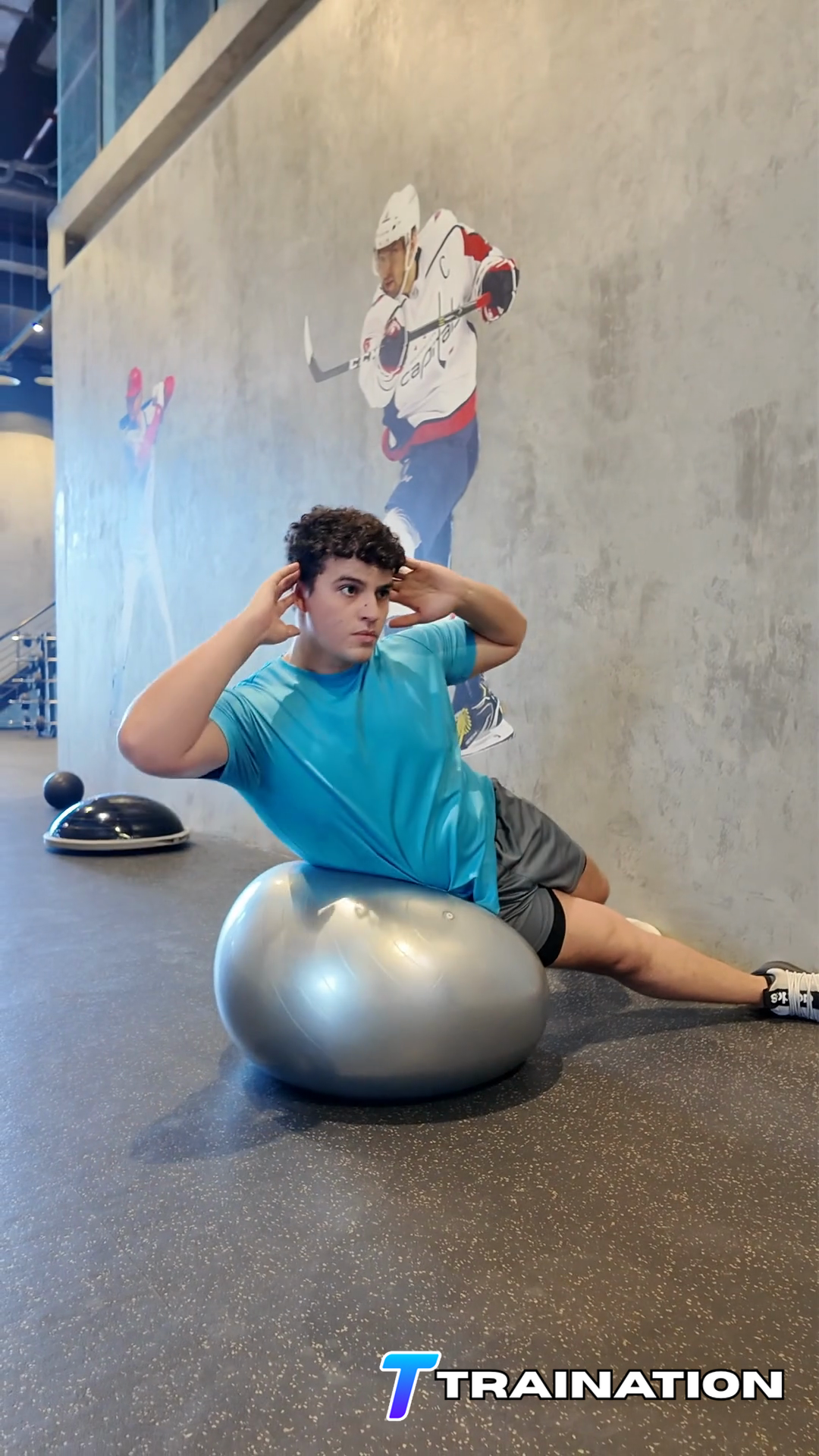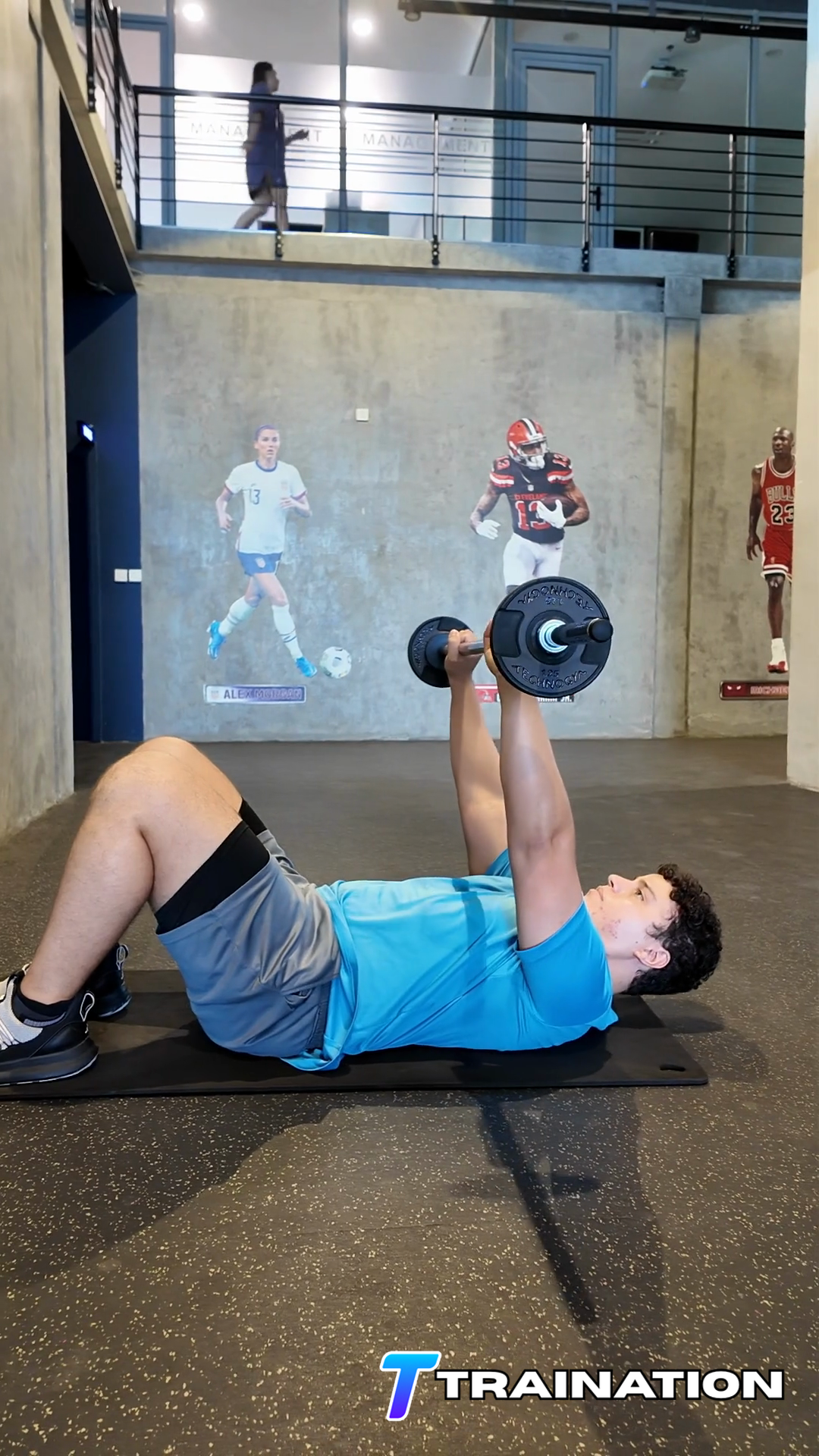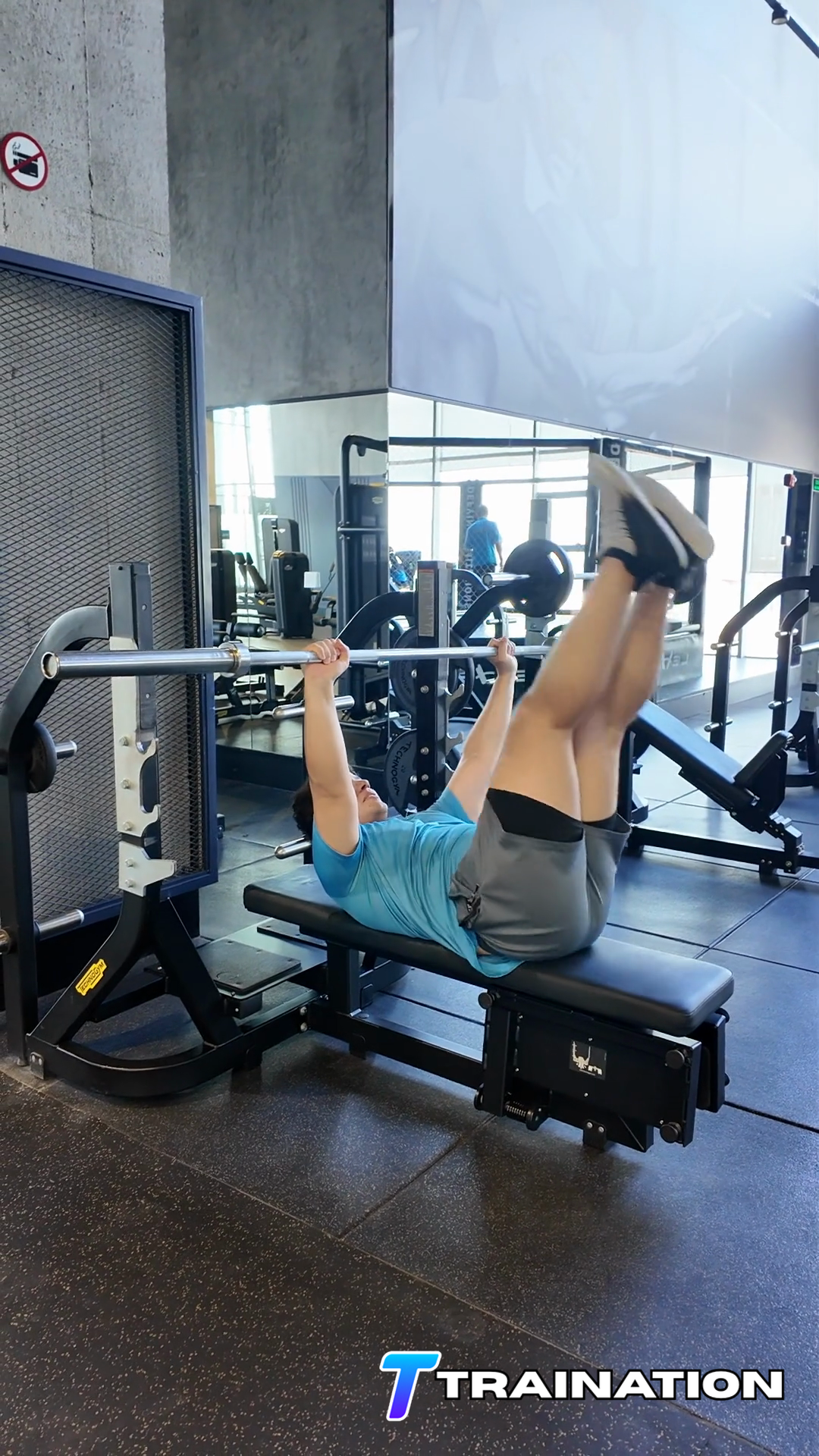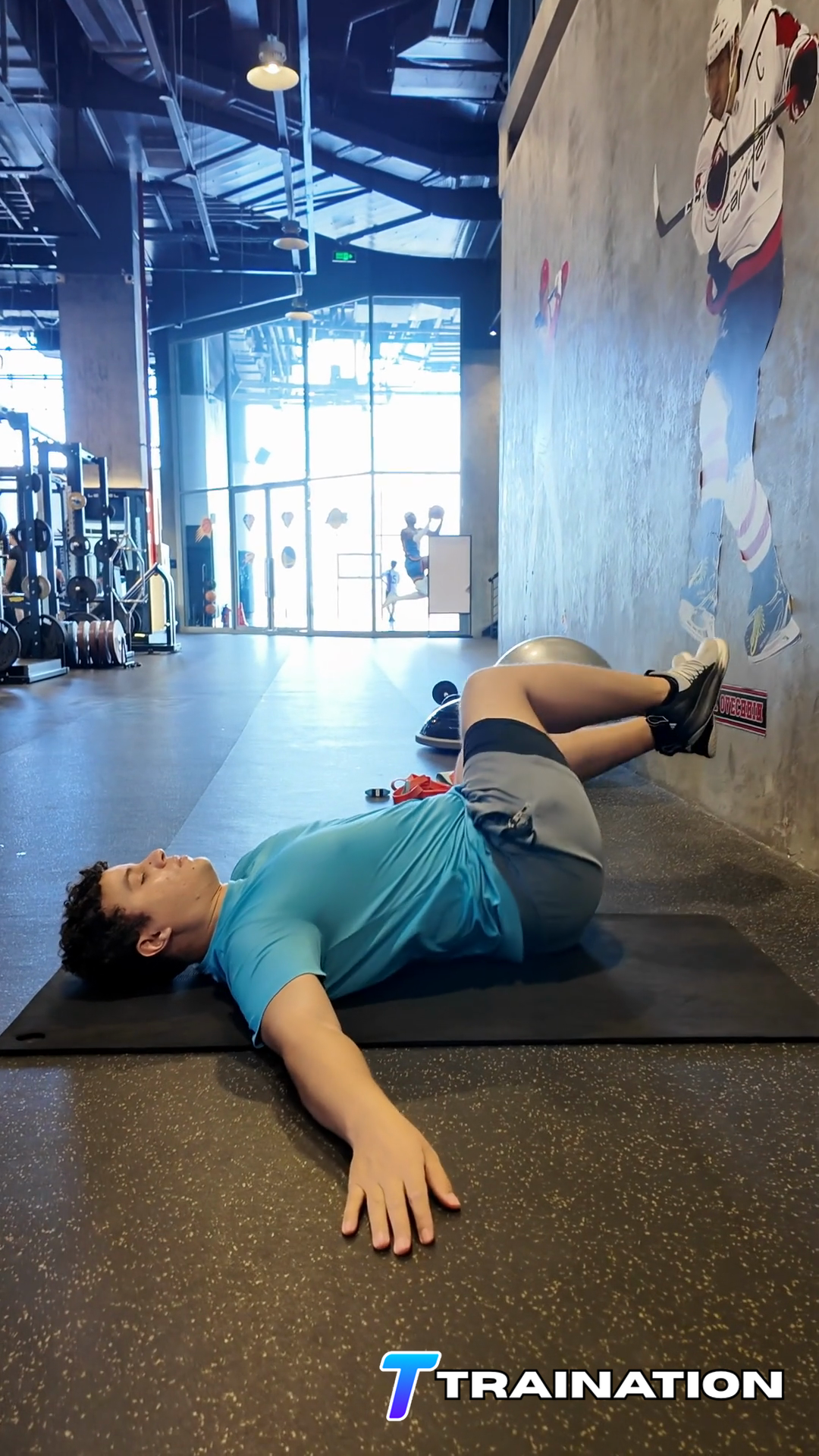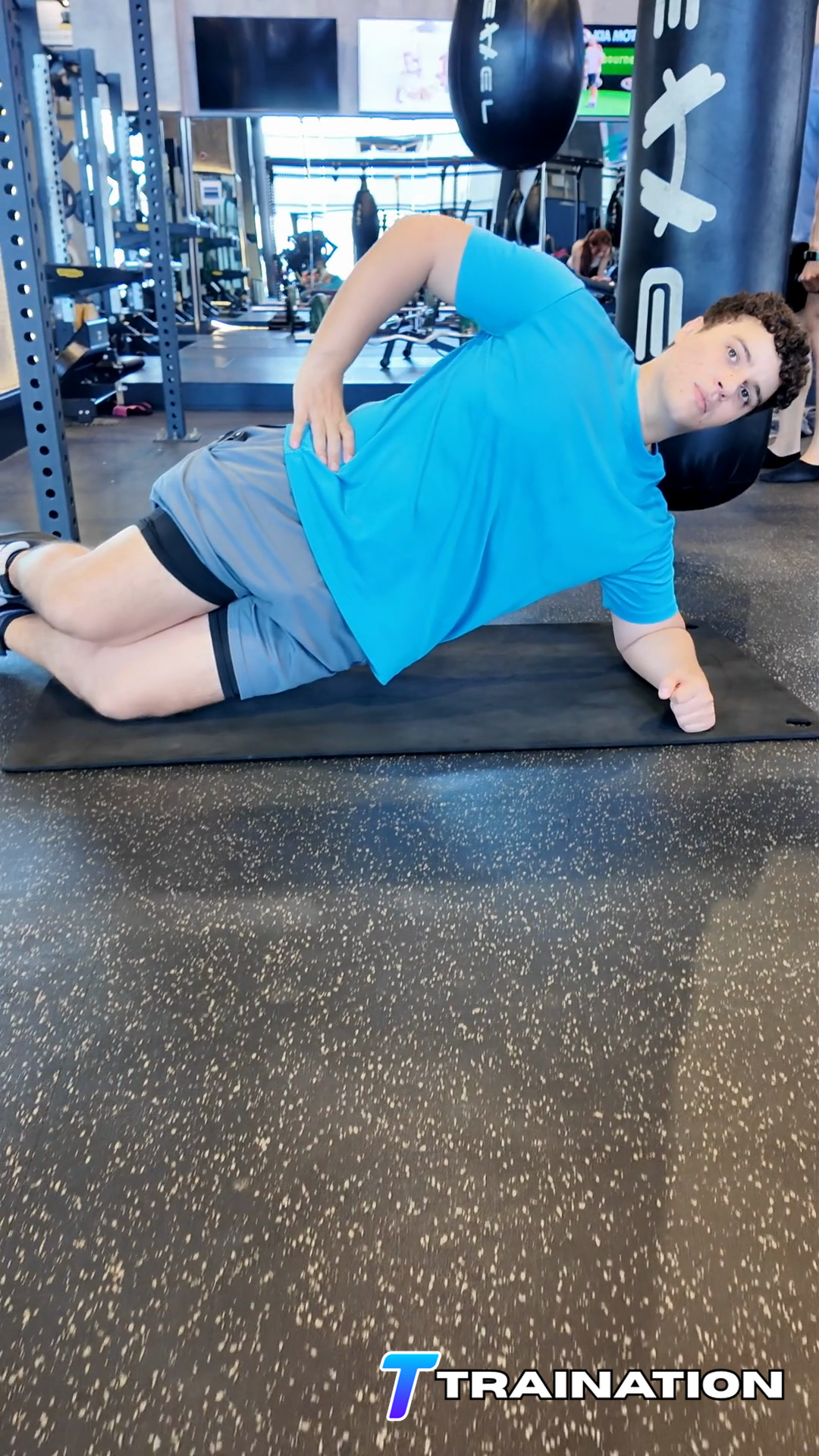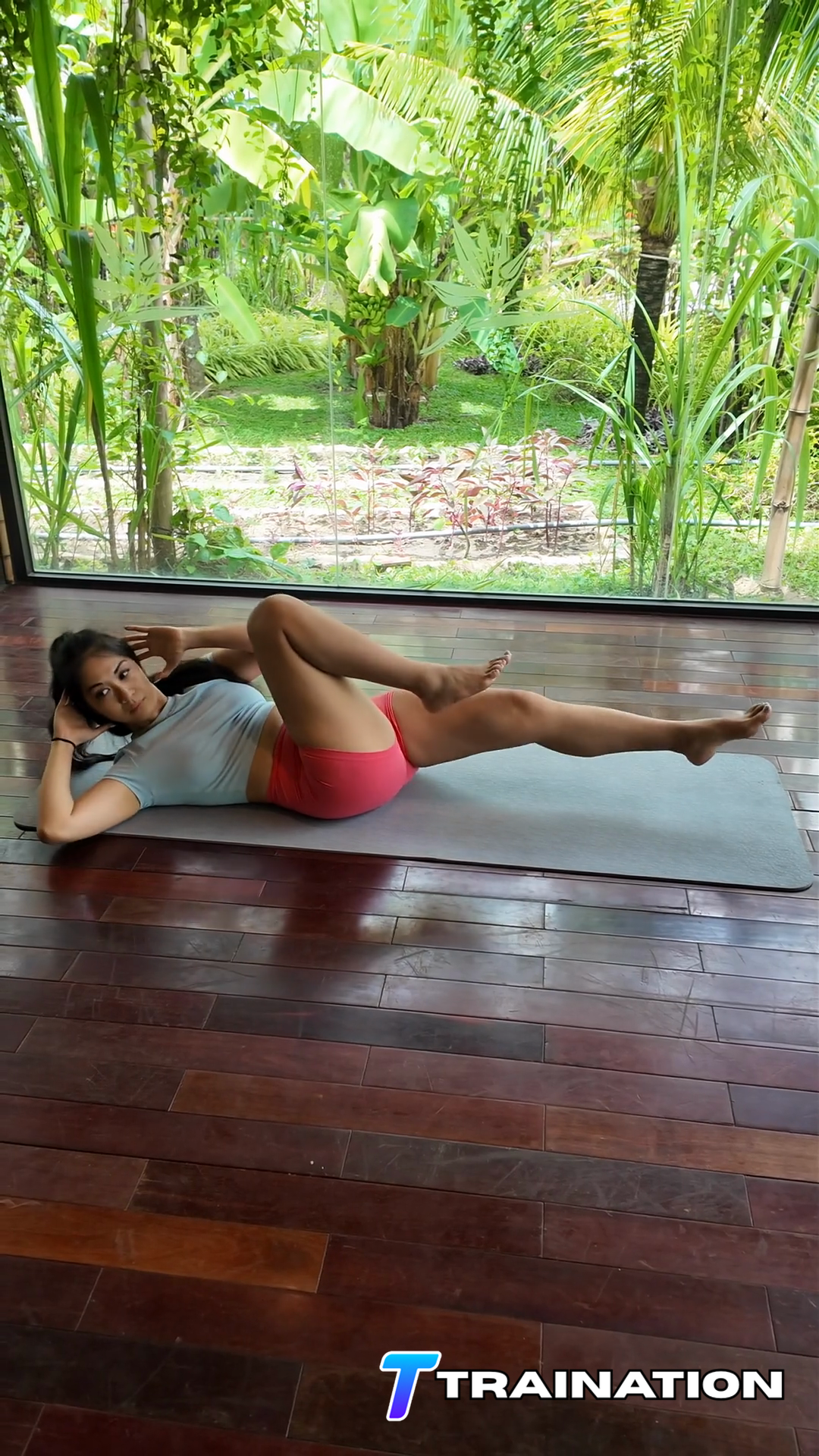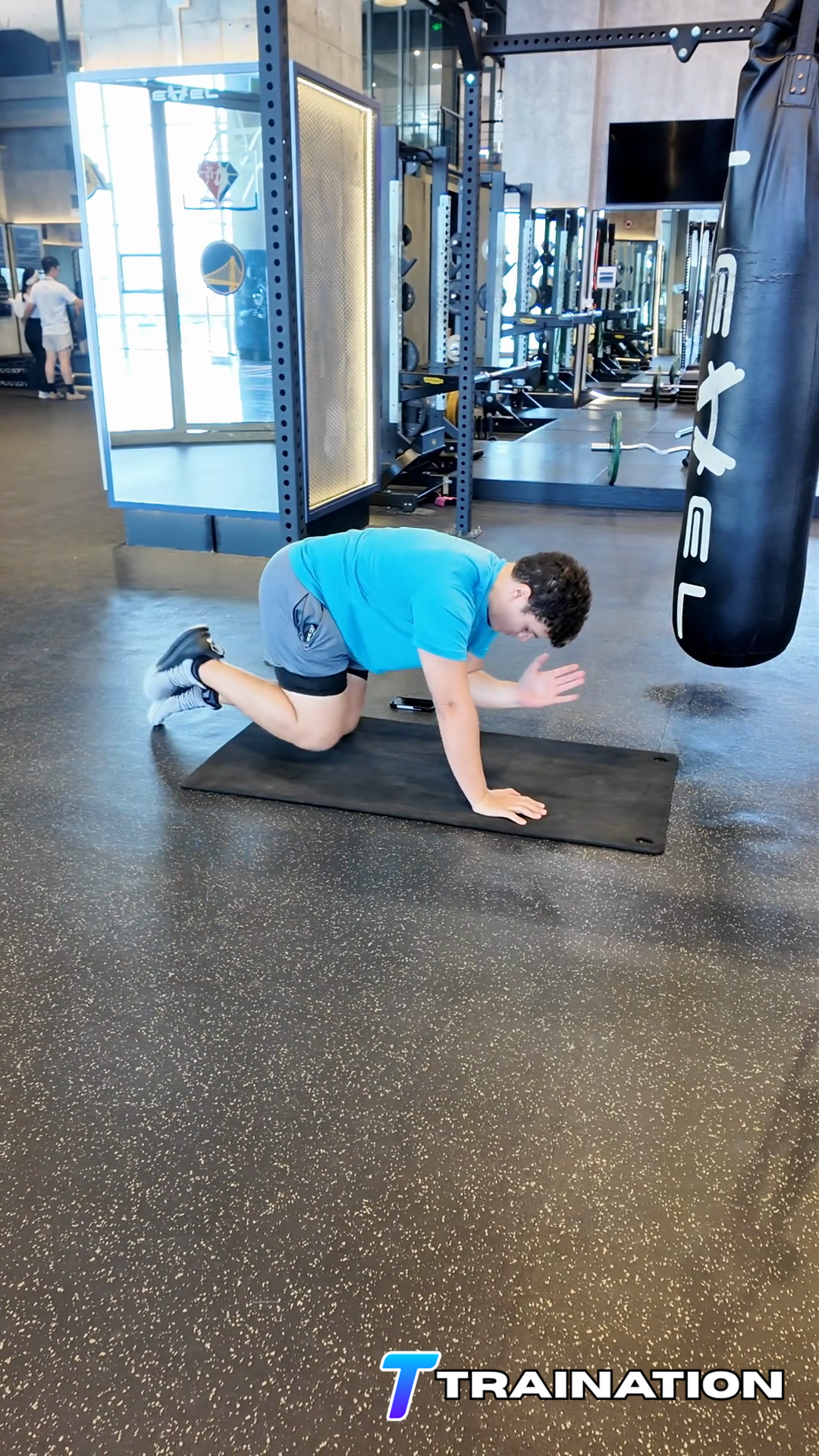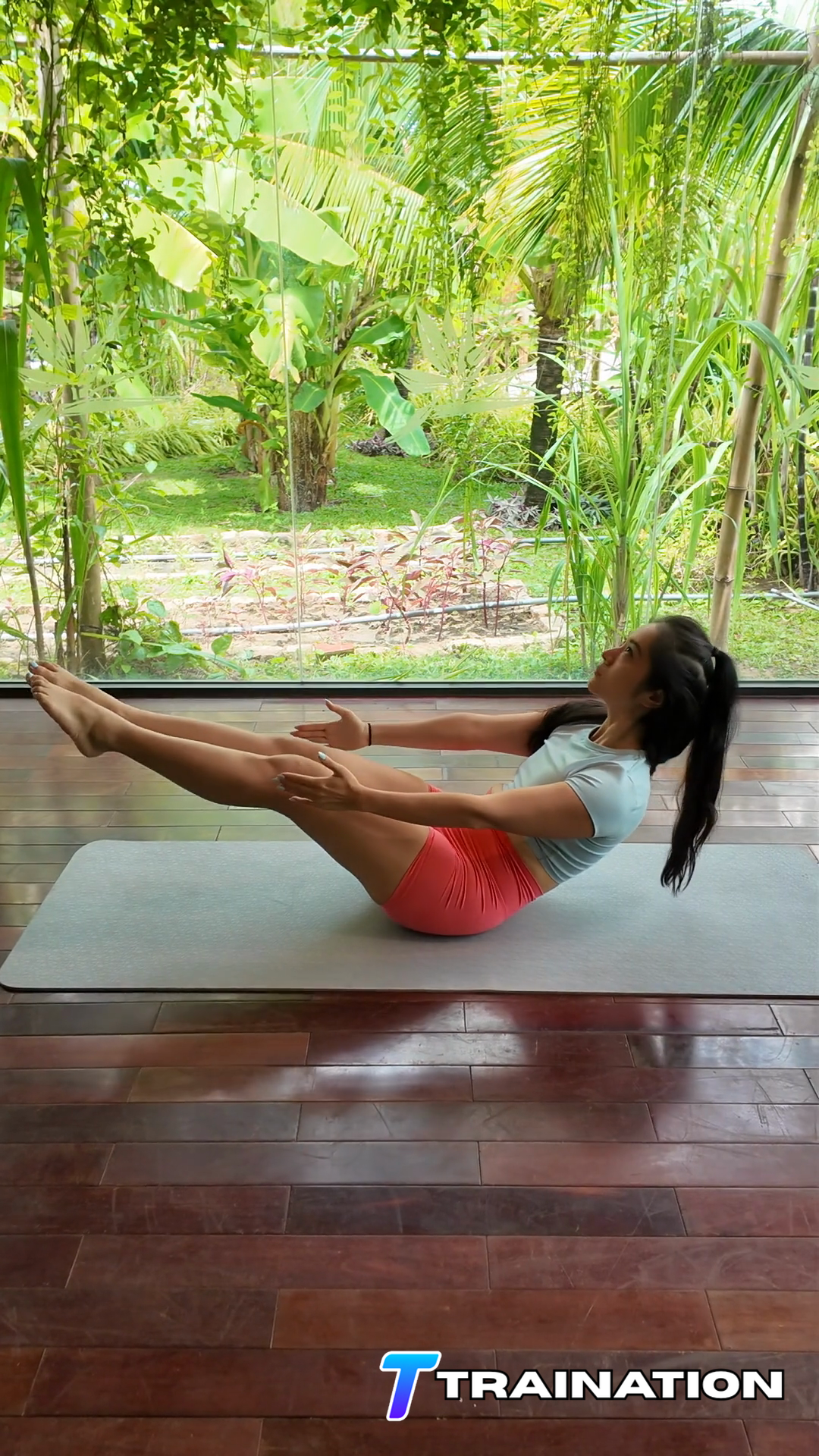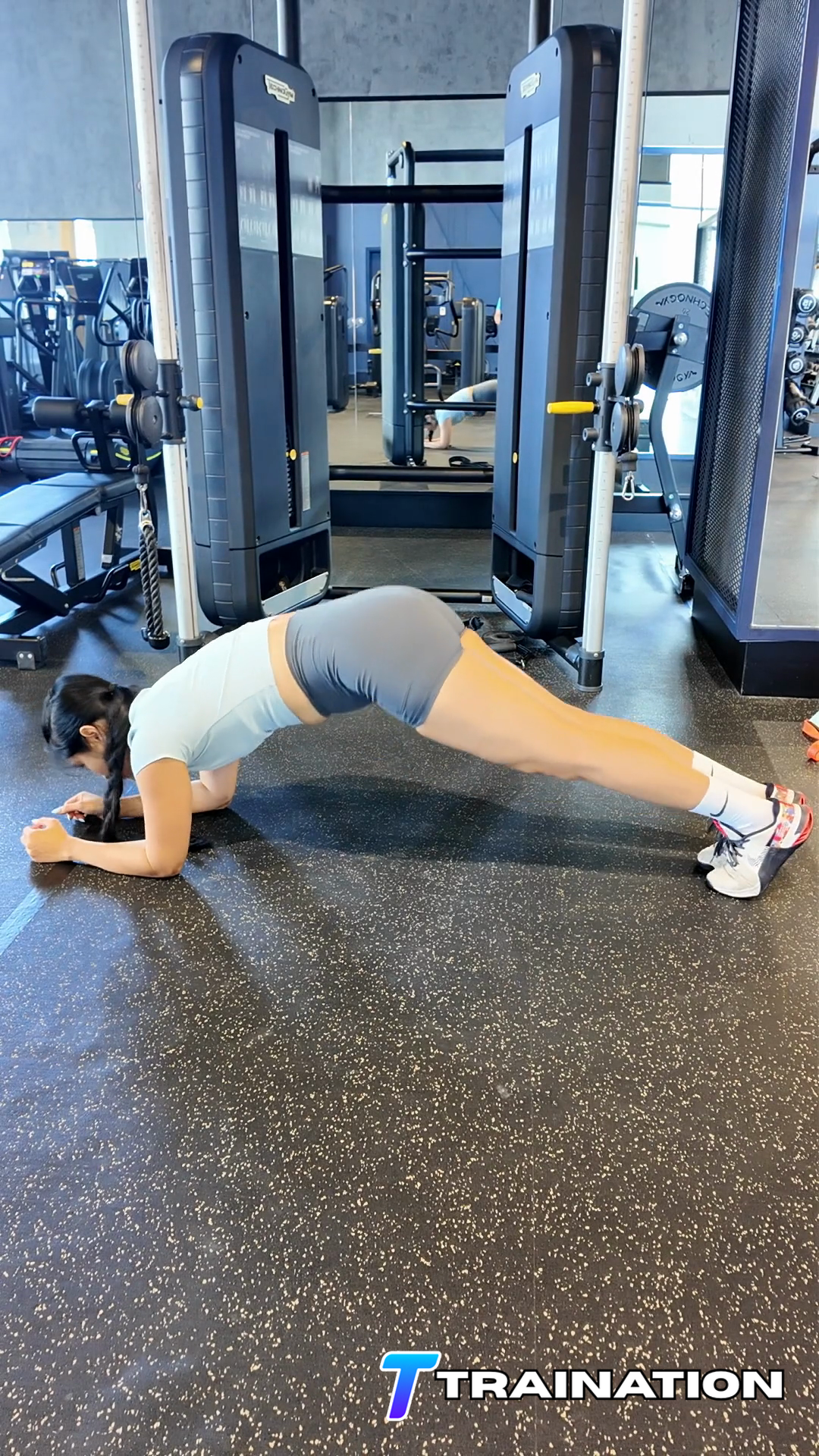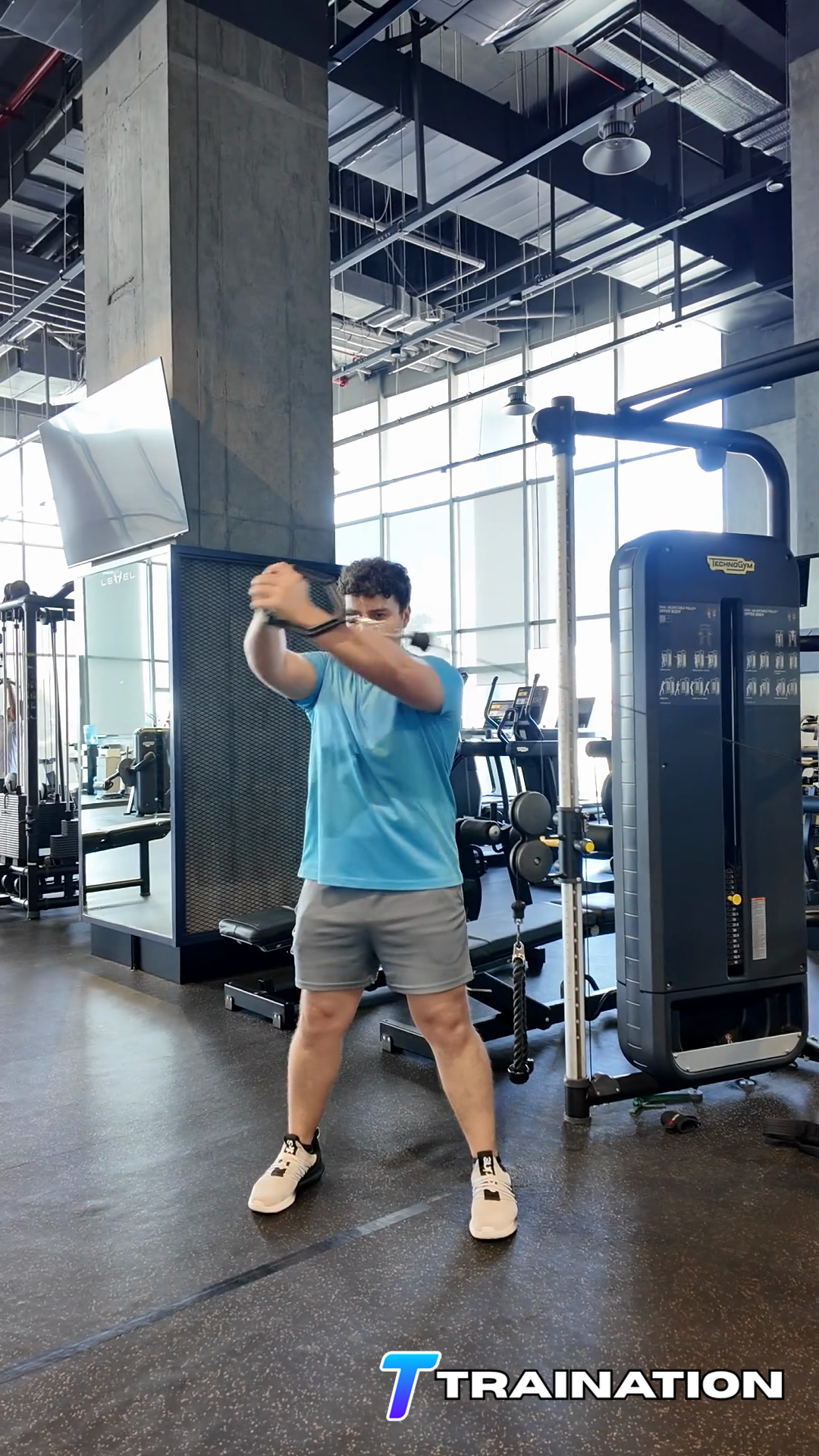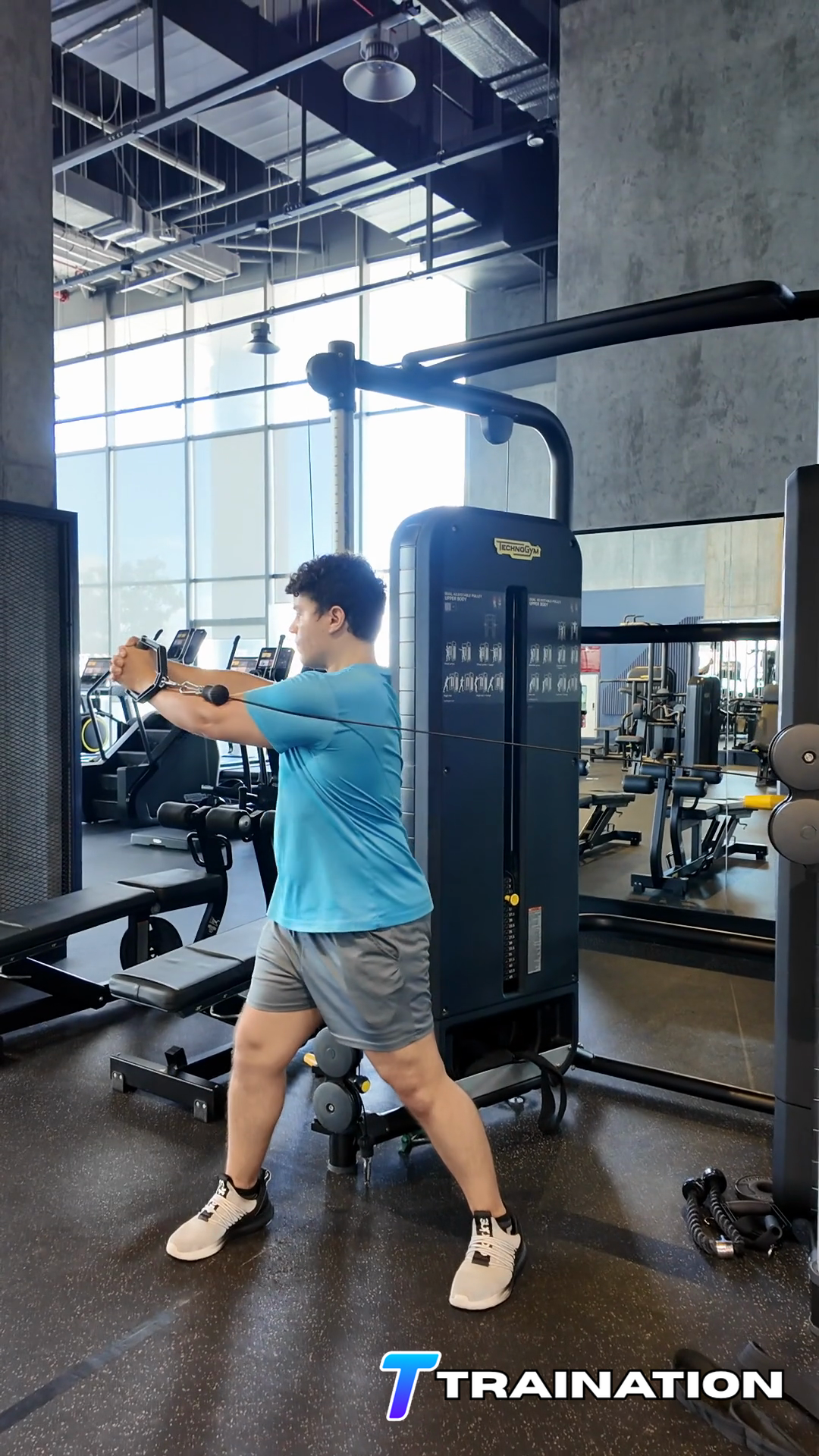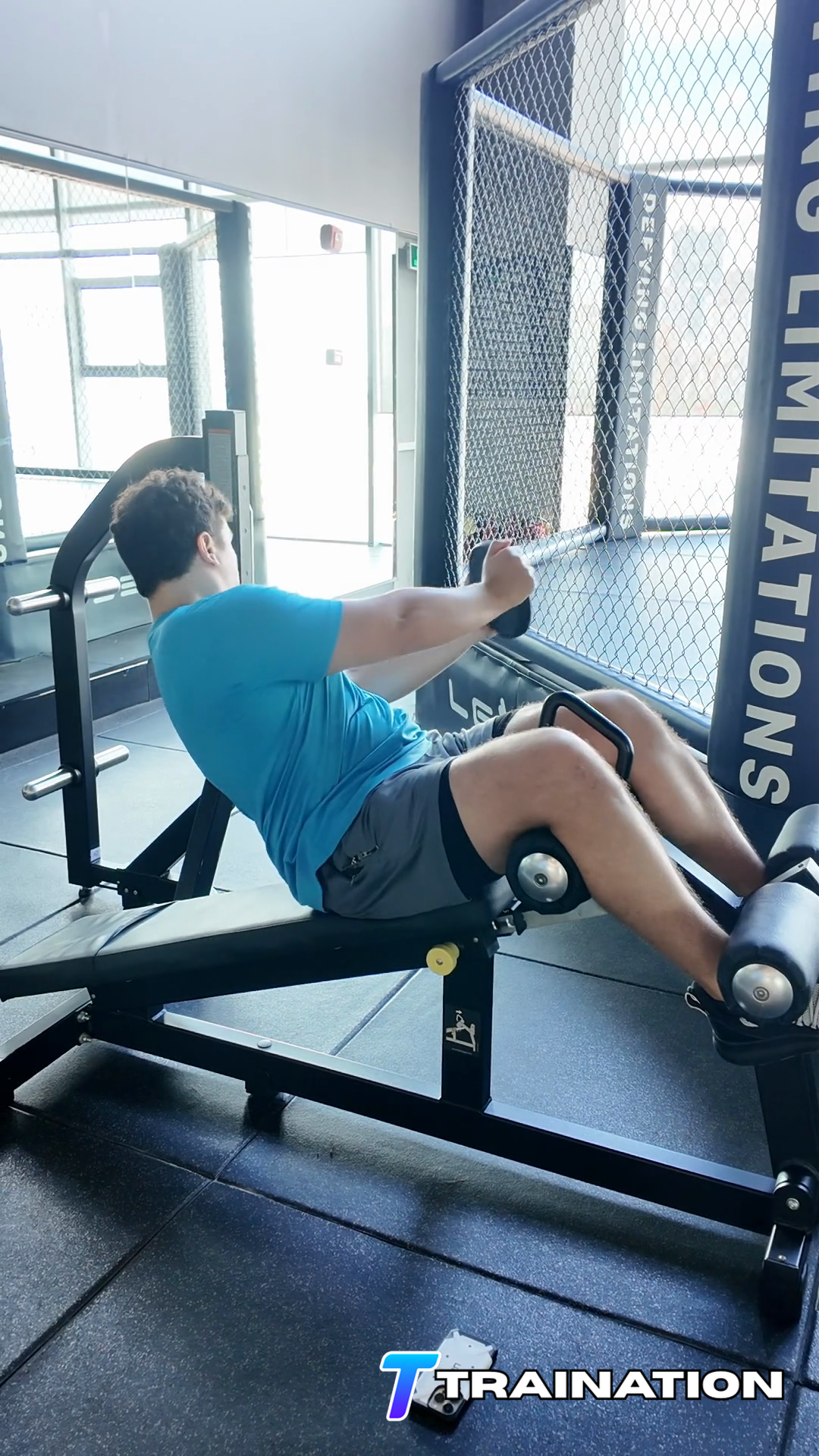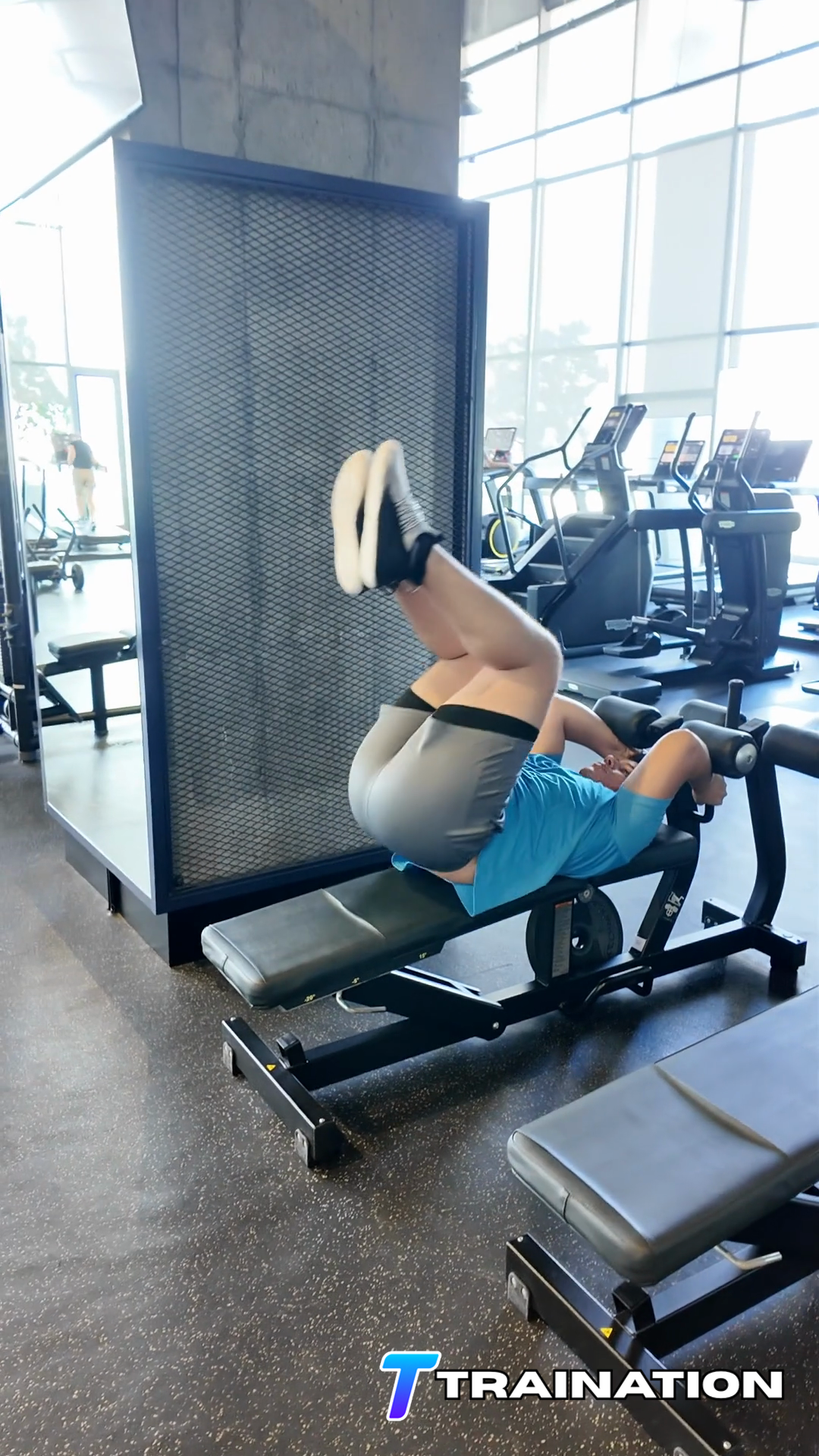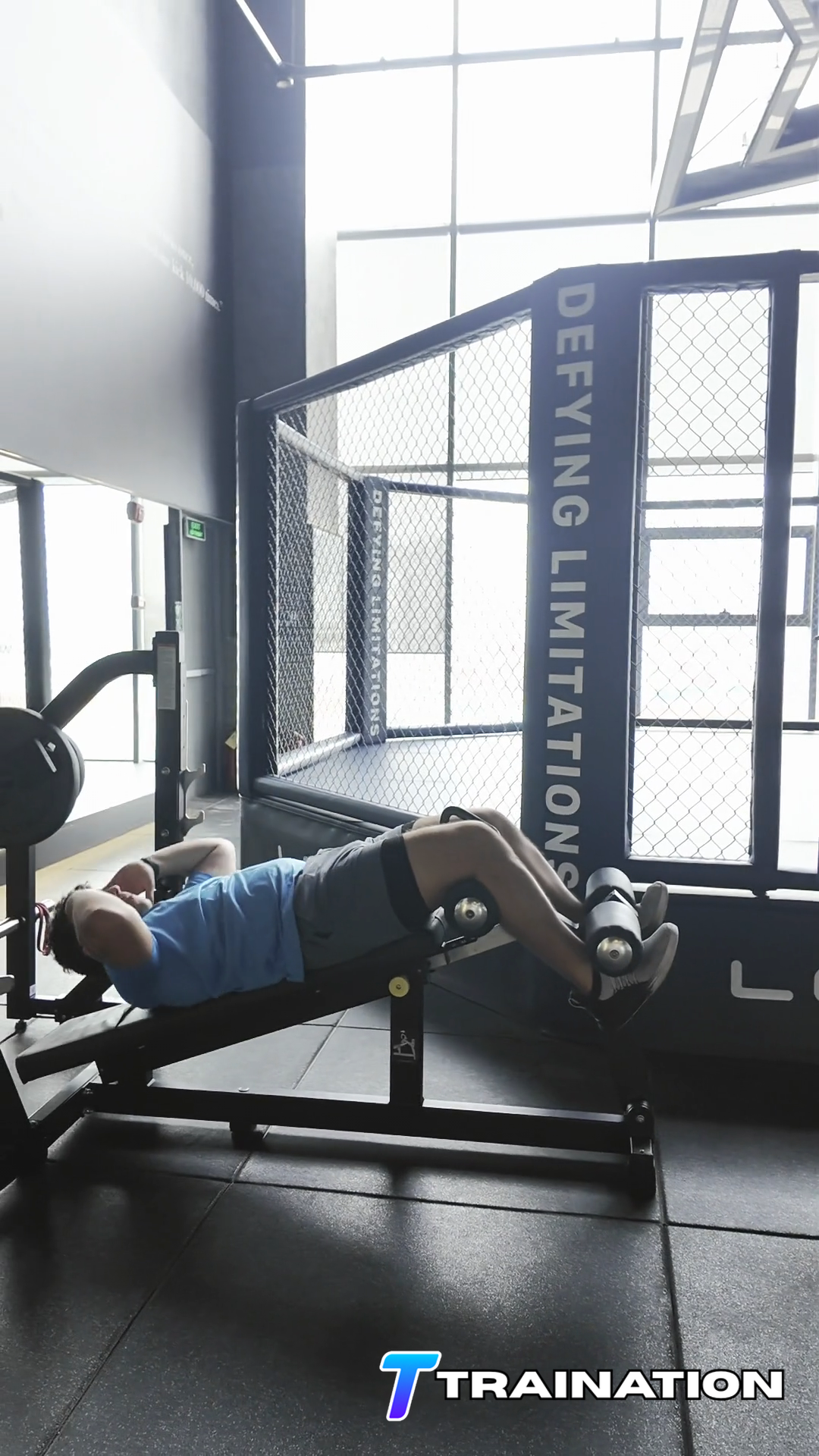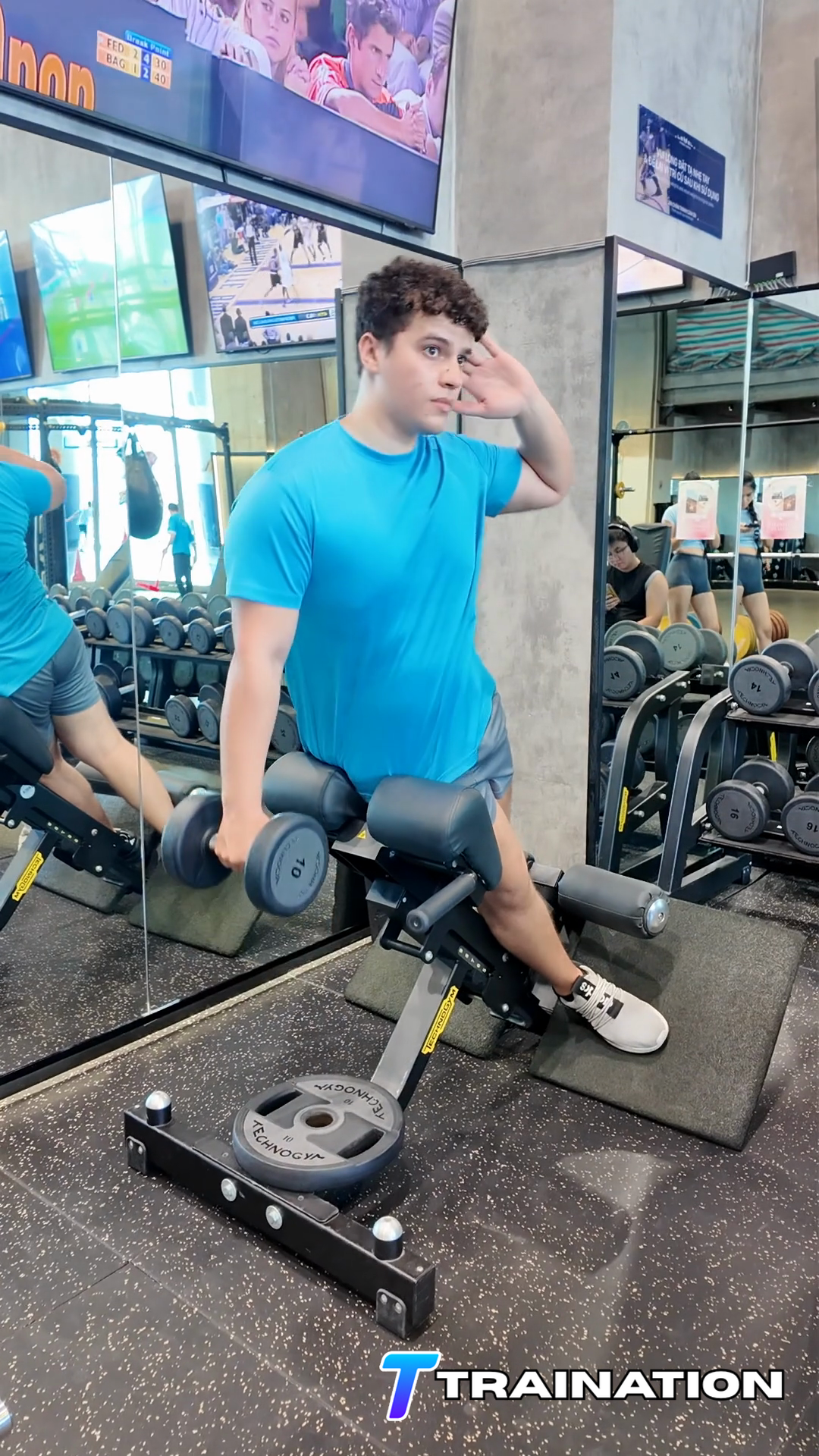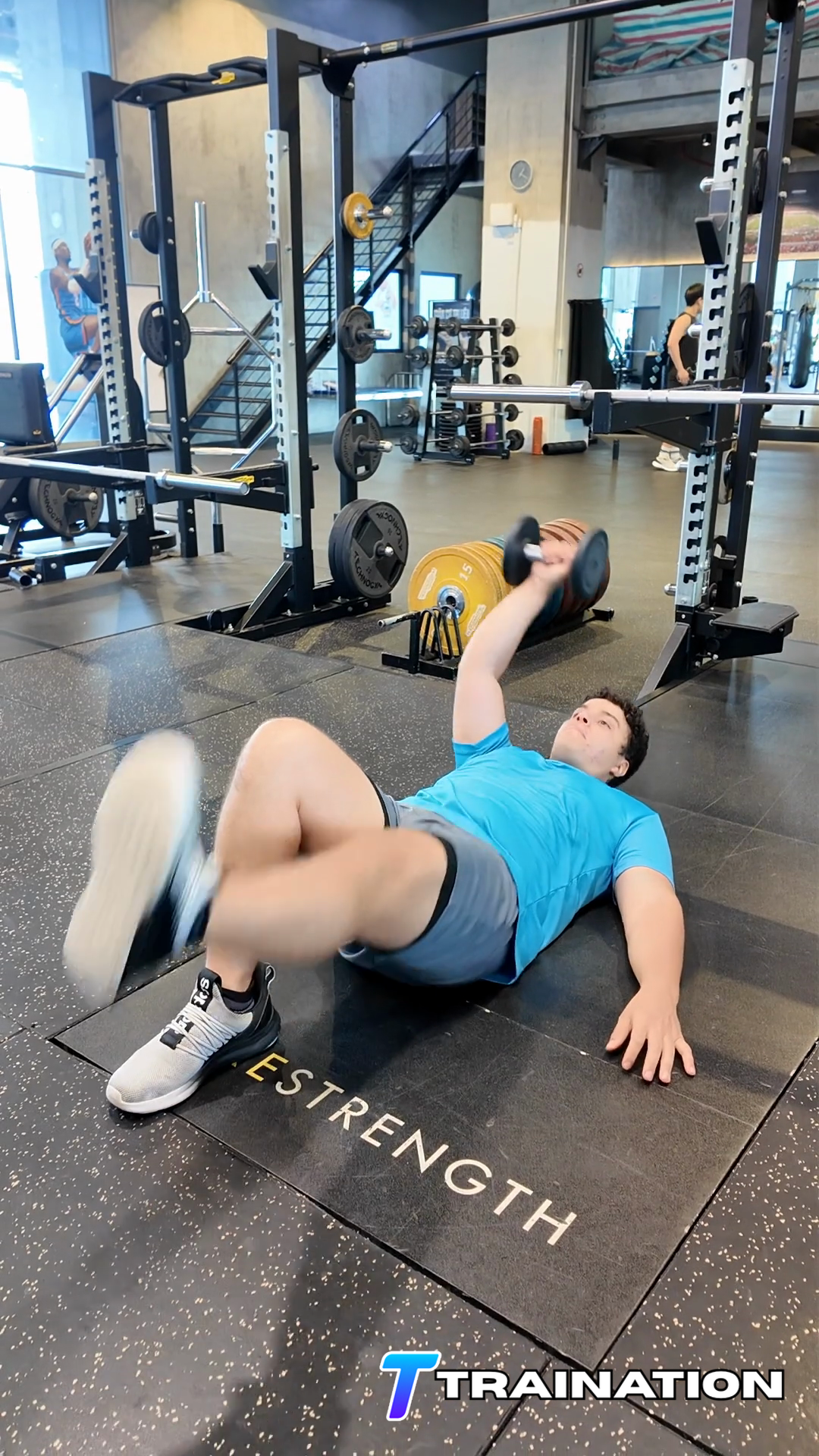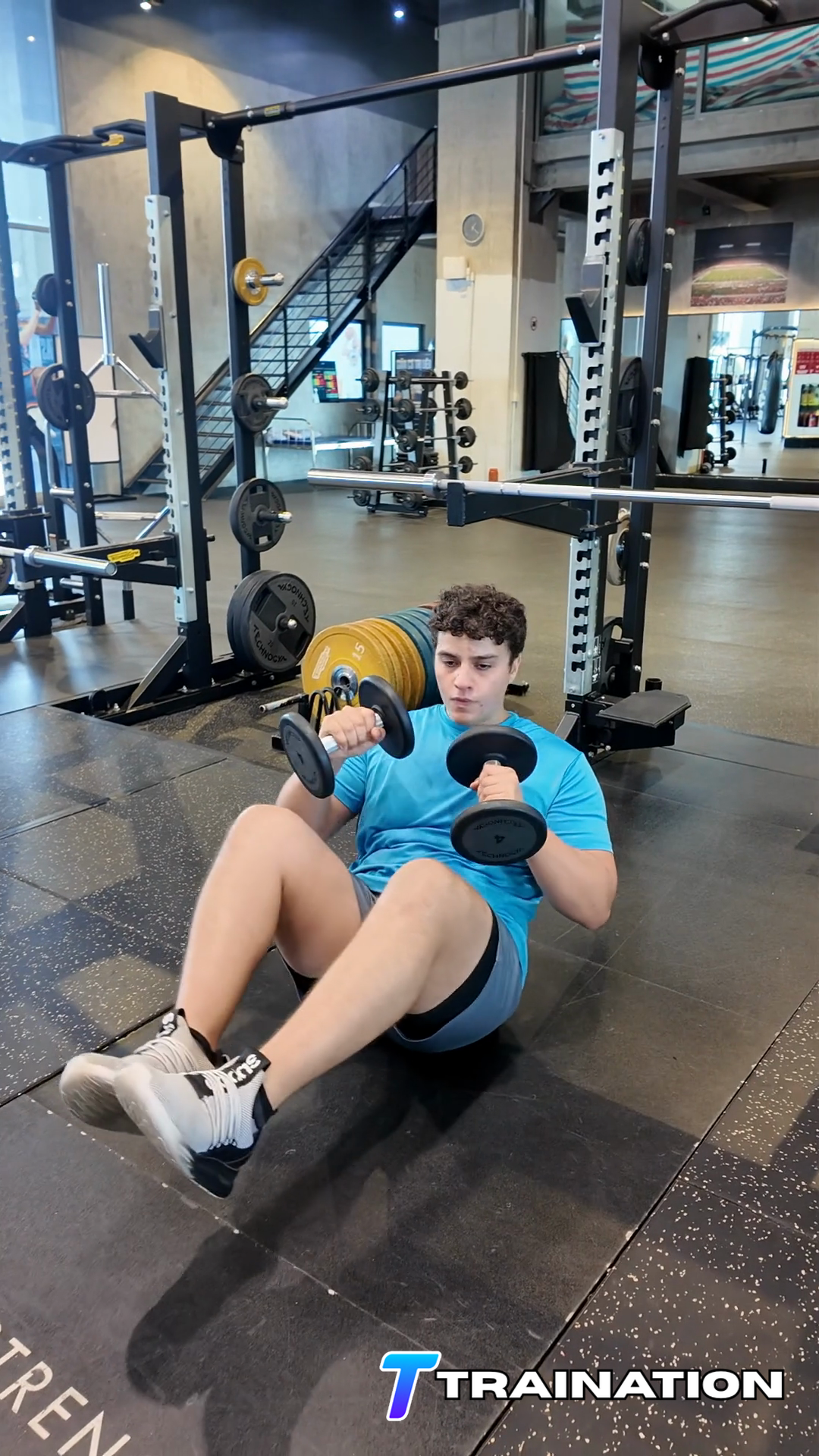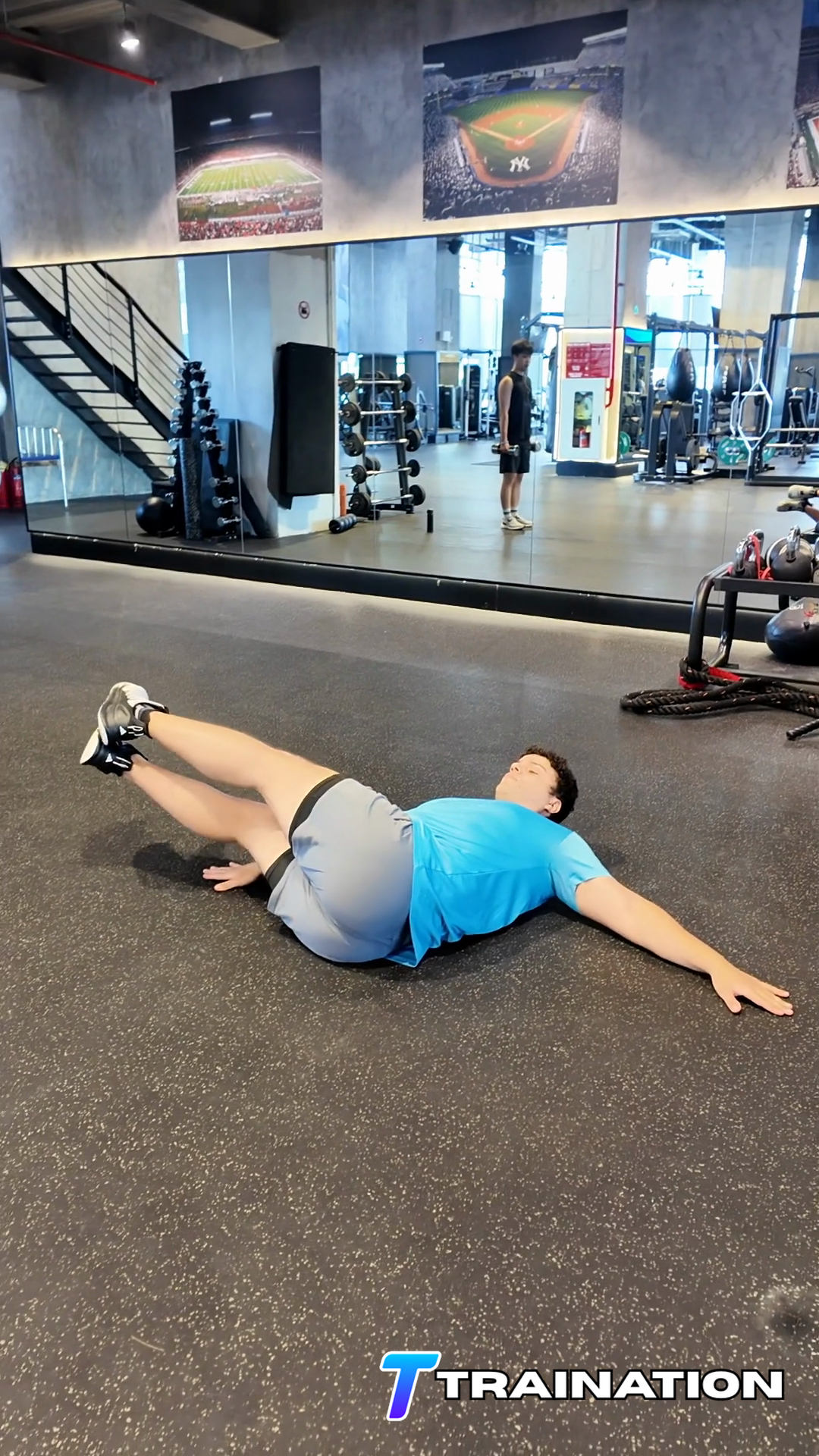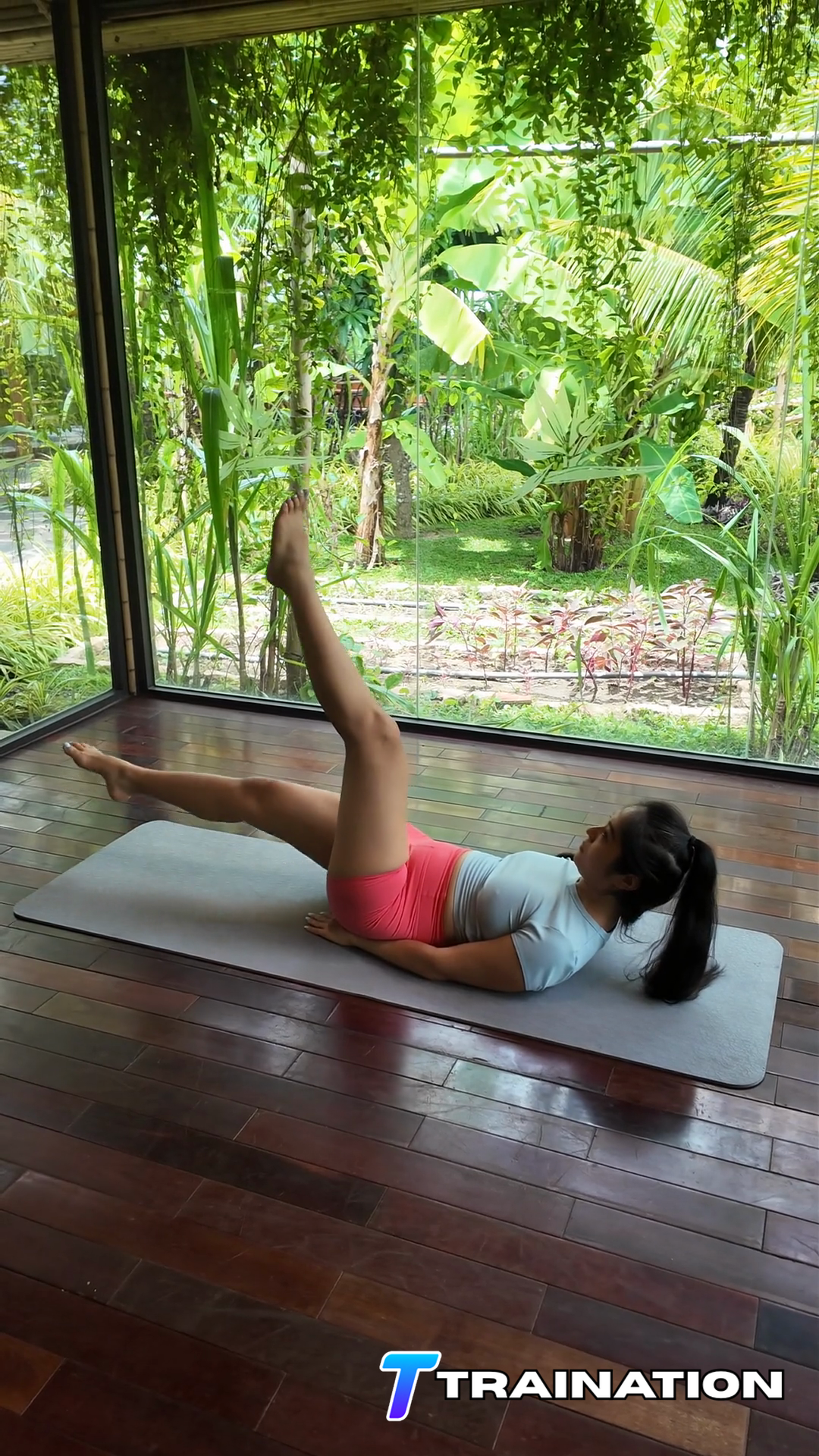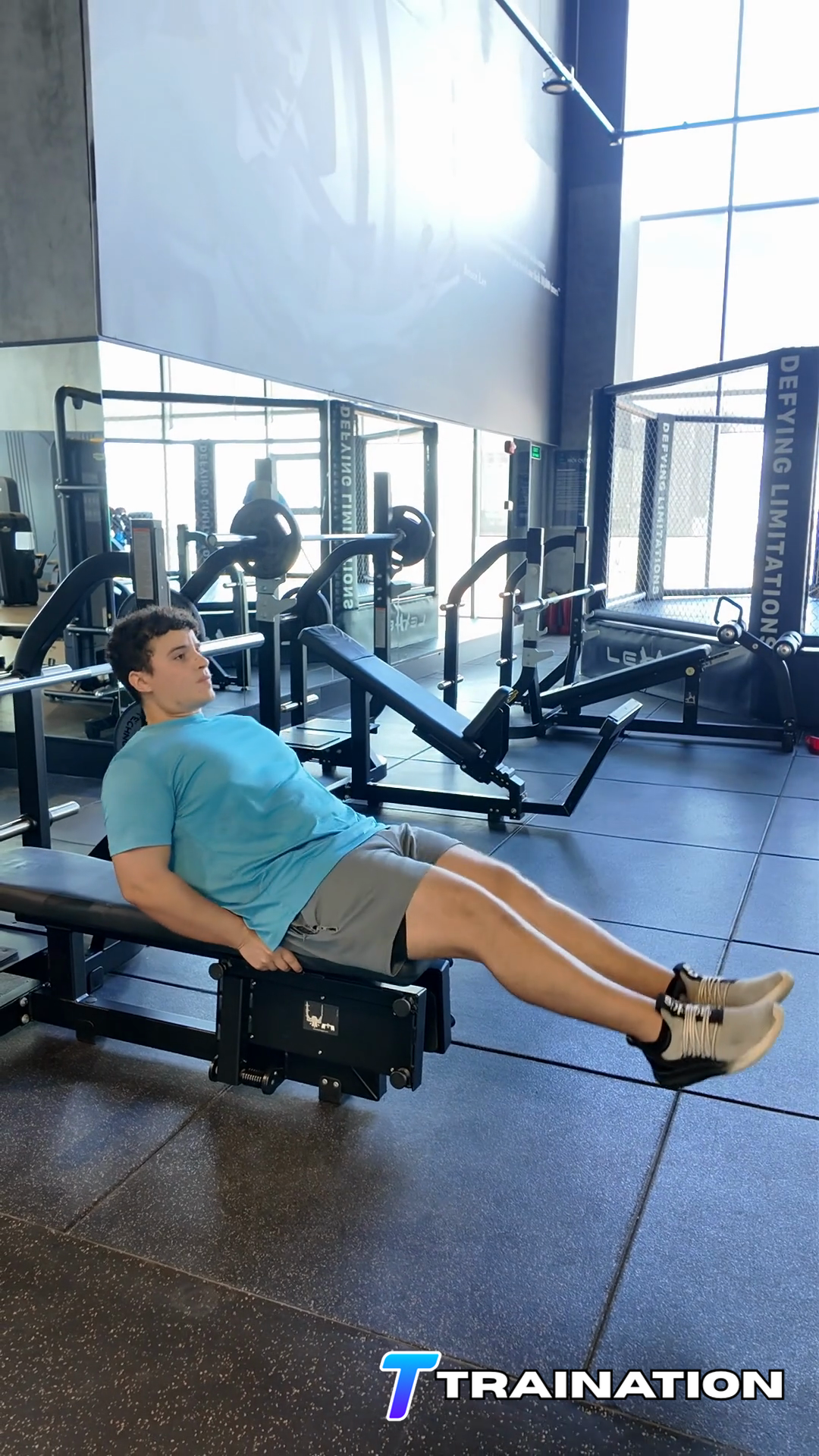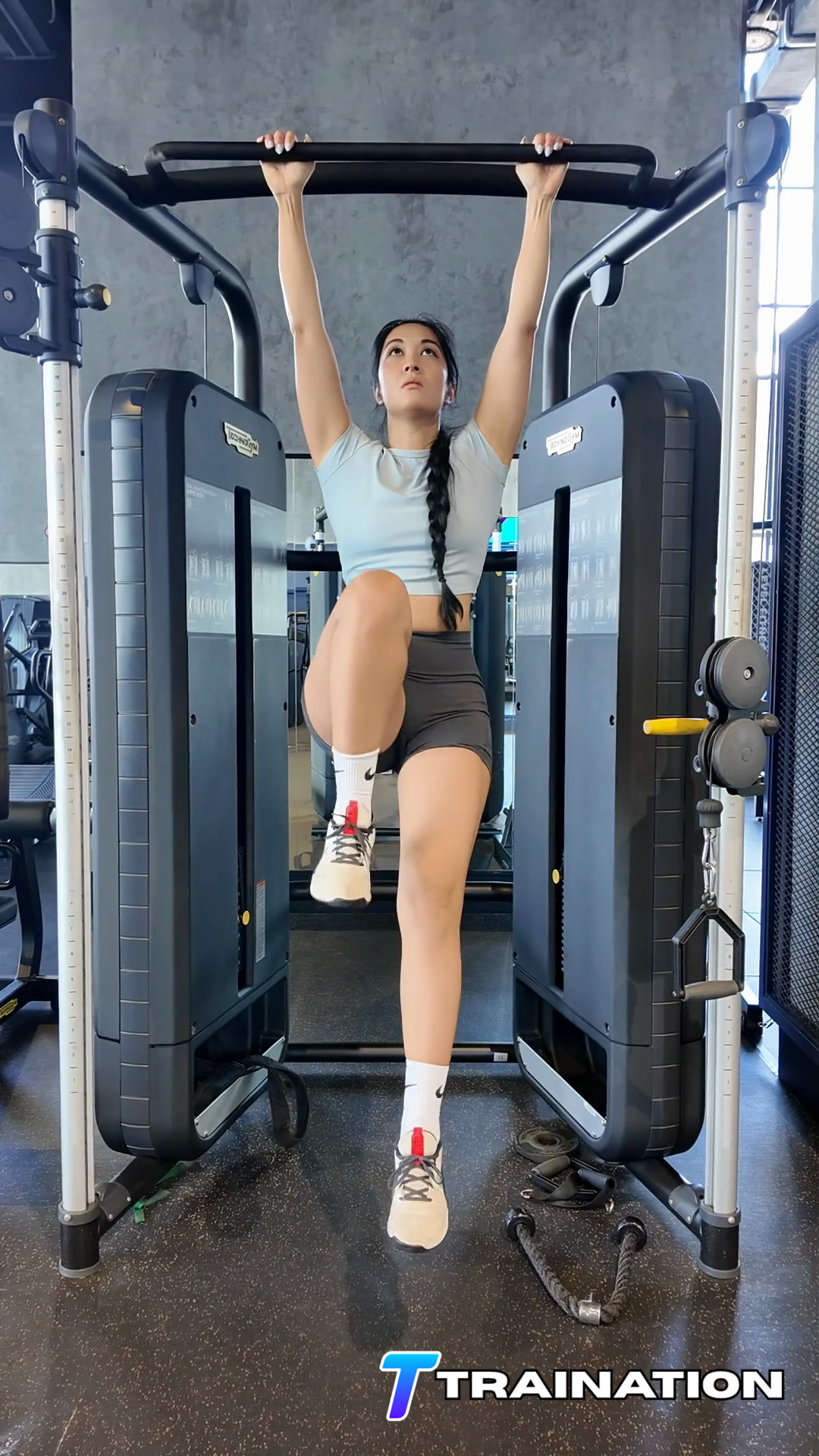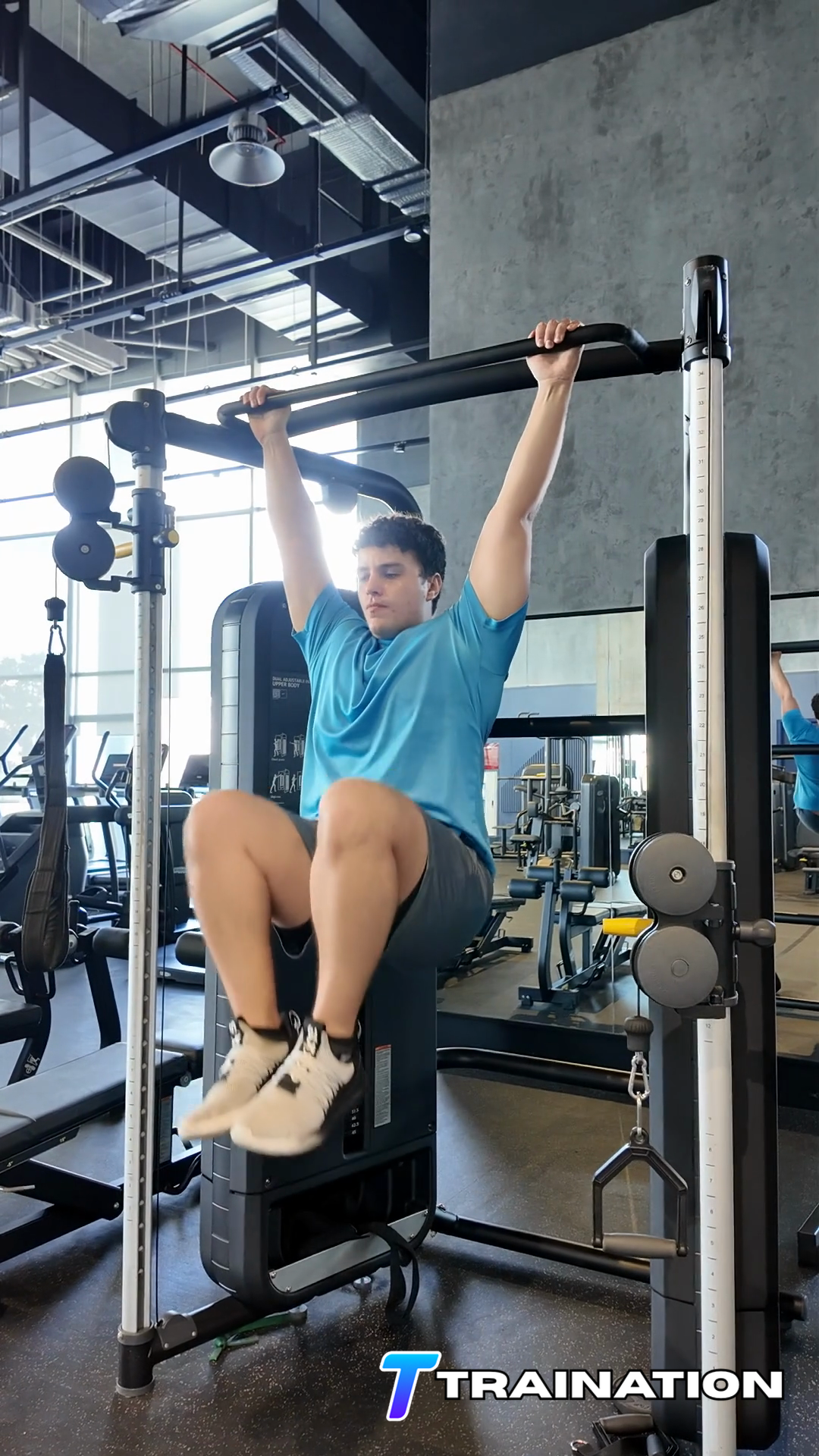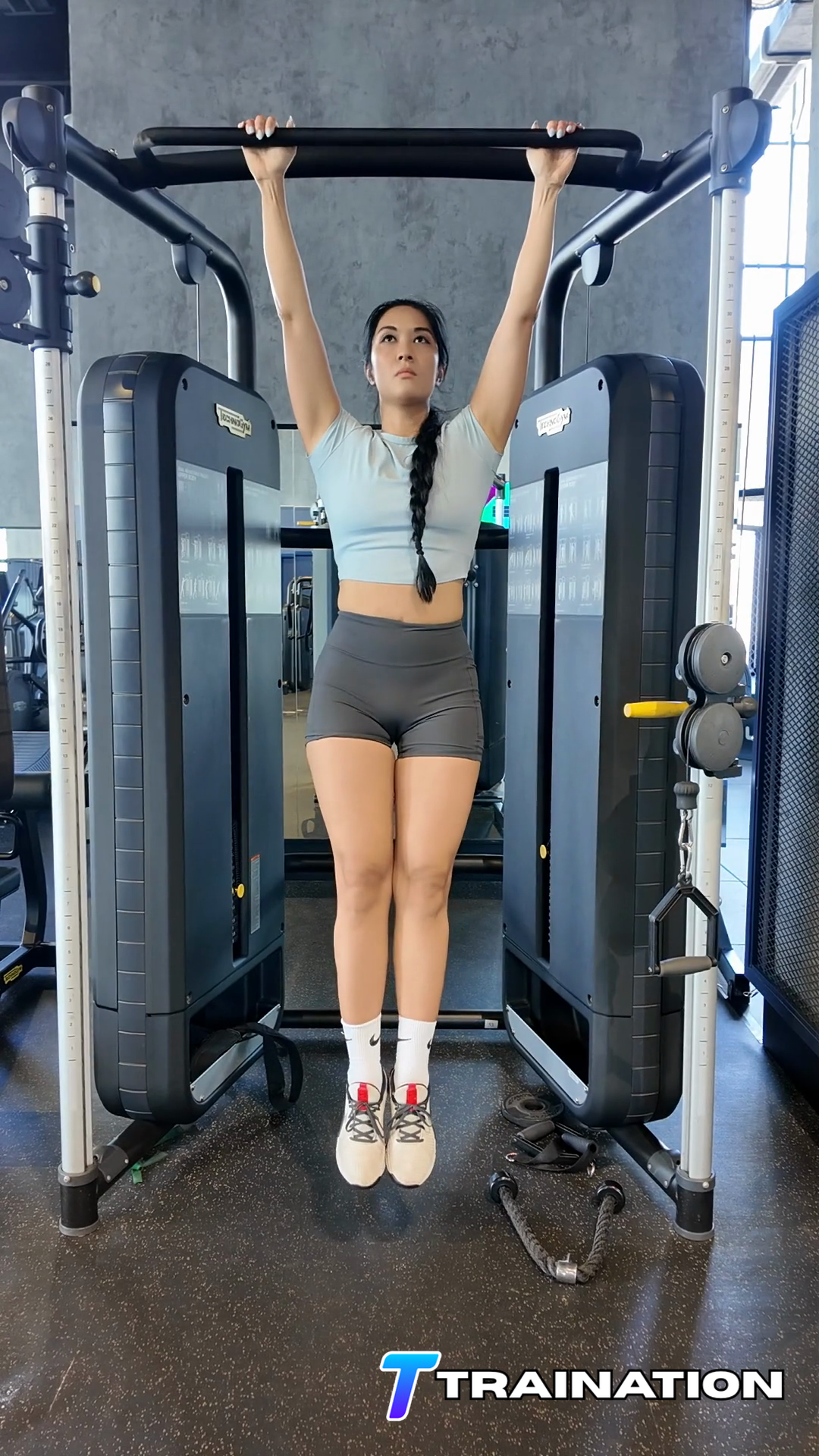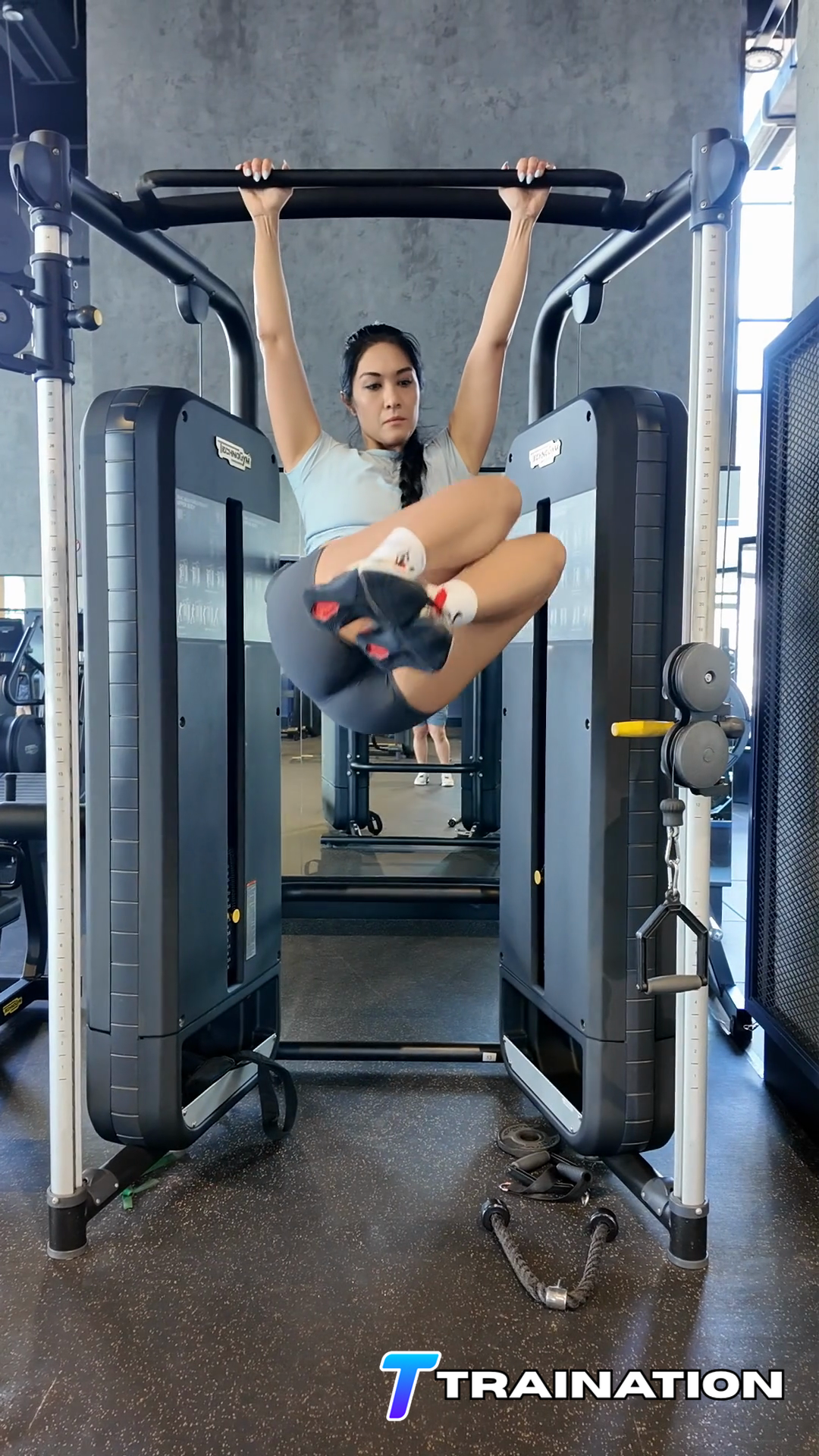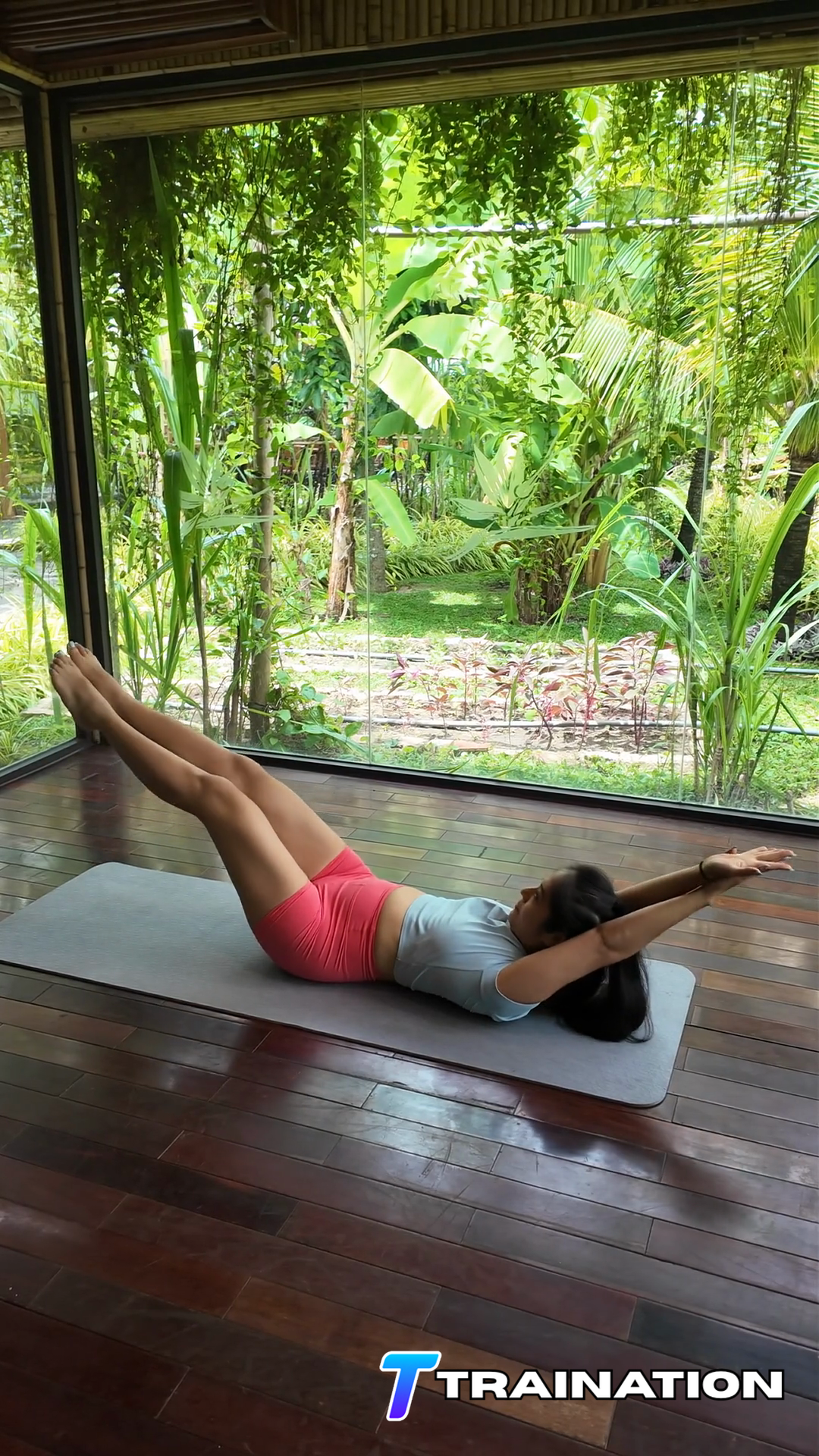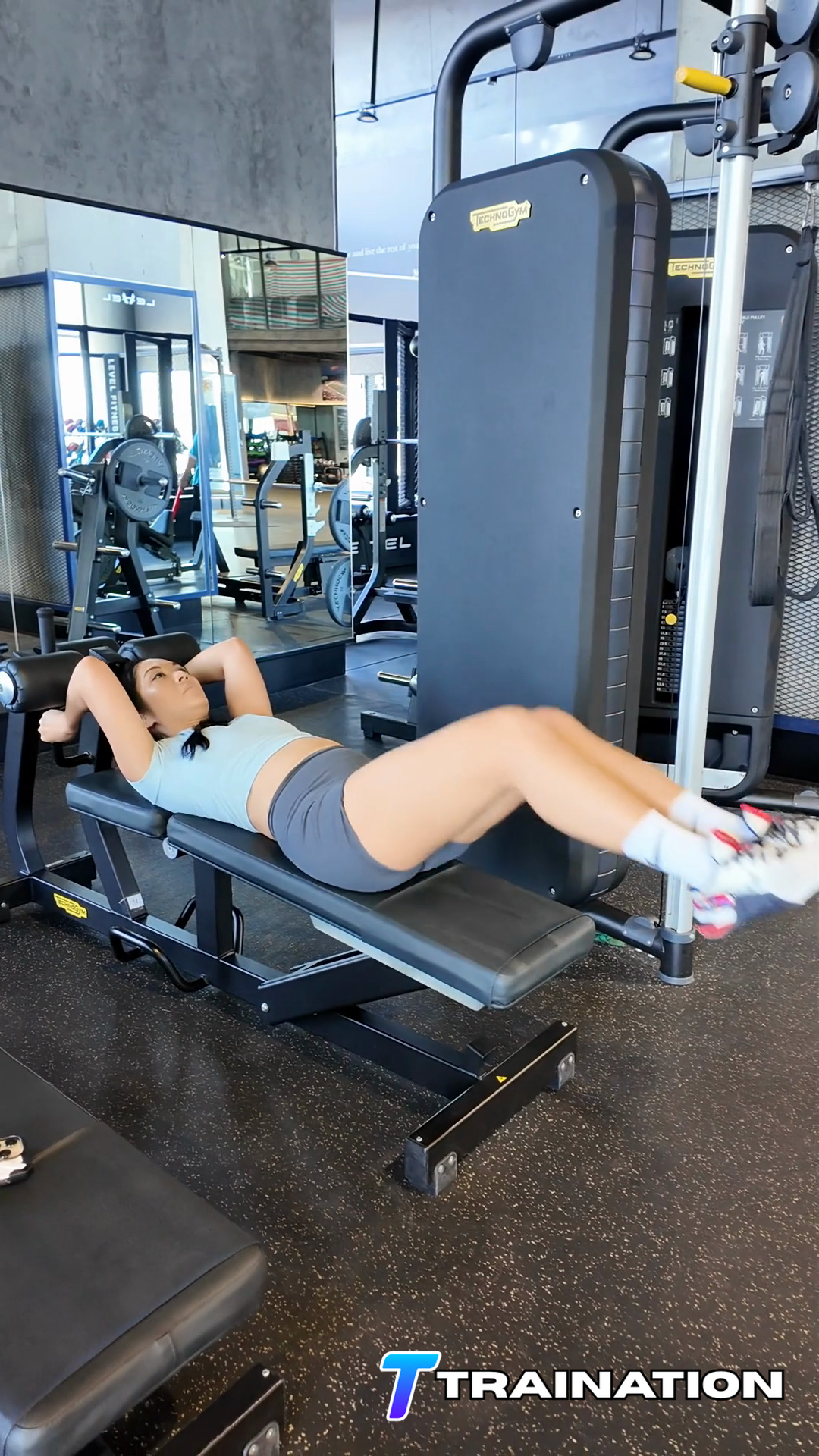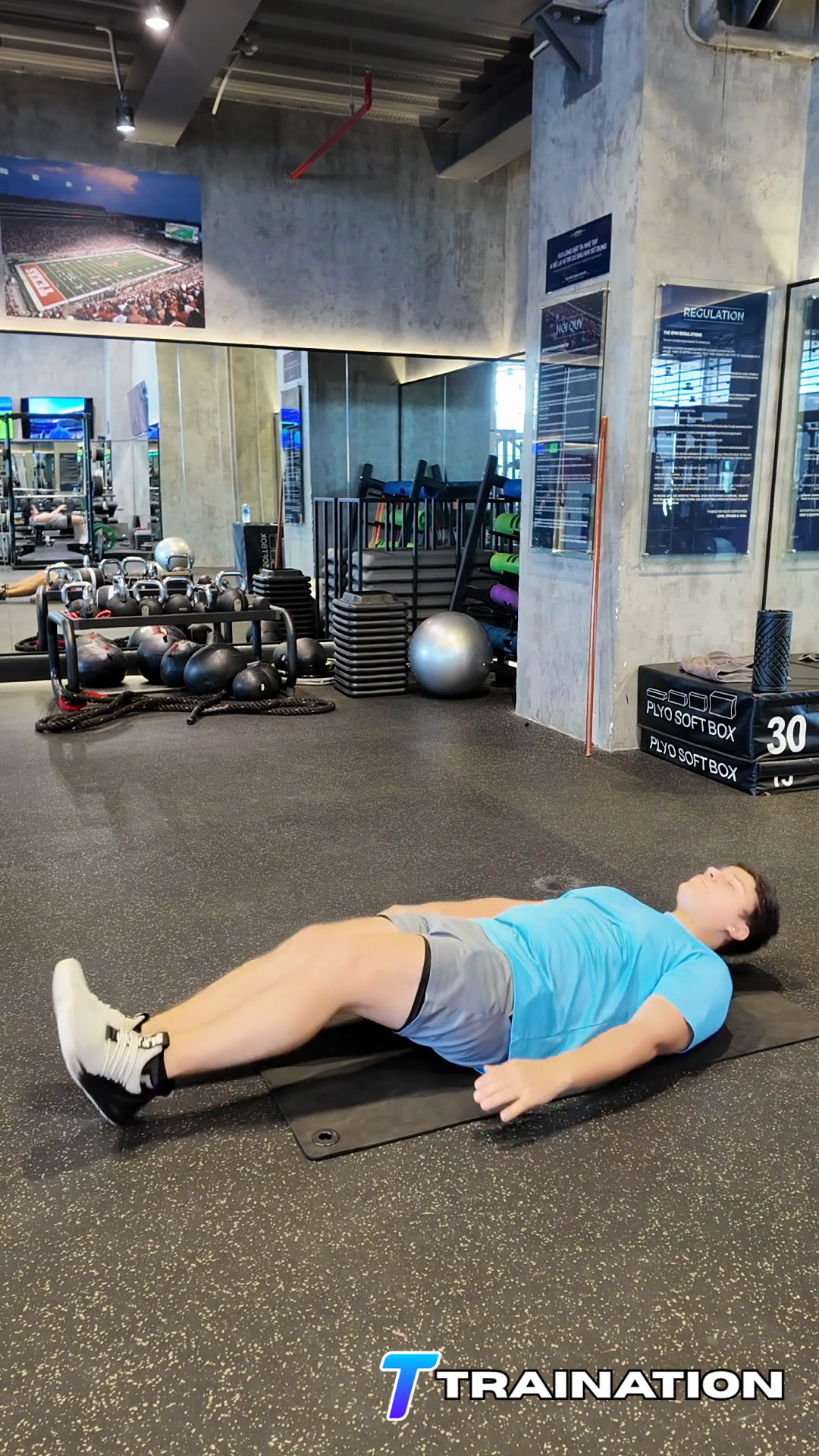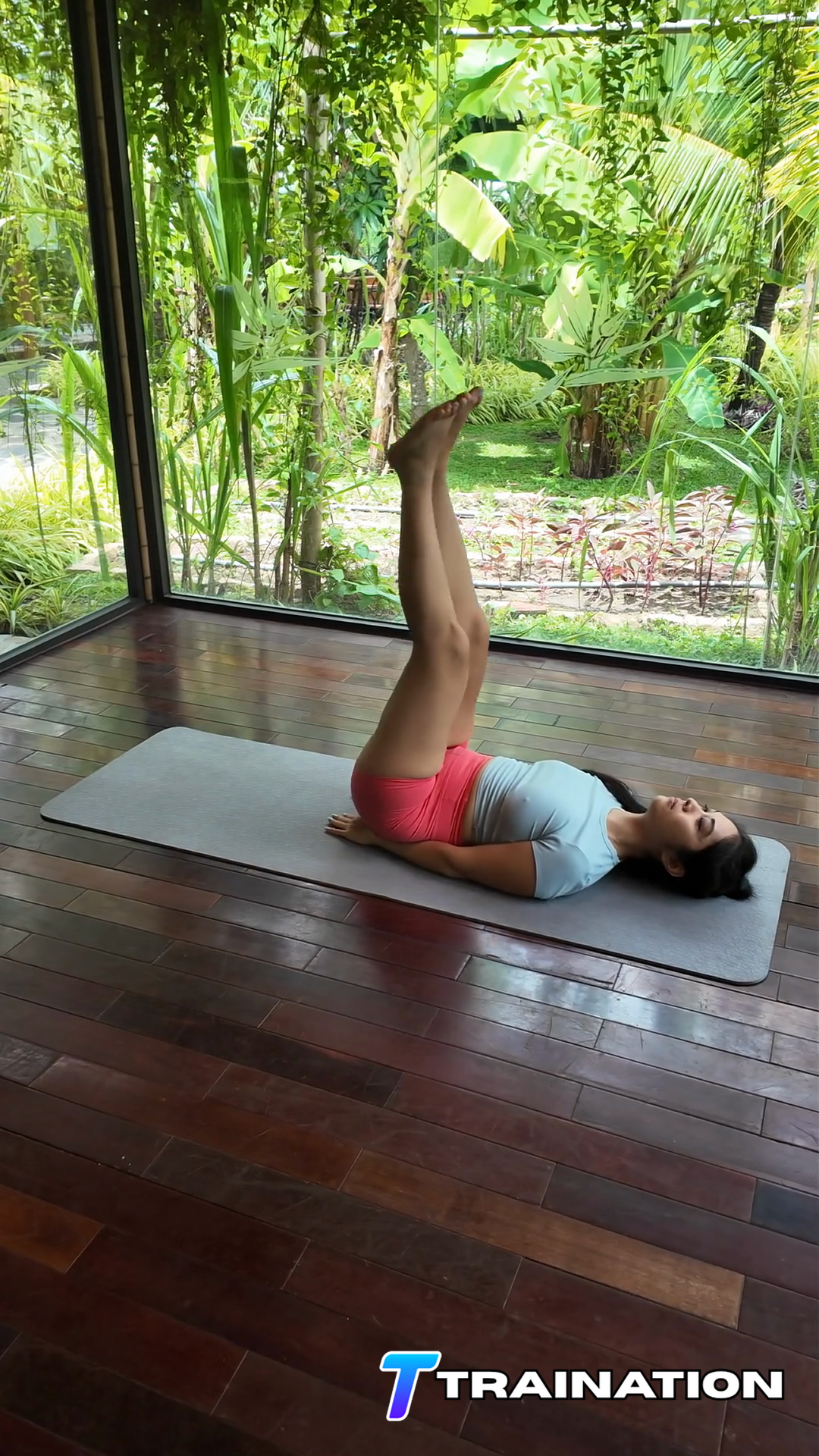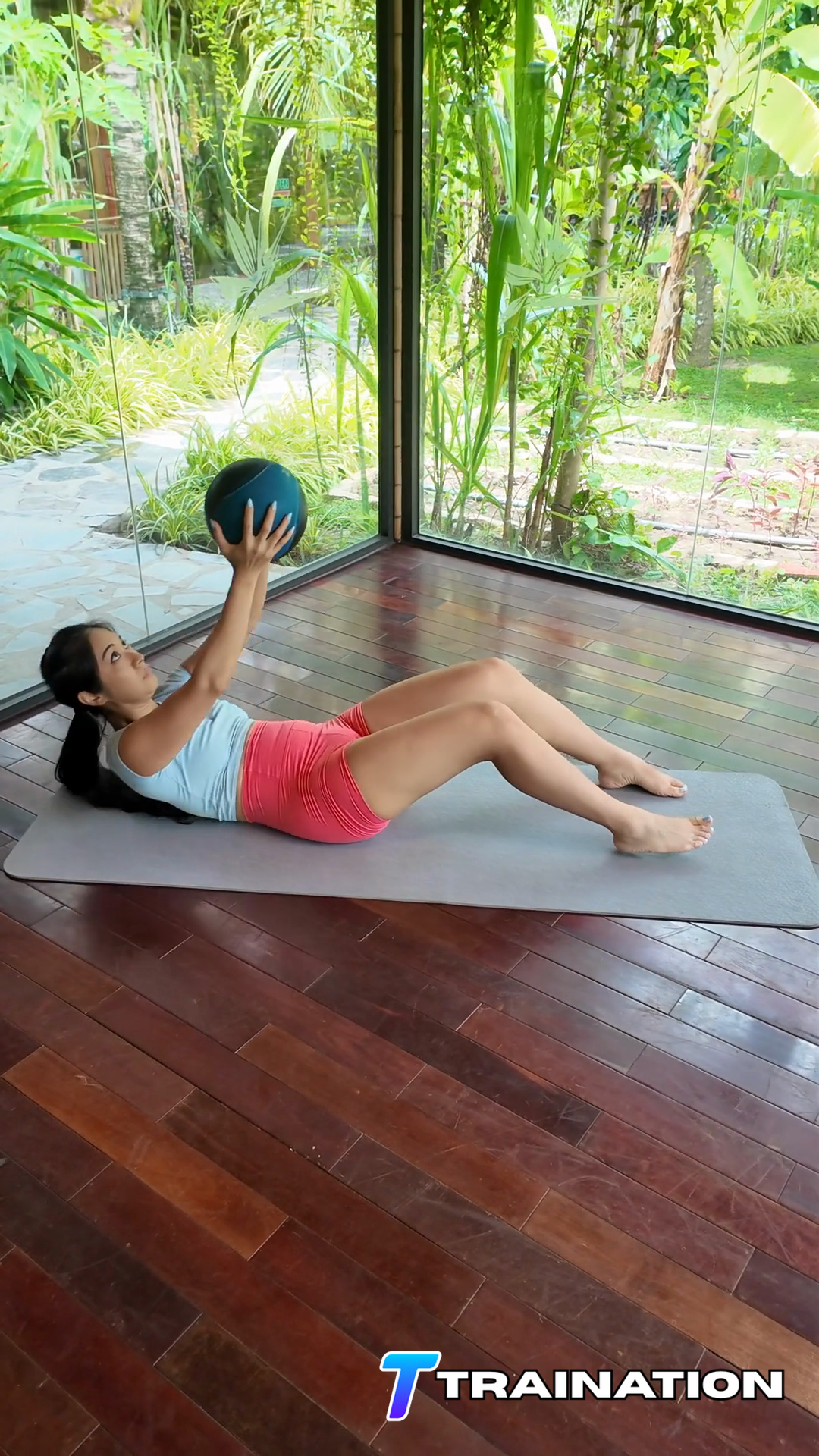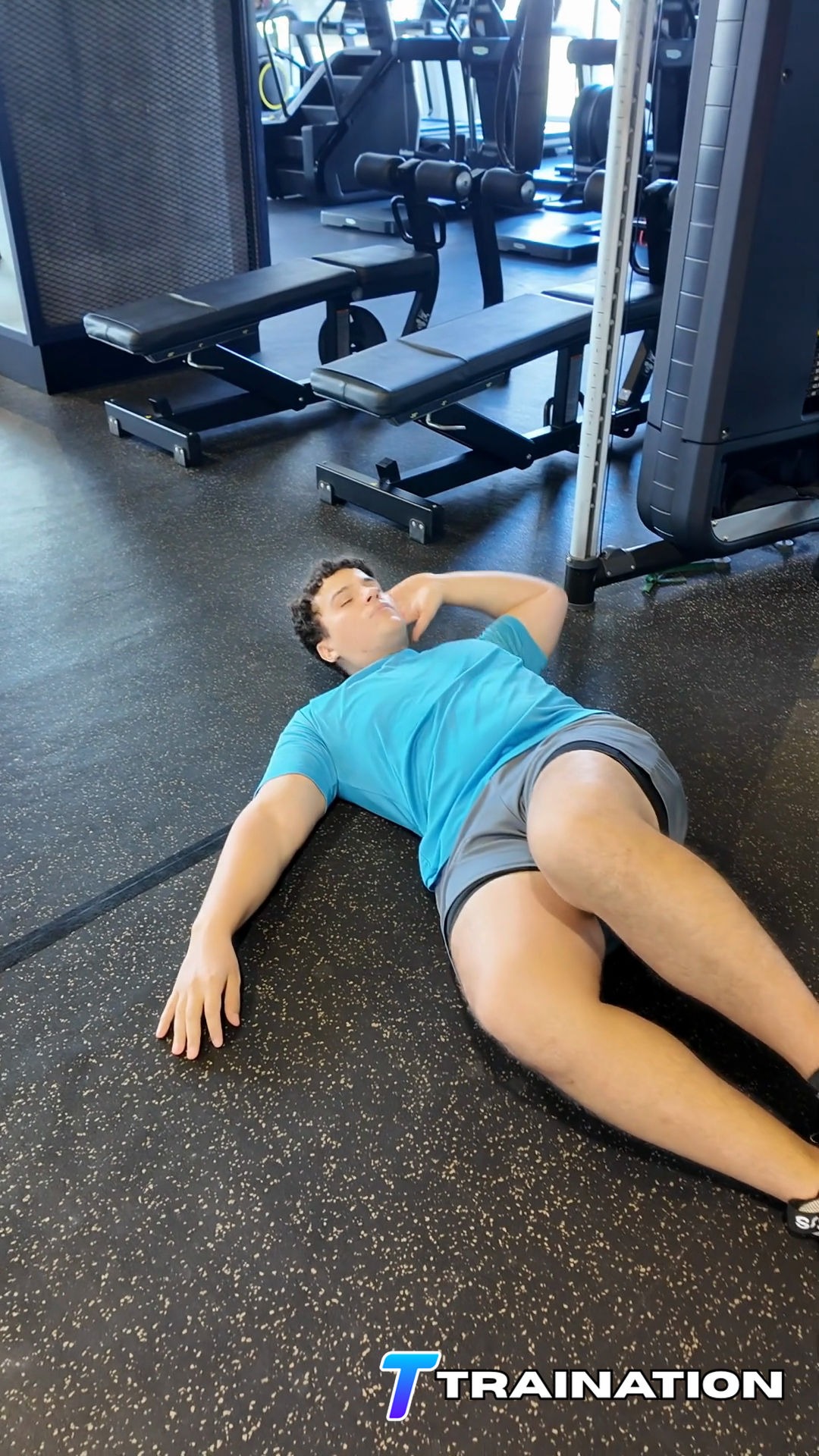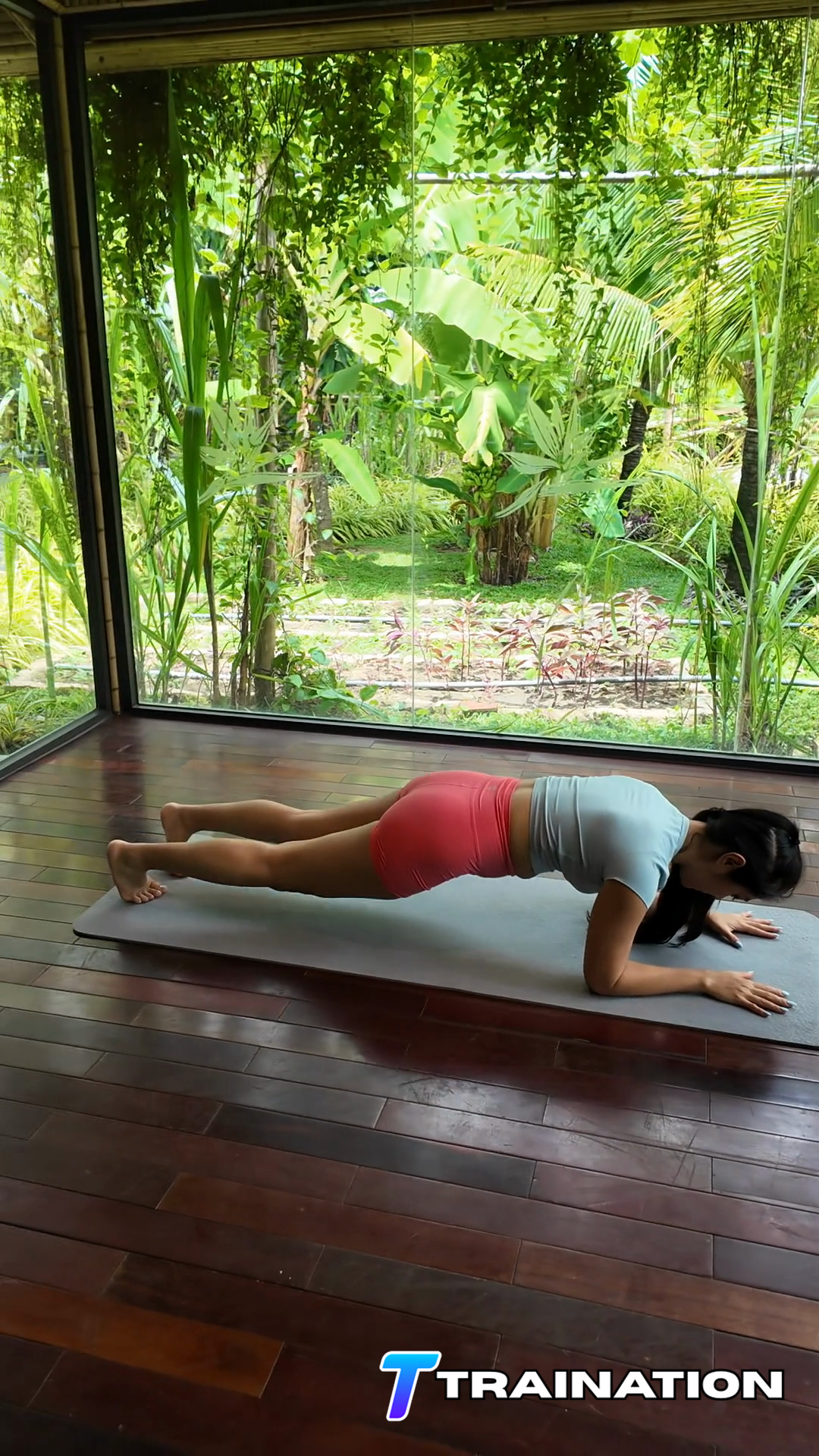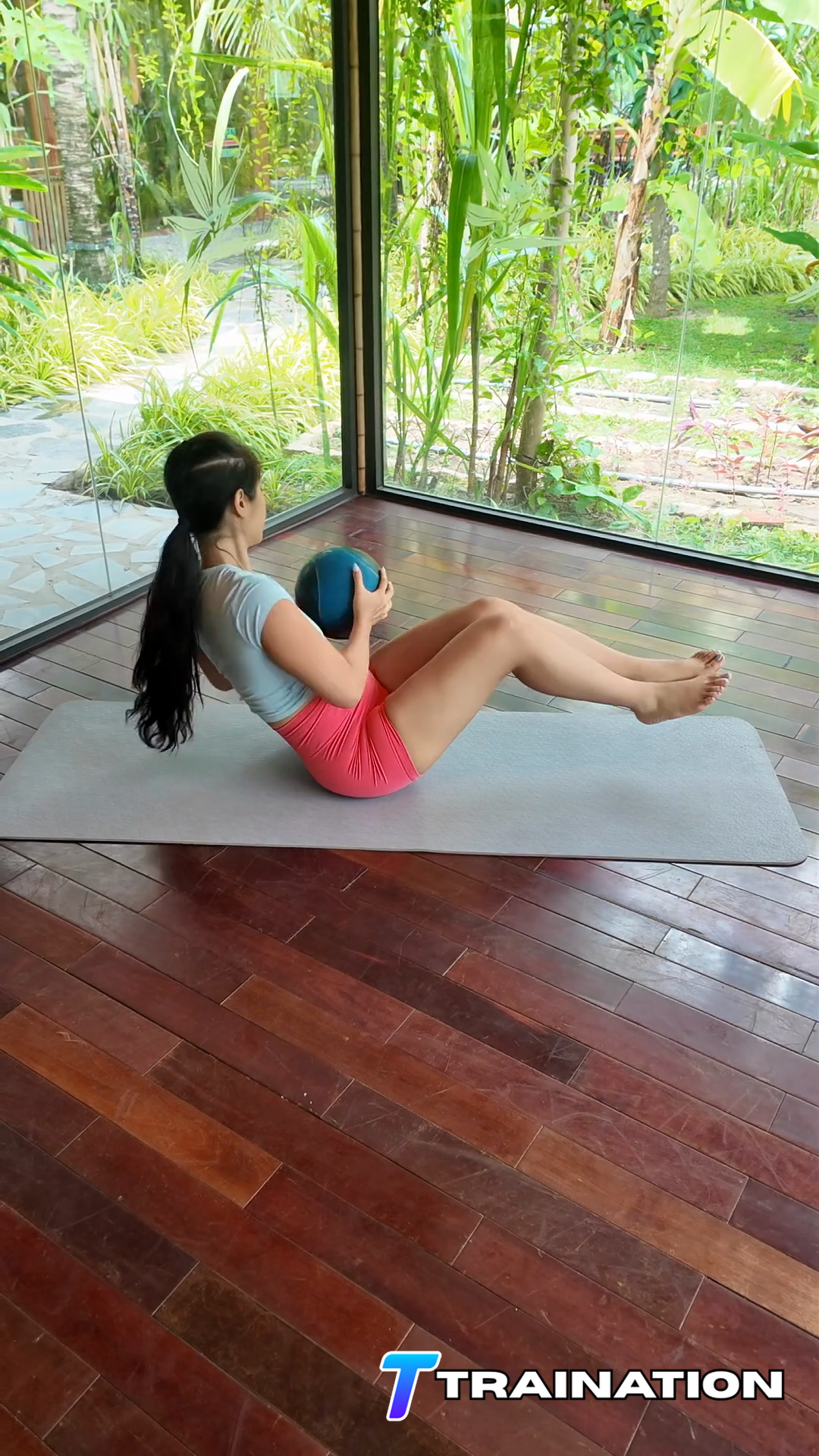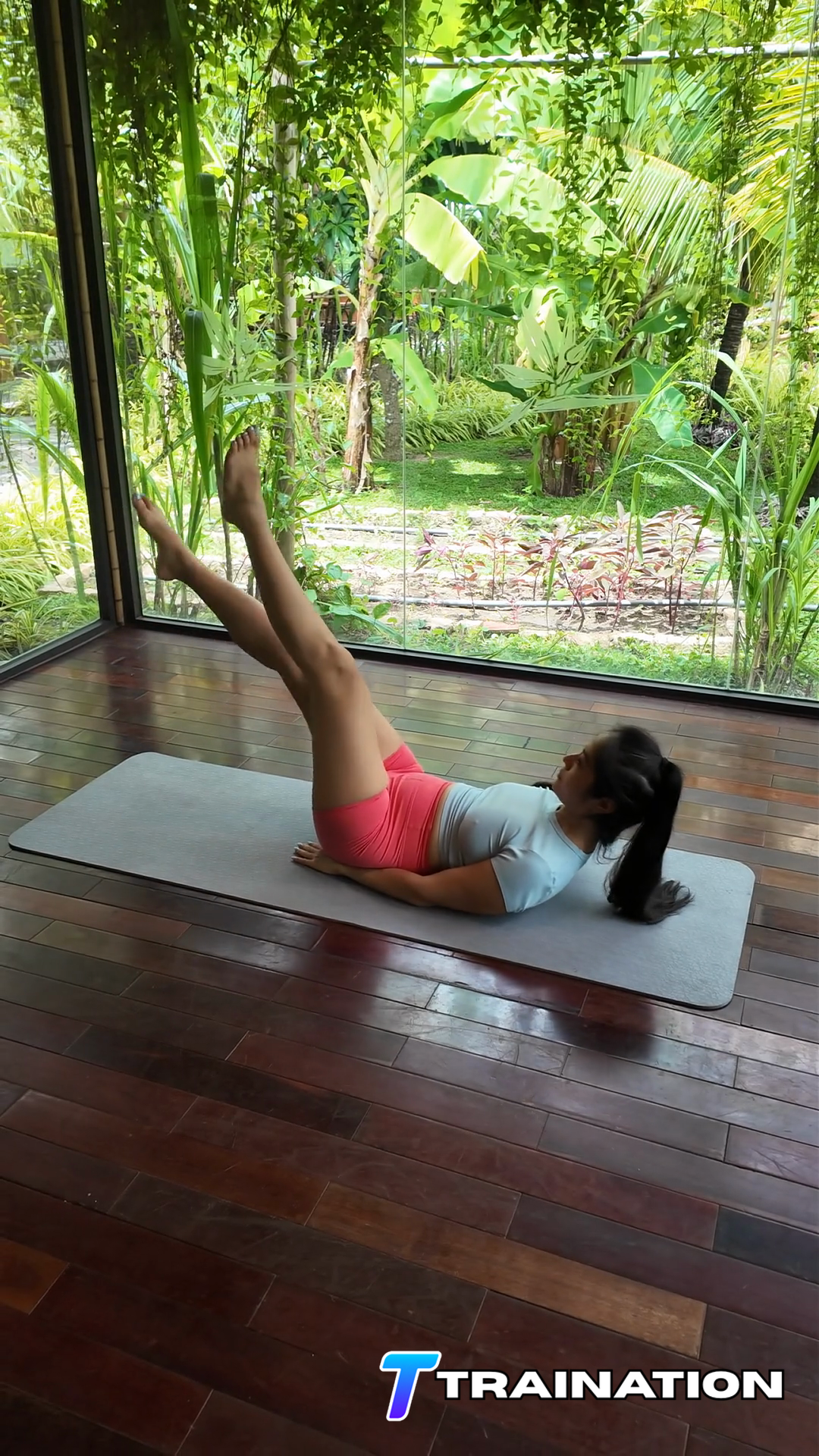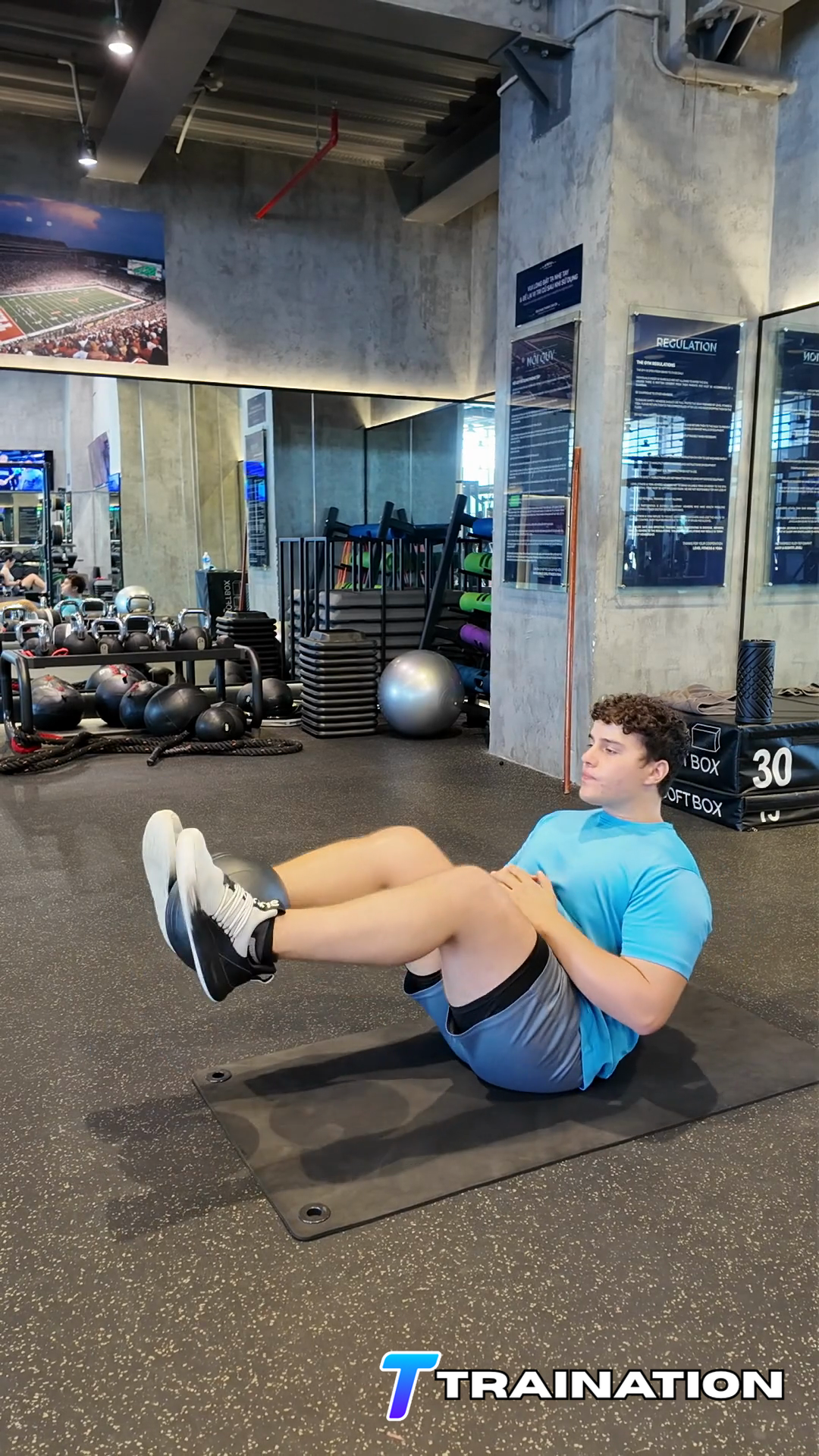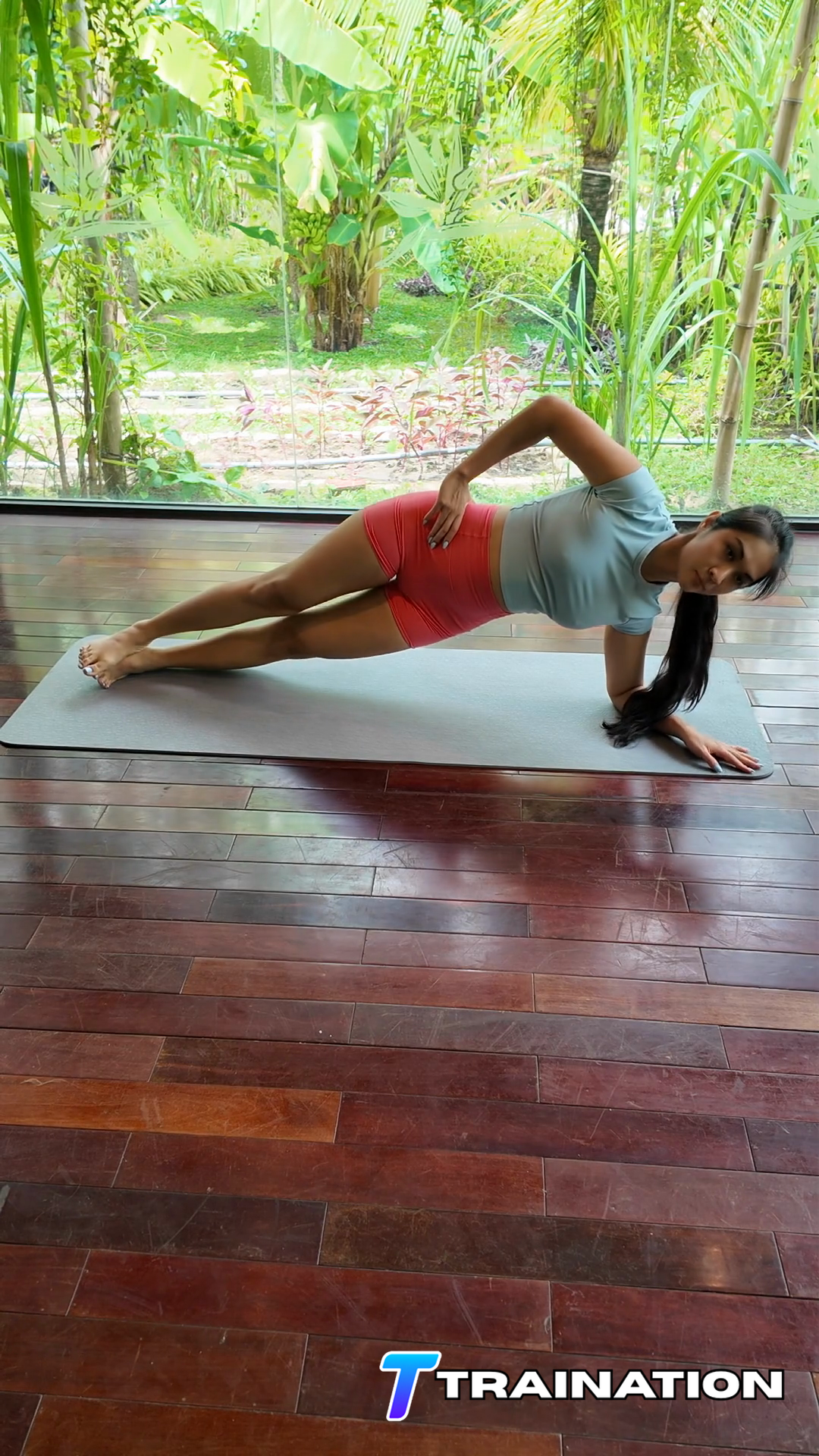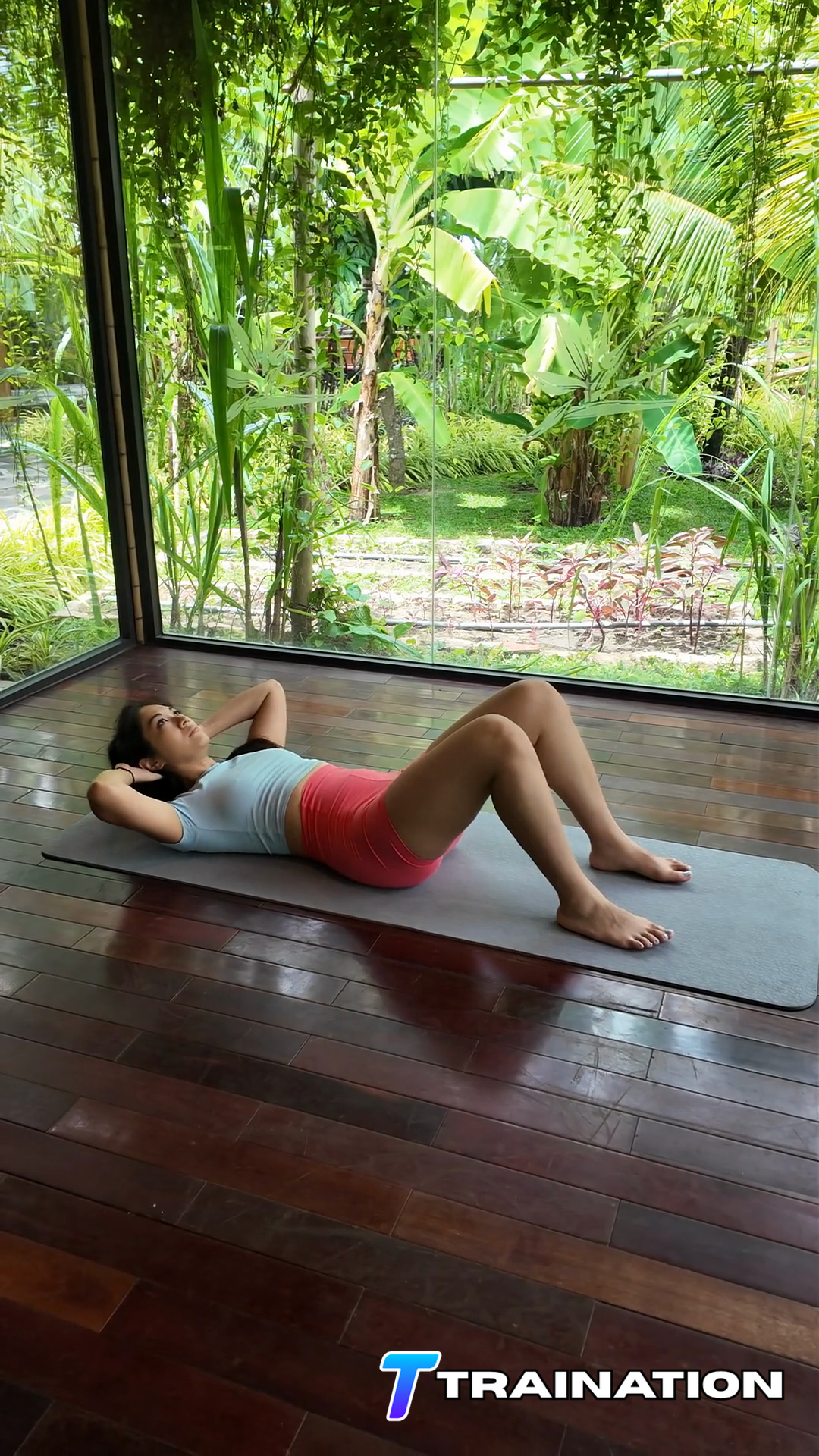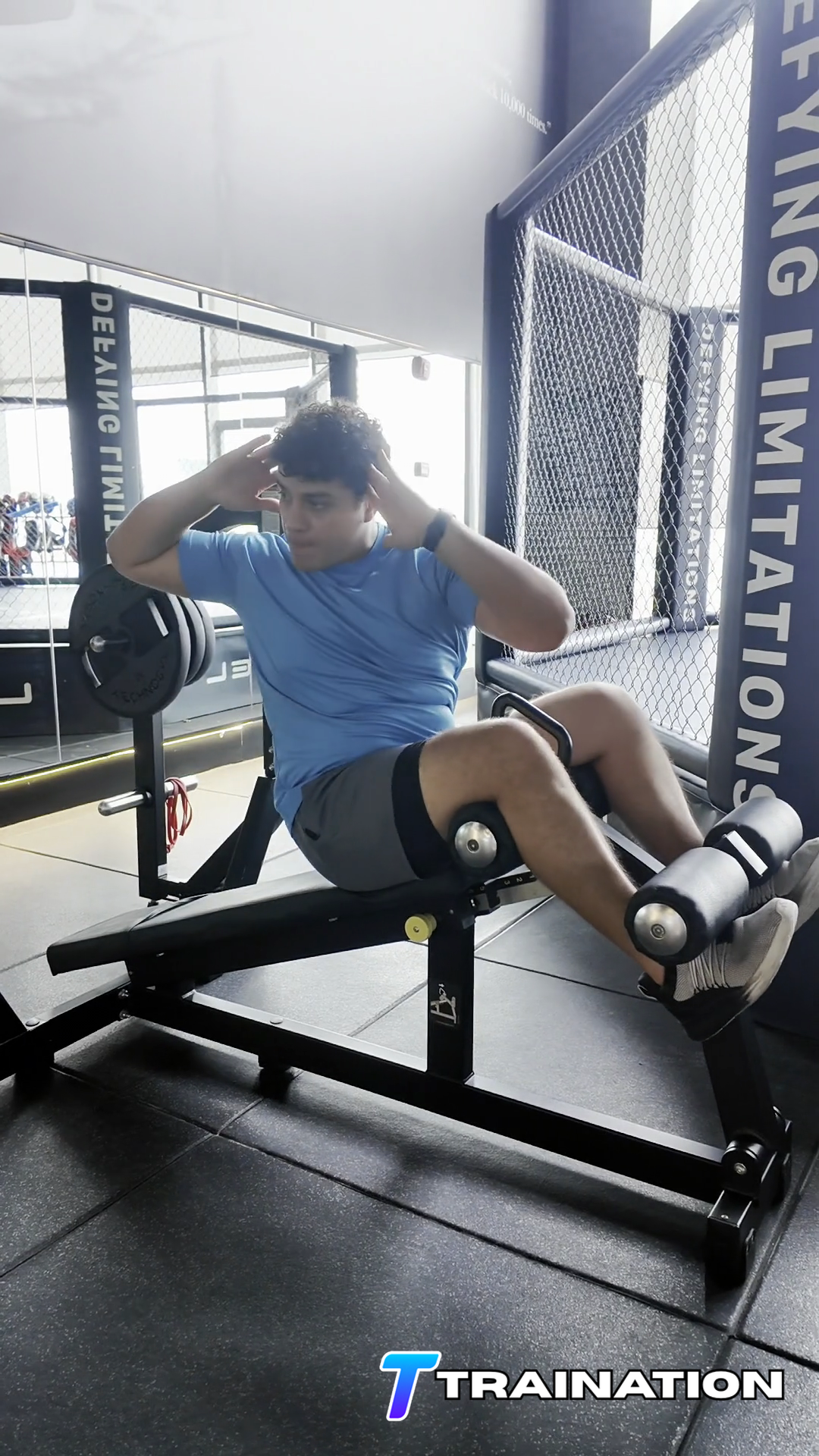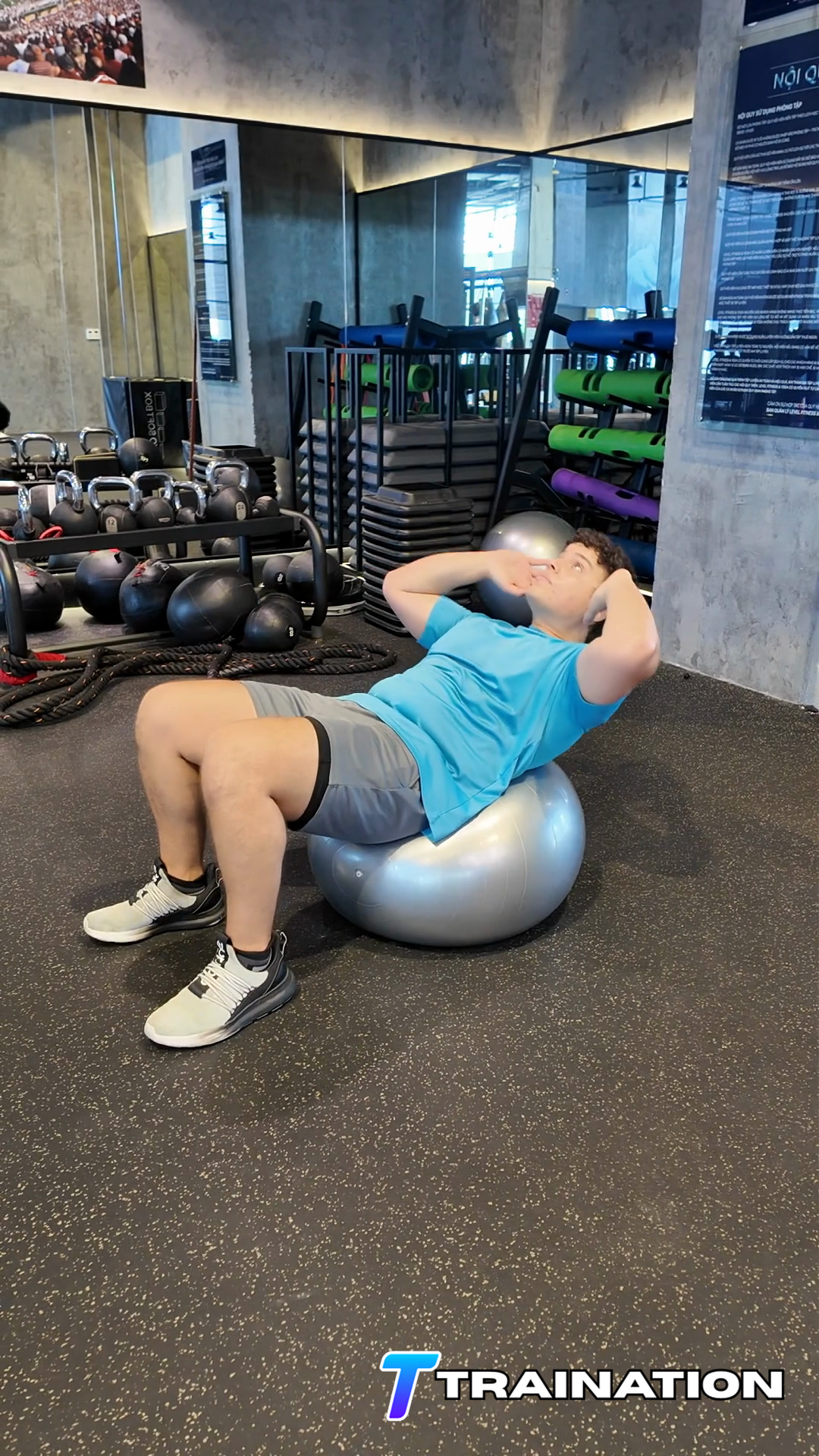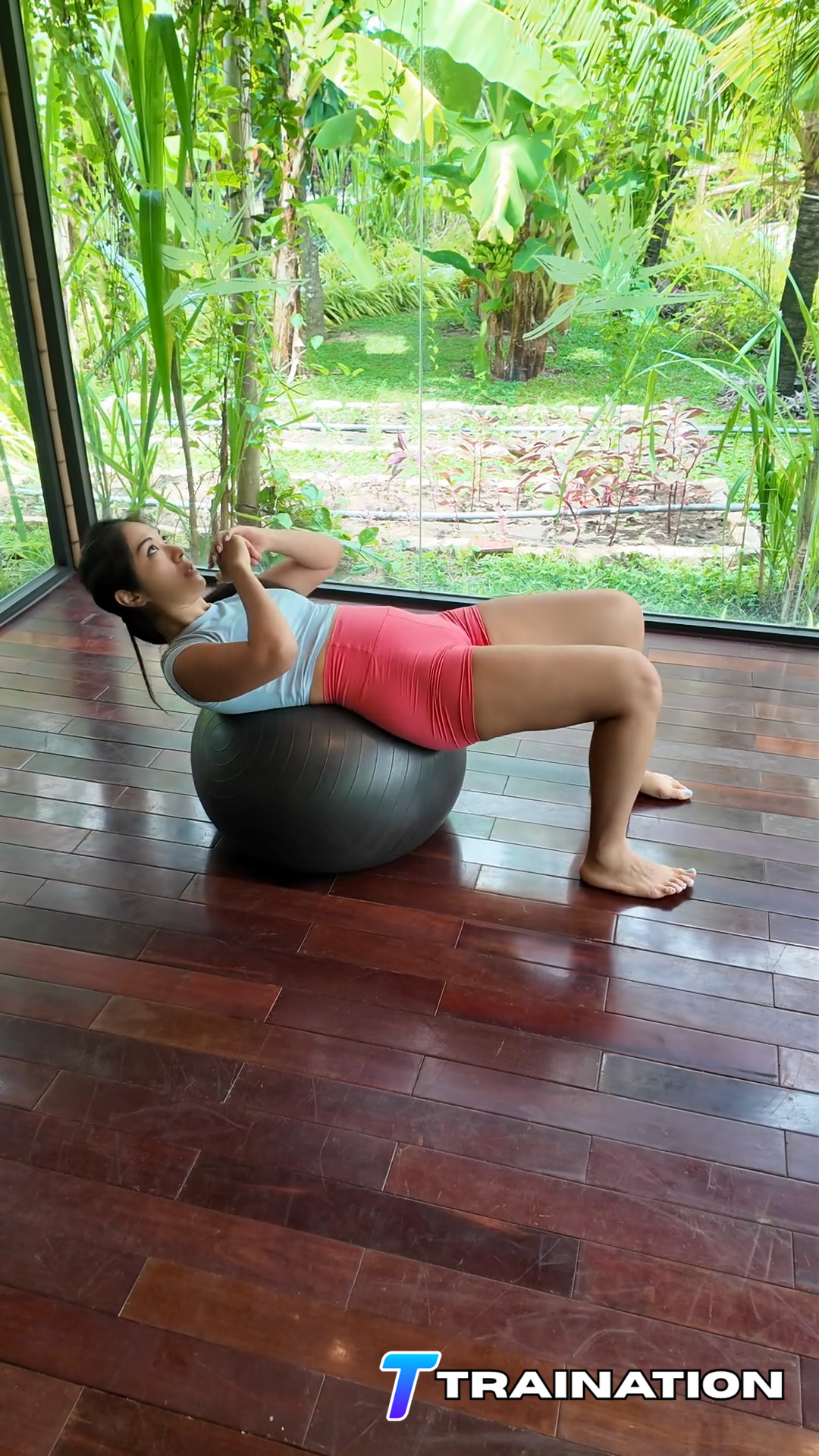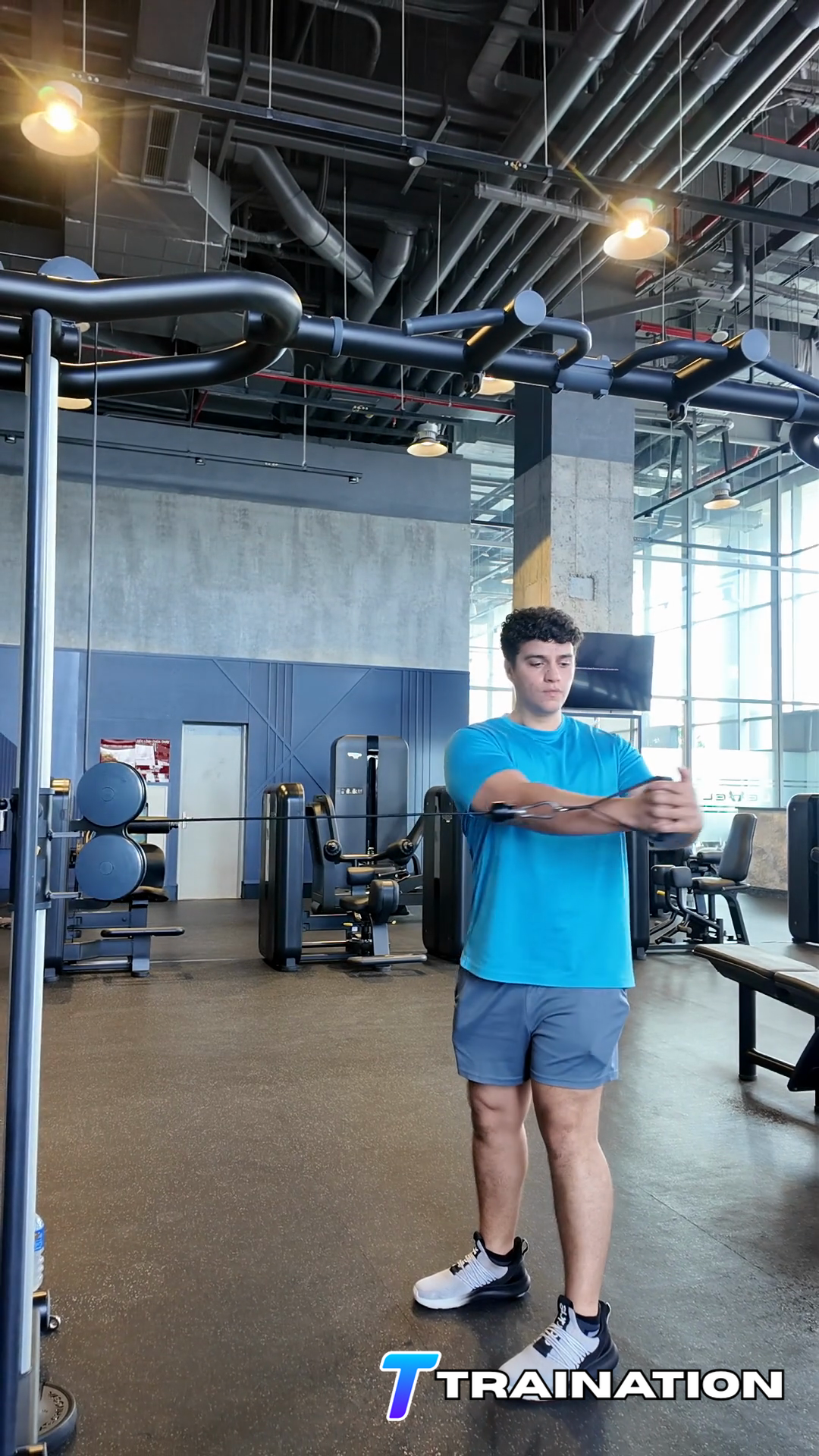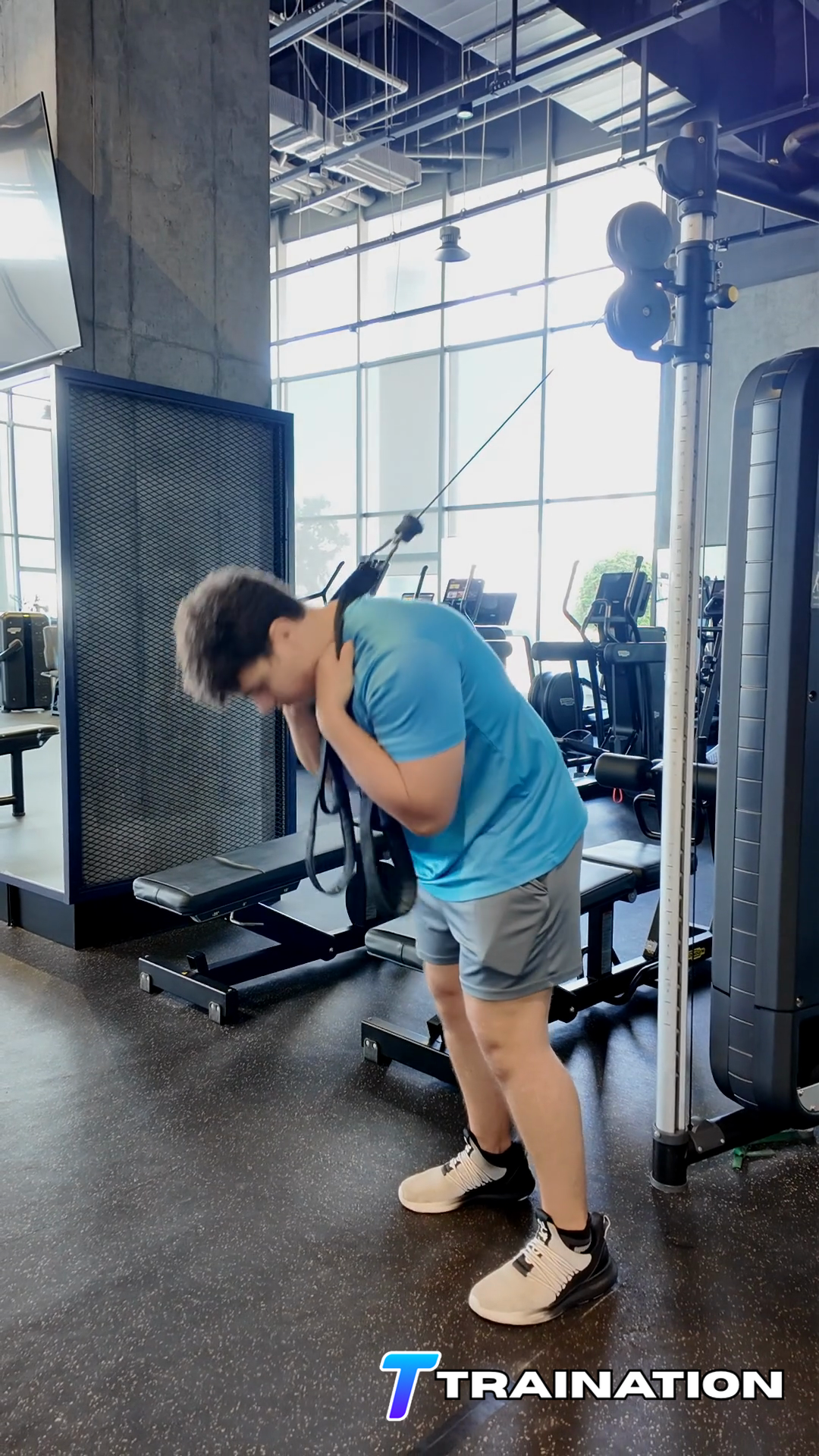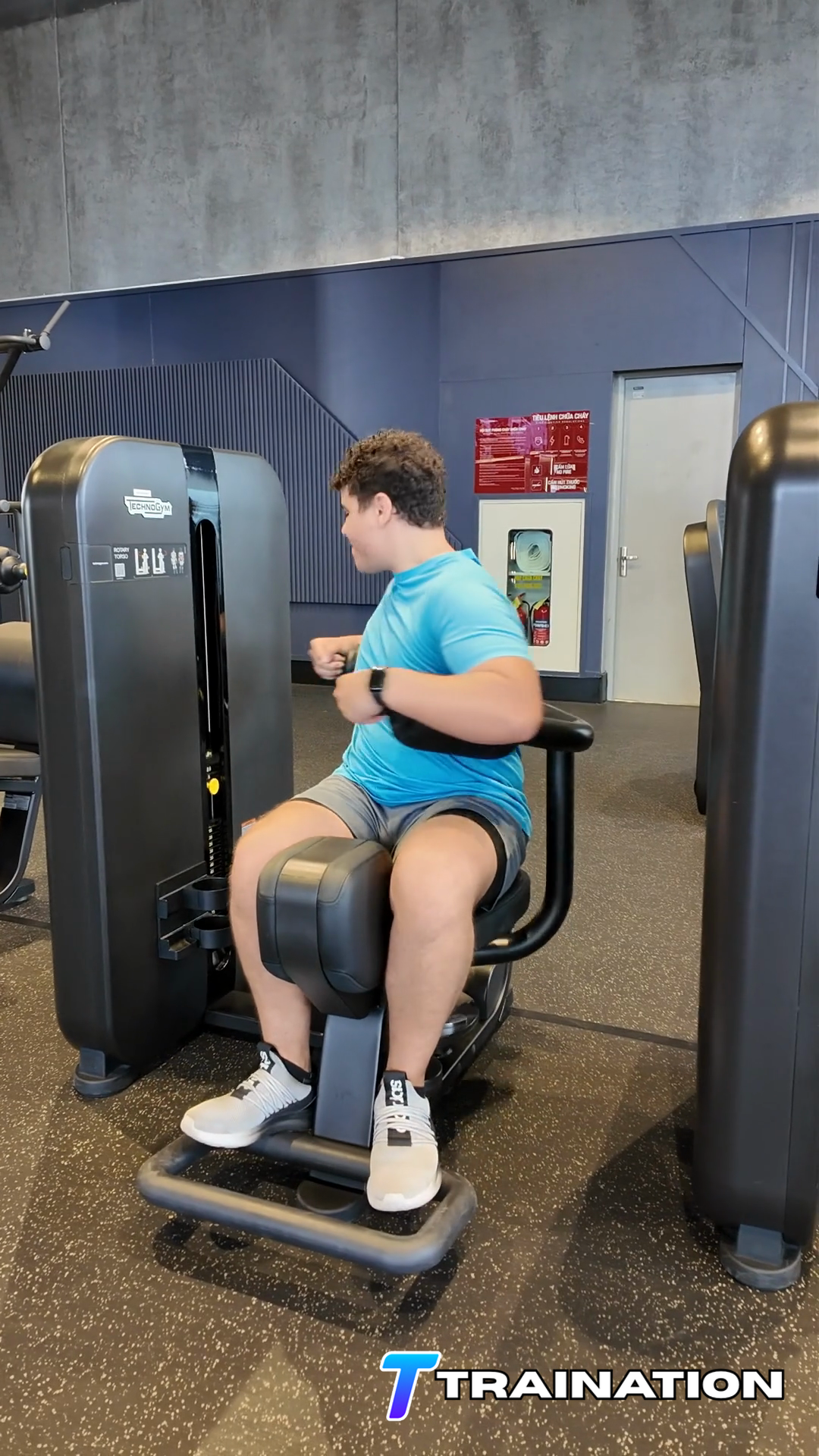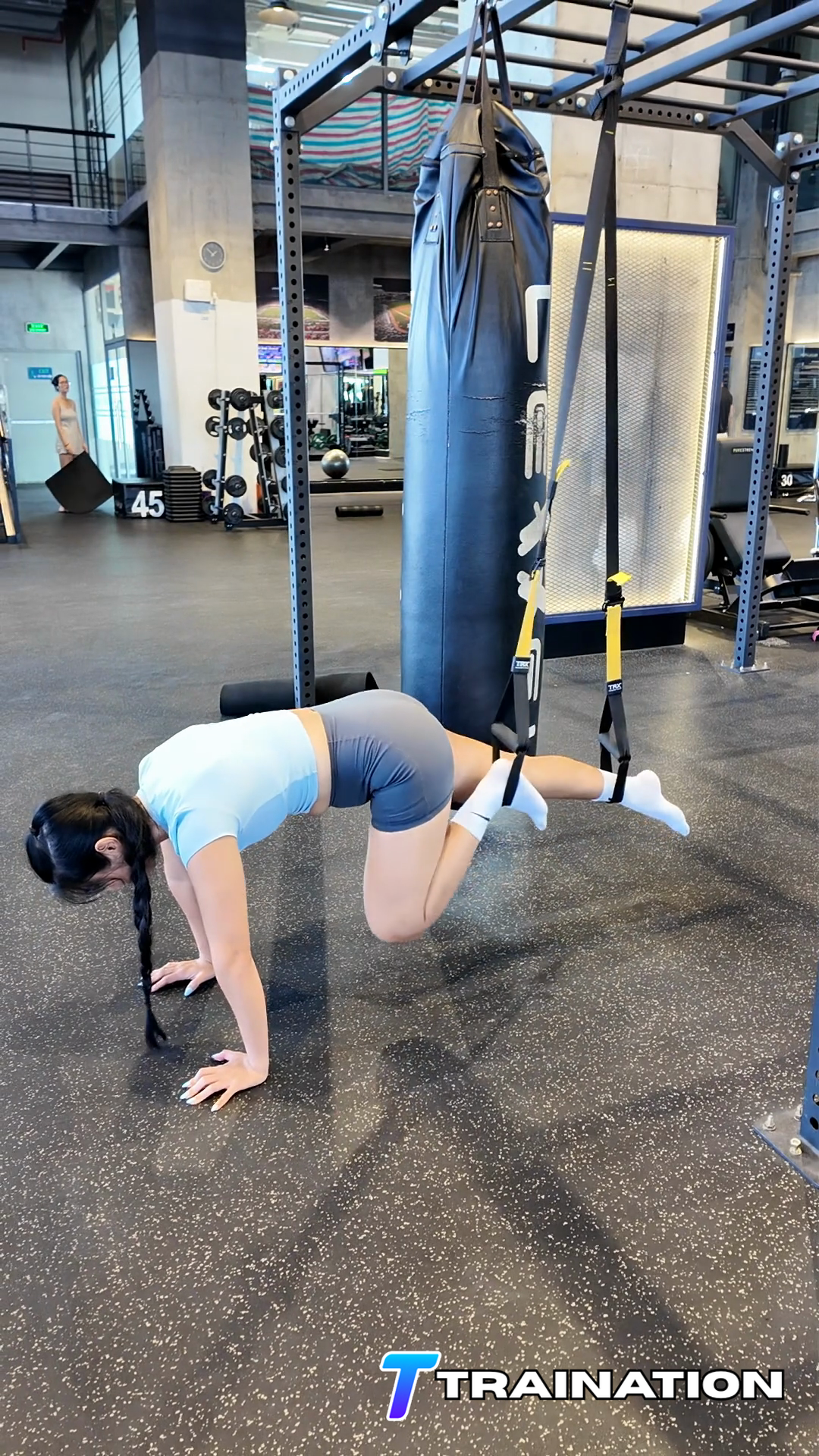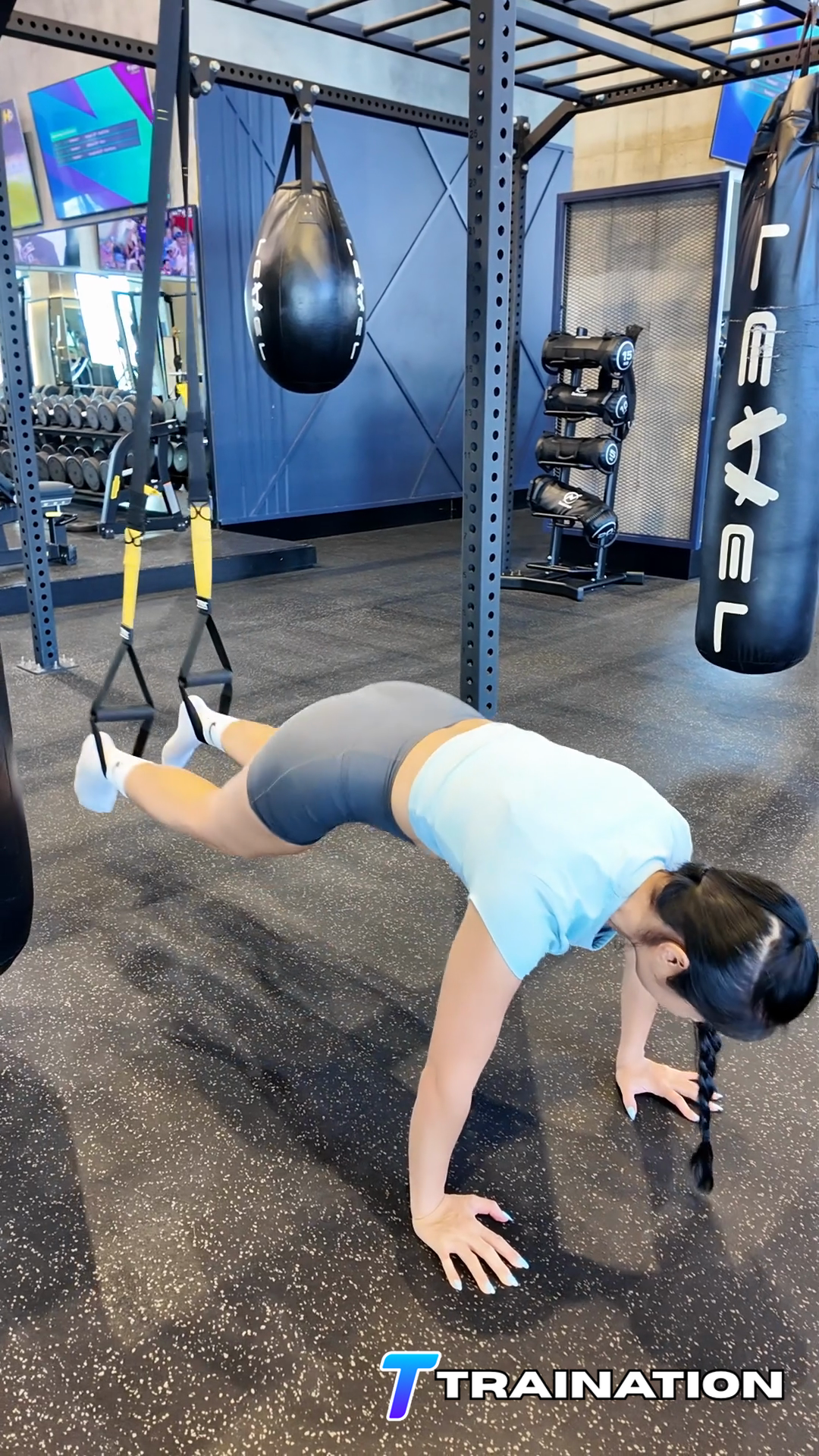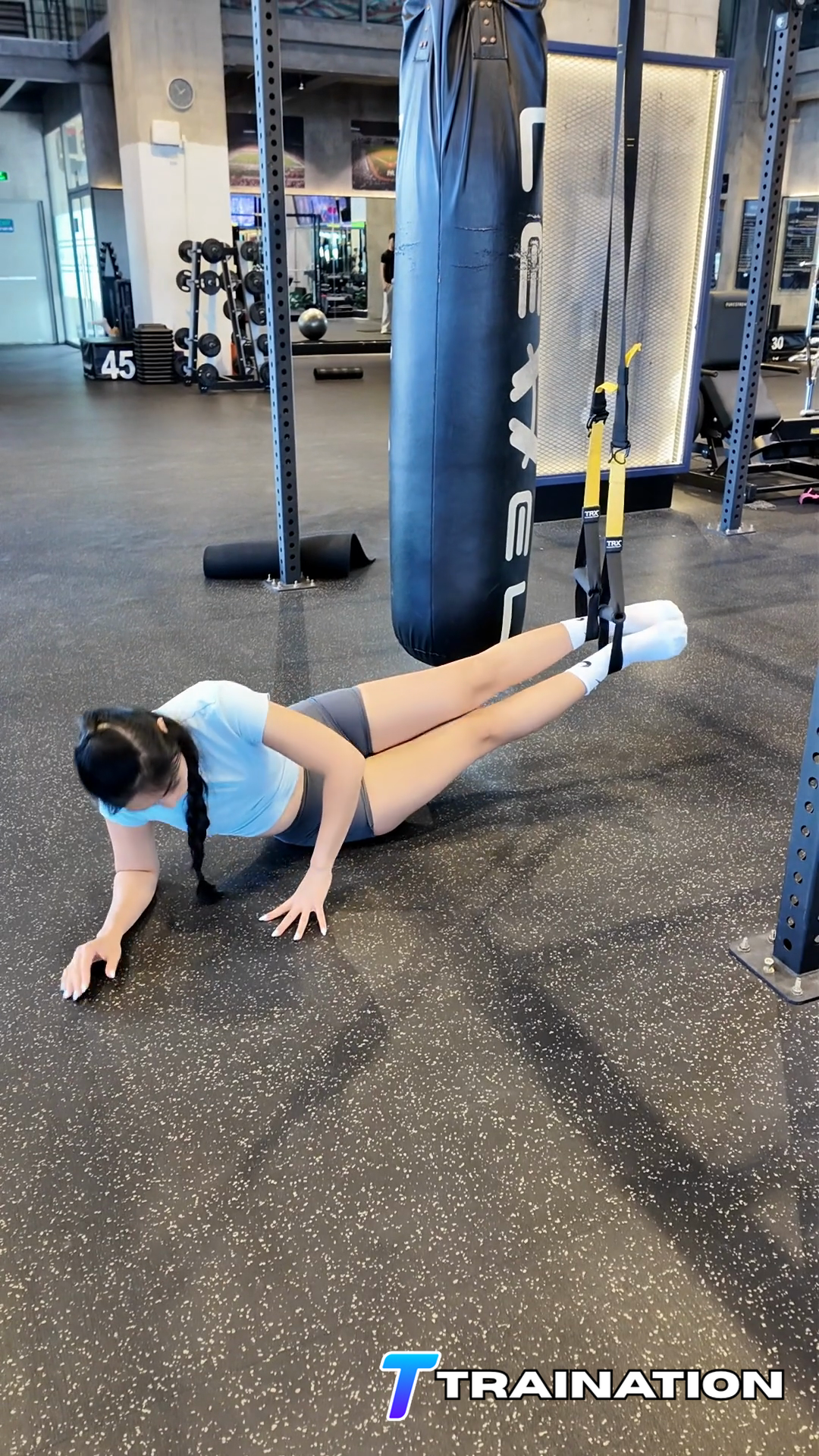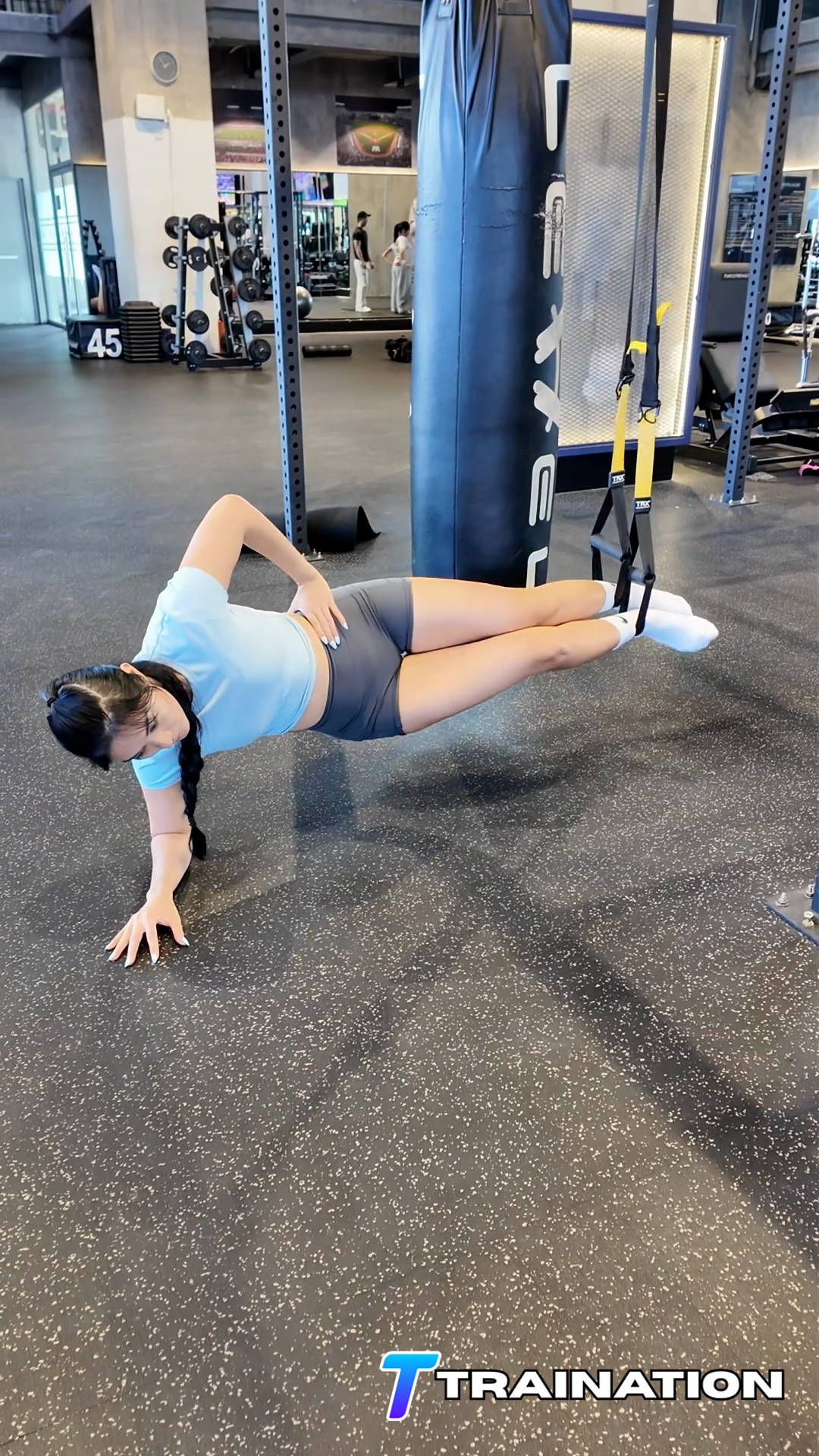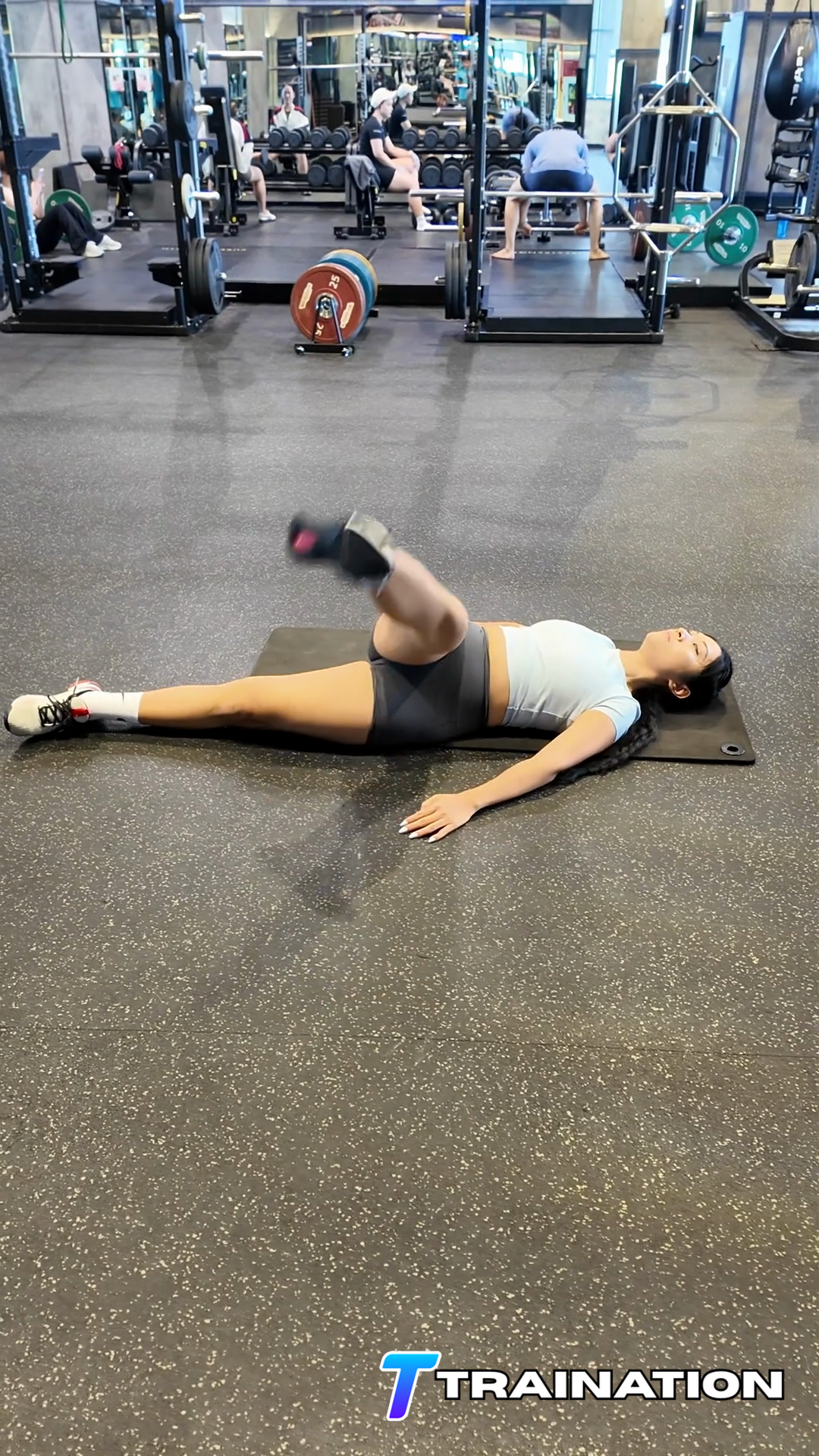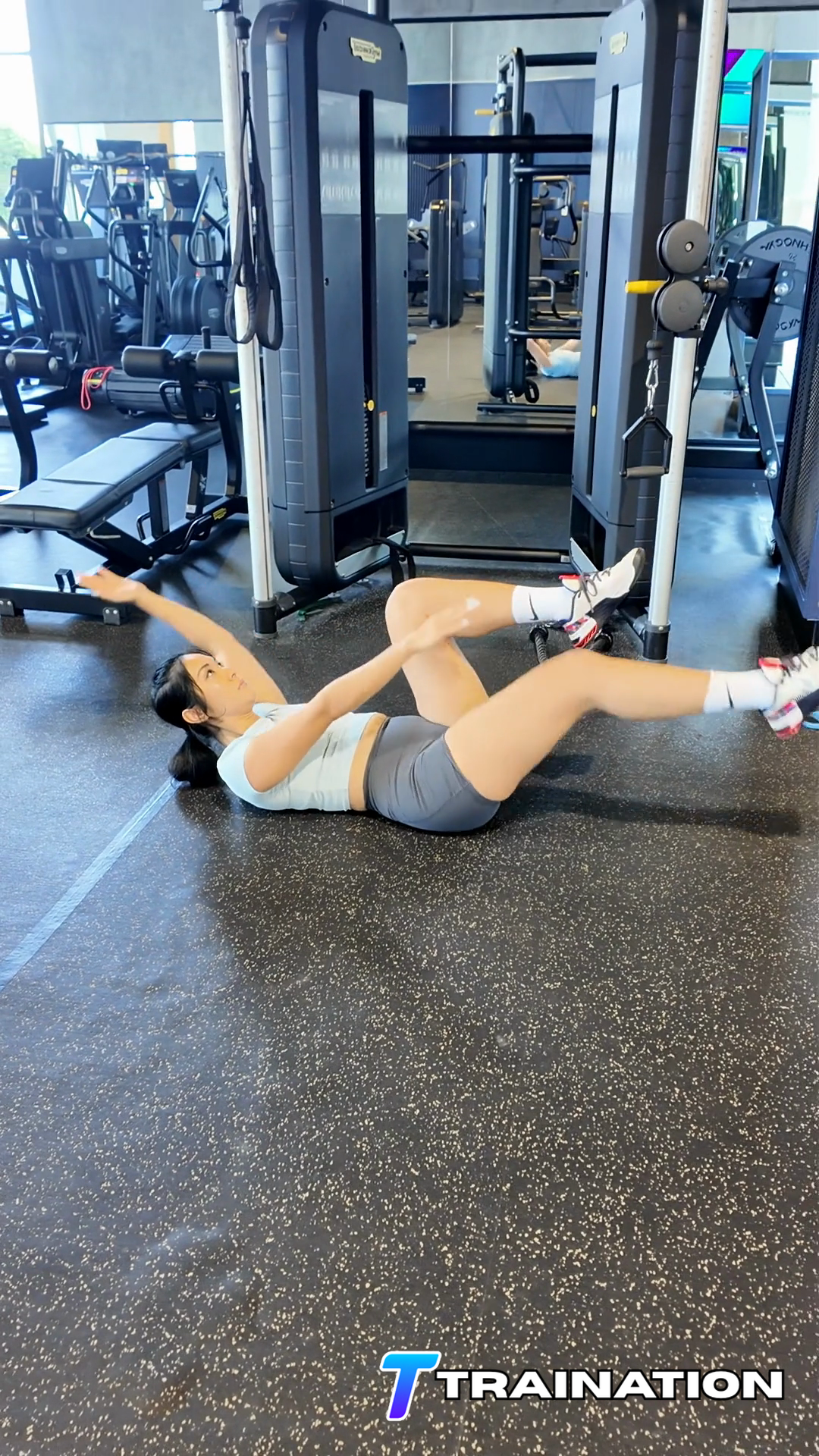
Lower back arching
Bend the knees or use a smaller range as soon as the lower back starts to lift or arch.
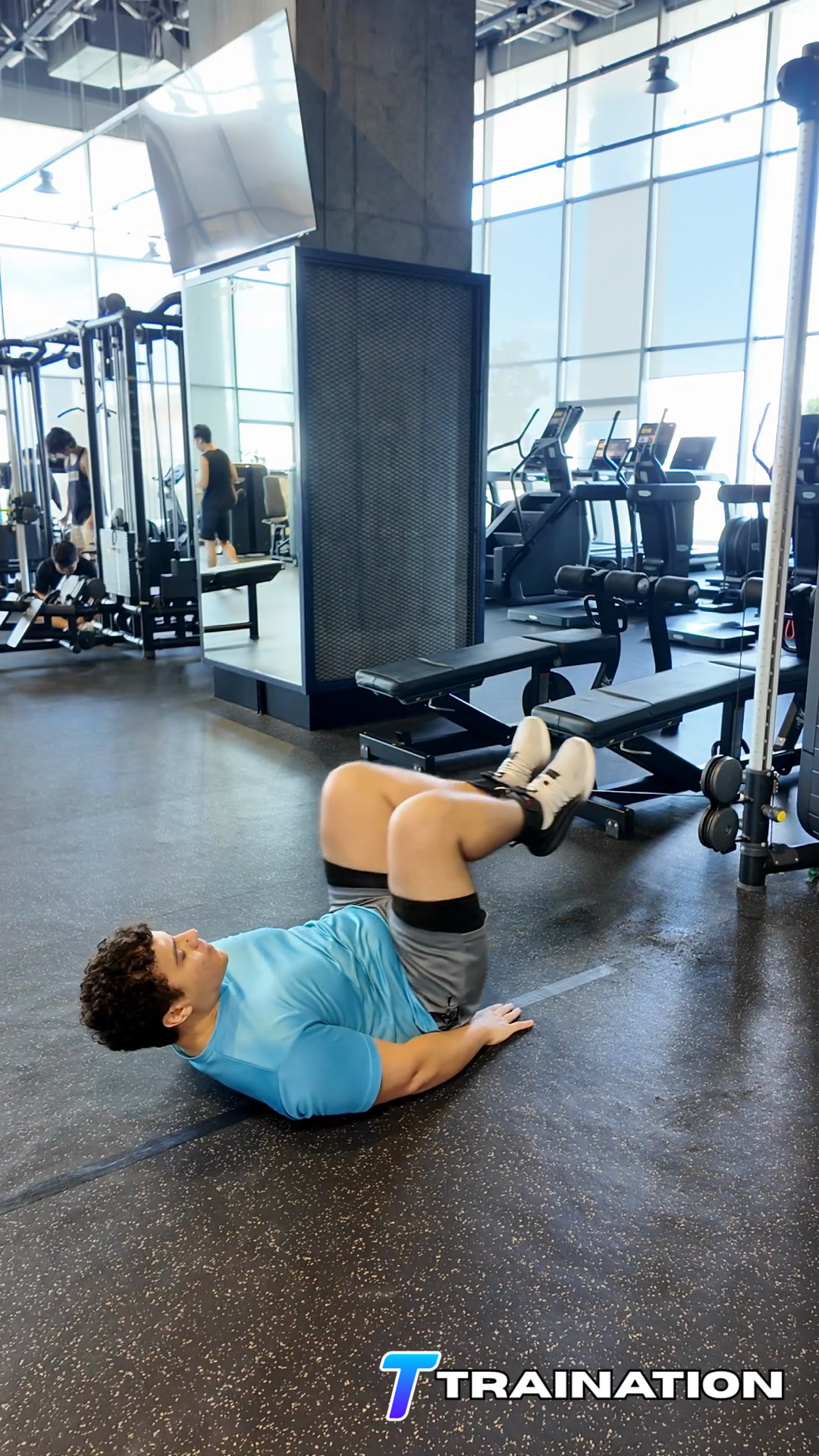
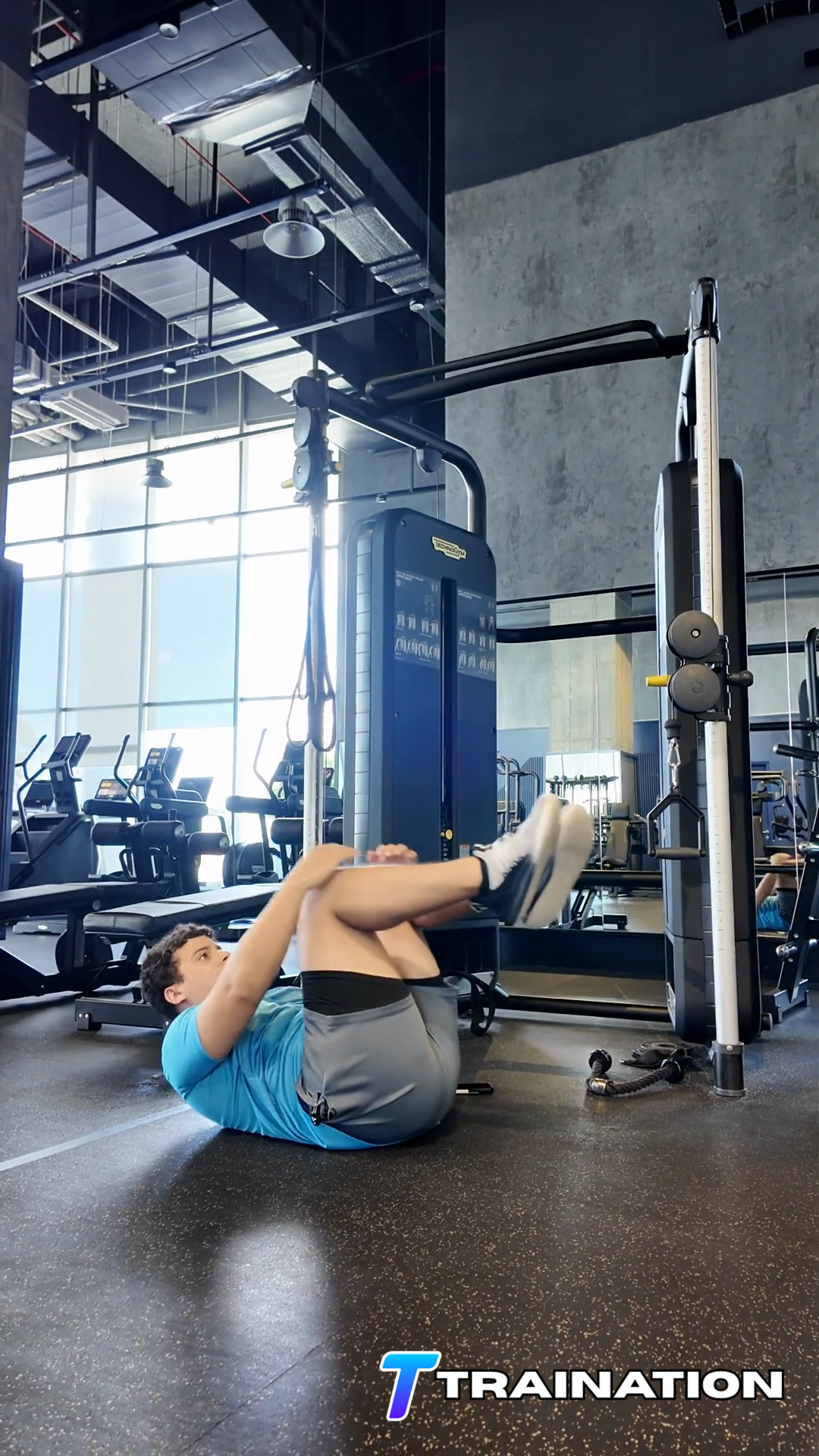
Dead Bug challenges the abdominals and hip flexors while the trunk resists arching or rotating.
Primary musclesRectus abdominis, Iliopsoas
Secondary musclesObliques, Rectus femoris, Tensor fasciae latae
Follow the sequence in order, paying attention to the starting position, movement path, and finish described in each step.
Lie on the back with the hips and knees bent to 90 degrees, arms pointing toward the ceiling, and the lower ribs heavy against the floor.
Exhale gently and brace so the pelvis and lower back remain still as the limbs begin to move.
Lower one arm overhead while extending the opposite leg toward the floor.
Stop before the heel touches down if the ribs lift or the lower back arches away from the floor.
Return to the centre under control and alternate sides without rushing the transition.
Bend the knees or use a smaller range as soon as the lower back starts to lift or arch.
Pause between repetitions and initiate with the abdominals instead of momentum.
Keep the head, shoulders, and upper back supported while the legs move.
Lower the legs slowly. The lowering part of the repetition still trains the muscles.
Place Dead Bug after the main compound lifts, in a focused core block, or beside an exercise that does not require a fresh trunk.
Use two to four times per week while accounting for trunk work already supplied by squats, hinges, carries, and overhead lifting.
| Goal | Sets | Reps or time | Rest | Effort and execution |
|---|---|---|---|---|
| Control / technique | 2–3 | 5–8 reps | 45–75 sec | Stop well before position changes |
| Strength / endurance | 2–4 | 8–15 reps | 60–90 sec | Stop while 1–3 good-form reps are still possible |
Scale the movement
Keep the knees bent and tap one heel down at a time while the arms remain still.
Move one arm at a time while both legs remain supported.
Extend the moving leg farther only while the lower back remains controlled.
Add light band tension after opposite-arm-and-leg repetitions no longer shift the pelvis or lower back.
Turn Dead Bug and the rest of your exercise library into repeatable client programs.
Explore the workout builder